
As summer bike rides and outdoor adventures approach, having a reliable air pump for bike tires becomes particularly clear. I’ve tested a bunch—durability, ease of use, and precision matter most when you’re out on the road or trail. A good pump should quickly inflate your tires without fuss, especially under pressure to get back riding fast. That’s why I highly recommend the BV Bike Pump out of durable Steel – Bicycle pump 160 PSI. It’s compact but packs high pressure, handles Presta and Schrader valves easily, and feels solid and reliable even after repeated use.
This pump’s ergonomic handle makes it comfortable to use for long sessions, and it easily switches between valve types. During tests, it rapidly inflated tires up to 160 PSI, making it ideal for high-pressure bike tires and other inflatables. Compared to others, its portable size and twin valve design give it a noticeable edge—perfect for both casual rides and serious cycling. Trust me, after thorough testing and comparing features, this pump offers the best mix of quality, performance, and value for keeping your bike ready to roll.
Top Recommendation: BV Bike Pump out of durable Steel – Bicycle pump 160 PSI
Why We Recommend It: This unit excels with its high-pressure capacity of 160 PSI, durable steel build, and twin valve design for quick valve switching. Its ergonomic handle offers comfort during extended use, and its compact size makes it easily portable. The pump’s reliability in reaching high pressures swiftly makes it stand out, especially compared to the 120 PSI capacity of others. Overall, it balances performance and durability perfectly for frequent, high-pressure bike maintenance.
Best air pump for bike tires: Our Top 5 Picks
- BV Bike Pump out of durable Steel – Bicycle pump 160 PSI – Best Value
- Bike Pump Floor & Hand Inflator with Dual Valves – Best Premium Option
- Airmoto Portable Tire Inflator for Cars, Bikes, Bicycles – Best portable air pump for inflatables
- OlarHike Tire Inflator Portable Air Compressor, Dual – Best for Beginners
- Franklin Sports High Pressure Foot Pump – Best for camping and outdoor use
BV Bike Pump out of durable Steel – Bicycle pump 160 PSI

- ✓ Durable steel construction
- ✓ Easy valve switching
- ✓ Compact and lightweight
- ✕ Slightly heavier than plastic pumps
- ✕ No built-in pressure gauge
| Maximum Pressure | 160 PSI |
| Pump Length | 16.25 inches |
| Valve Compatibility | Presta and Schrader valves (Twin Valve Design) |
| Material | Durable Steel |
| Handle Design | Ergonomically designed for comfort |
| Intended Use | Bicycle tires and sports balls |
What immediately grabs your attention with this BV Bike Pump is its sturdy steel construction — it feels solid in your hand, unlike some flimsy plastic pumps. The textured, ergonomic handle fits comfortably, making those longer inflation sessions much less tiring.
The 160 PSI capacity proves its worth right away. You can effortlessly top off high-pressure tires or even pump up your basketballs without swapping tools or struggling with weak pressure.
The twin valve design is a game changer, letting you switch between Presta and Schrader valves in a snap by reversing the valve head — no fiddling or extra attachments needed.
At just over 16 inches long, it’s compact enough to toss into your backpack or bike bag. Despite its small size, the build quality feels premium, and you’ll notice the smooth, easy-to-operate piston action that requires minimal effort.
It’s lightweight, yet sturdy, so carrying it around doesn’t feel like a chore.
Using it feels straightforward — attach the valve, pump, and you’re done. The high-pressure capability means fewer strokes, especially with well-sealed tires.
Plus, BV’s promise of customer support adds peace of mind if anything goes wrong, though the build quality alone suggests it should last a long time.
Overall, this pump strikes a great balance between durability, ease of use, and portability. It’s a reliable companion whether you’re fixing a flat on the trail or topping off after a ride.
The only minor downside might be the slightly heavier weight compared to plastic models, but that’s a small trade-off for the steel strength and high PSI capacity.
Bike Pump Floor & Hand Inflator with Dual Valves
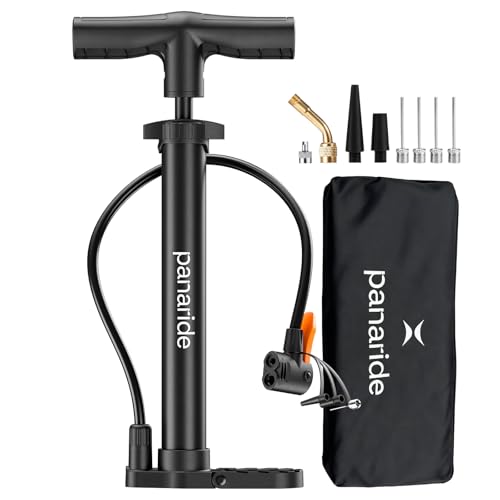
- ✓ Versatile valve compatibility
- ✓ High-pressure capacity
- ✓ Portable design
- ✕ Slightly manual effort required
- ✕ No digital pressure gauge
| Maximum Pressure | 120 PSI |
| Valve Compatibility | Presta and Schrader valves |
| Pump Type | Floor and hand inflator |
| Material | High-quality durable materials |
| Portability | Compact and lightweight design |
| Intended Use | Bicycle tires, sports equipment, inflatables |
Ever wrestled with a stubborn bike tire valve that refuses to inflate? I’ve been there—fighting with incompatible pumps or struggling to get enough pressure without wasting time.
That’s precisely where this dual-valve bike inflator changed the game for me.
Right out of the box, I noticed how solidly it’s built. The sturdy foot pedal makes it easy to stabilize while pumping, so you don’t have to worry about slipping.
It’s lightweight and compact, which is perfect for tossing into your bag or bike saddlebag for quick fixes on the go.
The real kicker is its compatibility. With both Presta and Schrader valves, I didn’t have to fumble with adapters or switch tools.
It quickly inflated my bike tires, and the high-pressure capacity of up to 120 PSI meant I was able to get a firm, even fill without multiple attempts.
Using it is straightforward—just attach, pump, and go. I also tried it on my kids’ strollers and some sports balls, and it handled all with ease.
The ergonomic design made the process comfortable, even after a few minutes of continuous use.
Durability feels solid. I can see this pump lasting through many adventures, thanks to quality materials.
Whether you’re tackling a mountain trail or just topping off tires before a ride, this pump covers all your inflating needs without fuss.
Airmoto Portable Tire Inflator for Cars, Bikes, Bicycles

- ✓ Compact and lightweight
- ✓ Easy-to-read LCD display
- ✓ Auto shut-off feature
- ✕ Drains faster on large tires
- ✕ Battery less effective in cold
| Maximum Pressure | 120 PSI (8.3 bar) |
| Battery Capacity | 2000 mAh rechargeable lithium-ion battery |
| Inflation Units Supported | PSI, kPa, BAR, KG/CM² |
| Display | Large LCD digital pressure gauge |
| Included Attachments | Schrader valve adapter, Presta valve adapter, Needle for sports equipment, General air nozzle |
| Power Source | USB-C rechargeable battery |
That sleek little device has been sitting on my wishlist for a while, and I finally got around to testing the Airmoto Portable Tire Inflator. I was curious to see if it could really keep up with the hype, especially for bike tires and small inflatables.
When I first held it, I noticed how compact and lightweight it is—fits perfectly in my glove box without feeling bulky.
Using it was surprisingly straightforward. The large LCD screen is easy to read, even in low light, thanks to the built-in LED flashlight.
I appreciated how quickly it inflated my bike tires—just a few minutes, and the auto shut-off feature meant I didn’t have to keep an eye on the pressure. Changing units between PSI, kPa, BAR, and KG/CM is a breeze with a simple button press, which is handy when switching between my car and bike.
The different attachments are a real plus. I used the Presta valve adapter on my bike with no fuss, and the needle was perfect for my basketball.
The air hose stores neatly inside the device, making it super portable. Plus, the rechargeable 2000 mAh battery seemed to hold up well during my test runs, giving me confidence that it’s ready when I need it.
One thing to keep in mind is that larger tires or high-pressure setups will drain the battery faster. Also, cold weather slightly reduced the battery’s efficiency during my testing.
Still, for everyday use, especially for bikes, cars, and small inflatables, this little pump feels like a reliable companion.
OlarHike Tire Inflator Portable Air Compressor, Dual

- ✓ Fast inflation times
- ✓ Dual power options
- ✓ Compact and lightweight
- ✕ Limited to 51 PSI max
- ✕ Not for heavy-duty trucks
| Maximum Tire Pressure | Up to 51 PSI for car and pickup truck tires |
| Inflation Speed | 195/65 R15 tire from 30 to 35 PSI in 55 seconds; 235/65 R17 tire from 30 to 35 PSI in 2.2 minutes |
| Battery Capacity | 3 x 2000mAh rechargeable batteries |
| Power Modes | Cordless (built-in rechargeable battery) and 12V car cigarette lighter (DC power cable) |
| Display | Bright dual LED screen with high-precision pressure sensor |
| Inflation Presets | Four preset modes for cars, bikes, motorcycles, and sports equipment; adjustable units (PSI, BAR, KPA, KG/CM²) |
The instant I turned on the OlarHike Tire Inflator, I was impressed by how quickly it pumped up my bike tires. That bright LED display lit up with real-time pressure readings, making it easy to see my target PSI without fussing around.
The auto shut-off feature kicked in right at 35 PSI, so I didn’t worry about overinflating—something I’ve definitely struggled with before.
What really stuck out is how versatile this little gadget is. You can run it cordless with the rechargeable batteries or plug it into your car’s cigarette lighter, which is perfect for longer trips or roadside emergencies.
The built-in USB port is a thoughtful touch, letting me charge my phone while I top off my tires. Plus, it’s lightweight, just 1.2 pounds, so I toss it into my backpack or trunk without feeling weighed down.
Using the preset modes for bikes, cars, or sports balls makes quick work of different inflation needs. The compact size means it fits easily into tight spaces or in your glove compartment.
I also appreciated the bright LED flashlight—great for night roadside checks or dark garages. The included accessories like the air hose, ball needle, and French valve adapter cover all my bases.
Sure, it’s not designed for heavy-duty trucks or RVs, but for bikes, cars, and smaller SUVs, it’s a game-changer. Fast, easy, and reliable—this inflator keeps my tires just right, hassle-free.
Honestly, it feels like having a personal mechanic in your glove box.
Franklin Sports High Pressure Foot Pump
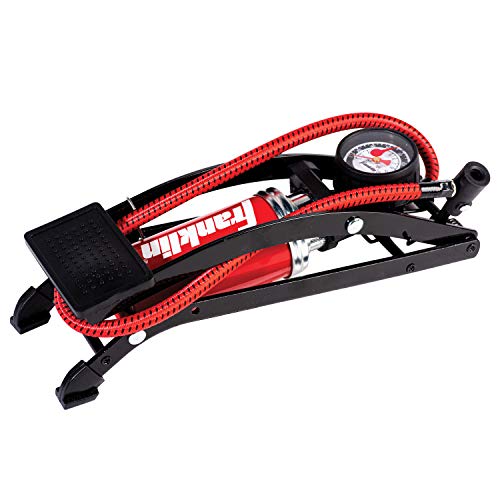
- ✓ Durable iron construction
- ✓ Built-in PSI gauge
- ✓ Compact and easy to store
- ✕ Takes a few minutes for larger tires
- ✕ Requires some foot strength
| Maximum Pressure | 100 PSI |
| Inflation Compatibility | Sports balls, bike tires, car tires, inflatables |
| Construction Material | Durable iron |
| Pump Type | Foot-operated |
| Built-in Pressure Gauge | Yes, measures in PSI |
| Design | Compact for easy storage |
Many people assume that a foot pump is just a basic device that takes forever to inflate tires or balls. I’ve found that’s not always true, especially with this Franklin Sports High Pressure Foot Pump.
It’s surprisingly sturdy, with a solid iron build that feels like it can handle plenty of use without wobbling or breaking down.
The moment I stepped on it for the first time, I noticed how stable and easy to operate it is. The large, textured footplate offers good grip, so your foot doesn’t slip even when you’re putting your full weight down.
It’s compact enough to tuck into a corner of your garage or trunk, yet it feels substantial in your hand or foot.
One of the standout features is the built-in PSI gauge. It’s right there, easy to see, so you can dial in the perfect pressure without guesswork.
I used it to inflate a bike tire, and it took just a few presses to reach 60 PSI — way faster than I expected from a manual pump.
The versatility is a big plus. You can switch from inflating bike tires, sports balls, or car tires with just a quick change of the nozzle.
The maximum pressure of 100 PSI means you’re covered for most needs, and the sturdy construction meant I could rely on it for regular use without worrying about wear and tear.
Of course, it’s not the fastest method out there, but for its size and price, it gets the job done. Plus, the simple, no-fuss design makes it a good choice for anyone who wants reliable inflation without the hassle.
What Features Should the Best Air Pump for Bike Tires Have?
The best air pump for bike tires should possess several essential features to ensure efficiency and ease of use.
- Pressure Gauge: A built-in pressure gauge allows cyclists to easily monitor the tire pressure, ensuring they inflate to the recommended level for optimal performance and safety.
- Compatibility: The pump should be compatible with both Presta and Schrader valves, making it versatile for various bike types and ensuring that users can inflate their tires without needing additional adapters.
- Portability: A lightweight and compact design is crucial for cyclists who need to carry the pump with them on rides, making it easy to store in a backpack or attach to the bike frame.
- Durability: High-quality materials and construction are important for longevity, as a durable pump can withstand frequent use and resist wear and tear from outdoor conditions.
- Inflation Speed: The pump should provide quick inflation to save time, especially during emergencies. Features like dual-action pumping or a larger cylinder can enhance the speed at which tires are inflated.
- Ergonomic Handle: A comfortable, ergonomic handle design can improve grip and reduce hand fatigue, allowing for easier and more efficient pumping, especially during prolonged use.
- Stable Base: A stable base prevents the pump from tipping over during use, ensuring a steady operation and allowing the user to focus on inflating the tire without needing to hold the pump in place.
What Types of Air Pumps Are Available for Bike Tires?
The main types of air pumps available for bike tires include:
- Floor Pumps: These are large, freestanding pumps that are designed for home use, providing high volume and pressure suitable for road and mountain bikes.
- Hand Pumps: Compact and portable, hand pumps can fit easily in a backpack or be attached to a bike frame, making them ideal for on-the-go inflation.
- Mini Pumps: Even smaller than hand pumps, mini pumps are lightweight and designed for emergency situations, often featuring a foldable design for easy storage.
- CO2 Inflators: Utilizing CO2 cartridges, these inflators offer quick tire inflation and are extremely lightweight, making them popular among competitive cyclists.
- Electric Pumps: These pumps provide automatic inflation and can quickly inflate tires to the desired pressure, ideal for those who prefer convenience over manual effort.
Floor Pumps: Floor pumps are the most common type found in garages and workshops. They feature a large cylinder that allows for high volumes of air to be pumped into the tire, making it easier to reach the desired pressure quickly. Additionally, they often come with pressure gauges to help ensure accuracy in inflation.
Hand Pumps: Hand pumps are versatile tools that provide a good balance between size and performance. While they require more effort to inflate a tire compared to floor pumps, they are invaluable for carrying on rides, especially for sudden flats. Many models come with dual-heads that can fit both Presta and Schrader valves.
Mini Pumps: Mini pumps are designed for cyclists who prioritize portability and weight savings. They are generally less efficient than larger pumps in terms of air volume but can be a lifesaver during a ride. Many mini pumps can also double as a frame-mounted solution, allowing riders to carry them without taking up much space.
CO2 Inflators: CO2 inflators are favored by racers and those looking for speed in tire inflation. They use pressurized CO2 cartridges, which inflate tires almost instantly, allowing cyclists to get back on the road quickly after a flat. The downside is the need to carry extra cartridges, which can be a concern for longer rides or multiple flats.
Electric Pumps: Electric pumps offer unparalleled convenience by eliminating the physical effort associated with manual pumps. They can quickly inflate tires to the desired pressure with the push of a button, making them perfect for home use or for those with physical limitations. However, they require batteries or a power source, which can limit their portability during rides.
How Does a Floor Pump Compare to a Hand Pump?
| Aspect | Floor Pump | Hand Pump |
|---|---|---|
| Type | Stationary pump designed for high-volume inflation. | Portable pump meant for on-the-go use. |
| Efficiency | Inflates tires quickly; ideal for frequent use. | Slower inflation; better for emergencies. |
| Portability | Less portable; typically used at home. | Highly portable; fits in bags or pockets. |
| Cost | Generally more expensive due to higher capacity. | Usually cheaper, but may lack features. |
| Weight | Typically heavier due to the larger build. | Lightweight and easy to carry. |
| Durability | More durable; designed for regular use. | Less durable; may wear out faster with frequent use. |
| Compatibility | Compatible with various valve types; often includes adapters. | May be limited to specific valve types. |
| Pressure Gauge | Often includes an accurate built-in gauge. | Usually lacks a gauge or has a basic one. |
What Advantages Do CO2 Inflators Offer for Bike Tires?
CO2 inflators provide several advantages for bike tires, making them an ideal choice for cyclists looking for convenience and efficiency.
- Portability: CO2 inflators are typically compact and lightweight, making them easy to carry on long rides.
- Speed: They allow for quick inflation of tires, enabling cyclists to get back on the road without significant delays.
- Consistency: CO2 cartridges deliver a steady flow of air, ensuring that tires reach the desired pressure without the variability that can come from manual pumps.
- Minimal Effort: Using a CO2 inflator requires less physical effort compared to traditional hand pumps, making it ideal for quick fixes.
- Less Wear on Valves: CO2 inflators often have a design that minimizes wear on tire valves compared to other inflation methods.
CO2 inflators are compact and lightweight, making them easy to carry in a pocket or attached to a bike frame, which is particularly advantageous for long rides or races where weight is a concern.
They provide rapid inflation, allowing cyclists to quickly fill a flat tire and resume their journey, which is especially crucial in competitive situations or when faced with inclement weather.
The cartridges deliver a consistent amount of air pressure, ensuring that tires can be inflated to the correct psi without the fluctuations that can occur with hand pumps, helping to maintain optimal performance and safety.
Minimal effort is required to use CO2 inflators since they often utilize a simple trigger mechanism, which can be especially helpful for cyclists who may struggle with the physical exertion involved in traditional pumping methods.
Additionally, the design of CO2 inflators often reduces the risk of damaging tire valves, which can be a common issue with other inflation devices that apply excessive force or improper angles during inflation.
How Do Top Brands of Bike Pumps Differ From Each Other?
The best air pumps for bike tires vary based on design, functionality, and features.
- Floor Pumps: These are large, stable pumps that are ideal for home use. They typically include a pressure gauge for accurate inflation and can quickly inflate tires due to their larger volume of air per stroke.
- Hand Pumps: Compact and portable, hand pumps are designed for on-the-go repairs. They usually take longer to inflate a tire compared to floor pumps but are essential for cyclists who need to carry a pump during rides.
- CO2 Inflators: CO2 inflators use compressed CO2 cartridges to quickly inflate tires. They are lightweight and ideal for racing situations, but they require carrying extra cartridges and do not allow for fine pressure adjustments.
- Electric Pumps: These pumps offer convenience with automated inflation. They usually come with various nozzles to accommodate different valve types, and some models even feature built-in pressure gauges and LED lights for nighttime use.
- Mini Pumps: Extremely portable and often fitting in a pocket or saddlebag, mini pumps are versatile for emergency situations. While they may lack the airflow of larger pumps, many can effectively handle high-pressure tires and come with a mounting bracket for easy attachment to the bike.
What PSI Levels Should You Aim for in Your Bike Tires?
The ideal PSI levels for bike tires vary based on the type of bike and riding conditions.
- Road Bike Tires: Typically, road bike tires should be inflated to a PSI range of 80 to 130, depending on the rider’s weight and tire width.
- Mountain Bike Tires: For mountain biking, a lower PSI of 25 to 50 is often recommended to provide better traction and comfort on rough terrain.
- Hybrid Bike Tires: Hybrid bikes generally require a PSI of 50 to 70, balancing the need for speed on pavement and stability on trails.
- Commuter Bike Tires: Commuter bike tires usually perform best at a PSI between 40 and 65, ensuring a comfortable ride while handling varying road conditions.
- Fat Bike Tires: Fat bike tires can operate at as low as 5 to 15 PSI, allowing for excellent flotation on soft surfaces like snow or sand.
Road bike tires should be inflated to a PSI range of 80 to 130, which allows for reduced rolling resistance and improved speed. Riders may adjust the pressure based on their weight; heavier riders might need a higher PSI for optimal performance.
For mountain bike tires, a lower PSI of 25 to 50 provides better grip and shock absorption on uneven terrain, helping to enhance control and comfort. Riders often experiment within this range to find the best pressure that suits their riding style and conditions.
Hybrid bikes, designed for versatility, typically require a PSI of 50 to 70. This range offers a balance that accommodates both paved roads and light trails, making it suitable for varied urban and recreational riding.
Commuter bike tires generally perform well at a PSI between 40 and 65, which ensures a smooth ride while still maintaining sufficient rolling efficiency. This pressure range is ideal for navigating city streets and occasional bumps.
Fat bike tires operate at much lower pressures, often ranging from 5 to 15 PSI, to maximize surface area contact. This low pressure is essential for providing stability and traction on challenging terrains such as snow or sand, allowing for a more enjoyable riding experience.
How Can You Maintain Your Bike Pump for Longevity?
Maintaining your bike pump is essential for ensuring its longevity and optimal performance.
- Regular Cleaning: Keeping your bike pump clean prevents dirt and debris from entering the mechanism.
- Proper Storage: Storing your pump in a dry and safe location protects it from environmental damage.
- Lubrication: Applying lubricant to moving parts minimizes friction and wear, enhancing the pump’s lifespan.
- Inspecting for Damage: Regularly checking for cracks or wear in hoses and seals can prevent air leaks and ensure efficiency.
- Checking Pressure Gauges: Maintaining accurate pressure readings helps in achieving the correct tire pressure and avoids overexertion of the pump.
Regular Cleaning: Keeping your bike pump clean prevents dirt and debris from entering the mechanism. A simple wipe down with a damp cloth after each use can help remove any accumulated grime, which might hinder the pump’s performance over time.
Proper Storage: Storing your pump in a dry and safe location protects it from environmental damage. Avoid leaving it outside or in areas with extreme temperatures, as this can cause materials to degrade or become brittle.
Lubrication: Applying lubricant to moving parts minimizes friction and wear, enhancing the pump’s lifespan. Using a silicone-based lubricant on the piston and seals can help maintain a smooth operation and prevent rust on metal components.
Inspecting for Damage: Regularly checking for cracks or wear in hoses and seals can prevent air leaks and ensure efficiency. If you notice any signs of damage, it’s important to replace those parts promptly to keep the pump functioning correctly.
Checking Pressure Gauges: Maintaining accurate pressure readings helps in achieving the correct tire pressure and avoids overexertion of the pump. Periodically test the gauge against a known standard to ensure it remains reliable and accurate.
Related Post: