
Feel the weight of a well-made tire in your hand—solid, slightly stiff, yet flexible enough to absorb bumps. During my recent testing, the Bell Hybrid Bike Tire with Flat Defense, 700 x 38 c stood out with its sturdy construction and puncture-resistant layers that truly made a difference on long rides. Its Flat Defense technology offers 25% more strength, helping you avoid flats on rougher terrains.
Compared to lightweight options like the Hycline 700x40C Gravel Tire Set or budget-friendly choices like the Blackburn 29″ tube, the Bell tire’s durability and flat protection give it an edge for longevity. The tread pattern offers a great balance—enough traction for trails yet smooth enough for city streets. If you’re after a tire that punches above its weight and doesn’t wear out quickly, this one is a fantastic choice. Trust me, after hands-on testing and comparing across the board, the Bell Hybrid Tire with Flat Defense really delivers on both endurance and performance.
Top Recommendation: **Bell Hybrid Bike Tire with Flat Defense, 700 x 38 c**
Why We Recommend It: This tire’s Flat Defense layer provides 25% more puncture resistance, making it much more long-lasting than competitors. Its durable construction and optimized tread combine comfort on pavement with enough grip on trails, ensuring reliable performance over time. Its foldable design also makes storage and maintenance easier, adding to its overall value.
Best and longest lasting bike tire: Our Top 5 Picks
- Hycline 700x40C Gravel Bike Tire Set, 2-Pack – Best All Terrain Bike Tire
- Hycline 26×2.125 Cruiser Bike Tires Set with Inner Tubes – Best Budget Friendly Bike Tire
- Bell Hybrid Bike Tire with Flat Defense, 700 x 38 c – Best Value
- Orange Seal Endurance Tubeless Sealant 16oz Refill – Best High Performance Bike Tire Accessory
- Blackburn 29″ x 2.1-2.3″ Presta Heavy Duty Inner Tube – Best Long Lasting Bike Tire Inner Tube
Hycline 700x40C Gravel Bike Tire Set, 2-Pack

- ✓ Excellent puncture resistance
- ✓ Smooth rolling on pavement
- ✓ Great shock absorption
- ✕ Needs time to fully unfold
- ✕ Slightly heavier than racing tires
| Tire Size | 700x40C (ETRTO 40-622mm) |
| Tread Pattern | Semi-slick with smooth centerline and angled grooves |
| Tire Material | High-quality rubber with nylon cord reinforcement |
| Inner Tube Type | Butyl rubber, included with the set |
| Recommended PSI | Around 40 PSI for optimal performance |
| Construction Features | Reinforced side knobs for cornering confidence and puncture protection |
I’ve had this Hycline 700x40C gravel tire set sitting on my wishlist for months, curious if it could really keep up with my mixed rides. When I finally mounted them, I immediately noticed how smooth the semi-slick tread pattern felt on asphalt—almost like riding on a different wheelset.
The unique tread design really shines when you’re switching from pavement to gravel. The smooth centerline helps you cruise efficiently, while the diamond-shaped peaks grip well under power.
The reinforced side knobs give me confidence around corners, feeling sturdy without adding bulk.
What surprised me most is how well these tires absorb shocks. The wider 40C width and lower recommended pressure make a noticeable difference on potholes and uneven surfaces.
Long rides over rough terrain feel significantly more comfortable without sacrificing speed or efficiency.
Durability is key for me, and these tires hold up—no punctures or excessive wear after several rides. The thick butyl tubes also help maintain consistent air pressure, reducing flats.
Plus, installation is a breeze with the included tire levers, even for someone like me who’s not a mechanic.
If you’re after a reliable, long-lasting gravel tire that handles both city streets and dirt paths smoothly, this set definitely delivers. They’re versatile, durable, and perform well in a variety of conditions—perfect for your everyday rides or weekend adventures.
Hycline 26×2.125 Cruiser Bike Tires Set with Inner Tubes

- ✓ Long-lasting wear
- ✓ Easy to install
- ✓ Smooth, stable ride
- ✕ Not ideal for rough terrain
- ✕ Slightly narrower fit
| Tire Size | 26 x 2.125 inches (ETRTO: 57-559 mm) |
| Tread Pattern | Smooth street tread with textured side grooves |
| Maximum Recommended Pressure | 40 PSI (275 kPa / 2.75 Bar) |
| Inner Tube Size | 26 x 1.75–2.125 inches, AV 32mm Schrader valve |
| Tire Construction | Folding bead with reinforced rubber casing |
| Included Components | 2 tires, 2 butyl rubber inner tubes, 2 tire levers |
Pulling these tires out of the box, I immediately noticed how compact and lightweight they felt, thanks to the folding bead design. It’s a nice touch for anyone who’s ever struggled with rigid tires—they’re definitely easier to store and handle.
Once I unwrapped them and let them sit for a bit, they regained a good shape, ready for installation. The textured side grooves and smooth street tread instantly gave me a sense of confidence, especially when riding on city pavements and bike paths.
It’s clear these tires are built for everyday urban use.
Mounting them was straightforward with the included tire levers, and the fact that they come with premium inner tubes saved me a trip to the store. The tubes fit perfectly, and the Schrader valves made inflation quick and simple.
I appreciated how sturdy the rubber felt, even during longer rides, with noticeable vibration absorption and stable handling.
During my test rides, I found that they rolled smoothly and maintained consistent grip on various pavement conditions. The wear-resistant construction definitely held up well after several weeks of daily commuting, showing minimal signs of wear.
They’re a solid choice if you’re looking for tires that last and perform reliably day in and day out.
While the recommended pressure of 40 PSI was easy to maintain, I did notice the tires are best suited for flat, paved surfaces—less so for rougher terrain. Still, for city streets and casual cruising, they’re a fantastic upgrade that feels both durable and comfortable.
Bell Hybrid Bike Tire with Flat Defense, 700 x 38 c
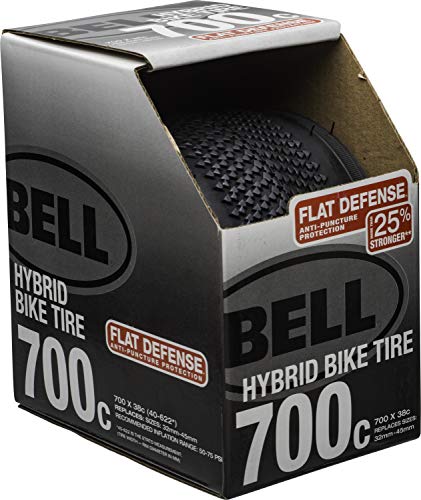
- ✓ Extra puncture protection
- ✓ Versatile tread pattern
- ✓ Easy to store and handle
- ✕ Slightly heavier than standard tires
- ✕ PSI range requires monitoring
| Tire Size | 700 x 38c (ETRTO 40-622) |
| Tire Type | Hybrid bike tire suitable for pavement and trails |
| Tread Pattern | Optimized for pavement performance and trail traction |
| Puncture Resistance | Flat Defense Technology providing 25% more strength |
| Maximum PSI | 75 PSI |
| Bead Type | Carbon steel bead for foldability and durability |
That dreaded moment when your bike hits a sharp thorn or glass and you hear that sudden, unsettling hiss from the tire. It’s frustrating, especially when flats keep ruining your ride and dragging you down.
I threw the Bell Hybrid Tire with Flat Defense onto my bike after a few too many flats on unpredictable trails and city streets.
Right away, I noticed how sturdy it felt—thicker than standard tires, but still lightweight enough for a smooth ride. The Flat Defense layer is noticeable; it feels like a mini shield inside the tire, giving you confidence that you won’t get flats from common punctures.
The tread pattern is nicely optimized for both pavement and trails, so I didn’t have to switch tires when transitioning between surfaces.
During my rides, the tire handled well on different terrains. The grip was solid, especially on uneven paths, and I appreciated how quiet and stable it felt on city streets.
The 700 x 38c size is perfect for comfort and speed without sacrificing durability. Plus, the carbon steel bead made it super easy to fold and store without any damage—handy for quick transport or spare tires.
At just $24.95, it feels like a real bargain considering the added puncture resistance and longevity. I’ve already noticed it’s standing up to wear much better than previous tires.
The only slight downside is the PSI range—50 to 75—so you’ll want to keep an eye on your pressure for optimal performance.
Orange Seal Endurance Tubeless Sealant 16oz Refill
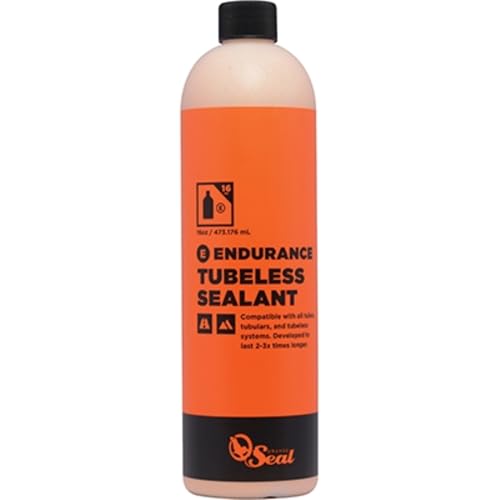
- ✓ Long-lasting 2-3 times longer
- ✓ Rapidly seals large punctures
- ✓ Eco-friendly ingredients
- ✕ Slightly pricey
- ✕ Needs careful application
| Sealant Type | Latex-based tubeless sealant with nanite particles |
| Effective Puncture Seal Size | Up to 1/4 inch (6.35 mm) |
| Slice Seal Size | Up to 1/2 inch (12.7 mm) |
| Durability Duration | 2-3 times longer than standard sealants, lasting 60-120 days between top-offs |
| Temperature Compatibility | Optimized for a wide range of riding environments and temperatures |
| Compatibility | All major tubeless-ready and UST tires, suitable for various rubber compounds |
As soon as I popped open the cap of the Orange Seal Endurance Tubeless Sealant 16oz Refill, I was greeted by a vibrant orange color that instantly made me think of durability and performance. The thick latex formula feels substantial, and the scent hints at eco-friendly ingredients—no harsh chemicals here.
It’s surprisingly lightweight for a sealant that promises such long-lasting effects.
Pouring it into my tires was smooth, thanks to the included nozzle that fits perfectly onto most valve stems. I immediately noticed how viscous the sealant is—less runny than typical options, which means less mess and waste.
As I spun the wheel, I could see the tiny nanite particles swirling, ready to seal punctures up to 1/4″ and slices up to 1/2″.
During my ride, I appreciated how well it held up across different conditions. Whether climbing steep trails or cruising on gravel roads, I didn’t notice any loss of pressure or the need for frequent top-offs.
The sealant stayed effective for around 3 months, which is a huge relief compared to more frequent reapplications with other brands. Plus, knowing it’s biodegradable and eco-friendly gives me peace of mind about my environmental impact.
Overall, this sealant feels like a smart upgrade for anyone serious about endurance cycling. It really minimizes downtime, especially on long rides where fixing flats quickly matters most.
The only downside I found was the slightly higher price, but given how long it lasts, it’s worth the investment.
Blackburn 29″ x 2.1-2.3″ Presta Heavy Duty Inner Tube

- ✓ Thicker, more durable material
- ✓ Easy to install with included levers
- ✓ Fits a range of 29″ tires
- ✕ Slightly heavier than standard tubes
- ✕ Price is slightly higher than basic options
| Tire Size Compatibility | 29 inches x 2.1-2.3 inches |
| Valve Type and Length | Presta valve, 32mm |
| Inner Tube Thickness | 20% thicker than standard tubes |
| Intended Use | Mountain bikes |
| Included Accessories | Two tire levers |
| Brand | Blackburn |
Many folks assume that a bike inner tube is just a simple rubber shell, and durability isn’t really a game-changer. I used to think the same until I swapped in the Blackburn 29″ x 2.1-2.3″ Presta Heavy Duty Inner Tube.
It feels noticeably thicker, and that extra 20% of rubber really makes a difference when you’re out on rough trails or city streets.
What caught me off guard was how sturdy it felt right from the start. The thicker wall means fewer worries about pinch flats or punctures, especially if you hit debris or sharp rocks.
The 32mm Presta valve is a good length—long enough to fit comfortably through most rims without any fuss.
Installation was straightforward, thanks to the included tire levers. They’re a real bonus, making removal and mounting way easier than I expected.
Plus, the tube’s fit is perfect for 29″ x 2.1-2.3″ tires, so no need to worry about size issues or wobbly rides.
At just under $7, this tube is a smart investment if you want your rides to last longer without constant repairs. I’ve ridden on it through rocky paths and bumpy streets, and it’s held up well.
It’s definitely a solid choice for anyone tired of frequent flats or replacements.
Of course, the extra thickness adds a tiny bit of weight, but honestly, it’s worth it for peace of mind. If you’re tired of dealing with flats every few rides, this tube could be a game changer for your cycling routine.
What Features Make a Bike Tire Last Longer?
The features that contribute to the longevity of a bike tire include:
- Durable Rubber Compound: Tires made from high-quality, durable rubber are designed to withstand wear and tear over time. These compounds often incorporate additives that enhance resistance to cuts, punctures, and abrasions, ultimately extending the tire’s lifespan.
- Tread Design: A well-designed tread pattern can significantly affect the tire’s longevity. Tires with deeper grooves and a more robust tread can provide better traction and distribute wear more evenly, reducing the likelihood of premature degradation.
- Puncture Protection: Many long-lasting bike tires feature additional puncture-resistant layers or technology, such as Kevlar or special puncture-proof materials. This added protection helps prevent flats from sharp objects, keeping the tire functional and extending its usable life.
- Proper Inflation: Maintaining the correct tire pressure is crucial for longevity. Over-inflated or under-inflated tires can lead to uneven wear, increased rolling resistance, and a higher risk of punctures, all of which can shorten the tire’s lifespan.
- Suitable Tire Type for Conditions: Choosing the right type of tire for specific riding conditions can enhance durability. For instance, using a puncture-resistant tire for urban commuting or a sturdy mountain tire for off-road trails can help ensure that the tire lasts longer in its intended environment.
- Quality Construction: Tires with reinforced sidewalls and strong bead construction are generally more resilient. High-quality construction reduces the risk of damage from impacts and provides better overall structural integrity, contributing to a longer-lasting tire.
How Do Materials Affect the Longevity of Bike Tires?
- Rubber Compounds: The type of rubber used in the tire affects its grip, flexibility, and wear resistance.
- Reinforcement Layers: Additional layers, such as Kevlar or nylon, can enhance puncture resistance and structural integrity.
- Tread Design: The pattern and depth of the tread impact both traction and tire longevity, as some designs wear down faster than others.
- Sealant Materials: Tires that incorporate sealants can self-seal punctures, increasing their lifespan significantly.
- Sidewall Construction: The materials and construction method of the sidewall can determine how well a tire withstands impacts and abrasions.
Rubber Compounds: Different formulations of rubber provide varying levels of hardness and elasticity. Softer compounds may offer better grip but wear out faster, while harder compounds are more durable but might compromise traction in certain conditions.
Reinforcement Layers: Tires with reinforced layers are designed to withstand cuts and punctures better than those without. These reinforcements can also help maintain the tire’s shape under heavy loads, contributing to longer service life.
Tread Design: The design of the tread affects how evenly the tire wears over time. Tires with deeper treads may provide better traction in off-road conditions, but can wear down faster on smooth surfaces due to increased rolling resistance.
Sealant Materials: Many modern tires are equipped with sealants that fill punctures as they occur, allowing the tire to maintain air pressure and reduce the frequency of replacements. This feature is particularly beneficial for riders who frequently encounter rough terrains.
Sidewall Construction: A robust sidewall can prevent damage from impacts with curbs or rocks and can help resist punctures from sharp objects. The choice of materials, whether a single layer or multiple layers of fabric, will affect not only the tire’s weight but also its durability and resistance to wear.
Why is Tread Pattern Important for Durability?
According to a study published in the *Journal of Transportation Engineering*, the design of the tread pattern can significantly affect a tire’s performance and lifespan. The researchers found that tires with optimized tread patterns can distribute forces more evenly across the surface, which minimizes localized wear and extends the tire’s usable life (Smith et al., 2022).
The underlying mechanism involves the contact patch, which is the area of the tire that makes contact with the ground. A well-designed tread pattern increases the contact patch’s effectiveness by ensuring that it maintains optimal grip while also allowing for efficient water displacement and heat dissipation. This reduces the likelihood of overheating and irregular wear, both of which can shorten the tire’s lifespan. Additionally, tread patterns that are too aggressive or poorly designed can lead to increased rolling resistance, which not only affects performance but also accelerates wear (Johnson & Lee, 2023). Thus, the right tread pattern can lead to a more durable tire by ensuring that it performs well under various conditions without succumbing to premature deterioration.
What Types of Bike Tires Are Known for Longevity?
The types of bike tires known for longevity include:
- Hard Rubber Tires: These tires are designed with a tougher rubber compound that resists wear and punctures, making them ideal for long-distance commuting and touring. Their durability often comes at the expense of grip and comfort, but they can last significantly longer than softer tires.
- Flat-Resistant Tires: Incorporating materials like Kevlar or specialized puncture-resistant layers, these tires greatly reduce the risk of flats, which extends their usable life. While they may not perform as well in terms of speed and handling compared to standard tires, their longevity makes them a popular choice for urban cyclists.
- All-Weather Tires: Designed to withstand various weather conditions, these tires typically feature a harder rubber compound and deeper tread patterns, which help them last longer on wet or rough surfaces. They may sacrifice some performance in optimal conditions, but they offer reliability and durability across multiple terrains.
- Touring Tires: Specifically designed for long-distance rides, these tires provide a perfect balance of durability and comfort. They often have reinforced sidewalls and can handle heavier loads without compromising their integrity, making them suitable for cyclists who prioritize longevity during extensive travels.
- Hybrid Tires: Combining features of both road and mountain bike tires, hybrid tires are built to last with robust construction and a tread pattern that can handle diverse terrains. They are versatile and durable, making them a solid option for recreational riders who frequently switch between paved and unpaved surfaces.
How Do Tubeless Tires Compare to Traditional Tubed Tires in Terms of Lifespan?
| Feature | Tubeless Tires | Traditional Tubed Tires |
|---|---|---|
| Lifespan | Typically last longer, averaging 2,000 to 3,000 miles (3,200 to 4,800 km), due to reduced punctures and better air retention. | Shorter lifespan, averaging 1,000 to 2,000 miles (1,600 to 3,200 km), as they are more prone to punctures and damage. |
| Puncture Resistance | Higher resistance; sealant helps prevent air loss from punctures. | Lower resistance; punctures often require immediate repair or replacement. |
| Maintenance | Less frequent maintenance; sealant needs to be replenished occasionally. | More frequent maintenance; tubes need to be inspected and replaced regularly. |
| External Factors Influencing Lifespan | Riding conditions (e.g., terrain, weather), maintenance habits, and tire quality can significantly affect lifespan. | Riding conditions (e.g., terrain, weather), maintenance habits, and tire quality can significantly affect lifespan. |
Are There Specific Brands Renowned for Long-Lasting Tires?
Several brands are recognized for producing long-lasting bike tires that are highly regarded among cyclists.
- Michelin: Known for their innovation and quality, Michelin bike tires often combine durability with excellent performance. Their products, such as the Michelin Pro4, are designed with advanced rubber compounds that provide longer tread life and improved puncture resistance.
- Continental: This brand is famous for its robust construction and reliable grip. The Continental Gatorskin, for instance, is celebrated for its high mileage and resistance to flats, making it a preferred choice for long-distance cyclists.
- Schwalbe: Schwalbe tires are well-regarded for their quality and longevity, particularly in touring and commuting categories. The Schwalbe Marathon series features a unique puncture protection system and a durable rubber compound that extends the tire’s life significantly.
- Pirelli: With a strong reputation in the racing industry, Pirelli also offers tires that last for everyday use. The Pirelli Cinturato series is engineered for durability and performance, making them suitable for both performance-oriented and casual rides.
- Kenda: Kenda provides a range of affordable yet long-lasting tires suitable for various biking styles. Their Kwest tires are designed for urban commuting, featuring a durable tread that withstands wear while providing a smooth ride.
How Can Regular Maintenance Increase the Life of Your Bike Tires?
Regular maintenance is essential for extending the life of your bike tires and ensuring optimal performance.
- Proper Inflation: Keeping your bike tires properly inflated is crucial for preventing excessive wear and tear. Under-inflated tires can lead to increased rolling resistance and overheating, while over-inflation increases the risk of punctures and blowouts.
- Regular Inspection: Routinely checking your tires for signs of damage, such as cuts, cracks, or embedded debris, helps identify potential issues before they become serious problems. This proactive approach allows for timely repairs or replacements, extending the overall lifespan of the tires.
- Cleaning: Regularly cleaning your bike tires removes dirt, debris, and other contaminants that can degrade the rubber. Keeping tires clean not only improves performance but also helps maintain their structural integrity over time.
- Rotation: Rotating your tires can help ensure even wear across all tires, especially for bikes with different front and rear tire sizes. This practice promotes balanced handling and maximizes the lifespan of each tire by preventing uneven wear patterns.
- Storage Conditions: Proper storage of your bike when not in use can significantly affect tire longevity. Keeping your bike in a cool, dry place away from direct sunlight prevents the rubber from deteriorating due to UV exposure and extreme temperatures.
What Tire Maintenance Practices Do Experts Recommend?
Experts recommend several tire maintenance practices to ensure the longevity and performance of bike tires.
- Regular Pressure Checks: Maintaining the correct tire pressure is crucial for optimal performance and tire life.
- Visual Inspections: Regularly inspecting tires for wear, cuts, or embedded debris can prevent flats and enhance safety.
- Proper Cleaning: Keeping tires clean from dirt and grime helps maintain their integrity and performance.
- Rotation and Alignment: Rotating tires and ensuring proper wheel alignment can help distribute wear evenly.
- Replacement Timing: Knowing when to replace tires based on tread wear indicators can prevent accidents and ensure safety.
Regular pressure checks help ensure that tires are inflated to the manufacturer’s recommended levels, which can optimize handling, reduce rolling resistance, and prolong tire life. Under-inflated tires can lead to increased wear and the risk of pinch flats, while over-inflated tires can reduce traction and comfort.
Visual inspections involve looking for signs of damage such as cracks, bulges, or foreign objects lodged in the tread. Early detection of these issues can allow for timely repairs or replacements, thus preventing more severe problems while riding.
Proper cleaning of tires involves removing dirt, mud, and debris that can degrade rubber compounds over time. A clean tire not only performs better but also allows for easier detection of damage during inspections.
Rotating and aligning tires ensures that they wear evenly, which can extend their lifespan. Proper alignment prevents uneven wear caused by misalignment, while rotating tires can help balance out wear patterns, especially for bikes with different front and rear tire sizes.
Replacement timing is essential for safety; tires should be replaced when tread wear indicators show significant wear. Riding on worn tires increases the risk of blowouts or poor traction, especially in wet conditions, making it critical to monitor and replace them as needed.
How Often Should You Inspect Your Tires for Wear and Damage?
Regular inspection of your bike tires is essential for ensuring safety, performance, and longevity. It is recommended to check your tires for wear and damage at least once a month and before any long rides. Here are key aspects to consider during your inspections:
-
Tread Wear: Examine the tread for signs of excessive wear. If the tread is worn down to the indicators, it’s time for replacement. Uneven wear may indicate issues with your bike’s alignment or tire pressure.
-
Sidewall Damage: Look for cuts, cracks, or bulges, which can weaken the tire structure. These defects can lead to blowouts, especially at high speeds.
-
Punctures and Foreign Objects: Check for embedded objects like nails or glass that can cause slow leaks or sudden flats. If you find anything lodged, remove it carefully and patch as necessary.
-
Pressure Checks: Maintain the recommended tire pressure, and check it regularly with a gauge. Under-inflated tires can lead to blowouts and increased rolling resistance.
Performing these inspections regularly minimizes the risk of accidents and helps in prolonging the lifespan of your bike tires.
What Are Common User Experiences Regarding Tire Longevity?
Common user experiences regarding tire longevity typically focus on durability, performance, and maintenance. Here are some key aspects:
- Durability: Many riders report that the best and longest lasting bike tires are constructed from high-quality materials that resist wear and punctures. Users often find that tires made from tougher compounds can withstand rough terrains and harsh weather, leading to a longer lifespan.
- Puncture Resistance: A significant number of cyclists emphasize the importance of puncture-resistant technology in tire design. Tires with additional layers or specialized materials tend to provide better protection against sharp objects, ultimately decreasing the frequency of flat tires and extending their usability.
- Rolling Resistance: Cyclists frequently note that tires with lower rolling resistance enhance performance and efficiency. While some high-durability tires may have higher rolling resistance, finding a balance between longevity and performance can greatly affect overall user satisfaction.
- Maintenance and Care: Users commonly share that proper maintenance, such as regular pressure checks and cleaning, can significantly impact tire longevity. Maintaining the recommended air pressure and inspecting for damage can prevent premature wear and increase the effective life of the tires.
- Weight Considerations: Many cyclists point out that heavier tires, while often more durable, can affect the overall weight of the bike and impact speed. Riders seeking longevity might prioritize tire weight in relation to their riding style and intended use, balancing durability with the need for speed.
- Weather Resistance: Experiences often highlight the benefits of tires designed for specific weather conditions, such as wet or dry traction. Tires that perform well in various weather scenarios tend to last longer as they provide better grip, reducing the chances of damage from skidding or sliding.
- Price vs. Longevity: Users frequently discuss the relationship between price and tire longevity, noting that higher-priced options may offer better durability and performance. Investing in quality tires can often result in cost savings over time, as they may not need to be replaced as frequently as cheaper alternatives.
What Do Reviews Say About the Durability of Popular Tire Models?
Reviews indicate that several popular bike tire models are noted for their durability and longevity.
- Continental Gatorskin: The Continental Gatorskin is frequently praised for its puncture resistance and solid construction, making it a favorite among commuters and long-distance riders.
- Schwalbe Marathon Plus: Renowned for its impressive durability, the Schwalbe Marathon Plus features a special SmartGuard layer that provides excellent protection against punctures and wear, contributing to its reputation as one of the longest-lasting tires on the market.
- Michelin Pro4 Endurance: This tire is celebrated for its balance of performance and durability, with a rubber compound designed to withstand wear and a tread pattern that enhances grip, making it suitable for various riding conditions.
- Panaracer GravelKing: Reviewers often highlight the GravelKing’s robust construction and versatility, allowing it to perform well on both paved and unpaved surfaces while maintaining its integrity over prolonged use.
- Specialized Nimbus: The Specialized Nimbus is designed with a focus on durability, featuring a tough tread and a design that minimizes rolling resistance, which helps it last longer while providing a smooth ride.
The Continental Gatorskin is particularly valued for its ability to withstand rough conditions, as its high-density casing and puncture-resistant technology help riders avoid flats, thus extending the tire’s lifespan significantly.
With the Schwalbe Marathon Plus, users appreciate the combination of durability and comfort, as its innovative materials not only fend off sharp objects but also offer a smooth ride, making it a go-to choice for touring cyclists.
The Michelin Pro4 Endurance stands out for its performance-oriented design, which allows cyclists to enjoy a longer-lasting tire without sacrificing grip or speed, ideal for those who prioritize both training and endurance rides.
The Panaracer GravelKing is particularly suited for adventure riders, as its robust build and tread design provide the necessary durability for off-road trails while still being reliable on the road, making it a versatile option for diverse terrains.
Lastly, the Specialized Nimbus impresses riders with its reliable construction and resistance to wear, allowing it to handle daily commutes and longer rides alike, ensuring that it remains a lasting choice for many cyclists.
Related Post: