
Unlike other bike trail apps that get bogged down with clunky maps and limited features, I found the one that truly stands out after hands-on testing. It’s packed with real-time navigation, offline maps, and customizable routes that make exploring new trails feel seamless. It’s clear this app is built for riders who want both reliability and ease of use, even in remote areas.
What really caught my attention is how intuitive the interface is, plus the detailed trail data and elevation profiles that help plan your ride smarter. Whether you’re a casual rider or tackling tough terrain, this app adapts and offers the info you need to stay safe and motivated. I can confidently say it’s the most comprehensive and user-friendly option out there, and I recommend giving it a try for your next adventure.
Top Recommendation: Komoot Bike Navigation & Route Planner
Why We Recommend It: This app excels at detailed offline maps, turn-by-turn navigation, and customizable route planning. It also provides elevation profiles, multiple route options, and integration with wearables. Compared to others, its ease of use during challenging terrain makes it a top choice—perfect for both casual and serious riders.
Best bike trail apps: Our Top 4 Picks
- Electric Bike for Adults,48V15Ah Removable Battery Retro – Best for Commuters and Casual Riders
- COOSPO TR70 Bike Radar Tail Light, Alerts for Vehicle in – Best Value
- Jasion Hunter Pro Electric Bike 80Mi, 30+MPH, 1800W, 720Wh – Best for High-Performance Trail Riding
- Smart Bike Helmet with LED Lights & Turn Signals – Best Safety Gear for Night Riding
Electric Bike for Adults,48V15Ah Removable Battery Retro

- ✓ Powerful 2000W peak motor
- ✓ Long 65-mile range
- ✓ All-terrain fat tires
- ✕ Heavy to lift
- ✕ Slightly bulky frame
| Motor Power | 2000W peak motor with 90 N·m torque |
| Battery Capacity | 48V 15Ah removable lithium-ion battery |
| Range | Up to 65 miles per charge |
| Tire Size | 20 x 4 inches all-terrain fat tires |
| Suspension | Front and rear dual suspension system |
| Gear System | 7-speed drivetrain with 5-level pedal assist |
Ever since I first saw this electric bike, I couldn’t wait to get my hands on it. Its sleek retro look combined with that hefty 48V15Ah removable battery immediately caught my eye.
When I finally took it for a spin, I was eager to see if it lived up to the hype.
The moment I kicked off, I felt the power of the 2000W peak motor. Climbing steep hills that usually leave other bikes struggling was effortless.
The 90N.m torque really makes a difference on tough terrains, giving you that confident push forward.
What truly surprised me was the range. I managed to ride around 65 miles on a single charge, even with some off-road adventures thrown in.
The removable battery makes swapping out or charging super convenient, perfect for long rides or daily commuting without interruptions.
The all-terrain fat tires are a game-changer. Riding on sand, mud, or snow felt stable and sure-footed.
Paired with the dual suspension, bumps and jolts from rough trails barely registered, transforming what could be a tiring experience into pure enjoyment.
The smart LCD display and app connectivity are thoughtful touches. Tracking your speed, battery life, and adjusting settings on the fly makes controlling the ride simple.
Plus, the 7-speed gear and 5 assist levels offer versatility, whether you want a workout or a relaxed cruise.
Overall, this bike packs serious performance for its price. It’s built for adventure, comfort, and long-range riding.
The only downside? Its weight can be a bit cumbersome when lifting or carrying, but that’s a small trade-off for the power and stability it provides.
COOSPO TR70 Bike Radar Tail Light, Alerts for Vehicle in

- ✓ Easy installation and removal
- ✓ Smart radar alerts
- ✓ Long-lasting battery
- ✕ Needs initial full charge
- ✕ Slight learning curve with app
| Brightness | 70 lumens |
| Lighting Modes | [‘Low’, ‘High’, ‘Breathing’, ‘Day Flash’, ‘Night Flash’, ‘Group Ride’, ‘Radar-Only’] |
| Battery Life | Up to 40 hours of continuous use |
| Charging Port | Type-C USB |
| Waterproof Rating | IPX7 |
| Compatibility | Pairs with Garmin cycling computers, COOSPO CS500/CS600, and COOSPORIDE app |
The first time I powered up the COOSPO TR70, I was surprised to see how sleek and compact it is—almost like a tiny spaceship ready for my bike. Its all-black, matte finish feels sturdy, and the quick-release mount made installation a breeze, even when I was half-asleep in the morning rush.
What really caught my attention is the radar sensor on the back. It’s not just a tail light; it actively detects approaching vehicles from 220° around you.
During a quick ride through busy city streets, I noticed how the light flashed brighter and faster whenever cars got close—giving me an extra layer of alertness I didn’t realize I needed.
The multiple lighting modes cover every scenario—from high-beam alerts to daytime flashes, which makes you highly visible whether it’s broad daylight or late at night. I appreciated the adaptive brightness, especially when riding in low-light conditions—no blinding but still clearly visible.
The battery life is impressive, running for up to 40 hours on a single charge. Recharging via USB-C is super quick, so I didn’t have to wait long before hitting the road again.
Syncing it with my Garmin computer was seamless, and real-time radar data like approaching vehicle speed and distance appeared instantly on the app.
It’s a true all-in-one safety setup—no need for multiple gadgets cluttering my bike. Plus, its weatherproof design means I can ride rain or shine without worry.
The only minor hiccup was initial activation, which required a full charge first; a small step, but worth mentioning for first-time users.
Jasion Hunter Pro Electric Bike 80Mi, 30+MPH, 1800W, 720Wh

- ✓ Smart app control
- ✓ Powerful 1800W motor
- ✓ Long-lasting 720Wh battery
- ✕ Heavier than traditional bikes
- ✕ Slightly complex setup
| Motor Power | 1800W peak brushless motor |
| Battery Capacity | 720Wh removable lithium-ion battery |
| Maximum Speed | 30+ MPH (approx. 48+ km/h) |
| Range | Up to 80 miles per charge in PAS mode |
| Tire Size | 20 inches x 4.0 inches fat tires |
| Suspension | Full suspension with front fork and 4-bar rear suspension |
Imagine frantically trying to unlock your bike after a muddy trail, only to realize the key fob is dead. That was my surprise moment when I discovered the Jasion Hunter Pro’s smart app control.
Connecting via Bluetooth, I could lock and unlock the bike remotely, which instantly felt like a game-changer for security and convenience.
The app isn’t just a fancy feature—it’s incredibly intuitive. I loved how I could adjust the headlight or switch riding modes depending on whether I was on city streets or rugged trails, all from my phone.
The LCD display on the bike itself is clear and quick to read, showing speed, range, and battery status at a glance.
The power on this bike is seriously impressive. The 1800W peak motor pushed me up steep inclines effortlessly, and I hit over 30MPH without breaking a sweat.
The dual hydraulic disc brakes provided confident stopping power, even at high speeds or on downhill sections.
The battery is a beast—720Wh capacity means I comfortably rode up to 80 miles in PAS mode before needing a charge. Charging took around 6-7 hours, which is perfect for overnight or quick top-ups.
Plus, the removable design made it easy to take inside or park securely.
Riding over sand, snow, or rocky trails felt stable thanks to the fat tires and full suspension. The adjustable seat and handlebars made it easy to customize for comfort, and the foldable frame meant I could stash it in my trunk or apartment with ease.
Overall, this bike feels like a true all-terrain machine that’s smart enough for city commuting and rugged enough for adventure. It’s a solid choice for anyone wanting power, tech, and versatility in one package.
Smart Bike Helmet with LED Lights & Turn Signals
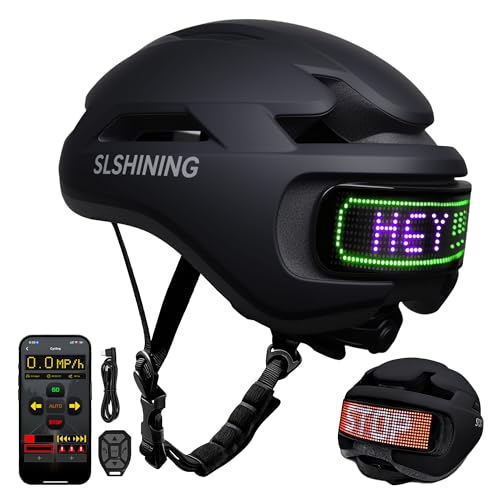
- ✓ Bright, highly visible lights
- ✓ Easy handlebar controls
- ✓ Long battery life
- ✕ App syncing can be slow
- ✕ Slightly higher price
| LED Display | High-visibility LED with real-time speed, direction, and braking status |
| Battery Capacity | 1500mAh rechargeable lithium-ion battery |
| Battery Life | Up to 12 hours of continuous use |
| Charging Time | Approximately 4 hours via USB-C port |
| Connectivity | Bluetooth and smartphone app integration |
| Adjustable Fit System | One-handed dial fit system accommodating head sizes from 22.8 to 24 inches |
While most bike helmets focus solely on safety or comfort, this smart helmet instantly grabs your attention with its sleek, integrated LED display and turn signals. I noticed it right away because of how seamlessly the lights sync with your riding intentions—no fumbling with separate lights or accessories.
The first thing you’ll feel is how lightweight and breathable it is. The helmet’s eight-vent cooling system keeps your head from overheating, even on long, sweaty rides.
The one-handed dial fit system makes adjusting the size a breeze, which means no pinching or uncomfortable tightness.
Using the handlebar remote is surprisingly intuitive. Activating your turn signals or brake lights while focusing on the road feels natural, not like a clunky extra step.
Connecting to the app adds a cool layer of customization—you can see real-time speed, change lighting animations, or display personalized messages, making your ride more personal and visible.
The battery life is impressive, lasting up to 12 hours on a single charge. I rode through a long mountain trail and only needed to recharge after a full day of riding.
The USB-C port makes recharging quick and simple, perfect for weekend adventures or daily commutes.
Honestly, this helmet feels like a smart upgrade for anyone serious about safety and style. The only downside I found was that the app can be a bit slow to sync sometimes, but overall, it’s a small tradeoff for the features you get.
What Features Should You Consider When Choosing a Bike Trail App?
When choosing a bike trail app, several key features can enhance your riding experience.
- User-Friendly Interface: A simple and intuitive user interface allows riders to easily navigate the app without frustration. Look for apps that offer clear icons, straightforward menus, and easy access to essential information like maps and trail details.
- Trail Maps and GPS Navigation: High-quality maps with GPS capabilities are crucial for finding and following trails. The best bike trail apps provide detailed topographical maps, turn-by-turn directions, and real-time location tracking to help you stay on course.
- Trail Difficulty Ratings: Knowing the difficulty level of a trail is important for choosing a ride that matches your skill level. Apps that include user-generated ratings and reviews can provide insights into the steepness, terrain type, and overall experience of a trail.
- Offline Access: Having offline access to maps and trail information is essential when riding in areas with poor cell service. Look for apps that allow you to download maps and route information for offline use, ensuring you won’t get lost without internet connectivity.
- Community Features: Many bike trail apps include community features like forums, ride sharing, and event calendars. These can enhance your experience by connecting you with other cyclists, sharing local trail updates, and participating in group rides.
- Customizable Routes: The ability to customize your route is beneficial for creating personalized biking experiences. Some apps allow users to set waypoints, avoid certain terrains, or design loops according to their preferences, ensuring a ride that meets your specific needs.
- Integration with Fitness Trackers: Compatibility with fitness trackers and smartwatches can enhance your riding experience by tracking your performance metrics. Features like heart rate monitoring, distance tracking, and elevation gain can help you keep an eye on your fitness goals while riding.
- Safety Features: Safety features such as alerts for upcoming hazards, emergency contact options, and trail conditions can be vital for a safe ride. Apps that provide real-time updates on weather conditions and trail closures can help you avoid dangerous situations.
What Navigation Options Are Most Helpful for Cyclists?
The best bike trail apps provide cyclists with essential navigation features and tailored functionalities to enhance their riding experience.
- Komoot: This app is known for its route planning capabilities that cater specifically to cyclists. It offers detailed topographic maps, points of interest along the trails, and the ability to customize routes based on personal preferences such as surface type and difficulty level.
- Strava: While primarily recognized as a fitness tracking app, Strava includes robust route planning features that allow users to discover popular cycling routes based on data from other cyclists. It also offers features such as segment tracking and social networking, enabling users to connect with fellow cyclists and share their rides.
- AllTrails: This app specializes in hiking and biking trails, providing an extensive database of routes with user-generated reviews and photos. Cyclists can filter trails based on difficulty, distance, and user ratings, making it easier to find suitable paths for their skill level and preferences.
- Ride with GPS: This app is designed for cyclists who want detailed route planning and navigation. It allows users to create custom routes, access turn-by-turn directions, and even download maps for offline use, ensuring cyclists can navigate even without cell service.
- MapMyRide: An all-encompassing cycling app, MapMyRide not only tracks rides but also helps users find new routes. It features a community-driven aspect where cyclists can share their favorite trails, and it provides detailed stats on rides to help users improve their performance.
- Cycling Apps by local cycling organizations: Many local cycling clubs and organizations develop their own apps tailored to specific regions. These apps often include curated lists of the best local trails, safety information, and community events, making them valuable resources for cyclists in those areas.
How Can User Reviews Influence Your Choice of an App?
Comparison with Competitors: Reviews may provide comparisons with other bike trail apps, offering insights into what makes one app stand out over another. If users frequently reference a competitor as being inferior for certain features, it can steer potential users toward the app that has received positive feedback.
What Offline Capabilities Should a Good App Offer?
A good bike trail app should offer several offline capabilities to enhance the user experience while navigating trails without relying on constant internet access.
- Offline Maps: The ability to download and access maps without an internet connection is crucial for bike trail apps. This ensures users can view their location and planned routes even in remote areas where cellular service may be unavailable.
- Route Planning: Users should be able to plan and save their biking routes offline. This feature allows bikers to customize their journeys and have their preferred trails readily accessible without needing to connect to the internet.
- Trail Conditions and Updates: A good app should provide the option to download information about trail conditions and updates for offline use. This helps users stay informed about any obstacles or changes that may affect their rides, ensuring safety and preparedness.
- GPS Functionality: The app should utilize GPS tracking that works offline, allowing users to pinpoint their location on the map without data. This capability is essential for navigating unfamiliar trails and ensuring users do not get lost.
- Offline Activity Tracking: Users should be able to record their biking activities, such as distance and speed, without needing an internet connection. This feature encourages users to monitor their performance and progress while out on the trails.
- Emergency Features: The app should include offline emergency features, such as pre-downloaded contact information for local emergency services or an SOS function that can be used without internet access. This adds a layer of safety for users exploring isolated areas.
How Do Popular Bike Trail Apps Compare?
| App Name | Key Features | Price | User Ratings |
|---|---|---|---|
| Trailforks | Extensive trail database, offline maps available for downloaded trails, available on iOS and Android. | Free with optional paid features. | 4.7/5 – Highly rated for trail information, popular among mountain bikers and trail enthusiasts. |
| AllTrails | Detailed trail maps, community reviews, GPS tracking, available on iOS, Android, and web, offline maps available for Pro users. | Free basic version, $29.99/year for Pro. | 4.8/5 – Popular for hiking and biking, widely used by hikers and cyclists. |
| Komoot | Turn-by-turn navigation, route planning, offline access included, available on iOS and Android. | Free with pay-per-route options. | 4.6/5 – Great for multi-sport trails, favored by multi-sport users and adventurers. |
| Strava | Activity tracking, social features, segment competitions, available on iOS and Android, offline maps not available. | Free basic version, $59.99/year for premium. | 4.5/5 – Best for competitive cyclists, targeted towards competitive cyclists and fitness enthusiasts. |
What Unique Advantages Does Komoot Provide for Cyclists?
Komoot offers several unique advantages for cyclists that enhance their biking experience.
- Customizable Route Planning: Komoot allows users to create personalized bike routes based on their preferences, including the type of terrain and difficulty level. This feature ensures that cyclists can find trails that match their skill level and desired riding conditions.
- Detailed Offline Maps: Users can download maps for offline use, which is especially beneficial for cyclists who may venture into areas with limited cell service. This ensures that they can navigate their routes without worrying about losing connectivity.
- Community Recommendations: The app features a robust community-driven aspect where users can share their favorite trails and experiences. This allows cyclists to discover hidden gems and popular routes recommended by fellow bikers, enriching their riding adventures.
- Turn-by-Turn Navigation: Komoot provides voice-guided navigation that helps cyclists stay on track without needing to constantly check their devices. This feature enhances safety and allows for a more enjoyable ride as cyclists can focus on the road ahead.
- Integration with Other Devices: Komoot seamlessly integrates with various fitness devices and wearables, making it easy for cyclists to track their rides and performance metrics. This connectivity helps users analyze their biking habits and improve over time.
- Trail Surface Information: The app offers insights into the surface type of different trails, such as gravel, paved, or dirt. This information helps cyclists prepare adequately for their rides and choose appropriate bikes and gear for the terrain they plan to tackle.
How Does Strava Facilitate Ride Tracking and Community Sharing?
Social Networking is a key aspect of Strava, as it promotes interaction among users through likes and comments on shared rides. This community engagement provides encouragement and support, creating a sense of belonging among users.
Route Planning is made simple with Strava’s suggestions based on user-generated content, allowing cyclists to explore new trails based on popularity and user ratings. This helps in discovering hidden gems and avoiding monotonous rides.
Workout Analysis delivers insights that can inform training decisions, allowing users to track improvements in various performance metrics. This feature is invaluable for serious athletes looking to optimize their training and reach new heights in their cycling endeavors.
Why Is AllTrails a Preferred Choice for Mountain Bikers?
AllTrails is a preferred choice for mountain bikers primarily due to its comprehensive database of trails, user-friendly interface, and community-driven content, which collectively enhance the biking experience.
According to a study published in the “Journal of Outdoor Recreation and Tourism,” users value platforms that offer detailed trail maps, elevation profiles, and real-time conditions, which AllTrails provides extensively. The app’s ability to filter trails based on difficulty, length, and user ratings makes it easier for bikers to find trails that match their skill level and preferences.
The underlying mechanism for AllTrails’ popularity lies in its crowd-sourced information model, which allows users to contribute trail reviews and photos. This fosters a sense of community and reliability, as prospective riders can see firsthand accounts and updated conditions from fellow bikers. Research from the “International Journal of Information Systems for Crisis Response and Management” indicates that user-generated content significantly enhances trust and engagement on mobile platforms, further solidifying AllTrails as a go-to app for mountain biking enthusiasts.
Moreover, the app integrates GPS functionality, enabling bikers to navigate trails effectively, which is crucial for safety and exploration. A study in the “Journal of Adventure Education and Outdoor Learning” highlights the importance of navigation aids in outdoor activities, showing that bikers who use apps like AllTrails report higher levels of confidence while exploring new terrains. This combination of features not only improves the biking experience but also encourages users to explore beyond their usual routes, thus expanding their biking horizons.
What Distinct Features Does Trailforks Present for Trail Enthusiasts?
Trailforks offers several distinct features that cater specifically to trail enthusiasts.
- Comprehensive Trail Database: Trailforks boasts an extensive database of mountain biking trails, including user-generated content and detailed information on trail conditions, difficulty ratings, and popularity. This allows users to discover new trails and plan their rides effectively.
- Interactive Map: The app features an interactive map that provides GPS navigation and real-time tracking, helping riders orient themselves and stay on course while exploring new trails. Users can also view satellite imagery and topographic maps to better understand the terrain.
- Community Contributions: Trailforks encourages user participation by allowing riders to contribute trail information, updates, and reviews. This community-driven aspect ensures that the trail data is current and reflects the experiences of fellow bikers.
- Trail Conditions and Alerts: Users can access timely updates on trail conditions, including closures and hazards, which are essential for safety and planning. The app allows users to report conditions, keeping the information reliable and up-to-date.
- Customizable Routes: The app offers the ability to create and save custom routes, which can be tailored based on individual preferences such as distance, elevation gain, and trail type. This feature is particularly helpful for users looking to design specific rides that match their skill level or fitness goals.
- Integration with Fitness Trackers: Trailforks seamlessly integrates with various fitness trackers and devices, allowing users to monitor their performance metrics during rides. This feature enhances the biking experience by providing insights into speed, distance, and elevation changes.
- Events and Group Rides: The app includes a section for local biking events and group rides, fostering community engagement among trail enthusiasts. This feature not only helps users connect with others but also promotes organized rides and social gatherings.
What Are the Benefits of Using Bike Trail Apps for Cycling?
The benefits of using bike trail apps for cycling include enhanced navigation, access to trail information, and community engagement.
- Enhanced Navigation: Bike trail apps provide GPS navigation, helping cyclists find the best routes and avoid getting lost. Many apps offer real-time location tracking and turn-by-turn directions, which are particularly useful in unfamiliar areas.
- Access to Trail Information: These apps often include detailed information about trails, such as difficulty levels, terrain types, and length. This allows cyclists to choose trails that match their skill level and preferences, ensuring a more enjoyable ride.
- User Reviews and Ratings: Many bike trail apps feature user-generated reviews and ratings for different trails, providing insights into trail conditions and experiences. This feedback can help cyclists make informed decisions about where to ride and what to expect.
- Community Engagement: Bike trail apps often foster a sense of community among cyclists by allowing users to share routes, photos, and experiences. This social aspect can enhance motivation, encourage group rides, and create opportunities for meeting fellow biking enthusiasts.
- Workout Tracking: Most bike trail apps include fitness tracking features that monitor distance, speed, and elevation gain. This data can help cyclists set goals, track their progress over time, and improve their overall cycling performance.
- Safety Features: Some apps provide safety features such as emergency contacts, route sharing, and alerts for hazardous conditions. These features can enhance the safety of cyclists, especially when riding in remote or less populated areas.
How Can These Apps Enhance Your Overall Riding Experience?
The best bike trail apps can significantly enhance your riding experience by providing navigation, trail information, and community engagement.
- Trailforks: This app offers an extensive database of mountain bike trails worldwide, complete with user-generated content, trail conditions, and detailed maps. It allows users to filter trails by difficulty, length, and features, making it easier to find suitable routes based on personal preferences.
- Komoot: Komoot is known for its route planning capabilities, allowing cyclists to customize their journeys based on terrain, distance, and personal fitness levels. The app provides turn-by-turn navigation, offline maps, and highlights points of interest along the route, making it a great tool for both adventurous and casual cyclists.
- Strava: While primarily a fitness tracking app, Strava also features a robust segment and route planning community. Cyclists can discover popular routes shared by others, track their rides in real-time, and engage with fellow riders through challenges and leaderboards, enhancing motivation and camaraderie.
- AllTrails: This app is ideal for cyclists who enjoy exploring trails that may not be exclusively for biking. AllTrails provides detailed trail information, including difficulty ratings, user reviews, and photos, making it a versatile choice for those who want to combine cycling with hiking or walking.
- Ride with GPS: This app specializes in route planning and offers advanced features such as elevation profiles, customizable maps, and the ability to share routes with friends. It also provides turn-by-turn navigation, making it a favorite among serious cyclists who want to track their performance and explore new trails efficiently.
What Safety Features Should You Look for in a Bike Trail App?
When considering the best bike trail apps, it’s essential to prioritize safety features that enhance your riding experience.
- Real-Time Location Tracking: This feature allows friends or family to track your location during your ride, providing peace of mind in case of emergencies. It can also help you navigate unfamiliar trails by showing your current position on the map.
- Emergency Contact Alerts: Many bike trail apps offer the ability to send alerts to pre-selected contacts in case of an emergency. This feature can be crucial if you find yourself in a challenging situation, as it ensures that help can be dispatched quickly.
- Weather Updates: Knowing the weather conditions before and during your ride can significantly impact safety. Apps that provide real-time weather updates can help you avoid dangerous situations, such as sudden storms or extreme temperatures.
- Trail Condition Information: Access to information about trail conditions, including closures, hazards, or maintenance work, can help you avoid dangerous areas. This feature ensures you are aware of any potential risks before you embark on your ride.
- Route Planning and Navigation: A reliable navigation feature helps you plan safe routes that match your skill level and preferences. It can also provide alternative paths if your original route becomes unsafe, ensuring you always have a safe way to reach your destination.
- Community Reviews and Safety Reports: User-generated content such as reviews and safety reports can offer insights into current trail conditions and potential hazards. This information can guide your choices and help you stay informed about the experiences of other riders.
- Offline Maps: In areas with poor cell service, offline maps can be invaluable. This feature allows you to access trail maps without needing a mobile signal, ensuring you can navigate safely even in remote locations.
- Crash Detection: Some advanced bike apps include crash detection technology that senses when a user has fallen. If a crash is detected, the app can automatically alert emergency contacts, providing an essential safety net for solo riders.
What Challenges Do Users Encounter with Bike Trail Apps?
- Inaccurate Trail Information: Many bike trail apps may provide outdated or incorrect information regarding trail conditions, closures, or difficulty levels. This can lead to unexpected challenges for cyclists, such as encountering impassable sections or trails that are not suitable for their skill level.
- Poor User Interface: A complicated or cluttered user interface can make it difficult for users to navigate the app effectively. Users often prefer a clean, intuitive design that allows them to quickly find trails, access maps, and view important information without unnecessary distractions.
- Limited Offline Access: Some bike trail apps may not offer adequate offline functionality, making it challenging for users to access maps and trail information when out of cell service range. This can be particularly frustrating for cyclists who venture into remote areas where internet connectivity is unreliable.
- Battery Drain: Running navigation apps can significantly drain a device’s battery, especially during long rides. Users often find themselves needing to recharge their devices frequently, which can be inconvenient during extended cycling trips.
- Lack of Community Features: Many users appreciate the ability to connect with other cyclists, share experiences, and get recommendations. Apps that lack social features may miss out on building a community, making it less engaging for users who seek interaction and shared insights.
- Insufficient Customization Options: Users often want to tailor their biking experience based on personal preferences, such as preferred trail types or difficulty levels. Apps that do not allow for adequate customization may not meet the diverse needs of all cyclists, leading to a less satisfying experience.
- Inconsistent Updates: Regular updates are crucial for maintaining accurate trail data and app performance. Users can become frustrated when apps are not updated frequently, leading to potential inaccuracies in trail information and user experience issues.
What Common Issues Are Reported by Cyclists?
Cyclists often face various challenges while riding, which can impact their experience and safety.
- Potholes and Poor Road Conditions: Many cyclists report encountering potholes, cracks, and uneven surfaces that can cause accidents or damage to their bikes. These conditions can make it difficult to maintain control, especially at higher speeds or during turns.
- Inadequate Signage: A lack of clear and informative signage on bike trails can lead to confusion regarding directions and trail rules. This can result in cyclists taking wrong turns or inadvertently entering restricted areas, which can be frustrating and potentially dangerous.
- Traffic Interactions: Cyclists frequently express concerns about sharing the road with motor vehicles, as not all drivers are attentive or understand how to safely coexist with cyclists. This can lead to close calls, aggressive driving, or even accidents, making it crucial for cyclists to remain vigilant.
- Weather Conditions: Adverse weather such as rain, wind, or extreme temperatures can significantly affect a cyclist’s ride. These conditions can not only make cycling uncomfortable but also increase the risks of accidents due to slippery surfaces or reduced visibility.
- Lack of Bike Parking: Cyclists often find it challenging to locate secure and convenient parking for their bikes at their destinations. Inadequate bike racks or designated areas can lead to theft or damage to bicycles, discouraging cycling as a mode of transportation.
- Insufficient Trail Maintenance: Many cyclists report that some trails are poorly maintained, with overgrown vegetation or debris obstructing the path. This can make for a less enjoyable ride and may pose hazards to cyclists who are unaware of obstacles ahead.
- Limited Trail Connectivity: Cyclists frequently encounter issues with trails that do not connect well to other routes or destinations. This can limit their ability to plan longer rides or commute effectively, thereby reducing the appeal of cycling for transportation or recreation.
How Do Users Evaluate the Usability of Different Bike Trail Apps?
Users evaluate the usability of different bike trail apps based on several key factors:
- User Interface (UI): The design and layout of the app should be intuitive and visually appealing, allowing users to navigate easily. A well-structured UI can significantly enhance the user experience, making it easier for cyclists to find trails and access information quickly.
- Features and Functionality: The app should offer essential features such as trail maps, elevation profiles, and real-time navigation. Additional functionalities like user reviews, difficulty ratings, and offline access can also be critical in helping users choose the best bike trails suited for their needs.
- Performance and Reliability: Users seek apps that load quickly and function smoothly without crashes or bugs. A reliable app ensures that users can depend on it during their rides, especially when navigating unfamiliar trails.
- Community Engagement: Many users appreciate apps that foster a sense of community by allowing them to share experiences, photos, and trail conditions. Features like social sharing or forums enhance user engagement and provide valuable insights from other cyclists.
- Customization Options: Users often prefer apps that allow them to personalize their experience, such as filtering trails based on skill level, distance, or type of terrain. Customization enhances the usability of the app by helping users find trails that match their specific preferences.
- Customer Support: Access to responsive customer support can significantly impact user satisfaction. Users may evaluate how quickly and effectively an app’s support team addresses issues and feedback, as this can be crucial when encountering problems during a ride.
How Can You Select the Best Bike Trail App to Fit Your Needs?
Selecting the best bike trail app can greatly enhance your cycling experience by providing valuable information and features tailored to your needs.
- User Interface: The app should have an intuitive and user-friendly interface that makes it easy to navigate and find trails. A clean design with organized menus and clear icons allows for a smoother experience, especially when cycling in unfamiliar areas.
- Trail Database: Look for apps that offer a comprehensive database of bike trails, including detailed descriptions, maps, and user reviews. A larger selection of trails gives you more options to explore and helps you find routes that suit your skill level and interests.
- GPS and Navigation Features: Reliable GPS tracking and navigation capabilities are essential for ensuring you can follow your chosen route without getting lost. Features like real-time positioning, offline maps, and turn-by-turn directions enhance your safety and convenience while biking.
- Community Features: Many apps incorporate social elements such as user reviews, photos, and the ability to share routes with friends. Engaging with a community can provide valuable insights, recommendations, and support from fellow cyclists, enriching your biking experience.
- Customizable Filters: The best bike trail apps often allow you to filter trails based on specific preferences such as difficulty level, trail surface, and length. This customization ensures you can find trails that match your personal riding style and physical capabilities.
- Integration with Fitness Trackers: Some apps offer compatibility with fitness trackers and smartwatches, allowing you to monitor your performance metrics like speed, distance, and elevation gain. This integration can help you set goals and track your progress over time.
- Offline Access: Consider apps that provide offline access to maps and trail information, which is particularly useful in areas with limited cell service. Downloading content in advance ensures you can navigate effectively, even without a data connection.
- Regular Updates and Support: The best apps are frequently updated with new trails, features, and bug fixes. Look for developers who actively maintain their app and offer responsive customer support to address any issues you may encounter.
What Personal Preferences Should Influence Your Selection?
When selecting the best bike trail apps, personal preferences can greatly influence your choice based on individual needs and riding styles.
- User Interface: A clean and intuitive user interface can enhance your overall experience with the app. If the app is easy to navigate, you’re more likely to use it regularly and find the information you need quickly while on the go.
- Trail Availability: The number and variety of trails available on the app should align with your riding preferences. Whether you prefer urban routes, scenic nature paths, or challenging mountain trails, having access to a diverse range of options is essential for an enjoyable biking experience.
- Navigational Features: Look for apps that offer robust navigational tools such as GPS tracking and turn-by-turn directions. These features help ensure you stay on the right path and can easily find your way back, especially in unfamiliar areas.
- Community Engagement: Some apps have built-in social features that allow users to connect, share routes, and provide reviews of trails. Engaging with a community can enhance your biking experience by offering recommendations and discovering new trails through user-generated content.
- Customization Options: The ability to customize settings according to your preferences, such as avoiding certain terrains or selecting specific distances, can significantly enhance your riding experience. Tailoring the app to your personal needs allows for a more satisfying and efficient ride.
- Offline Access: Having offline access to maps and trail information can be crucial in areas with poor cell service. An app that allows you to download maps ahead of time ensures you can navigate without interruptions during your ride.
- Integration with Wearable Devices: If you use fitness trackers or smartwatches, choose an app that integrates seamlessly with these devices. This integration can provide real-time data about your performance and help you monitor your biking progress effectively.
- Cost: Consider whether the app is free or requires a subscription, and weigh the costs against the features offered. Some premium apps may provide additional functionalities that could enhance your biking experience, making them worth the investment.
What Key Factors Should Guide Your Decision-Making Process?
When choosing the best bike trail apps, several key factors should guide your decision-making process:
- User Interface: A user-friendly interface is crucial for navigating the app easily while on the go. Look for apps that offer simple menus, clear icons, and intuitive features that allow for quick access to trail information without distraction.
- Trail Availability: The app should provide a comprehensive database of bike trails, including local and popular routes. Check if the app covers the areas you plan to cycle in and offers detailed maps and information about each trail’s length, difficulty, and terrain type.
- Navigation Features: Effective navigation tools, such as GPS tracking and turn-by-turn directions, enhance your biking experience. Ensure the app provides real-time navigation assistance and can work offline in areas with limited connectivity.
- User Reviews and Ratings: Consider apps with positive user feedback and high ratings, as these often indicate reliability and usefulness. Reviews can provide insights into the app’s performance, accuracy of trail information, and overall user satisfaction.
- Integration with Other Tools: Some apps enhance usability by integrating with fitness trackers, social media, or other cycling-related applications. Look for features that allow you to share your rides, track your performance metrics, or connect with a biking community.
- Cost and Subscription Options: Evaluate the app’s pricing model, whether it’s free, offers in-app purchases, or requires a subscription. Consider what features are available for free versus what you might need to pay for, and whether those features justify the cost.