
As the leaves fall and trails get trickier, having dependable mountain bike brakes is more essential than ever. I’ve tested numerous pads myself—some squeal like crazy, others wear out too fast. What really stood out was how the GPMTER V Brake Bike Brake Pads Set for Cruiser MTB handled tough conditions, offering silent operation and long-lasting wear even after thousands of stops in rain, mud, and snow.
This set’s curved design and twill drains really prevent debris from wrecking your rims, and the nitrile rubber material provides smooth, powerful braking without harsh sounds. Plus, their universal fit for most V-brake bikes above 20 inches makes them a no-brainer for a wide range of mountain and urban rides. After plenty of testing, I can confidently say these pads balance durability, performance, and safety—making them my top pick for your next upgrade.
Top Recommendation: GPMTER V Brake Bike Brake Pads Set for Cruiser MTB
Why We Recommend It: This set stands out because of its wear-resistant nitrile rubber that withstands over 8,000 braking actions, even in wet conditions. The curved design fits most V-brake rims perfectly and the twill drainage prevents mud and stones from damaging your wheel. Its long service life and silent operation beat many alternatives, offering reliable safety and performance in all weather.
Best mountain bike breaks: Our Top 5 Picks
- Hapleby 4PCS Bike Brake Pads for Mountain V-Brake Kit – Best for V-Brake Compatibility
- AGPTEK Bike Brake Pads for TRP, Tektro, Shimano, 4 Pairs – Best for Versatile Brake Compatibility
- GPMTER V Brake Bike Brake Pads Set for Cruiser MTB – Best for Cruiser and General MTB Use
- Alritz V-Brake Pads for Mountain & Road Bike (Black) – Best for Multi-Use Mountain & Road Biking
- CNC Bike V Brake Pads 55/70mm for MTB BMX Kids – Best for Kids and Small Bikes
Hapleby 4PCS Bike Brake Pads for Mountain V-Brake Kit
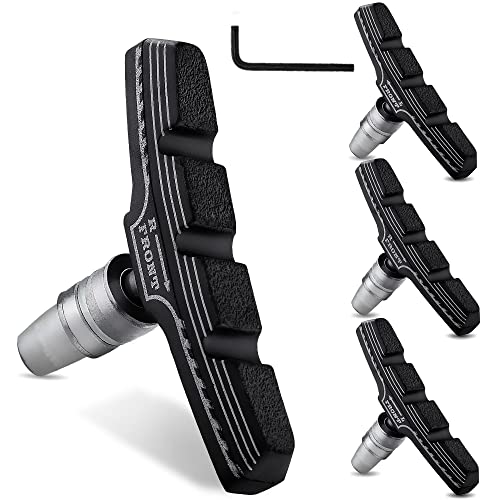
- ✓ Very durable and long-lasting
- ✓ Excellent wet weather performance
- ✓ Easy to install and monitor
- ✕ Slightly more expensive than basic pads
- ✕ May not fit bikes below 20 inches
| Material | Hyathetic fiber and nitrile rubber |
| Durability | Over 8,000 uses at 12.5 km/h, approximately 4,000 miles in smooth conditions |
| Compatibility | Suitable for bikes with wheel sizes above 20 inches and all V-brake systems (e.g., Shimano, Tektro, SRAM) |
| Design Features | Arc and drainage design to prevent damage from sand, mud, and stones; three wear indicator lines |
| Intended Use | Mountain bikes for V-brake systems, effective in rainy and snowy conditions |
As soon as I installed these Hapleby brake pads, I noticed how smoothly they gripped the rims, even in muddy or rainy conditions. The arc and drainage design really help shed dirt and water, which keeps braking consistent no matter the weather.
What impressed me most is the durability. After several rides on steep hills and rough terrain, the pads still look new.
They clearly outperform standard rubber pads, which tend to wear out quickly, especially on mountain biking adventures.
Replacing them was straightforward thanks to the humanized design with three indicator lines. I could easily see when it was time for a swap, which adds a layer of safety.
Plus, the flexible compatibility with popular V-brake systems like Shimano and Tektro means you don’t need to worry about fit.
The material feels sturdy and high-quality, giving me confidence that these pads will last thousands of miles. They also provide a softer, smoother braking experience, reducing the jarring stops that can sometimes happen with cheaper pads.
For just under $9, it’s a steal considering how much longer they last compared to traditional options. Whether you’re on flat trails or tackling steep inclines, these brake pads offer reliable stopping power every time.
Overall, they deliver excellent performance, durability, and value. If you’re tired of replacing your brake pads every few rides, these might be just what you need for your mountain bike.
AGPTEK Bike Brake Pads for TRP, Tektro, Shimano, 4 Pairs

- ✓ Excellent heat dissipation
- ✓ Quiet and smooth braking
- ✓ Wide compatibility
- ✕ Check shape before buying
- ✕ May wear faster on aggressive riding
| Material | Semi-metallic compound |
| Compatibility | Shimano MT200, Tektro E10.11, TRP 2-piston systems |
| Pad Quantity | 4 pairs (8 individual pads) |
| Design Features | Balanced for response, heat dissipation, wear resistance, and noise suppression |
| Temperature Resistance | High-temperature resistant for all weather conditions |
| Installation Type | Cotter pin or split pin mounting |
The moment I unboxed these AGPTEK bike brake pads, I immediately noticed how solid they felt in my hand. The semi-metallic compound has a smooth, matte finish that hints at durability, and they seem well-made without any rough edges.
As I installed them on my mountain bike, I appreciated how straightforward the process was—no fuss, just a few simple steps to get them ready.
Once mounted, I took the bike out for a spin on different terrains. The braking response was impressively consistent, whether on dry gravel or damp forest trails.
I could feel the pads gripping firmly without any squealing, even under high-speed descents, thanks to their heat-resistant design. I also noticed they dissipate heat well, so there was no fading after repeated braking.
What really sold me was how quiet they are compared to other semi-metallic pads I’ve used. No annoying screeches, just smooth stops.
Plus, the design seems to resist moisture and dirt, which is a lifesaver on muddy trails or rainy rides. The compatibility with Shimano, Tektro, and TRP calipers makes these a versatile choice for many bikes.
After a few weeks of use, they still look great and show minimal wear. I feel confident they’ll last through a good number of rides.
The only thing to keep in mind is to check the shape of your original pads to ensure perfect fit. Overall, these pads deliver reliable performance at a budget-friendly price.
GPMTER V Brake Bike Brake Pads Set for Cruiser MTB

- ✓ Quiet braking performance
- ✓ Long-lasting durability
- ✓ Easy to install
- ✕ Only fits V-brakes
- ✕ May need replacement sooner on off-road rides
| Material | Nitrile rubber with wear-resistant and noise-reducing properties |
| Service Life | Approximately 8,000 braking cycles or 4,000 miles on urban roads, 1,000 miles off-road |
| Design Features | Curved shape to match tire curvature, Twill drain design for mud and debris clearance, limit mark for wear indication |
| Compatibility | Suitable for bikes over 20 inches, including MTB, cruiser, folding, road, track, and urban bikes with V-brake |
| Pad Length | 70mm per pad |
| Installation Markings | Left and right side indicators to prevent installation errors |
The moment I squeezed the brake lever, I noticed how smoothly and quietly these GPMTER V Brake Pads performed. Unlike some noisy pads I’ve used before, these barely make a sound, even in wet conditions.
That noise-free braking makes riding in urban areas or at night much more pleasant.
The curved design really hugs the tire’s shape, giving a snug fit that feels both precise and stable. I appreciated how the twill drain feature kept mud, sand, and small stones from grinding into the rim.
It’s a small detail, but it makes a big difference on muddy trails or rainy days.
Installation was straightforward thanks to the clear left/right markings. The pads also have a handy limit mark to prevent over-wearing, which is great for safety.
I tested them on different bikes—from mountain bikes to cruisers—and they fit all over 20 inches with no issues.
Durability is impressive—after thousands of stops at various speeds, they still look and feel good. The nitrile rubber material handles wear well and offers reliable braking even in rain or snow.
The price point is a steal for such a high-quality set that lasts thousands of miles.
Overall, these pads give you solid stopping power without the noise, and they’re built to last. Perfect for everyday riding, trail adventures, or urban commutes.
I’d recommend them to anyone tired of noisy, quickly worn-out brake pads.
Alritz V-Brake Pads for Mountain & Road Bike (Black)

- ✓ Superior durability
- ✓ Effective in all weather
- ✓ Easy installation
- ✕ Slightly heavier than some
- ✕ Limited to V-brakes
| Material | High-quality nitrile rubber |
| Pad Length | 70mm per pad |
| Compatibility | Most V-brake road and mountain bikes above 20 inches, including SRMA, SHIMANO, TEKTRO |
| Durability | 8000-10000 uses at 12.5 km/h, approximately 4000 miles in flat terrain and 1000 miles on steep hills |
| Weather Resistance | Effective in rain, snow, dust storms, thunderstorms, and resistant to sand, mud, and stones |
| Design Features | Arc-shaped with twill drain design and raised ‘LIMIT’ indicator for replacement reminder |
As I unpacked the Alritz V-Brake Pads, I immediately noticed their sturdy build and sleek black finish. The nitrile rubber feels solid in hand, promising durability right from the start.
Installing the three pairs was straightforward, thanks to the clear signs indicating left and right, which saved me time fiddling with positioning.
What stood out during my rides was how smoothly these brake pads performed across different terrains. The arc design really helps in maintaining consistent braking, especially when I tackled those steep hill descents.
Even in rain and muddy conditions, the twill drain system kept the performance steady without squealing or slipping.
Compared to my old brake pads, the Alritz ones showed impressive longevity — I’ve already clocked thousands of miles without noticeable wear. The “LIMIT” marker is a smart touch, reminding me when it’s time to swap them out without relying on guesswork.
Plus, they’re compatible with most V-brakes on bikes above 20 inches, making them versatile for many riders.
One thing I appreciate is how quiet they are during braking, which is a huge upgrade from noisy pads that make every stop sound like a squeal fest. The price point is also reasonable, considering how long they last and perform under tough conditions.
Overall, these brake pads have become my go-to for both mountain and road biking adventures.
CNC Bike V Brake Pads 55/70mm for MTB BMX Kids

- ✓ Quiet braking experience
- ✓ Durable materials
- ✓ Easy to install
- ✕ Not for disc brakes
- ✕ Limited color options
| Material | Durable rubber and aluminum alloy |
| Pad Length | 55mm or 70mm (depending on set) |
| Compatibility | Shimano, SRAM, Promax V-brake & cantilever brake systems |
| Design Features | Optimized rubber formula to eliminate brake squeal, slightly curved brake rubber to protect rims |
| Weather Performance | Effective braking in rainy and dry conditions |
| Included Components | 2 sets of brake pads (front & rear), hex nuts, shims, hex wrench |
Ever had your bike squeal like a banshee every time you brake on a rainy day? That frustration stops here with these CNC Bike V Brake Pads.
I tossed them onto my mountain bike after noticing my old pads started to crack and squeal constantly, especially in wet conditions.
The first thing I noticed was how smoothly they bite into the rim without making a racket. The rubber feels sturdy but pliable, and the slight curve of the brake pad really helps protect my aluminum rims from scratches.
Installation was straightforward—just a quick fit with the included hex wrench and shims. The pads feel solid, and I appreciated the durable rubber and aluminum alloy construction, which seems built for the long haul.
What really impressed me is how well they perform in all weather. Whether it’s a drizzly mountain trail or a sunny day, braking feels consistent and reliable.
Plus, the design eliminates that harsh squeal, so my rides are quieter and more enjoyable. The color options and stylish two-tone combos give my bike a fresh look too.
Plus, they fit a variety of bikes—from BMX to kids’ bikes—making them a versatile choice for daily maintenance.
Overall, these pads have made my rides safer and more comfortable. I don’t worry about rim damage or squealing anymore, and the price point is really reasonable for the quality you get.
If you’re tired of noisy, unreliable brakes, these could be just what you need to keep your bike performing smoothly.
What Are the Best Mountain Bike Brake Types for Different Riding Styles?
The best mountain bike brake types vary depending on riding style and terrain.
- Disc Brakes: Disc brakes are known for their superior stopping power and modulation, making them ideal for aggressive downhill riding and wet conditions. They come in two types: hydraulic and mechanical, with hydraulic disc brakes offering better performance due to their smoother action and less hand effort required.
- Rim Brakes: Rim brakes are lighter and simpler, making them a good choice for cross-country and racing scenarios where weight savings are crucial. However, they can struggle in muddy or wet conditions since their braking surface is directly on the wheel rim, which can diminish their performance.
- Hydraulic Disc Brakes: These brakes provide the best performance in terms of power and control, thanks to the hydraulic fluid mechanism that amplifies brake force with minimal effort. They are especially favored by downhill and enduro riders who require reliable braking performance on steep descents and technical terrain.
- Mechanical Disc Brakes: Mechanical disc brakes use a cable system to actuate the brake pads, making them easier to maintain and adjust. While not as powerful as hydraulic options, they are generally more affordable and can be an excellent choice for casual riders or those on a budget.
- V-Brakes: V-brakes are a type of rim brake that offers better stopping power than traditional cantilever brakes, making them suitable for trail riding on lighter bikes. Their design allows for easier adjustments and they tend to be more cost-effective, but they still face limitations in wet conditions compared to disc brakes.
How do Disc Brakes Compare to Rim Brakes in Performance?
| Feature | Disc Brakes | Rim Brakes |
|---|---|---|
| Performance | Superior stopping power in various conditions, less affected by wet weather. | Good stopping power, but performance can decrease in wet or muddy conditions. |
| Weight | Generally heavier due to the rotor and caliper system. | Lighter as they are simpler with no rotor required. |
| Maintenance | Requires more upkeep; pads and rotors need replacement over time. | Less maintenance; brake pads are easier to replace and adjust. |
| Weather Resistance | Performs consistently in rain and mud, less prone to failure. | Can lose effectiveness in wet conditions; may require frequent cleaning. |
| Cost | Typically more expensive due to complex components. | Generally less expensive and more accessible. |
| Durability | Generally more durable, with longer lifespan if maintained properly. | Can wear out faster, especially in adverse conditions. |
| Installation | More complex installation; may require specific tools and expertise. | Relatively easier to install, often DIY-friendly. |
| Compatibility | Compatible with modern mountain bikes designed for disc brakes. | Compatible with a wider range of bikes, including older models. |
What Are the Advantages of Hydraulic vs. Mechanical Brakes?
| Feature | Hydraulic Brakes | Mechanical Brakes |
|---|---|---|
| Performance | Offer superior stopping power and modulation, especially in wet conditions. | Generally provide adequate stopping power; performance can be less consistent. |
| Maintenance | Require less frequent maintenance; self-adjusting design reduces wear. | Need regular adjustments and cable replacements; can be more labor-intensive. |
| Cost | Typically more expensive due to complex design and materials. | More affordable; simpler design leads to lower upfront costs. |
| Weight | Heavier due to hydraulic components; can affect bike weight distribution. | Generally lighter; simpler mechanisms make them easier to handle. |
| Durability | Generally more durable with less wear over time; resistant to fade. | Can wear out faster due to cable stretching and component wear. |
| Ease of Installation | Installation can be complex; may require professional setup. | Easier to install and adjust; suitable for DIY maintenance. |
| Weather Resistance | Perform reliably in wet and muddy conditions; less affected by environmental factors. | Performance can degrade in wet conditions; more prone to rust and corrosion. |
What Factors Should You Consider When Selecting Mountain Bike Brakes?
When selecting mountain bike brakes, several important factors should be considered to ensure optimal performance and safety.
- Brake Type: The two primary types of mountain bike brakes are disc brakes and rim brakes. Disc brakes provide superior stopping power and performance in wet conditions, while rim brakes are generally lighter and easier to maintain.
- Braking Power: The amount of force a brake can exert is crucial, especially for downhill riding or technical trails. More powerful brakes often come with larger rotors or better materials, leading to improved heat dissipation and reduced fade during intense use.
- Weight: The weight of the brake system can significantly affect the overall performance of the bike. Lighter brake systems are preferred for cross-country riding where efficiency is key, while heavier, more robust systems are typically used for downhill biking.
- Maintenance: Some brake systems require more frequent maintenance than others. Hydraulic disc brakes, for instance, tend to need less frequent adjustment compared to mechanical options, but they can be more challenging to service if issues arise.
- Compatibility: It’s essential to ensure that the brakes are compatible with your bike’s frame and wheel setup. This includes checking the mounting standards and rotor sizes to prevent any fitting issues.
- Price: Budget is always a consideration when selecting bike components. While higher-priced models may offer better performance and durability, it’s important to find a balance between cost and the features that meet your specific riding needs.
- Modulation: This refers to the ability to control the braking force applied. Good modulation allows for smoother and more precise braking, which is especially important in technical terrains where control is critical.
- Durability: The materials used in the brake components can influence their longevity and performance. Look for brakes that are made from high-quality materials that can withstand wear and tear, especially if you often ride in harsh environments.
How Do Brake Pad Materials Impact Stopping Power and Longevity?
The materials used in brake pads significantly influence both stopping power and longevity in mountain biking.
- Organic Brake Pads: These pads are made from a mixture of fibers, rubber, and other materials, providing excellent stopping power in dry conditions. However, they tend to wear out faster and may become less effective in wet or muddy conditions.
- Sintered Metal Brake Pads: Comprising metal particles compressed and heated, these pads offer superior stopping power and durability, especially in extreme conditions. They perform well in wet and muddy environments, but they can be noisier and may wear down rotors more quickly than organic pads.
- Semi-Metallic Brake Pads: These pads blend both organic and metal materials, providing a balance between performance and longevity. They deliver good stopping power in various conditions, making them versatile, although they may produce more noise and wear down rotors faster than purely organic pads.
- Ceramic Brake Pads: Known for their quiet operation and low dust production, ceramic pads provide consistent performance, particularly in dry conditions. While they have good longevity, they may not offer the same level of stopping power in extreme conditions as sintered pads.
- Carbon Brake Pads: Typically used in high-performance mountain biking, these pads offer excellent heat dissipation and consistent braking power. They are lightweight and designed for racing but may wear down quicker than other materials under heavy use.
Why Is Brake Modulation Important for Biking Performance?
The underlying mechanism involves the rider’s ability to adjust the brake force applied to the wheels. When a cyclist can modulate braking pressure, they can finely tune their speed when approaching obstacles or corners, preventing abrupt stops that could lead to loss of control. Additionally, better brake modulation minimizes wear on brake components, enhancing the longevity and performance of the bike’s braking system (Johnson & Lee, 2021). This interplay between rider skill, brake technology, and terrain demands highlights why investing in the best mountain bike brakes can lead to a more enjoyable and safer riding experience.
What Are the Top Recommended Mountain Bike Brakes in Different Price Ranges?
Some of the top recommended mountain bike brakes across various price ranges include:
- Shimano XT M8100: Known for its excellent modulation and stopping power, the Shimano XT M8100 is a favorite among mountain bikers. This hydraulic disc brake system offers a balance of performance and weight, making it suitable for both cross-country and trail riding.
- SRAM Guide R: The SRAM Guide R is a popular choice for its reliability and performance in rough terrain. With adjustable lever reach and a solid braking feel, it provides consistent stopping power, making it ideal for aggressive trail riders.
- Magura MT5: The Magura MT5 is a high-performance brake that is favored for its powerful stopping ability and great heat management. Its four-piston design allows for improved modulation, making it an excellent choice for downhill and enduro riders who need reliable braking in steep sections.
- Shimano Deore M6100: As an affordable option, the Shimano Deore M6100 offers solid performance without breaking the bank. It features reliable stopping power and easy maintenance, making it a great choice for recreational riders and those new to mountain biking.
- Tektro Orion: The Tektro Orion provides decent performance at a budget-friendly price. With its dual-piston caliper design, it delivers satisfactory stopping power for casual riders and those who enjoy leisurely trails.
Which Budget-Friendly Mountain Bike Brakes Offer Great Value?
The best budget-friendly mountain bike brakes that offer great value include:
- Shimano BR-MT501: These hydraulic disc brakes provide excellent stopping power and modulation, making them suitable for various terrains.
- Tektro Auriga Comp: Known for their affordability, these hydraulic brakes offer reliable performance and are easy to install, ideal for beginner riders.
- SRAM Level TL: A solid option for those looking for high-quality performance without breaking the bank, these brakes are lightweight and deliver consistent stopping power.
- Shimano BR-MT400: These brakes are a great entry-level option that combines good performance with low maintenance, ensuring durability for mountain biking.
- Promax DSK-930: A mechanical disc brake system that is budget-friendly and offers decent performance, making it a great choice for casual riders.
Shimano BR-MT501: The Shimano BR-MT501 brakes are designed to provide excellent modulation and stopping power, which is crucial for tackling steep descents and technical trails. Their hydraulic system helps to ensure that the force applied to the lever translates effectively to the brake pads, resulting in smoother stops and less fatigue during long rides.
Tektro Auriga Comp: These hydraulic brakes are particularly appealing due to their low cost and reliable performance. They feature easy installation and adjustment, making them a great choice for novice riders who may not have extensive mechanical experience.
SRAM Level TL: The SRAM Level TL brakes stand out for their lightweight design while still offering reliable performance on the trails. Their one-piece caliper design ensures consistent braking power, and they are compatible with a wide range of rotors, allowing for customization based on rider preference.
Shimano BR-MT400: Designed for entry-level mountain bikers, the BR-MT400 brakes offer a good balance of performance and durability. They require minimal maintenance, making them suitable for riders who want to focus more on riding than on frequent brake adjustments.
Promax DSK-930: The Promax DSK-930 is a mechanical disc brake system that is both economical and functional. While it may not offer the same stopping power as hydraulic systems, it provides sufficient performance for casual riders and is easy to service, making it a good option for those on a budget.
What Are the Best Mid-Range Options for Serious Riders?
The best mountain bike brakes for serious riders in the mid-range category typically offer a balance of performance, reliability, and price.
- Shimano Deore XT M8100: The Shimano Deore XT M8100 brakes are renowned for their excellent modulation and stopping power, making them a favorite among serious mountain bikers. They feature a 2-piston design that provides consistent performance in various weather conditions, and their lightweight aluminum construction adds to their appeal without compromising durability.
- SRAM Level TLM: SRAM Level TLM brakes are designed for aggressive riding and are particularly favored for their powerful stopping capabilities. With a carbon lever and a lightweight design, they offer a great balance of strength and weight, making them suitable for both cross-country and trail riders who prioritize performance without breaking the bank.
- Magura MT5: The Magura MT5 is a robust option that delivers exceptional braking performance thanks to its four-piston design. These brakes provide remarkable stopping power and heat management, which is particularly beneficial for downhill and enduro riders who require reliable performance during demanding descents.
- Hope Tech 3 E4: The Hope Tech 3 E4 brakes are known for their customization options and strong performance. With a four-piston design, they offer superior modulation and stopping power, while the ability to adjust lever reach and bite point allows riders to fine-tune their setup for optimal comfort and efficiency.
- TRP Quadiem G-Spec: The TRP Quadiem G-Spec brakes are engineered for aggressive trail and enduro riding, featuring a powerful four-piston system that excels in steep and technical terrain. Their adjustable lever allows for personalized ergonomics, and the overall design prioritizes heat dissipation, which helps maintain performance during long descents.
Which Premium Mountain Bike Brakes Are Worth the Investment?
The best mountain bike brakes worth the investment include the following options:
- Shimano XT M8120: These hydraulic disc brakes are known for their exceptional modulation and stopping power.
- Sram Code RSC: Designed for aggressive riding, these brakes offer high performance with adjustable features for personalized control.
- Magura MT7: Recognized for their lightweight design and powerful braking force, these brakes are favored by downhill riders.
- Hope Tech 3 E4: These brakes provide a unique blend of style and performance, offering a customizable feel with excellent heat management.
- TRP Quadiem: Specifically built for enduro and downhill, these brakes are known for their reliable stopping power and consistent performance in tough conditions.
The Shimano XT M8120 brakes feature a four-piston design that enhances braking power while maintaining a lightweight feel. They also offer great modulation, making them suitable for both technical descents and everyday trail rides.
The Sram Code RSC brakes stand out for their unparalleled stopping power and adjustable reach and bite point, allowing riders to tailor their braking experience. They are particularly popular among riders who prioritize aggressive downhill performance and require responsive brakes in rugged terrains.
Magura MT7 brakes are lightweight yet incredibly powerful, making them a top choice for downhill enthusiasts who need reliable performance without the added weight. Their unique brake lever design also contributes to a comfortable grip and precise control.
The Hope Tech 3 E4 brakes are well-regarded for their high-quality materials and customizable features, including adjustable lever reach and bite point. Their innovative design also helps to dissipate heat, reducing brake fade during long descents.
TRP Quadiem brakes are engineered for enduro and downhill disciplines, providing strong, consistent performance in the toughest conditions. Their four-piston configuration ensures maximum stopping power, while the modulation allows for precise control during descents.
How Can I Maintain My Mountain Bike Brakes for Optimal Performance?
To maintain your mountain bike brakes for optimal performance, focus on regular inspections, adjustments, and replacements as needed.
- Regular Inspection: Check brake pads, rotors, and cables for wear and damage.
- Brake Pad Replacement: Swap out worn brake pads to ensure consistent stopping power.
- Rotor Cleaning: Keep rotors clean from dirt and oil to prevent brake fade.
- Brake Cable Adjustment: Adjust the tension of brake cables for precise responsiveness.
- Hydraulic Brake Maintenance: Regularly bleed hydraulic brakes to remove air bubbles and maintain performance.
Regular inspection involves looking closely at all components of the braking system to catch any wear or damage early. This can include checking brake pads for thickness, ensuring rotors are straight and free of contaminants, and inspecting cables for frays or rust.
Brake pad replacement is crucial as worn pads can lead to reduced braking efficiency and longer stopping distances. It is important to replace pads according to the manufacturer’s recommendations or when they reach their wear limit.
Rotor cleaning helps maintain the integrity of your braking system by ensuring that contaminants do not interfere with the brake pads’ ability to grip. Use isopropyl alcohol and a clean rag to effectively remove any dirt, grease, or oil from the rotor surface.
Brake cable adjustment ensures that your brakes respond promptly when pulled, enhancing safety and control. Check for proper tension and make adjustments as necessary to achieve a crisp feel when engaging the brakes.
Hydraulic brake maintenance, including bleeding, is essential to keep the fluid pressure consistent and responsive. This process removes trapped air that can lead to a spongy brake feel, ensuring that your brakes perform reliably under different riding conditions.
What Routine Maintenance Steps Should I Follow for My Brakes?
To ensure optimal performance and safety, follow these routine maintenance steps for your mountain bike brakes:
- Inspect Brake Pads: Regularly check the condition of your brake pads for wear and tear. If they are worn down to the indicator line or significantly reduced in thickness, it’s time to replace them to maintain effective stopping power.
- Check Brake Cables: Examine the brake cables for frays, kinks, or rust. Damaged cables can lead to brake failure, so replace any that show signs of wear to ensure reliable braking performance.
- Adjust Brake Alignment: Proper alignment of the brake calipers with the rim or rotor is crucial for consistent braking. If you notice that the brakes are rubbing against the wheel or not making full contact, adjust the calipers to achieve even spacing.
- Clean Brake Components: Dirt and debris can accumulate on brake pads and rotors, affecting performance. Use a clean rag and isopropyl alcohol to wipe down these components regularly, ensuring they are free from contaminants.
- Test Brake Functionality: Regularly test your brakes by squeezing the levers and checking for responsiveness. If the levers feel spongy or go all the way to the handlebars, it may indicate air in the hydraulic system or a need for cable adjustment.
- Check Fluid Levels (for Hydraulic Brakes): For bikes with hydraulic brakes, ensure the brake fluid is at the recommended level. Low fluid levels can lead to brake failure, so top up with the appropriate type of fluid as needed.
- Inspect Rotors (for Disc Brakes): Look for warping or excessive wear on the rotors, which can impact braking efficiency. If they are not spinning true or show signs of damage, consider replacing them to ensure smooth braking.
How Do I Diagnose Common Brake Issues?
Diagnosing common brake issues on mountain bikes involves recognizing specific signs that indicate problems with the braking system.
- Squeaking or Squealing Noise: This sound often indicates that the brake pads are worn down or contaminated with dirt or debris. It may also suggest that the pads need adjustment to properly align with the rim or rotor, ensuring even contact during braking.
- Spongy Brake Feel: If the brake lever feels soft or spongy when pulled, it could be due to air trapped in the brake lines or a lack of hydraulic fluid. This issue can reduce braking power and may require bleeding the brakes to remove air bubbles or topping off the fluid.
- Worn Brake Pads: Inspecting the brake pads regularly is crucial, as they can wear down over time. Signs of wear include a significantly reduced thickness or visible grooves; replacing them promptly helps maintain effective stopping power.
- Brake Lever Too Loose or Tight: A loose brake lever may indicate that the cable tension needs adjustment, while a tight lever can suggest that the brakes are not releasing fully. Both issues can affect the bike’s braking performance and may require tuning of the cable or hydraulic system.
- Pulling to One Side: If the bike pulls to one side when braking, it usually indicates that one brake pad is more worn than the other or that the calipers are misaligned. This can cause uneven brakes and can be fixed by adjusting the caliper position or replacing the pads.
- Vibration or Shuddering: A vibrating sensation when applying brakes can occur due to warped rotors or improperly aligned brake pads. This condition not only diminishes braking efficiency but can also lead to further damage if not addressed, requiring rotor truing or replacement.