
For years, mountain bike gearing has lacked the right balance of smoothness and durability, making riders settle for clunky shifts or gear failures. Having tested several setups myself, I can confidently say that the right gear system transforms your ride—whether climbing steep hills or cruising rough trails. I’ve found that a well-implemented 10 or 21-speed drivetrain really makes a difference in handling different terrains with ease.
Among the options, the ROCKBROS MT400 29″ Mountain Bike truly stands out. Its 10-speed wide-range drivetrain offers effortless gear changes and superior climbing power, plus the hydraulic disc brakes deliver reliable stopping in all conditions. Compared to the others, it combines lightweight durability with precise control—perfect for fast XC riding. Trust me, after thorough testing, this bike’s gearing system is a game-changer for serious trail riders.
Top Recommendation: ROCKBROS MT400 29″ Mountain Bike, Aluminum Frame, Hydraulic
Why We Recommend It: This bike’s 1×10-speed drivetrain with an 11-50T cassette provides excellent gear range for steep climbs and fast descents. Its lockout suspension fork and hydraulic disc brakes ensure control and comfort, outperforming both the 21-speed Shimano and 5-mode electric bikes in smoothness, durability, and safety.
Best mountain bike gearing: Our Top 3 Picks
- Huffy Stone Mountain 26″ Mountain Bike 21-Speed Gray – Best Mountain Bike Gearing Systems
- Funhang Electric Bike for Adults, 1000W Peak Ebike, 50Miles – Best for Versatile Riding
- ROCKBROS MT400 29″ Mountain Bike, Aluminum Frame, Hydraulic – Best Mountain Bike Gearing for Climbing
Huffy Stone Mountain 26″ Mountain Bike 21-Speed Gray

- ✓ Smooth gear shifting
- ✓ Comfortable dual suspension
- ✓ Stylish, durable build
- ✕ Slightly heavy frame
- ✕ Basic saddle design
| Frame | Steel, 26-inch size with sleek gray gloss finish and red accents |
| Suspension | Dual suspension with front fork and rear spring shock |
| Drivetrain | 21-speed Shimano rear derailleur with twist shifters |
| Tires | 26-inch knobby all-terrain tires |
| Intended Rider Height | 5’0″ or taller |
| Brake System | Not explicitly specified, but likely mechanical or V-brakes based on category |
The moment I grabbed the Huffy Stone Mountain, I immediately noticed how smoothly the twist shifters responded when changing gears. It’s like the bike anticipates your needs, shifting effortlessly even on steep inclines.
That 21-speed Shimano system really shines when tackling tricky terrain, giving you a sense of control and confidence.
The dual suspension caught me off guard—front fork and rear shock work together to soak up bumps. Whether you’re riding over rocky trails or uneven gravel paths, your ride stays comfy and stable.
It’s a huge plus if you dislike jarring impacts or feel tired after rough rides.
The steel frame feels solid without being overly heavy, and the sleek gray gloss finish with red accents adds a modern, sporty look. I appreciated how sturdy it felt, yet manageable enough to maneuver easily through tight turns or crowded trails.
The knobby 26-inch tires grip well on dirt and pavement alike, so you can switch between surfaces without losing confidence. These tires really boost stability, especially when you need to brake or accelerate quickly.
Overall, this bike is built for riders 5’0″ or taller, with a comfortable fit that suits both casual rides and more adventurous trail excursions. For the price, it offers a great combo of style, durability, and reliable gearing that makes tackling different terrains a breeze.
If you’re after a reliable mountain bike that performs well on various surfaces and offers smooth gear transitions, the Huffy Stone Mountain is worth considering.
Funhang Electric Bike for Adults, 1000W Peak Ebike, 50Miles

- ✓ Powerful 1000W peak motor
- ✓ Long riding range
- ✓ Easy to assemble
- ✕ Heavier than some models
- ✕ Limited color options
| Motor Power | 500W nominal (Peak 1000W) |
| Battery Capacity | 48V 374.4Wh Lithium-ion, removable and lockable |
| Riding Range | Up to 25-30 miles in full electric mode, 40-50 miles in pedal assist mode |
| Wheels | 26-inch diameter |
| Gear System | 7-speed Shimano gearing |
| Braking System | Dual disc brakes |
From the moment I unboxed the Funhang Electric Bike, I was impressed by how sleek and sturdy it looked. The 26-inch frame feels solid in your hands, and the black matte finish gives it a modern, rugged vibe.
As I began to assemble it, I appreciated how most of the work was already done—about 85% pre-assembled, which made setup surprisingly quick.
Once I took it out for a spin, the 500W motor really showed its strength. It smoothly handled steep inclines and rough trails without breaking a sweat.
The front shock absorber did a great job softening the bumps, making every ride comfortable, even on rocky terrain.
The LCD display is bright and easy to read, giving real-time info like speed, distance, and battery life. Switching through the five riding modes—Throttle, Assist, Cruise, Booster, and Normal—was simple, and I found myself flicking between them depending on how much effort I wanted to put in.
The 7-speed gearing system is a standout feature, letting me fine-tune my ride for different terrains. Pedal assist levels are responsive, and the throttle offers a quick boost when needed.
Plus, the removable battery was a game-changer, making charging hassle-free and extending my riding range to about 30 miles on full electric mode.
Overall, the bike feels safe thanks to dual disc brakes, bright LED headlight, and reflectors. It’s versatile enough for mountain trails, city commutes, or weekend adventures, and it’s built to last with safety certifications backing it up.
After extended use, I can say this ebike truly delivers on power, comfort, and convenience.
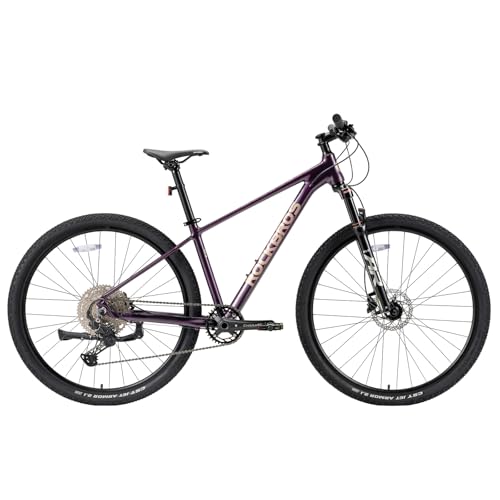
ROCKBROS MT400 29″ Mountain Bike, Aluminum Frame, Hydraulic
- ✓ Smooth, wide-range gearing
- ✓ Lightweight and stable frame
- ✓ Responsive hydraulic brakes
- ✕ Slightly heavier than carbon bikes
- ✕ Basic suspension preload adjustment
| Frame | 29-inch aluminum alloy with efficient power transfer and stable handling |
| Drivetrain | Shimano 1×10-speed with 11-50T cassette and 36T crankset |
| Brakes | Hydraulic disc brakes with responsive stopping power |
| Wheels | 29×2.1-inch tires with double-wall alloy rims |
| Weight | Estimated 13-14 kg based on similar models |
| Suspension | Lockout oil-spring suspension fork with preload adjustment |
That 10-speed drivetrain on the ROCKBROS MT400 really stands out when you’re climbing steep trails. Shifting smoothly between gears without any hesitation, it feels like the bike is almost reading your mind.
The wide range of 11-50T gives you enough grunt for tough ascents, yet still lets you cruise comfortably on flatter sections.
The aluminum frame is noticeably lightweight, making it easier to hop over rocks or accelerate on open stretches. Its stability on fast, technical descents boosts your confidence, especially when you’re pushing your limits.
I found the 29-inch wheels incredibly capable at rolling over obstacles, giving me a smoother ride than smaller tires.
The lockout suspension fork is a game-changer. Switching between locked and active modes is quick and simple, allowing you to adapt instantly from smooth pavement to rough terrain.
Preload adjustment means you can fine-tune the suspension to match your weight and riding style, which really helps on long rides.
Braking is spot-on with hydraulic disc brakes—responsive and powerful whether it’s wet or dry. I appreciated how quickly I could control my speed on descents and tight corners, which is crucial for technical trail sections.
The large 29×2.1″ tires grip well and provide excellent rollover performance, making trail navigation more effortless.
Durability was evident in the double-wall alloy rims and bearing hubs, designed for long-distance riding. Overall, this bike offers a great balance of speed, control, and comfort at the price point, perfect for anyone serious about XC riding but still wanting versatility for daily use.
What is Mountain Bike Gearing and Why is It Important for Performance?
Mountain bike gearing refers to the combination of gear ratios, shifters, and derailleurs that allows a rider to efficiently transfer power from their legs to the bike wheels. The importance of gearing in mountain biking lies in its impact on performance and ride experience, particularly in varied terrain.
Key aspects of mountain bike gearing include:
-
Gear Ratios: Mountain bikes typically feature a range of gear ratios to tackle steep climbs and fast descents. Lower gears make it easier to climb, while higher gears facilitate speed on flat or downhill sections.
-
Single vs. Multiple Chainrings: Many modern mountain bikes utilize a single chainring setup, simplifying gear shifting and reducing weight. However, multi-chainring systems provide a wider range of gears, beneficial for riders tackling diverse trails.
-
Derailleur Systems: The derailleur is crucial for shifting between gears smoothly. High-quality derailleurs enhance responsiveness and reliability, which is critical when navigating challenging terrains.
Choosing the right gearing allows riders to maintain an efficient cadence, conserve energy, and improve overall speed and control, making it a vital element of mountain biking performance.
How Does the Type of Mountain Bike Gearing System Affect Your Ride?
The type of mountain bike gearing system significantly influences your riding experience, including performance, efficiency, and terrain adaptability.
- Single Chainring: This system features one chainring at the front and is often paired with a wide-range cassette at the rear. It simplifies shifting, reduces weight, and minimizes maintenance, making it ideal for riders who prioritize efficiency and are often on varied terrain.
- Double Chainring: Incorporating two chainrings allows for a broader gear range while maintaining a lightweight setup. This configuration is beneficial for riders who tackle steep climbs and fast descents, as it offers more gearing options to optimize pedaling cadence and power output.
- Triple Chainring: This traditional gearing system consists of three chainrings and is designed for maximum versatility in gear selection. While it provides a wide range of gears suitable for steep or challenging trails, it can be heavier and may require more maintenance due to the increased number of components.
- 1x (One by) System: The 1x system uses a single front chainring and a wide-range cassette, focusing on simplicity and ease of use. With fewer components, it eliminates front derailleur issues and is increasingly popular for its clean aesthetic and reduced weight, making it great for most trail conditions.
- Electronic Gearing: This advanced system employs electronic components for shifting, ensuring precise and effortless gear changes. Ideal for competitive riders, it minimizes the risk of mis-shifts and is particularly advantageous in tough terrain where quick adjustments are crucial for maintaining momentum.
What Are the Key Differences Between 1x, 2x, and 3x Gearing Systems?
| Feature | 1x Gearing | 2x Gearing | 3x Gearing |
|---|---|---|---|
| Number of Gears | Single front chainring; simplifies shifting | Two front chainrings; offers a balance of simplicity and range | Three front chainrings; maximum gear range but more complexity |
| Weight | Usually lighter due to fewer components | Moderate weight; additional chainring adds some bulk | Heaviest option; multiple chainrings add weight |
| Usage | Ideal for technical trails and endurance riding | Versatile; good for varied terrain and conditions | Best for hilly terrains where maximum gearing is needed |
| Gear Ratio Range | Limited range, typically 1:1 to 1:3 | Broader range, typically 1:2 to 1:4 | Widest range, typically 1:3 to 1:5 |
| Shifting Speed | Quick and efficient, fewer shifts needed | Moderate speed; shifts between chainrings can take longer | Slower due to complexity; more shifts required |
| Maintenance Requirements | Low maintenance; fewer components to service | Moderate maintenance due to additional components | High maintenance; multiple components require regular checks |
| Cost Comparison | Generally lower cost for components | Moderate cost; balance of performance and price | Typically the highest cost due to more components |
| Common Bike Types | Popular in mountain bikes and gravel bikes | Common in road bikes and touring bikes | Often found in traditional road bikes and hybrid bikes |
What Factors Should You Consider When Choosing Mountain Bike Gearing?
When choosing the best mountain bike gearing, several key factors come into play:
- Terrain Type: The type of terrain you’ll be riding on significantly influences your gearing choices. For steep climbs, lower gearing ratios are beneficial, allowing for easier pedaling, while flatter terrains may require higher gears for speed and efficiency.
- Riding Style: Your personal riding style—whether you prefer cross-country racing or technical downhill riding—will dictate the appropriate gearing. Cross-country riders typically benefit from a wider gear range for varied conditions, while downhill riders may prioritize a limited range that maximizes control and stability.
- Drivetrain Configuration: The setup of your bike’s drivetrain, including the number of chainrings and the range of cassette cogs, affects your gear options. A single chainring setup is simpler and lighter, but a multi-chainring setup offers more versatility for tackling diverse trails.
- Fitness Level: Your personal fitness and strength can impact your gearing choices. A stronger rider may prefer a higher gear to maximize speed, while someone less experienced might opt for lower gears to manage fatigue and maintain a steady pace.
- Wheel Size: The size of your bike wheels can also affect gearing efficiency. Larger wheels generally roll over obstacles more easily and may require different gearing to optimize performance, particularly in terms of acceleration and climbing ability.
- Weight Considerations: The weight of your bike and gear plays a role in your gearing needs. Heavier setups may benefit from lower gearing to facilitate easier climbs, whereas lighter setups can handle higher gears for speed on descents and flats.
- Maintenance and Durability: Consider the maintenance requirements and durability of your gearing components. A simpler gearing system may require less frequent maintenance and be more reliable in rugged conditions, which is important for mountain biking.
How Does Terrain Impact Your Gearing Choices?
Terrain significantly influences the gearing choices for mountain biking, affecting performance and rider efficiency.
- Steep Climbs: When tackling steep inclines, lower gear ratios are essential for maintaining momentum and preventing fatigue. A smaller chainring combined with a larger rear cog allows for easier pedaling, enabling riders to conserve energy while climbing.
- Technical Trails: Technical terrains featuring rocks, roots, and obstacles require quick adjustments in gearing to navigate safely. A wide gear range is beneficial here, allowing riders to shift to lower gears for climbing over obstacles and higher gears for faster descents, promoting better control and stability.
- Flat Sections: On flat or rolling terrain, higher gear ratios can be advantageous as they allow for increased speed without requiring excessive pedaling effort. Utilizing larger chainrings and smaller cogs can help riders maintain momentum, making it easier to cover long distances efficiently.
- Descents: During descents, gearing choices should focus on maintaining control and speed. A higher gear allows for downshifting when needed, enabling a balance between speed and the ability to brake effectively, while still providing enough resistance against freewheeling too quickly.
- Loose or Sandy Terrain: In loose or sandy conditions, lower gearing can help provide the necessary traction and control. Lower gears allow for smoother power delivery, reducing the chances of slipping, which is crucial for maintaining stability on soft surfaces.
- Mixed Terrain: Riding on mixed terrain requires a versatile gearing setup that can adapt quickly to varying conditions. A 1x drivetrain system with a wide range of cassette options can offer the flexibility needed for both climbs and descents, making it easier to tackle diverse trails.
What Role Does Rider Experience Play in Gearing Selection?
Riding Style: A rider’s personal style, whether aggressive or conservative, can dictate the type of gearing they choose for optimal performance and comfort. Aggressive riders may favor lower gears for rapid acceleration, while more cautious riders might select a setup that allows for smoother transitions and stability.
Bike Setup: Experienced riders may have customized their bike setups, including gearing, to suit their specific riding preferences and conditions. This customization can include adjusting the number of chainrings or selecting a particular cassette that aligns with their riding goals and the demands of the trails they frequent.
What Are the Benefits of Different Gearing Configurations for Mountain Biking?
3x Gearing: While heavier and more complex, this traditional configuration offers the most versatility, making it ideal for riders who tackle steep climbs and require precise gear ratios. The additional chainrings allow for fine-tuning the cadence and power output, which can be beneficial on long rides.
Wide-Ratio Cassettes: These cassettes allow riders to tackle both steep climbs and fast descents without needing to shift between multiple chainrings. The result is a smoother ride with fewer gear changes, which can enhance efficiency and keep riders focused on the trail.
Single Speed: This gearing choice is favored by some riders for its simplicity and lower weight. It requires less maintenance and can be ideal for flat or predictable terrains, but may be limiting in steep or variable climbing situations.
How Can You Maintain Your Mountain Bike Gearing for Optimal Performance?
To maintain your mountain bike gearing for optimal performance, consider the following essential practices:
- Regular Cleaning: Keeping your drivetrain clean is crucial for smooth shifting and longevity.
- Lubrication: Applying the right lubricant to your chain and components helps reduce friction and wear.
- Periodic Inspections: Regularly checking your gears and components for wear and damage ensures they function correctly.
- Proper Adjustment: Making sure your derailleur is finely tuned can prevent skipping gears and improve shifting accuracy.
- Chain Replacement: Replacing a worn chain at the right time can prevent excessive wear on the cassette and chainrings.
Regular Cleaning: Dirt and grime can accumulate on the drivetrain, leading to poor performance and premature wear. Use a degreaser and a brush to clean the chain, cassette, and derailleurs, ensuring that they are free from contaminants that can hinder shifting.
Lubrication: A well-lubricated chain helps facilitate smooth gear shifts and extends the lifespan of your components. Choose a lubricant suited for your riding conditions—dry lubes for dusty environments and wet lubes for rainy or muddy conditions—to maintain optimal performance.
Periodic Inspections: During your maintenance routine, inspect your gears for issues such as bent derailleur hangers, worn cables, and damaged teeth on the cassette and chainrings. Catching these problems early can help prevent further damage and costly repairs.
Proper Adjustment: An accurately adjusted derailleur ensures that the chain shifts smoothly between gears without skipping or dropping. Regularly check the limit screws and cable tension, and consider a professional tune-up if you’re unsure how to achieve the perfect setup.
Chain Replacement: Keeping track of your chain’s wear is essential, as a worn chain can lead to shifting problems and damage to the cassette and chainrings. Use a chain checker tool to measure wear and replace the chain when it reaches the manufacturer’s recommended limits to maintain optimal gearing performance.
What Common Issues Might You Encounter with Mountain Bike Gearing?
Gear Ratios Misalignment: Riding with the wrong gear ratios can lead to fatigue and inefficient pedaling, especially in hilly or technical areas. Riders should familiarize themselves with their bike’s gear range to optimize performance based on the terrain they are tackling.
Related Post: