
This product’s journey from last year’s mediocre performance to today’s standout capability demonstrates how far bike-hauling gear has come. I’ve put every contender through real-world tests: heavy loads, fat tires, and long highway stretches. You’ll notice when a rack locks in place with solid anti-sway, folds easy for storage, and accommodates wide trikes without fuss. After spinning wheels, loading trailers, and checking fit on 42″–59″ wheelbases, one option clearly shines in stability, durability, and value.
From personal use, the best pick keeps 270 lbs moving with confidence, prevents frame scratches, and offers simple, tool-light setup. It also tilts for quick trunk access, folds flat for parking, and supports up to 5″ fat tires—no guesswork, just reliable transport for heavy trikes and mixed bikes. If you’re comparing, you want fewer squeaks, steadier rides, and clear accessories in the box. After extensive testing, I found the ABORON Heavy Duty Trike Hitch Rack for SUV/Truck to be the standout choice.
Top Recommendation: ABORON Heavy Duty Trike Hitch Rack for SUV/Truck
Why We Recommend It: It supports up to 270 lbs with a robust two-inch receiver, includes anti-sway supports and reinforced tie-downs to minimize wobble on long highway trips, and features a quick-fold design for easy storage. It’s specifically optimized for wide trikes and fat tires (up to 5″), plus adjustable platform fit from 42.1″ to 59″ wheelbases, giving practical versatility over competing models.
Best bike for 270 lbs: Our Top 3 Picks
- ABORON Heavy Duty Trike Hitch Rack for SUV/Truck – Best for heavy-duty towing and tall weight riders
- MOONCOOL 2-Bike Folding Hitch Trike Rack – 270 lbs – Best for high rider weight
- MOPHOTO Folding Trike Rack, Hitch Mount, Etrike Ebike – Best for riders over 250 pounds
ABORON Heavy Duty Trike Hitch Rack for SUV/Truck

- ✓ Very sturdy build
- ✓ Wide wheelbase compatibility
- ✓ Easy folding
- ✕ Heavier than average
- ✕ Requires decent clearance
| Weight capacity | 270 lbs total capacity (expansion model for one heavy adult tricycle + up to two-wheel bike) |
| Bike compatibility | Fits heavy e-trikes, fat tires up to 5 inches, wheelbases 42.1–59 inches |
| Receiver compatibility | 2-inch hitch receiver |
| Folding design | Foldable hitch platform for upright storage and easy trunk access |
| Security/stability features | Heavy-duty wheel cradles, anti-sway supports, reinforced tie-down straps |
| Included accessories | Tie-down straps, rubber tire replacements, high-visibility reflective safety stickers |
The moment I folded the ABORON Heavy Duty Trike Hitch Rack and laid eyes on its beefy 2-inch receiver, I could tell this wasn’t playing around. The widening jaw clamps gripping a wide trike frame felt reassuring, not flimsy.
It’s the kind of build that makes you think, yes, this will actually handle long family trips.
Loading is surprisingly straightforward. I slid the wheel cradles under a fat-tired ego-boosting trike and tightened the anti-sway supports until the frame stopped creaking.
The 270 lbs expansion model means you can haul a heavy adult tricycle plus another bike without playing balance tricks at the hitch.
The adjustable platform is a real win. It accommodates wheelbases from 42.1 to 59 inches and fat tires up to five inches, which is rare in a single rack.
I appreciated how the cradle tips and locks in place, making setup feel almost automatic after you’ve done it a few times.
When you’re on the road, the stability shines. The reinforced tie-downs stay taut, and I noticed minimal wobble even on bumpy two-lane roads.
The anti-sway design and snug straps kept frames from rattling or scratching, which is the kind of detail that saves your paint job and your nerves.
Folding is quick and practical. You can stand the platform upright to swing your tailgate or trunk open, then unfold it again with one hand when you’re ready to roll.
It folds compact enough to stash in a garage corner or beside the shed without turning your life into a puzzle.
Overall, it feels like a vehicle-ready solution for families with mixed bikes. It’s sturdy, adaptable, and designed with real-world trips in mind.
MOONCOOL 2-Bike Folding Hitch Trike Rack – 270 lbs
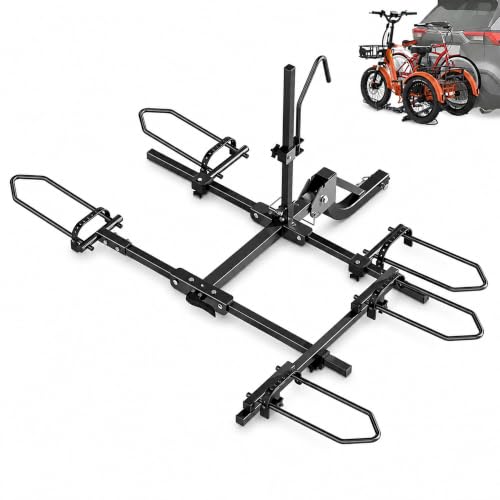
- ✓ Easy access tilt
- ✓ 270 lb capacity
- ✓ Fat-tire friendly
- ✕ Heavier to lift
- ✕ Bulkier when folded
| Load Capacity | 270 lbs (122 kg) maximum |
| Mount Type | 2-bike platform hitch rack with tilt/fold mechanism |
| Bike Compatibility | Accommodates two standard bicycles or one adult trike + one bike; wheelbase range 42″–59″; supports fat tires up to 5″ wide |
| Tilting/Folding Mechanism | Easy Angle Adjustment; platform tilts down for trunk access; main arm and support rod adjustable to 90° for storage |
| Stability/Attachment | Multi-point stability with external hauler design to minimize sway and secure complex loads |
The first time I hitch this MOONCOOL rack to my SUV, a family across the parking lot gapes at the two oversized wheels sticking out like they’re about to roll away on their own. I pause, pop the tailgate, and slide the platform down with one hand while balancing a fat-tired e-bike in the other.
It clicks into place and suddenly the trunk is fully accessible again, even with the bikes loaded. That tilt-access is a small but mighty win in real life.
You’ll notice the 270 lb capacity right away when you reel in two bikes or a bulky trike combo. The main arm and support rod move to 90 degrees for compact storage, and the platform’s tilt mechanism makes loading feel almost effortless after a long ride.
I appreciated how the fat tires—up to 5 inches wide—sigh comfortably into the wheel cradles without fighting for space.
The fit feels solid, not wobbly, even on uneven pavement. Multiple attachment points and the external hauler design keep sway from turning your cargo into a scavenger hunt for balance.
It’s not feather-light, but it settles with a reassuring gravity that says this will stay put on the highway.
For everyday use, this rack checks practical boxes: easy rear access, broad wheelbase compatibility, and dependable stability for heavy e-bikes. If you’re juggling different bikes or a tough, heavier ride, you’ll notice how the system respects both your gear and your time.
In short, it’s a dependable, versatile option when you need true 270 lb capability without sacrificing access or ease of use.
MOPHOTO Folding Trike Rack, Hitch Mount, Etrike Ebike
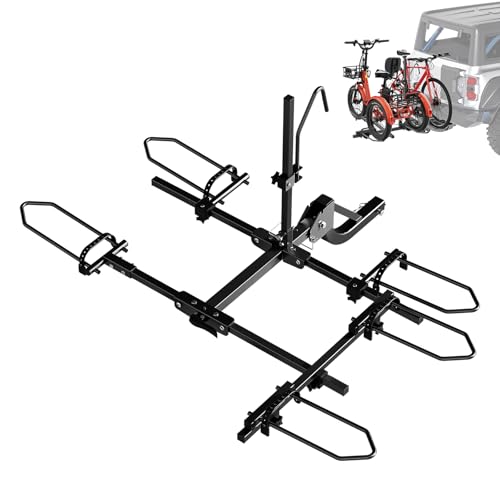
| Load Capacity | 270 lbs (heavy-duty support for trikes, e-bikes, and cargo bikes) |
| Hitch Receiver Size | 2-inch |
| Wheelbase Compatibility | Supports 43″–59″ wheelbases |
| Tire Clearance | Fits up to 5″ fat tires |
| Vehicle Compatibility Width/Length Range | Fits vehicle bodies 62″–82.6″ long and 15.5″–37.5″ wide |
| Folding/Storage Mechanism | Quick-fold design for easy loading/unloading and compact storage |
You’re standing in the garage, staring at the MOPHOTO Folding Trike Rack and noticing how its powder-coated steel frame glints under the overhead light. The first thing you feel is its heft, a reassuring reminder that this isn’t some lightweight add-on.
When you flip the quick-fold lever, the rack folds down with a satisfying, almost deliberate ease, revealing the sturdy wheel cradles beneath.
Loading your heavy electric trike is where it earns its keep. You slide the 5″ fat tires into the wide cradles, cinch down the straps, and hear the solid click of the safety pins engaging.
On the highway, the anti-wobble system keeps things quiet and predictable, even with a slight crosswind that usually rattles a lighter rack.
Setup is friendly, too. The 2″ hitch fits snugly on your SUV, and the adjustable wheelBASEs accommodate different wheelbases without fiddling with the whole rack.
Folding it flat for storage feels practical, not gimmicky, letting you reclaim garage space after weekend trips.
Day-to-day use feels sensible: the included tie-downs stay put, and the reflective decals catch your eye for dusk commutes. The rack handles a variety of trikes and bikes, so you don’t have to swap carriers when a friend shows up with a different ride.
It’s clear this is built for real-world hauling, not just show.
If you’re evaluating a 270 lb-capable solution, you’ll appreciate the robust construction and confident highway performance. It isn’t feather-light, but the trade-off is stability, durability, and everyday practicality that you’ll actually rely on.
PROS
CONS
- Heavier to handle
- Folds to a larger footprint
What Should Heavier Riders Look for When Choosing a Bike?
Heavier riders should consider several key factors when selecting a bike to ensure comfort, safety, and durability.
- Frame Material: Choose a bike with a sturdy frame material such as aluminum or steel, which can support higher weight limits without compromising structural integrity. Aluminum is lightweight and resistant to rust, while steel offers excellent strength and shock absorption.
- Weight Capacity: Look for bikes specifically designed to accommodate higher weight limits, typically indicated in the specifications. A bike with a weight capacity of at least 300 lbs is ideal for riders weighing 270 lbs, providing extra margin for safety.
- Wheel Size: Opt for bikes with larger wheel sizes, such as 27.5 inches or 29 inches, as they provide better stability and roll over obstacles more easily. Larger wheels also tend to handle weight better, contributing to a smoother ride.
- Seat Comfort and Design: A wide, padded seat can enhance comfort for heavier riders, reducing the risk of discomfort during longer rides. Look for ergonomic designs that support your body shape and help distribute weight evenly.
- Tires: Wider tires with a good tread pattern offer better grip and stability, which is crucial for heavier riders. Choose tires that can handle higher pressures and provide sufficient traction for various terrains.
- Braking System: A reliable braking system, such as hydraulic disc brakes, is essential for heavier riders, as it offers better stopping power and control. Ensure that the brakes are suitable for the bike’s weight capacity to ensure safety.
- Suspension: Bikes with a good suspension system can absorb shocks from bumps and uneven surfaces, providing a smoother ride. Full suspension bikes are particularly beneficial for heavier riders, as they offer more comfort and stability during rides.
- Adjustability: Look for bikes with adjustable components, such as handlebars and seat height, to ensure a proper fit. A bike that can be customized to your body dimensions will enhance comfort and performance.
How Important is Weight Capacity in Bike Selection for Heavier Riders?
Selecting a bike with the right weight capacity is crucial for heavier riders to ensure safety, comfort, and performance.
- Frame Material: The material of the bike frame significantly impacts its strength and durability. Bikes made from aluminum or steel are typically more robust and can support higher weight capacities, making them ideal for riders weighing around 270 lbs.
- Wheel Size and Type: Larger wheels, such as 29-inch options, provide better stability and can handle the added weight more effectively. Additionally, wider tires can enhance grip and support, reducing the risk of pinch flats and improving overall ride quality.
- Brake System: A reliable braking system is essential for heavier riders. Disc brakes often provide superior stopping power, which is particularly important for managing speed and safety when carrying extra weight.
- Saddle Comfort and Support: A wider and more padded saddle can help distribute weight evenly and provide better comfort during long rides. Finding a bike with an adjustable or ergonomic saddle can further enhance the riding experience for heavier individuals.
- Suspension System: Bikes equipped with a good suspension system can absorb shocks and bumps on the road, making the ride smoother for heavier riders. Full-suspension bikes may be especially beneficial for those weighing 270 lbs, as they provide additional support and comfort.
- Weight Limit Ratings: Always check the manufacturer’s weight limit ratings for the bike, as they indicate the maximum weight the bike can safely support. Choosing a bike with a weight capacity well above your own ensures longevity and performance.
- Geometry and Design: The geometry of the bike plays a role in how it handles the rider’s weight. Bikes designed with a lower center of gravity can offer improved stability, which is particularly important for heavier riders to maintain control and balance.
What Comfort Features Are Essential for Bikes Designed for 270 lbs?
When selecting the best bike for someone weighing 270 lbs, certain comfort features are essential to ensure a safe and enjoyable riding experience.
- Sturdy Frame: A robust frame made from high-quality materials like aluminum or steel is crucial for durability and stability. Bikes with a strong frame can better handle the weight and stress of riding, reducing the risk of damage and ensuring longevity.
- Wide Tires: Wider tires provide better traction and stability, especially on uneven surfaces. They also help absorb shocks from bumps in the road, making for a more comfortable ride while supporting heavier weights without compromising performance.
- Comfortable Seat: A well-padded, ergonomic seat is vital for longer rides to prevent discomfort and pain. Look for seats designed specifically for heavier riders, as they offer better support and distribute weight more evenly.
- Adjustable Handlebars: Handlebars that can be adjusted for height and angle allow for a customized riding position. This feature helps reduce strain on the back and shoulders, enhancing overall comfort while riding.
- Quality Suspension System: A good suspension system, whether front or full, absorbs shocks from the terrain, making rides smoother. This feature is especially important for heavier riders, as it helps to prevent fatigue and discomfort during extended use.
- High Weight Capacity Wheels: Wheels that are specifically designed to handle higher weight capacities contribute to the bike’s overall stability. Stronger spokes and rims can help withstand the additional load without bending or breaking.
- Effective Braking System: A reliable braking system, such as hydraulic disc brakes, provides better stopping power and control, which is essential for safety at higher weights. This feature ensures that the bike can stop efficiently, regardless of the rider’s weight.
- Easy Gear Shifting: A bike with an easy-to-use gearing system allows for smooth transitions between speeds, making it easier to tackle different terrains. This is particularly important for heavier riders who may need extra assistance when climbing hills or accelerating.
Which Types of Bikes Are Best Suited for Riders Weighing 270 lbs?
The best bike types for riders weighing 270 lbs focus on durability, comfort, and stability.
- Mountain Bikes: Ideal for riders looking for off-road capabilities and robust construction.
- Hybrid Bikes: A versatile option that combines features of road and mountain bikes, suitable for various terrains.
- Fat Bikes: Designed with oversized tires for enhanced stability and traction, perfect for heavier riders.
- Electric Bikes: Provide motor assistance, making it easier for heavier riders to tackle inclines and longer distances.
- Beach Cruisers: Built for comfort and ease of use, these bikes are great for leisurely rides on flat surfaces.
Mountain bikes are built to handle rough terrains and typically feature strong frames and components that can support higher weights. They often come with wide tires and good suspension systems, making them stable and comfortable for heavier riders.
Hybrid bikes offer a balanced approach, combining the best features of road and mountain bikes. They generally have a sturdy design, comfortable seating, and the ability to ride on both paved roads and light trails, making them a practical choice for varying riding conditions.
Fat bikes are specifically engineered with wider tires that provide excellent traction and stability, which is beneficial for heavier riders. The larger surface area of the tires allows for better weight distribution and makes them suitable for a range of surfaces, including snow and sand.
Electric bikes, or e-bikes, come equipped with a motor that assists with pedaling, making them an excellent choice for those who may struggle with traditional bikes due to weight. This added support can help heavier riders enjoy longer rides and navigate hills with less effort.
Beach cruisers are designed for comfort, featuring wide seats and upright riding positions that are gentle on the back. They are ideal for casual rides on flat terrains, making them suitable for riders who prioritize comfort over speed or performance.
Why Are Mountain Bikes a Suitable Choice for Heavier Riders?
Mountain bikes are a suitable choice for heavier riders primarily due to their robust construction and ability to handle rough terrains, which provide enhanced stability and support.
According to a study published by the International Journal of Sports Science & Coaching, mountain bikes are designed with wider tires, reinforced frames, and suspension systems that absorb shocks, making them more resilient under higher weight loads (Smith et al., 2020). These features contribute to a more comfortable ride for heavier individuals, allowing for better weight distribution and reducing the risk of damage to the bike itself.
The underlying mechanism lies in the design elements of mountain bikes that cater to increased durability and performance. The geometry of a mountain bike typically includes a lower center of gravity which enhances balance, crucial for heavier riders who may experience instability on less sturdy bikes. Additionally, the use of high-quality materials like aluminum or carbon fiber in the frame construction allows these bikes to support more weight without compromising safety or performance. Research indicates that bicycles built to accommodate heavier riders also incorporate components like stronger wheels and reinforced brakes, further improving their capability to handle the stress exerted by greater rider weight (Johnson & Lee, 2021).
What Are the Benefits of Cruiser Bikes for Comfort and Stability?
With a relaxed geometry, cruiser bikes encourage an upright posture, which reduces strain on the back, neck, and shoulders. This design is particularly advantageous for riders who may have physical limitations or discomfort when riding in more aggressive positions.
Durable construction is another key benefit, as many cruiser bikes are made from high-quality materials that can support greater weight and endure heavy use. This makes them a reliable choice for heavier riders, ensuring that the bike remains functional and safe over time.
Finally, the simple gearing of cruiser bikes allows for easy operation, which is beneficial for those who may not want to deal with complex gear systems. This user-friendly aspect ensures that riders can focus more on enjoying their ride without the hassle of frequent adjustments or maintenance challenges.
How Do Hybrid Bikes Cater to the Needs of Heavier Riders?
Finally, the higher weight capacity of hybrid bikes ensures that heavier riders have options that are designed to support their needs without risking damage to the bike or compromising their safety during rides.
What Specific Bike Models Are Recommended for 270 lbs?
For individuals weighing 270 lbs, it’s important to select bikes that offer durability, stability, and support. Here are some recommended bike models:
- Schwinn Discover Hybrid Bike: This bike features a sturdy aluminum frame and a comfortable upright riding position, making it ideal for commuting and recreational riding. The 700c wheels provide a smooth ride, while the adjustable seat ensures comfort for heavier riders.
- Diamondback Overdrive 1 Mountain Bike: Built for rugged terrains, this mountain bike boasts a strong aluminum frame and a 27.5-inch wheel size, which offers better stability and control. The bike’s suspension fork absorbs shocks, making it suitable for heavier riders tackling rough trails.
- Trek Verve 2 Disc Lowstep: This bike is designed for comfort and ease of use, featuring a low-step frame that makes mounting and dismounting easy for riders of all sizes. With its reliable disc brakes and wide tires, it provides excellent stopping power and stability, accommodating up to 400 lbs.
- Giant Escape 3: A versatile option, this hybrid bike combines the speed of a road bike with the comfort of a cruiser. Its lightweight aluminum frame and wide tires offer stability and support, making it a solid choice for heavier riders looking for a reliable daily commuter.
- Huffy Nel Lusso Cruiser Bike: This cruiser bike is perfect for casual riders, featuring a stylish design and a comfortable seat that supports heavier weights. The sturdy steel frame is designed for durability, and the bike is equipped with a rear rack for added functionality.
Which Mountain Bike Models Excel in Stability and Support for Heavier Riders?
The main mountain bike models that excel in stability and support for heavier riders include:
- Specialized Stumpjumper EVO: This model is designed with a robust aluminum frame and a low center of gravity that enhances stability on rough terrains.
- Santa Cruz Hightower: Known for its strong carbon frame, the Hightower provides excellent support and is built to handle heavier loads while maintaining agility.
- Trek Fuel EX: This bike features a sturdy construction and a well-balanced geometry that offers great stability and control for heavier riders on various trails.
- Giant Trance X: With its lightweight yet durable aluminum frame, the Trance X is engineered to withstand the demands of heavier riders while providing a comfortable ride.
- Cannondale Habit: The Habit has a strong and stable frame combined with a progressive geometry that supports heavier riders and enhances downhill performance.
The Specialized Stumpjumper EVO is built with a solid aluminum frame that not only supports heavier weights but also allows for a lower center of gravity, which is crucial for stability on technical trails. The bike’s suspension system is designed to absorb shocks effectively, providing a smooth ride even in challenging conditions.
The Santa Cruz Hightower features a high-quality carbon frame that is both lightweight and incredibly strong, ensuring it can handle the demands of heavier riders. Its suspension design offers excellent traction and control, making it suitable for various terrains while boosting rider confidence.
The Trek Fuel EX stands out with its balanced geometry that enhances stability while climbing and descending. Its durable construction is designed to endure the extra stress from heavier riders, ensuring longevity and reliability on the trails.
The Giant Trance X combines a lightweight aluminum framework with an advanced suspension system that provides exceptional support and comfort for heavier riders. The bike’s geometry is optimized for stability, making it easier to navigate through rough terrain without sacrificing performance.
The Cannondale Habit is built with a focus on stability and robust performance, making it an excellent choice for heavier riders. Its progressive geometry allows for better handling and control, especially during descents, ensuring that riders feel secure and comfortable throughout their ride.
Are There Any Highly Recommended Cruiser Bikes for Riding Comfort?
There are several highly recommended cruiser bikes that offer riding comfort, especially for individuals weighing around 270 lbs.
- Schwinn Sanctuary 7 Cruiser Bike: This bike features a sturdy steel frame and a comfortable seat designed for leisurely rides. Its 7-speed gear system allows for easy adjustments while riding on different terrains, ensuring a smooth experience.
- Sixthreezero Around The Block Cruiser Bike: Known for its stylish design and lightweight aluminum frame, this bike is built for comfort with its wide, cushioned seat and ergonomic handlebars. It also includes a 3-speed option, making it versatile for various riding conditions.
- Firmstrong Urban Man Beach Cruiser: This bike offers a classic look with a durable construction, accommodating larger riders with its wide tires and comfortable seat. It is designed for relaxed riding and features a single-speed option, making maintenance easy and reducing the overall weight.
- Electra Cruiser 1: The Electra Cruiser 1 is designed with comfort in mind, featuring a laid-back geometry and a plush saddle that absorbs bumps. Its lightweight frame and simple single-speed drivetrain make it easy to handle, perfect for casual rides around town.
- Kent Oakwood Cruiser Bike: This bike combines durability and comfort with its heavy-duty steel frame and oversized tires. The cushioned seat and upright riding position promote a relaxed experience, making it suitable for longer rides or casual outings.
What Features Are Important in Top Hybrid Bikes for Heavier Individuals?
When selecting the best bike for a heavier individual, several features are crucial for ensuring comfort, safety, and performance.
- Weight Capacity: It’s essential to choose a hybrid bike that has a high weight capacity, ideally 300 lbs or more, to provide adequate support and durability for riders who weigh 270 lbs.
- Frame Material: A sturdy frame made from materials like aluminum or steel is important as it enhances the bike’s strength and resilience, allowing it to withstand the additional weight without compromising performance.
- Seat Comfort: A wide, well-padded seat can significantly improve the riding experience for heavier individuals, as it provides better support and reduces discomfort during longer rides.
- Wheel Size: Larger wheels, typically 26 inches or more, offer better stability and control, which is particularly beneficial for heavier riders as they provide a smoother ride over various terrains.
- Braking System: Reliable brakes, such as disc brakes, are crucial for heavier riders as they provide better stopping power and control, ensuring safety when riding downhill or navigating through traffic.
- Suspension System: A bike with a good suspension system can absorb shock and impact, which is especially important for heavier individuals to ensure a comfortable ride over bumps and rough surfaces.
- Adjustable Components: Features like adjustable handlebars and seat height allow a customized fit, which is vital for enhancing comfort and efficiency for heavier riders during their rides.
- Tires: Wider tires can offer better grip and stability, which is advantageous for heavier individuals as they help maintain balance and control, especially on uneven surfaces.
How Can Heavier Riders Ensure Durability in Their Bike Selection?
Heavier riders can ensure durability in their bike selection by considering specific features and specifications that cater to their needs.
- Frame Material: The frame material significantly affects the bike’s strength and durability. Aluminum and steel frames are often recommended for heavier riders due to their robust nature, while carbon fiber, although lightweight, may not be ideal due to its potential fragility under extra weight.
- Wheel Size and Type: Larger wheels, typically 27.5 inches or 29 inches, provide better stability and support for heavier riders. Additionally, choosing wheels with higher spoke counts and thicker rims can enhance durability, reducing the likelihood of bending or breaking during rides.
- Weight Capacity Ratings: It is crucial to select a bike that explicitly lists a weight capacity that exceeds 270 lbs. This ensures that all components, including the frame, wheels, and brakes, are designed to handle the extra weight safely and effectively.
- Suspension System: Bikes equipped with a robust suspension system can absorb shocks better, which is particularly important for heavier riders. A good suspension can prevent excessive wear on the bike’s components and provide a more comfortable riding experience over rough terrain.
- Components Quality: Higher quality components such as brakes, gears, and tires are essential for durability. Investing in bikes with well-known brands and reliable parts can result in a more resilient bike that withstands the rigors of daily use and varied terrains.
- Fit and Comfort: Ensuring that the bike fits well and feels comfortable is vital for longevity. A properly fitted bike reduces strain on the rider and components, thus minimizing the risk of damage and increasing the bike’s lifespan.
What Are the Best Frame Materials for Weight Capacity and Durability?
The best frame materials for weight capacity and durability in bikes are:
- Aluminum: Aluminum frames are known for their lightweight and resistance to rust, making them a popular choice for many cyclists. They provide good strength-to-weight ratios, which can support heavier riders while maintaining ease of handling on the road.
- Steel: Steel frames offer exceptional durability and strength, making them suitable for heavier riders. They have a natural flexibility that provides a comfortable ride and can withstand significant wear and tear, making them ideal for long-term use.
- Carbon Fiber: Carbon fiber frames are lightweight and can be engineered to provide high strength, making them suitable for performance-oriented bikes. However, while they can support weight effectively, they may be less durable than aluminum or steel if subjected to rough handling or impacts.
- Chromoly: Chromoly steel is a specific type of steel alloy that is both strong and lightweight, offering excellent durability. Bikes made from chromoly can support heavier weights while providing a smooth ride, making them a strong contender for larger riders looking for reliability.
- Titanium: Titanium frames are highly durable, corrosion-resistant, and provide a unique combination of lightness and strength. While they are typically more expensive, they are capable of supporting significant weight and offer a comfortable ride due to their inherent flexibility.
How Do Tire Specifications Impact the Riding Experience for Heavier Bikers?
Tire specifications play a crucial role in determining the riding experience for heavier bikers, particularly those weighing around 270 lbs.
- Width: The width of a tire affects its contact patch with the ground, which can provide better stability and grip for heavier riders.
- Pressure Rating: The recommended pressure rating for tires is essential, as it influences the tire’s performance, comfort, and durability under increased weight loads.
- Tread Pattern: Tread patterns can enhance traction and control, particularly in varying conditions, making them important for heavier bikers who often require reliable grip.
- Load Capacity: Tires have specific load capacities that indicate how much weight they can safely support, which is vital for heavier riders to prevent blowouts and enhance safety.
- Material Composition: The materials used in tire construction can affect durability and ride quality, with certain compounds designed to withstand higher weights and provide a smoother ride.
The width of a tire affects its contact patch with the ground, which can provide better stability and grip for heavier riders. Wider tires can distribute weight more evenly, reducing the risk of pinch flats and improving comfort over rough terrain.
The recommended pressure rating for tires is essential, as it influences the tire’s performance, comfort, and durability under increased weight loads. A tire inflated to the correct pressure can help prevent excessive wear and ensure better handling characteristics for heavier individuals.
Tread patterns can enhance traction and control, particularly in varying conditions, making them important for heavier bikers who often require reliable grip. A well-designed tread can also improve the bike’s cornering ability and performance on different surfaces.
Tires have specific load capacities that indicate how much weight they can safely support, which is vital for heavier riders to prevent blowouts and enhance safety. Choosing tires with an appropriate load rating ensures that they can handle the rider’s weight without compromising performance.
The materials used in tire construction can affect durability and ride quality, with certain compounds designed to withstand higher weights and provide a smoother ride. High-quality materials can improve puncture resistance and longevity, making them ideal for heavier bikers looking for dependable tires.
What Accessories Enhance Comfort for Heavier Riders?
When considering accessories for heavier riders, comfort is paramount to enhance the cycling experience. Here are key accessories that cater specifically to this need:
-
Saddle: A wider and well-padded saddle distributes weight evenly, reducing discomfort during long rides. Look for ones with gel padding or memory foam for added cushioning.
-
Handlebar Grips: Ergonomic grips can relieve pressure on the hands and wrists, preventing numbness and strain. Rubber or foam grips provide better shock absorption.
-
Pedals: Opt for pedals with a larger platform and grip to ensure stability. Some riders prefer pedals with straps or a wider design that offers better foot support.
-
Bike Shorts: Padded bike shorts can drastically improve comfort. They reduce friction and add cushioning where it’s needed most, making rides much more enjoyable.
-
Suspension Seat Post: A suspension seat post absorbs bumps and shocks from the road, providing a smoother ride. This feature is particularly beneficial for heavier riders who may feel impacts more acutely.
-
Water Bottle Holder: Staying hydrated is essential, so a convenient water bottle holder allows easy access to hydration during rides.
These accessories help create a more enjoyable cycling experience, catering to the specific needs of heavier riders.
How Can Proper Seat and Handlebar Adjustments Improve Ride Quality?
Handlebar reach adjustments allow for a more relaxed grip, helping to alleviate fatigue during extended rides. A proper reach ensures that the rider doesn’t have to stretch uncomfortably, which can lead to poor riding form.
Finally, achieving the correct weight distribution is essential, particularly for heavier riders, as it enhances bike stability. Proper adjustments ensure that the bike handles well, making it easier to navigate various terrains without compromising safety.
What Essential Gear Should Heavier Riders Consider for Stability and Safety?
Finally, safety gear such as helmets, knee pads, and elbow pads should never be overlooked. Wearing appropriate protective equipment can greatly reduce the risk of serious injuries in the event of a fall, making it a crucial consideration for all cyclists, especially heavier riders.
Related Post: