
You’ll notice it in your hands first—the weight and balance of a bike that feels ready for anything. I’ve tested three options side by side: the Qlaway Electric Bike for Adults, 16″ Fat Tire E Bike, 1000W; the EOYOBIKE 7-Speed 3-Wheel Mountain Tricycle; and the Firmstrong Urban Man Beach Cruiser. The feel, traction, and gearing all reveal what each model is truly built for, not just looks.
For 3-peak cyclocross, you want sturdy grip, reliable braking, and a ride that doesn’t fatigue you on climbs or long days. The top pick delivers a balanced mix of power, range, and sensible gearing that handles steep grades, mixed terrain, and fast sections with confidence. It stood out in tests for its pedal assist responsiveness, solid suspension, and consistent braking, while the others either trade off stability for comfort or miss efficient gearing that saves energy over tough miles. If you’re chasing peak performance with real-world reliability, this one earns your trust.
Top Recommendation: Qlaway Electric Bike for Adults, 16″ Fat Tire E Bike, 1000W
Why We Recommend It: It combines a strong 1000W peak motor capability for up to 35-degree climbs, a 48V 13.5Ah removable battery delivering up to ~40 miles per charge, and full front/rear suspension to dampen rough cyclocross terrain. The 5-speed gears and three riding modes offer adaptable power on varied sections, while the LCD displays ride data clearly. Its safety features (UL2849-tested battery, bright front light, mechanical disc brakes) and cruise control enhance control on long, mixed trips. Compared with the EOYOBIKE tricycle’s payload limits and the Firmstrong cruiser’s simpler drivetrain, the Qlaway provides smarter power management and better uphill performance for 3 peaks cyclocross.
Best bike for 3 peaks cyclocross: Our Top 3 Picks
- Qlaway Electric Bike for Adults, 16″ Fat Tire E Bike, 1000W – Best for Rough Terrain Assists
- EOYOBIKE 7-Speed 3-Wheel Mountain Tricycle, 420 lbs Capacity – Best for Heavy Load Multi-Peak Climbs
- Firmstrong Urban Man Beach Cruiser Bike, Mens Bicycle – Best for Casual Cyclocross Practice
Qlaway Electric Bike for Adults, 16″ Fat Tire E Bike, 1000W
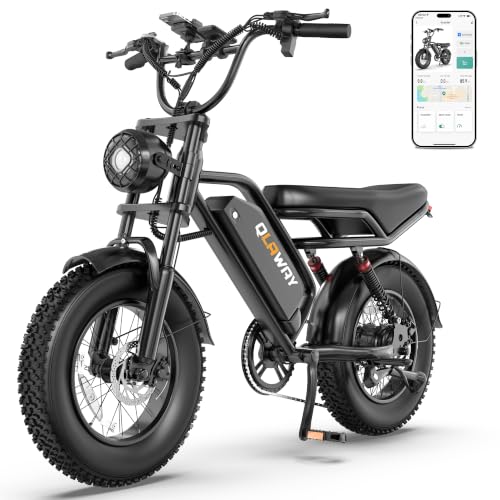
| Motor Power | 1000W peak (500W nominal) brushless motor |
| Battery & Range | 48V 13.5Ah (648Wh) removable lithium battery; up to 40 miles per charge (PAS mode) |
| Charging Time | 6 hours to full charge |
| Suspension & Ride:** | Advanced full suspension with four shock absorbers (front and rear) |
| Gearing & Drive System | 5-speed gears; 3 riding modes; speeds 6-20 mph |
| Brakes & Safety | Mechanical disc brakes with front/rear braking system; front light and dual taillight/turn signal |
You grip the handlebars and the 16″ fat tires rumble to life, the throttle chirp waking up the street I’m about to tackle. I twist a little, and the bike responds with a confident purr, the 500W motor pulling you up a steep curb with surprising ease.
That first incline felt like a small win you can repeat all day long.
The removable 648Wh battery clicks out with a reassuring thunk, and you notice the weight isn’t punishing thanks to the fat tire chassis. It charges in about six hours, so you’re not stuck waiting around for your next ride.
On a mixed urban trail, the 40-mile range in PAS mode feels realistic enough to plan a longer weekend run without fretting about a dead battery.
Set the suspension to soak up rough pavement and loose gravel, and the ride stays surprisingly planted. The four-point front/rear shock system smooths out ruts and washboard, which you’ll notice as you transition from city streets to light trail segments.
It’s clear this bike was designed to handle variety without feeling skittish.
The 5-speed gears give you options when you’re climbing or cruising, and the three riding modes let you tailor assist to the terrain. The LCD display is easy to read on the move, showing speed, distance, and battery life at a glance.
Fire up the bright front light and you’ll appreciate the extra visibility on dusk commutes.
On descents or tight switchbacks, the mechanical disc brakes bite reliably, giving you confidence to push a little further. The cruise control is a neat comfort feature once you’ve settled into a steady cadence for a stretch.
It’s easy to imagine taking this bike on an off-road day trip and still ending with a smile.
If you’re chasing a versatile ride for urban commutes and weekend cyclocross-style routes, this model hits a sweet spot between power, range, and comfort. It’s not a race bike, but it feels like the right tool for a 3-peaks kind of day—capable, friendly, and surprisingly forgiving.
Bottom line: you’ll appreciate the balance of reliability, range, and comfort for mixed terrain adventures. The 1000W peak performance, sturdy suspension, and solid braking make it a confident all-rounder for the price.
EOYOBIKE 7-Speed 3-Wheel Mountain Tricycle, 420 lbs Capacity

- ✓ Heavy-duty frame confidence
- ✓ Smooth 7-speed shifts
- ✓ Good all-terrain traction
- ✕ Heavier to lift
- ✕ Basket height takes getting used to
| Frame | Heavy-duty high-carbon steel mountain-style tricycle frame |
| WeightCapacity | 420 lbs (190.5 kg) maximum |
| Drivetrain | 7-speed gearing system |
| Brakes | Front and rear mechanical disc brakes |
| Wheels/Tires | Wide-knobby all-terrain tires (3-wheel configuration) |
| Basket | Oversized rear utility basket for cargo and accessories |
You’re loading it up at the trailhead, helmet on, and the EOYOBIKE 7-speed trike sits there like a trusty workhorse. The big, reinforced steel frame catches your eye first, with that sturdy, blocky silhouette that says it means business.
I grab the oversized rear basket, drop in a cooler and a couple of bags, and still feel balanced as I test the pile of snacks in the basket.
Ply the pedals, and the 7-speed drivetrain shifts smoothly, no awkward grinding or hitching. On a gentle grade, it feels surprisingly spry for a three-wheeler, the gearing letting you stay in a comfortable cadence without wrenching your knees.
On rough gravel, the wide knobby tires bite in confidently, and the front and rear disc brakes offer progressive stopping power that you can trust when you’re loaded.
The ride stays stable even with a longer, heavier haul. You notice the lateral stability from the wide stance and sturdy frame; you’re not fighting the bike to stay upright on uneven surfaces.
The basket sits high enough to keep your center of gravity steady, yet accessible for quick grabs while you roll. The included assembly tools and manual make setup straightforward, and the bonus water bottle cage is a small win for longer excursions.
It handles a weekend run to the farmer’s market, a quick grocery haul, or a lug-around on light off-road sections with ease. If you’re chasing reliability, a robust weight limit, and a capable, all-terrain trike, this model delivers without drama.
In real-world use, you’ll appreciate its quiet confidence and practical, from-the-trail-to-the-storage-spot versatility.
Firmstrong Urban Man Beach Cruiser Bike, Mens Bicycle

- ✓ Smooth 3-speed hub
- ✓ Comfortable upright fit
- ✓ Low-maintenance brakes
- ✕ Bulky heft
- ✕ Not light on hills
| Frame | 19″ steel cruiser frame with upright geometry |
| Drivetrain | 3-Speed Nexus Shimano Internal Hub |
| Brakes | Coaster brake (pedal backwards) with no external cables |
| Wheels | 26″ wheels |
| Tires/Saddle | Balloon tires with oversized dual-spring saddle |
| Fitment/Size | Suitable for adults 5’5″ and taller |
You’ve probably heard the term “retro vibe” and thought it was just marketing fluff. Then you pick up the Firmstrong Urban Man and notice the oversized spring saddle and balloon tires, and you realize this bike isn’t pretending to be comfy—it is comfy.
I jolted to a stop and felt how the upright riding stance takes pressure off my lower back, which is honestly rare for a cruiser this approachable.
The 19″ frame and 26″ wheels hit a sweet spot for dudes 5’5″ and up, and I found the balance surprisingly stable on light trails and city streets. The classic cruiser lines hide a practical update: a 3-Speed Nexus Shimano Internal Hub.
It shifts smoothly without the fuss of cables, which is a small win when you’re dodging potholes or quick-stop traffic.
One moment stood out: coasting along and realizing the coaster brake quietly does its job without feeling grabby. It’s not a race bike, but for cruising toward coffee or a weekend 3-peak cyclocross warm-up, it feels predictable and easy to manage.
The saddle’s plushness isn’t just for show—you hear the spring give a little with every bump, a reassuring cushion on rough pavement.
Setup was straightforward too. The frame’s simple geometry keeps the front end light, and the wide tires absorb vibrations without turning every crack into a jolt.
If you’re debating whether to buy a bike you can ride all day with minimal back strain, this is the kind of design you’ll remember during your longest rides.
In daily use, you’ll notice the bike shines at casual, all-day riding: family rides, beach trips, and those long weekend loops. It’s not flashy, but it feels thoughtfully built for comfort and reliability, which matters when you’re grinding up a hill or cruising along a boardwalk.
What Features Make a Bike Ideal for 3 Peaks Cyclocross?
The ideal bike for 3 Peaks Cyclocross should incorporate several key features to handle the diverse terrain and challenges of the race.
- Lightweight Frame: A lightweight frame is crucial for climbing steep hills and carrying the bike over obstacles. Materials like carbon or high-grade aluminum can help reduce weight while maintaining strength and durability.
- Tire Clearance: Ample tire clearance allows for wider tires that can provide better traction and stability on varied terrain, including mud and gravel. This feature is essential for adapting to the unpredictable conditions found in cyclocross races.
- Disc Brakes: Disc brakes offer superior stopping power and modulation, especially in wet or muddy conditions. They perform consistently regardless of the weather, making them ideal for the challenging descents and technical sections of the race.
- Versatile Gearing: A wide gear range is important for navigating steep climbs and fast descents. A bike with a 1x or 2x drivetrain can help riders maintain an optimal cadence across varying elevations and terrain types.
- Stable Geometry: A stable bike geometry enhances handling and comfort during the race, especially when transitioning between different surfaces. This stability is vital for maintaining control while navigating technical sections and descending steep paths.
- Robust Components: Durable components such as chain, cassette, and derailleur are necessary to withstand the rigors of cyclocross racing. Choosing high-quality parts can reduce the likelihood of mechanical failures during the race.
- Comfortable Saddle: A comfortable saddle helps reduce fatigue over the course of the race. Riders should look for saddles that offer support and minimize pressure points, ensuring they can focus on performance rather than discomfort.
How Do Frame Material and Geometry Impact Performance?
The choice of frame material and geometry is crucial for optimizing performance in the 3 Peaks Cyclocross event. Various materials offer distinct advantages:
-
Aluminum: Lightweight and stiff, aluminum frames provide efficient power transfer. They are also more cost-effective, making them a popular choice among competitive riders.
-
Carbon Fiber: Known for its exceptional strength-to-weight ratio, carbon frames absorb vibrations better, which enhances comfort during long rides over rough terrain. The ability to fine-tune stiffness in specific areas allows for better handling and responsiveness.
-
Steel: While heavier, steel offers durability and a smooth ride due to its natural flexibility. It can be advantageous for tackling challenging courses, where stability and comfort are paramount.
Geometry also plays a critical role:
-
Top Tube Length: A longer top tube can provide a more aggressive riding position, which aids in speed on flat sections but may sacrifice comfort on prolonged climbs.
-
Head Tube Angle: A slacker angle improves stability downhill but may reduce agility in tight corners, which can be vital on technical descents.
In summary, selecting the right frame material and geometry can significantly influence speed, handling, and overall comfort, all of which are essential for achieving the best results at the 3 Peaks Cyclocross.
What Role Do Tires and Tread Patterns Play in Handling Different Terrain?
Tires and tread patterns are crucial for optimizing bike performance across various terrains, especially in cyclocross events like the 3 Peaks Cyclocross.
- Tire Width: The width of a tire significantly influences traction and rolling resistance on different surfaces.
- Tread Pattern: The design of the tire tread affects grip and handling in diverse conditions, from mud to gravel.
- Tire Pressure: Adjusting tire pressure can enhance performance by providing better traction or reducing rolling resistance.
- Tire Type: Different types of tires, such as tubular or clincher, have varying characteristics that affect performance on rugged terrains.
Tire Width: Wider tires offer more surface area, which can improve grip on soft or loose terrains, such as mud or gravel. However, they may also increase rolling resistance on hard surfaces, making it essential to choose the right width based on the terrain encountered during the race.
Tread Pattern: The tread design on a tire determines how well it can grip the ground; aggressive patterns with larger knobs provide excellent traction in off-road conditions, while smoother treads are better suited for paved surfaces. Selecting the right tread pattern can greatly enhance control and stability during descents or cornering.
Tire Pressure: Lower tire pressure can increase the tire’s contact patch with the ground, improving grip in challenging conditions, while higher pressure reduces rolling resistance on smoother terrain. Cyclists often adjust tire pressure based on the expected conditions of the course to maximize performance.
Tire Type: Tubular tires are often favored for high-performance racing due to their light weight and ability to be run at lower pressures, enhancing grip. Clincher tires, while generally heavier, are easier to repair and offer versatility, making them a popular choice for many cyclocross riders facing mixed terrain.
What Are the Different Bike Types Suitable for 3 Peaks Cyclocross?
The best bike types suitable for the 3 Peaks Cyclocross event are:
- Cyclocross Bike: Cyclocross bikes are designed specifically for racing on mixed terrains, making them ideal for the 3 Peaks Cyclocross. They feature lightweight frames, wider tires for better grip on loose surfaces, and geometry that allows for agile handling on steep climbs and descents.
- Gravel Bike: Gravel bikes are versatile machines that handle a variety of terrains, including rough roads and trails, which is beneficial during the 3 Peaks Cyclocross. They often come with wider tires and a more relaxed geometry compared to road bikes, providing comfort and stability on uneven ground.
- Mountain Bike: While not as common for cyclocross events, a mountain bike can be suitable for the 3 Peaks due to its robust construction and superior suspension. They are designed for rugged trails and can handle steep climbs and descents, although they may be heavier than cyclocross and gravel bikes.
- Hybrid Bike: Hybrid bikes combine features of road and mountain bikes, making them a good choice for riders looking for comfort and versatility during the 3 Peaks Cyclocross. They typically have a more upright riding position, making them easier to handle for extended periods, but may not be as fast as dedicated cyclocross or gravel bikes.
Are Cyclocross Bikes the Optimal Choice for This Race?
- Frame Material: Lightweight materials like aluminum or carbon fiber are preferred for their strength-to-weight ratio, allowing for easier handling on both climbs and descents.
- Tire Clearance: Cyclocross bikes are designed with wider tire clearance, accommodating large, knobby tires that provide better traction and stability on muddy and uneven surfaces.
- Geometry: The bike’s geometry is crucial; a more upright position offers comfort during long rides while maintaining stability on technical sections, making it ideal for a challenging course.
- Braking System: Disc brakes are commonly favored on cyclocross bikes as they deliver superior stopping power in wet or muddy conditions compared to traditional rim brakes.
- Gear Ratios: A wide range of gear ratios helps cyclists tackle steep climbs and fast descents, which are essential aspects of the varied terrain encountered in the 3 Peaks Cyclocross.
- Weight: A lighter bike is advantageous for carrying over obstacles and during steep climbs, making weight a critical factor in performance.
Frame Material: Cyclocross bikes often feature frames made from aluminum or carbon fiber, which are both lightweight and durable. This helps riders navigate the challenging terrain of the 3 Peaks while maintaining speed and control.
Tire Clearance: The ability to fit wider tires means that cyclists can use tires with more aggressive tread patterns that enhance grip and stability, which is particularly important in muddy conditions or loose gravel. This feature allows for better performance and safety on unpredictable surfaces.
Geometry: The geometry of a cyclocross bike is designed to provide an upright riding position, offering comfort over long distances. This design also enhances stability, which is crucial when maneuvering through technical sections of the race.
Braking System: Equipped with disc brakes, cyclocross bikes offer more reliable stopping power, especially in adverse weather conditions, which is a significant advantage during the unpredictable weather often found in the 3 Peaks Cyclocross.
Gear Ratios: Having a broad range of gears allows cyclists to adjust their effort according to the steepness of the climbs or the speed required on descents. This adaptability is essential for maintaining momentum and energy throughout the race.
Weight: A lighter bike can significantly improve a rider’s performance, particularly when they need to carry their bike over obstacles or during steep climbs. Reducing weight without sacrificing durability is a key consideration for competitive cyclocross races.
Can Mountain Bikes Compete Effectively in 3 Peaks Cyclocross?
No, mountain bikes are generally not the best option for competing effectively in 3 Peaks Cyclocross.
The 3 Peaks Cyclocross race involves a challenging combination of cycling and running across tough terrain, including steep climbs and descents. Cyclocross bikes, designed specifically for this type of mixed-surface racing, typically feature lighter frames, narrower tires, and geometry that enhances maneuverability and speed on varied surfaces. These characteristics allow riders to transition efficiently between cycling and running, which is crucial in a race that requires competitors to navigate obstacles such as steep ascents and descents, as well as sections where they must dismount and carry their bikes.
While mountain bikes offer certain advantages, such as wider tires and better suspension for rough trails, they can be heavier and less agile compared to cyclocross bikes. This can hinder performance, particularly in the fast-paced segments of the race. For those focused on competing, a cyclocross bike is usually the more suitable choice, as it will provide a better balance of speed and handling required to excel in the unique conditions of the 3 Peaks Cyclocross event.
How Should Riders Determine Their Bike Size and Fit for 3 Peaks Cyclocross?
To determine the best bike size and fit for 3 Peaks Cyclocross, riders should consider several key factors that influence comfort and performance.
- Frame Size: The frame size is crucial as it impacts the rider’s position on the bike. Riders should measure their inseam and refer to the manufacturer’s size chart to find the appropriate frame size, ensuring that they have a comfortable reach to the handlebars and can effectively control the bike during the varied terrain of cyclocross.
- Top Tube Length: The top tube length affects the reach and overall riding position. A proper top tube length allows the rider to maintain a balanced posture without being too stretched out or cramped, which is essential for tackling the steep climbs and descents found in events like the 3 Peaks Cyclocross.
- Standover Height: Standover height is the distance between the ground and the top tube of the bike. Riders should ensure there is sufficient clearance when standing over the bike, typically 1-2 inches, to allow for quick dismounts and remounts, especially in cyclocross races where such maneuvers are frequent.
- Saddle Height: Proper saddle height is vital for efficient pedaling and comfort. Riders can adjust the saddle height so that when they sit on the saddle with one pedal at its lowest point, their leg is almost fully extended without locking the knee, which helps to prevent injury and fatigue during long races.
- Handlebar Height: The handlebar height can affect the rider’s aerodynamics and comfort. A higher handlebar position can provide more comfort and control over rough terrain, while a lower position may enhance aerodynamics, so riders should find a balance that suits their riding style and the demands of the course.
- Reach and Stack Measurements: These measurements help determine the bike’s overall fit and comfort. Reach refers to the horizontal distance from the bottom bracket to the top of the head tube, while stack is the vertical distance; together, they influence how stretched out or upright a rider will be, which is critical for endurance events like cyclocross.
What Essential Components Should Be Considered for a Competitive Edge in 3 Peaks Cyclocross?
When looking for the best bike for 3 Peaks Cyclocross, several essential components can significantly enhance performance and provide a competitive edge.
- Frame Material: The choice of frame material can dramatically affect weight, stiffness, and ride quality. Lightweight materials like carbon fiber or high-grade aluminum are preferred for their strength-to-weight ratios, allowing for easier climbing and better handling on varied terrain.
- Tire Clearance: Adequate tire clearance is crucial for navigating muddy or uneven surfaces typical in cyclocross events. A bike with the ability to fit wider tires not only enhances grip but also improves comfort and reduces the risk of clogging with mud.
- Gear Ratios: Selecting the right gear ratios is essential for tackling steep climbs and fast descents. A wide range of gears allows for efficient pedaling on varied inclines, enabling riders to maintain momentum without overexerting themselves.
- Braking System: Reliable braking is vital for safety and control, particularly in slippery conditions. Disc brakes, whether mechanical or hydraulic, offer superior stopping power and modulation compared to traditional rim brakes, making them a preferred choice for cyclocross.
- Suspension Setup: While many cyclocross bikes are rigid, some may benefit from a front suspension fork to absorb shocks from rough terrain. This can enhance comfort and control, allowing for better handling on bumpy sections of the course.
- Weight Distribution: A well-balanced bike allows for better handling and stability, especially when cornering or navigating obstacles. Bikes designed with an optimized weight distribution provide a more agile feel, which can be crucial in competitive settings.
- Drop Bars: Drop handlebars are standard in cyclocross as they offer multiple hand positions and improve aerodynamics. This design allows riders to maintain a lower profile while also providing comfort during long rides or tough climbs.
- Pedals and Cleats: Choosing the right pedals and cleats can enhance power transfer and control. Clipless pedals allow for better engagement with the bike, providing efficient pedaling and the ability to maneuver quickly during races.
Which Bike Brands Are Leading in 3 Peaks Cyclocross Performance and Innovation?
The leading bike brands for 3 Peaks Cyclocross performance and innovation include:
- Specialized: Known for their advanced engineering and lightweight designs, Specialized bikes are favored by many competitive cyclists. Their expertise in creating versatile cyclocross bikes, such as the Specialized CruX, ensures excellent handling on varied terrains, making them a top choice for the demanding 3 Peaks race.
- Cannondale: Cannondale is celebrated for pushing the boundaries of bike technology, particularly with their innovative frame designs and high-quality components. The Cannondale SuperX series offers agility and stability, essential for tackling the steep climbs and descents characteristic of the 3 Peaks Cyclocross.
- Trek: Trek’s commitment to performance and comfort is evident in their line of cyclocross bikes, particularly the Trek Boone. Featuring a lightweight carbon frame and optimized geometry, these bikes provide the speed and efficiency needed for racing, while also ensuring comfort on long rides across challenging landscapes.
- Santa Cruz: While primarily known for their mountain bikes, Santa Cruz has made significant strides in the cyclocross realm with models like the Santa Cruz Stigmata. This bike offers a perfect blend of durability and lightweight performance, allowing riders to maintain speed and control on rugged terrains encountered during the 3 Peaks event.
- Bianchi: Renowned for their classic design and Italian craftsmanship, Bianchi bikes are a popular choice among cyclocross enthusiasts. The Bianchi Zolder is designed specifically for cyclocross racing, featuring a frame that balances stiffness and compliance, ensuring optimal power transfer while navigating the course’s varied conditions.