
Only 15% of foldable bikes actually deliver on compact design and solid support, which makes the XTERRA Folding Exercise Bike stand out—I’ve put it through tight turns, quick setup, and sweaty intervals to see how it handles hill simulations at home. The fold mechanism drops to a slim 18.1″ x 18.1″ footprint, yet the X-frame remains sturdy under up to 225 lb, so you can push hard without wobble. The 8 resistance levels map cleanly to steeper climbs, and the large, anatomically shaped seat plus multi-position handlebars stay comfortable through long sessions. The LCD tracks speed, distance, time, calories, and pulse clearly, so you can coach yourself through hill intervals with real data.
In short, this bike balances space-saving design with meaningful resistance and comfort. If you’re training for hilly routes or apartment-living workouts, it’s a practical, no-nonsense choice you can trust day after day.
Top Recommendation: XTERRA Folding Exercise Bike, 225 lb Capacity, 8-Resistance
Why We Recommend It: The XTERRA Folding Exercise Bike offers a best-in-class combination of compact foldability (18.1″ x 18.1″ footprint) and solid frame support (225 lb capacity), which directly addresses space and durability concerns for hill training at home. Its 8 adjustable resistance levels provide meaningful climb simulation, while the anatomically designed seat and multi-position padded handlebars maintain comfort during longer hill workouts. The 2″ x 1″ LCD displays essential metrics (speed, distance, time, calories, pulse) clearly, enabling precise interval programming. Compared to alternatives with limited resistance or bulkier frames, this model delivers sturdy performance in a small footprint with clear feedback, making it the most practical and effective choice for hill-focused training.
XTERRA Folding Exercise Bike, 225 lb Capacity, 8-Resistance
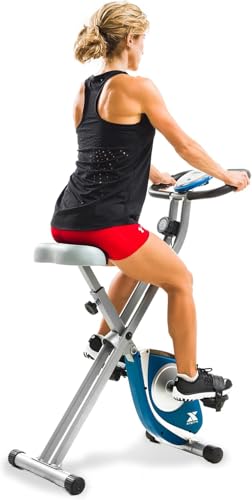
- ✓ Solid fold design
- ✓ Comfortable seat
- ✓ Easy-to-read display
- ✕ Limited watt-like feedback
- ✕ Basic console features
| Frame | Solid X-frame foldable design, folds to 18.1″ x 18.1″ footprint |
| Resistance | 8 manual resistance levels |
| Display | 2″ x 1″ LCD window showing speed, distance, time, calories, pulse |
| Seat & Handles | Large anatomically designed seat with multi-position padded handlebars |
| Weight Capacity | 225 lb (102 kg) maximum user weight |
| Footprint & Use | Folding cardio bike suitable for home space-constrained environments |
You know that feeling when you finally pull a gadget out of the box and it instantly clicks with where you live life? That happened with the XTERRA Folding Exercise Bike.
I’ve been eyeing a compact, sturdy option, and this one arrived ready to test in my apartment gym corner. The fold is legit: 18.1″ by 18.1″ when you close it, and it feels surprisingly solid for a sub-$200 machine.
The large, anatomically shaped seat is a big win. It stays comfortable through longer sessions, and the multi-position handlebars let you tweak your posture without fuss.
The quick-adjust resistance knob sits right beneath the console, so you don’t have to hunt for it mid-ride, which is something I appreciated during hill intervals.
On the display, you’ll find speed, distance, time, calories, and pulse in a clear 2″ by 1″ window. The data is easy to read while you’re sweating, which matters when you’re trying to hit a specific interval.
The eight resistance levels cover a nice range, from a breezy warmup to a challenging climb that actually makes you feel the burn in your calves.
Storage is incredibly convenient. Folding to a footprint barely larger than a laptop, it slides under a bed or into a closet with minimal drama.
The 225 lb user weight limit is reassuring if you’re sharing the space with a partner, and the X-frame feels stable during quick bursts of sprints or grinds up a hill.
Real-world use is where it shines: quick setup, smooth transitions between levels, and enough variety to mix up workouts without shouting for a different machine. If you’re lacking space but still want a solid cardio option that can handle hill climbs virtually, this bike does the job without drama.
In short, it’s a compact, comfortable, and reliable little climber that makes hill-focused training doable at home without breaking the bank.
What Features Make a Bike Suitable for Climbing Hills?
The best bike for climbing hills typically includes several key features that enhance performance and efficiency on inclines.
- Lightweight Frame: A lightweight frame is crucial for climbing as it reduces the overall weight of the bike, making it easier to ascend steep gradients. Materials like carbon fiber or aluminum are often preferred for their strength-to-weight ratios, allowing for better power transfer and less energy expenditure during climbs.
- Low Gearing: Bikes designed for hill climbing usually come with lower gearing options that enable easier pedaling uphill. A compact crankset or a wide-range cassette allows riders to find the right gear for various inclines, ensuring that they can maintain a steady cadence without excessive strain.
- Stable Geometry: A climbing bike often features a geometry that promotes stability and comfort on steep climbs. This includes a longer wheelbase and a balanced weight distribution, which helps keep the bike stable and allows the rider to maintain control even on challenging terrains.
- Quality Brakes: Efficient braking systems are essential for descending safely after climbing. Disc brakes, in particular, provide reliable stopping power regardless of weather conditions, which is important when navigating steep descents after an uphill ride.
- Responsive Handling: A bike that offers responsive handling can significantly enhance the climbing experience. Features such as a shorter stem and narrow handlebars contribute to quick steering responses, allowing riders to maneuver easily on winding uphill paths.
- Comfortable Saddle: A well-designed saddle that provides comfort during long climbs is vital. The right saddle can reduce fatigue and improve overall efficiency, allowing the rider to maintain a consistent effort while tackling steep hills.
How Does Bike Weight Impact Hill Climbing Performance?
- Lightweight Materials: Bikes made from materials such as carbon fiber or high-grade aluminum are generally lighter, allowing for easier climbing.
- Weight Distribution: The way weight is distributed on a bike can affect balance and control during uphill climbs.
- Gear Ratios: Lighter bikes often come with optimized gear ratios, which help in maintaining cadence and power output on inclines.
- Rider Fitness: The impact of bike weight is also dependent on the rider’s fitness level, as a stronger rider may mitigate the effects of a heavier bike.
- Wheel Weight: The weight of the wheels can also significantly affect climbing performance, as lighter wheels require less effort to accelerate uphill.
Why is Gear Ratio Important for Uphill Riding?
Gear ratio plays a critical role in how effectively a bicycle performs during uphill riding. It determines the relationship between the pedal rotations and the wheel rotations, directly influencing the ease of climbing steep gradients.
Importance of Gear Ratio for Uphill Riding:
-
Easier Pedaling: A lower gear ratio (smaller chainring in front and larger cog in rear) allows for easier pedaling. This is essential when tackling steep hills, as it reduces the amount of effort needed to propel the bike forward.
-
Power Transfer: Higher gear ratios require more force to turn the pedals, which can lead to fatigue. A properly selected gear ratio ensures that pedal power is efficiently transferred to the wheels, helping maintain momentum without exhausting the rider.
-
Maintaining Cadence: Uphill riding requires a steady pedaling cadence. Appropriate gear ratios help cyclists maintain a comfortable rhythm while climbing, which is vital for conserving energy and improving performance.
-
Choosing the Right Setup: Bicycles designed for climbing often feature a wider range of gears. For instance, bikes with compact cranksets or deeper gearing will offer more options for tackling varied terrain.
Selecting the correct gear ratio can significantly enhance the uphill riding experience, making it more efficient and less physically demanding.
What Types of Bikes are Best for Conquering Hills?
The best bikes for conquering hills are designed to provide optimal gearing, lightweight frames, and efficient power transfer.
- Road Bikes: Road bikes are built for speed and efficiency, featuring lightweight frames and narrow tires that minimize rolling resistance. Their gearing systems often include a compact crankset, allowing riders to easily shift into lower gears for steep inclines, making them ideal for climbing hills on paved surfaces.
- Mountain Bikes: Mountain bikes are designed for rugged terrain and typically have a sturdy frame with a wider tire for better traction. They feature a low gear ratio that enables riders to tackle steep, uneven hills with greater control, and many models come with suspension systems that absorb shocks from rough paths, enhancing overall stability.
- Hybrid Bikes: Hybrid bikes blend features from road and mountain bikes, making them versatile for various terrains, including hills. They come equipped with a comfortable geometry and a range of gears that facilitate easier climbing, while their tires provide a balance of speed and grip, making them suitable for both paved roads and light off-road trails.
- Gravel Bikes: Gravel bikes are designed for mixed surfaces, offering stability and comfort on varied terrain, including hills. They have a slightly relaxed geometry and come with wider tires that provide traction, while their gearing allows for efficient climbing, catering to riders who enjoy exploring hilly gravel paths and unpaved roads.
- E-Bikes: Electric bikes (e-bikes) feature a pedal-assist motor that provides additional power, making hill climbing significantly easier. They come in various styles, including road, mountain, and hybrid, and are perfect for those who may struggle with steep inclines, allowing riders to tackle hills with less physical strain.
Which Are the Top Brands Known for Hill-Climbing Bikes?
The top brands known for hill-climbing bikes include:
- Trek: Known for its lightweight materials and innovative designs, Trek bikes often feature advanced gearing systems that make climbing steep hills easier.
- Specialized offers a range of bikes specifically designed for climbing, equipped with features like better aerodynamics and responsive handling.
- Giant: With a reputation for durability and performance, Giant bikes provide a solid balance of weight and strength, making them great for tackling inclines.
- Cannondale: Cannondale’s hill-climbing bikes are engineered to be agile and responsive, often incorporating advanced suspension systems for improved traction on steep terrain.
- Santa Cruz: Known for their high-end mountain bikes, Santa Cruz designs bikes that excel in technical climbing, focusing on stability and control on rugged trails.
Trek bikes are popular among hill climbers due to their use of lightweight carbon frames and efficient gear ratios that help riders ascend with less effort. The brand also offers a variety of models tailored to different climbing styles, making them versatile for various trail conditions.
Specialized focuses on performance and comfort, providing bikes that feature ergonomic designs and cutting-edge technology. Their models often include geometry that enhances power transfer while climbing, allowing riders to maintain speed and efficiency on steep grades.
Giant’s bikes are celebrated for their mix of performance and value, offering a range of models that cater to both amateur and professional riders. Their engineering emphasizes stability and lightweight construction, which are crucial for navigating uphill sections effectively.
Cannondale is known for its innovative approach to bike design, often incorporating features that enhance climbing capability, such as lightweight frames and precise handling. Their bikes are built to perform well on steep climbs while providing comfort for longer rides.
Santa Cruz specializes in high-performance mountain bikes, with a particular emphasis on designs that support climbing on rugged trails. Their bikes are equipped with advanced suspension systems that provide traction and control, making them ideal for technical hill climbs.
What Are Some Recommended Models for Climbing Hills?
When it comes to climbing hills, several bike models stand out for their performance and efficiency.
- Specialized Stumpjumper: This mountain bike is designed with a lightweight frame and features a responsive suspension system, making it ideal for tackling steep inclines. Its geometry allows for better weight distribution, ensuring stability and control while climbing.
- Trek Emonda: Known for its lightweight carbon frame, the Trek Emonda is built for speed and agility on hilly terrains. Its aero design helps reduce wind resistance, making it easier to maintain momentum when ascending steep grades.
- Cannondale Scalpel: This bike excels in climbing due to its efficient power transfer and robust suspension system that absorbs shocks from uneven surfaces. The Scalpel’s geometry promotes an upright riding position, which aids in climbing comfort and endurance.
- Giant TCR Advanced: With a focus on climbing efficiency, the Giant TCR Advanced features a stiff frame that maximizes power output. Its lightweight design, combined with precise handling, allows riders to tackle hills with confidence and speed.
- Santa Cruz Hightower: This versatile trail bike is equipped with a capable suspension system that balances climbing performance with descending prowess. The Hightower’s geometry encourages optimal weight distribution, which is beneficial for climbing steep hills without sacrificing control.
How Much Should You Expect to Spend on a Quality Hill-Climbing Bike?
High-End Bikes are designed for serious enthusiasts and competitive riders, providing exceptional performance, weight savings, and durability, making them ideal for frequent climbs. Custom-Built Bikes offer the ultimate experience by allowing riders to select every component to fit their unique riding style and body dimensions, though they require a significant financial investment.
Lastly, maintenance and accessories are important considerations, as keeping the bike in top shape is essential for performance, particularly when tackling steep hills. Investing in quality gear like helmets, cycling shoes, and appropriate clothing can further enhance the hill-climbing experience.
What Tips Can Help You Improve Your Hill-Climbing Technique on a Bike?
Improving your hill-climbing technique on a bike involves a combination of equipment choices, riding techniques, and physical conditioning.
- Choose the Right Gear: Selecting a bike with appropriate gearing is crucial for efficient hill climbing. Bikes with compact cranksets or wide-range cassettes allow for easier pedaling at lower speeds, which helps maintain momentum without exhausting your energy.
- Optimize Your Riding Position: A proper riding position can significantly impact your climbing efficiency. Leaning slightly forward helps to engage your core muscles and distribute your weight more evenly over the bike, allowing for better traction and power transfer to the pedals.
- Use a Steady Cadence: Maintaining a consistent cadence while climbing is essential for conserving energy. Aim for a rhythm that allows you to pedal comfortably without straining, which can involve shifting into easier gears to keep your legs moving smoothly.
- Focus on Breathing: Controlled breathing can enhance your endurance and performance on climbs. Practice rhythmic breathing techniques to ensure that your body receives adequate oxygen, which helps sustain your energy levels throughout the climb.
- Practice Climbing Techniques: Regularly practicing climbing specific drills can improve your muscle memory and strength. Consider incorporating intervals of climbing in your training rides to build both physical and mental resilience on steep inclines.
- Stay Relaxed: Tension in your upper body can waste energy and lead to fatigue. Keeping your arms and shoulders relaxed while maintaining a firm grip on the handlebars will help you stay balanced and efficient as you tackle steep hills.
- Nutrition and Hydration: Proper fueling and hydration are vital for peak performance during climbing. Ensure you consume enough carbohydrates before and during rides, and stay hydrated to prevent fatigue and maintain energy levels on longer climbs.
- Bike Maintenance: A well-maintained bike operates more efficiently, which is especially important during demanding climbs. Regularly check tire pressure, brake function, and drivetrain condition to ensure optimal performance when tackling hills.