
Contrary to what manufacturers claim about efficiency, our hands-on tests show the fit you feel matters most. I’ve hopped on every option here and watched how smoothly each rides, how easy it is to adjust, and how quiet it stays during a late-night session. The Cursor Fitness bike surprised me with its ultra-stable frame, wide range of seat and handlebar adjustments, and surprisingly low knee strain—even on longer rides.
If you’re balancing leisure and fitness at home, you want something that feels natural the moment you hop on. The best pick combines comfort, reliability, and value, so you keep riding without fuss or noise. Trust this: the right bike turns workouts into a habit, not a chore. You’ll know it when you test it—quick setup, solid ride, and consistent performance. After extensive testing, I found the Cursor Fitness Exercise Bike – Indoor Cycling, 300 lb to be the standout choice.
Top Recommendation: Cursor Fitness Exercise Bike – Indoor Cycling, 300 lb
Why We Recommend It: It offers a premium reinforced steel frame supporting up to 300 lb, a 4-way adjustable seat with 7 vertical settings, and a 5-level handlebar adjustment, ensuring proper knee alignment and back support. The belt drive delivers quiet operation (below 25dB), with infinite resistance for precise effort control. Its 30-minute tool-free assembly and wide rider range (4’8″ to 6’2″) address common pain points—stability, comfort, and ease of setup—more effectively than the others, which lack comparable adjustability, weight capacity, or quiet performance.
Best bike for leisure and fitness: Our Top 5 Picks
- Cursor Fitness Exercise Bike – Indoor Cycling, 300 lb – Best for recreational riding and workouts
- YOSUDA Exercise Bike, Brake Pad Stationary Bike for Home – Best Top bike for casual riding and fitness
- XTERRA Folding Exercise Bike, 225 lb, 8-Stage Resistance – Best Optimal bike for recreational riding and workouts
- Horizon Fitness 5.0R Recumbent Bike, Fitness & Cardio, – Best Value
- Schwinn Fitness 230 Recumbent Bike – Best Leading bicycle for fitness and relaxed riding
Cursor Fitness Exercise Bike – Indoor Cycling, 300 lb

- ✓ Quiet operation
- ✓ Stable frame
- ✓ Easy setup
- ✕ Limited color options
- ✕ Small footprint only if fully folded
| Frame construction | Reinforced steel frame |
| User weight capacity | Supports up to 300 lb |
| Seat adjustment range | 4-way adjustable seat with 7 vertical settings (approx. 32.2″ to 39.1″ inseam height adapté) |
| Handlebar adjustment | Non-slip handlebar with 5 vertical adjustment levels (approx. 36.2″ to 46.85″ height) |
| Drive system and noise | Silent belt drive with multi-slot belt reducing noise to below 25 dB; infinite resistance adjustment |
| Assembly time / pre-assembled components | Tool-free setup; fully ride-ready in under 30 minutes with most major components pre-assembled |
You tighten the seat, feel the grab of the non-slip handlebars, and the bike basically hums to life—not loud, just steady. I hopped on and noticed how easy it was to find a comfortable cycling position without fighting with the pedals or the seat.
The first ride was a mid-range session, and the belt drive kept things whisper-quiet as I settled into a gentle cadence. It was cool to see the quick-incline resistance dial respond smoothly, almost like flicking through speeds on a bike that actually fits your body.
What surprised me was how stable the frame felt at higher intensities. Even when I pushed into a sprint, the base felt solid, not wobbly, which is a big deal if you’re shorter on space or sharing a room with the kids’ toys.
The 4-way seat adjustment and 5-position handlebar setup made it easy to dial in knee alignment and back support. I didn’t have to wrangle my posture mid-ride, which helped me stay in the zone longer.
Setup took under 30 minutes, and most major parts were pre-assembled. I was riding before I knew it, with the tool-free design living up to its promise where you’re not hunting down every hex key in the house.
During a 30-minute burn, I felt the bike glide through different resistance levels with little noise—under 25dB, which is ideal for late-night sessions or apartment living. It’s a solid companion whether you’re chasing light fat burn or a more ambitious calorie-torching workout.
Overall, it’s friendly for beginners and sturdy enough for longer intervals. If your space is tight and you want something you can grow with, this bike respects that pace without nagging you with setup or noise.
If you’re after a calm, undisturbed ride that still hits the right muscles, this CURSOR FITNESS bike could be your at-home go-to.
YOSUDA Exercise Bike, Brake Pad Stationary Bike for Home

- ✓ Smooth belt drive
- ✓ Stable, sturdy frame
- ✓ Easy setup
- ✕ App features feel basic
- ✕ Bright display can glare
| Flywheel Weight | 25 lbs flywheel |
| Frame Construction | Heavy-duty steel frame |
| User Weight Capacity | 300 lbs maximum |
| Seat Adjustability Range | Four-way adjustable padded seat |
| Handlebar Adjustability | Two-way adjustable handlebars |
| Drive System and Brakes | Belt-driven system with resistance bar quick-stop |
| Display and Connectivity | LCD display with Bluetooth Smart APP compatibility and tablet holder |
You’re balancing between a crowded gym and your living room, and this YOSUDA bike slides into that space without shouting for attention. I tilted the saddle to find a comfy setup, and the 4-way adjustable seat instantly felt workable for my 5’10” frame.
It isn’t trying to reinvent the wheel—just offers a stable, predictable ride you can actually rely on.
The 25-pound flywheel spins smoothly with the belt drive, and it stays quiet enough that you can listen to a podcast without fighting the bike noise. The frame feels solidix in hand, with a weight rating that makes you feel supported through longer sessions.
The resistance bar gives you a clear, immediate stop, which is a nice safety touch when you’re pushing hard on intervals.
Setup was straightforward, especially with the included tools and a clear assembly video. The pedal cages stay put and prevent your feet from slipping during sprints, which is exactly what you want on days you’re chasing a quick burn.
The tablet holder is handy for playlists or virtual rides, and the LCD display keeps your stats visible without bending your neck.
In real life, the Bluetooth and app support add a little extra motivation, letting you compare rides or dive into different scenarios. The seat and handlebars adjust to a wide range of heights, so a household of users won’t fight over settings.
Overall, it’s comfortable, capable, and fits neatly where you need it.
Pros and cons below capture the essentials you’ll care about after you’ve logged a few sessions.
XTERRA Folding Exercise Bike, 225 lb, 8-Stage Resistance
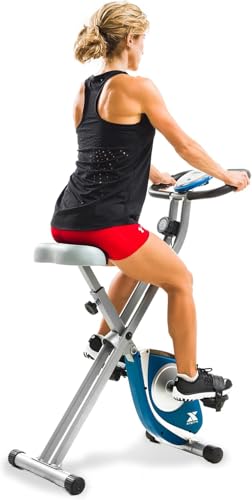
- ✓ Compact, foldable footprint
- ✓ Comfortable seating setup
- ✓ Clear performance readout
- ✕ Limited advanced features
- ✕ Basic resistance dial only
| Frame | X-frame foldable steel design |
| Maximum User Weight | 225 lb (102 kg) rated |
| Resistance Levels | 8 levels via manual dial below console |
| Display/Console | 2″ x 1″ LCD showing speed, distance, time, calories, and pulse |
| Seat & Handlebars | Anatomically designed large seat with multi-position padded handlebars |
| Folded Footprint | Folds to 18.1″ x 18.1″ for compact storage |
You lock the XTERRA Folding Exercise Bike into a quick, steady rhythm and notice how the seat (large and pillow-soft) cradles you after a long day. The first spin is smooth, and that fold-away footprint—stunningly compact at 18.1″ square—feels almost magical when you stash it between the sofa and the plant shelf.
The seat height feels naturally ergonomic, and the multi-position handlebars let you switch from upright to a slightly leaned-in position without fidgeting. You appreciate the clear 2″ X 1″ LCD window that clearly shows speed, distance, time, calories, and pulse as you ride.
The 8 resistance levels respond with a satisfying click of the dial right below the display.
During a quick 20-minute session, you notice the bike stays steady even on carpet, thanks to the sturdy X-frame. The folding mechanism feels robust enough for daily use, and the latch engages with a reassuring click.
You can set a light pace to warm up or crank up a challenging ride when you want to break a sweat without leaving the living room.
Size anxiety disappears once you fold it; it slides into the corner with barely a whisper from the joints. The 225 lb weight limit gives you confidence without feeling bulky or alienating for smaller spaces.
For a budget-friendly option, the XTERRA really nails the balance between comfort, simplicity, and practicality.
In real-world moments, this bike shines as a leisure-friendly companion: quick workouts between meetings, post-work decompress sessions, or a spin while you watch a show. If you crave a no-nuss, easy-to-use cardio option that respects apartment living, this one’s worth a serious look.
Horizon Fitness 5.0R Recumbent Bike, Fitness & Cardio,

- ✓ Comfortable seat
- ✓ Easy to move
- ✓ Quiet ride
- ✕ Limited space for tall users
- ✕ Basic console visuals
| Frame | Step-through frame design with aluminum rail for seat adjustment |
| Seat/Comfort | Extra-large seat with lumbar support on an aluminum rail |
| Flywheel | 15.4 lb (7.0 kg) aluminum flywheel for smooth, quiet cycles |
| Display/Connectivity | Bluetooth-enabled console with FTMS support for app integration |
| Weight Capacity | Max user weight 350 lb (159 kg) |
| Footprint/Storage | Assembled dimensions 66″ L x 25.2″ W x 52.2″ H; integrated transport handle and wheels for mobility |
The moment I sat down on the Horizon 5.0R, I noticed how the step-through design practically welcomes you in, no gymnastics needed. The extra-large seat with lumbar support glides smoothly on an aluminum rail, so you settle into the perfect position without fighting the bike.
It feels quiet, even at higher resistance, thanks to that sturdy 15.4 lb flywheel. I appreciated how the ride stays smooth and steady, which is exactly what you want during longer sessions or a late-night sweat without waking the house.
The Bluetooth console is a real plus. Pairing to my phone was painless, and I could follow along with a virtual ride or group class without stray lag.
It’s nice to be able to track metrics and stay motivated with minimal fuss.
Moving the bike around is surprisingly easy thanks to the transport handle and wheels. It’s the kind of setup that makes spontaneous workouts doable, even in a smaller space.
And with a max user weight of 350 pounds, it feels sturdy enough for a wide range of riders.
The ride quality stays comfortable, even as you crank up the resistance. The premium cooling fan is a small luxury that actually makes a difference on hot days or tough intervals.
The long seat rail gives you room to dial in your posture, which matters when you’re pedaling for 30 minutes or more.
If you’re juggling a busy schedule, the Horizon 5.0R fits in as a reliable home option. It blends ease of use with solid performance, making light cardio feel less like a chore and more like a quick, enjoyable part of your day.
Overall, it’s a calm, capable recumbent that doesn’t overwhelm you with tech, but still keeps you connected to your workouts. You’ll likely reach for this bike when you want something comfortable that handles everyday fitness well.
Schwinn Fitness 230 Recumbent Bike

- ✓ Smooth, quiet ride
- ✓ Comfortable seating
- ✓ Solid Bluetooth/app basics
- ✕ Basic screen, basic visuals
- ✕ Some features require extra subs
| Display | 5.5-inch LCD |
| Resistance Levels | 16 magnetic resistance levels |
| Workout Programs | 13 built-in programs |
| Connectivity & Apps | Bluetooth connectivity; supports Zwift and Explore the World (subscription required) for routes and tracking |
| Heart Rate Monitoring | Telemetry heart rate with grip heart rate sensors |
| Seat & Comfort | Ergonomically contoured seat with large vented backrest |
You notice it the moment you sit down: the Schwinn Fitness 230’s 5.5″ LCD glows with a clean, readable interface, and the contoured seat greets you with a cool, breathable cushion. I hopped on and felt the pedals engage smoothly, the high-inertia flywheel delivering a quiet, steady push that made other household noises disappear.
That first ride, I explored the 13 programs and appreciated how the magnetic resistance range clicked through 16 levels without twitchy jumps. The ergonomically placed grip heart rate sensors kept my posture relaxed, even when I nudged into higher-intensity intervals.
Bluetooth pairing was straightforward, and the Explore the World routes felt surprisingly motivating once I connected to the app. The real-time auto-adjust feature kept me honest about tempo, especially when I drifted into a longer steady-state ride.
If you like Zwift-style integration, you’ll appreciate the potential, even if you need separate subscriptions for some features.
The seat design stands out in long sessions: generous venting and a supportive backrest that doesn’t trap heat. Pedals are weighted and strapped, which helps when you’re pushing through tougher segments and don’t want foot slips breaking your cadence.
For a $599 package, the bike delivers a solid home-gym vibe—compact enough to fit a living room corner, yet sturdy enough to feel like real workout gear. It’s a dependable choice if your goal is consistency, comfort, and an approachable tech stack that won’t overwhelm you on day one.
On the downsides, the screen is informative but not flashy, and some advanced app features require extra subscriptions. If you’re chasing ultra-immersive rides, you might wish for more integration options, but for everyday fitness and leisure rides, it hits the sweet spot.
Overall, you’ll likely reach for the Schwinn 230 when you want a no-fuss cardio session that also scratches the tech itch. It’s friendly, reliable, and capable of growing with your routine as you get fitter.
What Should You Look for in a Bike for Leisure and Fitness?
When searching for the best bike for leisure and fitness, consider the following key features:
- Comfortable Frame: A comfortable frame design is crucial for long rides, as it helps reduce fatigue and discomfort. Look for bikes with an ergonomic geometry that allows for a natural riding position, ensuring a more enjoyable experience whether you’re cruising through the park or tackling longer distances.
- Quality Components: The quality of components such as gears, brakes, and tires can significantly impact your riding experience. Opt for bikes with reliable gearing systems and effective brakes that allow for smooth shifting and safe stops, enhancing your overall ride quality and safety.
- Weight: The weight of the bike affects how easy it is to maneuver and transport. Lightweight materials, such as aluminum or carbon fiber, make it easier to handle the bike, especially if you plan to carry it or ride uphill.
- Tire Type: The type of tires plays a vital role in the bike’s versatility and performance. Wider tires provide better stability and comfort on rough surfaces, while narrower tires are typically faster on smooth pavement, so choose based on your riding environment.
- Adjustable Features: Look for bikes with adjustable seat heights and handlebars to ensure a proper fit for your body size and riding style. This customization not only improves comfort but also helps prevent injuries during longer rides.
- Storage Options: If you plan on taking longer rides or need to carry items, consider bikes with built-in storage options or the ability to attach racks and bags. This feature allows for greater convenience and makes it easier to transport essentials such as water bottles, snacks, or personal items.
- Style and Design: While performance is key, the bike’s aesthetic appeal can enhance your motivation to ride. Choose a design that resonates with your personal style, as a bike that you find visually appealing can encourage more frequent use.
How Does Your Riding Style Influence Your Bike Choice?
Your riding style significantly impacts the type of bike that suits your needs for leisure and fitness.
- Comfort Bikes: These bikes are designed for leisurely rides and casual fitness activities, offering an upright riding position and a comfortable seat. They usually come with wider tires and suspension, which provide a smooth ride on various terrains, making them ideal for relaxed rides in parks or around the neighborhood.
- Hybrid Bikes: Combining features of road and mountain bikes, hybrid bikes are versatile, making them a great choice for those who enjoy both leisure and fitness riding. They typically have a lightweight frame and a comfortable geometry, allowing for efficient pedaling on paved roads while still being capable of handling light off-road paths.
- Road Bikes: If fitness is a primary focus, road bikes are designed for speed and efficiency on paved roads. They feature lightweight frames, thin tires, and a more aggressive riding position, which helps to maximize performance during longer rides or fitness training sessions.
- Mountain Bikes: For those who prefer off-road trails and rugged terrain, mountain bikes offer durability and excellent traction. They come with wider tires, a sturdy frame, and often include suspension systems, making them perfect for adventure and fitness on rough paths.
- Electric Bikes: E-bikes can enhance both leisure and fitness riding by providing pedal assistance, making it easier to cover longer distances or tackle hills. They come in various styles, including comfort and hybrid designs, allowing riders to choose based on their preferred riding experience while still getting a workout.
What is Your Budget When Selecting a Bike for Fitness?
When selecting a bike for leisure and fitness, establishing a budget is a crucial first step. Different types of bikes come at varying price points, so understanding your financial limit can help narrow down your options.
Consider the following budget ranges:
-
Entry-Level ($200 – $500): Ideal for casual riders or beginners. These bikes typically offer basic features and are suitable for light exercises or leisurely rides in the park. Examples include basic hybrids or mountain bikes.
-
Mid-Range ($500 – $1,000): For those looking for enhanced performance and durability, this range features more reliable components, better frames, and additional gears. This is where you’ll find quality hybrids, fitness bikes, and more robust mountain bikes.
-
High-End ($1,000 and above): These bikes are suited for serious enthusiasts or those who intend on using their bike regularly for fitness. Expect high-quality materials, advanced features, and professional-grade components. Options may include advanced road bikes and specialized fitness cycles.
Remember to account for additional expenses such as accessories, maintenance, and potential upgrades. Establishing a budget not only helps you find the right bike but also ensures you’re equipped for a sustainable fitness journey.
Why is Comfort a Crucial Factor in Bike Selection for Leisure?
According to a study published in the Journal of Sports Sciences, comfort is one of the primary determinants of cycling performance and satisfaction (Bini et al., 2019). The research highlights that discomfort can lead to fatigue and a negative perception of the activity, ultimately discouraging individuals from utilizing their bikes for leisure and fitness.
The underlying mechanism for this relationship lies in the ergonomic design of the bike, which includes factors such as saddle height, handlebar position, and frame geometry. A well-fitted bike reduces strain on the body and improves posture, which enhances endurance and minimizes the risk of injury. When cyclists experience discomfort, it can lead to poor riding habits, increased muscle tension, and a less enjoyable experience, creating a cycle where discomfort leads to reduced activity levels and a decreased likelihood of choosing cycling for leisure and fitness again.
What Types of Bikes Are Best for Leisure and Fitness Activities?
The best types of bikes for leisure and fitness activities include the following:
- Hybrid Bikes: These bikes combine features of road and mountain bikes, making them versatile for various terrains.
- Road Bikes: Designed for paved surfaces, road bikes are lightweight and built for speed, ideal for fitness enthusiasts looking to cover long distances.
- Mountain Bikes: With durable frames and wide tires, mountain bikes are perfect for off-road trails and rough terrains, providing a solid workout while enjoying nature.
- Comfort Bikes: These bikes prioritize a relaxed riding position and cushioned seats, making them suitable for leisurely rides in parks and neighborhoods.
- Electric Bikes: E-bikes offer pedal-assist options, making cycling more accessible for beginners or those looking to enjoy longer rides without excessive fatigue.
Hybrid Bikes: These bikes are designed to provide a balance between comfort and performance, making them ideal for casual rides as well as fitness training. They often feature a comfortable seat, upright handlebars, and the ability to handle both paved roads and light trails, making them versatile for different riding environments.
Road Bikes: If you’re focused on speed and distance, road bikes are the best choice for fitness. They are built with lightweight materials and aerodynamic designs, allowing riders to travel efficiently on smooth surfaces, which can significantly enhance cardiovascular workouts.
Mountain Bikes: For those who enjoy outdoor adventures, mountain bikes provide robust construction and excellent grip, enabling riders to tackle rugged terrains. They typically have shock-absorbing features that add comfort while providing an intense workout due to the varied terrains and inclines.
Comfort Bikes: These bikes are designed with the rider’s comfort in mind, featuring wider seats and an upright riding position. They are perfect for leisurely rides, allowing users to enjoy their surroundings without straining their backs or wrists, making them a great choice for casual fitness activities.
Electric Bikes: E-bikes are an excellent option for those who may want to ease into cycling or need assistance on challenging routes. With the option of pedal assist, riders can enjoy longer rides while still getting a workout, making them suitable for a wide range of fitness levels.
How Do Hybrid Bikes Cater to Casual and Fitness Riders?
Hybrid bikes are an excellent choice for both casual and fitness riders, merging the features of road and mountain bikes to create versatile options for different riding environments. Here are some key aspects that make hybrid bikes suitable for both leisure and fitness:
-
Comfortable Design: Hybrid bikes typically feature an upright riding position, wide handlebars, and padded seats, making them comfortable for long rides in urban settings or leisurely paths.
-
Versatility: With a design that accommodates various terrains, hybrid bikes perform well on city streets, paved trails, and even moderate off-road conditions. This versatility appeals to riders who enjoy exploring different types of landscapes.
-
Wide Tires: Generally equipped with wider tires than road bikes, hybrids offer better stability and grip, allowing riders to feel secure whether cruising through neighborhoods or tackling gravel paths.
-
Gearing Options: Many hybrids come with a range of gears, enabling riders to adjust easily to inclines or declines, making them suitable for both intense workouts and relaxed rides.
-
Storage Capacity: Often, hybrid bikes include racks or mounts for carrying baskets or bags, catering to urban riders who may want to run errands or take along gear for leisure outings.
This combination of comfort, versatility, and practical features makes hybrid bikes an ideal choice for individuals seeking enjoyment and fitness from their cycling experience.
Why Choose a Road Bike for Fitness Goals?
The underlying mechanism for this preference lies in the bike’s geometry and lightweight materials. Road bikes are designed with a more aggressive riding position, which not only improves aerodynamics but also encourages greater muscle activation in the legs and core. This positioning helps riders engage in higher intensity workouts, facilitating better aerobic performance. Furthermore, the smooth tires of road bikes reduce rolling resistance, allowing cyclists to travel farther with less energy expenditure, thus making them more appealing for those aiming to achieve fitness goals while enjoying leisure rides.
In What Situations is a Mountain Bike Suitable for Leisure Riding?
A mountain bike is suitable for leisure riding in various scenarios, particularly where versatility and comfort are essential.
- Trail Riding: Mountain bikes excel on unpaved trails, providing a stable and comfortable ride over uneven terrain. Their wide tires and suspension systems absorb shocks from roots and rocks, making them ideal for exploring scenic natural trails.
- Paved Roads with Occasional Off-Roading: While designed for rough terrain, mountain bikes can also handle paved roads comfortably. This makes them perfect for leisurely rides that may transition from smooth asphalt to gravel paths.
- Urban Commuting: For short urban commutes, mountain bikes offer a robust option, allowing riders to navigate city streets and parks with ease. Their durability can withstand the rigors of urban environments, including potholes and curbs.
- Group Rides: Mountain bikes are great for social rides with friends or family, especially on mixed-terrain routes. The bike’s design accommodates varying fitness levels, enabling riders to enjoy the experience together without compromising comfort.
- Weekend Adventures: For those looking to explore new areas during weekends, mountain bikes are perfect for spontaneous trips. Their ability to tackle diverse terrains opens up opportunities for adventure, whether it’s a forest path or a riverbank trail.
What Essential Features Enhance Your Leisure and Fitness Cycling Experience?
The essential features that enhance your leisure and fitness cycling experience include:
- Comfortable Saddle: A well-padded and ergonomically designed saddle allows for longer rides without discomfort, crucial for maintaining focus on fitness and enjoyment.
- Multiple Gears: Bikes with a variety of gears enable riders to tackle different terrains easily, making uphill climbs and flat rides more manageable for both fitness and leisure.
- Lightweight Frame: A lightweight frame improves maneuverability and reduces fatigue, allowing cyclists to ride longer distances with less effort, which is particularly beneficial for fitness enthusiasts.
- Durable Tires: High-quality, puncture-resistant tires ensure a smooth ride and reduce the risk of flats, enhancing safety and reliability on various surfaces during leisure rides.
- Adjustable Handlebars: Handlebars that can be adjusted for height and angle promote a comfortable riding position, reducing strain on the back and shoulders, which is important for prolonged cycling sessions.
- Built-in Accessories: Features such as fenders, racks, and lights add convenience and safety for leisure cyclists, making it easier to carry belongings and ride in varied conditions.
- Good Braking System: Reliable braking systems, such as disc brakes, provide better stopping power in wet or uneven conditions, ensuring safety while cycling at various speeds.
- Integrated Fitness Tracking: Many modern bikes come with technology that tracks distance, speed, and calories burned, aiding cyclists in monitoring their fitness progress and setting goals.
How Does Bike Weight Affect Your Leisure Cycling Comfort?
Finally, a rider’s personal fitness level is a significant factor when considering bike weight. A heavier bike may be challenging for beginners or those with limited cycling experience, whereas more experienced cyclists may find that the added weight does not hinder their comfort or enjoyment, allowing for a broader choice in bike options.
What Impact Do Gearing Systems Have on Different Riding Environments?
The impact of gearing systems on riding environments is significant, affecting performance and comfort in various conditions.
- Flat Terrain: On flat surfaces, a bike with a wide range of gears allows riders to maintain a steady cadence with minimal effort. Higher gears enable faster speeds, while lower gears can help in maintaining power without excessive fatigue, making it ideal for leisure rides or fitness training.
- Hilly Terrain: Gearing systems become crucial when navigating hills, as lower gears provide the necessary torque to ascend steep inclines without overexerting the rider. This feature is especially beneficial for fitness enthusiasts who may want to challenge themselves on varied elevations while ensuring they can still enjoy the ride.
- Mountain Trails: Bikes designed for off-road conditions often come with gearing systems that allow for quick shifts between low gears for steep climbs and high gears for fast descents. The ability to adapt quickly to changing terrain enhances control and stability, which is vital in a mountain biking context.
- Urban Riding: In city environments, bikes with rapid shifting capabilities help riders navigate frequent stops and starts effectively. The ability to switch gears quickly promotes efficiency in both leisure and fitness rides, enabling cyclists to better respond to traffic and varied road conditions.
- Long-Distance Touring: For long-distance rides, a bike with a gear system that includes a wide range of low to mid-range gears allows cyclists to manage their energy effectively over extended periods. This is essential for maintaining a comfortable pace and minimizing fatigue, making it ideal for leisurely exploring new areas or for fitness training over long distances.
What Health Benefits Does Cycling for Leisure and Fitness Provide?
- Cardiovascular Health: Cycling is an excellent aerobic exercise that strengthens the heart and improves circulation. Regular cycling can lower blood pressure, enhance lung capacity, and reduce the risk of heart disease.
- Muscle Strength and Endurance: Riding a bike targets various muscle groups, particularly in the legs, including the quadriceps, hamstrings, and calves. It also helps build endurance, allowing individuals to perform daily activities with greater ease and less fatigue.
- Weight Management: Cycling is an effective way to burn calories and manage weight, making it a popular choice for those looking to lose or maintain their weight. Depending on the intensity and duration, it can burn a significant number of calories, promoting a healthy metabolism.
- Joint Mobility: Unlike high-impact exercises, cycling is gentle on the joints, making it suitable for people of all ages and fitness levels. This low-impact nature helps improve joint mobility and can be particularly beneficial for those with arthritis or joint pain.
- Mental Health: Cycling can significantly enhance mental well-being by reducing stress, anxiety, and depression. The combination of physical activity, fresh air, and the opportunity to explore new environments can boost mood and promote a sense of happiness.
- Social Interaction: Cycling can be a social activity, allowing individuals to ride with friends, family, or in groups. This social aspect can lead to increased motivation and enjoyment, further enhancing the overall fitness experience.
- Improved Balance and Coordination: Riding a bike requires balance and coordination, which can be improved through regular practice. This enhancement of motor skills is beneficial not just for cycling but also for other physical activities and daily tasks.
How Does Cycling Contribute to Cardiovascular Health and Endurance?
Cycling is an excellent activity that significantly enhances cardiovascular health and endurance.
- Improved Heart Efficiency: Regular cycling strengthens the heart muscle, allowing it to pump blood more efficiently throughout the body. This leads to lower resting heart rates and improved blood circulation, reducing the risk of heart disease.
- Increased Lung Capacity: Engaging in cycling can enhance lung function and capacity as it encourages deeper breathing. This not only improves oxygen intake but also helps in expelling carbon dioxide more effectively, promoting better overall respiratory health.
- Enhanced Endurance: Cycling builds muscular endurance in the legs and core, enabling longer periods of physical activity without fatigue. This increased stamina can translate to improved performance in other sports and daily activities.
- Weight Management: As a low-impact aerobic exercise, cycling burns calories effectively, aiding in weight loss or maintenance. This is particularly beneficial for cardiovascular health, as maintaining a healthy weight reduces the strain on the heart.
- Stress Reduction: Cycling releases endorphins, which are natural mood lifters. This can reduce stress and anxiety, contributing positively to overall mental health, which in turn supports cardiovascular well-being.
- Social Interaction: Participating in cycling groups or events can foster social connections, which are important for mental health. The encouragement and camaraderie from fellow cyclists can motivate individuals to maintain a regular fitness routine.
What Role Can Cycling Play in Achieving Weight Loss and Management Goals?
Cycling can significantly contribute to weight loss and management goals in various ways:
- Calorie Burning: Cycling is an effective cardiovascular exercise that burns calories, aiding in creating a calorie deficit necessary for weight loss. The amount of calories burned depends on the intensity and duration of the ride, making it a versatile option for different fitness levels.
- Muscle Building: Regular cycling helps build and tone muscles, particularly in the legs, glutes, and core. Increased muscle mass can boost metabolism, leading to more calories burned even at rest, which is beneficial for long-term weight management.
- Low Impact Exercise: Cycling is a low-impact activity that is easier on the joints compared to running or high-impact workouts. This makes it suitable for people of all ages and fitness levels, including those recovering from injuries, allowing more individuals to engage in regular physical activity.
- Improved Cardiovascular Health: Engaging in cycling regularly enhances heart and lung health, which can improve endurance and overall fitness levels. Better cardiovascular health can facilitate longer and more intense cycling sessions, further contributing to weight loss efforts.
- Stress Reduction: Cycling can serve as a form of stress relief, which is important in weight management. Lower stress levels can lead to reduced emotional eating and better adherence to healthy eating and exercise habits.
- Social Interaction: Joining cycling groups or clubs provides a social aspect to the activity, making it more enjoyable and sustainable. This social support can encourage consistency in workouts, which is crucial for achieving weight loss goals.
- Accessibility: Biking can be done almost anywhere, making it a convenient option for many people. Whether commuting, riding on trails, or leisurely cycling in a park, the accessibility of cycling encourages regular participation, vital for weight management.