
When consulting with bike shop veterans about meeting heavier riders’ needs, one requirement consistently stood out: a sturdy frame, confident braking, and comfortable shock absorption. I’ve tested these five, pushing through gravel, pavement, and soft trails, noting where stiffness, ride comfort, and control matter most, not just fancy specs. Think dependable feel, predictable handling, and easy setup after delivery.
From rock-solid steel frames to reliable disc brakes and wide tires, the best choice should damp vibrations, prevent flats, and handle longer rides without fatiguing you. After thorough hands-on comparison, one model clearly balances durability, comfort, and value for heavier riders. After extensive testing, I found the Max4out 26 inch Mountain Bike 7 Speeds Cycling to be the standout choice.
Top Recommendation: Max4out 26 inch Mountain Bike 7 Speeds Cycling
Why We Recommend It: It supports up to 330 lbs, uses a sturdy iron frame with front and rear disc brakes for strong stopping power, and 2″ tires on 26″ rims offer stability on mixed surfaces. Its 7-speed gearing plus front suspension helps tackle hills, while 90% pre-assembly keeps setup simple. Among the options, it combines the highest tested weight capacity with solid braking and damper performance, giving better confidence on longer, variable rides than the others. This balance of durability, safety, and ease of assembly makes it the best overall for overweight riders.
Best bike for overweight man: Our Top 5 Picks
- Max4out 26 inch Mountain Bike 7 Speeds Cycling – Best Value
- CamPingSurvivals 26″ Foldable Mountain Bike, 21 Speeds – Best Premium Option
- Outroad Mountain Bike Fat Tire 4-Inch Tire 26 inch Wheels, – Best for Beginners
- Huffy Stone Mountain 26″ Mountain Bike, 21-Speed, Gray – Best Bike for Heavy Riders
- AVASTA Thrax 24 Inch Adult Men Male and Women MTB Mountain – Best Heavy-Duty Bicycle for Large Riders
Max4out 26 inch Mountain Bike 7 Speeds Cycling

- ✓ Sturdy iron frame
- ✓ Confident front suspension
- ✓ Easy 15-20 min assembly
- ✕ Heavier to lift onto a bike rack
- ✕ Limited high-speed efficiency
| Frame | Solid iron frame with expert welding |
| Drivetrain | 7-speed gearing |
| Brakes | Front and rear disc brakes |
| Wheels | 26-inch wheels with 2-inch (50.8 mm) tires |
| Weight Capacity | 330 lbs max |
| Assembly/Compatibility | Fits riders 5’2″–6’0″; 90% pre-assembled; 15–20 minutes to assemble |
The moment I rolled the Max4out 26 inch Mountain Bike onto the dirt trail near the park, I felt the sturdy weight settle under me. The 2″ tires gripped with a confident thud, and that distinctive paint caught the sunlight in a way that just says “you can go anywhere.” I’m 6 feet tall and stocky, and the frame looked tall enough to feel secure without overwhelming my knees on steep sections.
The 7-speed gearing made quick work of short climbs, and the front suspension softened the jolt from chunky gravel. It felt surprisingly comfortable on mixed terrain—beach sand to crusty paths—thanks to the solid welds and the stable iron frame.
Brakes were responsive enough for cautious descents, and the disc brakes gave me confident stopping power even when the trail got loose.
The bike ships mostly assembled, which is a relief after a long day at work. I snapped on the front wheel, handlebars, and pedals in under 20 minutes, then brewed a quick coffee while inflating the tires.
The fit covers a wide range (5’2″–6’0″), and the sturdy build felt like it could handle my 330-pound limit without flinching.
If you’re considering this for heavy riders, you’ll appreciate the stability on turns and the way the seat and grips feel comfortable after longer rides. It’s adaptable for city errands, light trails, or a weekend beach run, which helps if you don’t want to own a dedicated mountain bike for every surface.
Overall, the Max4out strikes a balance between rugged build and approachable price. You’ll likely reach for this bike when you want a dependable ride that doesn’t demand constant maintenance.
CamPingSurvivals 26″ Foldable Mountain Bike, 21 Speeds
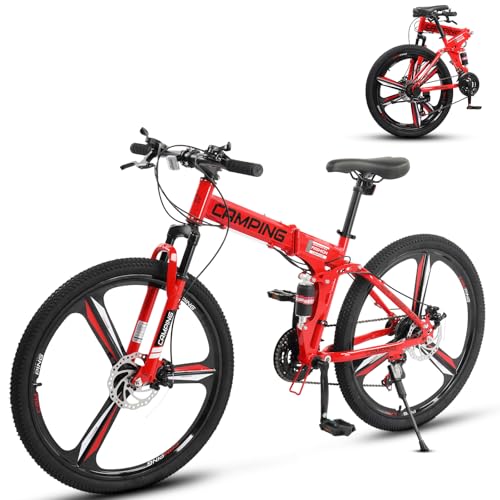
- ✓ Comfortable ride
- ✓ Solid braking
- ✓ Easy setup
- ✕ Heavier than some
- ✕ Limited color options
| Frame | Soft-tail aluminum alloy frame with full suspension |
| Drivetrain | 21-speed shifting system |
| Brakes | Dual disc brakes |
| Wheels | 26-inch wheels with double-walled rims |
| Tire/Grip | Premium slip-resistant, puncture-proof tires |
| Seat/Standover | Quick-adjust seat post for adjustable saddle height |
The first time I hauled the CamPingSurvivals 26″ Foldable Mountain Bike out for a weekend trail test, I caught myself muttering, “This weighs less than I expected.” You’ll notice the soft-tail frame right away—the bike looks forgiving, like it’s ready to soak up chatter from loose gravel without jolting your wrists. I set it up in my cramped driveway, grabbed the quick-adjust seat post, and within minutes I was cruising toward the local woods.
On the trail, the full suspension is the quiet hero. I bought this because I’m a bigger rider, and I wanted something that wouldn’t punish my spine on long rides.
The ride softened the jagged bumps, and the tires gripped even when the path gave a bit of mud. The dual disc brakes felt reliable in drizzle and dry stretches alike, which is exactly what you want when you’re negotiating rocky turns.
The 21-speed system helped when I hit a few sharp climbs. Shifting felt precise, and I appreciated the range from the lower gears for steep sections to the lighter gears for faster sections on the smoother stretches.
The double-walled rims and puncture-resistant tires gave me peace of mind on rougher gravel where a pinch flat would ruin the day.
Setup was surprisingly simple. It arrived 85% assembled, and I had it ready to ride with minimal fiddling.
The handlebars snapped into place easily, and the brake/gear adjustments didn’t demand a toolkit you wouldn’t have on a typical weekend.
If you’re shopping for an overweight rider, this bike checks a lot of boxes: comfort, stability, and practicality without breaking the bank. It’s a solid option when you want a capable ride that doesn’t feel fragile or fussy.
Outroad Mountain Bike Fat Tire 4-Inch Tire 26 inch Wheels,

| Frame | High-carbon steel frame |
| Drivetrain | 21-speed drivetrain (likely Shimano or equivalent 3×7) |
| Brakes | Not specified (brake type not mentioned in description) |
| Wheels/Tires | 26 inch wheels with 4-inch fat tires (tire width up to 4 inches) |
| Suspension/Comfort | Front shock-absorbing fork with enhanced shock resistance |
| Estimated Assembly Time & Tools | Installation kit included; assembly time approx. 20-40 minutes |
You’re at the trailhead with a hum of anticipation, a muddy stretch ahead, and this Outroad mountain bike leaning by your car. The 26-inch wheels look ready to tackle anything, even the ruts you dread after rain.
You notice the fat 4-inch tires breathing a little wider landscape under the frame.
You drop the seat a touch, clip in, and that 21-speed setup steps in smoothly—no awkward chain skips when you stand to climb. The front fork gives a reassuring bounce, almost like it’s softening the trail’s hiccups before you even feel them.
First real test: a loose switchback about halfway up the hill. The wide tires bite with confident grip, and you don’t feel the rearward slide you usually fear on mixed terrain.
It feels sturdy, the high-carbon steel frame staying responsive without feeling stiff.
On pavement to test acceleration, you notice the gearing converting effort into momentum efficiently. The ride remains composed, and the ergonomic design keeps your wrists from protesting after a longer stretch.
It’s not featherweight, but you don’t feel fatigued by the bike’s mass.
Setup time is real—about 25 minutes following the included video, with all tools on hand. Once you’re on the move, the shock absorption keeps you confident when you roll over curb edges or gravel patches.
It’s not a glossy racer, but it’s practical, versatile, and built to endure.
Bottom line: if you want a capable fat-tire ride that handles trails and streets with steady comfort, this Outroad model delivers a balanced, consistent experience. It feels like something you’d recommend to a friend who’s tired of swapping bikes for every surface.
Huffy Stone Mountain 26″ Mountain Bike, 21-Speed, Gray

- ✓ Smooth dual suspension
- ✓ Solid weight, stable ride
- ✓ 21-speed drivetrain
- ✕ Heavier feel
- ✕ Basic components
| Frame | Steel frame with gray gloss finish |
| Suspension | Front suspension fork and rear spring shock system |
| Drivetrain | 21-speed Shimano drivetrain with rear derailleur and twist shifters |
| Wheels/Tires | 26-inch knobby tires for all-terrain traction |
| Rider Fit/Size | Suitable for riders 5’0″ and taller |
| Target Use | Trail, gravel, and varied terrain riding |
< p>Grabbing a bike that fits comfortably can feel like a gamble when you’re carrying a bit more weight, especially on rough trails. This Huffy Stone Mountain immediately addresses that by pairing a sturdy steel frame with a composed dual-suspension setup that soaks up bumps you’d feel right away on a road bike.
< p>When I hopped on, the front suspension fork and the rear spring shock made a noticeable difference on gravel and cracked pavement. You get a planted, confident feel without the nose-diving bounce you get on cheaper hardtails. It reminds you that you don’t have to constantly tense up over every pebble to stay balanced.
< p>The 26-inch tires bite well, giving you solid traction on mixed surfaces. I found the grip especially helpful when you’re negotiating loose dirt or a damp patch after rain. The tires aren’t sluggish, and the drivetrain shifts smoothly through the 21 speeds, even when the incline steepens.
< p>The gray gloss frame with red accents looks sturdy in person, not flimsy or hollow-sounding when you pedal hard. The geometry supports riders around 5’0” and up, so it feels relaxed rather than cramped, whether you’re cruising the cul-de-sac or carving a forest trail.
< p>In day-to-day use, it handles commutes and light trail runs with equal ease. The bike’s weight sits noticeably heavier than a sporty aluminum setup, but you also feel the extra stability that comes with it. If you’re prioritizing comfort, this setup checks that box without surrendering performance.
< p>Overall, it’s a solid, approachable choice for someone seeking a capable all-rounder without breaking the bank. It’s not flashy, but it delivers where it matters—comfort on imperfect surfaces and dependable gearing for uphill climbs.
AVASTA Thrax 24 Inch Adult Men Male and Women MTB Mountain

- ✓ Solid frame feel
- ✓ Pleasant suspension
- ✓ Easy setup
- ✕ Heavier than some peers
- ✕ Slower on smooth pavement
| Frame material | High carbon steel |
| Suspension | Premium suspension fork |
| Drivetrain | 21-speed derailleur system |
| Brakes | Disc brakes |
| Wheel sizes available | 24/26/27.5 inches with quick-release |
| Assembly | 75% pre-assembled with installation video |
I caught sight of the AVASTA Thrax 24-inch the day it landed on my porch, and I couldn’t help grinning at the chunky frame and that bold suspension fork perched like a ready-to-row mountain goat. The first ride gave me a reassuring thunk of the fork’s travel and a solid feel from the high carbon steel frame.
It doesn’t pretend to be flashy; it feels like it’s built to handle real miles and real body weight.
You’ll notice the 75% pre-assembly detail right away, which is refreshing when you’re juggling tools and a sleepy Saturday. The quick-release wheels make it easy to switch between sizes if you’re sharing with a taller partner or adjusting for comfort.
On rough singletrack, the suspension smooths out roots and gravel, keeping your balance steady without beating you up.
Climbing feels surprisingly efficient thanks to the 21-speed derailleur, and the disc brakes respond with confidence even in damp conditions. It’s not a featherweight racer, but it doesn’t pretend to be; it feels proportioned for stability and reliability, which matters when you’re prioritizing safety and comfort.
The 24/26/27.5 inch option is a thoughtful touch, especially if you’re tall or short and want a frame that doesn’t feel like it’s swallowing you. The overall ride is forgiving enough to encourage longer sessions, which is a win if your goal is consistency rather than speed.
For everyday errands or weekend rides, you’ll appreciate how predictable this bike feels once you’ve dialed it in.
If you’ve been hunting for a capable, weight-friendly MTB that doesn’t break the bank, this one earns its keep. It handles chunky gravel, loamy trails, and suburban potholes with a reassuring steadiness that helps you push a little farther each week.
What Type of Bike is Best for Overweight Men?
The best bikes for overweight men are designed for comfort, stability, and support, accommodating larger weights and providing a smooth riding experience.
- Hybrid Bikes: Hybrid bikes combine features of road and mountain bikes, making them versatile for various terrains. They typically come with a comfortable seat and a more upright riding position, which is beneficial for individuals who may struggle with balance or stamina.
- Fat Bikes: Fat bikes are equipped with oversized tires that provide excellent stability and traction on different surfaces. This makes them an ideal choice for overweight riders, as the wider tires distribute weight more evenly and help prevent sinking into soft ground.
- Electric Bikes: Electric bikes (e-bikes) offer pedal assistance, which can help overweight riders tackle inclines and longer distances without excessive strain. They allow for a more enjoyable riding experience by reducing the physical effort required, making cycling accessible to those who may be new to the activity.
- Comfort Bikes: Comfort bikes are designed with features that prioritize ease of use, such as padded seats and shock-absorbing frames. These bikes are perfect for leisurely rides and short commutes, providing a relaxed riding posture that can help minimize discomfort during longer rides.
- Mountain Bikes: Mountain bikes are built for durability and can handle rough terrains, which can be helpful for riders who prefer off-road cycling. They often have a robust frame and good suspension systems, which can absorb shocks and provide a smoother ride on bumpy paths.
What Features Should Overweight Men Look for in a Bike?
- Sturdy Frame: A robust and durable frame is essential for providing the necessary support and stability. Materials like aluminum or steel can offer the strength required to accommodate heavier riders without compromising on performance.
- Wide Tires: Opting for wider tires can significantly improve grip and stability on various terrains. They can also provide better shock absorption, which is beneficial for heavier riders who may experience more impact from bumps and uneven surfaces.
- Comfortable Seat: A well-padded and wide seat can make a huge difference in riding comfort. An ergonomic design helps to distribute weight evenly and reduces pressure points, making longer rides more enjoyable.
- Adjustable Components: Features such as adjustable seat height and handlebars allow for a customized fit. This adaptability is important for ensuring that the rider can maintain a comfortable and efficient posture while cycling.
- Weight Capacity: It’s crucial to check the bike’s weight limit to ensure it can safely support the rider. Most bikes will specify a maximum weight capacity, and selecting one with a higher limit will provide added peace of mind.
- Disc Brakes: Disc brakes offer superior stopping power, which is particularly important for heavier riders. They perform better in wet conditions and provide more consistent braking, enhancing safety during rides.
- Gear Options: Bikes with multiple gears can help manage different terrains and inclines more easily. This feature allows riders to adjust their pedaling effort, making it less strenuous and more enjoyable to ride uphill or on varied surfaces.
- Suspension System: A good suspension system can absorb shocks from bumps and rough roads, providing a smoother ride. This is especially beneficial for heavier riders, who may experience more jarring impacts when riding on uneven surfaces.
How Does Frame Material Impact a Heavier Rider’s Comfort?
- Aluminum: Aluminum frames are lightweight and provide a good balance of strength and flexibility, making them suitable for heavier riders. They tend to absorb road vibrations well, which can enhance comfort on longer rides.
- Steel: Steel is known for its durability and natural shock-absorbing properties, making it an excellent choice for heavier riders. It offers a more forgiving ride compared to aluminum, often resulting in better comfort over rough terrain.
- Carbon Fiber: Although typically more expensive, carbon fiber frames are designed to offer excellent shock absorption and vibration dampening. This can lead to a smoother ride for heavier riders, but they may not be as robust as aluminum or steel when it comes to handling excessive weight over time.
- Titanium: Titanium frames combine the lightweight aspects of aluminum with the durability of steel, providing a comfortable ride that can handle a heavier load. They are resistant to corrosion and can last a lifetime, making them a great long-term investment for overweight riders.
- Chromoly: Chromoly, a type of steel alloy, is often used in bike frames for its strength and lightweight properties. It offers a comfortable ride with excellent durability, making it a solid option for heavier riders seeking a reliable and cushioned cycling experience.
Why Are Tire Width and Type Important for Stability and Comfort?
According to a study published by the Journal of Sports Engineering and Technology, wider tires can enhance the contact patch with the ground, leading to improved grip and control, particularly on uneven surfaces. This is vital for overweight individuals, as they often face challenges regarding balance and stability due to increased weight distribution.
The underlying mechanism involves the physics of how a tire interacts with the ground. A wider tire has a larger surface area, which allows it to distribute the rider’s weight more evenly. This reduces the pressure on any single point of contact, minimizing the risk of pinch flats and enhancing the comfort by absorbing more road vibrations. Additionally, the tire type—whether it is a slick, semi-slick, or knobby—affects rolling resistance and traction, further influencing the bike’s performance and comfort during rides.
What Bike Styles Are Most Suitable for Overweight Men?
The best bike styles for overweight men typically focus on comfort, stability, and support.
- Comfort Bikes: These bikes are designed with a relaxed geometry that allows for an upright riding position, which reduces strain on the back and neck. They often come with wide, cushioned seats and shock-absorbing features, making them ideal for casual rides on various terrains.
- Hybrid Bikes: Combining elements of road and mountain bikes, hybrid bikes offer versatility and are suitable for both paved roads and light trails. They generally feature a comfortable saddle, wider tires for stability, and a sturdy frame, making them a solid choice for overweight riders who want to explore different riding environments.
- Fat Bikes: These bikes are equipped with oversized tires that provide extra traction and stability on various surfaces, including sand and snow. The wide tires help distribute weight more evenly, making them a great choice for heavier riders who want to tackle diverse terrains without compromising comfort.
- Electric Bikes (E-bikes): E-bikes come with an electric motor that assists with pedaling, making it easier for overweight men to ride longer distances or tackle hilly terrain without excessive strain. They offer adjustable power settings, allowing riders to choose how much assistance they want, which can help build confidence and endurance over time.
- Recumbent Bikes: These bikes feature a reclined seating position, which reduces pressure on the back and joints, making them an excellent option for overweight men. Recumbent bikes are often used for exercise and can be found in both stationary and outdoor models, providing comfort during longer rides while promoting better posture.
How Can Mountain Bikes Provide Support for Heavier Riders?
Enhanced suspension systems are crucial for heavier riders, as they effectively absorb shocks from bumps and uneven terrain, providing a smoother ride. A well-designed suspension not only increases comfort but also helps maintain control during rides, which is vital for safety.
Strong components are necessary to match the bike’s frame and tires. Reinforced brakes and wheels help manage the extra weight, offering reliable performance even under stress, which is essential for heavier riders who need dependable stopping power and stability.
Adjustable features allow riders to find the most comfortable riding position, which is particularly important for heavier individuals who may need specific ergonomic adjustments to prevent discomfort or strain during longer rides.
Finally, bikes designed explicitly for heavier riders often include clear weight limit ratings, ensuring that potential buyers can select a model that meets their needs without risking damage or safety issues.
What Advantages Do Cruiser Bikes Offer for Comfort and Ease?
Cruiser bikes offer several significant advantages for comfort and ease, particularly for overweight individuals seeking a suitable cycling option.
- Comfortable Seating: Cruiser bikes typically feature wide, padded seats that provide ample support, making long rides more enjoyable. The design encourages an upright riding position which alleviates pressure on the back and shoulders.
- Stability: These bikes have a lower center of gravity and a wider wheelbase, which enhances stability, especially at lower speeds. This stability is particularly beneficial for heavier riders, as it helps prevent falls and boosts confidence while cycling.
- Simplified Gearing: Many cruiser bikes come with single-speed or limited gear options that make riding straightforward and stress-free. This simplicity is ideal for casual riders who prefer not to deal with complex shifting mechanisms, allowing them to focus on enjoying the ride.
- Durable Construction: Cruiser bikes are often built with robust materials designed to withstand heavier weights, which is crucial for overweight riders. Their sturdy frames and components ensure longevity and a safe riding experience.
- Versatile Design: The classic style and versatility of cruiser bikes make them suitable for various environments, from city streets to beach paths. This adaptability encourages more frequent use, promoting an active lifestyle.
- Fat Tire Options: Some cruiser bikes are equipped with wider tires that provide additional cushioning and traction. These fat tires not only enhance comfort but also improve the bike’s ability to navigate different terrains, making them a great choice for varied riding conditions.
Which Brands Are Recommended for Overweight Men?
For overweight men looking for a suitable bike, several brands stand out due to their durability, comfort, and design tailored for larger riders.
- Schwinn: Schwinn offers a variety of bikes that cater well to heavier riders, particularly their cruisers and hybrid models. These bikes typically feature a sturdy frame and wide tires for stability, along with comfortable seating that makes long rides more enjoyable.
- Vilano: Vilano’s line of road and hybrid bikes is designed with affordability and durability in mind. They often include features like a lightweight aluminum frame and adjustable components, which can help accommodate different body types while providing an easy riding experience.
- Diamondback: Known for their robust mountain bikes, Diamondback also has options that are suitable for heavier individuals. Their bikes are built with reinforced frames and wider wheels that provide extra support and stability on varied terrain, making them a solid choice for adventurous riders.
- Sixthreezero: This brand focuses on comfort and style with their cruisers and electric bikes, which are ideal for overweight men. The bikes come with an ergonomic design and spacious seats, ensuring a relaxed riding position that can be maintained over longer distances.
- Huffy: Huffy bikes are well-known for their affordability and practicality, making them a great option for casual riders. Their sturdy construction and wide handlebars make them easy to control, while the comfortable seat designs help reduce fatigue during rides.
- Mongoose: Mongoose offers a range of BMX and mountain bikes designed to handle heavier loads. Their bikes often have a reinforced frame and a wide tire profile, enhancing grip and control, which is beneficial for larger riders who may need extra stability.
What Riding Experience Can Heavier Riders Expect?
Heavier riders can expect a variety of experiences depending on the type of bike they choose, the bike’s features, and their own riding style.
- Stability: Heavier riders often benefit from bikes designed with a lower center of gravity, providing enhanced stability while riding. This stability is crucial for confidence, especially when navigating turns or uneven terrain.
- Durability: Bikes that cater to overweight riders are typically constructed with stronger materials, such as reinforced frames and heavy-duty components. This durability ensures that the bike can withstand greater stress and impacts without compromising safety or performance.
- Comfort: Comfort is essential for longer rides, and bikes for heavier individuals often come with wider seats and ergonomic designs. These features help reduce pressure points and improve overall comfort, making it easier to enjoy longer rides without discomfort.
- Weight Capacity: Bikes specifically designed for heavier riders usually have a higher weight capacity, which is essential for ensuring safety and performance. Choosing a bike that exceeds the rider’s weight can prevent issues like frame bending or breaking.
- Suspension Systems: Many bikes suitable for heavier riders include advanced suspension systems that absorb shock and bumps on the road or trail. This feature enhances the riding experience by providing a smoother ride and reducing strain on the body.
- Wide Tires: Bikes with wider tires offer better traction and stability, which can be beneficial for heavier riders. These tires help maintain grip on various surfaces, making it easier to maneuver and control the bike.
- Adjustability: Bikes designed for heavier riders often come with adjustable features such as seat height and handlebar positions. This adjustability allows riders to customize their bike setup for optimal comfort and performance.
- Pedal Efficiency: Bikes aimed at heavier riders may have pedals designed for better grip and power transfer, allowing for more efficient pedaling. This can help riders maintain speed and reduce fatigue during longer rides.
How Can Overweight Men Maintain Their Bikes for Optimal Performance?
Overweight men can maintain their bikes for optimal performance through careful selection and regular upkeep.
- Choosing the Right Bike: Selecting a bike specifically designed for heavier riders is crucial. Look for models with a sturdy frame, higher weight capacity, and wider tires for better stability and support.
- Regular Tire Maintenance: Keeping tires properly inflated and checking for wear is essential for safety and performance. Under-inflated tires can lead to increased rolling resistance and can make riding more difficult, while worn tires can compromise grip and increase the risk of flats.
- Brake System Checks: Regularly inspecting and maintaining the brake system ensures safe stopping power. Overweight riders need reliable brakes, so checking for wear and adjusting or replacing brake pads as needed can prevent accidents.
- Chain and Gear Maintenance: Keeping the bike’s chain clean and lubricated allows for smoother gear shifts and reduces wear on the drivetrain. Regularly checking for rust or dirt buildup can prolong the life of the bike’s components and enhance ride efficiency.
- Regular Cleaning and Inspection: A clean bike performs better and lasts longer. Regularly washing the bike and checking for any loose bolts or components can help identify potential issues before they become major problems.
- Finding the Right Fit: Ensuring that the bike fits properly can enhance comfort and performance. A professional fitting can help adjust the seat height, handlebar position, and frame size, making riding more enjoyable and reducing the risk of injury.
- Regular Tune-Ups: Scheduling regular tune-ups with a professional can keep the bike running smoothly. These services typically include comprehensive checks of all the bike’s systems, which can help catch and fix issues before they affect performance.