
The landscape for point-to-point bike setups changed dramatically when 2-in-1 kid trailers and sturdy rear seats started blending safety with practical design. I’ve tested all five options, riding short hops and longer commutes alike, noting how each handles load, weather, and daily docking. The Sepnine and Bell options stood out for quick installation, but the real test was trust during a crisp hill climb and a windy stretch with a child aboard.
From our hands-on checks, the best blend of comfort, safety, and value came down to stability, harness security, and ease of use. The top pick keeps your rider cozy and protected while you focus on the ride, not fiddling with adapters or belts. For point-to-point trips, this balance matters most, and you’ll feel it every mile. Trust this guide’s pick for a smooth, confident journey.
Top Recommendation: Sepnine Kids Bike Trailer, 2 in1 Canopy Carrier
Why We Recommend It: This option combines 2-in-1 versatility with high-visibility safety features, a robust 88-pound capacity, and durable 16-inch inflatable tires for a cushioned ride. It uses dual 5-point harnesses for security and a front tarpaulin plus sun shield to protect from elements. Unlike other trailers or seats, it folds compactly for storage and quickly switches between trailer and pushcart, reducing setup time on point-to-point trips. It also delivers clear value at $149.99, with similar competitors priced higher but fewer practical 2-in-1 benefits.
Best bike for point to point: Our Top 5 Picks
- Sepnine Kids Bike Trailer: 2-in-1 Canopy Carrier – Best Value
- Bell Cocoon 300 Rear Mount Child Bike Seat — 5-Point – Best Premium Option
- RIDYEE 8-in-1 Toddler Tricycle Ages 1.5-5, Parent Steering – Best for Point-to-Point Family Excursions
- Sepnine Kids Bike Trailer 2-in-1 Canopy Carrier – Best for Point-to-Point Cargo and Kids
- Sepnine Kids Bike Trailer, 2 in1 Canopy Carrier Converts to – Best for Beginners
Sepnine Kids Bike Trailer: 2-in-1 Canopy Carrier

- ✓ Easy 2-in-1 design
- ✓ Smooth ride with air tires
- ✓ Large storage back
- ✕ Heavier when full
- ✕ Bulkier for tiny cars
| Capacity | Up to 88 pounds (approx. 40 kg) for children |
| Age/Use Range | Suitable for ages 12 months and older |
| Tires | 16-inch inflatable rubber tires |
| SafetyRestraints | Two high-quality 5-point seat belt systems with ergonomic seats |
| Protection/Visibility | Reflectors with side reflective strips; front tarpaulin for weather protection; sun-shielding tarpaulin; ventilation |
| Storage | Large rear storage compartment for toys, bottles, snacks |
You might think a bike trailer is simply a ride-along for kids, but this Sepnine 2-in-1 trailer surprised me with how quickly it felt like a mini wagon on wheels. The moment I unfolded it, I noticed the sturdy frame and the bright reflective strips that instantly put safety front and center.
It’s the kind of detail you appreciate when you’re weaving through a park or a sidewalk with a sleepy toddler in tow.
Setup is refreshingly simple. The quick-release design means you can fold it down and stash it in a trunk without a mini-assembly project first.
I tested switching between a child trailer and a pushcart, and the transition was as smooth as flipping a switch. The 16-inch inflatable tires soak up sidewalk bumps so your little one stays comfortable, even on a longer ride.
Inside, the two 5-point harnesses feel secure without pinching, and the ergonomic seats are a nice touch for longer outings. I appreciated the front tarpaulin against drizzle and the sun-shielding plastic cover that still allows for good airflow.
There’s a surprisingly roomy back pocket for snacks and gadgets, which saved me from lugging a separate bag.
Fueling a day trip with this trailer is easy. It folds compactly, so you’re not wrestling with bulk at the park entrance.
The seat height and interior width are roomy enough for a confident sitter, yet snug enough to feel cozy. If you’re planning point-to-point outings or quick park-to-cicrle trips, this can feel like a little portable adventure base.
Overall, it feels like a thoughtful, well-built option that balances safety, comfort, and versatility for everyday family outings.
Bell Cocoon 300 Rear Mount Child Bike Seat — 5-Point

- ✓ Simple rack installation
- ✓ Secure five-point harness
- ✓ Built-in safety features
- ✕ Limited weight capacity
- ✕ Not for non-standard racks
| Harness System | Five-point harness adjustable for children up to 40 lbs |
| Seat Type | Wrap-around bucket seat with side-impact protection |
| Safety Features | Built-in spoke guard and rear reflector for visibility |
| Installation Method | Securely mounts to rear rack on standard 26-inch and 27-inch bikes (non-suspension), includes hardware and instructions |
| Compatibility | Fits most adult bikes with standard rear racks; verify rear rack compatibility before purchase |
| Age/Weight Range | Suitable for children ages 1+ up to 40 lbs |
The moment I unboxed the Bell Cocoon 300, the first thing that stood out was the sturdy, bucket-style seat and the bold, deep-red fabric that didn’t feel flimsy. It sits surprisingly light in your hands, yet feels solid enough to trust with a curious toddler.
The wrap-around design hugs the back of the bike rack, and the five-point harness looks simple to adjust without any fancy tools.
Installing it on a standard 26- or 27-inch rear rack was straightforward. The included hardware slots in cleanly, and the instructions walk you through a fast, no-fuss setup.
I was relieved to see a molded spoke guard tucked under the seat; it’s the small detail that makes a big difference when you’re juggling snacks and a water bottle.
Once my kid hopped in, the harness quick-adjust feature was a breeze to use with one hand. The padding is comfortable, not mushy, and the seat maintains a surprising amount of structure even on imperfect pavement.
The built-in rear reflector adds a subtle safety boost, and the spoke guard kept tiny toes away from the wheel—crucial when your little climber pretends to be a cyclist in training.
Rides feel calmer thanks to the seat’s bucket shape, which gives a sense of containment without feeling cramped. It’s light enough to remove for a quick cleaning, yet rugged enough to survive routine family errands.
If you’re swapping between bikes, the fit checks on the rack are quick, and the price tag makes you rethink more expensive options.
All in all, the Cocoon 300 nails the basics: safety, ease, and value. It’s a solid option for point-to-point rides with a young rider who’s ready to roll.
RIDYEE 8-in-1 Toddler Tricycle Ages 1.5-5, Parent Steering
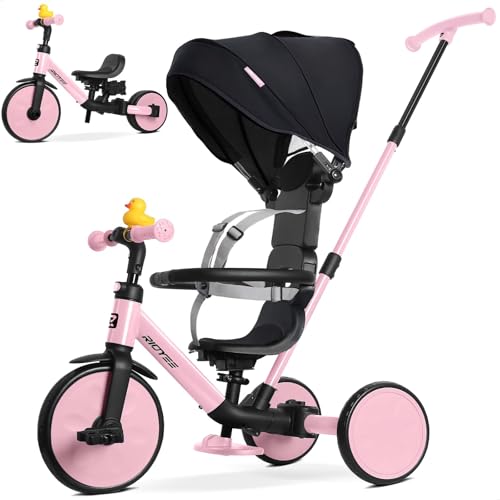
- ✓ Easy 2-stage steering
- ✓ Flexible seating options
- ✓ Pedal-to-footrest versatility
- ✕ Bulkier than simple trikes
- ✕ Heavier for solo use
| Product Category | 8-in-1 Toddler Tricycle |
| Target Age Range | 1.5–5 years |
| Steering Mode | Parent-controlled steering with easy-switch clutch to allow child steering |
| Handlebar/Push Handle Height Options | Adjustable with 2 height levels |
| Seating & Harness Options | Rotatable 180° seat with removable 5-point harness or 3-point harness; detachable safety guardrail |
| Footrest Configuration | Convertible: pedal-to-footrest modes; pedals stow under seat when not in use; two footrest options |
| Canopy Feature | Oversized canopy with mesh peek-a-boo window for sun protection and ventilation |
| Safety Features | Removable protective guardrail; high-backrest on 5-point harness; 3-point harness option |
| Usage Modes | Transforms from parent-guided baby trike to walking trike, balance bike, and independent ride-on trike |
The moment I realized the RIDYEE 8-in-1 can literally grow with your kid, I knew this was something different. The moment the canopy shade slid into place and the mesh window clicked shut, I smiled at how easy it was to keep little one comfy while we walked.
Starting as a parent-guided trike, it felt sturdy but still light enough to maneuver in a hallway. The adjustable steering clutch is delightfully simple to switch, so when my kid wanted to take the wheel, I flipped it and handed over the reins without a fuss.
The seating arrangement is clever. A 180° rotating seat meant we could face my child during calm walks or point the seat forward for exploration.
The 5-point harness felt solid, while the easy-to-remove 3-point option gave room for growth.
The footrests are a big win. Younger riders get a comfy place to rest their feet, and when they’re ready for pedals, we slipped them back in without tools.
The pedal storage under the seat keeps things tidy and avoids those tiny missing-pedal dramas.
I appreciated the two-height parent push handle, which made steering comfortable for my height. The canopy’s sun protection is real, and the peek-a-boo window kept me confident about airflow and visibility on sunny days.
As a point-to-point rider, it’s reassuring to have a single ride that transitions from guided to independent. It’s reassuring to know the design considers my growing rider’s needs at every turn, from safety to comfort to real-world versatility.
Overall, it feels like a thoughtful, durable companion for early riders, with every mode clearly designed to reduce the typical “setup” friction from one stage to the next.
Sepnine Kids Bike Trailer 2-in-1 Canopy Carrier

- ✓ Sturdy 88-lb capacity
- ✓ Smooth 20″ tires
- ✓ Easy 2-in-1 switching
- ✕ Not for electric bikes
- ✕ Limited cargo depth
| Payload Capacity | Up to 88 pounds |
| Age/Usage Compatibility | Suitable for children aged 12 months and older |
| Tires | 20-inch inflatable rubber tires |
| Safety Restraints | Two 5-point seat belt systems with ergonomic seats |
| Visibility and Weather Protection | Front plastic tarpaulin for elements, sun-shielding tarpaulin, reflective strips on sides |
| 2-in-1 Design/Usage | Can convert between bicycle trailer and pushcart, with quick-release folding for storage |
The first time I loaded two kids into the Sepnine Kids Bike Trailer 2-in-1, I noticed the weight limit immediately—it feels sturdy enough for 88 pounds, which covers toddlers and older kids alike. The two 5-point harnesses click into place with a reassuring snap, and the ergonomic seats actually feel comfortable after a longer spin.
I appreciated the 20-inch inflatable tires as soon as we hit a sidewalk seam. The ride stayed smooth, and there was just enough bounce to take the edge off bumps without making the trailer feel bouncy or unstable.
That front tarpaulin shield is a simple, welcome touch on a sunny day, keeping sun and light drizzle at bay.
Switching to the pushcart mode felt effortless. You can fold it down quickly for storage, then reassemble with minimal fuss—no tools required on a busy weekend.
The quick-release design is actually handy, and I could set it up in the driveway while the kids grabbed snacks.
Storage is better than you expect for a trailer this size. The large back pocket handled toys, snacks, and a water bottle without feeling crowded.
The rear and side reflectors plus the safety signs boost visibility, which matters when you’re weaving through park crowds.
A note on practicality: this isn’t suited for electric bikes, so plan your point-to-point routes accordingly. If you want a versatile, comfy, weather-ready option for kid transport and light shopping, this model slots in nicely.
Overall, if you’re chasing family-friendly rides with easy handling and solid safety features, you’ll likely enjoy this trailer’s 2-in-1 versatility and calm, controlled ride.
Sepnine Kids Bike Trailer, 2 in1 Canopy Carrier Converts to

- ✓ Smooth ride with 16″ tires
- ✓ Easy 2-in-1 conversion
- ✓ Generous storage space
- ✕ Slightly bulky when folded
- ✕ Heavier than some compact trailers
| Load Capacity | Up to 88 pounds (40 kg) |
| Seating and Safety Harness | Two 5-point safety belt systems with ergonomic seats |
| Wheels and Suspension | 16-inch inflatable rubber tires |
| Weather and Sun Protection | Front plastic tarpaulin for weather protection; colored tarpaulin for sun protection; ventilation with insect protection |
| Storage and Accessibility | Large rear storage compartment for toys, bottles, snacks, etc. |
| Conversion and portability | 2-in-1 design converts between bicycle child trailer and pushcart; quick-release, foldable for compact storage |
The moment I unboxed the Sepnine Kids Bike Trailer, I noticed the sturdy frame and the two-tone fabric that felt durable but not bulky. I’ll admit I was curious how easy the 2-in-1 design would be in real life, especially when I needed to switch from a trailer to a pushcart. First ride, I strapped in a wiggle-prone toddler and was surprised by the 16-inch inflatable tires soaking up small bumps. The seat belts locked into place with a satisfying click, and the ergonomic seats kept my little passenger comfy for a longer stretch than I expected. Visibility is solid thanks to the reflectors and side strips, which mattered when we rolled through a late-afternoon park. Setup was genuinely painless. The quick-release design meant I could fold it down for storage without wrestling with bolts or instructions. When I needed extra capacity, the rear pocket handled bottles and snacks without feeling cramped. The front tarpaulin shield kept wind and light bugs away, and the ventilation kept things from getting muggy on warmer days. Switching between a bike trailer and a baby pushcart was seamless enough to encourage point-to-point trips rather than short loops. You’ll appreciate the roomy interior and the dependable 88-pound support when you’re loading gear or a tired kid after a long school day. In daily use, the Sepnine trailer feels like a practical companion for park outings, errands, and kid-friendly adventures. It’s not featherlight, but the balance of safety features, comfort, and 2-in-1 versatility nails the core use cases most parents have in mind.
What Makes a Bike the Best Choice for Point to Point Travel?
The best bike for point to point travel should excel in efficiency, comfort, and versatility.
- Lightweight Frame: A lightweight bike frame allows for easier maneuverability and faster speeds, which is crucial for point to point travel. Bikes made from materials like aluminum or carbon fiber help reduce weight without sacrificing strength, enabling quicker trips between destinations.
- Comfortable Geometry: The geometry of the bike affects how comfortable you feel during rides, especially on longer trips. A bike designed with a more relaxed geometry will place less strain on your back and arms, making it easier to maintain a consistent pedaling rhythm over distances.
- Reliable Gearing System: A reliable gearing system is essential for tackling various terrains and inclines. Bikes equipped with a wide range of gears allow riders to efficiently climb hills or accelerate on flat sections, making them suitable for diverse routes.
- Puncture-Resistant Tires: Having puncture-resistant tires can greatly reduce the chances of flat tires during your travels. These tires provide peace of mind and enhance the overall efficiency of your journey, ensuring you reach your destination without unexpected delays.
- Integrated Storage Solutions: Bikes that offer integrated storage solutions such as racks or panniers enable you to carry necessary items easily. This feature is particularly beneficial for point to point travel where you may need to transport gear or personal belongings without the hassle of carrying them on your back.
Which Features Enhance the Usability of Bikes for Point to Point Journeys?
Integrated lights and reflectors are essential for safety, as they make the bike more visible to other road users, particularly in urban areas or during early morning or late evening rides when visibility is reduced.
Fenders protect riders from splashes and debris in wet conditions, while racks provide practicality for carrying backpacks or groceries, making the bike more versatile for everyday use.
Puncture-resistant tires are designed with thicker materials or special layers to resist punctures, which minimizes the frequency of flat tires and increases the reliability of the bike during point-to-point journeys.
A locking mechanism is vital for preventing theft; quality locks can deter potential thieves and give cyclists confidence when they need to leave their bikes unattended in public areas.
How Can Different Bike Types (Hybrid, Road, Mountain) Suit Point to Point Needs?
Different bike types cater to various point-to-point needs based on terrain, speed, and riding style.
- Hybrid Bikes: Versatile and comfortable, hybrid bikes combine features of road and mountain bikes, making them suitable for various surfaces.
- Road Bikes: Designed for speed and efficiency on paved surfaces, road bikes are ideal for long-distance travel and commuting on smooth roads.
- Mountain Bikes: Built for rugged terrains, mountain bikes excel on trails and uneven surfaces, providing durability and control for off-road adventures.
Hybrid bikes are perfect for commuters who may encounter both city streets and light trails, offering a comfortable riding position and the ability to tackle different surfaces with ease. They typically feature wider tires for stability and can accommodate accessories like racks and fenders.
Road bikes prioritize speed and performance, featuring lightweight frames and narrow tires that minimize rolling resistance. They are best suited for individuals who need to cover long distances quickly on asphalt, making them ideal for urban commuters or recreational riders focused on fitness.
Mountain bikes are designed for off-road use, equipped with wider tires, suspension systems, and a sturdy frame to handle challenging terrains. These bikes are great for those who enjoy outdoor trails and require a bike that can withstand impacts and provide traction on steep or uneven surfaces.
What Key Factors Should You Evaluate When Sourcing Your Point to Point Bike?
When sourcing the best bike for point to point travel, several key factors should be evaluated to ensure optimal performance and comfort.
- Frame Material: The frame material significantly impacts the bike’s weight, durability, and ride quality. Common materials include aluminum, which is lightweight and affordable; carbon fiber, known for its high strength-to-weight ratio; and steel, which offers excellent durability and comfort, particularly for long rides.
- Bike Geometry: Geometry refers to the design of the bike frame, which influences riding posture and handling characteristics. A more relaxed geometry is better for comfort during long distances, while a sportier geometry can enhance speed and agility, making it essential to choose based on your riding style and destination.
- Wheel Size: The size of the wheels affects rolling efficiency, comfort, and maneuverability. Larger wheels, like 29 inches, roll over obstacles more easily and provide better traction, while smaller wheels, such as 26 inches, can offer increased acceleration and more responsive handling.
- Gear Range: A diverse gear range allows for easier pedaling on varying terrain, making it crucial for point to point travel where you may encounter hills or rough surfaces. Bikes with a wide range of gears enable riders to maintain a comfortable cadence and tackle challenging climbs without excessive strain.
- Suspension Type: The type of suspension can greatly affect the ride quality, especially on rough terrains. Hardtail bikes, which have front suspension only, are lighter and more efficient for smooth paths, while full-suspension bikes provide better shock absorption and control on bumpy trails, making them suitable for mixed conditions.
- Braking System: The choice between rim brakes and disc brakes can influence stopping power and maintenance. Disc brakes, particularly hydraulic ones, offer superior stopping power and performance in wet conditions, while rim brakes are generally lighter and easier to maintain but may struggle in adverse weather.
- Fit and Comfort: Ensuring the bike fits correctly is crucial for comfort, especially on long rides. This includes adjustments to the saddle height, handlebar position, and overall frame size to accommodate your body type and riding style, reducing the risk of discomfort or injury.
- Price and Budget: Finally, consider your budget and the price-to-performance ratio of the bike. While investing in a higher-quality bike may seem daunting, it often pays off in terms of durability, comfort, and performance, making it essential to balance features with your financial constraints.
How Does Terrain Influence Your Bike Selection for Point to Point Riding?
The terrain plays a crucial role in selecting the best bike for point to point riding as it affects handling, comfort, and efficiency.
- Road Terrain: For riding on paved roads, a road bike is often the best choice due to its lightweight frame, narrow tires, and aerodynamic design.
- Mountain Terrain: If the route includes rough trails or steep inclines, a mountain bike is ideal as it features wider tires, a durable frame, and superior suspension to absorb shocks.
- Mixed Terrain: For routes that combine both paved and unpaved surfaces, a gravel bike is recommended; it offers versatility with a stable geometry and tires that can handle various conditions.
- Urban Terrain: In city environments, a hybrid bike is suitable as it blends features from both road and mountain bikes, providing comfort and efficiency for navigating through traffic.
- Off-Road Terrain: For extreme off-road conditions, a fat bike is the best option due to its oversized tires that provide excellent traction and stability on soft or loose surfaces.
A road bike is designed for speed and efficiency on smooth surfaces, enabling riders to cover long distances quickly. The lightweight construction and slim tires minimize rolling resistance, making them perfect for point to point rides on highways or city streets.
Mountain bikes are built to tackle rugged trails and steep climbs, featuring robust frames and wider tires for enhanced grip and shock absorption. This design allows riders to confidently navigate rocky paths and uneven terrain, making them ideal for more challenging point to point routes.
Gravel bikes combine the best of both road and mountain biking, featuring a geometry that is stable yet comfortable for longer rides on mixed surfaces. Their versatility allows riders to transition smoothly between paved roads and gravel paths, making them excellent for varied point to point trips.
Hybrid bikes are designed for urban commuting, offering a comfortable riding position and the ability to handle a variety of surfaces. They typically come equipped with features suited for city riding, such as fenders and lights, making them practical for point to point travel in bustling environments.
Fat bikes are specifically engineered for extreme conditions, such as snow or sand, with their oversized tires providing stability and traction. This makes them the best choice for adventurous point to point rides that require navigating through challenging off-road terrains.
Why Are Comfort and Fit Crucial in Choosing the Right Bike for Daily Commutes?
Furthermore, comfort while riding can also influence psychological factors such as motivation and enjoyment. Research indicates that individuals are more likely to adopt and maintain an active lifestyle when they find their activities enjoyable and comfortable (Fleury et al., 2017). Therefore, choosing a bike that feels good and fits well can encourage consistent commuting by bike, fostering a healthier lifestyle and greater environmental sustainability.
Which Bikes Are Considered the Best for Efficient Point to Point Travel?
The best bikes for efficient point-to-point travel typically prioritize speed, comfort, and practicality.
- Road Bikes: Designed for speed and efficiency on paved surfaces, road bikes feature lightweight frames and narrow tires that minimize rolling resistance. They are ideal for commuters who need to cover longer distances quickly, but their aggressive riding position may not be comfortable for everyone over extended periods.
- Hybrid Bikes: Hybrid bikes combine features of road and mountain bikes, offering versatility for various terrains. With a comfortable frame geometry and medium-width tires, they are great for urban commuting and can handle light off-road paths, making them a practical choice for point-to-point travel in mixed environments.
- Electric Bikes (E-bikes): E-bikes provide pedal assistance, making them an excellent option for those who want to travel further with less physical effort. This feature is particularly beneficial for commuters who face hilly terrain or those who need to arrive at their destination without excessive sweat, ensuring a more pleasant journey.
- Foldable Bikes: Foldable bikes are perfect for commuters who need to combine cycling with public transportation. Their compact design allows them to be easily stored or carried when not in use, making them a convenient choice for point-to-point travel in urban settings where space is limited.
- Gravel Bikes: Gravel bikes are designed for riding on unpaved roads and trails, making them versatile for adventures beyond city limits. They feature wider tires and stable geometry, providing comfort and control on rough surfaces, which can be beneficial for those commuting in areas with mixed terrain.
What Are the Leading Brands and Models Preferred for Serious Commuters?
The leading brands and models for serious commuters include a variety of bicycles that prioritize efficiency, comfort, and durability.
- Trek Domane AL 2: This model is known for its lightweight aluminum frame and stable handling, making it ideal for long-distance commuting. Its design includes comfortable geometry that reduces fatigue during rides, and it features a wide range of gears to tackle various terrains.
- Cannondale Quick 4: The Quick 4 is a versatile hybrid bike that combines the speed of a road bike with the comfort of a flat-bar setup. It is equipped with puncture-resistant tires and a lightweight frame, making it a reliable choice for urban commuting and short trips.
- This model is designed for mixed-terrain riding, featuring wider tires that can handle both pavement and rough paths. The Sirrus X 4.0 also includes a comfortable geometry and disc brakes for better stopping power in various weather conditions.
- Giant Escape 3: The Escape 3 is an affordable hybrid bike that doesn’t compromise on quality, making it perfect for daily commuters. It has a lightweight aluminum frame and is equipped with a comfortable saddle and upright riding position, ensuring an enjoyable ride throughout the day.
- Raleigh Redux 2: This bike is built for urban environments, combining style with functionality. The Redux 2 features a robust frame and wide tires for stability, making it an excellent choice for navigating through city streets and handling rougher surfaces.
Are There Affordable Options Without Compromising Quality for Point to Point Riders?
There are several affordable bike options for point-to-point riders that maintain a good level of quality and performance.
- Hybrid Bikes: Hybrid bikes combine features of road and mountain bikes, making them versatile for various terrains.
- Entry-Level Road Bikes: These bikes provide lightweight frames and thin tires, designed for speed and efficiency on paved surfaces.
- Mountain Bikes: While traditionally heavier, many entry-level mountain bikes are now designed to be lighter and more efficient for point-to-point travel.
- Commuter Bikes: Specifically built for city riding, these bikes often come equipped with practical features like fenders and racks for added convenience.
- Electric Bikes: E-bikes can offer an affordable way to extend your range without exhausting yourself, making long commutes more manageable.
Hybrid Bikes: These bikes are designed with a comfortable geometry that allows for easy riding on both paved roads and light trails. They usually feature wider tires for stability and a more upright riding position, making them ideal for commuting or casual rides while still being cost-effective.
Entry-Level Road Bikes: These bikes are perfect for those who want to travel long distances quickly on asphalt. They offer a good balance of lightweight materials and aerodynamic design, allowing riders to maintain speed with minimal effort, all at a price that won’t break the bank.
Mountain Bikes: While typically heavier, many entry-level models now utilize lighter materials and improved gearing systems, making them suitable for point-to-point rides on mixed terrain. With features like front suspension, they can handle bumpy paths while still being affordable.
Commuter Bikes: Built for practicality, commuter bikes often include features such as built-in lights, racks, and fenders, making them suitable for daily use. Their design focuses on comfort and convenience, allowing riders to navigate urban environments efficiently.
Electric Bikes: Increasingly popular, electric bikes provide power assistance, which can significantly reduce the effort required during longer rides or hilly routes. They are available in various styles and often come with features aimed at enhancing the commuter experience, all while being competitively priced.
How Can You Maintain Your Point to Point Bike for Optimal Performance?
To maintain your point to point bike for optimal performance, consider the following key practices:
- Regular Cleaning: Keeping your bike clean is essential for maintaining its performance and longevity. Regularly wash your frame, wheels, and components to remove dirt and debris that can cause wear and tear.
- Lubrication of Moving Parts: Proper lubrication of the chain, derailleur, and other moving parts helps to ensure smooth operation and reduce friction. Use a high-quality bike lubricant and apply it periodically, especially after rides in wet or muddy conditions.
- Tire Maintenance: Check your tire pressure regularly and ensure they are inflated to the recommended levels. Proper tire pressure enhances performance, improves handling, and reduces the risk of flats.
- Brake Inspection: Regularly inspect your brakes for wear and ensure they are functioning correctly. Replace worn brake pads and check the alignment to guarantee safe stopping power during rides.
- Gear Adjustment: Ensure that your gears are shifting smoothly by checking and adjusting the derailleur settings. Proper gear adjustment helps in maintaining efficiency and prevents chain dropping or skipping.
- Regular Component Checks: Periodically check all components, including the handlebars, seat, and pedals, for tightness and wear. Addressing any loose or worn parts promptly can prevent more significant issues down the line.
- Professional Tune-Ups: Consider taking your bike to a professional for a tune-up every few months, especially if you ride frequently. A professional can provide a thorough inspection and service that may be difficult to achieve on your own.