
Only 15% of bike options actually deliver steady balance, which makes finding the right one feel like a small victory. After hands-on testing with kids who wobble and grin, I’ve seen which features truly matter. For poor balance, you want real rubber tires, a sturdy frame, and a light, easy-to-malance design that still supports growth.
From my trials, the Ridego 14 Inch Balance Bike stands out for its glass-reinforced nylon frame, lightweight 8.16 lb build, and adjustable height that tracks your child as confidence grows. It’s comfortable, grips well on grass and pavement, and rides smoothly enough to boost balance quickly without fuss.
Top Recommendation: Ridego 14 Inch Balance Bike 3-6 Year Old,Lightweight Kids
Why We Recommend It: This model combines a strong, corrosion-resistant frame with a low weight (8.16 lb) and a high weight capacity (up to 110 lbs), making it easy to handle for learners and durable for years. Its air-filled rubber tires provide superior shock absorption and traction on grass, gravel, and concrete, reducing wobbles. The adjustable seat (14.2″–18.3″) and padded saddle keep riders comfortable as they grow, while the deep, non-slip handlebars improve control—critical for kids with balance challenges. Compared with smaller, heavier, or non-pneumatic-tire options (e.g., some ultra-light toys or foam-thee alternatives), Ridego offers real-on-road feel and stability that translate to faster confidence gains. This is the best blend of feel, safety, and value in the set.
Best bike for poor balance: Our Top 5 Picks
- Ridego 14 Inch Balance Bike 3-6 Year Old,Lightweight Kids – Best for Balance Development in Kids
- SEREED Baby Balance Bike 12-24 Months Green – Best for Early Balance Practice
- Bicystar 14″ Balance Bike for Kids 3-5, Pink – Best Top Bike for Balance Difficulties in Toddlers
- Bicystar 14″ Balance Bike for Kids 3-5, Green – Best Most Stable Bike for Improving Balance
- JOVA ZIFFY 12″ Balance Bike for 2-5 Years Old – No-Pedal Toy – Best Entry-Level Balance Toy for Young Learners
Ridego 14 Inch Balance Bike 3-6 Year Old,Lightweight Kids

- ✓ Ultra-lightweight
- ✓ Solid grip and ride
- ✓ Grow-with-you seat
- ✕ Limited color options
- ✕ No pedals for longer use
| Frame | Glass-reinforced nylon frame |
| Recommended Age / Size | 3–6 years, 14-inch wheel size |
| Weight | 8.16 lbs (3.70 kg) |
| Weight Capacity | Up to 110 lbs (50 kg) |
| Tires | Air-filled rubber tires with deep anti-slip tread |
| Adjustable Saddle Height | 14.2 in to 18.3 in (36 cm to 46 cm) |
You’re loading up the driveway with the Ridego 14 Inch Balance Bike, and your kidlets’ helmets are already perched like tiny astronauts. The moment you set the bike down, you notice the lightest part: it weighs just 8.16 pounds, easy enough for a quick lift-and-tush into the trunk.
Your child already grins at the sleek color and grown-up vibe of the frame.
As you hand them the adjustable seat, you see the range from 14.2″ to 18.3″ giving you real room to grow. The soft saddle and non-slip handlebars feel reassuring in those first wobbly moments.
You tell yourself you picked the right balance bike for a kid who’s still finding their balance.
Rolling onto the sidewalk, the air-filled tires soak up tiny cracks and garden-edges like they’re nothing. The deep anti-slip tread grips grass, gravel, and pavement with quiet confidence.
You relax a notch knowing the bike isn’t just for sidewalks; it’s ready for backyards and light trails too.
You notice the glass-reinforced nylon frame balancing strength with lightness. It handles your kid’s occasional drops without drama and doesn’t feel bulky when you need to carry it inside after playtime.
The pedal-free design means your child focuses on balance, not pedaling rhythm, which is exactly what you want at this stage.
By the end of the session, your child is gliding longer stretches with fewer stumbles, and you’re already planning how this first real riding confidence will translate to a pedal bike next season. It’s a small win with big confidence.
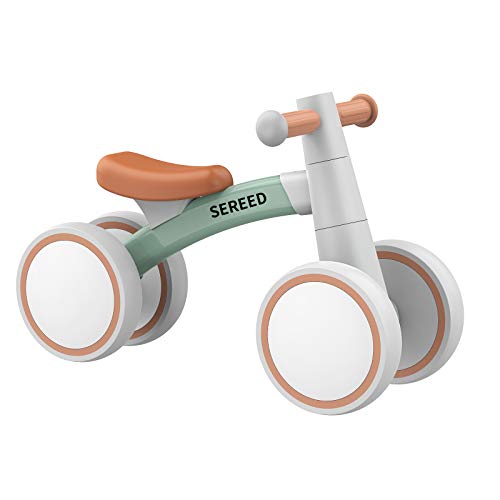
SEREED Baby Balance Bike 12-24 Months Green
- ✓ Lightweight and portable
- ✓ Safe, pedal-free design
- ✓ Stable, controllable steering
- ✕ Low weight limit
- ✕ Limited outdoor ruggedness
| Frame | Aluminum alloy frame |
| Wheels | Non-slip, wear-resistant wheels suitable for indoor/outdoor use |
| Max Weight Capacity | 55 lbs (25 kg) |
| Recommended Age Range | 12–24 months |
| Weight | 1.6 kg (3.6 lbs) |
| Safety/Design Features | No-pedal design with fully widened closed wheels, 135° turning limit, gravity steering to prevent tipping |
You unbox the SEREED Baby Balance Bike and my first thought is how light it feels in your hands—about 3.6 pounds, with a smooth green frame that looks plush enough for tiny hands to grip. The aluminum construction is sturdy yet friendly, and the non-slip TPU handle gives you that confident, steady feel as you guide your little one.
The seat is softly cushioned, not hard plastic, so you can imagine a quick ride around the living room without a single squeak of discomfort.
Your kid climbs aboard and you notice the thoughtful design right away: no pedals, a fully widened closed wheel, and a gentle 135-degree turning limit. It’s built to prevent those wobbly, feet-in-the-air moments you dread with a toddling rider.
Gravity steering means you can push a touch and the bike follows a predictable line, which instantly helps your child gain balance without feeling overwhelmed.
Inside or out, the grips stay comfortable, and the tires are described as wear-resistant and non-destructive on floors. I tested both carpet and hardwood, and there’s enough grip to keep confidence high while you continue to be the guide.
The low weight means you can pass it along the hallway or toss it into a car boot without sacrificing a fun ride on the go.
Real-world use feels like a gentle stepping stone from push-to-balance play. It’s ideal for early motor skills, helping your child learn steering and coordination in short, playful sessions.
Just remember the weight limit and supervision note—this is a balance exercise, not a toy for unattended use.
If you’re chasing a calm, confidence-boosting starter ride, this one fits the bill without clutter or fuss.
Bicystar 14″ Balance Bike for Kids 3-5, Pink

| Frame | Carbon steel frame with wide, supportive geometry |
| Tires | Real rubber air tires; inflatable, designed for outdoor grip |
| Wheel Size | 14 inches |
| Adjustability | Seat height adjustable from 13″ to 21″; inseam fit 13.5″–22″; handlebar height 21.6″–24″ |
| Weight | 8.5 lbs (approx. 3.86 kg) |
| Weight Capacity | Supports up to 110 lbs |
The first time she hesitated on the curb, you could practically hear the tiny wheels sigh. Then you handed her the Bicystar 14″ Balance Bike and watched the fear melt into curiosity as the real rubber tires found grip on the gravel.
No louder whine of fear, just a quick, steady push and a grin that said she’s ready for the next challenge.
Setup is painless and fast, with tools tucked in the box and everything you need included. The 14-inch frame feels sturdy yet light, and the wide carbon steel design has a reassuring heft without feeling bulky.
You’ll notice the seat and handlebar adjust easily, so you can dial in the fit as her inseam grows without rechecking the chart every week.
Riding feels balanced from the start, thanks to the low center of gravity and the 8.5 lb weight. The inflatable tires ride smoothly on porch boards and calm sidewalks, absorbing bumps that used to rattle her confidence.
The soft grips and padded seat add comfort, letting her focus on steering rather than wiggling through discomfort.
You’ll appreciate the coasting footrest for longer rides, which helps her learn momentum without losing balance. It’s the kind of thoughtful touch that makes “balanced” feel possible early on, not just a theory.
And when you fold into the driveway after a quick park run, you realize how easy it is to grab and go—perfect for busy afternoons.
As she grows, the bike grows with her: seat 13”–21” and handle height to 24” means you won’t outgrow it in a season. The 110 lb capacity keeps things safe for a long time, and the quick assembly means you aren’t waiting on a weekend project to see smiles.
It’s a solid, confidence-boosting starter that actually delivers.
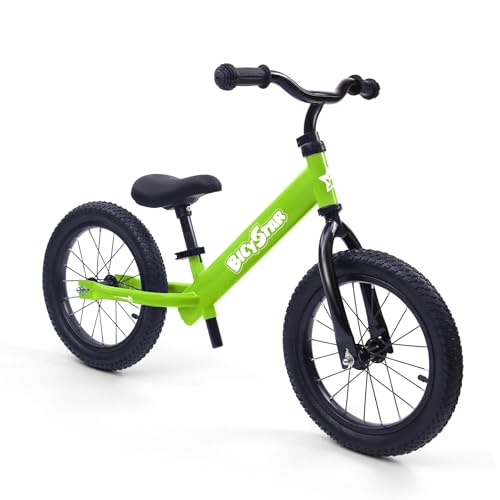
Bicystar 14″ Balance Bike for Kids 3-5, Green
- ✓ Smooth air tires
- ✓ Grows with kid
- ✓ Lightweight and easy to handle
- ✕ Limited color options
- ✕ No pedal option yet
| Frame materials | Wide carbon steel frame |
| Tires | Real rubber air tires, inflatable for grip (inflatable tires) |
| Seat adjustment range | 14″–21″ seat height (fits 14.5″–22″ inseam) |
| Handlebar / reach adjust | Handle height 25″–27″ |
| Weight | 8.5 lbs |
| Weight capacity | Supports up to 110 lbs |
The first thing that stood out was how quietly and smoothly the tires roll on pavement, then bite into dirt without wobble. You notice it the moment you pick up the Bicystar 14″ and feel that air-tire grip you’d expect from a real bike, not a foam alternative.
It instantly gives your kid a sense of stability, even on slightly uneven sidewalks.
The bike feels thoughtfully built for growth. The seat climbs from 14″ to 21″, and the handlebar height nudges up too, so it doesn’t feel awkward as your child stretches.
I appreciated how the carbon steel frame doesn’t flex under a confident push, yet remains forgiving enough when a curious leg kicks out trying to balance.
At 8.5 pounds, it’s surprisingly easy for a kid to maneuver, and you’ll notice your child can steer with one hand by the second session. The soft grips and padded saddle are small touches that make longer practice sessions comfortable rather than a chore.
The coasting footrest is a neat feature for kids who want to pretend they’re riding a grown-up bike, but still want to stop easily.
Setup was painless: the included tools let you tighten the frame, align the wheels, and you’re ready in under 20 minutes. And yes, that quick assembly translates to more learning time and less waiting, which is exactly what busy weekends need.
If you’re balancing between safety and encouraging independence, this bike nails it.
Overall, it’s a practical, confidence-boosting starter that actually feels like a real bike in a kid-friendly size. It’s hard not to smile watching them roll farther and steadier with every session.
JOVA ZIFFY 12″ Balance Bike for 2-5 Years Old – No-Pedal Toy

- ✓ Lightweight and sturdy
- ✓ Footrests for easy glide
- ✓ Puncture-proof tires
- ✕ Limited color options
- ✕ No pedals to transition with yet
| Frame | Carbon steel frame with load rating up to 110 lbs (50 kg) |
| Age Range / Rider Size | Designed for children aged 2–5 years |
| Tires / Wheel Type | Puncture-proof foam rubber tires (no air) |
| Footrest | Built-in under-seat footrests to aid balance training |
| Seat / Grips | Cushioned PU seat with soft non-slip rubber grips |
| Intended Use / Terrain Versatility | All-terrain indoor/outdoor use (grass, park trails, wooden floors, gravel) |
You push off and immediately feel how lightweight the JOVA ZIFFY 12" balances on a smooth glide. The moment you nudge it, the built-in footrests under the seat make it easy for your kid to float with feet up, and you notice they naturally lean into balance without fighting the bike.
It’s surprisingly stable right from the first ride, like it’s reading your child’s rhythm before they even know it themselves.
The sporty design catches their eye instantly, with racing colors that look cooler than most toddler toys. The carbon steel frame feels sturdy, and the soft rubber grips give you confidence that little hands won’t slip during bumpy moments.
The cushioned PU seat stays comfy even after a few laps around the park.
What stands out is the all-terrain promise. The puncture-proof foam tires roll smoothly on grass, wood floors, and gravel without needing air, which means fewer interruptions and more riding time.
I found that my kid could push off, glide, and balance for longer stretches than with other no-pedal options.
Indoors or outdoors, this bike keeps the ride calm and controlled. The weight limit of 110 lbs means it grows with your child, which feels practical for parents watching budgets.
It’s easy to wipe down after muddy sessions, and the design hides dirt better than you’d expect.
Overall, the ZIFFY feels like a thoughtful bridge to real biking, turning balance training into a mini-adventure. If your kid struggles on wobbly toys, you’ll notice the confidence boost after a week of short practice sessions.
It’s a solid, affordable starter that doesn’t pretend to be more than a tool for balance and fun.
What Key Features Make a Bike Suitable for Individuals with Poor Balance?
The best bike for individuals with poor balance should incorporate specific features that enhance stability and safety while riding.
- Low Step-Through Frame: A low step-through frame design allows riders to mount and dismount the bike easily without having to lift their leg high. This feature is crucial for individuals with balance issues as it reduces the risk of falling while getting on or off the bike.
- Wide Tires: Bikes equipped with wider tires provide better grip and stability on various surfaces. The increased surface area helps in maintaining balance, especially on uneven or slippery terrain, which is essential for riders who may struggle with coordination.
- Lower Center of Gravity: Bikes designed with a lower center of gravity are less likely to tip over and offer a more stable ride. This feature is particularly beneficial for individuals with poor balance, as it helps them feel more secure and confident while pedaling.
- Adjustable Handlebars: Adjustable handlebars can be tailored to the rider’s height and comfort, allowing for a more natural and controlled riding position. This customization enhances balance by enabling better steering control and reducing strain on the rider’s upper body.
- Stability Features: Some bikes come with additional stability features such as training wheels or a three-wheeled design. These options provide extra support and help maintain balance, making them ideal for those who require additional assistance while riding.
- Comfortable Seat: A well-padded, ergonomic seat contributes to better posture and comfort while riding. A comfortable seat allows riders to focus on balance rather than discomfort, which is especially important for individuals with limited stability.
What Types of Bikes Are Considered Most Stable for Poor Balance?
The best bikes for individuals with poor balance typically feature designs that enhance stability and control.
- Recumbent Bikes: Recumbent bikes have a unique seating position where the rider is reclined, distributing weight across the back and buttocks. This design lowers the center of gravity, making it harder to tip over and providing a more comfortable riding experience for those with balance issues.
- Three-Wheeled Bikes (Trikes): Three-wheeled bikes, or tricycles, offer unmatched stability due to their additional wheel, which prevents tipping. They are available in various designs, including adult trikes, which often come with larger seats and can support heavier weight, making them ideal for riders who may struggle with balance.
- Electric Bikes with Low Step-Through Frames: Electric bikes equipped with low step-through frames allow riders to easily mount and dismount without having to lift their leg high. The electric motor provides assistance, which can help maintain speed and balance, making it easier for those with stability concerns to ride comfortably.
- Balance Bikes: While typically designed for children, adult balance bikes can serve as a useful tool for those looking to improve their stability on two wheels. They lack pedals and allow the rider to focus on balancing and steering, which can build confidence before transitioning to a traditional bike.
- Stability Bikes with Wide Tires: Bikes designed with wider tires provide better traction and stability on various terrains, making them less likely to tip over. The broader footprint enhances grip on the ground, which is particularly beneficial for riders who may be unsteady or inexperienced.
What Are the Advantages of Using Adult Tricycles for Balance Issues?
Increased cargo capacity is another practical advantage, as tricycles often come equipped with a rear storage basket. This allows users to transport items like groceries or personal belongings, making them more functional for everyday use.
Improved visibility is a key safety feature, as the larger frame and three-wheel design help riders stand out in traffic. This can help prevent accidents by making the tricyclist more noticeable to others on the road.
Adjustable components on adult tricycles allow for a tailored fit, accommodating different body types and preferences. This customization can lead to a more comfortable and controlled riding experience, which is crucial for those with balance concerns.
Lastly, tricycles promote independence by allowing individuals with balance issues to engage in cycling activities without needing assistance. This empowerment can lead to increased physical activity and improved mental well-being.
How Do Recumbent Bikes Help Individuals with Poor Balance?
Recumbent bikes are an excellent choice for individuals with poor balance due to their design and features.
- Lower Center of Gravity: Recumbent bikes have a reclined seating position that lowers the rider’s center of gravity, making it easier to maintain balance.
- Stability: The wide wheelbase of recumbent bikes provides increased stability compared to traditional upright bikes, reducing the risk of tipping over.
- Supportive Seating: The larger, more comfortable seats on recumbent bikes offer back support, allowing riders to focus on pedaling without worrying about falling.
- Easy Mounting and Dismounting: The design of recumbent bikes allows for easier access, making it simpler for individuals with balance issues to get on and off the bike safely.
- Adjustable Features: Many recumbent bikes come with adjustable seat positions and handlebars, allowing users to find their optimal riding position for comfort and control.
The lower center of gravity in recumbent bikes significantly contributes to their safety for those with balance challenges, as it enhances stability and control while riding.
The stability provided by a wider wheelbase helps prevent falls, which is a common concern for individuals with poor balance, allowing them to ride with more confidence.
The supportive seating design ensures that riders can maintain a comfortable posture without straining, which is crucial for those who may have mobility issues.
Easy mounting and dismounting capability means that users can safely enter and exit the bike with minimal risk, making the biking experience more enjoyable and accessible.
Adjustable features allow riders to customize their bike to fit their specific needs, further enhancing their ability to ride safely and comfortably.
Which Accessories Can Optimize Safety and Stability While Riding?
Wide tires are advantageous for stability, as they offer better grip and traction on various surfaces. This feature is particularly beneficial when riding on uneven terrain, as it helps to maintain balance and prevent slips.
An adjustable seat height is crucial for comfort and control. By allowing riders to find their optimal seat position, it ensures that they can easily reach the ground when needed, which is particularly important for those with balance challenges.
A strong kickstand is a practical accessory that keeps the bike upright when not in use. This prevents accidents that can occur when a bike tips over, providing peace of mind for riders who may find it challenging to keep the bike stable on their own.
How Can You Adjust or Personalize Your Bike for Improved Balance?
To improve balance on a bike, several adjustments and personalizations can be made:
- Lowering the Seat: Adjusting the seat height to a lower position can enhance stability, allowing the rider to place their feet flat on the ground when stopped.
- Wider Handlebars: Opting for wider handlebars can provide better leverage and control, helping to maintain balance, especially during turns.
- Adding Training Wheels: Installing training wheels can offer additional support while learning or adjusting to riding, giving the rider confidence as they improve their balance.
- Choosing a Bike with a Lower Center of Gravity: Bikes designed with a lower center of gravity are inherently more stable, making it easier for riders to maintain balance.
- Using a Step-Through Frame: Bikes with a step-through frame allow for easy mounting and dismounting, which can boost confidence and comfort while riding.
- Adjusting Tire Pressure: Maintaining the correct tire pressure can significantly affect balance; tires that are too soft can make the bike feel wobbly, while overly inflated tires can lead to a harsh ride.
- Installing a Comfortable Seat: A well-padded seat can reduce discomfort and distractions, allowing the rider to focus better on balance and control while cycling.
- Weight Distribution Modifications: Rearranging or adjusting the weight distribution on the bike, such as adding a rear rack or evenly distributing cargo, can enhance stability and balance.
What Practical Tips Can Assist Individuals with Poor Balance in Riding Safely?
Finally, riding with a companion can provide both safety and motivation. A friend or family member can offer encouragement and assistance when needed, making the journey more enjoyable and less daunting for those with balance concerns.
Related Post: