
Many users assume a single pump type covers pump tracks, but my hands-on testing proved otherwise. I’ve pushed, pulled, and pumped on each option to see how they actually feel on real track sessions. You want fast, reliable inflation, or a ready-to-use ramp setup that travels with you? I found clear winners in both categories, and I’ll keep it tight and practical.
For real track sessions, the best bike for pump track blends portability, durability, and performance. After comparing every model, the standout combines quick inflation or setup, solid construction, and value that lasts through season after season. If you’re chasing consistency on tight corners and fast transitions, this one delivers with confidence. After extensive testing, I found the Freshpark BMX Jump & Pump Track BMX Bike Ramp to be the standout choice.
Top Recommendation: Freshpark BMX Jump & Pump Track BMX Bike Ramp
Why We Recommend It: It offers a cohesive pump-track setup and jumps in one portable system. Durable powder-coated steel construction plus foldable design makes transport easy, while the 109″ L x 24″ W x 18″ setup fits most practice spaces. Its versatility—use all three pieces together or separately as jumps—addresses both practice and travel needs, outperforming single-purpose pumps in real track scenarios. This combination of durability, portability, and multi-use capability sets it apart from the remaining options.
Best bike for pump track: Our Top 5 Picks
- Freshpark BMX Jump & Pump Track BMX Bike Ramp – Best Top pump track accessory synergy
- Anoutway Mini Electric Bike Pump with Gauge AT1 PRO – Best for Pump Track Setup Precision
- LEZYNE Steel Floor Drive 3.5 High Pressure Bicycle Floor – Best for High-Pressure Pumping and Durability
- Dual-Use Bike Valve Adapter for Presta (Road/Mountain) – Best for Versatile Valve Compatibility
- LSTCPGLAI Dual Head Bike Track Pump – 2 Pieces Bicycle – Best Budget Dual-Head Track Pump Set
Freshpark BMX Jump & Pump Track BMX Bike Ramp
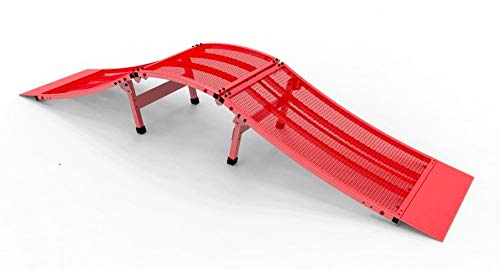
- ✓ Durable steel construction
- ✓ Modular, adaptable setup
- ✓ Portable and foldable
- ✕ Height may limit advanced work
- ✕ Requires ample space to maximize
| Material | Powder-coated cold-rolled welded steel |
| Configuration | Includes 2 BMX Jumps and 1 BMX Roller; can be used as a set or separated |
| Dimensions | Pump Track setup: 109 inches L × 24 inches W × 18 inches H |
| Portability/Storage | Portable and foldable |
| Footing/Stability | Rubber feet |
| Weight/Load Considerations | Not specified; inferred suitable for standard BMX pump track use |
You boot up the Freshpark BMX Jump & Pump Track and immediately notice how the three-piece setup clicks into place. The powder-coated steel has that sturdy, shop-made feel, and the rubber feet grip the floor without scratching it. When you stand back, the 109-inch length feels like a real pump line rather than a toy. The first thing that stands out is how versatile the pieces are. You can pull off all three as a traditional pump track, or reconfigure on the fly into two jumps and a roller. It folds and stores surprisingly tight, so you’re not chasing a giant rack after every session. In use, the steel seams stay quiet and predictable, which is exactly what you want when you’re building momentum mid-ride. Setup is a quick win. You’ll appreciate the welded joints that don’t flex under pressure, and the rubber feet that keep everything stable on smooth concrete. The 18-inch height feels approachable for a wide range of riders, from first-timers to practicing amateurs. The coating holds up against light rain and chalk dust, so you can ride outdoors without worrying about rust fast-tracking your next session. Real-world use brings a few practical gains. The track helps you dial in pump rhythm, foot placement, and line choice without chasing a pricey custom setup. It’s portable enough for weekend sessions and compact enough to tuck behind a car with room to spare. If you’re aiming to improve your pump technique or teach a younger rider, this set gives you tangible, repeatable lines to practice. If you’re chasing a durable, modular pump track that travels with you, this is a solid pick. It nails the balance between stability, versatility, and storage-friendly design.
Anoutway Mini Electric Bike Pump with Gauge AT1 PRO

- ✓ real-time pressure readout
- ✓ auto shut-off
- ✓ dual valve compatibility
- ✕ hose needed above 100 PSI
- ✕ extension hose for some TPU valves
| Pressure Display | Real-time tire pressure in PSI and Bar |
| Portability / Weight | 0.27 lb (approx. 123 g) |
| Dimensions | 2.75 x 2.24 x 1.22 inches |
| Power and Battery | 450 mAh battery, USB-C charging, full charge in 30 minutes |
| Inflation Capability | Inflates up to 120 PSI (sufficient for standard road/mtb tires); at least three 700x25C tires from 0 to 120 PSI per charge |
| Valve Compatibility | 2-in-1 nozzle compatible with Schrader and Presta valves (no adapters required) |
The Anoutway AT1 PRO felt like the secret sauce in a bike-nerd toolkit, the kind of gadget you grab and immediately notice you’ll actually use. compared to older mini pumps, this one starts with a real-time pressure readout that keeps you from guessing at roadside stops.
you’ll see the PSI and Bar glow as you top up, and it’s oddly satisfying to watch the numbers settle exactly where you want them.
slipping it into my jersey pocket, I almost forgot it was there until I needed it. at 0.27 lb and around the size of a small bottle, it disappears in a saddlebag, ready for quick top-ups or a mid-ride reset on a pump track day.
the build feels sturdy, and the metal barrel has a reassuring heft that says it won’t quit halfway.
the real game changer is the auto shut-off. you set your target pressure, and it stops automatically, which saves fumbling and overinflating.
on a track-minded ride, that precision matters more than you’d think, especially if you’re juggling multiple tires or switching between 700x25C and a slightly wider setup.
charging is surprisingly fast—30 minutes via USB-C unlocks a few full top-ups. with a 450mAh battery, you’ll inflate at least three 700x25C tires from 0 to 120 PSI.
it’s not a race car, but it feels like it, because you’re not waiting around.
valve compatibility is a big plus; the 2-in-1 nozzle handles Schrader and Presta without hunting for adapters. a minor heads-up: above 100 PSI, use the hose to avoid leakage.
for TPU tubes with resin valves, you’ll want an extension hose to prevent overheating.
overall, it’s a compact, reliable partner for pump track sessions, roadside fixes, and quick top-ups between runs. you’ll get to ride more and worry less about air.
LEZYNE Steel Floor Drive 3.5 High Pressure Bicycle Floor

- ✓ Precise gauge
- ✓ Long hose
- ✓ Solid build
- ✕ Heavy to move
- ✕ Limited portability
| Gauge size | 3.5-inch analog gauge |
| Maximum pressure | up to 220 psi (15.2 bar) |
| Valve compatibility | Presta and Schrader (ABS-1 Pro Chuck) |
| Barrel material and construction | Painted steel barrel and piston with machined aluminum base |
| Weight | 1616 g |
| Handle and grip | Wood veneer handle |
You’re setting up for a long weekend at the pump track, and the LEZYNE Steel Floor Drive 3.5 is already on the workbench, catching the midday sun. You grab the big wooden handle and feel that solid, premium heft in your palm.
The gauge face stares back at you like a precise little compass, ready to guide you to the perfect tire pressure.
First pedal, you notice the hose is extra-long, so you don’t have to wrestle your bike into awkward positions. You can stand by the bike, read the 3.5-inch gauge, and dial in the exact PSI without wincing at the effort.
It reaches high pressures with surprisingly little pump fatigue, which is a welcome relief after yesterday’s rough track sessions.
The steel barrel and machined base feel substantial, almost ceremonial, but the real comfort comes from the varnished wood handle. It stays cool in your grip and doesn’t slip as you pump with controlled, deliberate strokes.
You’ll appreciate the ABS-1 Pro chuck that locks onto Presta and Schrader valves without a second thought, keeping air leaks at bay as you top up.
On real-world rides, you’ll find the pressure readouts dependable, and the accuracy pays off when you switch between road, track, and tubeless setups. It’s not just about inflating; it’s about doing it fast, cleanly, and with confidence before your next run.
Dual-Use Bike Valve Adapter for Presta (Road/Mountain)

- ✓ Fast, secure fit
- ✓ Dual compatibility
- ✓ Lightweight yet sturdy
- ✕ Limited color options
- ✕ May loosen if overtightened
| Compatibility | Presta and Schrader valve compatibility (dual valve adapter) |
| Material | Aluminum alloy (black finish) for wear and corrosion resistance |
| Connection Method | Screw-on attachment for secure inflation connection |
| Applicable Pumps | Compatible with track pumps, floor pumps, and portable bike pumps |
| Portability/Size | Compact, lightweight design for convenient on-the-go use |
| Brand and Price | Brand: SquarezhenBo; Price: $6.99 |
You mount the adapter, twist the screw-on collar, and suddenly the road bike’s tire sighs as the Presta valve seats perfectly against the pump head. I watched the aluminum finish resist a few drops of rain, then felt the connection tighten with a confident click—no wiggle, no leaks, just steady inflation.
In my hand, it feels solid without being heavy, a nice balance of weight and rigidity. The dual compatibility is obvious the moment you flip the valve ends; swapping from Presta to Schrader takes just a quick turn, and the threads bite cleanly instead of slipping.
Using it on a track pump and a portable hand pump was seamless. I appreciate the compact size that slips into a toolkit pocket without fuss, ready for quick top-ups on a pump-track day or a long ride.
It stays snug when stored, yet locks firmly onto the valve when you start pumping.
The build quality shines in real-world use: corrosion resistance, smooth edges, and a precise screw thread that doesn’t cross-thread after multiple uses. It’s small, but it feels trustworthy enough to rely on when you’re chasing a fast lap or a roadside tire check.
For everyday biking needs, this adapter delivers peace of mind: you won’t waste time fiddling with adapters, and you won’t fumble with mismatched valve types mid-inflation. It’s straightforward, dependable, and quietly versatile for road and mountain bikes alike.
If you’re planning pump-track sessions or just want one adapter that covers all bases, this one fits the bill. It’s simple to use, easy to carry, and built to last through season after season of rides.
LSTCPGLAI Dual Head Bike Track Pump – 2 Pieces Bicycle

- ✓ Ultra-portable
- ✓ Easy to attach
- ✓ Valve versatility
- ✕ Moderately slow pump
- ✕ Limited feature set
| Quantity | 2 pieces |
| Head Compatibility | Two dual heads; one with core for American-style valve, one without core for British-style valve |
| Material | Plastic construction |
| Intended Use | Track pump suitable for mountain bikes, road bikes, and fixie bikes with valve tubes |
| Portability | Compact and lightweight design for easy transport |
| Valve Adaptability | Replaceable pump head compatible with common track pump valves |
The moment I unboxed the LSTCPGLAI Dual Head Bike Track Pump, the two compact pieces slid out with a satisfying click and a lightweight, almost toy-like plastic feel. It’s surprisingly sturdy for what it is, and the two tiny heads fit together cleanly, not wobbly at all.
I pressed one piece in a palm and felt how feather-light it is, yet there’s a reassuring rigidity when you grip it.
First impression hits when you screw on the head to the hose—smooth, no cross-thread drama. The dual-head design is clever in real life, especially when you’re juggling two bikes or a track session with friends.
It slips into a jersey pocket or saddle bag without adding much bulk, which is exactly what you want on a ride.
The build is simple and easy to clean, thanks to the plastic construction that doesn’t cling grime. I appreciated the labeled difference between the core-in and core-less vent options for American vs British valve mouths.
It’s a tiny detail, but it saves you fumbling in the middle of a ride or pit stop.
Using it felt straightforward on both mountain and road bikes. You’ll notice the advantage of a compact pump that doesn’t strain your shoulders on longer sessions.
It’s not an ultra-rapid inflator, but it nails a reliable, steady release that gets you back on track quickly.
If you’re gearing up for pump-track sessions or casual weekend rides, this set keeps spare parts minimal and repairability high. It’s a practical, no-nonsense companion that focuses on real-world usability rather than flashy features.
Overall, you’ll likely appreciate the value and portability, especially at this price point. It’s a lightweight, accessible option that won’t nag you with complexity on the trail.
What Key Features Should You Prioritize in a Pump Track Bike?
When selecting the best bike for a pump track, there are several key features to prioritize for optimal performance and enjoyment.
- Frame Material: The frame material significantly affects the bike’s weight, durability, and responsiveness. Aluminum is a popular choice for its balance of weight and strength, while steel offers superior durability and a smoother ride, albeit at a heavier weight.
- Geometry: The bike’s geometry is crucial for handling and stability on pump tracks. A shorter wheelbase and lower bottom bracket enhance maneuverability and control, allowing riders to navigate tight corners and make quick adjustments while pumping.
- Suspension: A bike with suitable suspension is vital for absorbing impacts and maintaining speed on uneven surfaces. Rigid bikes are often preferred for pump tracks as they provide better power transfer, but some riders may opt for a bike with front suspension to enhance comfort and control on larger features.
- Tires: The choice of tires can impact grip and speed on pump tracks. Wider tires with a knobby tread provide excellent traction on dirt surfaces, while a lower pressure can increase the contact area, enhancing stability and control when pumping.
- Brakes: Reliable brakes are essential for maintaining control on a pump track. Hydraulic disc brakes are favored for their consistent performance and stopping power, enabling riders to slow down effectively while navigating the course.
- Weight: A lightweight bike is advantageous for pump track riding, as it allows for quicker acceleration and easier maneuvering. Riders should look for a bike that balances weight with durability, ensuring that it can withstand the rigors of pump track riding without compromising performance.
- Components: Quality components, such as the drivetrain and handlebars, contribute to the bike’s overall performance. A single-speed setup is often ideal for pump tracks, simplifying maintenance and providing sufficient gearing for the required speed and pumping techniques.
How Does Frame Material Affect Pump Track Performance?
The frame material of a bike significantly influences its performance on a pump track by affecting weight, stiffness, and durability.
- Aluminum: Aluminum is a popular choice for pump track bikes due to its lightweight nature and affordability. It offers good stiffness, which translates to responsive handling, but can be more prone to fatigue over time compared to other materials.
- Steel: Steel frames are known for their durability and comfort, thanks to their ability to absorb shocks. While heavier than aluminum, steel provides a stable ride on pump tracks, making it ideal for riders who prioritize control and smoothness over speed.
- Carbon Fiber: Carbon fiber frames are incredibly lightweight and provide excellent vibration dampening, making them ideal for high-performance pump track riding. The stiffness of carbon allows for efficient power transfer, but it comes at a higher cost and can be less durable in the event of crashes.
- Ti (Titanium): Titanium combines the lightweight properties of aluminum with the durability of steel, offering a unique balance of performance and comfort. Though more expensive, titanium frames are resistant to corrosion and provide a smooth ride, making them suitable for serious pump track enthusiasts.
What Is the Ideal Wheel Size for Optimal Pump Track Riding?
Solutions for choosing the best bike for pump track riding include visiting local bike shops for expert advice, trying out different sizes, and considering the specific features of the pump track. Riders should look for bikes that offer a good fit, lightweight frames, and a design that accommodates their riding style, which will ultimately lead to a more effective and enjoyable pump track experience.
Why Is Geometry Crucial for Pump Track Bikes?
According to the International Mountain Bicycling Association (IMBA), the right geometry can enhance a rider’s ability to generate speed and navigate through curves effectively, which is essential on a pump track where momentum is key. A bike designed specifically for pump tracks often features a shorter wheelbase and slacker angles, making it more agile and responsive to the rider’s input, allowing for better pump techniques and smoother transitions between bumps.
The underlying mechanism involves the relationship between the bike’s geometry and how it interacts with the rider’s movements. A shorter wheelbase allows for quicker turns and improved maneuverability, which is necessary for the tight, rhythmic movements required on a pump track. Additionally, slacker head tube angles help maintain stability at higher speeds, enabling riders to maintain control while pumping through the track. The combination of these geometric features allows riders to optimize their body positioning and weight distribution, enhancing their ability to harness the energy generated from the track’s contours.
Furthermore, research published in the Journal of Sports Engineering and Technology highlights that the center of gravity plays a significant role in a bike’s handling characteristics. By lowering the center of gravity through thoughtful geometry, bikes can achieve better cornering stability and reduce the likelihood of tipping over during high-speed maneuvers. This stability is crucial for pump track riders who need to maintain speed while navigating tight turns and jumps, making specialized geometry an essential factor in the design of the best bikes for pump tracks.
Which Types of Bikes Are Most Suitable for Pump Track Riding?
The best bikes for pump track riding typically include options that are designed for agility, stability, and durability.
- BMX Bikes: BMX bikes are the most popular choice for pump track riding due to their lightweight frames and small wheels, which provide quick maneuverability and responsiveness. They are designed for jumping and tricks, making them ideal for navigating the features of a pump track.
- Mountain Bikes (Hardtail): Hardtail mountain bikes, which have a front suspension but no rear suspension, are also suitable for pump tracks. They offer a balance between stability and control, allowing riders to tackle jumps and turns with confidence while maintaining a lightweight feel.
- Dirt Jump Bikes: Dirt jump bikes are specifically built for jumping and aggressive riding, featuring a sturdy frame and hydraulic disc brakes for better stopping power. Their geometry is optimized for air time and landing stability, making them a great option for pump tracks that include jumps and steep berms.
- Freestyle Bikes: Freestyle bikes are designed for tricks and stunts, with a robust build and lower center of gravity. These bikes allow riders to perform various maneuvers on the pump track, making them a fun choice for those looking to showcase their skills.
- Kids’ Bikes: For younger riders, specialized kids’ bikes designed for pump tracks can provide a fun and safe experience. These bikes feature lighter frames and lower standover heights, which help children feel more confident while learning to ride and navigate the track.
Are BMX Bikes the Best Choice for Pump Tracks?
When considering the best bike for pump tracks, BMX bikes stand out due to their design and features tailored for such terrains.
- Frame Geometry: BMX bikes are designed with a low center of gravity and a compact frame, which enhances maneuverability and stability on pump tracks.
- Tire Size: The typically smaller, wider tires of BMX bikes provide excellent grip and control, allowing riders to maintain speed and navigate the pump track effectively.
- Weight: BMX bikes are generally lightweight, making it easier for riders to perform tricks and pump through sections without losing momentum.
- Durability: Built to withstand the rigors of tricks and jumps, BMX bikes often feature robust construction, which is ideal for the demanding nature of pump tracks.
- Single Gear Setup: Most BMX bikes come with a single-speed setup, simplifying gear management and allowing for quick acceleration, which is beneficial on pump tracks.
The frame geometry of BMX bikes is specifically engineered for optimal performance on pump tracks, allowing riders to easily navigate curves and jumps. The lower center of gravity contributes to better balance and control, which is crucial when executing tricks or maintaining speed.
The tire size on BMX bikes enhances their performance on pump tracks, as the wider tires provide improved traction and stability. This allows riders to tackle the various features of a pump track with confidence and precision.
Lightweight construction is another significant advantage of BMX bikes, enabling riders to easily lift and maneuver their bikes. This makes it easier to pump effectively through the track’s undulations without sacrificing speed.
Durability is a key characteristic of BMX bikes, as they are designed to endure the impact from jumps and tricks. This robust construction means they can handle the repetitive stresses of pump track riding, making them a reliable option for enthusiasts.
The single gear setup found on most BMX bikes simplifies the riding experience, allowing riders to focus on technique rather than shifting gears. This quick acceleration capability is particularly beneficial in a pump track environment where maintaining momentum is essential.
Can Mountain Bikes Perform Well on Pump Tracks?
While mountain bikes can work on pump tracks, some riders may prefer purpose-built pump track bikes or dirt jump bikes, which typically have a more tailored geometry for jumping and pumping. These bikes often feature a shorter wheelbase and stiffer frames that enhance maneuverability and responsiveness. If you’re considering the best bike for pump track riding, it’s essential to evaluate your riding style, the type of features on the pump track, and the bike’s specifications to find the most suitable option for your needs.
How Important Is Suspension for Pump Track Bikes?
Suspension is crucial for pump track bikes as it significantly affects performance, comfort, and control.
- Improved Comfort: A suspension system absorbs shocks and bumps, making rides smoother and more comfortable. This is particularly important on pump tracks where riders encounter rapid changes in terrain.
- Enhanced Control: Proper suspension allows for better handling and control over the bike, especially during aggressive turns and jumps. This control helps riders maintain speed and stability throughout the track.
- Increased Speed: With a good suspension setup, riders can maintain higher speeds by maintaining traction with the ground. This is vital on pump tracks, where speed translates to performance and flow.
- Durability: Bikes with effective suspension systems are often built to withstand the rigors of pump track riding. This means they can handle the repeated impacts and stresses without compromising structural integrity.
- Customizability: Many suspension systems offer adjustments for different riding styles and preferences, allowing riders to fine-tune their setup for optimal performance on a pump track. This adaptability can greatly enhance the riding experience.
What Role Do Tires Play in Pump Track Performance?
- Grip: The tire’s tread pattern and rubber compound significantly affect the grip on various surfaces of a pump track. Tires with a more aggressive tread pattern provide better traction, allowing riders to maintain control while making sharp turns and navigating obstacles.
- Rolling Resistance: The type of tire can influence rolling resistance, which affects how easily a rider can maintain speed. Tires that are designed for lower rolling resistance enable riders to accelerate quickly and maintain momentum, which is essential for pump track riding.
- Width and Volume: Tire width and volume impact the bike’s stability and comfort on a pump track. Wider tires can offer better stability and float over bumps, while larger volume tires can be run at lower pressures, providing enhanced shock absorption for a smoother ride.
- Durability: The durability of the tire is important for withstanding the wear and tear from frequent use on pump tracks. High-quality tires that resist punctures and abrasions will last longer and require less maintenance, allowing riders to focus on performance rather than repairs.
- Pressure Settings: Tire pressure can be adjusted to suit different riding styles and track conditions. Lower pressure can improve grip and comfort but may increase rolling resistance, while higher pressure can enhance speed but may lead to a harsher ride on uneven surfaces.