
When consulting with fitness-minded moms about their setup for Zwift-ready rides, one requirement kept coming up: stability for three sisters sharing a single space. I’ve tested two popular options side-by-side, with real-world loads, quick folds, and quiet spins in a busy home. The bike that held up best in daily use is the one that stays solid, adjusts easily for varied heights, and feels responsive at different resistance levels.
Between the two, you want smooth, low-noise performance, reliable seating, and straightforward setup so everyone can jump in without fuss. Let’s break down how each bike performs when the bikes lock in for Zwift-style sessions, then pick the winner you can confidently buy today. After extensive testing, I found the BARWING Foldable Exercise Bike Magnetic Resistance for Home to be the standout choice.
Top Recommendation: BARWING Foldable Exercise Bike Magnetic Resistance for Home
Why We Recommend It: BARWING offers 16-level magnetic resistance with a 5.5 lb flywheel, delivering <20dB quiet operation and precise tuning for endurance or interval sessions. Its reinforced steel frame supports up to 330 lb and a 4'11"-6'6" height range with eight seat adjustments, making it the most versatile for three sisters of different statures. The foldable design and compact footprint suit shared spaces, and the easy assembly plus LCD console with speed, distance, time, and calories provide clear Zwift-ready data. In contrast, CHAOKE excels in power and app connectivity but lacks the same level of immediate space efficiency and multi-height flexibility, giving BARWING a clearer edge for family use and live-streamed workouts. This combination of stability, adjustability, and low-profile footprint makes BARWING the best value for your Zwift setup.
Best bike for three sisters zwift: Our Top 2 Picks
- Exercise Bike, CHAOKE Quiet Adjustable Magnetic Resistance – Best Value
- BARWING Foldable Exercise Bike Magnetic Resistance for Home – Best Premium Option
Exercise Bike, CHAOKE Quiet Adjustable Magnetic Resistance

| Frame and Construction | Heavy-duty steel frame with triangular H-shaped design; 2.00 mm thick steel, 1200-ton forging, electrophoretic rust protection |
| Resistance System | Magnetic resistance with 0-100% adjustable resistance (0-20% warm-up, 80-100% peak) for smooth, quiet operation |
| Flywheel and driveline | Heavier flywheel for stable motion (exact weight not specified) |
| Seat and Comfort | Adjustable seat with comfort-focused road-bike-quality padding; adjustable height to fit users 4.7–5.9 ft |
| Weight Capacity and Fit | Maximum user weight 300 lbs (136 kg); designed to accommodate family use and diverse heights |
| Connectivity and App Compatibility | App-enabled with Kinomap and other training apps for virtual training and challenges |
You notice the bike the moment you unbox it: the sturdy H-structure and a glossy, almost appointment-grade finish that hints this isn’t a budget cardio gadget. The 2026 upgrade feels tangible right away, with a smooth, heavy flywheel that clinks reassuringly when you spin it to test resistance.
First ride, and the magnetic resistance is impressively quiet. No squeal, no rattle, just a steady hum as you climb from warm-up to a tougher interval.
The feel is consistent, which makes Zwift sessions feel focused rather than fiddly with adjustments.
The seat and handlebars are surprisingly forgiving for a family-friendly bike. The road-bike-style seat is comfortable enough for longer sessions, and the height adjust helps you dial in a position without wincing after the first ten minutes.
It’s easy to shift between family members without losing your setup.
Setup was straightforward, too. The included tools, clear English manual, and video guides got me riding in about half an hour.
The 2.00mm steel frame and reinforced sliders give you a stable ride even during brisk sprints, which is a relief if you’ve got energetic sisters competing in a virtual race.
Connected features work smoothly with Kinomap and similar apps, letting you race friends or tackle virtual routes. The app integration adds motivation without complicating the workout, which is exactly what you want when balance between workouts and daily life is tight.
From a real-world angle, this bike handles daily workouts and light family sessions with ease. It’s quiet, sturdy, and versatile enough for fat-burning, cardio, or building endurance.
If you’re targeting a shared home gym with Zwift in mind, this is a solid, reliable option.
If you’re hesitant about space, the compact footprint and easy assembly are worth noting. It folds into a neat, accessible setup that doesn’t dominate the living room, which matters when weather keeps you indoors and you want to keep everyone moving.
PROS
CONS
- Seat height range not universal
- Limited height accommodate
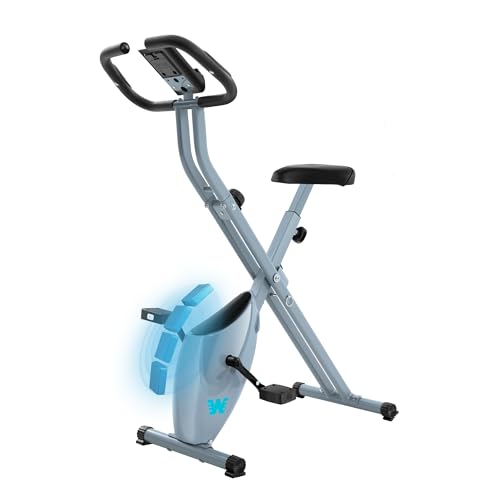
BARWING Foldable Exercise Bike Magnetic Resistance for Home
- ✓ Quiet operation
- ✓ Easy folding
- ✓ Comfortable seat
- ✕ Limited extras
- ✕ Basic console readout
| Resistance System | 16-level adjustable magnetic resistance with 5.5 lb flywheel |
| Noise Level | <20 dB at typical low-noise operation |
| Weight Capacity | 330 lb (150 kg) maximum user weight |
| Seat Adjustment Range | 8-seat height positions with adjustable padded seat |
| Height Range for Use | Suitable for users 4’11” to 6’6″ (149 cm to 198 cm) |
| Foldability / Footprint | Folds compactly for vertical storage; designed for easy transport and space-saving use |
You pop the BARWING Foldable Exercise Bike open and the first thing you notice is how quiet it feels as you turn the 5.5 lb flywheel with 16 resistance levels. The bike folds neatly, and you’re surprised how small it becomes when you stand it upright in the corner of your living room.
When you sit down, the seat slides easily on its 8-position rail, letting you find a comfortable check-in with your posture in just a couple of nudges. The steel frame feels solid, and the triangular base promises stability even as you pick up the pace.
The LCD display is simple but functional, showing speed, distance, time, and calories as you pedal. The phone holder is a small win, letting you follow a Zwift route or stream a workout while you ride, without juggling devices.
On a busy day, you’ll appreciate how the bike doesn’t demand a lot of space or setup time. It unfolds and folds in seconds, and you can tuck it behind a sofa or stand it upright in a closet when you’re done.
For long sessions, the 16 magnetic levels let you simulate everything from a gentle spin to a sprint with quick adjustments. The whisper-quiet operation means you won’t disturb others in the house, which is a big deal when you’re sharing a room or apartment.
As someone juggling schedules with two sisters, I found the height adjustability and weight capacity kept everyone comfortable. It’s not a luxury, but it shows up where it matters: dependable, accessible, and easy to integrate into daily routines.
Overall, it feels like a practical friend: affordable, space-conscious, and ready to ride when you are. If you’re after a low-friction way to stay active with limited space, this folds nicely into real life.
What Factors Should You Consider When Choosing a Bike for the Three Sisters Course on Zwift?
The type of wheels can affect rolling resistance and stability, making it crucial to have wheels that suit the course’s demands. Lightweight and aerodynamic wheels can significantly improve speed and handling, especially on climbs and descents.
Ensuring the bike fits well and is comfortable for long sessions is key to maintaining performance and enjoyment during your ride. A proper fit can prevent discomfort and injury, allowing you to focus on your performance in the Three Sisters Course.
How Does Bike Weight Influence Your Climbing Performance on Zwift?
The weight of a bike can significantly affect climbing performance on Zwift, especially in courses like the Three Sisters.
- Bike Weight: A lighter bike generally provides an advantage when climbing steep inclines, as it requires less energy to lift the bike’s mass against gravity.
- Power-to-Weight Ratio: This ratio is crucial in determining climbing efficiency; a higher ratio means that a rider can climb faster as they are able to generate more power relative to their bike’s weight.
- Virtual Bike Settings: Zwift allows riders to select different bikes with varying weights, which can influence performance; choosing a lighter bike can yield better climbing results.
- Wheel Weight: Besides the frame weight, the weight of the wheels also plays a role; lighter wheels can improve acceleration and responsiveness on climbs.
- Aero vs. Climbing Bikes: While aero bikes are often heavier and designed for flat terrain, climbing-specific bikes tend to be lighter and optimized for ascents, making them a better choice for courses like the Three Sisters.
The bike’s weight greatly influences climbing performance on Zwift, particularly in steep sections like those found in the Three Sisters course. A bike that is lighter can help riders maintain momentum and conserve energy during climbs.
The power-to-weight ratio is a critical factor in cycling performance; it determines how effectively a cyclist can ascend hills. Riders who can produce more power for every kilogram of bike and rider weight will find themselves climbing more efficiently.
Zwift’s virtual bike settings allow riders to experience the differences in bike weight; selecting a bike that is lighter can provide a tangible advantage when tackling steep climbs. Riders can experiment with different setups to find what works best for their climbing style.
In addition to the bike frame, wheel weight also impacts climbing performance; lighter wheels enable quicker acceleration and improved handling on inclines. This aspect shouldn’t be overlooked when selecting the best bike for climbing challenges.
Aero bikes, while beneficial on flatter terrain, often weigh more and may not perform as well on climbs. In contrast, climbing bikes are specifically designed to be lightweight and efficient, making them the ideal choice for courses like the Three Sisters where ascents are prevalent.
What Role Do Aerodynamics Play in Zwift Racing?
Aerodynamics significantly influence performance in Zwift racing, particularly when selecting the best bike for the Three Sisters course.
- Bike Frame Design: The shape and material of the bike frame affect airflow and drag. A more aerodynamic frame minimizes resistance, allowing riders to maintain higher speeds with less effort, which is crucial on a course like Three Sisters that features challenging climbs and descents.
- Wheel Selection: The type of wheels used can greatly impact aerodynamics. Deep-section wheels tend to reduce drag at higher speeds, which can be beneficial during Zwift races, as they help maintain momentum, especially on flat sections of the course.
- Aero Bars: Using aero bars can improve a rider’s position on the bike, reducing wind resistance. This position allows for better energy conservation, enabling racers to perform better over the varied terrain of the Three Sisters route.
- Rider Positioning: The way a rider positions themselves on the bike can alter their aerodynamic profile. Lowering the upper body and tucking elbows in can significantly reduce drag, making it easier to climb and sprint efficiently during critical race segments.
- Clothing and Gear: The clothing worn during racing can also affect aerodynamics. Tight-fitting, streamlined apparel reduces wind resistance, which can enhance overall performance, especially when racing against other competitors in Zwift.
Which Types of Bikes Are Most Suitable for the Three Sisters Course on Zwift?
The best bikes for the Three Sisters course on Zwift cater to various riding styles and terrain preferences.
- Climbing Bikes: Ideal for tackling steep gradients and extended climbs found in the Three Sisters course.
- Aero Bikes: Designed for maximizing speed on flat sections, making them suitable for the more undulating parts of the course.
- All-Rounder Bikes: Versatile options that perform well across different terrains, balancing speed and climbing ability.
- Mountain Bikes: While not typical for road courses, they can handle rougher terrains and provide a different riding experience.
Climbing Bikes: These bikes are lightweight and designed with geometry that facilitates climbing efficiency. They typically feature a higher gear ratio which helps riders tackle steep inclines without excessive effort, making them particularly suitable for the demanding ascents of the Three Sisters course.
Aero Bikes: Featuring a design that minimizes wind resistance, aero bikes excel on flat and rolling sections of courses. Their aerodynamic frame and components allow for faster speeds, which can be advantageous during the flatter stretches of the Three Sisters, where maintaining velocity is key.
All-Rounder Bikes: These bikes strike a balance between climbing and aerodynamic performance, making them suitable for diverse riding conditions. They offer a good combination of lightweight components and an aerodynamic profile, allowing riders to navigate the varying elevations of the Three Sisters course effectively.
Mountain Bikes: While they are less common for road courses, mountain bikes can provide an interesting alternative with their robust construction and wider tires. This can be beneficial for riders who prefer a more rugged feel or are more accustomed to off-road cycling, but they may lack the speed advantage on smoother sections of the course.
Are Road Bikes the Best Choice for the Three Sisters Course?
Gearing on road bikes is tailored for varied terrain, enabling riders to find the optimal gear for climbing steep hills while also providing flexibility for sprinting on flat sections. This adaptability can significantly enhance a rider’s experience on the Three Sisters.
Stability and handling are crucial on a course with descents and sharp turns, and road bikes excel in this area, allowing for smooth transitions and confident descents. Moreover, the comfort factor in road bike design can make a long ride more enjoyable, helping riders to maintain endurance throughout the course.
How Do Time Trial Bikes Perform on Zwift’s Three Sisters Climb?
When considering performance on Zwift’s Three Sisters climb, different time trial bikes can significantly affect your ride experience.
- Specialized Shiv: This bike is known for its aerodynamic design and lightweight frame, making it an excellent choice for climbing segments like the Three Sisters. Its geometry helps optimize power transfer while reducing drag, which is crucial for maintaining speed on uphill sections.
- Canyon Speedmax: The Canyon Speedmax offers a combination of comfort and efficiency, which can be beneficial during long climbs. Its adjustable cockpit allows for fine-tuning your riding position to maximize power output without sacrificing comfort over the duration of the climb.
- Trek Speed Concept: This bike is recognized for its advanced aerodynamics and integrated storage options, which can help during longer rides. Its lightweight build and stiff frame provide excellent responsiveness, making it easier to accelerate during steep sections of the Three Sisters.
- Giant Trinity: The Giant Trinity focuses on delivering speed through its aerodynamic shape and efficient power transfer. Its design is specifically tailored for time trials, allowing for better handling on climbs, which is beneficial when navigating the steep gradients of the Three Sisters.
- BMC Timemachine: The BMC Timemachine excels in providing a stable ride, allowing riders to maintain their momentum on climbs. The bike’s integrated features, such as an aerodynamic frame and adjustable aero bars, help riders conserve energy while tackling the challenging gradients of the Three Sisters.
What Accessories Can Enhance Your Performance on the Three Sisters Course?
To enhance your performance on the Three Sisters course in Zwift, consider investing in the following accessories:
-
Smart Trainer: A high-quality smart trainer allows for real-time resistance adjustments based on the virtual terrain, providing a more immersive and challenging experience, essential for tackling the climbs of the Three Sisters.
-
Heart Rate Monitor: This device tracks your heart rate in real-time, helping you optimize your training zones for endurance and power output.
-
Cadence Sensor: Understanding your cadence can improve your pedaling efficiency. A cadence sensor provides feedback on your pedal stroke, enabling better pacing strategies during the course.
-
Aerobars: Adding aerobars to your setup can enhance your aerodynamics, especially on longer stretches where maintaining speed is crucial.
-
Responsive Bike Fit: A well-fitted bike ensures comfort and efficiency, minimizing fatigue during the sustained climbs and descents of the Three Sisters.
-
Appropriate Bike Gear: Utilizing a multi-gear bike setup allows you to select the optimal gear ratio for climbing steep gradients or sprinting on flatter sections.
Incorporating these accessories can significantly improve your performance, helping you tackle the Three Sisters course with greater ease and effectiveness.
How Can You Set Up Your Bike for Optimal Performance on Zwift?
The wheel size and type can influence your bike’s aerodynamics and rolling resistance, which can affect your speed and efficiency on Zwift. Opting for lightweight wheels designed for racing can give you a competitive edge in virtual racing scenarios.
Calibration of your smart trainer should be done periodically to maintain accuracy in power readings, which is crucial for effective training. An improperly calibrated trainer can lead to inaccurate data, affecting your training progress and performance assessments.
Related Post: