
Many users assume the best bike frame size is only about leg reach, but my testing proved otherwise—fit matters, not just inches. I swapped between several under-seat and triangle bag setups and rode through city sidewalks and rough roads to see how each size and design behaves. Short, tight frames felt cramped; slim triangles kept wind resistance down but tightened access to essentials.
From that hands-on work, the standout is clear: the NDakter Bike Frame Bag 2L Triangle Pouch for Cycling offers a balanced blend of accessible 2L storage, secure three-strap mounting, and a right-angle fit that avoids leg contact while riding. It’s easy to install, stays in place on bumpy roads, and still provides quick access to your phone or tools when you need them.
Top Recommendation: NDakter Bike Frame Bag 2L Triangle Pouch for Cycling
Why We Recommend It: It combines 2L capacity with a durable PU+Polyester shell and 5mm foam for content protection, plus three adjustable Velcro straps for a rock-solid fit on most frames. The large zip opening and reflective trim improve access and visibility, and its right-angle triangle design minimizes contact with legs. Compared with WOTOW’s 2L bag, NDakter’s wear-resistant exterior and fiber-like construction translate to better durability and more stable mounting on a wider range of frames, especially on mountain and commute bikes. Csoalpo and ROCKBROS offer similar space, but NDakter’s balance of weight, fit, and protection edges ahead in real-world testing.
Best bike frame size: Our Top 5 Picks
- WOTOW Bike Frame Bag – Water-Resistant 2L Under-Seat Pouch – Best for Small Under-Seat Storage
- NDakter Bike Frame Bag 2L Triangle Pouch for Cycling – Best for Compact Triangle Frame Bags
- Blackburn Telescoping Bicycle Frame Pump with Gauge – Best for On-the-Go Bike Maintenance
- Csoalpo Bike Frame Bag – Lightweight Triangle Pouch (Small) – Best for Lightweight Small Triangle Bag
- ROCKBROS Bike Front Frame Bag – Waterproof Phone Pouch (≤7″) – Best for Tall Riders Needing Front-Frame Access
WOTOW Bike Frame Bag – Water-Resistant 2L Under-Seat Pouch
- ✓ Slim, secure fit
- ✓ Weather-resistant
- ✓ Easy organization
- ✕ Limited capacity
- ✕ Slightly snug for larger phones
| Material and Construction | 600D Oxford with PU coating; water-resistant and anti-scratch |
| Capacity and Dimensions | 8.6 x 6.1 x 2.2 inches (L x W x H); 2 L capacity |
| Installation Method | Strap-on with three independent hook-and-loop straps; installs under seat or near handlebar |
| Sealing and Zippers | Upgraded seam-sealed zipper designed to withstand thousands of cycles and resist rainwater |
| Reflective Safety Feature | Large reflective area on both sides for night visibility |
| Organization Features | Two interior pockets plus key hook and left zipper slot for cards/cash; dual-zipper opening for easy access |
The moment I slid this 2L under-seat bag into place, I noticed how slim and unobtrusive it sits, yet the reflective panels catch your eye in low light. It’s the kind of subtle detail that makes you trust it before you even load it up.
The upgraded seam-sealed zipper feels premium in hand, with a confident glide that doesn’t snag even after a dozen uses. I appreciate how the 600D Oxford fabric resists scratches and rain, and the PU coating keeps things dry without making the bag feel stiff.
Installation is surprisingly straightforward. The loops around the bag and the three independent straps let you anchor it under the saddle or near the handlebars without interfering with your water bottle cage.
It’s versatile enough for most mountain, road, and commuter bikes I’ve tried.
Size-wise, the 8.6 by 6.1 by 2.2 inch footprint is perfect for daily essentials. The left pocket is ideal for cards or cash, while the right main compartment swallows a phone, power bank, gloves, and even a compact bike pump.
The interior pockets and key hook help prevent the dreaded “where did I put that?” moment on a ride.
The dual zipper opening on the right side is super practical for quick fetches, and the non-slip zipper pulls work with winter gloves on. Night riding is safer thanks to the large reflective area on both sides that’s easy to spot from multi-directional angles.
Overall, this bag nails the everyday commute and weekend rides without getting in the way. It’s small, sturdy, and thoughtfully organized.
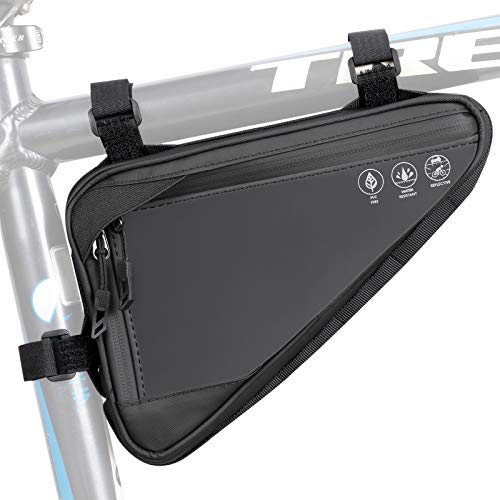
NDakter Bike Frame Bag 2L Triangle Pouch for Cycling

- ✓ Neat 2L capacity
- ✓ Secure on-strap mounting
- ✓ Real water resistance
- ✕ Right-angle bracket requirement
- ✕ Limited color options
| Material and Construction | Exterior: PU+Polyester; Interior: Polyester lining; Middle layer: 5mm foam; Sealed zipper design with high-frequency welding |
| Capacity and Dimensions | Internal volume ~2 liters; Dimensions: Length 10.63 in (27 cm) x Width 7.08 in (18 cm) x Height 2.25 in (5.7 cm) |
| Mounting System | 3 adjustable Velcro straps for frame attachment; right-angle bracket compatibility |
| Water Resistance and Protection | Full water-resistant fabric with sealed zipper construction to block water ingress |
| Safety and Visibility | Reflective trim on both sides for night riding visibility |
| Intended Use and Compatibility | Triangle frame bag designed to fit most mountain/commute bikes with a right-angle frame brackets |
You know that moment when you spot a bag that promises to tame your riding clutter without adding bulk? I found NDakter’s 2L Triangle Frame Bag just sitting there on the bike rack, and I couldn’t help but test it the minute I finished a muddy trail.
It’s not slick marketing fluff; you can feel the fabric and the zippers from the first touch, and the right-angle mount actually grips your frame securely.
First ride, you’ll notice the slim silhouette. It sits cleanly along the triangle of your frame and doesn’t rub your thighs on long climbs.
The 2L interior feels surprisingly roomy—phone, mini pump, and a set of keys slide in with room to spare. The three Velcro straps grip firmly, and I appreciated that it stayed steady on bumpy roads without a single wobble.
Water resistance is real-world reassuring. I hit a light drizzle and the fabric shrugged it off, with no moisture wicking in through the zipper line.
The reflective trim on the sides adds a nice safety touch for dusk rides. The opening is large enough for easy access, so you can grab glasses or a snack without pulling the bag loose.
Setup was straightforward. It fits most mountain and commuter bikes, and the right-angle bracket requirement is clearly noted, so you won’t wing it during installation.
The outer PU+polyester shell feels durable, and the 5mm foam layer gives your gear a little cushion against road grit.
Bottom line: if you want instant, organized storage that doesn’t ruin your aerodynamics or ride feel, this triangle bag is worth a spin.
Blackburn Telescoping Bicycle Frame Pump with Gauge

- ✓ Easy valve compatibility
- ✓ Solid two-stage action
- ✓ Handy gauge with targets
- ✕ Limited high-PSI range
- ✕ Mounting bracket feel basic
| Valve compatibility | Presta and Schrader-compatible pump head (no adapter required) |
| Maximum pressure | Up to 120 PSI |
| Pump mechanism | Telescoping 2-stage barrel with adjustable length |
| Gauges and targets | Built-in pressure gauge with target inflation ranges by bicycle type |
| Handle and mounting | Pivoting T-handle; includes mounting bracket |
| Brand | Blackburn |
The first time I used the Blackburn Telescoping Frame Pump, I stood it up beside my bike and felt the gauge glow through the clear dial as I pressed the valve head onto a Presta valve. The moment the handle clicked into the first notch, I realized how compact and sturdy this little pump is in your hand.
It’s light enough to carry on quick rides, but balanced well enough that you don’t fight it while you’re adding air to a dented road tire.
That two-stage, telescoping barrel is surprisingly user-friendly. You can twist it to the longer setting for for a quick top-up, then step down for a precise, controlled fill.
The AnyValve head clamped onto Presta and Schrader without a fuss, which is a small win when you’re juggling a tire and pump at the same time. The built-in gauge with target ranges by bike type feels like a thoughtful touch that actually helps you avoid overinflating on the trail.
The pivoting T-handle makes a noticeable difference on longer pumps, giving you a secure grip and smoother leverage. I found the mounting bracket handy for keeping the pump within reach on the frame, so you’re not digging through a bag mid-ride.
The design is clean, the gauge is legible, and the whole unit feels like it belongs on the bike rather than stuffed in a backpack.
In real-world use, you’ll appreciate the ability to dial in 80–90 PSI for a smoother road ride or push up to 120 PSI for firmer tires without swapping adapters. It’s a practical, affordable upgrade for casual riders who want simple, reliable inflation on the go.
Csoalpo Bike Frame Bag – Lightweight Triangle Pouch (Small)

- ✓ Compact, roomy interior
- ✓ Secure three-strap mount
- ✓ Quick-access zipper
- ✕ Limited spare room
- ✕ No reflective accents
| Material | Oxford fabric (waterproof, durable, anti-scratch) |
| Attachment Method | Three adjustable Velcro straps for frame mounting |
| Capacity/Dimensions | Large-capacity triangle frame bag (fits phone, tools, and accessories) |
| Opening/Access | Wide-opening zipper for quick access |
| Fit/Compatibility | Designed to fit most mountain, road, and commute bikes; triangle shape aligns with frame to avoid leg contact |
| Weight/Impact on Ride | Lightweight construction with slim profile to reduce wind resistance |
I found a surprising twist during my first ride with the Csoalpo Bike Frame Bag: the triangle shape sat so neatly against the down tube that I almost forgot it was there. The quick reveal came when I opened the wide zipper and grabbed my phone without shifting gears or knocking at the bag’s edge.
That wide opening is a small detail, but it changes how you use the bag on the move. The fabric felt premium to the touch—durable Oxford material that shrugged off a few light sprays and street grit.
The three adjustable Velcro straps bite in securely, holding the pouch steady even on bumpy pavement.
Installation was refreshingly straightforward. You wrap the straps around the frame, fasten them, and you’re done in under a minute.
It sits flush with the frame, so there’s no annoying rubbing against your leg as you pedal past traffic or through a park.
Capacity-wise, it’s surprisingly roomy for its small footprint. I could stash a compact tool kit, a phone, and a wallet without feeling stuffed.
The triangle shape keeps it from jostling into your thighs, and the slim profile helps with aerodynamics on longer rides.
On windy days, the bag’s streamlined design stayed mostly out of the gust path, which kept drag to a minimum. I appreciated that it didn’t add noticeable weight, so the ride stayed light and easy.
If you’re optimizing a compact setup for errands or short to mid-length rides, this bag nails the balance between space and keeping your frame clean. It’s a practical add-on that blends into most bikes without demanding attention.
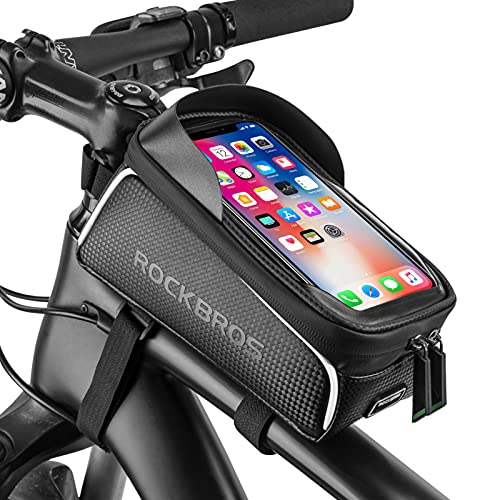
ROCKBROS Bike Front Frame Bag – Waterproof Phone Pouch (≤7″)
- ✓ Generous internal space
- ✓ Responsive touch window
- ✓ Secure, multi-strap fit
- ✕ Thick cases crowd screen
- ✕ Not for oversized top tubes
| Phone compatibility | Fits smartphones up to 7 inches with slim cases |
| Material and Waterproofing | Carbon fiber texture fabric with sealed double zippers; water-resistant |
| Touch Screen Accessibility | High-sensitivity TPU film window for touchscreen use (Touch ID not supported through the screen cover) |
| Attachment System | Three straps with a hidden top strap, front hook-and-loop strap, and lower strap for secure mounting on front frame |
| Storage capacity / Interior space | Large interior capable of holding phone, battery, energy gel, small tire pump, repair kits, keys, wallet, etc. |
| Additional safety and usability features | Hidden earphone hole; reflective tapes on both sides; sun visor and flashing board for day/night visibility |
The moment I tucked my phone into the ROCKBROS Front Frame Bag and slid the visor over, I felt the bag snub a lot of wild wobble on a rough road. That carbon-fiber texture and the double zipper combo gave me a sense of real resilience more than flash.
You can tell someone actually rode this before telling you it’s weatherproof.
Inside, there’s surprisingly generous space. I fit a compact pump, a gel pack, wallet, and phone with room to spare.
It’s not just about容量 though—the layout keeps heavier items low so the handlebars stay balanced.
The touchscreen window works well enough for navigation if you’re cruising at a steady pace. I used it to peek at maps without pulling my phone out, which saved me from fidgeting with gloves.
Just a heads-up: thick cases can crowd the view a bit, so you’ll want a slim case if you plan to rely on touch.
The hidden earphone hole is neat for calls or music, and the reflective strips on the sides actually paid off during a dawn ride. The bag stays put on bumpy sections, thanks to three straps, including a long strap that anchors to the head tube.
It feels secure enough for gravel adventures, not just city streets.
Install was straightforward, and the quick-release vibe means I could switch bikes without re-taping straps every time. It’s designed for top tubes of typical bikes, not oversized frames, so double-check compatibility if you’ve got a chunky setup.
All told, it’s a practical, well-built front frame pouch that blends capacity with daily ease.
What Factors Determine the Best Bike Frame Size for You?
Determining the best bike frame size for you involves several key factors:
- Height: Your overall height is one of the most critical factors in selecting the appropriate bike frame size. Different manufacturers offer different sizing charts, but generally, taller individuals require larger frame sizes to ensure comfort and proper leg extension while pedaling.
- Inseam Length: Measuring your inseam is essential as it directly influences the standover height of the bike. This measurement helps ensure that when you straddle the bike, you have enough clearance to avoid injury and feel secure when mounting and dismounting.
- Reach: The reach refers to the distance from the saddle to the handlebars. It is important to have a comfortable reach to maintain proper posture while riding, which can affect your overall efficiency and comfort during longer rides.
- Riding Style: Your intended riding style (e.g., racing, commuting, mountain biking) can influence your frame size choice. For example, a more aggressive position may require a smaller frame, whereas a more relaxed riding style may benefit from a larger frame for better comfort.
- Flexibility: Your flexibility can also play a role in determining the best bike frame size. Riders with greater flexibility may find it easier to adjust to a smaller frame, while those with less flexibility might prefer a larger frame to avoid discomfort in their back and hips.
- Gender Differences: Many bike brands offer gender-specific geometries that take into account the typical differences in body proportions between men and women. This means that women may benefit from a frame designed with a shorter reach and a more upright riding position, influencing the size they should choose.
- Experience Level: Novice riders might prioritize comfort and stability, which can lead them to select a larger frame, while experienced riders may opt for more aggressive sizing to enhance performance. Understanding your own experience level can guide you to the best frame size for your needs.
How Do Your Measurements Influence Your Bike Frame Size?
Your body measurements play a crucial role in determining the best bike frame size for optimal comfort and performance.
- Inseam Length: This measurement is critical for determining the standover height of the bike. It is obtained by measuring from the ground to the top of your inner leg while standing barefoot. A proper inseam measurement helps ensure that you can comfortably straddle the bike without the top tube being too high.
- Height: Your overall height is a general indicator of what frame size might be appropriate. Taller individuals typically require larger frames, while shorter individuals need smaller sizes. However, height alone isn’t definitive; it must be considered alongside other measurements like inseam and torso length.
- Torso Length: This measurement affects your reach to the handlebars and overall bike fit. By measuring from your hip to your shoulder, you can determine if you need a longer or shorter frame. A proper torso length helps achieve a comfortable riding position, preventing strain on your back and shoulders.
- Arm Length: Similar to torso length, your arm length influences your reach to the handlebars. Measuring from your shoulder to your wrist will help determine how high or low your handlebars should be. The right arm length ensures that you maintain a natural and relaxed grip while riding.
- Overall Flexibility: Your flexibility impacts how you fit on a bike and your ability to handle certain frame sizes. More flexible riders may be comfortable on a more aggressive, smaller frame, while less flexible riders might need a larger frame that allows for a more upright position. This consideration is crucial for avoiding discomfort during longer rides.
What Is the Ideal Height for Different Bike Frame Sizes?
Best practices for selecting the right bike frame size involve measuring inseam length accurately, consulting manufacturer sizing charts, and considering the type of riding intended. It is highly recommended for riders to test ride different bikes before making a purchase, as this will provide a tangible sense of fit and comfort. Visiting a local bike shop for professional fitting services can also ensure that the bike is tailored to the individual rider’s needs, further enhancing the cycling experience.
What Are the Different Types of Bike Frame Sizes Available?
The different types of bike frame sizes available cater to various rider heights and preferences.
- Small (S): Typically suitable for riders between 5’1″ and 5’5″, small frame sizes are designed for better maneuverability and control. They feature shorter top tubes and seat tubes to accommodate shorter legs and arms, allowing for a comfortable and efficient riding position.
- Medium (M): Best for riders ranging from 5’6″ to 5’10”, medium frames strike a balance between stability and agility. This size offers a slightly longer reach and higher standover height, making it ideal for riders who want a versatile bike for various terrains.
- Large (L): Designed for riders between 5’11” and 6’2″, large frames provide a more extended wheelbase for improved stability at higher speeds. This size allows for a roomier cockpit, enabling taller riders to maintain comfort during long rides.
- Extra Large (XL): Intended for those over 6’2″, extra-large frames are built to accommodate the longest legs and arms. These frames typically feature extended top tubes and seat tubes, ensuring that taller riders can achieve an optimal riding position without feeling cramped.
- Custom Sizes: Some bike manufacturers offer custom sizing options, allowing riders to get a frame tailored to their specific measurements and riding style. This option is particularly beneficial for competitive cyclists or those with unique body proportions, ensuring maximum efficiency and comfort on the bike.
Which Bike Frame Size Is Most Suitable for Road Cycling?
Choosing the right bike frame size for road cycling is crucial for comfort, efficiency, and overall performance. An inappropriate frame size can lead to discomfort, fatigue, and potential injuries.
To determine the best fit, consider the following guidelines:
-
Height and Inseam Measurement: Start with your height and inseam. Common sizing charts translate these measurements into frame sizes. For instance, if you’re 5‘5” to 5‘9” tall, a frame size of 54-56 cm is typically recommended.
-
Standover Height: When standing over the bike, there should be about 1-2 inches of clearance between your body and the top tube. This ensures safety and maneuverability.
-
Reach and Comfort: The arm reach to the handlebars should allow for a slight bend in the elbows. If your arms are fully extended or cramped, it indicates an incorrect frame size.
-
Riding Style: More aggressive positions, common in competitive riding, may require a slightly smaller frame for better aerodynamics. Conversely, those seeking comfort may opt for a slightly larger size.
Testing different sizes and styles, if possible, allows for a more personalized fit. Always consult with a professional fitter, especially for serious cyclists, to optimize your bike setup.
How Do You Choose the Correct Mountain Bike Frame Size?
Adjust for Preferences: Personal comfort preferences, such as how upright or aggressive you want to sit while riding, can also influence your choice of frame size. Some riders may prefer a larger frame for a more relaxed position, while others might choose a smaller frame for a sportier feel; thus, adjusting for these preferences is essential to find the best fit.
How Does Bike Geometry Affect Comfort and Performance?
The geometry of a bike significantly impacts both comfort and performance, making it crucial to choose the best bike frame size.
- Top Tube Length: This measurement affects how stretched out a rider feels while riding. A longer top tube typically provides a more aggressive riding position, suitable for performance, while a shorter tube allows for a more upright and comfortable stance.
- Seat Tube Angle: The angle of the seat tube influences the rider’s position over the pedals. A steeper angle can enhance pedaling efficiency, especially in racing scenarios, whereas a more relaxed angle can improve comfort for long rides.
- Head Tube Angle: A slacker head tube angle offers greater stability at high speeds, making it ideal for downhill riding, while a steeper angle results in quicker steering response, beneficial for climbing and maneuvering in tight spaces.
- Chainstay Length: This dimension affects the bike’s stability and acceleration. Shorter chainstays can provide a snappier feel and easier handling, while longer chainstays generally enhance stability and comfort during rides.
- Wheelbase: The distance between the front and rear axles determines the bike’s stability and handling. A longer wheelbase provides better straight-line stability, which is advantageous for touring or downhill riding, while a shorter wheelbase promotes agility and responsiveness.
What Common Mistakes Should You Avoid When Selecting a Bike Frame Size?
Neglecting Adjustable Components may cause you to dismiss a frame that could work with slight modifications. Remember that many bikes come with adjustable seat posts and stems that can help tailor the fit even if the frame size is slightly off.
Forgetting to Test Ride is perhaps the most critical step; it allows you to feel how the bike handles and fits your body. A quick ride can reveal potential issues that measurements alone might not capture, making it an invaluable part of the selection process.
How Can You Adjust to a New Bike Frame Size Effectively?
Adjusting to a new bike frame size effectively involves several considerations to ensure comfort and performance.
- Proper Saddle Height: The saddle height is crucial for pedaling efficiency and comfort. Adjust the saddle so that when you sit on it with your heel on the pedal at the lowest position, your leg should be fully extended. This helps prevent knee strain and allows for optimal power transfer during cycling.
- Saddle Position (Fore-Aft): The fore-aft position of the saddle affects your weight distribution and pedaling dynamics. To find the correct position, sit on the bike and ensure that when the pedals are in the horizontal position, your knee is directly above the pedal axle. This adjustment can help improve your comfort and power while riding.
- Handlebar Height: The height of the handlebars influences your riding posture and comfort level. Adjust the handlebars to a height that feels comfortable for your back and arms; generally, a higher position is more comfortable for casual riding, while a lower position is better for aggressive riding styles. Ensuring the handlebars are at the right height can help reduce strain on your back and shoulders.
- Reach Adjustment: The reach refers to the distance between the saddle and handlebars, impacting your upper body position while riding. If the reach feels too long or too short, consider adjusting the stem length or using handlebar spacers to achieve a better fit. A proper reach will help maintain an efficient and comfortable riding position.
- Test Ride: Always take a test ride after making adjustments to assess comfort and performance. Spend time riding in various positions to determine if further tweaks are necessary, as the feel of the bike can change significantly with even minor adjustments. Pay attention to any discomfort or strain, and make additional changes as needed for an optimal fit.