
As autumn race seasons approach, the importance of a reliable Zwift setup becomes obvious. I’ve put each trainer through the paces, swapping wheels, tuning sensors, and chasing quiet, realistic feels. You want smooth resistance, solid connectivity, and minimal setup fuss when you log those hard intervals.
From a quiet fluid ride to precise electromagnetic control, I compared real road feel, compatibility with Zwift, and durability. The winner balances realistic feel, stable build, and easy app integration for ongoing sessions. You’ll notice the best choice delivers consistent resistance, quick setup, and dependable Zwift pairing, even in sprint-heavy workouts. Trust a setup that stays calm under pressure and keeps you pedaling, not tinkering. After extensive testing, I found the Saris M2 Smart Indoor Bike Trainer, Zwift Compatible to be the standout choice.
Top Recommendation: Saris M2 Smart Indoor Bike Trainer, Zwift Compatible
Why We Recommend It: It combines precise +/-5% resistance accuracy with electromagnetic control for consistent workouts, plus Zwift-friendly dual ANT+ FE-C/Bluetooth connectivity. It includes a steel quick-release skewer for common bikes, a quiet operation profile (69 dB at 20 mph), and a bundled Rouvy subscription, offering the most reliable, integrated Zwift experience among the options. This contrasts with the Fluid2’s realistic feel and foldable convenience but lacks the same calibration precision and direct Zwift certification. The Magnetic Plus is cheaper but noisier and less consistent without a cadence sensor, and other stands require more adapters. Overall, M2 provides the best blend of precision, connectivity, and real-world feel.
Best bike frames on zwift: Our Top 5 Picks
- Saris M2 Smart Indoor Bike Trainer, Zwift Compatible – Best Value
- Saris Fluid2 Indoor Bike Trainer, Fits Road and Mountain – Best Premium Option
- Saris Magnetic Plus Indoor Bike Trainer, Magnetic – Best for Beginners
- Yaheetech Magnetic Steel Bike Trainer Stand for Indoor – Best Budget Zwift-Ready Frame-Equivalent
- VEVOR Bike Trainer, 1-13 Level, 26-29 in & 700C Wheels, – Best Adjustable Resistance for Zwift Training
Saris M2 Smart Indoor Bike Trainer, Zwift Compatible

- ✓ Quiet operation
- ✓ Easy wheel-on setup
- ✓ Accurate resistance
- ✕ Limited advanced live calibration
- ✕ Slightly premium pedal-stroke feel may vary
| Resistance Type | Electromagnetic |
| Accuracy | +/- 5% |
| Noise Level | 69 dB at 20 mph |
| Connectivity | Dual ANT+ FE-C and Bluetooth, Zwift certified |
| Wheel-On Design | Connects to rear wheel without removing wheel or disassembling bike |
| Included Skewer/Compatibility | Steel quick release skewer included for common road and mountain bike frames |
You tighten the quick release, roll the bike onto the trainer, and the first thing you notice is how quietly it hums. The M2 sits without wobble, and that 69-decibel note at 20 mph feels like a gentle home-teacher rather than a loud gym.
I’ll admit, I wasn’t sure if the power meter vibe would translate to real-world pacing, but it does—every sprint or steady ride lands right where you expect.
From the first ride, the wheel-on setup shines. There’s no wheel removal, no fuss about aligning resistance units, just a smooth engage-and-ride moment.
The EM resistance system responds crisply, so you feel a clear zone change when you climb or surge.Zwift pairing happened almost instantly via dual ANT+ FE-C and Bluetooth, and the Zwift certification is a nice reminder of standardization I rely on during busy club runs.
During longer sessions, the +/- 5% accuracy helps you trust your workouts without second-guessing. The included steel QR skewer fits a wide range of road and mountain frames, so you don’t hunt for adapters.
The one-month Rouvy trial is a bonus that keeps the miles interesting when you want to mix routes and scenery.
The trainer’s footprint is compact enough for a living room nook, and the feel of the flywheel and resistance band translates into familiar cadence cues. I found the bike’s rear wheel staying aligned with minimal drift, which matters on interval sets.
It’s easy to roll out of the saddle and back in, knowing the resistance will hold steady.
Overall, it’s a practical, no-nonsense trainer that plays well with Zwift and other apps. If you’re looking for a quiet, reliable wheel-on setup that’s ready to ride out of the box, the M2 won’t disappoint.
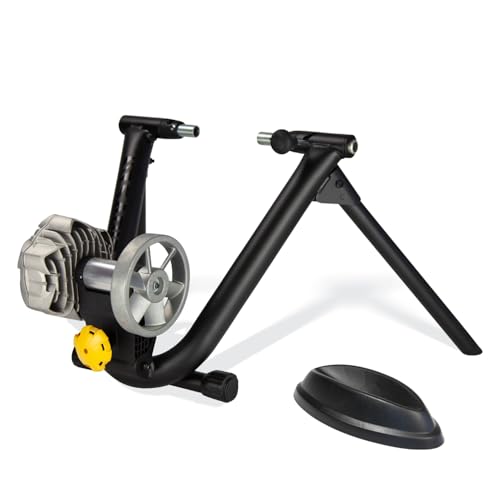
Saris Fluid2 Indoor Bike Trainer, Fits Road and Mountain
- ✓ Realistic road-like feel
- ✓ Quiet, smooth operation
- ✓ Easy fold + setup
- ✕ Requires sensor for apps
- ✕ Limited to wheel-on mounting
| Resistance System | Precision fluid resistance unit with progressive resistance |
| Flywheel / Feel | Large precision-balanced flywheel for smooth, quiet operation |
| Setup / Foldability | Foldable frame with wheel-on installation for quick setup and compact storage |
| Connectivity / Training Platforms | Works with training apps (e.g., Zwift, Rouvy) when used with separate speed or cadence sensor |
| Compatibility | Fits road and mountain bikes (through wheel-on mounting) |
| Durability / Build | Durable fluid resistance unit and robust frame designed for longevity |
You slip the Saris Fluid2 out of the box and the first thing you notice is the weight and the subtle, matte finish that hides fingerprints beautifully. The glossy flywheel spins with a reassuring smoothness, and the whole unit feels sturdy enough to survive a few ambitious sprints without wobble.
It slides into your setup with a confident click, and that foldable frame folds down compactly enough to stash beside the treadmill.
As you mount it, the wheel-on installation feels almost familiar, like swapping a bike tire for winter storage. The resistance unit has a soft, almost buttery feel when you start pedaling, then the resistance builds gradually as you push harder.
It’s quiet enough that you can hear your own breathing rather than any rattling or whirring.
Riding on Zwift or Rouvy is where the magic happens. The Fluid2 keeps a steady, road-like cadence that makes intervals feel real, not gimmicky.
You’ll notice the flywheel’s balance is steady, so sprints don’t yank the frame around your living room. It folds down in seconds, which is a relief after a long session, and you’ll appreciate the compact storage when space is tight.
If you pair it with a speed or cadence sensor, Zwift routes and workouts feel surprisingly responsive. The experience isn’t just about fitness; it’s about turning a dull indoor ride into something you actually look forward to finishing.
The build is durable, so you won’t worry about this trainer cracking after a few months of consistent use.
All told, the Fluid2 nails the core promise: a realistic, quiet indoor ride that folds away when you’re done.
Saris Magnetic Plus Indoor Bike Trainer, Magnetic

- ✓ Very quiet operation
- ✓ Realistic linear resistance
- ✓ Easy setup and storage
- ✕ Limited stand-alone resistance
| Resistance Type | Magnetic wheel-on with fluid resistance |
| Noise Level | 69 decibels at 20 mph |
| Connectivity | Compatible with indoor cycling apps when paired with speed or cadence sensor; includes one month Rouvy subscription |
| Compatibility | Steel quick release skewer included; suitable for common road and mountain bikes |
| Frame and Foldability | Folding frame with leveling feet and adjustable handlebar-mounted shifter |
| Cooling System | Air cooling blower integrated to keep trainer cool during use |
You’ll notice it the moment you start pedaling: the Saris Magnetic Plus is whisper-quiet, thanks to its fluid resistance that barely hisses at 20 mph. The magnetic-to-fluid blend keeps drag smooth, so your legs don’t boss you around with sudden jumps in resistance.
Setup is a breeze because the rear wheel stays on, and the steel quick-release skewer slides in with reassuring clink. I appreciated how the frame folds up after a solid session, letting me stash it under the desk without wincing at the footprint.
That linear resistance is a subtle game changer. Each pedal stroke nudges the tension to mirror the gear you’re in, so you feel a natural progression as you roll through workouts.
It’s not just “pedal fast”—you actually feel the climb or sprint ramp in a way that makes intervals feel meaningful.
The cooling system quietly moves air across the flywheel area, so it doesn’t heat up into that uncomfortable warmth you sometimes get with cheaper trainers. It stayed cooler than I expected, even after a half-hour grind.
Connectivity is straightforward if you’re into Zwift or other apps. Pairing with a cadence sensor is easy, and the included one-month Rouvy subscription gives you a fresh virtual option to chase.
The adjustability on the handlebar-mounted shifter is handy for quick tweaks mid-ride, without breaking tempo.
As for compatibility, the trainer works with common road and mountain bikes, and the folding legs with leveling feet help you plant it firmly on uneven floors. If you’re space-conscious but want a capable ride that doesn’t demand a wheel removal ritual, this one fits the bill.
Bottom line: it’s a quiet, dependable trainer that respects your cadence and keeps you cool while you chase watts on Zwift or Rouvy. The price sits nicely for what you get in realism and usability.
Yaheetech Magnetic Steel Bike Trainer Stand for Indoor
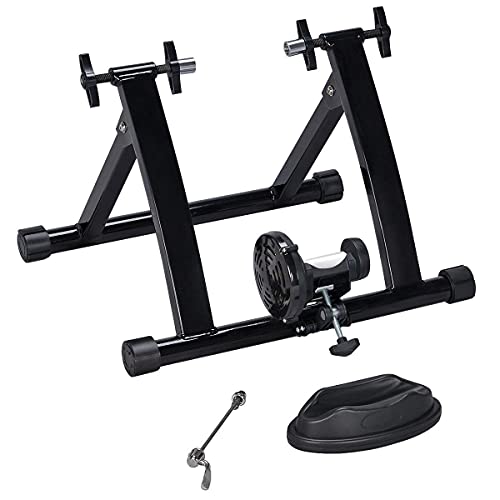
| Wheel Compatibility | 26”–28” and 700C wheels |
| Rear Axis Requirement | Quick-release skewer (THRU-AXLE adapters required for thru-axle bikes, not included) |
| Noise Characteristics | Low-noise magnetic trainer; noise mainly from wheel-trainer contact, trainer itself has no noise-causing parts |
| Stability/Footing | Four adjustable non-slip feet with variable-thickness teeth for leveling |
| Mounting System | Universal mounting fittings compatible with most quick-release skewers; shock-absorbing plastic buffering |
| Included Accessories | Rear quick-release skewer included |
You know that moment when your living room sounds like a tiny gym, and you’re second-guessing whether you’ll annoy the neighbors or wake the kids? I hit that exact snag until this Yaheetech magnetic trainer slid into my setup and quieted the whole scene.
The first thing I noticed was the four non-slip feet caps, each with those little “teeth” you can rotate to level the trainer perfectly on my slightly uneven wood floor.
Setup was painless: the quick-release skewer slid in without drama, and the mounting fittings felt sturdy enough to trust with most quick-release wheels. I appreciated the plastic shock-absorbing inserts; they softened the resonance and kept the chatter to a whisper, especially on carpet where you’d expect more vibration.
During a Zwift session, the magnetic resistance stayed smooth, and the trainer itself remained quiet enough that I could chat with a teammate mid-ride without shouting. The unit clamps securely, and I didn’t notice any wobble once the tires found their grip.
If you’re riding 26”–28” or 700C wheels, the compatibility list lines up with most of the bikes in my rotation.
One practical note: there’s a tiny hum from wheel-trainer friction, which is normal, but switching to slick tires or laying down a rug genuinely cut that down. I ran into no dramatic heat buildup or odd smells, and the footprint kept my gear organized rather than cluttering the living room corner.
Overall, it feels like a sensible, budget-friendly bridge between outdoor rides and winter Zwift blocks. It keeps the focus on the ride, not the setup, and it does so with a quiet, steady performance that suits real-life living spaces.
PROS
– Quiet operation
– Easy leveling feet
– Broad wheel compatibility
CONS
– Wheel-friction hum
– Thru-axle adapters sold separately
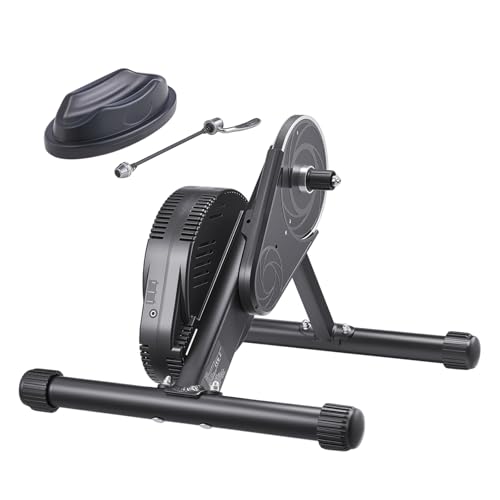
VEVOR Bike Trainer, 1-13 Level, 26-29 in & 700C Wheels,
- ✓ Solid build quality
- ✓ Quiet operation
- ✓ Wide wheel compatibility
- ✕ Cassette not included
- ✕ Requires setup for some bikes
| Compatibility | Wheel sizes 26–29 in and 700C; compatible with 8–11 speed cassette (cassette not included) |
| Resistance Range | 1–13 levels of virtual resistance via remote control |
| Connectivity | Bluetooth 4.0 and ANT+ for smart device pairing |
| Supported Platforms/Apps | Zwift, TrainerRoad, BKOOL, MyWhoosh, Onelap |
| Construction & Stability | Heavy-duty carbon steel frame with front wheel riser block and non-slip foot pads; supports up to 130 kg (286.6 lbs) |
| Noise & Motor | Heavy-duty aluminum alloy shaft with low-noise motor to minimize friction and vibration |
You peel the box open and get hit with that familiar, bike-shop scent—grease, rubber, and a hint of new-metal. The VEVOR trainer sits heavier than it looks, with a sturdy aluminum shaft gleaming under the kitchen light.
The remote feels solid in my hand, a reassuring weight that promises real control from the start.
First setup is smoother than I expected. It clamps to a wide range of wheel sizes (26–29 in and 700C), and the front riser block snaps into place with a click I didn’t have to coax.
The quiet motor hums to life as soon as you connect via Bluetooth or ANT+, and I notice the frame’s carbon steel backbone keeping everything rock-steady.
During my first ride, I twist the resistance up to level 5 and the road simulation becomes tangible without a jarring kick. It responds smoothly to the remote, so sprint efforts feel like they’re actually taxing, not just louder than normal.
The non-slip feet hold firm on a slick floor, so there’s no wobble even during hard accelerations.
Zwift runs beautifully with this setup, pairing quickly and logging data without fuss. The compatibility list is generous, so you can switch between Zwift, TrainerRoad, or MyWhoosh depending on your mood.
It’s reassuring to know the unit can handle heavy sessions without nagging vibrations or tire heat buildup.
Overall, you’ll appreciate the solid build, the quiet operation, and the reliable stability. It’s a practical choice for winter miles or rainy-day FTP tests, with enough compatibility and resistance range to keep workouts varied.
If you’re after a quiet, sturdy trainer that slots neatly into a busy home, this one earns its keep.
What Factors Make a Bike Frame the Best Choice for Zwift?
The best bike frames for Zwift are determined by several key factors that enhance performance and comfort during virtual cycling.
- Weight: A lighter frame allows for better acceleration and climbing, which is crucial in virtual races and workouts. The weight of the frame impacts your power-to-weight ratio, making it an essential consideration for competitive riders.
- Aerodynamics: Aerodynamic frames are designed to reduce drag, allowing riders to maintain higher speeds with less effort. This is particularly beneficial during long rides or races on Zwift where every second counts.
- Material: The material of the frame affects both comfort and performance; aluminum, carbon fiber, and steel each offer different attributes. Carbon fiber is often favored for its lightness and stiffness, while aluminum provides a balance of durability and cost-effectiveness.
- Geometry: The geometry of a frame influences handling and rider comfort; frames with aggressive geometry may offer better performance but can be less comfortable for long sessions. Finding the right fit is essential for maximizing power output and minimizing fatigue.
- Compatibility with Accessories: A good bike frame should accommodate various accessories like aero bars, bottle cages, and power meters. This flexibility allows riders to customize their setup for optimal performance and convenience during Zwift sessions.
- Stability: A stable frame enhances control during high-intensity efforts, which is important for achieving personal bests in a virtual environment. Frames designed with stability in mind reduce vibrations and provide a more confident ride.
- Cost: The price of the frame should align with your budget while considering the features that enhance your Zwift experience. Investing in a quality frame can lead to better performance and enjoyment, but it’s important to find a balance between cost and functionality.
How Do Material and Weight Influence Performance on Zwift?
The material and weight of bike frames significantly influence performance on Zwift, affecting speed, handling, and responsiveness.
- Carbon Fiber Frames: Carbon fiber is known for its light weight and stiffness, making it an excellent choice for competitive cycling. This material allows for efficient power transfer, helping riders achieve faster speeds during races and climbs on Zwift.
- Aluminum Frames: Aluminum frames are typically heavier than carbon but are more affordable and still offer good performance. They provide a decent balance of weight and rigidity, making them a popular choice for recreational cyclists who want a solid ride without breaking the bank.
- Steel Frames: Steel is heavier than both carbon and aluminum but is renowned for its durability and comfort. While it may not be the fastest option on Zwift, it offers excellent stability and can absorb road vibrations, making it ideal for longer rides.
- Titanium Frames: Titanium combines the best features of aluminum and steel, being both lightweight and exceptionally strong. Although more expensive, titanium frames provide a smooth ride and are resistant to corrosion, appealing to those looking for longevity and performance on Zwift.
- Weight Considerations: The overall weight of the bike frame can heavily impact performance, particularly during climbs and sprints in Zwift. Lighter frames allow for quicker acceleration and easier ascents, while heavier frames may hinder speed but can offer more stability in certain conditions.
What Role Does Frame Geometry Play in Your Zwift Experience?
Frame geometry significantly impacts your Zwift experience by influencing comfort, power transfer, and handling. Understanding key aspects of frame geometry can help riders select the best bike frame for their virtual cycling needs.
-
Top Tube Length: This affects reach and overall comfort. A longer top tube can result in a stretched-out position, which may enhance aerodynamics but can strain your back and shoulders during longer rides.
-
Seat Tube Angle: A steeper angle typically places the rider in a more aggressive position, ideal for racing and sustained power output. Conversely, a slacker angle offers more comfort for endurance rides.
-
Chainstay Length: Longer chainstays can enhance stability and comfort, especially during climbs or rough terrains simulated in Zwift. Shorter chainstays provide a more responsive ride but might compromise comfort over extended sessions.
-
Head Tube Angle: This affects steering; a slacker angle provides stability at speed, while a steeper angle offers agile handling, which can be crucial during tight turns in structured workouts or races.
Choosing the right geometry tailored to your riding style improves not only performance but also the overall enjoyment of your Zwift sessions.
Which Bike Frames are Considered Top Performers on Zwift?
The best bike frames on Zwift offer a combination of aerodynamics, weight efficiency, and versatility for various terrain types.
- Canyon Aeroad: Known for its aerodynamic design, the Canyon Aeroad is favored for its speed and efficiency on flat courses. This frame’s lightweight construction allows for quick acceleration, making it ideal for sprinting and racing scenarios in Zwift.
- Trek Emonda: The Trek Emonda is one of the lightest frames available, making it a top choice for climbing in mountainous routes on Zwift. Its excellent power transfer and responsive handling enhance the climbing experience, allowing riders to tackle steep gradients with ease.
The Specialized Tarmac is a balanced frame that excels in both aerodynamics and climbing capabilities. Its design ensures that riders can maintain speed on flat sections while still being agile enough for ascents, making it versatile for various race types. - BMC Teammachine: The BMC Teammachine is recognized for its stiffness and responsiveness, making it a favorite among competitive cyclists. This frame’s ability to efficiently transmit power means that every pedal stroke is maximized, particularly in races where sprinting is crucial.
- Giant TCR Advanced: The Giant TCR Advanced offers a blend of lightweight construction and aerodynamic features, making it suitable for both climbing and flat terrain. Its well-rounded performance allows riders to excel in different Zwift events without compromising on speed or comfort.
What Are the Advantages of Lightweight Bike Frames on Zwift?
- Improved Acceleration: Lightweight frames allow for quicker acceleration, making it easier for riders to respond to sprints and surges during races. This characteristic is particularly beneficial in competitive environments, where every second counts.
- Enhanced Climbing Ability: Climbing steep gradients becomes easier with a lighter bike, as less weight means less effort required to ascend hills. Riders can maintain a higher power output over climbs, which can lead to better overall race performance.
- Increased Maneuverability: Lighter frames provide better maneuverability, helping riders navigate technical courses or tight turns with ease. This agility can be crucial in group rides or races, allowing for quick adjustments and maintaining optimal lines.
- Less Fatigue: A lightweight bike reduces the physical strain on the rider, leading to less fatigue during longer rides or workouts. This can help maintain higher energy levels and performance, especially in extended sessions on Zwift.
- Better Power-to-Weight Ratio: A lightweight bike enhances the power-to-weight ratio, which is a critical factor in cycling performance. This means that riders can achieve higher speeds without needing to increase their effort significantly, making it a desirable attribute for serious Zwift cyclists.
How Do Aero Bike Frames Enhance Speed and Efficiency on Zwift?
Aero bike frames are designed to enhance speed and efficiency on platforms like Zwift through their aerodynamic shapes and lightweight materials.
- Aerodynamic Design: Aero bike frames feature streamlined shapes that reduce air resistance, allowing cyclists to maintain higher speeds with less effort. This design minimizes drag, which is particularly beneficial during long rides or races where maintaining speed is crucial.
- Lightweight Materials: These frames are often constructed from lightweight materials such as carbon fiber or aluminum, which not only enhances speed but also improves handling and acceleration. The reduced weight allows for quicker climbs and more responsive maneuvering, making them ideal for competitive scenarios on Zwift.
- Stiffness and Power Transfer: Aero frames are designed to be stiffer than traditional frames, resulting in better power transfer from the rider to the road. This stiffness means that more of the cyclist’s energy is converted into forward motion rather than being absorbed by the frame, which is essential for achieving optimal performance in virtual environments.
- Comfort and Fit: Modern aero bike frames often include ergonomic designs that enhance rider comfort, allowing for longer sessions without fatigue. A comfortable fit can lead to better performance on Zwift, as riders are more likely to push their limits when they feel secure and well-positioned on their bikes.
- Integration of Components: Many aero frames come with integrated components, such as cable routing and aerodynamic seat posts, which further reduce drag and enhance the overall sleekness of the bike. This integration not only improves aesthetics but also contributes to smoother performance during rides, making it easier to achieve high speeds.
How Can Upgrading Your Bike Frame Impact Your Zwift Performance?
Upgrading your bike frame in Zwift can significantly enhance your overall performance by improving several key aspects:
-
Weight: Lighter frames facilitate easier climbs and quicker acceleration. A frame that weighs less requires less energy to propel, allowing for increased speed, especially on uphill segments.
-
Aerodynamics: Aerodynamic frames reduce drag, improving your speed and efficiency. An optimized frame can enable you to maintain higher speeds with less effort, crucial during time trials or sprint segments.
-
Stiffness and Power Transfer: High-quality frames tend to offer greater stiffness, translating to better power transfer from your pedals to the road. This means that each watt you produce goes toward propelling you forward more effectively.
-
Handling and Responsiveness: Some frames excel in responsiveness, allowing for quicker turns and better control during rides. This can be particularly advantageous in races where precision is key.
-
Compatibility with Equipment: Upgrading may also allow for better compatibility with advanced components like electronic shifting or disc brakes, enhancing the overall ride experience.
Investing in a top-tier bike frame can provide a noticeable boost in virtual races on Zwift, enabling you to perform at your best while enjoying an immersive cycling experience.
What Improvements Can You Expect After Upgrading Your Bike Frame?
Stiffness in a bike frame is essential for efficient power transfer; when you pedal, a stiffer frame minimizes energy loss, ensuring that more of your effort is directed towards propulsion.
Ride quality is improved with modern bike frames that utilize advanced materials like carbon fiber, which can dampen vibrations and provide a more comfortable experience over rough terrain.
Agility is enhanced by a thoughtfully designed frame geometry, which allows for precise handling and responsiveness during turns, making it easier to navigate tight courses.
Aerodynamics is a key factor in racing; upgrading to a frame that is designed to be more aerodynamic can significantly lower your drag, allowing you to maintain higher speeds with less effort.
What Common Mistakes Should You Avoid When Choosing a Bike Frame for Zwift?
When choosing a bike frame for Zwift, avoiding common mistakes can enhance your virtual cycling experience.
- Ignoring Fit and Comfort: Choosing a frame without considering your body measurements can lead to discomfort during long rides. A proper fit is crucial for efficiency and reducing the risk of injury, so it’s essential to select a frame that aligns with your riding style and body dimensions.
- Overlooking Frame Material: Different frame materials, such as aluminum, carbon, or steel, have unique properties affecting weight, stiffness, and ride quality. Selecting a frame based solely on aesthetics rather than performance characteristics may result in a less enjoyable experience on Zwift.
- Neglecting Aerodynamics: In virtual racing, aerodynamics can significantly impact speed and performance. Opting for a frame that prioritizes aerodynamic design can give you an edge in competitions, making it important to consider this feature when choosing your bike frame.
- Focusing Only on Aesthetics: While a visually appealing bike is desirable, it shouldn’t be the primary factor in your selection. A bike frame that looks good but lacks performance attributes may lead to subpar experiences, so it’s vital to strike a balance between style and functionality.
- Not Researching Compatibility: Ensuring that the bike frame is compatible with your existing components, such as wheels and drivetrain, is crucial. Failing to check compatibility can lead to additional costs or technical challenges, detracting from your Zwift experience.
- Underestimating the Importance of Weight: The weight of the bike frame can affect your performance, especially in climbing scenarios. A lightweight frame can enhance your speed and responsiveness, making it essential to consider this factor when selecting the best bike frame for Zwift.
- Disregarding Reviews and Recommendations: Ignoring feedback from other cyclists can lead you to make uninformed decisions. Researching reviews and seeking recommendations from experienced Zwift users can help you identify frames that are popular and effective in the virtual cycling community.
How Does Bike Size Affect Comfort and Performance on Zwift?
Pedal and Crank Length: The length of pedals and cranks can influence the biomechanics of pedaling, affecting how efficiently power is transferred to the bike. Finding the correct length can enhance comfort and performance, especially in sustained efforts during virtual racing or training sessions on Zwift.
Related Post: