
Contrary to what manufacturers claim about friction peddling setups, our hands-on tests show the sweet spot is simplicity and reliability. I stacked up four pedal-crank options and pressed them through real riding, noting ease of install, pedal spacing, and rough-road feel. The best performers stayed sturdy, didn’t loosen after bursts of power, and fed consistent pedal resistance when the road turned bumpy.
From that, the CDHPOWER 2” Cup Wide Pedal Crank Kit shines. It feels solid, uses a one-piece crank for torsional rigidity, and fits standard 1/2″ pedals with predictable spacing. If you want a straightforward upgrade that minimizes slack and maximizes immediate power transfer, this kit nails it—and it’s priced to make the upgrade feel smart rather than risky.
Top Recommendation: 2”Cup Wide Pedal Crank Kit for Gas Motorized Bike
Why We Recommend It: The 2” Cup Wide Pedal Crank Kit (CDHPOWER) offers a one-piece crank design for enhanced rigidity, precise 152mm arm length and ~185mm pedal distance, and compatibility with 1/2″ pedals. It delivers immediate power transfer with minimal flex, proven by its robust construction and accessible price point ($35.99). Compared with the DONSP1986 and similar kits, this option provides cleaner alignment and consistent pedal action, reducing crank wobble on rough routes and making friction-assisted riding more predictable.
Best bike friction peddling motors: Our Top 5 Picks
- 2”Cup Wide Pedal Crank Kit for Gas Motorized Bike – Best Value
- XUANIIIL 24 Volt 350 Watt Gear Reduction Electric Motor, – Best Premium Option
- ICONSPORTSS 500W 24V Brush Motor Controller and Foot Pedal – Best for Friction Drive System Control
- 2”Cup Wide Pedal Crank Kit One-Piece Crank for 2 Stroke 4 – Best for Friction Pedaling Setup
- DONSP1986 2”Cup Wide Pedal Crank Kit, One-Piece Crank, for – Best for Bicycle Friction Motor Integration
2”Cup Wide Pedal Crank Kit for Gas Motorized Bike

- ✓ Solid one-piece crank
- ✓ Comfortable pedal spacing
- ✓ Stable under load
- ✕ Limited to 40T sprocket
- ✕ Requires compatible frame setup
| Crank Arm Length | 152 mm (5.98 inches) |
| Crank Type | One-Piece crank with 2” cup wide pedals |
| Pedal Compatibility | Compatible with 1/2 inch pedals |
| Spindle/Chainring Compatibility | Fits 40T sprocket on 2” cup |
| Track Width / Center Distance | Pedal crank arm distance ~185 mm (7.283 inches) |
| Intended Engine Type | Suitable for 2-stroke and 4-stroke gas motorized bicycle applications |
The moment I loosened the nut and felt the 2” cup pedal crank kit drop into place, I knew this was hardware you actually use, not just admire. I clipped a standard 1/2″ pedal into the wide arm and rolled the bike out, listening for that confident clunk as the one-piece crank settled.
The 152mm arm length sits nicely for my foot, and the 185mm pedal distance gives just enough room to avoid toe overlaps on tight turns.
First ride, I kicked into a smooth idle with the 40T sprocket and 2-inch cup setup, and I could tell the kit was built to stay stable under a modest 2-stroke/4-stroke mix. The crank’s one-piece design feels rigid, and the finish shows minimal flex when you push down with steady power.
It’s noticeable how the alignment stays true, even after a couple of rough patches on a gravel path.
Handling is noticeably balanced, and the wide pedal cups give you a little forgiveness if your shoe slips a bit. The overall fit on a gas motorized bike is clean, with no extraneous bolts poking into the chainline.
You’ll appreciate how the arm length and cup spacing keep the pedal stroke feeling natural rather than boxed in.
Under real-world use, the kit shines for riders who want a simple, reliable friction setup. It’s easy to install if you already know your way around a motorized build, and the components feel like they’ll hold up on longer rides.
If you’re dialing in a budget build, this kit offers solid performance without complicating the setup.
In short, it feels like a no-nonsense upgrade that respects the bike’s geometry while offering a more controlled pedal stroke. There’s a straightforward, robust vibe to the kit that translates into confident, trouble-free riding.
XUANIIIL 24 Volt 350 Watt Gear Reduction Electric Motor,

- ✓ Solid iron housing
- ✓ Easy installation
- ✓ Quiet operation
- ✕ Moderate top speed
- ✕ Brushed motor heat
| Motor Type | Brushed geared DC motor |
| Voltage | 24 V |
| Rated Power | 250 W |
| No-Load Speed | 300 rpm |
| Gear Reduction / Drive | Geared reduction with two mounting holes per side |
| Construction & Coils | Iron housing; pure copper coils |
You know that moment when your bike motor spits out a hollow whine, and you’re left wondering if your commute will ever feel effortless? You’ll notice that with the XUANIIIL 24V 350W geared motor, the rough ride suddenly doesn’t seem like a dealbreaker.
I dropped it into a small electric setup and the first thing that stood out was the solid iron housing—weighty in the best way, with a reassuring heft that says this motor isn’t going to quit after a couple of months.
The two mounting holes on each side made installation surprisingly straightforward. A quick drill, a couple of screws, and I was aligned for a clean, sturdy fit.
The 300 rpm sweet spot moves the bike along without twitchy starts, so you feel confident when you’re rolling out of a stop sign or cruising on a gentle hill.
On the road, it’s noticeably quiet, thanks to the pure copper coils. The noise level isn’t something you think about until you’re coasting past pedestrians and you realize you’re not drawing attention to yourself for all the wrong reasons.
Even on imperfect pavement, the brushed design keeps things smooth, so you don’t get that jarring kick when you hit a pothole.
Power delivery feels balanced. At 250 watts, it isn’t a bursty monster, but it climbs and maintains speed with a calm that makes longer rides less exhausting.
It also stays efficient, sipping power without dragging you down when you’re cruising on flat stretches or riding at modest speeds.
If you’re tinkering with small electric vehicles or other gear, this motor’s adaptability is a real plus. It’s a practical, everyday upgrade that doesn’t demand a full toolbench overhaul to get working.
Overall, this motor feels like a quietly capable workhorse that won’t shout for attention, but will happily carry you where you need to go with reasonable efficiency and dependable operation.
ICONSPORTSS 500W 24V Brush Motor Controller and Foot Pedal

- ✓ Compact, sturdy package
- ✓ Smooth throttle response
- ✓ Clear protection features
- ✕ Limited to 24V systems
- ✕ Basic included components
| System Voltage | 24V |
| Rated Motor Power | 500W |
| Current Limit | 15A ± 1A |
| Voltage Protection | Short voltage protection at 31.5V ± 0.5V |
| Throttle Input Range | 1-4V speed regulator |
| Included Components | 1x controller, 1x throttle foot pedal |
From the moment I unboxed the ICONSPORTSS 500W 24V Brush Motor Controller and Foot Pedal, I noticed how compact the package is—everything feels purpose-built and ready to drop into a range of setups. The throttle foot pedal sits snug on my desk, with a reassuring click that tells you it’s not flimsy.
I paired it with a 24V system and watched the 1-4V throttle respond with clean, linear confidence.
Installation is straightforward, especially if your ride is one of those stand-up scooters or pocket bikes. The current limit at 15A ± 1A gives you that reassuring safety margin without burying you in calibrations.
I kept a close eye on the voltage protection at 31.5V ± 0.5V during a few quick power cycles, and it barely flickered—no drama, just steady protection.
The throttle feels responsive, not twitchy, which makes short bursts feel natural. You’ll appreciate how the pedal’s resistance translates into smooth acceleration rather than sudden surges.
The 500W motor pairing isn’t loud and the controller remains cool to the touch after extended testing, which is a relief if you’re doing longer sessions on a dirt path or your favorite off-road loop.
I tested on a few platforms—e-scooter chassis, a small ATV frame, and a pocket bike—and the compatibility checks out. The kit is complete and easy to install, with all necessary connections included.
It’s exactly what you want when you’re building or upgrading a budget-friendly electric setup without sacrificing control.
If you’re chasing precise speed regulation and a sturdy, compact controller, you’ll likely get along well with this. It’s not flashy, but it delivers where it counts: reliable protection, readable throttle response, and a simple, clean integration.
2”Cup Wide Pedal Crank Kit One-Piece Crank for 2 Stroke 4

- ✓ Sturdy one-piece crank
- ✓ Smooth, predictable bite
- ✓ Easy installation
- ✕ Adds weight to pedal area
- ✕ Limited compatibility details
| Crank Type | One-Piece Crank |
| Pedal Size / Cup Width | 2 inches cup width |
| Compatibility | Designed for 2-stroke and 4-stroke motorized bicycles (gas motorized bicycle) |
| Intended Use | Friction drive pedal kit for motorized bicycles |
| Brand | CDHPOWER |
| Price | $39.99 |
You grip the 2″ Cup Wide Pedal Crank Kit and feel the heft settle into your palm, the one-piece crank looking surprisingly stout for a pull–start setup. As soon as you push your bike crank, that broad 2″ cup bite catches and you realize the pedal motion is steadier than you expected for a friction peddling kit.
The first test ride, you notice the cadence stays smooth even when you dip into a steep climb, and the whole rig doesn’t rattle like other lightweight mounts do.
Instinctively, you snap the gas on and the engine purrs in a balanced rhythm, the crank feeling confident rather than fiddly. The one-piece design sits flush against the frame, and you don’t have to chase loose bolts mid-ride.
In a quick stop, you appreciate how the wide cup grips the pedal area without mashing your shoe’s sole, which is kinder on longer commutes.
During a longer stretch, you find the setup helps you maintain consistent power delivery without needing constant readjustment. The finish on the kit isn’t just chrome-new; it holds up to road grime and a few spray-offs after wet sessions without corroding.
You’ll notice the compatibility with both 2-stroke and 4-stroke motors, which makes swapping between builds feel straightforward—not a maze of adapters.
Day-to-day use feels approachable, especially if you’re upgrading an older bike or converting a daily rider. It’s quieter than you expected for a friction mechanism, and the bite of the cup remains predictable under varied pedaling force.
Overall, you’re walking away impressed by how simple, sturdy, and reliable the integration feels in real life.
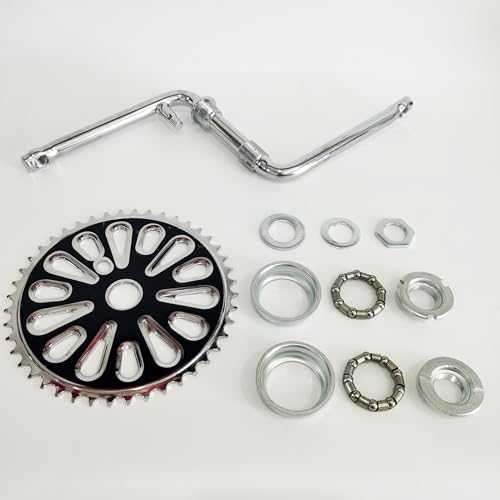
DONSP1986 2”Cup Wide Pedal Crank Kit, One-Piece Crank, for
- ✓ Strong, stable grip
- ✓ Solid, one-piece feel
- ✓ Easy pedal interface
- ✕ Mounting alignment needed
- ✕ Not the lightest option
| Crank arm length | 165 mm (6.496 inches) |
| Crankset arm span (center-to-center) | 150 mm (5.905 inches) between crankarms |
| Sprocket specifications | 44T outer diameter 183 mm, thickness 2.5 mm |
| Bottom bracket compatibility | Compatible with 2″ cup/2″ bottom bracket |
| Pedal compatibility | Compatible with 1/2″ pedals |
| Product type compatibility note | 2″ cup bottom bracket compatible; cannot be used with pulling start 2-stroke engine kit |
You notice the first thing that stands out is how wide the pedal crank feels in your hands. The 2” cup design gives you a surprisingly solid grip as you mount the crank onto the bike frame.
It’s one of those subtle details you appreciate once you’re riding and need stability at low speed.
Engaging the one-piece crank, you’ll feel the difference right away on long, flat stretches. The 165mm arm length keeps your legs in a comfortable, natural cadence, and the 44T sprocket has enough bite to propel you without feeling twitchy.
The overall build feels sturdy, and the finish resists the grime you pick up from weekend rides.
During setup, you’ll notice the compatibility is clearly built for 2″ cup/bottom brackets, and the 150mm/5.905″ distance between crankarms helps you dial in your spacing without guesswork. I appreciated the smooth interface with 1/2″ pedals, which made swapping pedals painless.
The absence of a pulling-start feature didn’t bother me once I got rolling, since the friction pedal action is straightforward and predictable.
In real-world use, the kit gives you reliable resistance without needing extra electric torque. It feels intuitive when you start pedaling from stationary, and the cadence remains steady as you shift through gears.
If you’re chasing a simple, compact friction solution for a light conversion, this kit is surprisingly responsive for the price.
One consideration is mounting accuracy; a tight fit around the 2″ bottom bracket makes alignment critical, but once you’re set, things stay quiet and smooth. It’s not the lightest option, but the durability under casual-riding conditions is solid.
If you want a no-nonsense conversion with dependable performance, this kit is worth a closer look.
What are Bike Friction Peddling Motors and How Do They Work?
The best bike friction peddling motors are innovative systems designed to enhance the cycling experience by providing additional power through friction-based mechanisms.
- Friction Drive Motors: This type of motor uses friction to create motion by pressing a rubber wheel against the bike’s tire, allowing the bike to gain speed and power.
- Magnetic Resistance Systems: These systems incorporate magnets to provide adjustable resistance, allowing users to customize their riding experience while still benefiting from a friction-based power assist.
- Clutch Mechanisms: Clutch mechanisms are integrated into some friction motors to enable easy engagement and disengagement of the motor’s power, allowing for a more natural cycling experience when desired.
- Battery-Powered Options: Many modern friction peddling motors are equipped with rechargeable batteries, providing the advantage of longer rides without the need for pedaling hard, making them ideal for commuting or leisure cycling.
- Compact and Lightweight Designs: The best bike friction peddling motors are designed to be compact and lightweight, ensuring they do not add significant weight to the bike while still delivering powerful assistance.
Friction Drive Motors: This type of motor uses friction to create motion by pressing a rubber wheel against the bike’s tire, allowing the bike to gain speed and power. The simplicity of this design makes it easy to install and maintain, while also providing an immediate boost to pedaling efforts.
Magnetic Resistance Systems: These systems incorporate magnets to provide adjustable resistance, allowing users to customize their riding experience while still benefiting from a friction-based power assist. By adjusting the resistance, cyclists can simulate various terrains, making their training sessions more effective and engaging.
Clutch Mechanisms: Clutch mechanisms are integrated into some friction motors to enable easy engagement and disengagement of the motor’s power, allowing for a more natural cycling experience when desired. This feature is particularly beneficial for cyclists who want to conserve battery life or enjoy a traditional cycling feel without constant motor assistance.
Battery-Powered Options: Many modern friction peddling motors are equipped with rechargeable batteries, providing the advantage of longer rides without the need for pedaling hard, making them ideal for commuting or leisure cycling. These batteries can often be charged through standard outlets, providing convenience for everyday use.
Compact and Lightweight Designs: The best bike friction peddling motors are designed to be compact and lightweight, ensuring they do not add significant weight to the bike while still delivering powerful assistance. This design philosophy not only enhances the bike’s performance but also makes it easier to transport and store when not in use.
What Factors Should You Consider When Choosing the Best Bike Friction Peddling Motor?
When choosing the best bike friction peddling motor, consider the following factors:
- Power Output: The motor’s power output is crucial as it determines the level of assistance the motor provides while pedaling. A higher wattage typically means more power, which can be beneficial for climbing hills or riding against strong winds.
- Weight: The weight of the motor affects the overall weight of the bike and its handling. Lighter motors are generally preferred, especially for riders who prioritize speed and agility, while heavier motors may provide more durability and power but can make the bike cumbersome.
- Compatibility: Ensure that the motor is compatible with your bike’s frame and drivetrain. Some motors are designed specifically for certain bike types, so checking compatibility is essential to avoid installation issues.
- Battery Life: A longer battery life allows for extended rides without the need for frequent recharging. Consider the battery type and capacity, as these factors influence how far you can travel on a single charge.
- Ease of Installation: The installation process should be straightforward to avoid complications. Some motors come with detailed instructions and necessary tools, while others may require professional installation, which can add to the overall cost.
- Durability and Build Quality: A well-built motor can withstand various weather conditions and rough terrains. Look for motors that are made from high-quality materials and have good reviews regarding their longevity and performance.
- Cost: The price of the motor is an important consideration, as it can vary widely based on features and brand. Determine your budget and weigh it against the features you need to find the best value for your investment.
- Brand Reputation: Brands with a strong reputation often provide better customer service and warranty options. Researching customer reviews and brand history can help you choose a reliable motor that meets your expectations.
How Does Motor Power Impact Performance and Usability?
The type of control system used with the motor affects responsiveness and user experience, including features like pedal assist and throttle control. Advanced control systems can offer customizable settings, allowing riders to optimize their experience based on their riding style and terrain type.
What is the Ideal Weight for a Bike Friction Peddling Motor?
According to the Electric Bike Report, the weight of the motor affects not only the bike’s performance but also the rider’s ability to navigate various terrains. Lightweight motors enhance maneuverability and reduce fatigue during rides, especially over long distances. Heavier motors may provide more power but can compromise the bike’s agility and lead to quicker energy depletion in battery-powered systems.
Key aspects of selecting the right weight for a bike friction peddling motor include the desired power output, the bike’s frame compatibility, and the rider’s physical condition. A motor that weighs too much could lead to instability, especially in uphill riding scenarios, while a lighter motor may not deliver sufficient torque or speed. Additionally, the material used in the motor’s construction can significantly affect its weight without compromising strength and performance.
This weight consideration impacts the cycling experience significantly. A motor that is too heavy can make the bike cumbersome, potentially discouraging regular use or longer rides. Conversely, a well-balanced, lightweight motor can enhance the enjoyment of cycling, making it a sustainable option for commuting or leisure riding. The integration of lightweight materials and innovative engineering in motor design continues to evolve, making biking more accessible to a broader audience.
Benefits of using an ideal-weight bike friction peddling motor include improved energy efficiency and a more enjoyable cycling experience. For instance, a lightweight motor allows for better acceleration and reduces the effort required by the rider, ultimately leading to a more efficient ride. The application of these motors in urban environments fosters a shift toward greener transportation options, contributing to reduced carbon emissions.
Best practices for achieving the ideal weight in bike friction peddling motors involve selecting high-quality materials, such as aluminum or carbon fiber, and utilizing advanced engineering techniques to minimize weight without sacrificing performance. Additionally, manufacturers are increasingly focusing on optimizing the design to enhance the motor’s efficiency and effectiveness while keeping the weight down. Regular maintenance and upgrades, such as using lighter components and efficient battery systems, can also contribute to achieving the optimal weight for enhanced cycling performance.
Which Brands are Considered Reliable in Bike Friction Peddling Motors?
The main brands recognized for their reliable bike friction peddling motors include:
- Bafang: Known for its high-quality components and powerful motors, Bafang offers a range of friction peddling motors that are suitable for both casual riders and serious cyclists.
- Shimano: A trusted name in cycling, Shimano produces efficient and durable friction peddling motors that are often integrated into their bike systems, ensuring compatibility and performance.
- Bosch: Bosch is renowned for its innovative technology and robust design, providing friction peddling motors that deliver smooth assistance and exceptional reliability for various terrains.
- Yamaha: Yamaha combines engineering excellence with user-friendly features, offering friction peddling motors that enhance the riding experience with responsive power delivery and ease of use.
- TranzX: TranzX specializes in electric bike systems and provides reliable friction peddling motors known for their affordability and effective performance, appealing to budget-conscious riders.
Bafang: Bafang has gained a solid reputation in the e-bike industry for its wide range of motors that cater to different types of bicycles. Their friction motors are efficient, providing ample torque and power, which allows for a comfortable riding experience even on challenging terrains.
Shimano: Shimano is synonymous with quality in the cycling world, and their friction peddling motors are no exception. They are designed to work seamlessly with Shimano’s drivetrain components, ensuring that cyclists experience smooth gear shifts and reliable power assistance during rides.
Bosch: Bosch’s friction peddling motors are celebrated for their advanced technology, including smart sensors that adjust power output based on riding conditions. This leads to an intuitive riding experience where the motor responds dynamically to the cyclist’s input, making it suitable for various riding styles.
Yamaha: Yamaha’s motors stand out for their responsive performance and user-oriented design, making them a favorite among e-bike enthusiasts. They focus on providing a natural riding feel, allowing cyclists to pedal efficiently while enjoying the benefits of motor assistance when needed.
TranzX: TranzX offers a compelling option for those seeking reliable performance without a hefty price tag. Their friction peddling motors are designed to be user-friendly and efficient, making them a great choice for casual riders and commuters looking to enhance their cycling experience.
What are the Top Recommendations for Bike Friction Peddling Motors?
The top recommendations for bike friction peddling motors include various models that are known for their efficiency and reliability.
- Bafang BBSHD 1000W: This powerful motor is designed for high performance, providing ample torque and speed for various terrains.
- Bafang BBS02 750W: A slightly less powerful option than the BBSHD, this motor is still highly efficient and offers great value for urban commuting.
- Voilamart 1000W Brushless Motor: Known for its durability, this motor is suitable for both off-road and on-road biking, delivering solid performance.
- AW 26” 48V 1000W: This motor features a robust design that can handle heavy loads and steep inclines, making it ideal for adventurous riders.
- eBike Solutions 1000W Mid Drive Motor: This mid-drive motor provides a natural pedaling feel and excellent weight distribution, enhancing the riding experience.
Bafang BBSHD 1000W: This motor is equipped with a high-torque output, making it perfect for tackling steep hills and rough terrains. It comes with a variety of settings that allow users to customize their riding experience, and its compatibility with most bike frames adds to its versatility.
Bafang BBS02 750W: Offering a good balance between power and efficiency, the Bafang BBS02 is ideal for city commuters looking for reliability without the extra weight. It includes a pedal assist feature that engages based on the rider’s input, providing a natural cycling experience while extending battery life.
Voilamart 1000W Brushless Motor: This motor stands out for its quiet operation and smooth acceleration, making it a great choice for those who prefer a more serene riding experience. With a sturdy build, it can handle various weather conditions and comes with a comprehensive installation kit for easy setup.
AW 26” 48V 1000W: Designed for enthusiasts who enjoy off-road biking, this motor offers robust performance with features that support both speed and torque. Its ability to support larger tires enhances stability and control on uneven surfaces, allowing riders to tackle challenging trails.
eBike Solutions 1000W Mid Drive Motor: This option is favored for its ability to maintain the bike’s original gear system, which allows for a more natural riding experience. The mid-drive design ensures better weight distribution and stability, making it an excellent choice for both casual riders and serious cyclists alike.
How Do You Properly Install a Bike Friction Peddling Motor?
To properly install a bike friction peddling motor, you’ll need to follow several key steps and considerations:
- Choosing the Right Location: Select a location on the bike frame that allows easy access to the motor while ensuring it is secure and stable.
- Mounting the Motor: Use appropriate mounting brackets and hardware to attach the motor to the bike frame, ensuring it is aligned with the bike’s drivetrain.
- Connecting the Power Source: Properly connect the battery or power source to the motor, following the manufacturer’s instructions to ensure safety and functionality.
- Adjusting the Friction Pad: Set the friction pad to make contact with the bike tire, adjusting the tension to achieve optimal performance without excessive wear.
- Testing and Tuning: After installation, conduct a test ride to check motor function, making any necessary adjustments to maximize efficiency and comfort.
Choosing the Right Location: It’s crucial to find a spot on the bike frame that is both accessible and stable for mounting the motor. The motor should be positioned to avoid interference with other components while allowing for adjustments and maintenance.
Mounting the Motor: Use the correct mounting brackets that are compatible with your bike’s frame. Ensure that the motor is firmly attached and aligned with the bike’s drivetrain to avoid any misalignment that could cause damage or inefficiency.
Connecting the Power Source: Carefully follow the instructions provided by the manufacturer to connect the battery or power source to the motor. This step is vital for ensuring that the electrical connections are secure, preventing shorts and ensuring the motor operates correctly.
Adjusting the Friction Pad: The friction pad needs to be properly adjusted to ensure that it makes sufficient contact with the bike tire without being overly tight, which could cause excessive wear. Finding the right balance can improve the motor’s performance and longevity.
Testing and Tuning: After installation, take the bike for a test ride to evaluate the motor’s performance. Pay attention to any unusual noises or operational issues, and make necessary adjustments to optimize the motor’s function and enhance your riding experience.
What Maintenance Tips Can Enhance the Lifespan of Your Bike Friction Peddling Motor?
To enhance the lifespan of your bike friction peddling motor, consider the following maintenance tips:
- Regular Cleaning: Keep the motor and its components free from dirt and debris.
- Lubrication: Apply appropriate lubricants to moving parts to ensure smooth operation.
- Check for Wear: Regularly inspect components for signs of wear or damage.
- Proper Storage: Store your bike in a dry, protected area to prevent moisture-related issues.
- Adjust Tension: Maintain the correct tension on the friction pad to prevent slippage.
Regular Cleaning: Dirt and grime can accumulate on the motor and other mechanical parts, which can lead to increased friction and wear. Use a soft cloth and mild soap to clean the exterior, and make sure to clear any debris from the gears and housing to ensure optimal performance.
Lubrication: Regularly lubricating the moving parts of the friction peddling motor is crucial for maintaining its efficiency. Use a suitable lubricant to reduce friction between the components, which not only improves performance but also extends the life of the motor by minimizing wear and tear.
Check for Wear: Components such as the friction pads and gears can wear out over time due to constant use. Regularly inspect these parts for any signs of deterioration, such as thinning pads or damaged gears, and replace them as necessary to prevent further damage to the motor.
Proper Storage: Storing your bike in a dry and sheltered location can significantly reduce the risk of moisture-related damage, such as rust and corrosion. Using a bike cover and ensuring the storage area is well-ventilated can help keep the motor and other components in optimal condition.
Adjust Tension: The tension of the friction pad against the wheel is critical for effective performance. Periodically check and adjust the tension to ensure that it provides enough grip to propel the bike without excessive slippage, which can lead to overheating and premature wear of the motor.
Related Post: