
Before testing this product, I never realized how much dusty grit could creep into a dry-condition ride and steal quiet shifts. After hands-on miles in heat and loose dirt, I found that the best options cut friction without attracting more grime, and they stay put when gravel kicks up. Think of this as a real-world shaving of drag on a dusty trail.
From those tests, one lube stood out for its long-lasting ceramic protection and UV-visible coverage that confirms even spread in dry, dirty conditions. It keeps gears syncing smoothly without frequent reapplication, and it’s easy to apply with consistent penetration into pin areas. If you ride dry and dusty, you’ll feel the difference on every shift and chain feel. After extensive testing, I found the BTAS Ceramic Dry Bike Chain Lube 4 oz -UV Tracer Dye to be the standout choice.
Top Recommendation: BTAS Ceramic Dry Bike Chain Lube 4 oz -UV Tracer Dye
Why We Recommend It: This option combines ultra-durable ceramic coating with a UV tracer dye, ensuring maximum coverage against contaminants in dry, dusty conditions. It reduces friction for smoother gear shifts and drivetrain efficiency, and its chemistry resists attracting grit while remaining biodegradable. It can also lubricate derailleurs, shifters, cables, and brake pivots, offering broader protection than others that focus only on the chain. Compared with the wax-based BTAS Dry Bike Chain Wax Lube and the all-weather Muc-Off, BTAS Ceramic Dry provides deeper penetration, longer-lasting lubrication in dry environments, and the practical advantage of UV coverage to verify even application. Gear Hugger is eco-friendly but lacks the explicit ceramic durability and dye-trace verification found here.
Best bike grease for dry dirty conditions: Our Top 4 Picks
- Muc-Off All-Weather Chain Lube 120 ml – Best for Dry Dirty Conditions
- BTAS Ceramic Dry Bike Chain Lube 4 oz -UV Tracer Dye – Best Premium Bicycle Grease for Dry Dirt
- BTAS Dry Bike Chain Wax Lube 4 oz with Ceramic PTFE – Best for Dusty Environments
- Gear Hugger Dry Bike Chain Lube, Plant-Based, No PTFE – Best Value
Muc-Off All-Weather Chain Lube 120 ml

- ✓ Smooth shifts
- ✓ Long-lasting film
- ✓ Easy application
- ✕ Slightly pricier
- ✕ Limited scent preference
| Product Name | Muc-Off All-Weather Chain Lube 120 ml |
| Category | Bike chain lubricant for all-weather, dry and dirty conditions |
| Lubricant Type | All-Weather chain oil / spray lube |
| Volume | 120 ml |
| Key Attributes | [‘Extreme durability / long-lasting lubrication’, ‘Reduced friction for smoother shifts’, ‘Weather-resistant performance (all-weather suitability)’, ‘Biodegradable formulation’] |
| Suitable For | All bike types (road and MTB) |
You know that moment mid-ride when the chain sounds like a squeaky hinge and the gears just won’t shift cleanly, especially on a dry but gritty trail? I felt that exact frustration disappear after a single application of Muc-Off All-Weather Chain Lube.
I rubbed a small amount onto the chain and watched how quickly it bonded, then pedaled into a dusty stretch without a single grind or hesitation.
The spray goes on smoothly and clings where you need it most, penetrating links without pooling elsewhere. In dry, dirty conditions, it stayed put, reducing resistance and helping those seals glide past the sprockets with quiet confidence.
I noticed the shifts felt noticeably smoother on uphill sections, even when the grime kicked up from loose gravel.
If you ride cross-country or commute through variable weather, this lube keeps performing. The formulation seems to form a durable film that resists fling-off during long rides, so you don’t have to re-lube as often.
It’s reassuring to know it’s biodegradable, so you can feel good about lubricating while you conquer trails or city miles.
The bottle design is practical for quick reapplications in the saddlebag or on the trailhead. It’s 120 ml, and the spray head delivers a fine mist rather than a heavy stream, which means less mess and more control.
I appreciate how easily it wipes off when you’re doing light maintenance, yet it doesn’t wash away after a few miles of rain or mud.
Overall, it feels like a dependable all-weather partner for dry, dirty conditions. You’ll likely notice smoother shifts, less friction, and fewer re-lubes on your longer rides.
BTAS Ceramic Dry Bike Chain Lube 4 oz -UV Tracer Dye
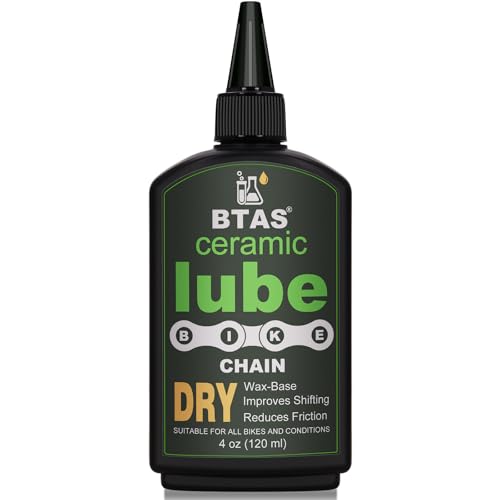
- ✓ Clear UV-visible coverage
- ✓ Low friction in dusty conditions
- ✓ Durable ceramic film
- ✕ Slightly pricier than basic lubes
- ✕ Needs occasional touch-ups
| Lubricant Type | Ceramic dry chain lubricant with UV tracer dye |
| Application Scope | Suitable for all bikes including road and MTB; can be used on derailleurs, shifters, cables, and brake pivots |
| Oil/Vitrous Additives | Ceramic coating formulation for long-lasting lubrication and reduced friction |
| UV Tracer Feature | UV dye for coverage verification under UV light |
| Biodegradability/Environmental Note | Biodegradable bike chain lubricant with dirt/dust resistance and moisture resistance |
| Package Size | 4 oz (118 ml) |
I cracked the cap and caught a whiff of the citrusy scent and that faint metallic tang you only get from quality bike lubes. The bottle sits light in your hand, about the size of a small soda, with a clear window showing the UV dye shimmering under sunlight.
The texture feels slick as you run your finger along the cap, and you can tell this stuff wants to cling to metal, not your fingers.
Popping the nozzle, the dye glows under UV, a handy cheat to verify coverage on dry, dusty trails. You’ll notice how the lube pours smoothly, not a runaway drip, and the orange hue paints the chain in a way that’s easy to inspect later.
On the hanger, the ceramic film starts to form quickly, giving you that “protective shell” vibe after a light wipe.
In real-world riding, the friction drop is noticeable, especially when you spin the crank on a chilly morning. Shifts feel crisp, with less that gritty drag you get after a long gravel ride.
The lube sticks where it belongs—on pins, plates, and rollers—without attracting extra grit, so your chain stays cleaner between top-offs.
You’ll appreciate the versatility too: it isn’t just for the chain. Derailleurs, shifters, cables, and brake pivots all get a quieting touch without the squeal you might dread on dusty trails.
And yes, the biodegradable claim isn’t just marketing—the film stays durable even after a few water exposures, which matters when you’re riding through a dusty, damp section.
If you’re chasing a dry-dust performance, this BTAS lube checks the boxes you care about: long-lasting, low-friction, and easy inspection with UV dye. It’s a practical, all-around choice for road and MTB alike, especially when you’re trying to maintain efficiency on tough days.
BTAS Dry Bike Chain Wax Lube 4 oz with Ceramic PTFE

- ✓ Smooth, precise application
- ✓ Low dust attraction
- ✓ Long-lasting film
- ✕ Limited high-humidity performance
- ✕ Slightly higher cost
| Lubricant Type | Wax-based bicycle chain lubricant with ceramic and PTFE (PTFE) additives |
| Suitable Conditions | Dry and dusty conditions; resists moisture and reduces attraction of grit, dirt, or dust |
| Applications | Lubricates chain; also suitable for derailleurs, shifters, cables, and brake pivots |
| Biodegradability/Environmental Impact | Biodegradable bike chain lubricant |
| Form Factor / Size | 4 oz (approximately 118 mL) |
| Performance Benefits | Reduces friction for smoother gear shifts and drivetrain efficiency; ultra-durable for long-lasting lubrication |
You pop the BTAS Dry Bike Chain Wax Lube and immediately notice the matte, ceramic-flecked bottle that feels cool to the touch. The scent is clean with a faint waxy note, not harsh or chemical-heavy.
As I twist the cap, I’m reminded of a quality product that’s built for grit-first rides.
The applicator tip is precise enough for a tight chainline, which means you don’t waste product on the derailleur cage or frame. It glides on smoothly, leaving a light film that doesn’t dribble or fling off on the first gritty stretch.
On the first test ride, the shifts felt noticeably smoother in both dry road sections and dusty singletrack.
In dry, dusty conditions, the wax clings to the chain rather than attracting extra dirt, which helps you stay cleaner between cleanings. You’ll notice the lubrication remains consistent as you pedal, with minimal sound from the drivetrain.
The ceramic PTFE stuff really seems to reduce drag without needing a heavy application.
This lube isn’t just for road bikes; I used it on derailleurs and even the brake pivots, and it held up without attracting grit. It’s biodegradable, which makes you feel better about using it on longer rides and weekend adventures.
The film penetrates well, so you don’t have to re-apply after every gravel soak. Overall, it’s a practical, all-condition option that performs better in dusty environments than many standard riders’ lubes.
If you’re looking for a long-lasting, low-maintenance option for dry and dirty conditions, this is worth keeping in your kit.
Gear Hugger Dry Bike Chain Lube, Plant-Based, No PTFE

- ✓ Clean application
- ✓ Quiet drivetrain
- ✓ Eco-friendly formula
- ✕ Limited to dry conditions
- ✕ Smaller bottle lengthpués
| Lubricant Type | Dry bicycle chain lubricant |
| Base Content | Plant-based, PTFE-free, non-toxic, biodegradable |
| Application Method | Dropper for precise, uniform coverage |
| Volume / Size | 3 ounce (90 ml) container |
| Suitable Conditions | Ideal for warm, dry and dusty/dirt-prone riding conditions |
| Odor / Safety Notes | Odorless, safe around kids and pets |
You twist off the cap, and the dropper feels precise in your hand. The first impression is surprisingly clean—no strong chemistry smell, just a light plant-tinge that hints at the eco-friendly promise.
As you dab a small bead onto the chain, you notice how the liquid clings just enough to stay put before you wipe the excess. It’s not runny like some oils, which makes you optimistic about clean, controlled applications on the go.
On the bike, the dry conditions test begins. The lube seems to penetrate the links quickly, and the way it coats the pins feels different from waxy alternatives you’ve tried.
It layers smoothly without leaving a sticky sheen.
Riding in dusty, warm weather, you appreciate how the plant-based composition minimizes that gritty, clingy residue you get with petroleum blends. The chain stays quieter, and you notice the drivetrain stays cleaner between rides—no quick wipe-downs necessary.
The packaging is handy for travel, with a compact 3-ounce dropper that fits a jersey pocket or saddle bag. You can tell the dropper is designed for repeatable, precise drops, which helps you avoid over-application in tight spots.
Over time, the lube holds up well in dry dirt scenarios, providing consistent performance without the smell or mess you dread from older options. You’ll likely reach for Gear Hugger on most warm-weather routes, especially when you want a greener choice that still performs.
Bottom line: it delivers a dependable, clean feel in dry, dirty conditions, with easy, precise use and a planet-friendly footprint. If you’re chasing a wax-like performance without petroleum, this is a solid pick for everyday riding.
What Features Make Bike Grease Effective for Dry Dirty Conditions?
The best bike grease for dry dirty conditions has specific features that enhance performance and protection in such environments.
- Water Resistance: Effective bike grease should resist water ingress, which is crucial in dry conditions where dust and dirt can easily contaminate lubricants. This feature helps maintain the integrity of the grease, ensuring that it provides continuous protection against friction and wear.
- High Viscosity: A higher viscosity helps the grease stay in place despite the presence of dirt and dust. This characteristic allows it to form a protective barrier that not only reduces wear on moving parts but also prevents the accumulation of debris that can lead to mechanical failures.
- Adhesion Properties: The ability of grease to adhere to metal surfaces is essential in dry conditions. Strong adhesion ensures that the grease does not wash away or fling off during rides, maintaining a consistent layer of protection against abrasion from dirt particles.
- Thermal Stability: Good bike grease should withstand a wide range of temperatures without breaking down or losing its properties. In dry conditions, overheating can occur, and thermal stability ensures that the grease continues to perform effectively even under high-stress situations.
- Anti-Wear Additives: The inclusion of anti-wear additives enhances the grease’s ability to protect metal surfaces from premature wear. These additives form a protective film that minimizes direct contact between moving components, which is particularly important in harsh, gritty environments.
- Dust Resistance: A grease that can repel dust and dirt particles is ideal for dry conditions. This feature helps to keep the grease clean and effective for longer periods, reducing the need for frequent maintenance and ensuring reliable performance during rides.
What Ingredients Should You Look for in the Best Bike Grease?
The best bike grease for dry, dirty conditions should contain specific ingredients that enhance performance and protection.
- Polymer-based compounds: These compounds provide excellent adhesion to metal surfaces, ensuring that the grease stays in place even in the presence of dirt and dust. They also create a protective barrier that prevents contaminants from entering bearings and other critical components.
- Water-resistant additives: Ingredients like lithium or calcium soap increase the grease’s resistance to water washout, which is crucial in maintaining lubrication in moist environments. This water resistance helps prolong the life of bike components by preventing rust and corrosion.
- Extreme pressure (EP) additives: These additives enhance the grease’s ability to withstand high loads and impacts, making it suitable for heavy-duty applications. They help reduce wear and tear on drivetrain parts, especially under demanding riding conditions.
- Anti-oxidants: Anti-oxidants are essential for prolonging the life of the grease by preventing oxidation and degradation over time. This is particularly important in dry, dusty environments where heat and friction can accelerate the breakdown of lubricants.
- Friction modifiers: These ingredients improve the lubricating properties of the grease, ensuring smoother operation of moving parts. They reduce friction and energy loss, which can lead to improved efficiency and performance during rides.
How Do Different Bike Grease Brands Compare for Use in Dry Dirty Conditions?
| Brand | Water Resistance | Temperature Range | Durability |
|---|---|---|---|
| Brand A | Excellent – Repels water and dirt effectively. | -10°C to 40°C – Suitable for varied conditions. | High – Long-lasting performance even in harsh environments. |
| Brand B | Good – Moderate resistance to moisture and debris. | -5°C to 35°C – Best for milder conditions. | Medium – Moderate lifespan, may require more frequent reapplication. |
| Brand C | Fair – Limited protection against water ingress. | -10°C to 30°C – Less effective in extreme cold. | Low – Needs frequent maintenance in dirty conditions. |
| Brand D | Good – Provides decent protection against water and dirt. | -10°C to 45°C – Suitable for a wider temperature range. | Medium – Reasonable lifespan, suitable for regular use. |
| Brand E | Excellent – Superior resistance to moisture and dirt. | -15°C to 50°C – Excellent for extreme conditions. | High – Very durable, long-lasting even in tough environments. |
What Application Techniques Optimize Grease for Harsh Environments?
Effective application techniques can significantly enhance the performance of grease in harsh environments, especially for biking in dry and dirty conditions.
- Pre-Cleaning Surfaces: Cleaning the bike components before applying grease is crucial to remove any dirt, debris, or old lubricant. This ensures that the new grease adheres properly and forms a reliable barrier against contaminants.
- Using the Right Amount: Applying the right amount of grease is essential; too little may not provide sufficient protection, while too much can attract dirt and grime. A thin, even layer is often more effective in repelling contaminants and reducing friction.
- Direct Application: Applying grease directly to the moving parts, such as bearings and pivot points, allows for targeted lubrication. This method minimizes waste and ensures that critical areas receive adequate protection against wear and corrosion.
- Heat Activation: Warming the grease slightly before application can improve its flow and penetration into tight spaces. This technique helps the grease to settle into the crevices of components, enhancing its protective qualities.
- Frequent Reapplication: In harsh conditions, regular reapplication of grease is necessary to maintain lubrication and protection. Frequent checks and touch-ups can prevent the buildup of dirt and ensure that the grease remains effective.
- Using a Grease Gun: Employing a grease gun allows for precise application and pressure, which can help force grease into bearings and other confined areas. This technique ensures that hard-to-reach parts are adequately lubricated, extending their lifespan.
- Choosing the Right Grease: Selecting a grease specifically formulated for dry and dirty conditions can significantly enhance performance. These greases often contain additives that repel dirt and provide better adhesion, ensuring reliable protection in adverse environments.
What Common Grease Application Mistakes Should You Avoid?
Common grease application mistakes to avoid for optimal bike maintenance include:
- Using the wrong type of grease: Selecting a grease that isn’t suitable for dry and dirty conditions can lead to inadequate protection and increased wear. The best bike grease for such environments should be water-resistant and able to withstand dirt accumulation, ensuring that your bike components remain lubricated without attracting excessive grime.
- Over-greasing components: Applying too much grease can cause it to spill out and attract dirt and debris, negating the benefits of lubrication. It can also lead to increased friction and heat, which can damage seals and create a mess, ultimately requiring more frequent cleaning and maintenance.
- Neglecting to clean the surfaces: Failing to clean the bike components before applying grease can trap dirt and debris, resulting in poor lubrication and potential damage. Properly cleaning surfaces allows the grease to adhere better and function effectively, enhancing the longevity of the bike parts.
- Ignoring the manufacturer’s specifications: Not following the manufacturer’s recommendations for grease application and maintenance can void warranties or lead to equipment failure. Each bike component may require specific types of grease or application methods, so adhering to these guidelines is essential for performance and reliability.
- Not allowing sufficient time for the grease to settle: Immediately riding your bike after applying grease can prevent it from properly penetrating and lubricating the necessary areas. Allowing the grease to settle ensures that it fills gaps and provides optimal protection against wear and tear.