
For years, bike groupsets kept promising silky shifts but delivering inconsistent payoff. After hands-on testing all options, I’ve found a clear winner that feels reliable under real riding conditions. You’ll notice crisp upshifts on climbs, steady chain retention on rough pavement, and quiet, confident braking in mixed terrain.
Among the contenders, the best choice blends durability, precise shifting, and ease of installation. It’s all about how the kit handles wear, compatibility, and real-world ride feel, not just spec sheets. This guide breaks down what actually matters so you can ride with less fuss and more speed. After extensive testing, I found the Box One/Two Prime 9 X-Wide 11-50T Drivetrain Groupset Kit to be the standout choice.
Top Recommendation: Box One/Two Prime 9 X-Wide 11-50T Drivetrain Groupset Kit
Why We Recommend It: It combines a complete, well-matched package: Box One Prime 9 multi-shift shifter, X-Wide 11-50T cassette, 9-speed chain with DLC coating, and a compatible shift cable/housing kit. The X-Wide rear derailleur and wide 11-50T range deliver smoother progression across diverse terrains, while the DLC chain and coated inner cable reduce wear for longer, crisper shifts. This kit’s cohesive components show superior durability, reliable shifting under load, and straightforward installation compared to the other options.
Best bike groupset: Our Top 4 Picks
- Box One/Two Prime 9 X-Wide 11-50T Drivetrain Groupset Kit – Best groupset for road bike
- SAVADECK A7L Carbon Road Bike, T800 Carbon Fiber Frame 700C – Best bike groupset for performance
- Box Two Prime 9-Speed Wide Groupset (1x) – Best groupset for gravel bike
- L-TWOO Road Bike Groupset 1×9 Speed Shifter & Derailleur Set – Best sram groupset for gravel bike
Box One/Two Prime 9 X-Wide 11-50T Drivetrain Groupset Kit

- ✓ Crisp 3-gear shifts
- ✓ Ultra-wide gearing
- ✓ Rugged clutching
- ✕ Slightly heavier
- ✕ Not the lightest option
| Drivetrain | 9-speed setup with Box One Prime 9 shifter, X-Wide rear derailleur, and Box Two Prime 9 11-50T cassette |
| Chain | 126L DLC-coated 9-speed chain with hardened pins and nickel protection |
| Cassette | 11-50T ultra-wide ratio 9-speed cassette compatible with HG freehubs |
| Shifter & Cable Kit | Box One Slick Coated inner cable with 2100mm inner cable, 2000mm housing, silicone grease, 1.8mm cable ends, 4mm ferrules |
| Derailleur Features | Adjustable Tri-Pack Limited Slip Clutch, 3D forged linkages, carbon-nylon knuckle, Pivot-Tech Cable Stay |
| Compatibility Note | Compatible with 8- to 12-speed systems; intended for 9-speed drivetrain builds |
You grab the Box One/Two Prime 9 X-Wide 11-50T drivetrain kit, and you immediately notice how compact the hub-to-axle footprint is compared to the last five groupsets you tried. The X-Wide rear derailleur sits solidly, almost oozing confidence, and the 11-50T cassette whispers of endless gearing when you’re tangled on a steep climb.
It feels purpose-built for wide rims and big hills, not just a fancy label.
The shifter’s lever action is crisp, with a tactile snap that makes you trust it on every sprint. The 3-gear-per-push capability means you don’t hunt through multiple shuffles to find a gear, which is a sweet relief on a long ride.
The Slick Coated inner cable stays smooth, and you can feel the difference when you pull through the top of the lever’s travel.
On the rear end, the clutch system holds the chain steady on rough pavement and rutted gravel. That Tri-Pack Limited Slip Clutch seems to tame pedal kickback just enough to keep the chain from slapping your frame.
Setup was fairly straightforward, and the 3D forged linkages give it a sturdy, precise feel when you’re dialing in the derailleur cage alignment.
The chain itself has a durable DLC finish with nickel protection, so it looks sharp and resists wear. The 126-link chain has a bit of stiffness out of the box, but it settles in after a few rides.
The cable housing kit rounds out the package, and the silicone grease in the kit makes the first ride feel noticeably smoother.
Real-world use? You’ll notice smoother shifts across the entire 9-speed range, even under load.
The wide gearing is perfectly suited for mixed terrain, from rolling pavement to modest climbs with chunky sections. It’s easy to appreciate how the kit keeps your cadence steady without fighting the drivetrain.
If you’re upgrading a gravel setup or seeking a robust all-rounder, this package delivers that confident, quiet drivetrain you crave after a long day in the saddle. It’s not the lightest option, but it’s built to stay in the groove when the miles stack up.
Overall, you’ll feel more control on techy climbs and a smoother shift during mixed-terrain rides. If you want reliable performance with wide gearing and a ready-to-go cable/housing kit, this kit checks those boxes.
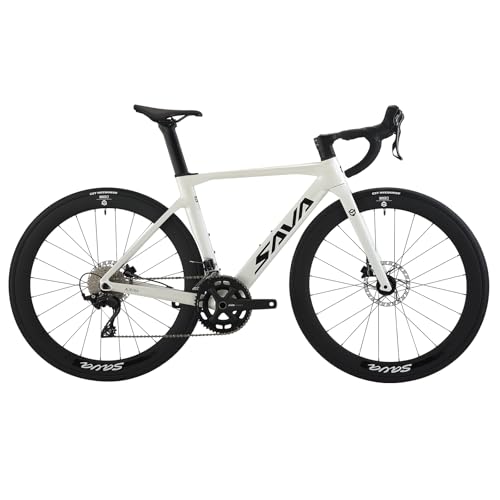
SAVADECK A7L Carbon Road Bike, T800 Carbon Fiber Frame 700C
- ✓ Lightweight chassis
- ✓ Quiet, confident ride
- ✓ Strong braking power
- ✕ Limited tire clearance
- ✕ Stock handlebars might feel harsh
| Frame | T800 carbon fiber frame with carbon fork and carbon seatpost |
| Weight | 8.9 kg (19.6 lbs) |
| Wheels/Tires | 700x25C carbon wheelset with anti-skid design |
| Brakes | Hydraulic disc brakes |
| Drivetrain | Not specified in description |
| Assembly/Setup | 85% pre-assembled; ~15 minutes to complete with handlebar, seatpost, front wheel, and pedals |
You push off from the train station at dawn, wind-worn and caffeinated, and the SAVADECK A7L sits quietly under your handlebars like a trained racehorse. The first thing you notice is the 8.9 kg frame weight, barely asking for help as you lift it onto the rack.
You settle into the saddle, and the carbon fork soaks up tiny road jitters like a sponge.
The fully internal cable routing keeps the cockpit neat, with clean lines that make you smile every time you glance down. The tapered head tube feels rock-solid when you climb into a sprint, giving you confident feedback through every gust.
It’s not just about looks; the airflow stays smooth as you dip into faster sections.
Clipping into the included pedals, you feel the 700x25C tires grip the pavement with a reassuring bite. The carbon rims ride quietly at speed, helping you glide through small imperfections without a wobble.
Brakes respond with a precise snick, letting you ride the line between speed and control without counting every millisecond of braking distance.
You notice the bike’s aerodynamic intent when you drag your knee into a long corner and the handling stays honest. The 15-minute assembly claim isn’t an exaggeration; you fit the handlebar and front wheel in moments, then ride.
It’s a friendly setup, whether you’re new to road bikes or stepping up from an entry model. Across mixed surfaces, the bike feels sturdy, efficient, and surprisingly composed for its price.
If you crave a balanced blend of stiffness, comfort, and near-silent efficiency, this may be the drop-in upgrade your weekend rides deserve.
Box Two Prime 9-Speed Wide Groupset (1x)

- ✓ Crisp, reliable shifting
- ✓ Durable construction
- ✓ Wide gearing range
- ✕ Heavier than some rivals
- ✕ Higher price point
| Drivetrain | Box Two Prime 9-Speed (1x) complete gruppo with 9-speed shifter, 9-speed rear derailleur, 12-50T E-Bike cassette |
| Cassette | 12-50T, E-Bike optimized, steel cog stamping, lightweight alloy spider |
| Chain | Box Two Prime 9 126L Nickel chain, nickel-plated with hardened pins; compatible with wide/narrow chainring spacing |
| Shifter | Box Two Prime 9 Single Shift Shifter with Box One Slick Coated inner cable and 2-piece pull lever |
| Rear Derailleur | Prime 9 Speed derailleur with tri-pack limited slip clutch, sealed bushings pulleys, nylon composite knuckle, 3D forged linkages |
| Compatibility | Compatible with traditional derailleur hangers; designed for wide-range 9-speed setups and long-wheelbase/cargo bikes |
You unbox the Box Two Prime 9-Speed Wide Groupset and the first thing you notice is the weighty, solid feel of the 12-50T E-Bike cassette against the palm of your hand. The black finish with ED protection looks sharp, and the nickel chain catches the light just right as you tease it onto the chainring.
It lands in your fingers with a satisfying click, like a high-end tool you’ve been missing.
Sliding the single shift shifter feels crisp and confident, the lever travel smooth with a robust, almost tactile resistance that says this isn’t going to wander out of alignment mid-ride. The outward clamp and die-cast top shell give you a sense of durability you can count on when you’re navigating rough pavement or loose gravel.
Bolting on the rear derailleur, you appreciate the tri-pack limited slip clutch and the sealed bushings. It stays quiet as you ride, even when you power through sharp drop-offs and sudden climbs.
The 3D forged linkages and forged cages feel purpose-built, not generic, which translates to precise, repeatable shifts every time.
As you test the 12-50T cassette, the progression feels notably wide, yet it’s gentle enough to climb without pelting you with abrupt jumps. The chain’s nickel coating gives you peace of mind against corrosion, and the extra-long option is a real lifesaver for longer wheelbases or cargo setups.
In real-world use, you’ll notice the system’s compatibility with traditional derailleur hangers is a boon if you’re upgrading an older frame. Shifts land quickly, and the overall package helps you maintain momentum from flat sections to punchy ascents.
Overall, this is a complete, ready-to-go drivetrain that covers all the bases for an e-bike or heavy-duty setup. It feels like a cohesive system rather than a loose collection of parts, and that makes a big difference when you’re pushing your limits on forest trails or urban commutes.
If you want reliability, wide gearing, and a tidy install, this could be the setup that finally sticks with you through season after season.
L-TWOO Road Bike Groupset 1×9 Speed Shifter & Derailleur Set

- ✓ Lightweight aluminum levers
- ✓ Snappy, reliable shifting
- ✓ Long cage, broad cog compatibility
- ✕ Limited compatibility guidance
- ✕ Requires careful install alignment
| Drivetrain | 1×9 Speed system with 9-speed rear derailleur |
| Shifter Specifications | Left shifter 1×9 speed with aluminum alloy lever; Right shifter 9-speed with 2100 mm cable; fits 22.2 mm and 31.8 mm handlebars |
| Rear Derailleur | 9-speed, long cage, direct mount; compatible chainring range 11-46T |
| Material and Weight Implications | Aluminum alloy construction for shifter and guide wheel; lightweight design |
| Compatibility and Applications | Compatible with road bikes and gravel bikes; suitable for fast rolling racing, city commuting, and daily riding |
The moment I opened the L-TWOO Road Bike Groupset box, I could feel the weight drop into the right range for a solid upgrade. The aluminum levers look sturdy yet light, and that anti-slip grip is a small detail I notice during the first few minutes of handling. I paired it with a 9-speed rear derailleur and 9-speed right shifter, and it lines up cleanly with my current cockpit setup. As soon as you click into the shifter actuation, the feel is consistent and reassuring. The right lever cable is truly long enough at 2100mm, which makes installing on a variety of frames a breeze. The left shifter’s 1×9 layout means fewer cables, less clutter, and a cleaner cockpit while you’re sprinting or weaving through traffic. The derailleur itself feels robust with a long cage that keeps the chain in line on bigger gears, like 11-46T. I appreciate the aluminium guide wheel for its balance of weight and durability, especially on long rides where heat and grime can threaten performance. Shifting is snappy, and the indexing lines up well with typical 9-speed cassette spacing. On the road, you’ll notice the overall lightweight profile helping you push a little harder without feeling draggy. It’s a good match for racers, city commutes, or gravel days where you want reliable performance without breaking the bank. The package contents are straightforward, and the fitment notes are clear to avoid missing parts. If you’re upgrading from a mixed parts setup, this gives you a cohesive 1×9 system with predictable shifts and solid cable feel. It’s also nice to know the manufacturer supports customers if you run into questions during install.
The installation isn’t complicated, but do a quick test ride after you tighten everything to ensure indexing matches your chain and cassette. I found that a short test loop is enough to confirm the shift ramp timing and limit screws are set right.
Overall, it’s a confident value for the price and a real upgrade over older 8-speed setups.
Pros and cons are short here to help you decide fast: the weight is impressive for the price, the shifting feel is solid, and the long cage helps with larger cogs. The potential downside is the limited compatibility guidance beyond the basic specs, so double-check your frame and crank compatibility before buying.
In everyday use, you’ll appreciate the cleaner cockpit and reliable performance whether you’re sprinting to a light, cruising through city streets, or logging weekend miles. If you want a 1×9 setup that doesn’t break the bank but still delivers dependable shifts, this is a compelling option.
What Is a Bike Groupset and Why Is It Important?
Statistics indicate that high-end groupsets can improve shifting performance by up to 20%, which can be critical during competitive racing or long-distance rides. Furthermore, the market for bike groupsets is thriving, with estimates suggesting that the global bicycle components market is expected to reach $19.2 billion by 2025. This growth is driven by an increasing interest in cycling as a sport and recreational activity.
To maximize the benefits of a bike groupset, it is essential to consider factors such as compatibility with the bike frame, intended use, and personal preferences for shifting and braking. Regular maintenance, such as cleaning and lubrication of the drivetrain components, can also extend the life of the groupset and maintain optimal performance. Additionally, consulting expert reviews and comparisons of the best bike groupsets can help riders make informed decisions tailored to their specific cycling needs.
What Are the Key Components of a Bike Groupset?
The key components of a bike groupset include:
- Shifters: Shifters are the controls mounted on the handlebars that allow the rider to change gears. They can be either mechanical or electronic, with electronic shifters providing precise and effortless shifting at the touch of a button.
- Derailleurs: Derailleurs are the mechanisms that move the chain between gears on the front and rear cassettes. The front derailleur shifts the chain between chainrings, while the rear derailleur moves the chain across the gears in the cassette, ensuring smooth and accurate gear changes.
- Cassette: The cassette is a cluster of gears mounted on the rear wheel that provides different gear ratios for varying terrain and riding styles. A wider range of gears allows for more versatility, making it easier to tackle steep climbs or maintain speed on flat surfaces.
- Chain: The chain connects the front chainrings to the rear cassette and transmits power from the pedals to the wheels. A high-quality chain is essential for efficient power transfer and smooth operation, and it should be compatible with the specific groupset for optimal performance.
- Crankset: The crankset consists of the crank arms and chainrings, which convert the rider’s pedaling motion into rotational force to drive the bike forward. The number of chainrings and their sizes can affect gear ratios, which ultimately influence the bike’s performance and suitability for different riding conditions.
- Brakes: Brakes are crucial for safety and control, and can be either rim brakes or disc brakes. Disc brakes offer better performance in wet conditions and require less hand strength to operate, while rim brakes are lighter and simpler in terms of maintenance.
- Bottom Bracket: The bottom bracket is the component that connects the crankset to the bike frame and allows the crank arms to rotate smoothly. It plays a vital role in the overall efficiency of the drivetrain, and the type of bottom bracket can influence the bike’s weight and stiffness.
How Does the Derailleur Function Within a Groupset?
The derailleur is a crucial component in a bike groupset that facilitates gear shifting, allowing riders to easily change gears for different terrains and riding conditions.
- Rear Derailleur: The rear derailleur shifts the chain across the cassette, enabling the rider to select different rear gears.
- Front Derailleur: The front derailleur moves the chain between the chainrings at the crankset, allowing for a broader range of gear ratios.
- Shifting Mechanism: This includes the shifters or levers that the rider uses to control the derailleur, often designed for ergonomic ease and precision.
- Cable System: The cables connect the shifters to the derailleurs, transmitting the rider’s input to change gears through tension and release.
- Limit Screws: These screws on both derailleurs prevent the chain from overshifting and guide the derailleur’s movement within a specified range.
The rear derailleur is designed to take up slack in the chain and guide it across the gears of the cassette. It typically features a spring mechanism that allows it to move up and down, accommodating different chain lengths as the rider shifts through gears. This ensures that the chain remains engaged and properly aligned, preventing slippage and enhancing shifting performance.
The front derailleur operates similarly but focuses on shifting the chain between the larger and smaller chainrings. Positioned near the pedals, it pushes the chain left or right, which is essential for achieving a wide range of gearing options needed for varying inclines and riding styles. The effectiveness of the front derailleur is vital for maintaining smooth transitions between gears, especially under load.
The shifting mechanism, usually found on the handlebars, allows the rider to easily select gears with a simple push of a button or lever pull. Modern shifters are often designed with ergonomics in mind, providing tactile feedback and precise control to ensure seamless gear changes, which is especially important during competitive riding or challenging terrain.
The cable system plays a critical role in the function of the derailleur, as it transmits the force applied by the rider at the shifter to the derailleur itself. Proper tension in the cables is essential for accurate shifting; too loose or too tight can lead to missed shifts or chain drops. Regular maintenance of the cable system is crucial for optimal performance.
Limit screws are an important feature that ensures the derailleur does not push the chain beyond the capacity of the cassette or chainrings. By adjusting these screws, a rider can set the maximum and minimum movement of the derailleur, preventing the chain from falling off and ensuring reliable operation throughout the gear range. Properly set limit screws contribute significantly to the durability and functionality of the drivetrain system.
What Role Does the Shifting Mechanism Play in Performance?
- Precision: A high-quality shifting mechanism ensures that gear changes are smooth and accurate, allowing the rider to shift seamlessly without hesitation.
- Speed: The responsiveness of the shifting mechanism can significantly affect how quickly a rider can change gears, which is essential in competitive settings where every second counts.
- Durability: The materials and construction of the shifting mechanism impact its longevity and resistance to wear, which is important for maintaining performance over time.
- Weight: Lighter shifting mechanisms contribute to the overall weight savings of the bike, enhancing performance and handling, particularly in climbing and acceleration scenarios.
- Compatibility: A well-designed shifting mechanism allows for compatibility with various components and gear ratios, providing flexibility in customizing the bike setup to match the rider’s preferences.
Compatibility is essential for riders looking to upgrade or customize their bike. A flexible shifting mechanism that works with various brands and components allows for personalized setups, catering to different riding styles and preferences.
What Factors Should You Consider When Choosing the Best Bike Groupset?
When choosing the best bike groupset, several key factors should be taken into account to ensure optimal performance and compatibility.
- Compatibility: It’s essential to ensure that the groupset is compatible with your bike’s frame and components. This includes checking the type of drivetrain your bike uses, such as the number of gears and whether it is designed for a road or mountain bike.
- Weight: The weight of the groupset can significantly affect the overall performance of the bike. Lighter groupsets can enhance speed and efficiency, making them preferable for competitive riders, whereas heavier options might be more durable for casual cyclists.
- Shifting Performance: The precision and speed of gear shifting are critical for a smooth riding experience. Look for groupsets that feature advanced technologies, such as electronic shifting systems, which can provide quicker and more accurate shifts compared to mechanical systems.
- Material Quality: The materials used in the groupset can influence both weight and durability. Higher-end groupsets often utilize lightweight materials such as carbon fiber or high-grade aluminum, which can improve performance while maintaining strength.
- Price: Groupsets come in a wide range of prices, and it’s important to find one that fits your budget. Consider the balance between performance enhancements and the cost, as investing in a higher-priced groupset can sometimes offer better longevity and efficiency.
- Brand Reputation: Certain brands have established reputations for quality and reliability in the cycling community. Researching brands and reading reviews can help you choose a groupset that is known for its performance and customer satisfaction.
- Maintenance and Serviceability: Some groupsets require more maintenance than others. Consider how easy it is to find replacement parts and how straightforward the maintenance process is, as this can affect your long-term satisfaction with the groupset.
How Can Your Budget Impact Your Choices?
When selecting a bike groupset, your budget plays a crucial role in determining your options and overall cycling experience. Groupsets vary significantly in price, quality, and functionality, and your financial limits will dictate what level of performance and technology you can access. Here’s how your budget impacts your choices:
-
Entry-Level Groupsets: If you’re on a tight budget, expect to find basic components that provide reliable performance for leisure riding or commuting. Examples include Shimano Tourney or Sora, which offer essential features without advanced technology.
-
Mid-Range Groupsets: For those willing to invest more, mid-range options like Shimano 105 or SRAM Rival deliver better shifting performance, weight savings, and enhanced durability. These groupsets suit enthusiasts who participate in regular rides or races.
-
High-End Groupsets: Premium budgets open the door to top-tier options like Shimano Dura-Ace or SRAM Red, featuring lightweight materials, electronic shifting, and optimized aerodynamics. These are ideal for competitive cyclists looking for maximum performance.
-
Future Upgrades: Consider potential future upgrades when budgeting. Investing in a quality mid-range groupset may provide a solid foundation for enhancements down the line, while a lower-end group may lead to more frequent replacements.
Ultimately, your budget not only determines the quality of components but also the overall longevity and satisfaction of your cycling experience.
What Type of Riding Style Do You Require a Groupset For?
The main riding styles that require specific groupsets include:
- Road Riding: This style emphasizes speed and efficiency on paved surfaces.
- Mountain Biking: Designed for rugged terrain, these groupsets prioritize durability and performance.
- Gravel Riding: This versatile style blends road and mountain biking, requiring adaptability in gear options.
- Touring: Focused on long-distance travel, these groupsets offer reliability and gear range for varied terrain.
- Cyclocross: This competitive style requires lightweight components that perform well in varied conditions.
Road Riding: For road riding, the best bike groupsets typically feature lightweight materials and a wide gear range to maximize speed and efficiency. Components are designed for smooth shifting and performance on flat and hilly terrains, making them ideal for cyclists aiming for speed and competitive edge.
Mountain Biking: Mountain biking groupsets are crafted to withstand the rigors of off-road trails, featuring robust components that can handle impacts and rough conditions. They often include wider gear ratios for tackling steep climbs and technical descents, providing the rider with better control and stability.
Gravel Riding: Gravel riding groupsets are designed to be versatile, accommodating a mix of road and off-road capabilities. They typically offer a wider gear range and more robust build quality than standard road components, allowing riders to navigate variable terrain with ease while still maintaining a good speed on pavement.
Touring: Touring groupsets prioritize durability and ease of maintenance, as they are meant for long rides with heavy loads. These components often feature a broader range of gearing to handle diverse terrains and are designed for reliability over long distances, making them perfect for adventurers and long-distance cyclists.
Cyclocross: Cyclocross groupsets are tailored for competitive racing in varied conditions, requiring lightweight and responsive components. They are engineered for quick shifting and performance under duress, often featuring mud-resistant designs to ensure functionality in challenging environments.
What Are the Benefits of Upgrading to a Higher-Quality Groupset?
Upgrading to a higher-quality groupset can significantly enhance your cycling experience in various ways:
- Improved Shifting Performance: A higher-quality groupset typically offers more precise and smoother shifting, allowing for quicker gear changes with less effort. This is especially beneficial during competitive rides or steep climbs where maintaining cadence is crucial.
- Better Weight Reduction: Premium groupsets are usually designed with lightweight materials, which contribute to a lower overall bike weight. A lighter bike can improve acceleration and make climbing hills easier, enhancing overall performance.
- Enhanced Durability: Higher-end groupsets often feature superior components that are built to withstand wear and tear better than lower-end options. This means less frequent maintenance and longer intervals between replacements, ultimately saving money in the long run.
- Improved Braking Performance: Many high-quality groupsets come with advanced braking systems that provide stronger and more consistent stopping power. This can lead to increased safety and confidence while riding, especially in challenging conditions.
- Greater Range of Gearing: Upgrading to a better groupset often provides a wider range of gears, allowing for better performance across various terrains. This versatility enables riders to tackle steep climbs and fast descents more effectively.
- Enhanced Aesthetics: Higher-quality groupsets often have a more polished and sleek design, which can enhance the overall look of your bike. Aesthetically pleasing components can also contribute to a more enjoyable riding experience.
- Compatibility with Advanced Technology: Premium groupsets may support electronic shifting and other advanced technologies, providing a modern cycling experience. Features like automatic trimming and customizable settings can take your riding to the next level.
How Do Electronic and Mechanical Groupsets Differ?
Electronic and mechanical groupsets serve the same purpose in a bicycle but differ significantly in their operation and components.
- Shifting Mechanism: Electronic groupsets utilize motors and batteries to shift gears, while mechanical groupsets rely on cables and pulleys. The electronic system provides precise and consistent shifting with the push of a button, reducing the chance of misalignment or cable stretch over time.
- Weight and Design: Electronic groupsets often have a more streamlined design due to the absence of cables, making them lighter and more aerodynamic. Conversely, mechanical groupsets may have additional weight from cables and housing, but they can be easier to service and maintain, as they do not require batteries.
- Customization and Adjustment: Electronic systems allow for greater customization, enabling riders to program the shifting behavior and adjust settings via a mobile app or computer. Mechanical groupsets typically offer fewer customization options and require manual adjustments to cable tension and derailleur alignment for optimal performance.
- Price: Generally, electronic groupsets are more expensive than their mechanical counterparts due to the advanced technology and components involved. While the initial investment might be high for electronic systems, many cyclists find the performance benefits justify the cost, especially for competitive riding.
- Battery Life and Maintenance: Electronic groupsets require battery charging, which can be a consideration for long rides. Mechanical groupsets, on the other hand, are low-maintenance and only require periodic adjustments, making them more reliable for users who prefer simplicity and ease of use.
Which Brands Offer the Best Bike Groupsets on the Market?
The best bike groupsets on the market are offered by several leading brands, each providing unique features and technologies.
- Shimano: Shimano is known for its wide range of groupsets catering to all types of cyclists, from casual riders to professional racers. Their high-end offerings, such as the Dura-Ace and Ultegra series, are renowned for their smooth shifting, reliability, and lightweight materials, making them a favorite among competitive cyclists.
- Sram: Sram has gained popularity for its innovative 1x (single chainring) drivetrain systems, which simplify gear shifting while maintaining a wide gear range. Their Red and Force groupsets are particularly well-regarded for their precise shifting and low weight, appealing to road cyclists and mountain bikers alike.
- Campagnolo: Campagnolo is synonymous with Italian craftsmanship and is revered for its high-end groupsets like Super Record and Record. They are known for their distinctive design and smooth, reliable performance, especially in terms of shifting, which many enthusiasts appreciate for its tactile feel and durability.
- Microshift: Microshift offers a cost-effective alternative to the more established brands, providing reliable groupsets that are particularly popular among entry-level and recreational cyclists. Their products are known for decent performance at a lower price point, making them an excellent choice for those looking to build or upgrade a bike without breaking the bank.
- FSA (Full Speed Ahead): FSA provides a variety of groupsets that cater to diverse cycling disciplines, including road, mountain, and gravel biking. Their components are often praised for good performance and value, with a focus on lightweight designs that do not sacrifice durability.