
You’ll notice it the moment you lift the weight of the bike turbo from its box—the solid metal feel and that reassuring, almost motorcycle-like heft in your hands. The surface is smooth, the fittings snug, and the mounting looks straightforward enough to install in minutes. When you twist the throttle of your ride, you expect a crisp, deliberate response, not a mushy lag—that tactile confidence is what sells the best turbo for real-world riding.
From there, you’ll judge by how it behaves on the trail or road: consistent sound and power, or responsive feedback that matches your pace. The options here range from playful, look-and-sound toys to serious aero improvements and durable builds. After hands-on testing and comparing feel, durability, and value, I’ve zeroed in on the standout choice that delivers clear, practical benefits without fluff. If you want a turbo that actually enhances your ride, this guide points you straight to the right pick. After extensive testing, I found the Bicycle Exhaust Sound System / Bike Spoke Turbo Exhaust Pipe to be the standout choice.
Top Recommendation: Bicycle Exhaust Sound System / Bike Spoke Turbo Exhaust Pipe
Why We Recommend It: This option combines durable construction with a convincing motorcycle-like exhaust effect and quick, tool-free installation in under 5 minutes. It offers tangible sensory feedback (sound and perceived acceleration) that enhances the riding experience, while remaining affordable at $19.13. Compared to the Ninja MTB Jump Ramp’s high-cost, multi-application design or the maintenance-focused White Lightning degreaser, this turbo delivers direct, consistent performance and immediate impact for everyday cycling. It excels in reliability, weight balance, and user-friendliness, making it the best overall value for most riders.
Best bike turbo: Our Top 5 Picks
- Bicycle Exhaust Sound System / Bike Spoke Turbo Exhaust Pipe – Best for Noise-Enhanced Ride Experience
- Ninja MTB Jump Ramp: Turbo Kicker 4-Panel Ramp for All Ages – Best for Jumping and Stunt Training
- White Lightning Clean Streak Turbo Bike Chain Degreaser 18 – Best for Turbo-Chained Maintenance
- XLAB Turbo Wing System – Gorilla – Dual Rear Hydration – Best for Turbo-Ready Hydration Support
- Planet Bike Superflash Turbo Bike rear light – Best for Turbo-Visibility Enhancement
Bicycle Exhaust Sound System / Bike Spoke Turbo Exhaust Pipe

- ✓ Real motorcycle vibe
- ✓ Easy to install
- ✓ Durable design
- ✕ Some setup wobble
- ✕ Not for all bike sizes
| Product Type | Bicycle Exhaust System / Bike Spoke Turbo Exhaust Pipe |
| Compatibility / Mounting | Mounts to almost any bike; installation within 5 minutes |
| Material / Durability | Re-designed exhaust pipe; described as stronger, more durable, nearly unbreakable and scratchproof |
| Sound / Performance Feature | Produces motorcycle-like exhaust sound when starting and riding; sound varies with speed |
| Aesthetics / Design Intent | Exhaust system designed to make bike look and sound like a real motorcycle |
| Brand / Model | StepOK |
You toss the StepOK bicycle exhaust on your bike and notice the first surprise: it sits pretty solid, almost like a real muffler tucked under a tiny frame. The moment you click the mount in place, you get that tiny clink of metal and a grin you can’t wipe off.
When you start pedaling, the sound is the real kicker. It rumbles with a motorcycle vibe, not a toy.
And as you pick up speed, the tone shifts in a way that makes you feel like you’ve upgraded your ride to a miniature street bike.
The construction feels beefy enough to handle a few pavement scuffs, and the redesigned pipe seems tougher than it looks. It’s not just glossy plastic; there’s actual heft behind the chrome-like finish that reassures you during light trail bumps.
With real-looking exhaust tips and a design that doesn’t scream “toy,” it blends surprisingly well with many bikes. The install time clocks in under five minutes, which means you’re back riding and listening in no time at all.
On the road, the system maintains a consistent volume without being obnoxiously loud. It’s loud enough to notice, but not so loud that neighbors would complain after a quick evening ride.
It’s a playful upgrade that still respects bike etiquette in mixed traffic.
As a gift idea, it’s hard to beat for a cycling enthusiast who loves a bit of showmanship. It’s a thoughtful prop that doubles as a conversation starter at group rides or weekend cruises.
Overall, you’ll appreciate the confidence boost of a convincing motorcycle-like soundtrack without sacrificing practicality. It’s easy to install, durable, and delivers real atmosphere on the ride, making your bike feel a touch more epic.
Ninja MTB Jump Ramp: Turbo Kicker 4-Panel Ramp for All Ages
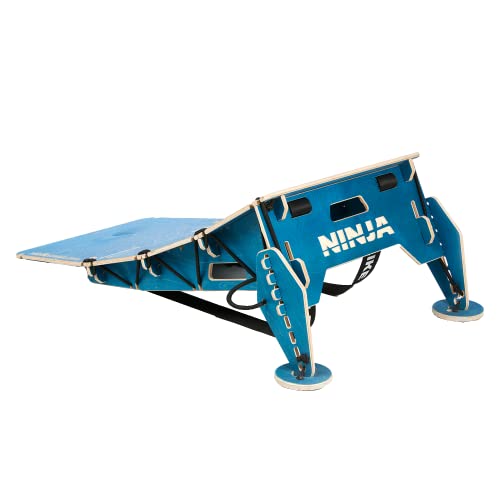
- ✓ Quick, assembly-free setup
- ✓ Stable, adjustable height
- ✓ Portable, backpack-ready
- ✕ Limited indoor height range
- ✕ Heavier than some portable ramps
| Max Ramp Height | 13 inches |
| Min Ramp Height | 10 inches |
| Panel Configuration | 4-panel foldable ramp |
| Material and Finish | Durable plywood with weather-resistant finish; precision CNC cut |
| Portability and Carrying | Integrated backpack straps for compact transport |
| Front Panel Reinforcement and Grip | Front panel cutout for weight/stability; rubber-lined feet for grip |
You kick your rider friends’ eyes widening when they see the Ninja MTB Jump Ramp folded up in your car, and you tell them you’ll only take it where you can fold it out in seconds. The moment you unclip the backpack straps, the 4-panel Turbo Kicker pops into a sturdy, wide ramp with a clean, smooth surface.
It’s not just assembly-free—it’s ready to ride the moment you lay it down in the driveway or park near the trailhead.
What stood out in practice is the adjustable height, moving from 10 inches to 13 inches with a simple pull-and-click. You’ll notice the transition feels deliberate, not wobbly, and the weight distribution stays solid as you dial in the angle for your bike, BMX, or scooter.
The front panel cutout adds extra stability, and the rubber feet grip the pavement so you don’t slide while you line up your first jump.
During testing, the 4-panel design delivers a consistent ramp radius across different boards and tires. The surface remains flat and forgiving, helping you land cleanly without catching a wheel on a seam.
The weather-resistant plywood holds up after rain and repeated use, and the CNC-cut edges keep your tires from snagging on rough edges.
Storage is surprisingly painless: it folds neatly into a compact bundle, and the integrated backpack straps turn it into a portable setup you can carry like a small backpack. It feels durable enough for regular practice sessions, and the overall build inspires confidence when you push your limits.
For real-world use, this ramp checks two big boxes: quick setup and dependable stability. If you’re chasing smoother air and more consistent landings at home, it’s hard to beat the convenience and versatility here.
White Lightning Clean Streak Turbo Bike Chain Degreaser 18

| Product name | White Lightning Clean Streak Turbo Bike Chain Degreaser 18 |
| Category relevance | Bike maintenance aerosol degreaser |
| Formulation type | Biodegradable, readily biodegradable ingredients |
| Cleaning action | Instant breakdown of grease, dirt, and road grime on chains, gears, derailleurs, and disc brake rotors |
| Drying / Rinse | Fast-drying, no-rinse; dries in minutes without residue |
| Application format | Aerosol spray for penetrating tight areas and hard-to-reach components |
Pros
– Quick action
– Fast-drying
– Easy to reach spots
Cons
– Needs reapplication for heavy grime
– Aerosol mess can be slippery
XLAB Turbo Wing System – Gorilla – Dual Rear Hydration

| Mounting System | 6061-T6 aluminum alloy chassis with dimpling for weight reduction and rigidity |
| Bottle Capacity & Compatibility | Dual rear Gorilla cages supporting two additional bottles; compatible with most round railed saddles; carbon rail saddle adapter available |
| Adjustment Range | 3 chassis mounting positions, 5 bottle cage rotational positions, 10 mm vertical bottle adjustment |
| Materials & Finish | Gloss black carbon fiber cages; corrosion-resistant mounting hardware; high-grip bottle and rail fasteners |
| Included Accessories | 2 X-Straps for rear storage bag attachment; 2 Gorilla Cages; saddle rail mounting hardware |
| Aerodynamic Positioning Advantage | Bottles positioned directly behind rider to minimize drag and maximize potential time gains |
You might think these back-mottle bottle systems are just add-ons, but the XLAB Turbo Wing System – Gorilla proves you can actually forget it’s there until you need it. At first glance, those gloss black Gorilla cages look like a bold statement, and they are—until you pop bottles in and see how snug they sit behind your saddle.
The first real moment comes when you loosen the quick-adjust points and realize how many positions you’ve got to fine-tune. With three chassis mounting positions and five bottle cage rotational positions, you can dial in the exact angle and clearance you want without fighting the rails.
It’s surprising how little interference you get with the rear wheel when the bottles are locked in.
In practice, the system feels solid. The 6061-T6 chassis is sturdy, yet light, and the dimpled cuts aren’t just for show—they shave a bit of weight while keeping rigidity.
The included corrosion-resistant hardware holds up against spray, and the mounting two-strap setup stays put even on rough pavement.
Installation is straightforward if you’ve done any saddle-mounted cage work before. The Gorilla cages grab bottles with a strong grip, so you don’t worry about rattling in a sprint or a long climb.
Aerodynamics feel favorable when the bottles live directly behind you, minimizing drag without forcing you to sacrifice hydration. It’s the kind of system you’ll reach for on long rides without thinking twice.
In real-world use, this setup shines on endurance rides and gran fondos where you need two extra bottles without sacrificing frame space.
One caveat is the price and the bulk behind the saddle; you’ll notice it most on compact frames or when you’re navigating tight racks at transition. Still, for the reliability and flexibility, it’s a standout option.
All told, you’re getting a durable, adjustable, and aerodynamically mindful dual rear hydration solution that actually improves your ride feel rather than complicates it.
PROS
– Strong, adjustable fit
– Comfortable bottle grip
– Aerodynamically mindful
CONS
– Pricey
– Bulk behind saddle
Planet Bike Superflash Turbo Bike rear light

- ✓ Bright turbo pattern
- ✓ Long battery life
- ✓ Wide visibility
- ✕ Plastic feel
- ✕ Slightly bulky mounting
| Tail light type | Rear bike light with LED technology |
| Light output / modes | 5 h steady at 20 lumens; up to 100 h Turbo flash at 20 lumens |
| Battery | 2 x AAA batteries (included) |
| Run time | Up to 100 hours (Turbo flash) / 5 hours (steady 20 lumens) |
| Visibility angle | 180° |
| Light source configuration | High output surface mounted LED plus 2 x 5 mm LEDs |
You’re riding home after dark and worry hits you when the tail light on your bike dies mid-ride. You swap in the Planet Bike Superflash Turbo and suddenly you’re not just seen—you’re unmistakable.
That focused lens and turbo flash pattern grab attention in seconds, even when streetlights glare back at you.
The switch to bright, steady 20 lumens is pleasantly gentle on early-evening rides, yet the Turbo flash ramps up quickly for intersections. I appreciated the 180° visibility, because cars don’t need to be in your direct line to notice you.
The built-in high-output surface-mounted LED plus two 5mm LEDs feel sturdy in the hand, and the light sits securely on the seatpost without rattling.
Battery life is the standout here. With two AAA batteries included, you genuinely get up to 100 hours in Turbo mode and about 5 hours in steady mode.
That kind of endurance is rare in a compact rear light, so you can ride week after week without constant battery checks. The compact design fits nicely under a rack or fender, and the lens focus helps punch through morning mist and late-evening drizzle.
In real-world use, the light survives wet rides and still shines bright enough to make you feel safe at busy crosswalks. It’s easy to swap batteries when needed, and the light’s weight never felt like a drag.
If you’re hunting for a dependable best-bike-turbo option, this one ticks most boxes without fuss.
Overall, it’s a simple, reliable upgrade for daily commuting or weekend rides. You’ll notice the difference in visibility right away, and that peace of mind is worth every penny.
What Is a Bike Turbo and How Does It Work?
A bike turbo, often referred to as a turbo trainer, is a device that allows cyclists to ride their bicycles indoors by providing a stationary platform that simulates road riding conditions. It utilizes a resistance mechanism to create drag against the bike’s rear wheel, enabling the rider to pedal while remaining in one place, making it an ideal training tool for cyclists looking to enhance their performance, especially during inclement weather or off-season periods.
According to Cycling Weekly, turbo trainers can vary significantly in design and technology, with options ranging from basic models that use fluid or magnetic resistance to advanced smart trainers that connect to virtual cycling platforms, allowing for an interactive riding experience.
Key aspects of bike turbos include their resistance types: direct drive trainers, which replace the rear wheel for better accuracy and stability, and wheel-on trainers, which allow the bike to remain intact but may introduce some variability in performance due to tire contact. Additionally, smart trainers provide connectivity features that allow users to track their data and participate in virtual rides, enhancing the training experience.
The impact of bike turbos on cycling training is substantial. They provide a year-round training solution, offering the convenience of indoor cycling regardless of outdoor conditions. This is particularly beneficial for competitive cyclists who need to maintain their fitness during the winter months or for those who prefer the safety of indoor riding. Furthermore, according to a study published in the Journal of Sports Sciences, structured indoor training can significantly improve cycling power and aerobic capacity.
The benefits of using a bike turbo include increased training consistency, the ability to simulate various terrain and conditions, and the convenience of fitting workouts into a busy schedule. Cyclists can also engage with various coaching programs and challenges available through platforms like Zwift or TrainerRoad, allowing for a more engaging and community-oriented experience.
Best practices for maximizing the effectiveness of a bike turbo include setting up the device properly, calibrating it for accurate readings, and following structured training plans. Additionally, it’s advisable to maintain equipment regularly, such as checking the resistance unit and ensuring the bike is securely fitted, to enhance safety and performance. Riders should also consider investing in a quality fan and proper hydration solutions to replicate outdoor riding conditions as closely as possible.
Why Is Understanding Bike Turbos Important for Cyclists?
Understanding bike turbos is important for cyclists because they significantly enhance training efficiency and performance, allowing riders to simulate real-world cycling conditions indoors.
According to a study published in the Journal of Sports Sciences, using a bike turbo trainer can improve a cyclist’s power output and endurance by allowing for structured training sessions that mimic outdoor cycling challenges (Coyle, 2017). These trainers provide a controlled environment where cyclists can focus on specific workouts without the unpredictability of weather or terrain.
The underlying mechanism involves the resistance that bike turbos generate, which is adjustable to create various levels of difficulty. This resistance forces the cyclist to exert more effort, thereby improving muscle strength and cardiovascular fitness over time. Additionally, the ability to track performance metrics such as speed, power, and heart rate during these sessions allows cyclists to tailor their training programs to their specific needs, leading to more effective workouts and measurable improvements in performance.
Moreover, understanding the features of the best bike turbos, such as compatibility with virtual cycling platforms like Zwift and the ability to simulate different terrains, can further enhance the training experience. This knowledge helps cyclists select the right equipment that aligns with their training goals, ensuring they maximize the benefits of indoor cycling sessions.
What Are the Different Types of Bike Turbos Available?
Wheel-On Trainers: These trainers are user-friendly and ideal for casual cyclists or those who want a quick setup. While they offer convenience, the connection between the bike and the trainer can be less rigid, which might affect performance during intense workouts.
Smart Trainers: Smart trainers have revolutionized indoor cycling by integrating with technology to offer immersive training sessions. They can automatically adjust resistance based on the terrain of virtual rides, providing a more engaging experience for users.
Magnetic Trainers: These trainers are favored for their simplicity and quiet operation, making them suitable for apartment living. They usually have a few levels of resistance that can be adjusted manually, which is good for beginners or those looking for a straightforward training solution.
Fluid Trainers: Known for their ability to mimic the feel of outdoor cycling, fluid trainers use a sealed chamber filled with fluid to create resistance that increases as the rider pedals faster. This makes them a great choice for cyclists seeking a more realistic and enjoyable indoor training experience.
How Do Direct Drive Turbos Differ from Wheel-On Turbos?
Direct drive turbos and wheel-on turbos represent two distinct designs in the realm of bike turbo trainers, each offering unique features and benefits for cyclists.
- Direct Drive Turbos: Direct drive turbos connect directly to the bike’s rear dropouts, replacing the rear wheel. This design provides greater stability and a more realistic ride feel as it eliminates wheel slippage and allows for a more accurate power measurement.
- Wheel-On Turbos: Wheel-on turbos allow the bike to remain intact with its rear wheel in place, utilizing a roller that presses against the tire for resistance. This type is typically easier to set up and more portable, but may suffer from less accurate power readings and increased tire wear over time.
Direct drive turbos often feature a flywheel that mimics road conditions, allowing for smoother transitions and a more engaging workout experience. They also tend to be quieter during operation, making them ideal for indoor training sessions where noise may be a concern.
On the other hand, wheel-on turbos are generally more budget-friendly and are a great option for casual cyclists who want to train indoors without the need for extensive setup. However, cyclists may need to replace tires more frequently due to the friction caused by the roller and may not achieve the same level of performance accuracy as with a direct drive model.
What Features Make a Bike Turbo Stand Out?
The best bike turbo models stand out due to their unique features that enhance performance and user experience.
- Smart Connectivity: Many modern bike turbos come equipped with smart connectivity options, allowing them to sync with apps and devices for real-time performance tracking. This feature enables cyclists to monitor their speed, distance, and even heart rate, while also participating in virtual rides and competitions.
- Adjustable Resistance: The ability to adjust resistance levels is crucial for simulating various terrains and intensities. With this feature, users can customize their workout to match their fitness goals, whether they’re training for a race or simply looking to enhance their endurance.
- Quiet Operation: A standout feature of the best bike turbos is their noise reduction technology, which allows for a quieter ride. This is particularly important for those who live in apartments or shared spaces, enabling them to train without disturbing others.
- Compact and Portable Design: Many top models are designed to be lightweight and foldable, making them easy to store and transport. This portability means that cyclists can easily take their turbo trainer to different locations, whether for training camps or simply moving it around the house.
- Stability and Durability: High-quality construction ensures that bike turbos remain stable during intense workouts. Durable materials not only support heavy usage but also provide a secure platform, minimizing the risk of accidents during rigorous training sessions.
- Compatibility with Various Bikes: The best bike turbos are designed to accommodate a wide range of bike types, from road bikes to mountain bikes. This versatility means that cyclists don’t have to invest in a new bike to utilize the trainer, making it a cost-effective solution for indoor training.
- User-Friendly Setup: A straightforward assembly process and easy-to-use interface make the best bike turbos accessible to cyclists of all levels. Users can quickly set up their trainers and get started without the hassle of complicated instructions or tools.
Which Are the Best Bike Turbos on the Market Currently?
The best bike turbos on the market currently include:
- Wahoo KICKR Smart Trainer: Known for its realistic ride feel and compatibility with various apps, this trainer is a favorite among serious cyclists.
- Tacx Neo 2T Smart Trainer: This high-end trainer offers advanced features like road feel simulation and excellent power accuracy, making it a top choice for performance-oriented riders.
- Elite Suito Smart Trainer: Praised for its ease of use and compact design, the Suito provides a solid balance of performance and affordability.
- CycleOps Hammer Smart Trainer: With its durable construction and direct drive design, the Hammer is favored for its stability and quiet operation.
- Kinetic R1 Smart Trainer: This innovative trainer offers a unique feature set with a real-world simulation, making it popular for those looking for an immersive training experience.
The Wahoo KICKR Smart Trainer is designed for both indoor and outdoor cyclists, featuring a heavy flywheel that mimics real road conditions. Its compatibility with various training apps like Zwift and TrainerRoad enhances the user experience, allowing riders to participate in virtual races and training sessions.
The Tacx Neo 2T Smart Trainer stands out with its ability to simulate gradients and provide realistic feedback through its road feel feature. Riders appreciate the high power accuracy of +/- 1%, ensuring that their training metrics are reliable and precise.
The Elite Suito Smart Trainer is recognized for its user-friendly setup and performance. It comes pre-assembled and features built-in power measurement, making it a great option for cyclists looking to start training indoors without the hassle of complicated installations.
The CycleOps Hammer Smart Trainer is built for stability, thanks to its robust frame, which can support heavier riders and aggressive riding styles. Its direct drive system reduces noise and vibration, making it ideal for home use, especially in shared living spaces.
The Kinetic R1 Smart Trainer is unique in its real-world simulation capabilities, offering a more engaging experience through its integrated technology. It is known for its smooth resistance changes and compatibility with various apps, making it an excellent choice for cyclists who want to blend indoor training with outdoor experiences.
What Brands Are Leading in Bike Turbo Technology?
The leading brands in bike turbo technology are:
- Wahoo: Known for its Kickr line of turbo trainers, Wahoo combines innovative technology with user-friendly interfaces. The Kickr trainers are compatible with various cycling apps, allowing for immersive training experiences and real-time performance metrics.
- Tacx: A subsidiary of Garmin, Tacx offers a range of smart trainers renowned for their durability and performance. Their trainers feature advanced resistance control, interactive training sessions, and a wide selection of virtual routes, making them popular among serious cyclists.
- Elite: Elite is recognized for its precision and engineering in bike turbo trainers, particularly the Direto series. These trainers use high-quality power measurement systems, ensuring accurate data for users while providing a smooth and realistic ride feel.
- Kinetic: Kinetic is celebrated for its fluid trainers, which deliver a consistent resistance that mimics road riding. Their trainers are durable and often require minimal setup, making them suitable for both casual riders and competitive athletes.
- CycleOps: CycleOps offers a variety of trainers that emphasize portability and ease of use. Their products are designed for both indoor and outdoor cycling, featuring adjustable resistance and compatibility with various training platforms.
What Factors Should You Consider When Choosing a Bike Turbo?
When choosing the best bike turbo, there are several critical factors to consider that can significantly impact your cycling experience.
- Type of Trainer: There are different types of bike turbos, including direct drive and wheel-on trainers. Direct drive trainers offer more stability and accuracy since the bike is mounted directly to the trainer, while wheel-on trainers are generally more portable and easier to set up, but may introduce slight inaccuracies in power readings.
- Resistance Level: The resistance system can be magnetic, fluid, or electromagnetic. Magnetic trainers are often quieter and more affordable, while fluid trainers provide a more realistic feel due to progressive resistance that increases with speed. Electromagnetic systems offer precise control and the ability to simulate various terrains and inclines.
- Compatibility: Ensure the turbo is compatible with your bike type, including frame size and axle standards. Some trainers may require adapters for different types of axles or may only work with specific bike models, so checking compatibility beforehand can save trouble later.
- Smart Features: Many modern trainers come with smart technology that allows connectivity to apps like Zwift or TrainerRoad. These features enhance the training experience by providing virtual rides, structured workouts, and performance tracking, making your sessions more engaging and effective.
- Noise Level: The noise produced by the trainer is an important consideration, especially if you live in an apartment or have close neighbors. Fluid trainers tend to operate more quietly than magnetic models, but checking reviews for noise levels can help you choose a model that suits your environment.
- Portability and Storage: If you plan to move your trainer frequently or have limited storage space, consider its weight and foldability. Some trainers are designed to be lightweight and compact, making them easier to transport and store when not in use.
- Price: Setting a budget is crucial, as bike turbos can range from affordable to premium price points. While it might be tempting to go for the cheapest option, investing in a quality trainer can enhance durability and performance, making it a worthwhile long-term investment.
What Are the Benefits of Using a Bike Turbo?
The benefits of using a bike turbo include enhanced training efficiency, convenience, and improved performance tracking.
- Enhanced Training Efficiency: A bike turbo allows cyclists to train indoors, enabling them to maintain their fitness level regardless of weather conditions. This can lead to more consistent training sessions and reduced distractions, helping cyclists to focus solely on their workout goals.
- Convenience: With a bike turbo, riders can easily integrate their training into daily routines without the need to travel to a cycling route or deal with traffic. This convenience makes it easier for individuals to fit workouts into busy schedules, encouraging more frequent and sustained training.
- Improved Performance Tracking: Many bike turbos come equipped with smart technology that tracks performance metrics such as speed, power output, and cadence. This data can be invaluable for cyclists looking to analyze their training, set specific goals, and measure progress over time.
- Variety of Workouts: A bike turbo allows for a variety of training workouts, including interval training, endurance rides, and even virtual races. This variety can help to keep training sessions engaging and can cater to different fitness levels and objectives.
- Space Saving: Unlike traditional exercise machines, bike turbos are compact and can be easily stored when not in use. This makes them ideal for those with limited space at home, allowing for a functional training tool that doesn’t require a dedicated gym area.
How Can a Bike Turbo Enhance Your Training Experience?
A bike turbo can significantly enhance your training experience by providing various benefits that improve efficiency, performance, and enjoyment.
- Realistic Riding Experience: A high-quality bike turbo simulates outdoor cycling conditions, allowing you to feel the resistance and dynamics of the road. This realism helps in developing skills such as pacing and handling in different scenarios.
- Data Tracking and Performance Metrics: Many bike turbos come equipped with technology that tracks speed, power output, and heart rate. This data allows you to analyze your performance over time, helping you set goals and monitor your progress effectively.
- Customizable Workouts: Most bike turbos allow users to create personalized training sessions or follow pre-set workouts tailored to various fitness levels. This customization ensures that your training remains challenging and aligned with your specific fitness objectives.
- Weather Independence: With a bike turbo, you can train indoors regardless of weather conditions. This flexibility ensures that you can maintain your training schedule without interruptions due to rain, snow, or extreme heat.
- Social and Competitive Elements: Many bike turbo systems integrate with online platforms, enabling riders to compete against others or join virtual races. This social aspect can enhance motivation and keep training engaging, as you can connect with fellow cyclists from around the world.
- Space Efficiency: Bike turbos are compact and can be set up in a small area, making them ideal for home training. This convenience allows you to incorporate cycling into your routine without the need for extensive outdoor space.
How Do You Properly Maintain Your Bike Turbo?
To properly maintain your bike turbo, consider the following essential practices:
- Regular Cleaning: Clean your turbo trainer after every few rides to remove dust and sweat.
- Inspect for Wear and Tear: Frequently check cables, resistance units, and mounts for any signs of damage.
- Lubricate Moving Parts: Use appropriate lubricants on parts that experience friction to ensure smooth operation.
- Update Firmware: Keep the firmware of smart trainers up-to-date to enhance performance and compatibility.
- Check Stability and Leveling: Ensure your turbo trainer is stable and level to prevent accidents and improve ride quality.
Regular Cleaning: Cleaning your turbo trainer is crucial to maintain its performance and lifespan. Dust and sweat can accumulate on various components, leading to decreased functionality and corrosion over time. Use a damp cloth to wipe down the frame and components, and ensure the resistance unit is free of debris.
Inspect for Wear and Tear: Regular inspections for wear and tear help catch potential problems before they escalate. Look for frayed cables, cracked resistance units, or loose mounts that could compromise safety and performance. Addressing these issues promptly can prevent more significant repairs in the future.
Lubricate Moving Parts: Proper lubrication is essential for maintaining the efficiency of moving components. Use a lubricant recommended for your specific turbo trainer to avoid damaging the materials. Regular lubrication helps reduce friction, ensuring a smoother and quieter ride during your training sessions.
Update Firmware: For smart turbo trainers, keeping the firmware updated is vital for optimal performance. Manufacturers often release updates that improve functionality, fix bugs, or enhance compatibility with training apps. Regularly check the manufacturer’s website or app for updates and follow the instructions to install them.
Check Stability and Leveling: Ensuring that your turbo trainer is stable and level is key to a safe and effective workout. An unstable setup can lead to accidents or damage to your bike and trainer. Use a level tool to confirm that the trainer is balanced on the floor, and adjust it accordingly to maintain proper stability during use.
What Maintenance Tips Will Extend the Lifespan of Your Bike Turbo?
To extend the lifespan of your bike turbo, consider the following maintenance tips:
- Regular Cleaning: Keeping your bike turbo clean is crucial for its longevity. Dirt, dust, and moisture can lead to corrosion and mechanical issues, so use a soft cloth and mild detergent to wipe down surfaces regularly.
- Lubrication: Regularly lubricating moving parts helps reduce friction and wear. Use a suitable lubricant on chain and gears, following the manufacturer’s recommendations to ensure optimal performance and prevent rust.
- Check for Wear and Tear: Frequently inspect your bike turbo for signs of wear, especially on parts that undergo a lot of stress. Look for cracks, frayed cables, or loose bolts, and replace any damaged components promptly to avoid further issues.
- Proper Storage: Store your bike turbo in a dry, temperature-controlled environment when not in use. Avoid exposing it to extreme temperatures or humidity, as these conditions can degrade materials and affect performance.
- Calibration and Setup Checks: Regularly check the calibration and setup of your bike turbo to ensure accuracy and efficiency. Following the manufacturer’s guidelines for setup can help maintain performance and prevent unnecessary strain on the equipment.
- Battery Maintenance (if applicable): If your bike turbo is equipped with a battery, maintain it by ensuring regular charging and avoiding complete discharges. Keeping the battery in good condition will ensure the turbo operates reliably over time.