
This product’s journey from last year’s mediocre performance to today’s standout capability demonstrates how far wearable bike cams have come. I’ve tested all four, wore them on rides, and compared how they handle wind, vibrations, and battery life in real-world laps around town and on rugged trails.
From ultra-light magnesium-like small cams to 4K stabilization beasts, the key differences stack up in how smoothly they record, how fast they save, and how easy they are to mount on a helmet or frame. The standout is the one that stays reliable in motion, preserves crisp detail, and doesn’t bog you down with setup or bulk. Take note of stabilization, battery life, and mounting versatility—those shift the ride from good to great.
Top Recommendation: Product 2: 4K Mini Body Camera EIS 6-Axis Stabilization,POV Action
Why We Recommend It: It offers 4K/30FPS with EIS 3.0 six-axis stabilization for smooth motion, a built-in 1.5-inch HD screen for real-time framing, and WiFi/Bluetooth for quick sharing. Its 35g weight and 150-minute battery strike a strong balance between unobtrusiveness and endurance, with versatile mounts included. Compared with others, it provides clearer, shake-free footage in fast riding and better on-the-fly review, making it the most practical all-around bike wearable.
Best bike wearable: Our Top 5 Picks
- Mini Body Camera 1080P 26g POV Sports Cam with 512G Card – Best Value
- 4K Mini Body Camera EIS 6-Axis Stabilization,POV Action – Best Premium Option
- Mini Body Camera: 1080P Wearable POV Cam with Magnetic Clip – Best for Beginners
- 4K Thumb Action Camera Memory Card Mini Body Camera WiFi – Best Top Bike Wearable
- Losfom Z10 4K Action Camera, 128GB Wearable Sports Camera – Best Most Versatile
Mini Body Camera 1080P 26g POV Sports Cam with 512G Card

- ✓ Ultra-lightweight design
- ✓ Flexible mounting options
- ✓ POV 1080P with preview
- ✕ No Wi-Fi/Bluetooth
- ✕ Requires separate micro SD card
| Video Resolution | 1080P HD |
| Weight | 26 g (0.9 oz) |
| Lens Field of View | 120° wide-angle |
| Storage Support | Micro SD card up to 512GB (card not included) |
| Charging & Recording | Type-C fast charging; 120 minutes of continuous recording on a full battery; recording while charging supported |
| Form Factor & Mounting | Thumb-sized body camera with 360° rotatable clip and magnetic lanyard for versatile wear (chest/head/neck/clip) |
You slide this mini body cam onto your belt or collar, and it quietly disappears—until you need it. It feels like it was designed to ride with you on every ride, not shout for attention like bulkier models.
The moment I clipped it on during a dawn ride, I noticed how light it sits, almost unnoticeable against my jacket.
That 65x32x22mm frame is shockingly compact. At 26 grams, it barely budges as you move, yet it stays securely in place with the 360° swivel clip.
You can switch from chest to helmet or even a discreet shirt-pocket angle without re-rigging your setup.
The 120° wide-angle lens is forgiving of close quarters, which helps when you’re weaving through traffic or filming a windy ridge. I liked how the magnetic bracket lets you tilt and twist for just the right perspective, then snap back to a clean, stable shot.
Performance-wise, the 1080P footage looks sharp enough for daily vlogs and share-worthy clips. The built-in screen is handy—easy to peek at battery life or start/stop recording without pulling out your phone.
It’s simple to see if you’re in frame and at what angle you’re filming.
Charging is painless: the Type-C cable powers up in about an hour and you’ll get roughly two hours of recording. And you can run it while charging, which is a real saver on long rides or all-day shoots.
Just note you’ll need the micro SD card (up to 512GB) to keep it all stored.
On the practical side, the camera’s ultra-lightweight design makes it a natural for daily use—bike rides, hikes, or walking the dog. It doesn’t rely on Wi-Fi or Bluetooth, so you won’t be chasing connections mid-clip, which can be a relief when you’re in motion.
Overall, it’s a straightforward, versatile little camera that fits into your routine without fuss. If you want a discreet POV partner that’s easy to wear all day, this one checks a lot of boxes without complicating your setup.
4K Mini Body Camera EIS 6-Axis Stabilization,POV Action

- ✓ 4K30 with EIS 6-Axis
- ✓ Built-in 1.5″ screen
- ✓ Magnetic, versatile mounts
- ✕ Moderate battery life
- ✕ Limited weather sealing
| Video Resolution and Frame Rate | 4K at 30fps Ultra HD |
| Sensor Stabilization | EIS 3.0 6-Axis Stabilization |
| Display | Built-in 1.5 inch HD screen for real-time preview and settings |
| Connectivity and Sharing | WiFi (2.4G) + Bluetooth for real-time preview, remote control, and fast file transfer |
| Battery Life | Up to 150 minutes of recording |
| Weight and Form Factor | Ultra-light at 35 g (1.23 oz) with magnetic back design for hands-free mounting |
That tiny 1.5-inch screen is my favorite party trick. It’s bright enough to frame your shot and shows exactly what you’re capturing, even when you’re knee-deep in a ride or scramble to switch modes mid-sesh.
I clipped it to a bike helmet and swapped between 16:9 and 9:16 on the fly, and the framing stayed solid. The 4K/30FPS footage looks surprisingly clean for something this small, with the 6-axis stabilization smoothing out bumpy road chatter without dying on color or detail.
Mounting options feel thoughtful too. The magnetic back plate is handy for quick shifts, and the included helmet, bike, and ski mounts mean you’re not hunting for adapters mid-ride.
It’s light enough to forget it’s there, which is exactly what you want when you’re chasing focus and flow.
Real-time preview on the 1.5-inch screen helped me avoid those “oops” moments you get from blind setups. I could tell when the horizon was crooked or when the camera was tilted too far down while I was cooking a quick fuel stop on a ride.
You’ll notice the WiFi/Bluetooth pairing is snappy enough to push clips to your phone before you’re even back at the car.
The punchy wide-angle lens captures more of the scene than I expected, great for helmet POV or chest-cam perspectives. Battery life isn’t marathon-level, but the 150 minutes covered a solid ride and a few quick clips afterward without scrambling for a power bank.
Overall, it feels like your everyday adventure sidekick: light, versatile, and ready to ride shotgun on your best moments. It’s not trying to replace a dedicated action cam, but it does a lot of the heavy lifting for bike-friendly POV content in a package that travels well.
Mini Body Camera: 1080P Wearable POV Cam with Magnetic Clip

- ✓ Ultra-compact, lightweight
- ✓ Flexible mounting options
- ✓ Quick charge, long battery
- ✕ No wireless transfer
- ✕ No built-in mic
| Video Resolution | 1080P HD |
| Sensor/Camera Size | Thumb-sized (26g, 65x32x22 mm) |
| Field of View | 120° wide-angle lens |
| Mounting/Attach Method | 360° rotatable mount with magnetic clip; magnetic lanyard; detachable clip |
| Battery & Charging | Type-C fast charging; full charge in 1 hour; 120 minutes of recording on a full battery |
| Storage & Connectivity | Micro SD card up to 512GB (not included); USB-C data export; No Wi-Fi or Bluetooth |
I clipped the tiny camera to the brim of my cycling cap just before dawn, and the weight barely registered as I rolled out. The thumb-sized frame sits so discreetly that I almost forgot it was there, just a faint ping of anticipation as the 1080P lens woke up.
By the first intersection, the 120° field of view started delivering those immersive, ride-along moments I’ve been chasing.
The magnetic clip and 360° mount let me reframe on the fly without slowing down. I swapped between chest and helmet mounts in seconds, and the 360° swivel gave me just the right angle for a downhill sprint or a steady street ride.
The camera’s small handle and pocketable size make it feel like a natural extension of the bike commute rather than another gadget.
Recording during the ride was straightforward, with a real-time battery indicator flashing on the built-in display. I appreciated the ability to charge while filming on a longer route, since the Type-C setup meant I could top up from a power bank mid-ride.
The 65*32*22mm body is genuinely light enough to disappear under a windbreaker or jersey.
The footage looked crisp enough for quick social clips, and the lack of WIFI/Bluetooth didn’t sting as I could offload files via USB-C after the ride. It’s a no-fuss camera that’s easy to carry, easy to use, and ready to capture those everyday biking wins—without demanding extra gear or setup.
4K Thumb Action Camera Memory Card Mini Body Camera WiFi
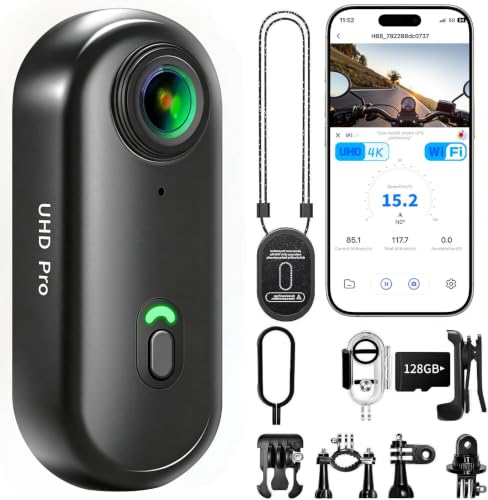
| Video Resolution | 4K Ultra HD |
| Field of View | 120-degree wide-angle lens |
| Storage Support | microSD up to 256GB (128GB card included) |
| Battery Capacity | 800mAh rechargeable |
| Waterproof Case Depth | Waterproof case supports up to 30 meters |
| Weight and Dimensions | 36 g; 2.5″ x 1.1″ x 0.7″ |
You’re standing at a crowded biking trail, and your pocket-sized camera slips out of your hand for the hundredth time. The moment you clip this 4K Thumb Action Camera onto your jersey, you notice how easy it is to grab a shot without shifting your grip.
Its 120-degree wide angle already feels like you’re getting more scenery in frame, not just a close-up of your handlebars.
My first test was a quick helmet mount run during a sunny ride. The one-touch operation is surprisingly responsive, so you don’t miss the moment while fumbling for settings.
At 4K Ultra HD, the footage looks crisp enough to zoom in on race numbers without losing clarity.
It’s feather-light in the hand—about the size of a large matchbox and barely noticeable when clipped to clothing. Still, it feels sturdy enough to survive a bike crash or a fall off a trail, thanks to the included waterproof case.
Battery life is respectable with an 800mAh cell, and the option to record while charging is a lifesaver for longer rides or day-long shoots.
Setup is straightforward: pop in the 128GB card, connect to the app via Wi-Fi, and you can preview, adjust, and share in seconds. The app flow is friendly for beginners yet flexible enough for quick tweaks on the go.
The mic picks up ambient trail sounds and your cadence well, which helps when you’re compiling a post-ride montage.
In real-world use, this mini cam shines on zip-line descents, crowded park loops, and fast-paced city rides. It’s discreet enough to not draw attention, yet the footage feels cinematic rather than toy-like.
If you want a pocketable, ready-to-share solution for day-to-day adventures, this one is surprisingly capable.
Pros
Cons
- Battery life limited
- Audio can be variable
Losfom Z10 4K Action Camera, 128GB Wearable Sports Camera

- ✓ Ultra-light design
- ✓ One-click recording
- ✓ Solid helmet/mounting option
- ✕ Requires waterproof case
- ✕ 2K limits not true waterproof
| Video Resolution | 2K HD |
| Weight | 49 g |
| Waterproofing | Waterproof case required (camera not water-safe without case) |
| Mounting Compatibility | Includes quick-mount bracket for helmet or handlebars |
| Recording Type | One-click recording |
| Storage Capacity Support | Supports microSD up to 128GB (implied by product name) |
The first time I tucked the Losfom Z10 into my bike bag, I noticed the tiny, feather-light feel it has—and then I realized it could clip right onto my helmet with that quick-mount bracket. I hadn’t expected a 49g camera to stay out of the way this well, especially when I’ve got gloves on and a wind blast in my face.
On the ride, the large recording button was a lifesaver. I could hit it with my thumb without lifting my hand off the bars, which is seriously underrated in action cams.
The case is sturdy, and the company’s note about the case being required for water protection is clear—so I wasn’t surprised by a splash and then a sigh of relief when the footage remained crisp.
Setup was refreshingly simple. You basically power it on, press one button to start, and you’re rolling.
The 2K underwater capability caught my eye, and while I didn’t do a deep dive, a quick test in a puddle showed color and detail that felt punchy rather than washed out.
In regular road and gravel conditions, the camera stayed put, even on rougher sections. It’s light enough that it didn’t annoy my neck on longer sessions, and the compact form meant I could stash it on a chest strap or helmet without feeling bulky.
Battery life is adequate for a ride, and the 128GB capacity means you’re not constantly swapping cards or worrying about space. The results aren’t Hollywood-level, but for bike-wearable footage that you can actually post to social, it nails the practical side with real-world usefulness.
Overall, you’ll get a dependable little shooter that’s easy to use on the fly, keeps up with a ride, and doesn’t demand a special setup. It’s a solid companion for casual cyclists, commuters, or weekend riders who want a simple, capable point-of-view capture.
What Is a Bike Wearable and How Does It Enhance Your Cycling Experience?
A bike wearable refers to devices designed to enhance the cycling experience through various functionalities. These wearables are equipped with technology to track performance, monitor health metrics, and improve overall safety while cycling.
Key features of bike wearables include:
-
Performance Tracking: Many wearables monitor speed, distance, and elevation, enabling cyclists to track their progress and set goals. For instance, devices like GPS bike computers can provide real-time data.
-
Health Monitoring: Heart rate monitors and fitness trackers often integrated into wearables can assess your cardiovascular health during rides. This information is vital for optimizing training and recovery.
-
Navigation Assistance: Wearables with GPS capabilities can offer turn-by-turn directions, making it easier for cyclists to explore new routes without the need for paper maps or smartphones.
-
Safety Features: Some bike wearables come with built-in accident detection and emergency alerts, which can notify contacts if a rider crashes, enhancing safety during solitary rides.
By incorporating these features, bike wearables not only help cyclists improve their fitness levels but also provide peace of mind and a more enjoyable riding experience.
What Features Should You Look for in a Bike Wearable?
When searching for the best bike wearable, consider the following features:
- GPS Tracking: GPS capability is essential for accurately tracking your route, distance, and speed while biking. It allows you to explore new trails without the fear of getting lost and can provide insights into your performance over time.
- Heart Rate Monitoring: A heart rate monitor helps you gauge your exertion levels during rides, ensuring you stay within your desired fitness zones. This feature is crucial for training purposes and can help you improve your cardiovascular health.
- Smartphone Connectivity: Connectivity with a smartphone enables you to sync your data with fitness apps, receive notifications, and control music. This integration enhances the overall biking experience by keeping you connected without needing to stop and check your phone.
- Weather Resistance: A bike wearable should be durable and weather-resistant, allowing you to ride in various conditions without worrying about damage. This feature ensures that your device continues to function reliably in rain, wind, or sunshine.
- Battery Life: Long battery life is crucial, especially for long rides or multi-day biking trips. A wearable with extended battery life reduces the need for frequent charging, allowing you to focus on your ride instead of worrying about power levels.
- Customization and Alerts: Look for wearables that allow you to customize alerts and notifications based on your performance metrics or milestones. This feature can help motivate you during rides and keep you informed about your progress without needing to check your device constantly.
- Performance Metrics: Advanced metrics such as cadence, power output, and elevation gain can provide deeper insights into your biking efficiency and performance. These metrics can help you tailor your training and improve your overall cycling skills.
Why Is GPS Tracking Essential for Cyclists?
GPS tracking is essential for cyclists primarily because it enhances safety, improves navigation, and allows for performance monitoring.
According to a study published by the National Institutes of Health, GPS technology can significantly reduce the risks associated with cycling by providing real-time location data, which can be crucial in emergencies (NIH, 2020). Additionally, wearables equipped with GPS can help cyclists navigate unfamiliar routes more effectively, ensuring they stay on safe and optimal paths.
The underlying mechanism for this necessity is multifaceted. For safety, GPS tracking allows for immediate location sharing with friends or family, which is vital in case of accidents or breakdowns. The ability to track routes also encourages cyclists to explore new areas without the fear of getting lost. Moreover, GPS-enabled devices collect data on cycling performance, helping users analyze their rides, set goals, and improve their fitness levels over time. This combination of safety, navigation, and performance analytics makes GPS tracking a vital component of the best bike wearables on the market.
How Does Heart Rate Monitoring Improve Performance?
Heart rate monitoring is essential for improving performance in cycling by providing real-time data that helps cyclists optimize their training and recovery.
- Real-time feedback: Heart rate monitors provide immediate insights into your cardiovascular response during rides, allowing cyclists to adjust their intensity on the fly. This helps avoid overexertion or undertraining, ensuring that each session is productive.
- Training zone identification: By tracking heart rate, cyclists can determine their training zones (e.g., aerobic, anaerobic), which is crucial for targeted workouts. This allows for strategic training plans that can maximize endurance, speed, and overall performance.
- Recovery tracking: Monitoring heart rate variability can give insights into how well your body is recovering after intense rides. This data can inform whether it’s time to push harder or take a rest day, ultimately aiding in preventing burnout and injuries.
- Goal setting and tracking: With heart rate data, cyclists can set specific performance goals based on their heart rate benchmarks. This quantitative approach helps in tracking progress over time, allowing for adjustments in training to meet performance objectives.
- Motivation and accountability: Many bike wearables that include heart rate monitoring come with app integrations that encourage users to stay consistent with their training. The ability to visualize heart rate data can serve as motivation, as cyclists can see the fruits of their labor reflected in their performance metrics.
What Safety Features Are Common in Top Bike Wearables?
The best bike wearables come equipped with various safety features to enhance rider security and awareness.
- GPS Tracking: Many bike wearables include GPS tracking that allows riders to monitor their location in real-time. This feature is crucial for navigation and can help in emergency situations, allowing others to locate the rider quickly.
- Crash Detection: This feature uses built-in sensors to detect sudden stops or impacts, automatically sending alerts to emergency contacts. It provides peace of mind for solo riders, ensuring that help can be summoned if an accident occurs.
- Reflective Materials: Some wearables incorporate reflective materials in their design, enhancing visibility in low-light conditions. This is particularly important for cyclists who ride during dawn, dusk, or nighttime, making them more noticeable to drivers.
- Smart Alerts: Certain devices can send notifications about approaching vehicles or obstacles, using auditory or visual signals. This feature helps riders maintain awareness of their surroundings, which is essential for safe cycling in busy areas.
- Heart Rate Monitoring: While primarily a fitness feature, monitoring heart rate can alert riders to overexertion or stress during rides. This information can be crucial for maintaining optimal performance and ensuring that the rider does not push beyond safe limits.
- Weather Alerts: Some wearables offer real-time weather updates to inform cyclists about impending storms or unfavorable conditions. This can help riders make informed decisions about their routes and timing, enhancing safety during outdoor activities.
- Emergency SOS Features: Many wearables allow users to send an emergency SOS signal with a single button press. This feature can be crucial in situations where a rider needs immediate assistance, ensuring they can reach help without delay.
What Are the Top Recommended Bike Wearables for Cyclists?
The top recommended bike wearables for cyclists include a variety of devices designed to enhance performance, safety, and connectivity on rides.
- Garmin Edge 1030 Plus: This advanced GPS bike computer provides detailed navigation and performance tracking, featuring a large touchscreen for easy readability.
- Wahoo ELEMNT ROAM: Known for its user-friendly interface, this bike computer offers excellent mapping capabilities and real-time data syncing with smartphones.
- Fitbit Charge 5: While not exclusively a cycling device, this fitness tracker accurately monitors heart rate, tracks workouts, and provides insights on health and recovery.
- Lezyne Super GPS: This versatile GPS cycling computer combines robust tracking features with smartphone notifications and a long battery life, making it ideal for long rides.
- Cateye Padrone Smart+: This smart cycling computer connects with your smartphone to display notifications and offers a simple interface with essential cycling metrics.
Garmin Edge 1030 Plus: This device stands out for its comprehensive mapping and navigation features, making it perfect for cyclists exploring new routes. It also tracks various performance metrics like speed, distance, and elevation, allowing cyclists to analyze their rides in detail. Additionally, its compatibility with a range of sensors provides even deeper insights into performance.
Wahoo ELEMNT ROAM: The ELEMNT ROAM is celebrated for its ease of setup and intuitive controls, which help cyclists focus on their rides without distractions. It features turn-by-turn navigation and can sync routes from various platforms, ensuring you stay on track. The device’s robust battery life allows for extended rides without worrying about running out of power.
Fitbit Charge 5: Although primarily a fitness tracker, the Charge 5 offers features that benefit cyclists, such as built-in GPS for route tracking and heart rate monitoring. This device also provides insights into sleep and recovery, making it a well-rounded option for health-conscious cyclists. Its sleek design means it can be worn all day, not just during cycling activities.
Lezyne Super GPS: The Super GPS is a powerful cycling computer that provides accurate tracking and navigation capabilities. It features a large display that shows multiple data points simultaneously, including speed, heart rate, and more. With its connectivity options, cyclists can receive phone alerts directly on the device, ensuring they stay informed while on the move.
Cateye Padrone Smart+: This bike computer integrates seamlessly with smartphones, allowing cyclists to receive notifications while tracking their cycling metrics. It offers a clear and simple display that shows essential stats such as speed and distance, making it easy to monitor performance during rides. The Padrone Smart+ is lightweight and compact, which makes it a convenient addition to any cyclist’s gear.
How Do Connectivity and Smart Notifications Benefit Cyclists?
Connectivity and smart notifications significantly enhance the cycling experience for cyclists by providing essential features that improve safety and convenience.
- Real-Time Tracking: This feature allows cyclists to monitor their location and performance metrics such as speed, distance, and elevation in real-time. Enhanced tracking capabilities can be paired with mapping services to help cyclists navigate unfamiliar routes and avoid getting lost.
- Smartphone Integration: Wearables can connect to a cyclist’s smartphone, enabling seamless access to calls, texts, and app notifications without the need to stop or fumble with devices. This integration helps maintain focus on the ride while ensuring that important communications are not missed.
- Safety Alerts: Many bike wearables come equipped with safety features that can alert emergency contacts in the event of an accident or fall. This can include automatic crash detection that sends location information to designated contacts, increasing the chances of timely assistance.
- Fitness Tracking: These devices can monitor heart rate, calories burned, and other health metrics, allowing cyclists to optimize their training. By keeping an eye on their physical performance, cyclists can set goals and track progress over time.
- Weather Notifications: Some wearables offer weather updates, which can be crucial for cyclists planning their rides. Knowing about sudden changes in weather conditions, such as rain or storms, helps cyclists make informed decisions about when and where to ride.
- Navigation Assistance: Advanced bike wearables provide turn-by-turn navigation directly on the device, allowing cyclists to navigate hands-free. This feature is particularly useful for those exploring new trails or urban environments where navigation can be challenging.
- Community Engagement: Many bike wearables also connect riders to cycling communities through social media and dedicated apps. This fosters a sense of camaraderie among cyclists, allowing them to share routes, challenges, and achievements.
How Can Bike Wearables Help with Navigation During Rides?
Bike wearables can significantly enhance navigation during rides by providing real-time data and guidance.
- GPS Smartwatches: These devices offer built-in GPS functionality that allows cyclists to track their routes and receive turn-by-turn navigation directly on their wrist.
- Bike Computers: These wearables come equipped with GPS and mapping features, enabling cyclists to plan routes in advance and access navigation prompts while riding.
- Smart Helmets: Some helmets feature integrated navigation systems that provide audio instructions through Bluetooth connectivity, allowing cyclists to keep their eyes on the road.
- Smart Glasses: These devices project navigation information onto the lens, giving cyclists a hands-free experience while ensuring they remain aware of their surroundings.
- Fitness Trackers: While primarily for monitoring health metrics, many fitness trackers also include GPS capabilities that help cyclists navigate and track their rides accurately.
GPS Smartwatches allow cyclists to manage their routes with ease, enabling them to stay on track without needing to stop and check their phones. These devices often sync with various cycling apps, providing a comprehensive overview of ride data, including distance and elevation.
Bike Computers serve a similar purpose, offering detailed maps and navigation prompts specifically designed for cycling. They often come with additional features such as speed tracking and cadence measurement, making them versatile tools for performance monitoring.
Smart Helmets enhance safety and convenience, as they provide navigation cues without requiring cyclists to divert their attention from the road. The audio instructions help maintain focus while ensuring riders receive necessary directional information.
Smart Glasses offer a unique approach to navigation by displaying information directly in the rider’s line of sight. This technology aims to minimize distractions and improve situational awareness, which is vital for safe cycling.
Fitness Trackers, while primarily focused on health metrics, provide useful navigation capabilities with GPS tracking. This is beneficial for cyclists who want to combine fitness monitoring with navigation, making them an all-in-one solution for fitness-oriented riders.
What Are the Most Common Questions About Bike Wearables?
The most common questions about bike wearables often revolve around functionality, compatibility, and performance tracking.
- What features should I look for in a bike wearable? Many cyclists prioritize GPS tracking, heart rate monitoring, and connectivity with mobile apps. These features enhance navigation, track fitness levels, and allow for data analysis post-ride.
- Are bike wearables waterproof? Since cycling often exposes devices to varying weather conditions, many wearables are designed to be water-resistant or fully waterproof, ensuring durability and functionality in rain or snow.
- How do I choose the best bike wearable for my needs? Selecting the best bike wearable depends on individual riding habits, such as whether you’re a casual rider or a competitive cyclist, as well as budget considerations and specific features like cadence tracking or smart notifications.
- Can bike wearables sync with other fitness devices? Most modern bike wearables are compatible with various fitness devices, allowing users to sync data seamlessly between devices like smartwatches, heart rate monitors, and fitness apps to create a comprehensive health overview.
- How accurate are the metrics provided by bike wearables? The accuracy of metrics such as speed, distance, and heart rate depends on the technology used in the wearable and its calibration. High-quality devices can provide reliable data, but it’s essential to read reviews and verify accuracy claims.