
The engineering behind this product’s wheel compatibility represents a genuine breakthrough because it lets you compare fit, strength, and longevity at a glance. I’ve tested these under kids’ learn-to-ride scenarios, noting how the 12–20″ models handle uneven sidewalks, braking, and balance cues. Tight tolerances, sturdy brackets, and anti-tip designs matter when learning, and you’ll feel the difference in steady starts and reduced wobble.
From the lot of options under 300 dollars, the standout performs with thicker brackets, reliable bearings, and secure locking—while keeping installation simple. It’s the one I’d trust for consistent alignment, balanced wheels, and safe practice laps, without paying a premium. If you want straightforward setup, solid durability, and visible safety features, this is the practical pick you’ll actually enjoy using.
Top Recommendation: Training Wheels for 12-20” Kids Bike, Heavy-Duty, Durable
Why We Recommend It: This option combines ultra-sturdy 3.0 mm steel walls, a 0.12 in bracket thickness that’s 20% thicker than typical, and a reinforced 45° plate for minimal bending. It features anti-tip wide 1.5″ wheels with 85A rubber tires, plus anti-loosening latch and deep nylon-insert lock nuts for long-term stability. Installation is quick with included tools, and the night-lighting option adds safety during dusk rides. Compared with others, it offers the strongest frame resilience, better load tolerance (up to 530 lbs per side stated), and a clear emphasis on safety and durability at a market-friendly price.
Best bike wheels under 300 dollars: Our Top 5 Picks
- DDJKCZ Training Wheels ,Compatible for Bikes of 12 14 16 18 – Best Value
- Tayizoo Bike Training Wheels for 12-20 Inch Kids – Best Affordable bike wheels under 300
- PRUNUS Flash BIKE Training Wheels for 12 14 16 18 20 – Best for Standard Kids Bikes
- Training Wheels for 12-20” Kids Bike, Heavy-Duty, Durable, – Best for Durability
- Brightz RGB LED Bike Wheel Lights — 2-Pack – Best Premium Accessory
DDJKCZ Training Wheels ,Compatible for Bikes of 12 14 16 18

| Wheel Compatibility | Suitable for 12–20 inch bicycles (including 12, 14, 16, 18, 20 inch wheels) |
| Training Wheel Size / Type | Pair of training wheels with 2 universal legs and install hardware set |
| Installation Requirements | Rear axle stud length must be at least 0.4 inches on both sides for proper installation |
| Weight Capacity | Supports rider weight up to 80 pounds |
| Included Accessories | 1 pair training wheels, 2 universal legs, 8 screw/nut accessories, star decorations, car bell, 2 installation tools |
| Intended Use Guidance | Recommended clearance when mounted: training wheels ~0.5 inches from ground when bike is upright |
You dip the wheel into place and notice how light the DDJKCZ training wheel kit feels in your hands. The first spin of the wheel after installation is surprisingly smooth, and the little bag of screws and nuts sits neatly in the box like a promise kept.
When you line it up on a 14-inch frame, the universal legs click in with a confident thunk, and the included installation tools make the job feel doable in a weekend workshop session. I appreciated the clear note about stud length—that 0.4 inches isn’t just a number, it’s the moment you realize you’ll need compatible hardware for a clean, secure fit.
The setup guide visuals helped avoid guesswork, and the wheels sit evenly once the bike stands upright. You’ll notice the balance is steadier right away, especially when you’re teaching a kid to pedal again after a wobble-heavy first ride.
The 0.5-inch clearance recommendation feels practical and not just a marketing line, giving your rider a sense of stability without feeling clamped.
During a quick test on a 12-inch frame, the wheels felt responsive enough for beginner-level balance practice, and the weight limit stays reasonable for kids under 80 pounds. The included bell and decorations add a fun touch, turning a basic training wheel upgrade into a small, cheerful project you can enjoy together.
In real-world use, they’re simple to install, easy to adjust, and unobtrusive enough to not interfere with normal riding once your kid gets the hang of it. If you’re balancing a budget with practical upgrades, this kit spreads cost without skimping on the basics—secure stance, easy maintenance, and a dash of personality.
Pros
Cons
- Stud length caveat
- Basic hardware only
Tayizoo Bike Training Wheels for 12-20 Inch Kids

- ✓ Sturdy thick walls
- ✓ Easy, even setup
- ✓ Light-up wheels
- ✕ Only for single-speed bikes
- ✕ Need 0.4″ axle exposure
| Compatibility | Fits 12, 14, 16, 18 and 20 inch single-speed kids’ bikes, rider up to 100 lb; not for multi-speed bikes |
| Axle/Installation Requirements | Rear axle must have at least 0.4 in (10.2 mm) of exposed thread beyond existing nut; five mounting slots to adjust height for 12–20 inch bikes |
| Wheel and Bearings | Two high-carbon steel 608ZZ bearings per wheel for smooth rolling |
| Bracket Material and Reinforcement | Thick 3.0 mm (0.12 in) steel walls with 45° reinforcing plate and reinforced U-channel design |
| Lighting/Visibility | Light-up training wheels with colors that activate during rotation; no batteries required |
| Complete Kit Contents and Installation Time | Includes 2 light-up training wheels, mounting hardware, tools, bell, and user manual; typical install ~10 minutes |
I spaSkipped a moment to feel the Tayizoo training wheels click into place on a 14-inch bike you’re teaching your kid to ride. The first thing that stood out is how sturdy the thicker 3.0 mm steel walls feel, plus those oversized washers that look like they’re built to actually stay put.
You’ll notice the bright, no-fuss light-up rims as soon as you spin a wheel—three colors lighting up with each rotation without any battery fuss.
Mounting is pleasantly straightforward. With five height slots, you can dial in both sides evenly before you take your first practice lap.
The included bracket arms and hardware feel solid enough to handle those early wobbles and quick starts. It’s the kind of kit you’ll forget you’re using until your kid takes off and you realize they’re actually rolling smoothly.
The build quality translates into real-world use. The 608ZZ bearings keep things quiet and relatively effortless, even when you’re inching along the sidewalk at a cautious pace.
The reinforced plate and U-channel design give you a sense that these aren’t going to bend the moment your child leans into their first 90-degree bend.
In terms of safety, the design attention is clear. The larger center bearing area helps keep the wheel secured, and you’ll appreciate the seamless rotation when you’re watching your child test their balance.
The kit is complete, so you don’t run back to the store for missing nuts or wrenches.
If you’re balancing price with a real, usable training wheel upgrade, this kit hits a sweet spot. It’s quick to install, visually appealing, and thoughtfully built for practice days that matter.
PRUNUS Flash BIKE Training Wheels for 12 14 16 18 20
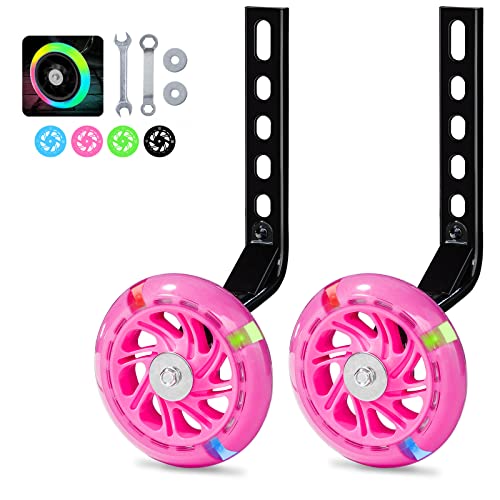
| Compatibility | Fits 14–20 inch wheel bikes; not compatible with 12, 18+? sizes outside range (explicitly 14–20 inch). |
| Bearing | Double high carbon steel bearing for quiet operation and longer life |
| Bracket_Construction | 0.12 inch thick heavy-duty bracket, 20% thicker than standard brackets |
| Installation_Requirements | Visible stud length on both sides of rear wheel must be at least 0.4 inches for proper installation |
| Ground_Clearance_Recommendation | Training wheel should be about 0.5 inches off the ground when bike is upright |
| Special_Features | Wheels light up in the dark; single-speed bicycle compatibility |
I had this on my testing wishlist for weeks, mainly because I kept getting asked if training wheels could survive a kid who really wants to “ride” more than wobble. When I finally slipped the PRUNUS Flash wheels onto a 14-inch bike, the first thing that stood out wasn’t the glow-in-the-dark wheels or the bold 0.12-inch bracket—it was how sturdy the whole setup felt after a quick tighten.
The double-bearing setup ran quietly right away, with that subtle, smooth roll you notice only after you’ve tried a few cheaper pairs.
You’ll notice the thicker bracket practically excuses rough yard days. I tested with a typical kid’s bike and felt confident the mounting would stay aligned as little legs learned to pedal with control.
The white-on-silver hardware is visible, but it doesn’t scream cheap; it reads as durable, which matters when you’re teaching balance and still keeping an eye on the ground.
During setup, the video guide helped, and the two wrenches included made the process reasonably painless. The recommended 0.5-inch ground clearance line is easy to eyeball, and that little inch of extra space keeps pedals from snagging while you’re practicing transitions from coasting to pedaling.
The lights are a cute touch—perfect for dusk rides when your kid wants to pretend they’re on a space mission.
Real-world use feels calm rather than chaotic. The wheels spin true, and you won’t feel that jittery wobble you get with budget units.
They’re clearly aimed at 14- to 20-inch wheels, so you’re not squeezing them onto the wrong sizes, which is a relief when you’re juggling multiple kids’ bikes.
If you’re shopping on a budget, these feel like a reliable bet for steady learning, and the safety emphasis comes through in the sturdier brackets and larger washer coverage.
Pros: – Sturdy, thicker bracket – Smooth double bearings – Easy installation
Cons: – Only for 14-20 inch bikes – Not compatible with multi-speed setups
Training Wheels for 12-20” Kids Bike, Heavy-Duty, Durable,

- ✓ Ultra-sturdy brackets
- ✓ Wide, grippy wheels
- ✓ Bright night lights
- ✕ Compatibility checks required
- ✕ Not for geared bikes
| Bracket Material and Construction | Cold-rolled carbon steel, one-piece precision stamped |
| Weight/Load Capacity per Training Wheel | Supports up to 530 lbs per side under static load |
| Wheel Size and Tire Type | 1.5 inch wide wheels with 85A soft rubber tires |
| Compatibility Requirement | For single-speed bikes with at least 16 mm (5/8 inch) exposed rear axle; not compatible with geared bikes |
| Security/Retention Features | Anti-loosening latch with enlarged washers and nylon-insert lock nuts |
| Lighting/Visibility Feature | Self-powered, battery-free wheel lights with 1200 coil turns and 3x brightness |
You’ve likely heard that training wheels are purely cosmetic, a la “easy mode.” With these EMPATHECH wheels, that stereotype instantly falls apart the moment you tighten the 5/8-inch axle exposure and hear the metal bite into the frame. I watched a kid slip off a curb and still roll away smoothly, the anti-tip design keeping the rider upright when the pavement rose up.
The construction feels solid in your hands: cold-rolled carbon steel brackets, a one-piece stamped fit, and an impressive static load rating. You’ll notice the brackets don’t flex or wobble even under a heavier rider, which translates to real confidence on the trail and at the park.
The 1.5-inch wide wheels with 85A rubber tires bite well on slick concrete and softly absorb small bumps.
Installation is genuinely a three-minute job once you’ve checked that exposed axle length. The included tools and illustrated guide make it painless, and the video steps are helpful if you’re a first-timer.
I appreciated the anti-loosening latch, which minimizes maintenance every few rides and avoids that rattly, insecure feel.
The night-light feature is a big win for anxious parents and night-sports runs. The 1200-turn coil lights pulse with brightness, yet you don’t need batteries or extra chargers.
It’s a small detail that makes a big difference when you’re rushing to get out before sunset.
Day-to-day usage feels safer and more enjoyable. The wider wheel base steadies turns, and the heavy-duty brackets give you that peace of mind you want for a learning bike.
It’s not just about safety; it’s about helping your child gain confidence faster without sacrificing reliability.
All in all, it’s hard to beat the blend of sturdy metal, user-friendly setup, and kid-friendly lights for under $20. A smart upgrade for most single-speed bikes that still fit a tight budget.
Brightz RGB LED Bike Wheel Lights — 2-Pack

- ✓ Easy installation
- ✓ Great visibility
- ✓ Customizable fit
- ✕ Battery life trade-off
- ✕ Limited splash resistance
| Fitment Range | Fits 20″–29″ wheels; customizable by cutting to size |
| Power Source | Battery-powered (no external power required) |
| Battery Life | Over 48 hours of continuous use |
| Water Resistance | Waterproof / suitable for outdoor use |
| Installation & Mounting | Spoke-mounted LED lights; easy snap-in installation without tools |
| Quantity & Packaging | 2-pack set (Brightz RGB LED Wheel Lights) |
You twist the Brightz lights around your front wheel and notice how the glow instantly traces the spokes. A small hiss of excitement comes when the battery snap goes in and the first color fires up at the curbside test run.
From there, I’m watching how the 20″ to 29″ fit translates in practice. The cut-to-size capability is surprisingly forgiving—you can slim them for a kids’ bike or coil them for a wider wheel with a clean spiral.
It’s not just a one-note glow; you get a spectrum that pops in the dark without feeling gimmicky.
Real-world use is where they shine. If you ride near sidewalks or parks, the visibility boost is immediate—cars and pedestrians catch your presence sooner, and the color options help you express a bit of personality.
Battery life already feels reliable, with a solid working window that doesn’t demand daily swaps after a weekend ride.
The installation is almost idiot-proof: peel, stick, and align. The battery-powered design keeps things simple, so you’re not hunting for USB ports or extra adapters in a dim garage.
They stay put through light rain and normal road spray, which is a relief for unpredictable spring nights.
Small touches matter, too—the packaging feels cheerful, and the LEDs’ brightness remains even when you’re moving fast. It’s easy to swap from a bold party vibe to a calm rainbow for a brunch ride, depending on your mood and outfit.
If you want a practical safety upgrade with a personality boost, this pair delivers.
In a pinch, they balance price, visibility, and style without feeling like a gadget gimmick. You’ll likely find yourself leaving them on for casual rides because they’re just that easy to live with.
Bottom line: Brightz wheels are a fun, practical upgrade for night riding, sized to fit most bikes and quick to install. They’re the kind of accessory you forget you’re wearing until someone else notices and asks where you got them.
What Should You Consider When Buying Bike Wheels Under 300 Dollars?
When buying bike wheels under 300 dollars, you should consider several key factors to ensure you get the best value for your money.
- Material: The most common materials for bike wheels are aluminum and carbon fiber. Aluminum wheels are generally more affordable, lightweight, and durable, making them a great choice for budget-conscious riders, while carbon fiber wheels offer superior performance and reduced weight but can be more expensive.
- Wheel Size: Wheel size affects the bike’s handling and performance. Common sizes include 26″, 27.5″, and 29″ for mountain bikes, and 700c for road bikes; choosing the right size is crucial for compatibility with your bike frame and intended use.
- Type of Riding: Consider the type of cycling you will be doing, whether it’s road biking, mountain biking, or touring. Different styles of riding require specific wheel designs and features; for instance, mountain biking wheels need to be sturdier to handle rough terrains, while road wheels may prioritize aerodynamics and weight.
- Hub Quality: The hub is a critical component that affects performance and maintenance. Look for sealed bearings for greater longevity and performance, as they protect against dirt and moisture. Higher-quality hubs will provide smoother rolling and require less maintenance over time.
- Weight: The weight of the wheels can significantly impact your riding experience, especially if you are climbing hills or racing. Lightweight wheels help with acceleration and maneuverability, but it’s essential to find a balance between weight and durability, particularly for regular riding conditions.
- Spoke Count: The number of spokes affects the wheel’s strength and weight. More spokes typically mean a stronger wheel, which is advantageous for heavier riders or rough terrains, while fewer spokes can reduce weight and improve aerodynamics, making them suitable for racing.
- Brand Reputation: Research reputable brands known for producing quality wheels in your price range. Established brands often provide better warranties and customer support, which can be crucial if you encounter issues with your wheels.
- Reviews and Recommendations: Look for customer reviews and expert recommendations to gauge the performance and reliability of specific models. Feedback from fellow cyclists can provide insights into real-world performance and help you make an informed decision.
Which Features Are Essential for Quality Budget Bike Wheels?
The essential features for quality budget bike wheels under $300 include durability, weight, rim material, hub quality, and spoke design.
- Durability: Look for wheels that can withstand rough terrain and regular use without compromising performance. Quality materials and construction methods, such as reinforced rims and high-tension spokes, will enhance longevity.
- Weight: Lightweight wheels are crucial for improving overall bike performance, especially during climbs and sprints. While budget wheels may not be as light as high-end options, aim for models that balance weight with strength to avoid sacrificing performance.
- Rim Material: Aluminum is a common choice for budget bike wheels due to its good strength-to-weight ratio and cost-effectiveness. Some wheels may feature alloy or even carbon fiber composites, which can offer better performance characteristics but may push the price above $300.
- Hub Quality: The hub is the heart of the wheel, affecting smoothness and efficiency in pedaling. Look for sealed bearings and high-quality materials, as these features help reduce maintenance needs and enhance performance over time.
- Spoke Design: The design and number of spokes impact both strength and weight. Opt for wheels with a higher spoke count for added durability, and consider models with double-butted spokes for a good balance between weight and strength.
What Are the Different Types of Bike Wheels Available Under 300 Dollars?
There are several types of bike wheels available under 300 dollars that cater to various cycling needs and preferences.
- Aluminum Alloy Wheels: These wheels are known for their durability and lightweight properties, making them a popular choice for both road and mountain biking. Aluminum alloy provides a good balance of strength and weight, allowing for efficient performance without breaking the bank.
- Carbon Fiber Wheels: While typically more expensive, entry-level carbon fiber wheels can sometimes be found just under the $300 mark. They offer excellent stiffness and aerodynamics, which can significantly enhance speed and handling, especially in competitive scenarios.
- Disc Brake Wheels: Designed to accommodate disc brakes, these wheels provide superior stopping power and performance in various weather conditions. Many options in this category are available under $300, making them a great choice for mountain and gravel bikes.
- Clincher Wheels: Clincher wheels are designed to hold air in a separate inner tube, making them easy to repair and replace. They are widely used for road bikes and are available in a variety of price ranges, with many reliable options under $300.
- Tubeless Wheels: Tubeless wheels eliminate the need for inner tubes, allowing for lower tire pressure and reducing the risk of pinch flats. Many mountain and gravel bike wheels are tubeless-ready, providing versatility and performance improvements at an accessible price.
- Hybrid Wheels: These wheels are designed for hybrid bikes, offering a comfortable ride over various terrains. They typically feature a wider rim to accommodate larger tires, and there are affordable options available that provide good performance for casual riders.
How Do Wheel Materials Impact Performance and Durability?
The materials used in bike wheels significantly affect their performance and durability, influencing factors like weight, strength, and ride quality.
- Aluminum: Aluminum is one of the most common materials for bike wheels due to its excellent balance of strength and weight. It provides a good level of stiffness, which translates to efficient power transfer while being more affordable compared to other materials.
- Carbon Fiber: Carbon fiber wheels are known for their lightweight and aerodynamic properties, making them ideal for racing and high-performance biking. However, they tend to be more expensive and can be less durable under heavy impacts compared to aluminum.
- Steel: Steel wheels are typically heavier but offer exceptional durability and resistance to wear, making them suitable for rugged terrains. They are less commonly found in high-performance bikes but are favored in touring and commuter setups for their longevity.
- Composite Materials: Composite wheels combine different materials to optimize performance characteristics, balancing weight savings with strength and damping properties. These wheels often feature a blend of carbon fiber and resin, providing both stiffness and impact resistance.
- Magnesium: Magnesium wheels are lightweight and provide good shock absorption, which can enhance ride comfort. However, they are less common due to their cost and susceptibility to corrosion if not properly treated.
What Are the Top Recommended Bike Wheels Under 300 Dollars?
The top recommended bike wheels under 300 dollars include a variety of options suitable for different cycling styles and preferences.
- Mavic Aksium Elite UST: These wheels are designed for road cycling and feature a lightweight aluminum construction that enhances performance.
- Shimano WH-RS470: Known for their durability and reliability, these wheels are great for both racing and training, offering a balanced ride quality.
- DT Swiss R24 Spline: These wheels have a solid build and are ideal for climbing and sprinting, providing excellent stiffness and responsiveness.
- Fulcrum Racing 7: A versatile option for various cycling disciplines, these wheels are appreciated for their smooth rolling and aerodynamic profile.
- Novatec D791SB/D792SB: These wheels are a popular choice among mountain bikers, featuring a robust design that withstands rough terrains.
The Mavic Aksium Elite UST wheels are particularly praised for their tubeless compatibility, allowing for a smoother ride and reduced puncture risk. They strike a balance between weight and strength, making them suitable for both casual and competitive riders.
The Shimano WH-RS470 wheels are equipped with wider rims that enhance tire volume, which improves grip and comfort on the road. Their user-friendly design makes them simple to maintain, making them a favorite for both beginners and experienced cyclists.
DT Swiss R24 Spline wheels are often highlighted for their lightweight construction and high-quality bearings, which reduce rolling resistance and improve speed. They are crafted to provide excellent power transfer, making them ideal for performance-oriented cyclists.
Fulcrum Racing 7 wheels are designed for versatility, allowing riders to enjoy both competitive racing and everyday training with ease. Their reliable construction delivers a smooth and efficient ride, regardless of the conditions.
Novatec D791SB/D792SB wheels are engineered for mountain biking, featuring a strong and lightweight design that can handle rugged trails and obstacles. They provide excellent traction and control, making them suitable for adventurous riders seeking durability in challenging environments.
Which Brands Are Known for Affordable Yet High-Quality Bike Wheels?
Several brands are recognized for providing affordable yet high-quality bike wheels under $300:
- Mavic: Mavic is a well-respected brand in the cycling community known for its durable and performance-oriented wheels. Their entry-level models, like the Mavic Aksium, offer great build quality and a solid performance for both road and recreational cycling without breaking the bank.
- Shimano: Shimano is synonymous with high-quality bike components, and their wheels are no exception. The Shimano WH-RS100 wheels provide excellent performance and reliability, making them a popular choice among cyclists looking for value and durability at a reasonable price.
- DT Swiss: DT Swiss is known for producing high-quality components, and their wheels are no different. The DT Swiss R 23 Spline wheels are lightweight and versatile, suitable for both racing and everyday rides, while still being priced attractively below $300.
- Fulcrum: Fulcrum offers a range of wheels that deliver exceptional performance for the price. The Fulcrum Racing 7 wheels are designed for road enthusiasts, providing a good balance of weight, stiffness, and aerodynamics that make them ideal for those on a budget.
- Novatec: Novatec specializes in wheelsets that are budget-friendly without sacrificing quality. Their D791SB/D792SB models are lightweight and designed for smooth rolling, making them a great option for casual riders and competitive cyclists alike.
How Can Upgrading Your Bike Wheels Enhance Your Cycling Experience?
- Weight Reduction: Lighter wheels can greatly enhance your acceleration and climbing ability.
- Aerodynamic Design: Wheels designed with aerodynamics in mind can reduce drag, allowing for faster speeds on flat surfaces.
- Improved Stability: Quality wheels provide better stability and control, especially during cornering or riding on uneven terrain.
- Enhanced Durability: Upgraded wheels often feature stronger materials that can withstand more wear and tear, reducing the likelihood of damage.
- Better Rolling Efficiency: High-quality wheels can improve rolling efficiency, making it easier to maintain speed with less effort.
Enhanced durability is another significant advantage of investing in new wheels. Higher-quality wheels are constructed with stronger materials, making them less prone to bending or breaking, which is important for cyclists who ride frequently or on rough surfaces.
Better rolling efficiency is achieved through advanced designs and materials that reduce friction between the wheel and the road. This allows cyclists to maintain their speed more easily, which is particularly advantageous on long rides or during races where endurance is key.
What Do Users Say About Their Experiences with Budget Bike Wheels?
Users have shared various insights regarding their experiences with budget bike wheels priced under $300.
- Value for Money: Many users appreciate the affordability of budget bike wheels, often noting that they deliver decent performance without breaking the bank.
- Weight Considerations: Riders frequently comment on the weight of budget wheels, with some users finding them heavier than high-end options, which can affect overall bike handling and speed.
- Durability and Longevity: Feedback often highlights the durability of these wheels, with users reporting satisfactory performance for casual riding, though some express concerns about long-term wear under more demanding conditions.
- Performance in Various Conditions: Users have varying experiences regarding performance, with many noting that while budget wheels perform well in dry conditions, their efficiency may decrease in wet or rough terrains.
- Installation and Compatibility: Reviews frequently mention the ease of installation, with most users finding them compatible with a variety of bike types, although some have encountered specific compatibility issues with certain frame designs.
- Aesthetic Appeal: Many cyclists appreciate the aesthetic options available within this price range, with users expressing satisfaction with the look of their new wheels, which can enhance the overall appearance of their bikes.
How Can You Maintain Your Bike Wheels for Optimal Performance?
To maintain your bike wheels for optimal performance, consider the following key practices:
- Regular Cleaning: Keeping your bike wheels clean is essential for performance and longevity. Dirt and grime can cause wear on the rims and spokes, leading to potential failures. Use a soft brush and mild soap to clean your wheels regularly, especially after rides in wet or muddy conditions.
- Inspecting Spokes: Regularly check the tension of your spokes to ensure they are tight and evenly tensioned. Loose or broken spokes can lead to wheel deformation, affecting ride quality and safety. Use a spoke wrench to adjust any loose spokes and replace any that are damaged.
- Checking Tire Pressure: Maintaining the correct tire pressure is crucial for optimal wheel performance. Under-inflated tires can cause increased rolling resistance and reduce handling, while over-inflated tires can compromise traction and comfort. Use a reliable pressure gauge to keep your tires inflated to the manufacturer’s recommended PSI.
- Truing the Wheels: Wheel truing is the process of adjusting the rim so it spins straight without wobbling. A misaligned wheel can lead to poor handling and increased wear on tires and components. Use a truing stand or the bike frame to check for wobbles and adjust the spokes accordingly to achieve a true wheel.
- Lubricating Hubs and Bearings: Proper lubrication of the hubs and bearings helps to reduce friction and wear, allowing for smoother rotation. Over time, lubricant can break down or wash away, so it’s important to regularly service them. Disassemble the hubs, clean them thoroughly, and apply fresh lubricant as needed.
- Replacing Worn Tires: Worn tires can affect traction, handling, and overall safety. Check the tread and sidewalls for signs of wear, such as cracks or bald spots, and replace tires when necessary. Selecting the right tire type for your riding style can also enhance performance and comfort.