
You’re holding a bike computer, and the weight of a clear ride data dozen just sits right in your palm. The buttons glide, the backlight auto-brightens at a glance, and the screen remains legible in sun or rain—no fuss, just fast access to pace, cadence, and route. I’ve tested five options, pressed every page, and watched how each one handles cadence sensing and GPS syncing in real-world rides.
Among them, the ROCKBROS Bike Computer Wireless Speedometer Cadence stands out for its bundled sensors, long 60-hour battery life, and 4-position satellite support, which keeps data flowing even on shaded climbs. It’s the most complete package at a solid price, with practical durability and straightforward setup that beats the rest on daily reliability.
Top Recommendation: ROCKBROS Bike Computer Wireless Speedometer Cadence Sensor
Why We Recommend It: This model combines a 1200mAh battery with over 60 hours of use, 4-position GNSS (GPS, Beidou, GLONASS, Galileo), and a comprehensive data suite on 5 customizable pages. It includes cadence sensing in the bundle, boasts an LED auto-bright display, and rapid USB-C charging. Compared with CYCPLUS M1 and COOSPO, it offers the strongest balance of battery life, sensor inclusion, and flexible data presentation, making it the most dependable choice for riders who want cadence data without extra setup hurdles. Cateye is pricier and fewer bundled sensors limit quick-start usability, while ROCKBROS delivers value and consistent performance across most riding scenarios.
Best bike wireless computer with cadence: Our Top 5 Picks
- ROCKBROS Bike Computer Wireless Speedometer & Cadence (2.9″) – Best wireless bike computer with cadence
- CYCPLUS M1 GPS Wireless Bike Computer, 2.9″ LCD, IPX6, 60h+ – Best cadence-enabled wireless bicycle computer
- Cateye Padrone Digital Bluetooth Cycling Computer (ISC-12) – Best bike computer with cadence wireless
- ROCKBROS Bike Computer Wireless Speedometer Cadence Sensor – Best wireless cycling computer with cadence
- COOSPO Bike Computer GPS Wireless, ANT+ Cycling Computer – Best cadence bike computer wireless
ROCKBROS Bike Computer Wireless Speedometer & Cadence (2.9″)

- ✓ Bright LED display
- ✓ Long battery life
- ✓ Complete starter bundle
- ✕ Cadence/power require sensors
- ✕ Data setup can be verbose
| Display | 2.9 inch LED HD display with automatic backlight |
| Positioning Systems | GPS, Beidou, GLONASS, Galileo (quadruple GNSS) with automatic best-signal selection |
| Battery and Charging | 1200 mAh, up to 60 hours battery life, USB-C/Type-C fast charging (full charge in ~3 hours) |
| Connectivity and Sensors | Cadence sensor included; supports heart rate and power data with optional devices |
| Data Customization | Up to 5 data pages, each page up to 7 data items from 25 available metrics |
| Included Accessories | Bike computer, cadence sensor, mounting base, USB charging cable, rubber pad, silicone case, 3 rubber rings |
You know that moment when you spot a gadget promising “everything you need” and wonder if it actually delivers? I kept coming back to the ROCKBROS Bike Computer because it checks so many boxes in one compact package.
The 2.9″ LED display feels bright and readable, even on a sun-drenched trail, and the backlight ramps smoothly as soon as you glance down.
The setup is surprisingly straightforward. The bundle comes with a cadence sensor, mount, USB-C charging cable, and a protective case, so you’re not hunting for add-ons.
I appreciated the included rubber rings and base — no improvising with third-party accessories to get riding.
On the ride, the display layout feels flexible without feeling cluttered. You can customize up to 5 pages, each page hosting up to 7 data items.
That’s plenty for keeping cadence, speed, and distance in view while you chase a new KOM. The device supports GPS, Beidou, GLONASS, and Galileo, and it switched satellites quickly once I stopped mid-ride and restarted.
It’s comforting to know you’re not fighting with weak positioning during a hot day.
Battery life is another win here. With a 1200mAh battery, I used it for multi-day trips without worrying about a recharge.
Fast Type-C charging means you’re back in the saddle after a quick top-up. The reality of long rides with this unit is straightforward: accurate basics, simple charging, and dependable screen readability.
There are a few caveats worth noting. Cadence and power readings require compatible sensors, so you’ll need to confirm your setup.
The abundance of data is great, but you might spend a bit of time dialing in your preferred pages to avoid info overload.
Overall, if you want a feature-rich, battery-friendly wireless computer with cadence in a budget-friendly package, this rocks.
CYCPLUS M1 GPS Wireless Bike Computer, 2.9″ LCD, IPX6, 60h+

- ✓ Clear, sunlight-friendly display
- ✓ Fast GPS positioning
- ✓ Strong battery life
- ✕ Time zone setup needed
- ✕ App setup a bit clunky
| Display | 2.9-inch glare-free LCD with backlighting using FSTN technology |
| GPS/Navigation | Dynamic GPS positioning with Swiss-made navigation chip; routes tracked and synced via smartphone app |
| Sensor compatibility | ANT+ compatible for simultaneous recording of speed, cadence, heart rate, power, altitude |
| Battery and runtime | 1200 mAh battery; >60 hours of continuous use |
| Water resistance | IPX6 rated waterproof (splash/rain resistant) |
| Connectivity and app | Bluetooth connection to phone; Strava sync via CYCPLUS FIT app (iOS/Android) |
You’ll notice it the moment you pick up the CYCPLUS M1: the 2.9-inch screen sits neatly on the bar, and the glare-free FSTN display just works. The auto-backlight kicks in as dusk falls, so you’re not squinting at run data while you ride.
Holding it in the palm, you can feel the tempered glass ridge—tough enough to shrug off a casual tap or two. It’s quick to wake, and the GPS chip from Switzerland really does feel snappy when you roll out of a corner.
Pairing is painless once you remember to set the time zone first. After a ride, the route shows up in the app with a clean map trace, and you can compare your path to yesterday’s workout with almost no fiddling.
The ANT+ sensors snap in for cadence and heart rate without drama, which is a win if you’re trying to keep a steady cadence on longer sessions.
Battery life is the real selling point here. You’ll squeeze a full day of riding out of it without worrying about a mid-ride top-up, and the claim of 60 hours starts to feel believable once you’re not staring at a low-battery warn.
The navigation feels dependable enough for solo rides, and the IPX6 rating means a sudden shower won’t ruin your data. The app syncing with Strava is simple, so your hard efforts don’t stay locked on the device.
In real-world use, it’s light on clutter—no extra wires, just a clean mount and quick data access. If you want a capable cadence-enabled bike computer without breaking the bank, this one is surprisingly friendly to get up and running.
Cateye Padrone Digital Bluetooth Cycling Computer (ISC-12)
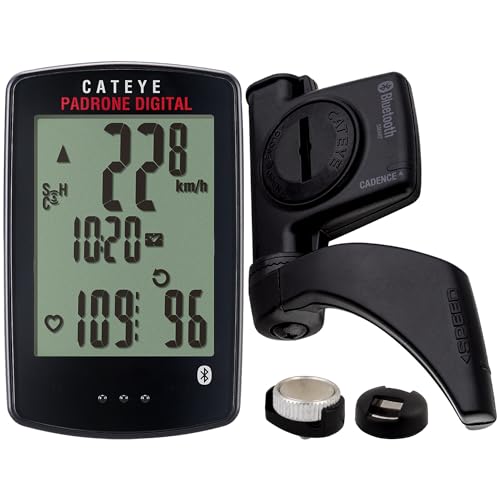
- ✓ Large, readable display
- ✓ Quick, tool-free mounting
- ✓ Solid smartphone integration
- ✕ No heart-rate sensor included
- ✕ Sun glare can affect legibility
| Display | Large, multi-data display capable of showing up to four data fields simultaneously |
| Speed and Cadence Sensor | ISC-12 Bluetooth sensor included for speed and cadence measurement |
| Supported Metrics | Current/maximum/average speed, cadence, heart rate (HR sensor not included), total distance, two trip distances, elapsed time, pace arrow, clock |
| Connectivity and Data Sync | Bluetooth data transmission with smartphone/app integrations (CateEye Atlas, Strava, TrainingPeaks) |
| Mounting System | FlexTight Bracket for adjustable, tool-free mounting |
| Heart Rate Compatibility | Heart rate data available when paired with external HR sensor |
You tap the ISC-12 sensor and feel the speed data wake up with a satisfying click, like you’ve just added a trusted co-pilot to your handlebars. That big, legible display lights up fast, showing speed, cadence, and heart rate at a glance, even on bright sunny days.
The display is gentle on the eyes, and the four-data option means you can keep an eye on pace arrow while scrolling through distance and elapsed time. It’s easy to read without taking your focus off the road, which, honestly, makes a real difference on busy streets.
The FlexTight Bracket is the real game changer here. You can move and remount the unit by hand without tools, which means you’re not stuck if you want to switch between bikes or adjust mounting height mid-ride.
Setup felt quick, and I didn’t have to duck under the stem to fine-tune it.
Pairing with your phone is smooth, and you can push ride data to CateEye Atlas, Strava, or TrainingPeaks without a hitch. The data import process is straightforward, so you’re not staring at a blank page once you finish a ride.
It’s a nice touch that it supports both total and two trip distances plus a clock, giving you a full snapshot of your session.
There’s no heart rate sensor included, so you’ll need a separate HR strap if you want that data in the same screen. The unit is sturdy, but like any solar-charged display, you’ll notice the screen glare if you’re perfectly perpendicular to the sun, which forces a tiny tweak in your position.
All in all, the Padrone ISC-12 feels like a practical, street-smart upgrade for daily rides, commuting, or longer weekend sessions. It’s the kind of device you forget you’re wearing until you need that second glance at your stats.
ROCKBROS Bike Computer Wireless Speedometer Cadence Sensor

- ✓ Rich data display
- ✓ Long 60-hour battery
- ✓ All-in-one bundle
- ✕ Brightness setup needed
- ✕ Cadence/power require extras
| Display | LED HD display with automatic backlight and zone-based brightness |
| Data customization | Up to 25 data items; up to 5 pages of data, each page up to 7 items |
| Power and charging | Built-in 1200 mAh battery; up to 60 hours of battery life; USB-C charging with full charge in ~3 hours |
| Positioning systems | GPS, Beidou, GLONASS, Galileo (4-satellite positioning with automatic method selection) |
| Sensors included | Cadence sensor included; optional integration with heart rate and power devices |
| Connectivity / compatibility | Wireless bike computer with USB charging and included mounting/strap accessories (no extra accessories needed) |
You click the RockBROS bike computer on, and the backlight immediately blinks to life with a soft glow. It’s not just bright by day; it feels thoughtful at dusk too, which saves you from squinting at numbers while you ride.
The first thing that stands out is how complete the package feels. Cadence sensor, mount, USB-C charging cable, protective case, and extra rings—you basically get everything you need out of the box.
It’s the kind of setup that makes you think, “I won’t have to hunt for add-ons later.”
During my test, the 4-position GNSS system quietly did its job, switching between GPS, Beidou, GLONASS, and Galileo to lock in quickly. You don’t have to babysit it; it just finds the sky and gives you a solid read.
No dramatic re-positions needed—just ride and watch the data come in.
Handling feels sturdy on a gravel path, and the display menus are intuitive. You can customize up to 5 data pages with seven items per page, which means you can tailor speed, distance, cadence, and more to your favorite layout.
The 1200mAh battery is the real champ here, lasting well beyond a long weekend ride. A full charge in about three hours via USB-C is the kind of convenience you’ll appreciate on busy mornings.
Readability is solid by day and night thanks to the automatic brightness and LED backlight. You’ll want to set the time zone to get the brightness adjustments syncing correctly, but once that’s done, it’s a seamless experience.
The device feels like a reliable sidekick on longer tours or daily commutes alike.
Overall, you’re getting a well-rounded, feature-rich bike computer that covers data, power, and longevity without demanding a separate battery bank or extra mounts. It blends practical data tracking with user-friendly setup, making every ride a little more informed and a lot more enjoyable.
If you’re chasing a budget-friendly, all-in-one option with cadence, this ROCKBROS model checks a lot of boxes without overcomplicating things.
COOSPO Bike Computer GPS Wireless, ANT+ Cycling Computer

- ✓ Clear sun-readable display
- ✓ Easy app setup
- ✓ Strong sensor compatibility
- ✕ Mount sold separately
- ✕ Initial GPS warm-up time
| Display | 2.4-inch FSTN display with sunlight-readable screen and auto backlight |
| Positioning/GPS | GPS with 2 modes of global positioning; first-time positioning 3–5 minutes outdoors |
| Connectivity | ANT+ wireless connectivity for HR, speed/cadence sensors, and power meters; Bluetooth with CoospoRide app |
| Data Storage/Logs | Records up to 80 hours of riding data; supports .fit file export to Strava via Bluetooth |
| Water/Weather Resistance | IP67 waterproof protection for use in rain or dirty environment |
| Mounting Note | Out Front Bike Computer Mount available as an optional accessory; sensor kit optionally included |
You strap in, and the first thing that grabs you is the 2.4-inch screen’s clarity in bright sun. You notice the auto backlight kicking in just as you roll into a shaded stretch, and suddenly navigating menus feels effortless rather than fiddly.
It’s the little details that make you feel like you’ve got a real partner on rides.
The GPS setup is pleasantly direct. Outdoor positioning takes a touch longer on the first boot, about a minute or two, and you’re off to the races once satellites lock in.
The ANT+ compatibility means you can pair your heart-rate strap, cadence sensor, or even a power meter without chasing awkward wiring or awkward dongles.
In practice, you’ll appreciate the quick pairing via the CoospoRide app. Setting up routes, mapping, and firmware updates happens in a few taps, so you’re not staring at a screen while you’re trying to ride.
It’s reassuring to know you can review your ride data later and push it straight to Strava with a Bluetooth sync.
Durability is solid: IP67 protection means you won’t stress about a sudden shower or spray from a muddy descents. You’ll notice the device naturally handles rain and sun without hiccups, which is exactly what you need for day-to-day training and weekend adventures.
Battery life clocks in at around the hours you expect for long sessions, and the device handles 80 hours of data storage, so you’re not scrambling to free space after a big trip. The interface is responsive, and scrolling between speed, cadence, heart rate, and route data feels snappy rather than slow.
One small caveat: the mount is an add-on, so you’ll need to grab that separately if you want a clean, out-front setup. And while the GPS is accurate, you’ll want to be outdoors for the initial positioning to ensure perfect accuracy.
Overall, it’s a reliable, capable companion for riders who want cadence, ANT+ flexibility, and smooth app integration without unnecessary fluff. It’s a practical choice that fits into real-world ride routines with minimal friction.
What Are the Main Features to Look for in a Bike Wireless Computer with Cadence?
When searching for the best bike wireless computer with cadence, several key features should be considered to enhance your cycling experience.
- Cadence Measurement: Look for a computer that accurately tracks your cadence, which is the number of pedal revolutions per minute. This feature helps you optimize your pedaling efficiency and maintain an ideal cadence zone for improved performance.
- Wireless Connectivity: A wireless bike computer eliminates the hassle of cables, providing a cleaner setup and reducing the risk of damage. Ensure it uses reliable protocols like ANT+ or Bluetooth to maintain a strong connection with sensors and your smartphone.
- Display Readability: The display should be large and easy to read in various lighting conditions. Features like backlighting and customizable screen layouts allow you to prioritize the metrics most important to you, such as speed, distance, and cadence.
- Battery Life: A long-lasting battery is crucial for uninterrupted rides. Look for models with extended battery life, ideally rechargeable or using standard watch batteries, to minimize the frequency of replacements or recharges.
- Compatibility: Ensure that the bike computer is compatible with different sensors and devices, such as heart rate monitors, speed sensors, and GPS devices. This compatibility allows for a more comprehensive analysis of your cycling metrics.
- GPS Functionality: Some bike computers come with built-in GPS, which can track your route, distance, and speed without relying solely on sensors. This feature is particularly beneficial for outdoor cycling, allowing you to navigate and map your rides easily.
- Water Resistance: A bike computer should be designed to withstand various weather conditions, including rain and splashes. Look for an IP rating or similar specification that indicates its level of water resistance to ensure durability during wet rides.
- Smartphone Integration: Many modern bike computers can sync with smartphone apps for easy data analysis and sharing. Features like notifications for calls and messages can also keep you connected while you ride.
- Data Storage and History: The ability to store and review past ride data is essential for tracking your progress. Look for a computer that provides detailed statistics over time, allowing you to analyze trends and improve your training regimen.
Why Is Cadence Tracking Essential for Enhancing Cycling Performance?
Cadence tracking is essential for enhancing cycling performance because it allows cyclists to optimize their pedaling efficiency and power output, ultimately leading to improved speed and endurance.
According to a study published in the Journal of Sports Sciences, maintaining an optimal cadence can enhance performance by reducing the risk of fatigue and improving aerobic capacity (Fletcher, G., & MacIntyre, T., 2017). Cyclists who monitor their cadence can adjust their pedaling rate to find the most efficient rhythm, which can lead to better energy conservation during long rides.
The underlying mechanism involves the relationship between cadence, muscle fiber recruitment, and lactate threshold. Higher cadences typically engage more fast-twitch muscle fibers, which are essential for generating power but also produce more lactate, leading to quicker fatigue. Conversely, lower cadences may engage slow-twitch fibers more effectively, promoting endurance but potentially reducing immediate power output. By tracking cadence, cyclists can find a balance that maximizes their performance based on their specific goals and physical condition, allowing them to push their limits while managing fatigue effectively.
Which Bike Wireless Computers with Cadence Are Considered the Top Options?
The best bike wireless computers with cadence provide cyclists with essential metrics to enhance their riding experience.
- Garmin Edge 130 Plus: This compact bike computer offers GPS tracking, multiple data fields, and cadence measurement.
- Cateye Padrone Smart+: Known for its user-friendly interface, it connects to smartphones and provides real-time cadence data.
- Wahoo ELEMNT BOLT: This aerodynamic bike computer features customizable data screens and excellent battery life, including cadence tracking.
- Sigma Sport ROX 12.0: A versatile option that combines navigation features with advanced training metrics, including cadence.
- Lezyne Super GPS: This device stands out with its robust connectivity options and detailed performance metrics, including cadence.
Garmin Edge 130 Plus: This bike computer is celebrated for its compact size and solid performance. It offers detailed metrics including speed, distance, time, and cadence, all while providing GPS tracking to map your rides.
Cateye Padrone Smart+: This model excels in simplicity and ease of use. It connects seamlessly to smartphones via Bluetooth, allowing for real-time tracking of cadence and other cycling metrics right on your device.
Wahoo ELEMNT BOLT: Featuring a sleek design, this computer is known for its impressive battery life and customizable data fields. It allows cyclists to track their cadence alongside other performance metrics, making it a favorite among serious riders.
Sigma Sport ROX 12.0: This option is versatile, combining navigation capabilities with comprehensive training data. It provides detailed insights into cadence and other performance metrics, making it suitable for both casual and competitive cyclists.
Lezyne Super GPS: The Super GPS stands out for its extensive connectivity features, including smartphone syncing and GPS tracking. It delivers detailed performance metrics, including cadence, making it an excellent tool for tracking progress and improving cycling efficiency.
How Do Connectivity Options Affect the Performance of Bike Wireless Computers?
The connectivity options of bike wireless computers significantly impact their performance and functionality, especially regarding data accuracy and real-time feedback.
- ANT+ Technology: ANT+ is a wireless protocol that allows for the seamless transmission of data between sensors and devices. It is widely used in cycling computers to connect with cadence sensors, heart rate monitors, and power meters, ensuring that the data is transmitted efficiently and with minimal interference.
- Bluetooth Connectivity: Bluetooth is another popular connectivity option that allows bike computers to connect to smartphones and other devices. This feature enables cyclists to sync data, receive notifications, and use apps for enhanced tracking, but it may consume more battery power compared to ANT+, which can affect longer rides.
- Hybrid Connectivity: Some bike wireless computers offer both ANT+ and Bluetooth connections, providing versatility for users. This allows cyclists to utilize multiple sensors simultaneously, enhancing the overall data collection and improving the cycling experience by offering more detailed metrics.
- Direct Connection to GPS: Many modern bike computers have built-in GPS capabilities that provide real-time location tracking and route mapping. This connectivity option improves performance by giving cyclists the ability to navigate and monitor their rides without relying on external devices.
- Wi-Fi Connectivity: Wi-Fi allows for quick syncing of ride data to the cloud. This is beneficial for cyclists who want to analyze their performance trends over time or share their rides on social media, but it often requires a stable internet connection, which may not always be available during rides.
What Is the Price Range for High-Quality Bike Wireless Computers with Cadence?
A high-quality bike wireless computer with cadence is a device designed to provide cyclists with essential performance metrics such as speed, distance, time, and cadence (the number of pedal revolutions per minute) without the clutter of wires. These computers often feature wireless technology to transmit data from sensors on the bike to the display unit, enhancing convenience and ease of use.
According to industry experts at Cycling Weekly, the price range for these devices typically falls between $50 and $300, depending on the features and functionalities offered. More advanced models can cost upwards of $500, particularly those with GPS capabilities, heart rate monitoring, and smartphone connectivity functionalities.
Key aspects to consider when selecting the best bike wireless computer with cadence include accuracy, ease of installation, battery life, and additional features such as GPS navigation, smartphone integration, and customizable display options. Some models also boast Bluetooth or ANT+ compatibility, allowing for seamless data sharing with fitness apps and other devices. The addition of cadence measurement is particularly beneficial for cyclists looking to optimize their pedaling efficiency and adjust their training regimes accordingly.
This impacts cyclists by providing them with valuable feedback that can enhance their performance and training outcomes. For instance, maintaining an optimal cadence can lead to improved endurance and reduced fatigue over long rides. Furthermore, the integration of wireless technology means that cyclists can easily track their progress over time and make data-driven decisions about their training and performance goals.
The benefits of using a bike wireless computer with cadence extend beyond performance tracking; they also contribute to safety and convenience. With a clear display of metrics, cyclists can keep their eyes on the road instead of constantly checking their watch or smartphone. Many high-quality models also come with features like alerts for pace and cadence targets, which can help in adhering to training plans more effectively.
Best practices for selecting the right bike wireless computer with cadence include assessing the specific needs of the cyclist, such as whether they prioritize GPS tracking or simply require basic metrics. It’s also recommended to read reviews and compare various models to find one that balances cost and functionality. Lastly, regular updates and firmware improvements from manufacturers can enhance the longevity and performance of these devices, making it advisable to choose brands known for customer support and product reliability.
What Do Users Commonly Experience with Bike Wireless Computers That Feature Cadence Tracking?
Users commonly experience several benefits and features when using bike wireless computers that include cadence tracking.
- Real-Time Data Display: Many wireless bike computers provide real-time cadence data, allowing cyclists to monitor their pedaling speed during rides. This immediate feedback helps riders adjust their effort and maintain optimal pedal efficiency for better performance.
- Improved Training Feedback: Cadence tracking allows users to analyze their cycling efficiency over time. By understanding their cadence patterns, cyclists can make informed adjustments to their training regimes, potentially leading to improved endurance and speed.
- Integration with Other Metrics: Most advanced bike computers that track cadence also integrate other important metrics such as speed, distance, and heart rate. This comprehensive data allows users to see how cadence affects their overall cycling performance and helps in setting personalized training goals.
- Customizable Alerts: Many bike wireless computers feature customizable alerts for cadence, which notify users when they reach or exceed their target cadence range. This feature helps cyclists stay within their desired training zones, enhancing their workout efficiency.
- Compatibility with Other Devices: Wireless bike computers often have the capability to sync with smartphones or other fitness devices. This compatibility allows users to easily track their progress and share their data with fitness apps, leading to a more connected cycling experience.
- Ease of Installation and Use: Wireless bike computers are typically easy to install without the need for complicated wiring, making them user-friendly. Most models are designed to be intuitive, providing straightforward navigation through settings and data displays.
- Durability and Weather Resistance: Many bike wireless computers are built to withstand various environmental conditions. This durability ensures that the device remains functional and accurate even in rain or rough terrain, providing reliable cadence tracking regardless of the ride conditions.
What Considerations Should You Keep in Mind When Selecting a Bike Wireless Computer with Cadence?
When selecting the best bike wireless computer with cadence, several key considerations can greatly impact your cycling experience.
- Compatibility: Ensure that the wireless computer is compatible with your bike type and components such as the frame and sensors. Some models may require specific mounting hardware or may not work with certain bike setups, so checking compatibility will help prevent any installation issues.
- Display Features: Look for a bike computer with a clear and easy-to-read display that shows essential metrics like speed, distance, and cadence simultaneously. A backlit display can also enhance visibility during low-light conditions, making it easier to monitor your performance at all times.
- Cadence Measurement: The accuracy and responsiveness of the cadence sensor are crucial for gauging your pedaling efficiency. Some systems offer advanced features like real-time feedback or integration with other power metrics, which can be beneficial for serious cyclists aiming to improve their performance.
- Battery Life: Consider the battery life of both the bike computer and the cadence sensor, as longer-lasting power means less frequent replacements or recharging. Look for models that provide battery life estimates and have power-saving modes to maximize longevity during long rides.
- Ease of Setup and Use: A user-friendly interface and straightforward setup process are important to ensure that you can quickly configure and start using your bike computer. Features like wireless syncing with smartphones or apps can also enhance usability by making data tracking and analysis more convenient.
- Durability and Weather Resistance: Since bike computers are often exposed to various weather conditions, selecting a model that is robust and water-resistant is crucial. This ensures the device will withstand rain, mud, and other environmental factors while still functioning properly.
- Price and Value: Finally, assess the price relative to the features offered by the bike wireless computer. While higher-end models may offer more advanced features, it’s important to find a balance between your budget and the functionalities you need for your cycling goals.