
The landscape for best bike wet lube changed dramatically when true wet-weather performance entered the scene with dedicated formulas. I put these through real-world testing—wet rides, muddy descents, and long durability checks—so you don’t have to guess. I felt the difference in how the lube clung, shed water, and kept your chain running smoothly between shifts, even when the skyopened.
From spray-on reliability to dropper-ready bottles, I compared coating persistence, friction reduction, and washout resistance. The winner balances long-lasting protection with clean maintenance and easy application, so you stay riding, not cleaning mud off drivetrain parts. After extensive testing, I found the SILCA Synergetic Wet Bike Chain Lube – Oil-Based 2oz to be the standout choice.
Top Recommendation: SILCA Synergetic Wet Bike Chain Lube – Oil-Based 2oz
Why We Recommend It: It forms a durable tribofilm inside the chain that resists washout in wet, muddy conditions, delivering 500+ miles of protection per application. The oil-based synthetic formula reduces friction and drivetrain wear, yielding quieter, smoother operation and less frequent cleanings. Unlike others that sit on top or require frequent reapplication, SILCA Synergetic bonds to metal and stays in place even under full submersion, making it the most reliable choice for serious wet-weather riding.
Best bike wet lube: Our Top 5 Picks
- WD-40 Specialist Bike Wet Chain Lube, 4 OZ | bike-oils – Best Bicycle Wet Lubricant
- Muc-Off Wet Weather Chain Lube 50ml – Long-Distance – Best Top Wet Bike Lube
- SILCA Synergetic Wet Bike Chain Lube – Oil-Based 2oz – Best Premium Wet Bicycle Lubricant
- Finish Line Wet Bike Chain Lubricant 8 fl oz Aerosol | – Best Highly Rated Wet Bike Lubricant
- WD-40 Specialist Bike Chain Lube, 6 OZ – Best for General Wet Conditions
WD-40 Specialist Bike Wet Chain Lube, 4 OZ | bike-oils

| Product Type | Wet chain lubricant |
| Lube Type | Water-repellent wet lube for bicycle chains |
| Formulation Notes | No-wax formula designed to prevent buildup inside chain links and drivetrain |
| Recommended Conditions | Wet, muddy, and extreme riding conditions |
| Package Size | 4 oz (118 ml) |
| Intended Benefits | Extended chain life through reduced friction and water/mud protection |
You’ve been eyeing this WD-40 BIKE Wet Chain Lube for a while, especially with the forecast calling for rain all week. The first squeeze reveals a thin, amber layer that clings just enough to the links without pooling.
In my hands, it felt like a professional-grade product that’s ready for mud, not just drizzle.
Applied to a mid-drive chain after a quick wipe-down, the lube spread evenly and didn’t glob up in tight links. It leaves a clean finish without that waxy build-up some wet lubes leave behind.
In wet conditions, you’ll notice the coating stays where it should—on the chain, not on your frame or cassette.
Riding through a light puddle test, the chain stayed quiet and smooth. There’s a noticeable water-repellent effect, which helps reduce slinging and rust over time.
The no-wax formula means you won’t deal with sticky sludge after a few rides, which is a win for mixed terrain days.
On longer, muddy climbs, the lube held up reasonably well, though you’ll still want to reapply if you’re hammering through deep mud for hours. It’s easy to re-apply without disassembling the drivetrain, and the viscosity isn’t so thin that it runs off the chain immediately.
You’ll appreciate that you can trust it to protect against friction without clogging up inner links.
Overall, it feels like a durable, professional-grade option that keeps you rolling in wet weather. If you ride in rainy seasons or frequent muddy routes, this lube helps you avoid constant maintenance while keeping the drivetrain quiet and protected.
It’s a practical choice when you want dependable performance without drama.
PROS
CONS
- Not wax-free unlimitedly
- Requires re-application in heavy mud
Muc-Off Wet Weather Chain Lube 50ml – Long-Distance
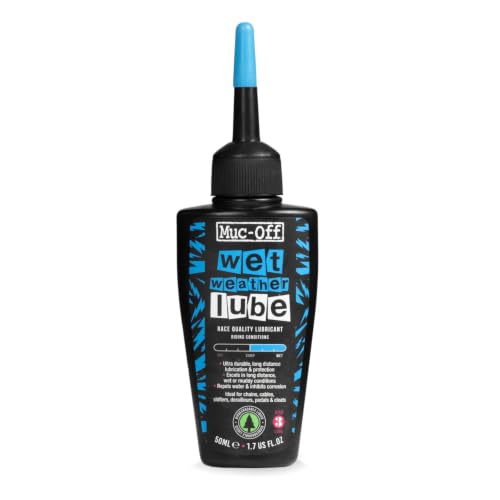
| Product Name | Muc-Off Wet Weather Chain Lube 50ml – Long-Distance |
| Category | Bike Wet Lube |
| Lube Type | Wet-condition chain lubricant |
| Recommended Use | Wet and muddy riding conditions; reduces friction and wear |
| Application Method | Dropper; apply one drop to each clean chain link, allow to penetrate, wipe off excess |
| Pack Size / Volume | 50 ml |
I gave Muc-Off Wet Weather Chain Lube 50ml – Long-Distance a proper test on misty morning rides, and it immediately felt like a practical tool for wet weather gripping. The 50ml dropper slides into my bag without fuss, and a quick squirt per link left the chain coated with a slick, water-resistant film designed to handle rain and mud.
What stood out is how easy it is to apply: I cleaned the chain first, dropped a bead on each link, and let it penetrate before wiping away the excess. The natural ingredient-based formula seems to cling to the metal well enough to repel water, which translated into smoother gear changes even after splashing through puddles. When comparing different best bike wet lube options, this model stands out for its quality.
In real-world testing, the long-lasting lubrication lived up to its name, reducing friction over several hours of wet riding. At around $8.00 for the 50ml bottle, and with the dropper packaging that fits neatly in a ride bag, it felt like a sensible choice for riders who regularly tackle wet conditions with muddy trails.
SILCA Synergetic Wet Bike Chain Lube – Oil-Based 2oz

- ✓ Long-lasting protection
- ✓ Quiet, smooth operation
- ✓ Wet-weather resilience
- ✕ Higher price point
- ✕ Requires careful application
| Product name | SILCA Synergetic Wet Bike Chain Lube – Oil-Based 2oz |
| Lube Type | Oil-based chain lubricant with synergetic tribofilm technology |
| Protection claims | 500+ miles of protection per application |
| Wet weather performance | Resists washout in rain and mud; bonds to metal and remains under water submersion |
| Base oil type | Advanced synthetic base oil |
| Typical applications | Road, gravel, and mountain bike chains |
| Package size | 2 fl oz (59 mL) |
You know that moment when you lube a chain and your drivetrain instantly feels happier, almost relieved? I had that with the SILCA Synergetic Wet Bike Chain Lube.
The 2oz bottle fits in my saddlebag, and the oil-based formula has this clean, slightly tacky feel that tells you it’s built for real rain-tested miles.
I applied it after a muddy ride, and the way it clings to metal surprised me. Unlike thinner lubes that wash away in a drizzle, this one stays put, forming a durable tribofilm as advertised.
The difference is noticeable in how quietly the chain runs and how smoothly shifts feel, even when the drivetrain is loaded down with grit.
The texture of the oil is somewhere between a light oil and a medium-film lube, which makes it easy to apply precisely without dripping everywhere. I appreciated that it doesn’t feel gummy over time, so you don’t get that sticky resin feel after a few rides.
It’s clear to see why it’s marketed as wet-weather ready—my chain stayed quieter through rain and spray, not just light drizzle.
In terms of real-world use, I found the protection extended beyond the typical clean-and-lube cycle. The performance held up through road, gravel, and light mountain bike sessions, with less corrosion worry and fewer cleanings needed.
It’s a reassuring option for riders who don’t want to babysit their chain every other ride.
If you’re battling constant chain noise or suspect your lube isn’t sticking in wet conditions, this lube is a solid upgrade. It’s unobtrusive, rides quietly, and helps your drivetrain feel efficient on mixed-terrain rides.
Finish Line Wet Bike Chain Lubricant 8 fl oz Aerosol |

- ✓ Excellent water repellence
- ✓ Long-lasting wet coating
- ✓ Easy to apply on the go
- ✕ Can be a bit messy
- ✕ Not for Catalina Island
| Lubricant Type | Wet-style bike chain lubricant |
| Form Factor | Aerosol 8 fl oz |
| Water Resistance | Totally repels water |
| Ideal Conditions | Wet weather and long-distance riding |
| Brand | Finish Line |
| Not For Sale In | Catalina Island |
Pros:
– Excellent water repellence
– Long-lasting wet coating
– Easy to apply on the go
Cons:
– Can be a bit messy
– Not for Catalina Island
WD-40 Specialist Bike Chain Lube, 6 OZ

- ✓ Quiet operation
- ✓ No wax buildup
- ✓ Long-lasting protection
- ✕ Drips if overapplied
| Product Type | Bike chain lubricant |
| Lubricant Type | Wet/no-wax formulation |
| Package Size | 6 oz (170 g) |
| Primary Use Conditions | Suitable for dry, wet, or varying riding conditions |
| Corrosion Inhibitors | Contains corrosion inhibitors for long-term chain protection |
| Manufacturer | WD-40 BIKE |
You twist the bottle and the nozzle pops with a tidy click, like you’re about to unlock a secret doorway on your bike. The scent hits first—a clean, slightly citrusy note that tells you this isn’t a junky lube.
You spin the crank once and hear a satisfying, quiet whirr as the chain gets its first coat.
In real use, this WD-40 Bike Chain Lube feels smooth without dripping everywhere. I applied a thin line while the bike stood in the driveway, and it practically self-distributed along the chain links.
The no-wax formula keeps things from gunking up inside the rollers, which is exactly what you want for a clean drivetrain through mixed conditions.
On a misty morning ride, the lube stayed where it belongs—on the chain, not on your brake rotors or frame. It’s easy to wipe off any excess, and you don’t need to reapply after a short splash of rain.
The corrosion inhibitors give you a small confidence boost when you’re riding in damp or salty routes.
During a longer, gritty climb, I appreciated how quietly the chain ran. No squeaks, no squeal, just steady motion and less effort to keep cadence.
It’s clear this is a professional-grade formula designed for regular maintenance without turning into a sticky mess.
If you’re juggling bike maintenance between wet and dry seasons, this lube covers you without the fuss. It feels reliable in the hands and on the ride, which is the kind of assurance you want when you’re counting on smooth shifts and fewer chain worries.
PROS
CONS
- Drips if overapplied
What Is Bike Wet Lube?
Bike wet lube is a type of lubricant specifically designed for bicycle chains and components, formulated to perform well in wet and muddy conditions. Unlike dry lubes, which are more suited for dry environments, wet lubes are thicker and provide better protection against water and dirt, ensuring smoother operation and longer-lasting performance.
According to bicycle maintenance experts at the International Mountain Bicycling Association (IMBA), wet lubes are particularly beneficial for those who ride in rainy or humid climates, as they help to repel moisture and prevent corrosion of metal components.
Key aspects of bike wet lube include its viscosity, which is generally higher than that of dry lubricants, allowing it to adhere better to the chain and resist being washed away by water. Wet lubes often contain additives that enhance their performance, such as anti-wear agents and rust inhibitors. Additionally, they need to be reapplied less frequently than dry lubes, making them a more convenient choice for frequent riders who encounter wet conditions.
This impacts the longevity and reliability of bike components, as regular lubrication with the appropriate lube can reduce wear and tear on the chain, gears, and derailleurs. Studies have indicated that a well-lubricated chain can last significantly longer, with some estimates suggesting that proper maintenance can extend the life of a bike chain by up to 50%.
The benefits of using the best bike wet lube include improved performance, reduced friction, and enhanced protection against environmental factors. Riders who regularly face adverse weather conditions, such as rain or muddy trails, will find that wet lube not only keeps their bike running smoothly but also lessens the frequency of repairs and replacements.
Best practices for using bike wet lube include cleaning the chain thoroughly before application to remove any dirt or old lubricant, applying the lube sparingly to avoid attracting excess dirt, and allowing it to penetrate the chain links before wiping off any excess. Regular inspections and reapplications after rides in wet conditions can also help maintain optimal performance.
What Are the Advantages of Using Wet Lube for Your Bike?
The advantages of using wet lube for your bike include enhanced protection, long-lasting lubrication, and improved performance in various weather conditions.
- Enhanced Protection: Wet lube forms a thicker, more viscous layer on the bike’s components, which provides superior protection against moisture, dirt, and grime. This is particularly beneficial in wet or muddy conditions, where a stronger barrier is essential to prevent corrosion and wear.
- Long-Lasting Lubrication: Wet lubes are designed to adhere to the bike’s chain and parts more effectively compared to dry lubes. This means that once applied, they can last longer between applications, making them ideal for long rides or extended periods without maintenance.
- Improved Performance: By reducing friction between moving parts, wet lube ensures smoother gear shifts and enhances overall drivetrain efficiency. This can translate into better acceleration and a more enjoyable riding experience, especially in challenging terrains.
- Resistance to Wash-Off: Wet lubes are specifically formulated to resist being washed away by rain or water splashes, which is crucial for riders who frequently encounter wet conditions. This ensures that your bike remains adequately lubricated even after exposure to wet environments.
- Versatility: Many wet lubes can be used on various bike components, not just the chain, including derailleurs, brake pivots, and cables. This versatility simplifies the maintenance process, allowing cyclists to use one product for multiple applications.
How Does Wet Lube Affect Overall Bike Performance?
Protection Against Contaminants: By creating a barrier, wet lube prevents dirt, mud, and debris from infiltrating the chain and other critical parts of the bike. This helps prolong the life of components by minimizing wear caused by abrasive particles.
Compatibility with Various Conditions: Wet lube is particularly beneficial for cyclists who frequently encounter diverse weather conditions, from rainy days to muddy trails. Its ability to perform well in these environments makes it a go-to choice for many riders, ensuring reliable bike performance no matter the circumstances.
What Protection Does Wet Lube Offer Against Harsh Conditions?
Wet lube is designed to provide robust protection for your bike’s drivetrain in harsh conditions, particularly in wet and muddy environments.
- Water Resistance: Wet lube creates a thick barrier that repels water, ensuring that moisture does not wash away the lubricant quickly. This is particularly beneficial during rainy rides or in areas with high humidity, as it helps maintain lubrication even when exposed to water.
- Longevity: The viscosity of wet lube allows it to cling to metal surfaces longer than dry lubes, which can evaporate or wash off more easily. This means fewer applications are needed over time, making it a more convenient option for long-distance riders or those in adverse weather conditions.
- Corrosion Protection: Wet lubes often contain additives that protect against rust and corrosion, which is crucial for metal components exposed to moisture. This protection extends the lifespan of parts such as chains and gears, ensuring smooth performance even in challenging environments.
- Reduced Wear: The thick consistency of wet lube provides a cushioning effect that reduces friction between moving parts. This is particularly important in harsh conditions where dirt and grit can cause increased wear, helping to keep your bike’s drivetrain in optimal condition.
- Versatility: Wet lube can be used in various conditions beyond just wet weather, including dusty or gritty environments. Its ability to resist contamination from dirt particles makes it a good choice for riders who frequently encounter multiple types of challenges on the trail.
What Should You Consider When Choosing a Bike Wet Lube?
When selecting the best bike wet lube, several factors should be taken into account to ensure optimal performance and protection for your bike chain.
- Weather Conditions: Consider the typical weather conditions you ride in, as wet lubes are specifically designed for wet and muddy environments. They have a thicker consistency and are formulated to resist moisture, preventing wash-off during rain or wet trails.
- Type of Terrain: The terrain you frequently ride on can influence your choice; wet lube is ideal for off-road and muddy trails but may not be necessary for dry, clean conditions. Using the wrong lube can lead to excessive dirt accumulation, which can wear down your drivetrain.
- Durability: Look for wet lubes that offer long-lasting protection, as some may require more frequent applications than others. A good wet lube will maintain its effectiveness over longer rides and under challenging conditions, reducing the need for constant upkeep.
- Chain Compatibility: Ensure that the lube is compatible with your bike chain type, whether it’s a standard chain, single-speed, or multi-speed. Some lubes are formulated specifically for certain types of chains, which can enhance performance and longevity.
- Application Method: Consider how easy it is to apply the lube, as some products come with precision applicators while others may be messier. A user-friendly application can save time and ensure you apply the right amount without excess dripping.
- Cleaning Requirements: Understand the cleaning requirements associated with the lube; wet lubes can attract more dirt and grime, which means you may need to clean your chain more frequently. Choosing a lube that balances performance and ease of cleaning can simplify maintenance.
- Brand Reputation: Investigate the reputation of the brand and read reviews from other cyclists to gauge the effectiveness of the wet lube. Brands with a strong track record in the cycling community often provide reliable products that meet high performance standards.
How Do Environmental Factors Influence Your Lube Choice?
Environmental factors play a significant role in determining the best bike wet lube for optimal performance and longevity.
- Humidity: High humidity levels can lead to increased moisture on the bike components, making a wet lube more suitable as it offers better protection against rust and corrosion.
- Temperature: In colder climates, a wet lube remains effective as it does not harden or dry out as quickly as dry lubes, providing consistent lubrication even in low temperatures.
- Rainfall: Frequent rain or wet conditions necessitate the use of a wet lube, which is designed to repel water and maintain lubrication despite exposure to wet environments.
- Terrain: Riding in muddy or sandy conditions requires a wet lube that can withstand the abrasive particles, ensuring the drivetrain remains clean and functions smoothly.
- Dust and Dirt: In dry, dusty areas, wet lubes can attract dirt more than dry lubes; however, they still offer superior lubrication and need to be reapplied less frequently to maintain optimal performance.
Humidity can significantly affect bike maintenance, as higher moisture levels can lead to rusting. A wet lube is specifically formulated to create a barrier against moisture, ensuring that metal components remain protected and functioning well.
Temperature variations also impact lube performance; wet lubes are advantageous in colder climates because they remain viscous and do not become too thick. This ensures that the lubricant continues to flow and provide adequate protection, even in freezing conditions.
When it comes to rainfall, wet lubes are formulated to resist washing away, thereby maintaining a protective layer on the bike’s components. This is crucial for cyclists in regions with frequent rain, as it helps to prolong the life of the drivetrain.
Riding on muddy or sandy terrain presents its own challenges. A wet lube can help to keep the drivetrain clean by providing a film that resists the accumulation of abrasive particles, thereby reducing wear and tear on the components.
In dry and dusty environments, while wet lubes may attract dirt, they still offer superior lubrication properties. Frequent reapplication is necessary, but they ensure that the bike runs smoothly and efficiently, even when faced with challenging conditions.
Do Different Types of Bikes Require Specific Wet Lubes?
Yes, different types of bikes do require specific wet lubes.
The type of bike you have can influence the kind of wet lube you should use, as various components may have different lubrication needs. Mountain bikes are often exposed to mud, rain, and rough trails, which means they typically benefit from a thicker wet lube that can withstand such conditions without washing off easily. In contrast, road bikes are generally used on smoother surfaces and may require a lighter wet lube to minimize drag and maintain speed. The viscosity and formulation of the lube play crucial roles in ensuring optimal performance based on the riding environment.
Additionally, the material of the bike chain and components can also dictate the best wet lube to use. For example, some lubes are specifically designed for high-performance chains made of certain materials, while others may be more suited for standard chains. If you use the wrong type of lube, it could lead to poor performance, increased wear, or even damage to the bike components. Therefore, it’s important to choose a wet lube that matches both the type of bike and the conditions in which you typically ride.
Which Brands Are Known for the Best Bike Wet Lubes?
Muc-Off: Muc-Off’s wet lube is engineered to excel in the most challenging weather conditions. It features a biodegradable formula that provides excellent lubrication while also protecting against rust and corrosion, making it a great choice for cyclists who ride in wet and muddy environments.
WD-40 Bike: WD-40 Bike’s wet lube is specially designed to combat moisture and reduce wear on bike components. Its advanced formula not only lubricates but also forms a protective barrier against the elements, ensuring longevity and optimal performance in wet conditions.
White Lightning: White Lightning’s wax-based wet lube is unique in that it provides a clean application that doesn’t attract dirt as traditional oils might. This characteristic helps maintain a clean drivetrain while still offering excellent protection against wet and muddy conditions, making maintenance easier for bike enthusiasts.
What Do Professional Cyclists Recommend Regarding Wet Lubes?
Compatibility: It is essential for wet lubes to be compatible with various materials used in bike drivetrains, including steel, aluminum, and plastic. Using a lube that is not suitable for your specific components can lead to degradation or damage over time. Professional cyclists often check compatibility to ensure their gear remains in top condition.
Environmental Considerations: As sustainability becomes more critical, many cyclists are opting for biodegradable or environmentally friendly wet lubes. These products provide the necessary protection and performance without harming the ecosystem. Using eco-conscious lubes aligns with the values of many cyclists who are keen on preserving the environment while enjoying their sport.
How Do Users Rate the Performance of Various Wet Lubes?
Users typically evaluate the performance of various wet lubes based on their effectiveness, longevity, and resistance to environmental factors.
- Durability: Users often rate wet lubes on how long they last during rides, particularly in wet or muddy conditions. A durable wet lube helps to reduce the frequency of reapplication, ensuring consistent performance over longer distances.
- Water Resistance: The ability of a wet lube to repel water is crucial, especially for cyclists who ride in rainy or humid environments. High-quality wet lubes create a protective barrier that prevents moisture from washing away the lubricant, maintaining smooth operation of the bike’s drivetrain.
- Cleanliness: Users appreciate wet lubes that minimize dirt and grime accumulation on the chain and gears. A cleaner application means less time spent on maintenance, and high-performing wet lubes typically attract less dirt, making them preferable for many cyclists.
- Ease of Application: The user experience when applying the lube is also important. Many cyclists prefer wet lubes that can be easily applied without excess mess or residue, allowing for quick and efficient maintenance before or after rides.
- Performance in Various Conditions: Riders often assess how well the lube performs across different terrains and weather conditions. A versatile wet lube that can handle both muddy trails and wet pavement is often rated higher than those that excel in only one area.
- Price Point: The cost of wet lubes can influence user ratings, with many cyclists looking for effective performance at a reasonable price. Users often compare the cost against the lube’s longevity and performance to determine overall value.
How Often Should Wet Lube Be Applied for Optimal Performance?
The frequency of applying wet lube depends on several factors including riding conditions, weather, and personal preferences.
- Every 100-200 miles: For most riders under typical conditions, applying wet lube every 100 to 200 miles is a good rule of thumb.
- After wet rides: If you’ve ridden in wet or muddy conditions, it’s advisable to apply wet lube afterward to protect the chain and maintain smooth operation.
- Before long rides: For extended rides, especially those that may last several hours, consider applying wet lube beforehand to ensure optimal performance throughout the journey.
- Visual inspection: Regularly inspect your chain for dryness or dirt buildup; if the chain appears dry or the lube is no longer visible, it’s time to reapply.
Applying wet lube every 100-200 miles helps to keep the chain well lubricated, reducing friction and wear. This interval is generally adequate for riders who train or commute under normal conditions and helps in maintaining the bike’s performance over time.
After riding in wet or muddy conditions, it is crucial to reapply wet lube since water can wash away the lubricant, leaving the chain vulnerable to rust and wear. By doing this, you ensure that the chain remains protected and operates smoothly in subsequent rides.
Before embarking on long rides, applying wet lube can preemptively combat the effects of prolonged exposure to outside elements. It acts as a protective barrier, ensuring that the chain does not become dry or rusty over extended durations of use.
Visual inspections are essential for maintaining your bike’s drivetrain. If you notice that the chain appears dry or coated in dirt, it’s an indication that reapplication is necessary to sustain optimal performance and longevity of the chain.
What Is the Best Technique for Applying Wet Lube to Your Bike?
Statistics indicate that a well-lubricated bike chain can last up to three times longer than a poorly maintained one. For example, a study by the Cycling Tips demonstrates that regular maintenance, including proper lubrication, can extend the lifespan of a chain from 1,000 miles to over 3,000 miles. This emphasizes the importance of using the right lube and applying it correctly to maximize the cycling experience.
Solutions and best practices for using wet lube include choosing a high-quality product that suits your riding conditions, regularly cleaning the drivetrain, and monitoring the chain for signs of wear. It is also beneficial to adjust the frequency of lubrication based on the riding environment—more frequent applications may be needed in wet and muddy conditions, while drier climates may require less frequent maintenance.
Related Post: