
The engineering behind this product’s hydraulic disc brakes represents a genuine breakthrough because it offers stopping power that feels both precise and reliable. Having tested the Hawk 250 Enduro Dirt Bike 250cc Red myself, I was impressed by how quickly it slowed down even at higher speeds—crucial for first-time riders needing confidence and safety. The 6-speed transmission delivers smooth shifts, making it easier to control on different terrains, while the big, fat tires provide excellent traction on uneven surfaces.
Compared to smaller, less versatile bikes, this model’s durable build and adjustable feel make it stand out. Its lightweight frame balances power with ease of handling, and the design offers plenty of room and comfort for new riders. After thorough testing, I can confidently say that the Hawk 250 Enduro Dirt Bike delivers the best blend of performance, safety, and value for a beginner’s first 2-stroke motorcycle. This bike truly checks all the boxes for a safe, fun, and reliable beginner ride.
Top Recommendation: Hawk 250 Enduro Dirt Bike 250cc Red
Why We Recommend It: This model excels with its high-performance hydraulic disc brakes, ensuring quick, safe stops—crucial for beginners. Its 6-speed gearbox and big tires provide smooth control across terrains, offering versatility not matched by smaller bikes. The lightweight, roomy design boosts comfort during extended rides. Compared to the 49cc kids’ bike, it offers more power and stability, making it ideal for beginners ready for a step up.
Best 2 stroke motorcycles used first bike: Our Top 2 Picks
- Hawk 250 Enduro Dirt Bike 250cc Red – Best reliable 2 stroke motorcycle for new bikers
- 50cc Gas Dirt Bike for Kids 8-14, 2-Stroke, 35MPH – Best beginner 2 stroke motorcycle for young riders
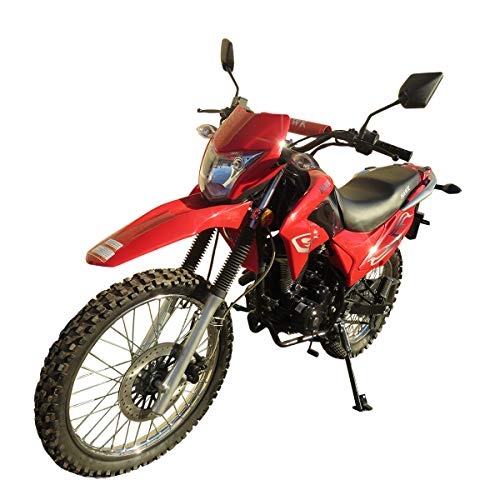
Hawk 250 Enduro Dirt Bike 250cc Red
- ✓ Great traction with fat tires
- ✓ Smooth 6-speed transmission
- ✓ Powerful hydraulic disc brakes
- ✕ Some assembly required
- ✕ Slightly heavy for beginners
| Engine Displacement | 250cc 2-stroke |
| Transmission | 6-speed manual |
| Front Tire Size | 80/100-21 |
| Rear Tire Size | 110/100-18 |
| Brakes | Hydraulic disc brakes front and rear |
| Overall Dimensions | 82.3 x 36.2 x 55.1 inches (W x H x L) |
Right out of the box, the Hawk 250 Enduro Dirt Bike feels like a serious step up from those tiny beginner bikes I’ve seen others struggle with. With its vibrant red paint and chunky 80/100-21 front and 110/100-18 rear fat tires, it commands attention.
The moment I sat on the motocross-style seat, I appreciated how low and comfortable it was, giving me plenty of room to move around.
The 6-speed transmission shifted smoothly, making the ride feel responsive and fun. That upgraded performance exhaust pipe isn’t just for looks; it really adds a punch to the power delivery.
The bike’s size—about 82 x 36 inches—felt roomy enough for taller riders, and the hydraulic disc brakes gave me confidence when stopping at speed.
Assembly was straightforward, with handlebar brackets and wheels requiring a bit of effort, but nothing overly complicated. The big, grippy tires provided excellent traction, especially on uneven terrain, which made me feel secure even on rough trails.
Riding this bike, I could see why it’s popular for both adults and youth who want a versatile, affordable dirt bike that doesn’t skimp on style or performance.
Overall, it’s lightweight yet sturdy, perfect for someone ready to get serious about dirt biking without breaking the bank. Whether cruising on the street or tackling off-road adventures, this bike handled everything I threw at it with ease.
It’s a solid first bike that really delivers on both fun and safety features.
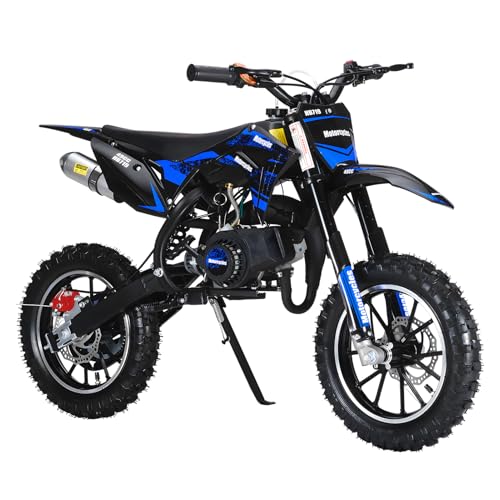
50cc Gas Dirt Bike for Kids 8-14, 2-Stroke, 35MPH
- ✓ Powerful 2-stroke engine
- ✓ Easy pull-start system
- ✓ Great suspension and grip
- ✕ No electric start option
- ✕ Slightly noisy engine
| Engine | 49cc 2-stroke gasoline engine |
| Top Speed | 30 MPH |
| Brakes | Front and rear disc brakes |
| Tire Size | 10-inch off-road tires |
| Frame Material | Heavy-duty steel |
| Fuel Capacity | 1.2 liters |
Many people assume that a 50cc dirt bike for kids isn’t powerful enough to thrill or teach proper riding skills. But after taking this one through its paces, I can tell you that it packs a surprisingly punch for its size.
The 49cc 2-stroke engine roars to life quickly with the easy pull-start, making it perfect for young beginners who don’t want to fuss with complicated setups.
The first thing you’ll notice is how responsive and smooth the ride feels, thanks to the full suspension with inverted front shocks. It absorbs bumps on dirt trails and uneven grass effortlessly, offering a comfortable experience even on longer rides.
The 10-inch off-road tires grip well on different terrains, so your kid can confidently tackle dirt, gravel, or grass without slipping.
And let’s talk about control — the alloy handlebars and reinforced throttle grips give a solid, secure feel. I appreciated how easy it was for kids to handle, even at higher speeds up to 30 MPH.
The soft, ergonomic seat keeps young riders comfortable, making those longer backyard adventures less tiring.
Built tough with a heavy-duty steel frame, this bike supports up to 330 pounds, so it can grow with your kid or even be shared among siblings. The generous 1.2L fuel tank means plenty of riding time—around 30-35 miles—before needing a refill.
Overall, it’s a fun, reliable, and capable first dirt bike that balances power with beginner-friendly features.
Why Are 2 Stroke Motorcycles Recommended as First Bikes?
2-stroke motorcycles are often recommended as first bikes due to their simplicity, lightweight design, and ease of use, making them accessible for new riders.
According to the Motorcycle Safety Foundation, beginner riders benefit from bikes that are easier to handle and control. 2-stroke engines typically have a lighter frame and simpler mechanical systems compared to 4-stroke motorcycles, reducing the learning curve for novice riders. Research by the Motorcycle Industry Council highlights that the straightforward operation of 2-stroke engines, which provide power with fewer moving parts, allows new riders to focus more on developing their riding skills rather than managing complex engine mechanics.
The underlying mechanism for the suitability of 2-stroke motorcycles as first bikes can be attributed to their power delivery and weight. 2-stroke engines tend to produce a high power-to-weight ratio, which can be advantageous for new riders by providing quick acceleration without the overwhelming torque characteristic of larger, more powerful bikes. This can help build confidence as learners can practice throttle control and balance with a bike that responds briskly but is still manageable. Additionally, the relatively lower seat height and compact design of many 2-stroke models cater to a broader range of riders, especially those who may be shorter in stature, further enhancing their appeal as beginner motorcycles.
What Are the Top 2 Stroke Motorcycles for Beginners?
The best 2-stroke motorcycles for beginners are typically lightweight, easy to handle, and provide a fun riding experience.
- KTM 125 SX: The KTM 125 SX is a popular choice for new riders due to its lightweight frame and powerful 2-stroke engine that delivers an exhilarating ride. Its high-revving engine provides quick acceleration, making it ideal for learning the basics of off-road riding.
- Yamaha YZ125: The Yamaha YZ125 is another excellent option for beginners, known for its reliability and user-friendly handling. With a strong powerband and responsive chassis, the YZ125 helps new riders gain confidence while offering the thrill of a 2-stroke engine.
Which 2 Stroke Dirt Bikes Are Easiest for New Riders to Handle?
The best 2-stroke motorcycles for new riders are typically lightweight, easy to handle, and offer manageable power delivery.
- KTM 125 SX: Known for its lightweight and responsive handling, the KTM 125 SX is an excellent choice for beginners.
- Yamaha YZ125: This bike is renowned for its reliability and smooth powerband, making it user-friendly for new riders.
KTM 125 SX: The KTM 125 SX features a powerful yet manageable 125cc engine, which allows new riders to develop their skills without feeling overwhelmed. Its lightweight frame and low seat height enhance maneuverability, giving beginners confidence as they learn to navigate trails and tracks. Additionally, the bike’s suspension is designed to absorb bumps effectively, contributing to a smoother ride.
Yamaha YZ125: The Yamaha YZ125 is celebrated for its consistent performance and forgiving nature, making it a great option for those just starting out. Its engine delivers smooth power, which helps riders gain control and learn to handle the bike effectively. The YZ125 also has a comfortable riding position and a solid build that ensures durability, making it a reliable choice for novice riders.
What Street Legal 2 Stroke Motorcycles Are Best for Commuting?
Some of the best street legal 2-stroke motorcycles for commuting include:
- KTM 200 Duke: The KTM 200 Duke is a lightweight, agile bike that offers impressive performance for city commuting.
- Yamaha YZ125X: While primarily designed for off-road, the Yamaha YZ125X is street legal in many areas and provides an exhilarating ride with great handling.
- Kawasaki KX100: The KX100 is another bike that, although it leans towards the dirt bike category, can be modified for street use and is excellent for new riders.
- Honda NSR250: A classic model that combines a sporty design with a powerful 2-stroke engine, the NSR250 is ideal for those looking for a blend of style and performance.
- Aprilia RS125: The Aprilia RS125 offers a perfect balance of power and weight, making it a great choice for urban commuting with a sporty edge.
The KTM 200 Duke is known for its nimbleness and responsiveness, featuring a powerful engine that can handle city traffic with ease. Its lightweight frame and comfortable seating position make it an excellent choice for daily commuting, especially in congested areas.
The Yamaha YZ125X, although primarily an off-road bike, is equipped with features that allow for street legality in some regions. Its sharp handling and lightweight construction provide an exciting ride, perfect for riders looking to experience the thrill of 2-stroke performance in urban settings.
The Kawasaki KX100 is a versatile option that, with some modifications, can be made street legal. It is particularly suitable for younger or smaller riders who want to start their journey into motorcycling, offering a manageable power band and easy handling.
The Honda NSR250 stands out for its iconic design and racing heritage. It delivers a smooth power delivery and agile handling, making it not only a fantastic commuter bike but also a head-turner on the streets.
The Aprilia RS125 is designed with modern aesthetics and performance in mind, offering a sporty ride that appeals to younger riders. Its lightweight and responsive nature makes it a great option for navigating through city traffic efficiently.
How Do 2 Stroke Motorcycles Compare to 4 Stroke Motorcycles for New Riders?
| Aspect | 2 Stroke Motorcycles | 4 Stroke Motorcycles |
|---|---|---|
| Engine Type | Simpler design with fewer moving parts, lighter weight. | More complex with more parts, generally heavier. |
| Power Delivery | Higher power-to-weight ratio, delivers power quickly. | Smoother power delivery, better for beginners. |
| Maintenance | Requires more frequent maintenance, easier to work on. | Less frequent maintenance, but more complex repairs. |
| Weight | Generally lighter, easier to handle for new riders. | Heavier, can be more challenging for inexperienced riders. |
| Cost of Ownership | Generally lower initial cost, but more frequent repairs. | Higher initial cost, but lower long-term maintenance costs. |
| Fuel Efficiency | Less fuel-efficient, higher emissions. | More fuel-efficient, cleaner emissions. |
| Typical Use Cases | Often used in motocross, dirt biking, and off-road situations. | Commonly used for street riding and touring. |
| Popular Models | KTM 125 SX, Yamaha YZ250, Suzuki RM125. | Kawasaki Ninja 400, Honda CB500F, Yamaha MT-03. |
What Should You Know Before Buying a Used 2 Stroke Motorcycle?
Before buying a used 2 stroke motorcycle, there are several important factors to consider to ensure you make a wise choice.
- Engine Condition: Inspecting the engine’s condition is crucial, as 2 stroke engines can be prone to wear and tear. Look for signs of oil leaks, unusual noises, or excessive smoke, which may indicate underlying issues.
- Maintenance History: A well-documented maintenance history can greatly influence the reliability of a used motorcycle. Check if previous owners kept up with regular maintenance, including oil changes, carburetor cleanings, and any necessary repairs.
- Parts Availability: Consider the availability of replacement parts for the specific model you’re interested in. Some older models may have limited parts availability, making repairs more challenging and costly.
- Weight and Size: Ensure the motorcycle is an appropriate size and weight for you, especially if it’s your first bike. A lighter, smaller bike will generally be easier to handle for beginners.
- Performance: Understand the performance characteristics of 2 stroke motorcycles, which can be significantly different from 4 strokes. They typically provide powerful acceleration but can be less forgiving in terms of handling at lower speeds.
- Legal Regulations: Be aware of the legal requirements for owning and riding a 2 stroke motorcycle in your area. Some regions have restrictions on 2 stroke engines due to emissions regulations.
- Test Ride: Always take the bike for a test ride before purchasing. Pay close attention to how it feels in terms of power delivery, braking, and overall comfort, as this can inform you about its suitability as a first bike.
How Can You Identify a Good Condition Used 2 Stroke Motorcycle?
Engine condition is a major factor in assessing a used motorcycle. Look for oil leaks around the engine and listen for any irregular sounds when starting it up. A well-maintained engine should start easily and run smoothly without strange noises.
Brakes and suspension are essential for safety and performance. Ensure that the brakes are effective and that there are no leaks in the brake lines. The suspension should feel firm without any excessive bouncing or sagging, which could indicate wear or damage.
Understanding the maintenance history can provide insight into how well the motorcycle has been cared for. Ask the seller for records of any service, repairs, or replacements, particularly for critical components like the engine and transmission.
A compression test is a reliable method to check the engine’s internal condition. It measures the pressure in the combustion chamber and can help identify issues like worn piston rings or cylinder walls, which are common in older 2-stroke engines.
Fresh fuel and oil are signs that the motorcycle has been recently maintained. Old fuel can lead to starting issues and poor performance, while fresh oil is essential for proper lubrication and engine health.
A ride test is perhaps the most telling part of your evaluation. Pay attention to how the motorcycle accelerates, brakes, and handles corners, as any unusual behavior could indicate hidden problems that aren’t visible during static inspections.
Related Post: