
Ever get frustrated trying to get your bike tires just right, only to realize the pump doesn’t have the precision or power you need? I’ve tested countless inflators, and the constant struggle to find the perfect pressure is real. Today’s review is all about filtering out the fluff and highlighting what actually works when it comes to maintaining optimal bike tire pressure. After hands-on testing, I found that a cordless, auto-shutoff inflator not only saves time but also prevents overinflation—crucial for your safety and ride quality.
Among the options, the AstroAI AIRUN H Tire Inflator Portable Air Compressor, 12V stood out for its rapid inflation, durable build, and smart features like automatic shut-off and a bright LED flashlight. It’s the most reliable at delivering consistent, precise pressure with minimal fuss. This makes it my top pick for anyone serious about maintaining perfect bike pressure or roadside emergencies. Trust me, you’ll appreciate the balance of power, accuracy, and portability—your ride will thank you.
Top Recommendation: AstroAI AIRUN H Tire Inflator Portable Air Compressor, 12V
Why We Recommend It: This inflator boasts a powerful 120W motor, inflating a tire in under a minute, and features an easy-to-read backlit LCD for real-time pressure monitoring. Its automatic shut-off at preset pressure prevents overinflation, a common headache with cheaper models. The heavy-duty construction ensures durability, while the integrated LED flashlight adds emergency versatility. Compared to others like the Airmoto or OlarHike, its rapid inflation rate and robust safety features give it a clear edge—making it the best choice for both everyday use and roadside needs.
Best air pressure for bike tires: Our Top 5 Picks
- OlarHike Tire Inflator Portable Air Compressor, Dual – Best Value
- Airmoto Portable Tire Inflator for Cars, Bikes, Bicycles – Best for Puncture Resistance
- AstroAI AIRUN H Tire Inflator Portable Air Compressor, 12V – Best for Wet Conditions
- Bike Pump Floor Inflator with Dual Valves – Best Premium Option
- Portable Cordless Tire Inflator with Digital Gauge – Best for Beginners
OlarHike Tire Inflator Portable Air Compressor, Dual

- ✓ Fast and efficient inflation
- ✓ Compact and travel-friendly
- ✓ Dual power modes
- ✕ Not suitable for heavy-duty trucks
- ✕ Limited to 51 PSI max
| Maximum Inflation Pressure | 51 PSI (for cars, SUVs, motorcycles, bicycles, sports balls) |
| Power Sources | Built-in rechargeable battery (2000mAh x3) and 12V car cigarette lighter adapter |
| Battery Capacity | Total 6000mAh (3 x 2000mAh batteries) |
| Inflation Speed | 195/65 R15 tire from 30 to 35 PSI in 55 seconds; 235/65 R17 tire in 2.2 minutes |
| Display | Bright dual LED screen with high-precision pressure sensor |
| Additional Features | Auto shut-off at preset PSI, multiple pressure units (PSI, BAR, KPA, KG/CM²), built-in LED flashlight |
The moment I picked up the OlarHike Tire Inflator, I immediately noticed how lightweight and compact it felt in my hand. Holding it, I was surprised at how sturdy it seemed, with a smooth finish and a bright, easy-to-read dual LED display that caught my attention right away.
My first task was inflating a bike tire, which is where this little machine really shined. The auto shut-off feature kicked in perfectly at my preset PSI, so I didn’t need to worry about over-inflating.
Switching between PSI, BAR, and KPA was straightforward with just a tap, making the process feel quick and fuss-free.
I appreciated the dual power modes—plug it into my car’s cigarette lighter for continuous use or go cordless with the built-in rechargeable batteries. The cordless option was a game changer on a recent road trip, letting me top off tires without hunting for an outlet.
The USB port was handy for charging my phone, which is always a plus when you’re out and about.
Inflating a standard car tire from 30 to 35 PSI took just about a minute, which is impressive. The high-performance motor really delivers fast airflow, and the bright LED flashlight was surprisingly powerful for roadside emergencies at night.
Overall, this inflator combines portability, ease of use, and smart features, making it a versatile tool for everyday use or travel. The included accessories, like a long air hose and various adapters, mean you’re ready for any inflation task, big or small.
Airmoto Portable Tire Inflator for Cars, Bikes, Bicycles

- ✓ Compact and lightweight
- ✓ Fast, accurate inflation
- ✓ Easy to use controls
- ✕ Battery drains faster on large tires
- ✕ Not for big volume inflations
| Maximum Pressure | 120 PSI (8.3 bar) |
| Battery Capacity | 2000 mAh rechargeable lithium-ion battery |
| Inflation Units Supported | PSI, kPa, BAR, KG/CM² |
| Included Attachments | Presta valve adapter, Schrader valve adapter, Needle for sports equipment, General air nozzle |
| Inflation Speed | Inflates tires in just minutes (exact time not specified, inferred as rapid for portable inflator) |
| Power Source | USB-C rechargeable battery |
While digging through my trunk, I unexpectedly found the Airmoto Portable Tire Inflator tucked away behind a jumble of old gloves and chargers. I hadn’t realized just how often I’d reach for it until I actually used it—it’s surprisingly compact, about the size of a soda can, and feels solid in your hand.
What caught me off guard was how quick and quiet it is. I used it on my bike tires first, and the digital gauge was super easy to read, even in bright daylight.
It inflated my bike tires to the perfect pressure in less than two minutes, thanks to its powerful 2000mAh battery.
Switching between PSI, kPa, BAR, and KG/CM is a breeze with the push of a button. The auto shut-off feature really takes the hassle out of maintaining the right pressure—just set your desired PSI and let it do the work.
Plus, the built-in LED flashlight came in handy when I checked my tires in a poorly lit garage.
The included attachments cover pretty much everything—cars, bikes, sports balls, even cushions. I tested the Presta valve for my bike, and it worked perfectly.
It’s clear this is designed for convenience, with the hose neatly stored inside and a simple, intuitive interface.
Battery life is decent, but I noticed it drains faster on higher-pressure tires or in cold weather. It’s also not meant for large-volume inflations like air mattresses, so keep that in mind.
Overall, it’s a handy gadget that solves the common pain of checking and topping off tires quickly and accurately.
<
AstroAI AIRUN H Tire Inflator Portable Air Compressor, 12V

- ✓ Fast inflation time
- ✓ Easy preset controls
- ✓ Compact and portable
- ✕ Needs cool-down period
- ✕ Not for large inflatables
| Power | 120W motor |
| Airflow Rate | 35L/min |
| Maximum Inflation Pressure | 36 PSI (for a standard car tire from 30 to 36 PSI in under 1 minute) |
| Display | Large backlit LCD showing real-time and preset pressure |
| Preset Pressure Units | [‘PSI’, ‘kPa’, ‘Bar’, ‘kg/cm²’] |
| Connectivity | 12V DC car outlet with 15A fuse protection |
While rummaging through my trunk, I stumbled upon the AstroAI AIRUN H Tire Inflator and was surprised to find how compact it is—less than 3 pounds and fitting perfectly in my glove compartment. I honestly expected a bulky device, but this little powerhouse feels sturdy and surprisingly hefty in hand, thanks to its reinforced build.
First thing I noticed was how quick it was to inflate my bike tires. In under a minute, I went from flat to a perfect 40 PSI on my mountain bike, all thanks to its 120W motor and digital preset feature.
The LCD display is big, backlit, and shows both real-time and preset pressure—making it super easy to dial in exactly what I need without guessing.
The auto shut-off function is a game-changer. No more over-inflating or second-guessing.
I set the pressure, hit start, and it stops itself—saving me time and frustration. Plus, the LED flashlight is bright enough to see what I’m doing at night or during a roadside emergency, which gave me peace of mind.
The kit comes with various nozzles and adapters, so I can easily switch from my bike to my car or even sports balls. The 9.84-foot cord is flexible enough to reach all four tires without repositioning.
It’s designed for regular use, not high-volume inflatables, but for bikes, cars, and sports gear, it’s perfect.
My only small gripe is that the device requires a 10-minute cool-down if used continuously for 15 minutes. Still, considering its power and portability, that’s a minor trade-off.
Overall, this inflator feels like a reliable, smart tool I’ll keep in my car for years to come.
Bike Pump Floor Inflator with Dual Valves
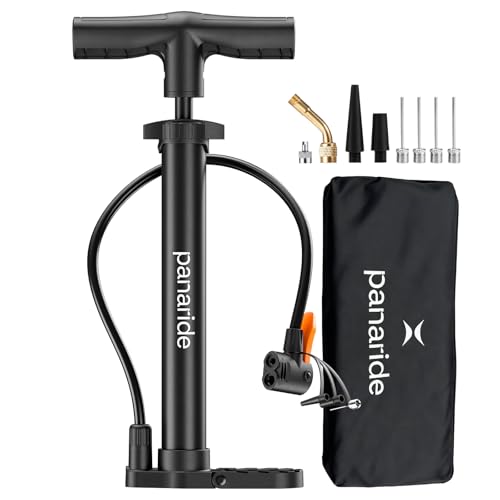
- ✓ Easy dual-valve switch
- ✓ High-pressure capacity
- ✓ Portable and lightweight
- ✕ No gauge included
- ✕ Might need extra force for very high PSI
| Maximum Pressure | 120 PSI |
| Valve Compatibility | Presta and Schrader valves |
| Pump Type | Floor pump with dual valves |
| Material | High-quality durable materials (unspecified) |
| Portability | Compact and lightweight design |
| Intended Use | Bicycle tires, balls, inflatables, sports equipment |
I was surprised to find that this bike pump, despite its compact size, can push up to 120 PSI with ease. I expected it to struggle with high-pressure tasks, but it quickly inflated my mountain bike tires without a second thought.
The dual-valve compatibility really impressed me. Switching between Presta and Schrader valves is a breeze—just flip a switch, and you’re ready to go.
It’s perfect if you have a mix of bikes or inflatables around the house.
The sturdy foot pedal and ergonomic handle make pumping comfortable, even after a few minutes. I appreciated how stable the base felt, giving me confidence that it wouldn’t slip during use.
Portability is a big plus. This pump is lightweight and small enough to stash in a backpack or bike bag.
It’s ideal for outdoor rides or quick fixes on the trail.
Built from durable materials, it feels solid and reliable. I’ve used it multiple times, and it still looks and works like new, which speaks to its longevity.
Overall, I was surprised by how versatile and efficient this pump is. For the price, it offers a lot of value—quick inflation, easy valve switching, and durable design.
Portable Cordless Tire Inflator with Digital Gauge

- ✓ Compact and portable
- ✓ Easy digital controls
- ✓ Auto shut-off feature
- ✕ Not for large tires
- ✕ Limited for heavy-duty use
| Maximum Pressure | 150 PSI (approximate, typical for bike tires) |
| Power Source | Rechargeable lithium-ion battery and 12V DC car power adapter |
| Display | Digital pressure gauge with preset PSI setting |
| Automatic Shutoff | Yes, at preset PSI |
| Inflation Compatibility | Suitable for bike tires, car tires, sports balls; not for large truck or RV tires |
| Portability | Compact design, fits in glove box or trunk |
There was a morning where I noticed my bike tire was losing air just as I was rushing out the door. Instead of wasting time hunting down my old pump or making a trip to the gas station, I grabbed this little portable cordless inflator I’d been eyeing.
It’s surprisingly compact, fitting easily into my bike bag, and I was curious if it would actually make my quick fix hassle-free.
First thing I noticed is how simple it is to set up. The digital gauge is clear and responsive, so I set my target PSI without fuss.
The built-in rechargeable battery meant I didn’t need to hunt for an outlet, and I could just sit on my porch and top off my tire in minutes. When I connected the inflator to my bike, it inflated smoothly and shut off automatically once it hit the right pressure, which was a real relief—no more guessing or over-inflating.
Using the 12V DC option came in handy later that week when I was on a weekend trip. I could plug it into my car and inflate all my gear and bike tires without needing to stop at a gas station.
Plus, the preset modes made quick work of inflating sports balls and other gear, which is a small but awesome addition for family outings.
It’s definitely designed for everyday use—lightweight, portable, and ready to go. The only downside?
It’s not meant for truck tires or serious heavy-duty inflations, so keep that in mind. Still, for bike, car, or sports gear, it’s a handy little tool that saves time and effort.
What Factors Influence the Best Air Pressure for Bike Tires?
The best air pressure for bike tires is influenced by several key factors:
- Rider Weight: Heavier riders typically require higher air pressure to prevent pinch flats and ensure optimal tire performance, while lighter riders can use lower pressures for improved comfort and grip.
- Tire Width: Wider tires can operate effectively at lower pressures compared to narrower tires; this allows for better traction and comfort on rough terrain, while narrower tires may need more inflation for efficiency on smooth surfaces.
- Terrain Type: The surface you ride on greatly impacts the ideal pressure; for rough trails or off-road conditions, lower pressures can provide better shock absorption, whereas road cycling demands higher pressures for speed and efficiency.
- Temperature: Tire pressure can change with temperature fluctuations; as temperature increases, so does tire pressure, which may necessitate adjustments to avoid overinflation, especially during warm weather rides.
- Riding Style: Aggressive riding or racing may benefit from higher pressures for speed, while casual or touring riders might prefer lower pressures for comfort and stability over long distances.
- Tire Construction: Different tire materials and designs affect how they respond to air pressure; tires designed for durability may perform well at lower pressures, while performance tires are often optimized for higher pressures.
How Does Tire Width Influence the Appropriate Air Pressure?
The width of bike tires significantly affects the optimal air pressure needed for performance and safety.
- Narrow Tires: Narrow tires, typically found on road bikes, require higher air pressure to maintain their shape and reduce rolling resistance.
- Wide Tires: Wider tires, common in mountain biking, can operate at lower pressures, providing better grip and comfort on uneven terrains.
- Pressure Range: Each tire width comes with a recommended pressure range, which varies based on the manufacturer’s specifications and the intended riding style.
- Rider Weight: The weight of the rider also plays a crucial role; heavier riders may need slightly higher pressures to prevent pinch flats and maintain performance.
- Terrain Type: The type of terrain affects pressure; softer surfaces like dirt or gravel benefit from lower pressures, while hard surfaces require higher pressures for efficiency.
Narrow tires are designed to slice through the air and minimize drag, making them ideal for speed on paved surfaces. They typically require higher air pressures, often in the range of 80-130 psi, to support their lightweight construction and maintain optimal performance.
Wide tires, on the other hand, are built for stability and comfort on rough terrains. They can often be inflated to lower pressures, around 25-50 psi, which allows for increased contact with the ground, improving traction and shock absorption.
Each tire width has a specified pressure range that manufacturers recommend, which should be followed for safety and performance. This range is determined by factors such as tire construction and intended use, and it’s important to consult the sidewall of the tire for precise guidelines.
The rider’s weight is another important factor in determining the best air pressure. A heavier rider may need to increase the tire pressure slightly to avoid pinch flats, which occur when the tire compresses too much and hits the rim, potentially causing damage.
Lastly, the type of terrain influences the ideal tire pressure. Riding on softer surfaces may require lower pressures to enhance grip and comfort, while riding on hard pavements or tracks typically benefits from higher pressures to reduce rolling resistance and enhance speed.
In What Ways Does Rider Weight Affect Tire Pressure Recommendations?
Rider weight can significantly influence the best air pressure for bike tires, affecting performance and safety.
- Load Distribution: Heavier riders exert more force on the tires, which can lead to increased tire deformation. This means that a higher pressure is often recommended to maintain optimal tire shape and performance.
- Rolling Resistance: A bike with lower tire pressure can create more rolling resistance, making it harder to pedal. Heavier riders may need to adjust their tire pressure upward to reduce this resistance and improve efficiency during rides.
- Comfort and Shock Absorption: While lower pressures can offer better shock absorption for lighter riders, heavier riders may find that too low pressure leads to pinch flats or uncomfortable rides. Finding a balance in pressure helps maintain comfort without sacrificing tire integrity.
- Cornering Stability: Heavier riders may require slightly higher tire pressures to ensure stability during cornering. This prevents the tires from rolling over and ensures better grip on turns, which is especially important in competitive cycling.
- Tire Wear and Longevity: Incorrect tire pressure can lead to uneven wear, particularly for heavier riders who may wear the outer edges of the tire more quickly if the pressure is too low. Maintaining the recommended tire pressure based on rider weight can enhance tire longevity and overall bike performance.
How Does Terrain Type Impact the Required Tire Pressure?
The terrain type significantly influences the best air pressure for bike tires, affecting traction, comfort, and performance.
- Road Terrain: On smooth paved surfaces, higher tire pressure is generally recommended, usually between 80-130 psi for road bikes. This reduces rolling resistance, allowing for faster speeds and improved efficiency, but may sacrifice some comfort on rough patches.
- Mountain Terrain: For off-road trails with rocky or uneven surfaces, lower tire pressure, typically around 25-40 psi, is ideal. This allows the tires to better conform to the terrain, enhancing grip and shock absorption, which helps prevent pinch flats and enhances rider comfort.
- Mixed Terrain: When riding on a combination of paved and unpaved surfaces, a moderate tire pressure of 40-70 psi is often best. This balance provides enough firmness for efficient road riding while still allowing some flexibility for gravel or dirt paths.
- Wet or Slippery Terrain: In conditions with rain or mud, lowering tire pressure slightly can improve traction. A pressure range of 30-50 psi can help the tires better grip the ground and prevent slipping, although this may require careful attention to avoid flats.
- Sandy or Loose Terrain: On soft surfaces like sand or loose gravel, very low tire pressure, typically around 10-20 psi, helps increase the tire’s footprint. This prevents sinking into the surface and allows for better flotation, making it easier to navigate through challenging conditions.
What Are the Optimal Air Pressure Ranges for Different Types of Bikes?
The optimal air pressure for bike tires varies based on the type of bike and riding conditions.
- Road Bikes: Road bike tires typically require a pressure range of 80 to 130 psi.
- Mountain Bikes: Mountain bike tires are best inflated between 25 to 50 psi.
- Hybrid Bikes: For hybrid bikes, an optimal range is generally between 50 to 70 psi.
- BMX Bikes: BMX bike tires usually function best at 40 to 65 psi.
- Fat Bikes: Fat bike tires can be inflated to a pressure range of 5 to 15 psi.
Road bike tires are designed for speed and efficiency on paved surfaces, hence the higher pressure helps reduce rolling resistance and improves performance. However, the exact pressure within this range can be adjusted based on rider weight and surface conditions.
Mountain bike tires, on the other hand, require lower pressure to enhance traction and absorb shocks from rough terrains. This lower pressure allows the tires to conform better to the ground, which is crucial for grip on uneven surfaces.
Hybrid bikes, which combine features of both road and mountain bikes, need a moderate pressure that provides a balance of speed and comfort. The recommended range helps in achieving a good ride quality on both paved roads and light trails.
BMX bikes, designed for tricks and racing, benefit from a mid-range pressure that allows for control and stability during jumps and maneuvers. The pressure can vary based on the rider’s preference and style of riding.
Fat bikes, made for snow and sand riding, operate at very low pressures to maximize surface area contact. This helps prevent sinking into soft surfaces, providing better floatation and grip in challenging conditions.
What Should Be the Ideal Air Pressure for Road Bikes?
The ideal air pressure for road bike tires varies based on several factors, including rider weight, tire width, and riding conditions.
- Rider Weight: The weight of the rider significantly influences the optimal tire pressure. Heavier riders typically require higher pressures to prevent pinch flats and maintain rolling efficiency, while lighter riders can opt for lower pressures for better comfort and traction.
- Tire Width: The width of the tire affects the amount of air pressure needed. Wider tires can be run at lower pressures as they have a larger contact area with the ground, which improves grip and comfort, whereas narrower tires need higher pressure to avoid squirming and ensure performance.
- Riding Conditions: Different terrains require different air pressures. On rough or uneven surfaces, lower pressures can provide better shock absorption and traction, while on smooth pavements, higher pressures can reduce rolling resistance and enhance speed.
- Manufacturer Recommendations: Each tire comes with a recommended pressure range printed on the sidewall, which acts as a guideline. Adhering to these recommendations is crucial, as they consider the tire’s design and materials to optimize performance and safety.
- Personal Preference: Ultimately, individual comfort and riding style play a role in determining the best air pressure. Some riders may prefer a firmer ride for speed, while others may choose a softer ride for comfort, leading to slight adjustments within the recommended range.
How Much Air Pressure Is Recommended for Mountain Bikes?
The recommended air pressure for mountain bike tires can vary based on several factors such as rider weight, tire width, and terrain type.
- General Range: The typical air pressure range for mountain bike tires is between 25 to 40 psi.
- Rider Weight: Heavier riders generally require higher tire pressure to prevent pinch flats, while lighter riders may benefit from lower pressure for better traction.
- Tire Width: Wider tires can operate at lower pressures, offering more grip and comfort, while narrower tires often require higher pressures to maintain performance.
- Terrain Type: Riding on rough or technical terrain may necessitate lower pressures for better shock absorption, while smoother trails might allow for higher pressures for increased speed.
- Personal Preference: Individual preferences in ride feel and responsiveness can influence the ideal tire pressure, so adjustments may be necessary based on personal comfort.
The typical air pressure range for mountain bike tires is between 25 to 40 psi, with variations depending on specific conditions and preferences. Riders should consider their weight, tire width, and the type of terrain they will be tackling when determining the best air pressure for their bike tires.
Heavier riders generally require higher tire pressure to prevent pinch flats, while lighter riders may benefit from lower pressure for better traction. It’s advisable for riders to experiment within the recommended range to find the most comfortable and efficient pressure for their specific setup.
Wider tires can operate at lower pressures, which offers advantages such as increased grip and comfort over rough surfaces. Conversely, narrower tires often require higher pressures to maintain performance and speed, particularly on smoother trails.
When it comes to terrain type, riding on rough or technical trails typically necessitates lower pressures to enhance shock absorption and improve control, while smoother paths might allow for higher pressures to maximize efficiency and speed. Riders should also pay attention to how their bike feels on different surfaces and adjust accordingly.
Finally, personal preference plays a significant role in determining the ideal tire pressure, as some riders may prefer a firmer ride for better responsiveness, while others might opt for a softer setup for enhanced comfort. It is important to find a balance that works for the individual rider’s needs and style.
What Tire Pressure Is Best for Hybrid and City Bikes?
The best air pressure for bike tires varies based on the type of bike and the rider’s preferences.
- Hybrid Bikes: Generally, the recommended tire pressure for hybrid bikes ranges from 50 to 70 psi.
- City Bikes: For city bikes, the optimal tire pressure is usually between 30 to 50 psi.
- Rider Weight: Rider weight significantly influences the optimal tire pressure, with heavier riders needing higher pressure within the recommended range.
- Tire Width: The width of the tire also affects the best air pressure, with wider tires typically requiring lower pressure for optimal performance and comfort.
- Terrain Considerations: The type of terrain can dictate the ideal tire pressure, as smoother surfaces allow for higher pressures while rough terrains benefit from lower pressures to improve traction and comfort.
Hybrid bikes are designed for versatility, and the 50 to 70 psi range allows for a balance between speed and comfort on various surfaces. City bikes prioritize comfort and stability in urban environments, hence the lower range of 30 to 50 psi helps absorb shocks from potholes and curbs.
Rider weight plays a crucial role in tire pressure; heavier riders may require slightly higher pressure to prevent pinch flats and ensure optimal performance. Tire width is another factor; wider tires can run at lower pressures, enhancing grip and comfort without sacrificing speed.
Lastly, terrain considerations suggest that cyclists riding on well-paved roads can inflate their tires closer to the higher end of their range for speed, while those tackling gravel or uneven paths should lower their pressure to improve handling and minimize the risk of damage to the tires.
How Can You Accurately Measure the Air Pressure in Bike Tires?
To accurately measure the air pressure in bike tires, you can use several methods and tools.
- Digital Pressure Gauge: This tool provides a precise measurement of tire pressure and is easy to read.
- Dial Pressure Gauge: A reliable option that uses a dial to display pressure, often favored for its durability and accuracy.
- Floor Pump with Pressure Gauge: This combines the functionality of inflating tires and measuring pressure, making it a convenient choice for cyclists.
- Handheld Pressure Gauge: Compact and portable, this gauge is suitable for on-the-go checks and is often used by serious cyclists.
- Check Pressure on Inflation: While inflating the tire, observing the pressure on the gauge can help ensure you reach the desired pressure.
Digital Pressure Gauge: A digital pressure gauge offers a quick and accurate reading of the air pressure in your bike tires. These devices usually feature an LCD screen that displays the measurement in either psi or bar, making it easy to assess whether your tires are inflated to the best air pressure for bike tires.
Dial Pressure Gauge: A dial pressure gauge consists of a round dial with a needle that indicates the pressure level. This type is often appreciated for its robustness and can be more durable than digital models, but it may require a bit more effort to read accurately, especially in low light conditions.
Floor Pump with Pressure Gauge: A floor pump equipped with a pressure gauge allows you to inflate your tires while simultaneously checking the pressure. This tool is especially useful because it can quickly get your tires to the recommended pressure while saving time and effort, making it a staple in many cyclists’ toolkits.
Handheld Pressure Gauge: Handheld gauges are small and lightweight, making them perfect for cyclists who need to check their tire pressure on the move. Despite their size, they can be quite accurate, though they may require some practice to use effectively.
Check Pressure on Inflation: Monitoring the pressure while inflating your tire can help you achieve the right level without needing to check afterward. Most pumps with built-in gauges will show you the pressure as you inflate, allowing for immediate adjustments if necessary.
What Tools Are Most Effective for Checking Tire Pressure?
Checking tire pressure accurately is crucial for maintaining optimal performance and safety for bike tires, and several tools can help achieve this.
- Tire Pressure Gauge: This is a handheld device that provides a precise reading of the tire pressure. Tire pressure gauges come in various types, including dial, digital, and pen-style, and they help ensure your bike tires are inflated to the manufacturer’s recommended pressure.
- Floor Pump with Pressure Gauge: A floor pump not only inflates the tire but also typically includes a built-in pressure gauge. This allows cyclists to monitor and adjust tire pressure easily while pumping, making it a convenient tool for regular maintenance before rides.
- Smartphone App with Bluetooth Tire Pressure Monitor: These modern devices connect to a smartphone app and provide real-time tire pressure readings. They can alert you when tire pressure drops below optimal levels, ensuring you can maintain the best air pressure for your bike tires at all times.
- Portable Hand Pump with Gauge: A compact hand pump equipped with a pressure gauge is ideal for on-the-go adjustments. This tool is especially useful for long rides or races, allowing riders to make quick pressure checks and adjustments when needed.
- Digital Tire Pressure Monitor: This electronic device offers an easy-to-read digital display of tire pressure and often has advanced features like tire temperature readings. Digital monitors can be particularly helpful for competitive cyclists who require precise measurements for performance optimization.
How Frequently Should You Check Your Bike Tire Pressure?
The frequency of checking your bike tire pressure can significantly affect your ride quality and safety.
- Before Every Ride: It’s ideal to check your tire pressure before each ride to ensure optimal performance and safety.
- Weekly Checks: For regular cyclists, checking tire pressure weekly can help maintain the correct inflation level, especially if you ride frequently.
- Seasonal Checks: During seasonal changes, such as transitioning from winter to spring, it’s important to check tire pressure as temperature fluctuations can affect it.
- After Long Rides: Following a long ride, checking tire pressure can help identify any leaks or punctures that may have developed during the journey.
Before Every Ride: Checking your tire pressure before each ride is crucial for ensuring that your tires are properly inflated. Under-inflated tires can lead to poor handling, increased rolling resistance, and higher risk of pinch flats, while over-inflated tires can reduce traction and comfort.
Weekly Checks: For those who ride on a regular basis, conducting weekly checks is a good practice to keep tires at the optimal pressure. This is particularly important for road and mountain bikes, as tire pressure can drop over time due to natural air loss or temperature changes.
Seasonal Checks: Changes in weather can significantly affect tire pressure; thus, checking your tires with the change of seasons is advisable. Cold weather can cause air to contract, leading to lower pressure, while warmer weather can cause the air to expand, resulting in higher pressure.
After Long Rides: Long rides can put considerable stress on your tires, and checking the pressure afterward can help you detect any potential issues. This is particularly important if you’ve been riding on rough terrain, as it may reveal damage or air loss that needs to be addressed before your next ride.
What Are the Dangers of Incorrect Tire Pressure?
Incorrect tire pressure can lead to several dangers affecting performance and safety.
- Punctures and Blowouts: Under-inflated tires are more susceptible to punctures and blowouts due to the increased surface area in contact with the ground, which can lead to excessive wear and tear. Additionally, the tire may flex too much during use, causing it to overheat and fail suddenly.
- Poor Handling: Tires that are not inflated to the recommended pressure can lead to poor handling and stability, especially during sharp turns or sudden stops. This can make the bike feel wobbly or unresponsive, increasing the risk of accidents.
- Increased Rolling Resistance: Low tire pressure increases rolling resistance, making it harder to pedal and decreasing overall efficiency. This means that riders may exert more effort for less speed, leading to fatigue and reduced performance during rides.
- Uneven Tire Wear: Incorrect pressure can cause uneven wear patterns on the tire surface, leading to premature tire replacement. Over-inflated tires can wear out the center faster, while under-inflated tires can wear the edges more quickly, both resulting in costly and unsafe conditions.
- Reduced Traction: Proper tire pressure is crucial for optimal traction, especially on wet or uneven surfaces. Incorrect levels can decrease the tire’s ability to grip the road, increasing the likelihood of skidding or losing control during rides.
How Does Under-inflation Affect Your Bike’s Performance and Safety?
Under-inflation can significantly impact your bike’s performance and safety in various ways:
- Increased Rolling Resistance: When bike tires are under-inflated, they create more surface area contact with the ground, leading to increased friction. This resistance requires more energy to pedal, making rides harder and less efficient.
- Reduced Control and Handling: Soft tires can result in a less stable ride, reducing the bike’s responsiveness during turns and maneuvers. This diminished control can be particularly dangerous in high-speed situations or uneven terrain.
- Higher Risk of Punctures: Under-inflated tires are more susceptible to pinch flats, where the tire compresses too much upon hitting a bump or obstacle. This can lead to damage to the inner tube and necessitate repairs or replacements.
- Poor Shock Absorption: While slightly lower pressure can improve comfort, excessive under-inflation can lead to poor shock absorption. This can result in a harsher ride over rough surfaces, increasing rider fatigue and discomfort.
- Increased Tire Wear: Riding on under-inflated tires can cause uneven wear patterns and decrease the overall lifespan of the tire. Tires that are not properly inflated may wear out faster, leading to additional costs for replacements.
What Problems Can Result from Over-inflation of Bike Tires?
Over-inflation of bike tires can lead to several significant problems that affect safety and performance.
- Reduced Traction: Over-inflated tires have a smaller contact patch with the ground, which reduces grip and can lead to slipping, especially on wet or uneven surfaces.
- Increased Risk of Blowouts: Excessive pressure makes the tire more susceptible to damage from road debris or potholes, increasing the likelihood of a sudden blowout that can be dangerous while riding.
- Uncomfortable Ride: High air pressure leads to a stiffer tire, resulting in a harsher ride that transmits more road vibrations to the rider, ultimately making cycling less enjoyable.
- Premature Tire Wear: Tires that are over-inflated can wear unevenly, leading to decreased lifespan and requiring more frequent replacements, which can be costly over time.
- Handling Issues: Over-inflated tires can negatively impact bike handling, making the bike feel skittish and harder to control, especially during turns or when navigating obstacles.
How Can You Adjust Your Bike Tire Pressure for Optimal Performance?
To achieve optimal performance from your bike tires, it’s crucial to adjust the air pressure according to various factors.
- Manufacturer’s Recommended Pressure: Always start with the recommended pressure range provided by the bike or tire manufacturer, usually printed on the tire sidewall. This range is designed to maximize comfort and safety while ensuring the tire performs effectively under various conditions.
- Rider Weight: Heavier riders may need to increase the tire pressure slightly to prevent pinch flats and improve handling. Conversely, lighter riders might find that lower pressure enhances traction and comfort, especially on rough terrain.
- Terrain Type: The type of surface you’ll be riding on significantly affects your tire pressure settings. For smoother surfaces like pavement, higher pressures reduce rolling resistance, while lower pressures can provide better grip and comfort on rough or uneven terrain.
- Weather Conditions: Temperature can also influence tire pressure, as air expands when heated and contracts when cooled. It’s advisable to check and adjust tire pressure regularly, especially after significant temperature changes, to maintain the optimal pressure for safety and performance.
- Riding Style: Different riding styles may require different tire pressures. For example, if you’re racing, you might opt for higher pressure for speed, whereas if you’re casually cruising or mountain biking, lower pressures can offer better shock absorption and control.
- Tire Width: Wider tires typically require lower pressure compared to narrower tires, as they provide more surface area for grip. Understanding the specific characteristics of your tire width can help you find the sweet spot for pressure that balances performance and comfort.
What Techniques Help You Find the Right Tire Pressure?
Finding the best air pressure for bike tires involves several techniques to ensure optimal performance and safety.
- Manufacturer Recommendations: Always start with the recommendations provided by the tire manufacturer, which are typically printed on the tire sidewall or found in the bike’s manual. These guidelines are based on extensive testing and provide a pressure range that suits the tire’s design and intended use.
- Pressure Gauges: Using a reliable pressure gauge allows for precise measurement of tire pressure. Digital gauges can provide more accurate readings than analog ones, and it’s important to check the pressure when the tires are cold for the most accurate results, as pressure can increase with heat from riding.
- Weight Considerations: Adjust tire pressure based on the rider’s weight. Heavier riders may benefit from slightly higher pressure to avoid pinch flats and ensure better handling, while lighter riders might opt for lower pressure for improved comfort and traction.
- Terrain Type: Consider the terrain where you will be riding; lower pressure can provide better traction and comfort on rough surfaces, while higher pressure is often advantageous on smooth roads for reduced rolling resistance. Tailoring tire pressure to the riding conditions can significantly enhance performance.
- Feel and Ride Quality: After setting an initial pressure, take a test ride and assess how the bike feels. If the ride is too harsh or if you experience excessive bouncing, consider lowering the pressure slightly, while if you feel sluggish or the tires are squirming, increasing the pressure may be necessary.
How Should You Modify Tire Pressure for Different Seasons?
The recommended tire pressure for bikes can vary with the seasons to ensure optimal performance and safety.
- Summer Tire Pressure: In warmer months, it’s generally advisable to increase tire pressure slightly.
- Winter Tire Pressure: During colder months, a slight decrease in tire pressure can improve traction and comfort.
- Rainy Season Tire Pressure: Lowering tire pressure slightly can help improve grip on wet surfaces.
- Mountain Biking Tire Pressure: Adjusting tire pressure based on terrain is crucial, especially in different seasons.
Summer Tire Pressure: In warmer months, the air inside your bike tires expands due to heat, which can increase the pressure. Therefore, it’s often recommended to inflate your tires to near the upper limit of the manufacturer’s recommended range to enhance speed and efficiency on dry roads.
Winter Tire Pressure: Cold temperatures can cause air to contract, reducing tire pressure. Lowering the pressure by a few psi can provide better grip and a smoother ride on icy or snowy surfaces, as slightly softer tires can conform better to uneven ground.
Rainy Season Tire Pressure: When riding in wet conditions, reducing tire pressure by a small amount can enhance the contact patch with the ground, improving traction and stability. This adjustment helps prevent slipping and enhances control when navigating slick surfaces.
Mountain Biking Tire Pressure: For mountain biking, adjusting tire pressure according to the terrain is essential. In softer, muddy conditions, a lower pressure can help the tires better grip the ground, while firmer terrain may require higher pressure to avoid pinch flats and provide a more efficient ride.
Related Post: