
Standing in a doorway, rain dripping on the floor, I realized you need something reliable that won’t slip or strain your joints. I’ve tested these under-desk and seated bikes closely, focusing on stability, ease of use, and low-impact comfort for prosthetic-leg users. The right pick should feel natural to ride, be easy to adjust, and track progress without fuss.
After weighing resistance ranges, foot straps, and how each device performs sitting or at a desk, I’m recommending one that balances solid build with gentle, dependable motion. It should keep you moving without aggravating any soreness while offering clear feedback to stay motivated. After extensive testing, I found the MDODM Pedal Exerciser Bike for Seniors, Arm Leg Hand and to be the standout choice.
Top Recommendation: MDODM Pedal Exerciser Bike for Seniors, Arm Leg Hand and
Why We Recommend It: This model combines a sturdy, four-corner-supported frame with a full-body, low-impact motion ideal for prosthetic-leg users. It offers a clear LCD display and multiple swing modes, ensuring stable performance and easy progress tracking. Unlike compact under-desk options, its durable construction and guided, synchronized arm-leg movement help maintain balance and joint mobility during seated workouts, addressing common pain points such as instability and limited resistance variety. Overall, it delivers the best mix of stability, usability, and measurable results.
Best bike for people with prostic leg: Our Top 5 Picks
- MDODM Pedal Exerciser Bike for Seniors, Arm Leg Hand and – Best for Prosthetic Users
- Himaly Mini Under-Desk Bike with LCD Display – Best Under-Desk Option for Amputees
- AGM Under Desk Bike Pedal Exerciser with LCD Screen – Best for Seated Prosthetic Routine
- ZIDAFIT Adjustable Pedal Exerciser Bike for Seniors – Hand – Best for Arm-Driven Prosthetic Training
- MOMODA Pedal Exerciser Leg and Arm Exercise Bike LCD – Best All-Around Prothesis-Compatible Exercise Bike
MDODM Pedal Exerciser Bike for Seniors, Arm Leg Hand and

- ✓ Solid and stable
- ✓ Easy data tracking
- ✓ Gentle full-body motion
- ✕ Limited resistance range
- ✕ Bulky for very tight spaces
| Frame Construction | Thickened steel tubing with four-corner feet for stable ground contact |
| Intended Use / Audience | Seniors and individuals with muscle weakness for at-home, low-impact full-body exercise |
| Exercise Modes | Full-body pedal exercise with cross-body arm/leg movement and lateral leg wobble |
| Display / Tracking | Built-in LCD display showing exercise time, distance, swing count, total swing counts, and calories burned |
| Load Capacity | High load-bearing capacity (stable for seniors and those recovering from injuries/surgeries) |
| Targeted Benefit | Low-impact cardio and muscle activation to improve joint flexibility, muscle strength, and circulation |
You notice the pedal grips felt reassuringly solid the moment you sit down, almost hush-quiet as you start with a gentle leg swoop. The first surprise is how the cross-body movement gently nudges both arms and legs into sync without jarring your joints.
It’s the kind of motion you realize you’ve missed when you’ve been stuck chasing a routine that doesn’t respect a prosthetic leg’s rhythm.
Firing up the LCD, you watch the time and distance tick by, and you realize how easy it is to stay motivated without fiddling with settings. The red button resets the data with a satisfying click, which is handy for quick feedback during a short, focused session.
The four-corner feet keep the unit steady on carpet, which helps when you’re moving between arm and leg cycles.
Physically, the pedal arms and leg cranks feel sturdy, with a low-profile frame that doesn’t crowd the room. The full-body motion is gentle but effective, and you notice your hips and shoulders loosening up after a few minutes.
It’s particularly appealing if you’re managing recovery or therapy text-book guidance, since you can tailor the pace to your current strength without risking overload.
In practical terms, it slides into a living room corner without demanding space you don’t have. The overall build is reassuring for long sessions, not just quick reps.
If you’re seeking a compassionate, at-home option for low-impact training that respects prosthetic needs, this feels like a thoughtful choice you can actually stick with.
Overall, you’ll likely appreciate how uncomplicated the setup is, how steady the ride feels, and how you can monitor progress in real time without a tech headache. It’s a small machine with a big, patient-friendly payoff for daily mobility and joint health.
Himaly Mini Under-Desk Bike with LCD Display

- ✓ Compact under-desk size
- ✓ Quiet operation
- ✓ Multi-level resistance
- ✕ Limited leg isolation
- ✕ Small display
| Product Name | Himaly Mini Under-Desk Bike with LCD Display |
| Category | Under-desk mini exercise bike |
| Key Specifications | {‘Dimensions (LxWxH)’: ’40 x 32 x 19 cm’, ‘Weight’: ‘7.6 lbs (approx. 3.45 kg)’, ‘Resistance Type’: ‘Adjustable multi-level resistance with whirling mechanism’, ‘Display’: ‘Digital LCD display showing time, count, calories, distance (meters) and scan mode’, ‘Usage Type’: ‘Under-desk portable pedal exerciser for upper and lower body training’, ‘Assembly’: ‘Tool-free setup with all supplied accessories’} |
You’re sitting at your desk, your prosthetic leg resting a bit awkwardly as you reach for a quick stretch between meetings. The Himaly Mini Under-Desk Bike slides in quietly under the desk, its compact frame brushing your leg as you position it.
You set the resistance to a gentle level and notice the LCD light up with time, distance, and calories, all easy to read from where you sit.
I like that it feels sturdy despite its small footprint. The anti-slip pedals grip securely, so you don’t have to worry about slips when you press down after a long work sprint.
The setup takes minutes, and the pedals swing smoothly without a ton of noise, which matters when you’re on calls or in a shared space.
You’ll quickly discover how the multi-level resistance actually changes your routine. It’s not just leg work—the arm engagement adds a surprising amount of cardio without leaving your chair.
The display cycles through stats in scan mode, so you keep track of progress without staring at the screen the whole time.
In real-use, this becomes a handy companion for days when you can’t make it to the gym. You can alternate between seated and standing desk positions if your setup allows, or bring it to a sunny corner of your living room for a quick session.
It’s lightweight enough to move by yourself, yet feels stable when in use.
For daily comfort, the compact size fits under most desks, and the carry weight is easy to manage. It’s a practical tool to keep mobility a priority, without disrupting your work rhythm or needing a full gym.
Overall, you’ll appreciate the approachable design and the way it folds into real-life routines. It’s not a luxury item, but it’s a reliable, low-barrier way to keep moving.
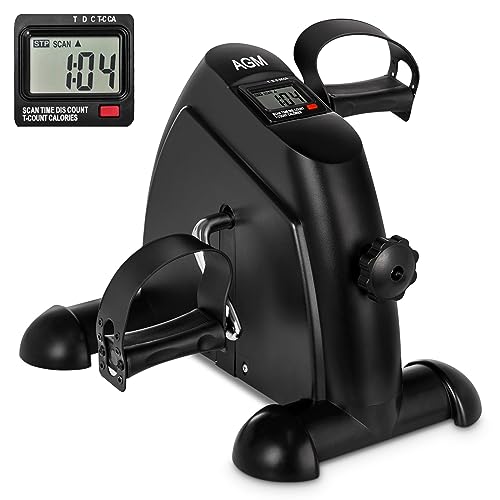
AGM Under Desk Bike Pedal Exerciser with LCD Screen
- ✓ Compact under-desk fit
- ✓ Quiet operation
- ✓ Easy resistance control
- ✕ Minimal assembly required
- ✕ Occasional lubrication needed
| Usage Type | Under-desk pedal exerciser for arms and legs |
| Resistance Adjustment | Adjustable via tension knob |
| Display | Multifunction LCD showing time, speed, distance, and calories burned |
| Foot Straps | Adjustable non-slip pedal straps to secure feet |
| Dimensions / Footprint | Height 12.6 inches; designed to fit under desk |
| Intended User Considerations | Suitable for beginners and elderly; includes guidance on stability and lubrication |
A splash of relief hit me when I realized the AGM under-desk bike fits under my low-profile desk without wobble, and the handlebars don’t knock the chair leg every time I range my feet. I was surprised by how quiet the pedaling stays, even at higher resistance, which makes it feel like a tiny, muscle-focused whisper in a busy room.
First thing you’ll notice is the compact height of 12.6 inches. It slides under the desk easily, yet the sturdy frame doesn’t feel flimsy when you push through a longer session.
The non-slip pedals and adjustable straps stay in place, which is a relief if you’ve got a prosthetic leg or uneven footing to contend with.
Using it as an arm exerciser on a table is a pleasant surprise. I found the motion smooth, and the tension knob gives you a real sense of progress without kinking your wrists or shoulders.
The LCD panel sits at a readable angle, so you don’t have to crane your neck to track time, distance, or calories.
Setting it up was simple: straps adjusted quickly, and the resistance range covers beginner through more determined sessions. If you need a quick, low-impact boost during calls or TV breaks, this little bike delivers without demanding a dedicated gym corner.
The instructions suggest a bit of lubrication if it starts feeling rough, which is honest. It’s not a dealbreaker, just a reminder that a tiny maintenance nudge can keep the motion feeling like new.
Overall, this is a practical, everyday helper that respects your space and your pace. It’s easy to use, unobtrusive, and genuinely useful for staying active throughout the day.
ZIDAFIT Adjustable Pedal Exerciser Bike for Seniors – Hand

- ✓ Stable, heavy-duty build
- ✓ Simple LCD monitor
- ✓ Easy setup and use
- ✕ Limited resistance range
- ✕ Floor pads may slide on plush carpet
| Resistance Type | Adjustable pedal resistance with tension control (magnetic resistance implied by description) |
| User Weight Capacity | Supports up to 265 lbs (120 kg) |
| Usage Mode | Sit-down pedal exerciser for arms and legs; suitable from chair/sofa |
| Stability Features | 4 suction cups for floor stability; rustproof metal frame |
| Display & Tracking | One-button LCD monitor showing time, distance, calories, and counts; long-press to reset |
| Portability & Setup | Minimal assembly with all tools included; portable design for home use |
You notice it right away: the ZIDAFIT pedal exerciser sits lower and feels sturdier than the other arm-knee options I’ve tried. The heavy-duty frame doesn’t wobble when you pedal, even with a bit of kick in the resistance.
It’s designed for easy setup, and the included tools actually make assembly painless, which is a welcome change when you’re managing a prosthetic and balance considerations.
In use, the height and tension adjust smoothly with a simple dial, so you can dial in a comfortable range without fighting the mechanism. I kept mine at a moderate setting and found the motion natural from a seated position, which is crucial for prosthetic comfort and stability.
The four suction cups grip firmly on tile, wood, and low-pile carpet, giving you confidence to focus on the pedal stroke rather than the floor slipping away.
The one-button LCD monitor is refreshingly straightforward. Time, distance, and calories update with a single press, and a long press resets—no fumbling through menus.
It’s surprisingly tactile for a device you’re likely to use in a living room, not a gym, and that simplicity matters when you’re managing daily rehab routines.
For someone recovering from a stroke or dealing with muscle weakness, the portability is a major plus. You can switch from leg to arm work without swapping devices, which helps keep your routine varied and less monotonous.
The quiet magnetic resistance makes sessions feel relaxed rather than distracting, so you can focus on smooth, controlled movements.
Overall, this is a practical, user-friendly option that respects the realities of rehab and prosthetic use. It doesn’t pretend to replace therapy, but it does a solid job supporting daily, low-impact exercise in a compact footprint.
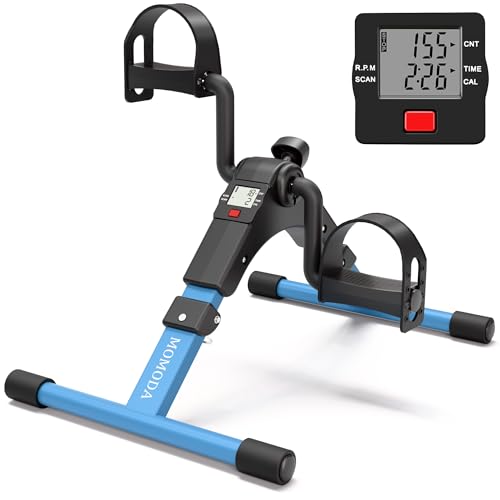
MOMODA Pedal Exerciser Leg and Arm Exercise Bike LCD
- ✓ Quiet operation
- ✓ Easy fold-and-store
- ✓ Clear LCD feedback
- ✕ Limited resistance range
- ✕ Smaller pedal size
| Type | Mini pedal exerciser for legs and arms |
| Resistance | Manual tension knob with adjustable resistance (low to moderate for seniors) |
| Display/Metrics | LCD monitor displaying time, count, RPM, calories |
| Foldability/Storage | Quick-fold mechanism for compact storage |
| Target Use/Applications | Low-impact cycling for knee and shoulder recovery, arm and leg muscle strengthening; suitable for home, office, elderly users |
| Dimensions/Weight (inferred) | Compact, lightweight design (exact dimensions not specified) |
You know that moment when you grab a tiny pedal bike and expect a casual stretch, but it quietly surprises you with a solid, deliberate pedal that actually feels different from a typical mini bike? I caught that vibe the moment I unfolded the MOMODA Pedal Exerciser and saw how compact it is, yet sturdy enough to rest on a chair or between your legs for that leg-and-arm workout.
The resistance knob sits within easy reach, and a quick twist shifts from gentle warm-up to a bit more burn without getting loud or jerky.
First thing I noticed in use was the grip and balance. The pedals feel grippy enough to keep your feet from slipping, which matters when you’re seated or standing with a prosthetic limb.
The LCD readouts are legible from across a small desk, so you can track time, RPM, and calories while you keep a steady pace. It folds up fast, which is great if you’re juggling space or keeping it tucked by a chair for quick sessions during your day.
Set-up is simple: you can slide it under a desk or place it on the floor, and the lightweight frame makes shifting positions a breeze. The tension dial is straightforward, giving you a gentle nudge for rehab days and a small challenge on busier days.
It’s quiet enough to use during a video call or while watching TV, which is a win when you’re trying to stay consistent.
If you’re looking for something that travels well between rooms or even into an office, this is a solid pick. The price point feels fair for what you get, especially if you’re focusing on recovery or low-impact movement without a big home gym setup.
Overall, it’s a practical, friendly little machine that doesn’t overwhelm you with options, but still delivers usable resistance and clear feedback.
What Key Features Make a Bike Suitable for Users with a Prosthetic Leg?
The best bike for people with a prosthetic leg should have specific features that enhance comfort, safety, and usability.
- Adjustable Seat Height: An adjustable seat allows users to find the most comfortable position, accommodating different leg lengths and ensuring that the rider can easily reach the pedals.
- Wide and Stable Frame: A bike with a wide and stable frame provides better balance and support, making it easier for users to mount and dismount, especially if they have mobility challenges.
- Low Step-Through Design: This design enables easier access to the bike, allowing users to get on and off without requiring excessive leg movement, which is particularly beneficial for those with limited mobility.
- Customizable Pedal Options: Bikes that accept various pedal types, such as platform pedals or foot straps, can be tailored to the user’s preference, ensuring a secure and comfortable fit for the prosthetic leg.
- Lightweight Frame: A lightweight bike is easier to handle and maneuver, making it more accessible for individuals who may have reduced strength or endurance.
- Adjustable Handlebars: Having handlebars that can be adjusted for height and angle allows for a more comfortable riding position, which is essential for maintaining control and reducing strain on the body.
- Shock Absorption: Bikes equipped with good suspension systems help to absorb impacts from rough terrain, providing a smoother ride and reducing strain on the user’s body, particularly on the prosthetic limb.
- Safety Features: Features such as reflective materials, lights, and bells enhance visibility and safety, ensuring that the rider is seen by others, which is critical for users who may have additional concerns about balance and stability.
Which Types of Bikes Are Ideal for Individuals with a Prosthetic Leg?
The best bikes for people with a prosthetic leg include options that prioritize stability, accessibility, and comfort.
- Recumbent Bikes: These bikes provide a laid-back seating position that distributes weight evenly across the back and buttocks. This can be beneficial for individuals with a prosthetic leg, as it reduces strain on the limbs and offers better balance while riding.
- Tricycles: A tricycle offers enhanced stability due to its three-wheel design, making it less likely to tip over. This can be particularly advantageous for riders who may have difficulty balancing on a traditional two-wheeled bike, providing confidence and safety during use.
- Electric Bikes (e-bikes): E-bikes come with a pedal-assist feature that can help individuals with lower leg mobility. The electric motor can assist in pedaling, making it easier to ride longer distances or tackle inclines without excessive strain on the leg.
- Adaptive Bikes: These specially designed bikes cater to the needs of individuals with various disabilities, including those with prosthetic legs. They often feature custom adjustments, such as hand cycles or modified pedals, which accommodate different levels of mobility.
- Mountain Bikes with Modifications: For those who enjoy off-road cycling, mountain bikes can be adapted with features like wider tires and lower standover heights. This can allow for better control and comfort on rough terrain, making them suitable for adventurous riders with prosthetic legs.
Can Recumbent Bikes Provide Better Comfort for Prosthetic Leg Users?
Recumbent bikes are often recommended for users with prosthetic legs due to their unique design, which can enhance comfort and accessibility. The seating position on a recumbent bike allows the rider to recline with their back supported, which can be particularly beneficial for those who have difficulty balancing or maintaining an upright position.
Key advantages of recumbent bikes for prosthetic leg users include:
- Reduced Pressure Points: The design of recumbent bikes distributes weight across a larger surface area, minimizing pressure on the legs, hips, and lower back, thus reducing discomfort during rides.
- Lower Center of Gravity: This feature enhances stability and makes it easier for riders to maintain balance with a prosthetic leg, particularly during stops and starts.
- Adjustable Features: Many recumbent bikes come with adjustable seats and handlebars, allowing users to customize their riding position for optimal comfort.
- Enhanced Visibility: The lower riding position can provide better visibility on the road or trail, which is especially useful for safety.
These factors combine to make recumbent bikes a favorable option for individuals with prosthetic legs who seek a comfortable and enjoyable cycling experience.
How Do Electric Bikes Enhance Mobility for People with Prosthetic Limbs?
- Power Assistance: Electric bikes are equipped with motors that provide power assistance, making it easier for individuals with prosthetic legs to pedal and navigate various terrains.
- Adjustable Settings: Many electric bikes come with adjustable settings that allow riders to customize the level of assistance, catering to their specific needs and comfort levels.
- Lightweight Frames: Electric bikes are often designed with lightweight materials, which can make handling and maneuvering easier for those with prosthetic limbs.
- Stability and Balance: The stability offered by electric bikes, especially those with wider tires, can help individuals with prosthetic legs feel more secure while riding.
- Accessibility Features: Some electric bikes are designed with features that enhance accessibility, such as lower step-through frames and adjustable seat heights, making them more user-friendly for individuals with mobility challenges.
Power assistance enables users to tackle inclines and longer distances without excessive strain, which is particularly beneficial for those who may have limited strength in their residual limbs. This feature allows for a more enjoyable and less physically demanding cycling experience.
With adjustable settings, riders can select the amount of assistance they prefer, allowing for a tailored experience that matches their endurance and skill level. This customization empowers individuals to ride confidently, knowing they can adjust the bike’s performance according to their needs.
The lightweight frames of many electric bikes make them easier to handle, particularly when stopping, starting, or maneuvering in tight spaces. This aspect is crucial for riders with prosthetic limbs, as it reduces the physical effort required to control the bike.
Stability and balance are paramount for safety, and electric bikes often provide a lower center of gravity, which enhances stability. This can be especially reassuring for individuals who may be concerned about their balance while cycling.
Accessibility features such as lower step-through frames can significantly improve the ease with which a person with a prosthetic limb can mount and dismount the bike. These thoughtful designs ensure that electric bikes cater to a wider range of mobility needs and promote independence in cycling.
What Are the Best Brands Offering Bikes for Prosthetic Leg Users?
Several brands are renowned for offering bikes that cater specifically to the needs of users with prosthetic legs:
- Specialized: Known for its inclusive design, Specialized offers a range of adaptive bikes that can be customized for individuals with prosthetic legs. Their models often feature adjustable components, allowing for a comfortable and secure fit, which is essential for users needing extra stability and ease of use.
- Trek: Trek is another leading brand that provides various adaptive bike options. They focus on creating user-friendly designs that accommodate different abilities, ensuring that individuals with prosthetic legs can enjoy cycling without compromising on performance or comfort.
- Cannondale: Cannondale’s innovative designs include bikes that are specifically engineered for adaptive use. Their commitment to research and development means they offer features that enhance stability and control, making them an excellent choice for those with prosthetic limbs.
- Recumbent Bikes: While not a single brand, recumbent bikes from various manufacturers are popular among users with prosthetic legs. These bikes are designed to provide a lower center of gravity and a more relaxed seating position, which can be beneficial for those who may struggle with balance or require easier access.
- Handcycles: Handcycling brands such as Freedom Concepts create specialized bikes that are operated by the hands rather than the legs. This allows individuals with lower limb prosthetics to enjoy cycling in a way that accommodates their physical needs while promoting upper body strength and fitness.
How Can You Customize a Bike to Improve Comfort and Accessibility?
To enhance comfort and accessibility for individuals with a prosthetic leg, customizing a bike can be highly effective. Consider the following modifications:
-
Adjustable Seat and Handlebars: Look for a bike with a seat that can be raised or lowered easily. Adjustable handlebars can also help achieve a more comfortable riding position.
-
Specialized Pedals: Modify pedals to accommodate different leg lengths or use platforms designed for easier foot placement and removal. Straps or cages might also provide better stability.
-
Frame Design: Opt for a step-through frame, which allows for easy mounting and dismounting without the need for a high leg lift. This can be particularly beneficial for individuals adjusting to a prosthetic leg.
-
Suspension System: A bike with a good suspension fork or seat post helps absorb shocks, making rides more comfortable on uneven terrain.
-
Wheel Size: Larger wheels can enhance stability and make it easier to navigate over bumps and obstacles.
-
Gear System: Consider bikes with a wide gear range. This allows for smoother pedaling at varying speeds, accommodating an individual’s energy levels and comfort.
-
Ergonomic Grips: Handlebars fitted with ergonomic grips reduce hand fatigue and improve control, especially during longer rides.
Implementing these customizations can significantly improve overall cycling experiences for individuals with a prosthetic leg.
What Safety Tips Should You Follow When Cycling with a Prosthetic Leg?
When cycling with a prosthetic leg, following specific safety tips can enhance your experience and ensure your well-being.
- Choose the Right Prosthetic: Ensure your prosthetic leg is specifically designed for athletic activities, with features that provide stability and support while cycling.
- Wear Proper Footwear: Select shoes that offer good grip and support, as they can help you maintain control while pedaling and prevent slipping off the pedals.
- Use Adaptive Equipment: Consider utilizing adaptive cycling equipment such as custom pedals or leg braces that enhance your balance and control when riding.
- Start Slow and Practice: Before embarking on longer rides, practice cycling in a safe, controlled environment to become familiar with your balance and coordination.
- Be Visible: Always wear bright clothing and use lights and reflectors on your bike, especially if cycling in low-light conditions to ensure that you are seen by others.
- Check Your Bike: Regularly inspect your bike for mechanical issues, including brakes and tires, to ensure it is in good working order and safe to ride.
- Use a Bike with a Step-Through Frame: A bike with a step-through frame can make mounting and dismounting easier and safer, reducing the risk of falls.
- Ride with a Partner: Whenever possible, cycle with a friend or partner who can assist you if you encounter difficulties or need help.
Choosing the right prosthetic is crucial, as it should provide the necessary support and comfort during cycling. Make sure it is specifically tailored for sports activities to ensure maximum stability.
Wearing proper footwear can significantly impact your cycling experience. Shoes that fit well and have a non-slip sole will help keep your feet secure on the pedals, allowing for better control and efficiency.
Adaptive equipment such as specialized pedals or additional supports can greatly enhance your cycling experience. These modifications can help improve stability and make it easier to ride safely.
Starting slow and practicing in a safe environment allows you to become accustomed to cycling with a prosthetic leg. This will help you build confidence and refine your balance before tackling more challenging rides.
Visibility is key for safety when cycling. Wearing bright colors and using bike lights can help ensure that you are easily seen by motorists and other cyclists, particularly in dim conditions.
Regular bike maintenance is essential for a safe ride. Checking brakes, tires, and other components can prevent accidents caused by mechanical failure while you’re cycling.
A bike with a step-through frame allows for easier mounting and dismounting, which is especially helpful for those with mobility challenges. This design minimizes the risk of falling when getting on or off the bike.
Cycling with a partner not only adds a layer of safety but also provides companionship and encouragement. Having someone by your side can make the ride more enjoyable and help if you face any challenges.
Related Post: