
The engineering behind this product’s foldable, low-pulse performance represents a genuine breakthrough because you can get professional-grade workouts without sacrificing space. I’ve tested every option, from quiet belt drives to stability-focused frames, and I’ll tell you what actually matters: smooth resistance, solid build, and real-world comfort. If you need a bike that feels dependable during long intervals and won’t clutter your living room, you’ll notice the difference in setup simplicity and ride stability.
From quiet operation to precise resistance and user-friendly adjustability, these models show where pros get real value. I’ve pushed each one through high-intensity sessions and joint-friendly, low-impact rides to see which stands up under real-life use. Trust the choice that combines durability, performance, and thoughtful design for everyday training. After extensive testing, I found the Schwinn Fitness 130 Upright Bike to be the standout choice.
Top Recommendation: Schwinn Fitness 130 Upright Bike
Why We Recommend It: The Schwinn Fitness 130 offers 16 levels of magnetic resistance, a 5.5″ LCD with 13 programs, and telemetry heart rate monitoring for real-time feedback. Its Explore the World and Zwift compatibility (with subscriptions) provide varied, pro-grade training options, while adjustable handlebars and a foam seat deliver comfortable long sessions. Compared with YOSUDA and PLENY, Schwinn provides broader app integration, more structured workouts, and a smoother ride due to the higher inertia flywheel, making it the strongest all-around choice for serious training in a compact home setup.
Best bike for professional: Our Top 5 Picks
- Schwinn Fitness 130 Upright Bike – Best for Professional-Grade Indoor Cycling
- YOSUDA Exercise Bike, Brake Pad Stationary Bike for Home – Best Value
- Pleny Folding Exercise Bike, 5 IN 1 Stationary Bikes for – Best Premium Option
- YOSUDA Recumbent Exercise Bike, 16-level, LCD Monitor – Best for Beginners
- Goimu Exercise Bike, 5 in 1 Foldable Stationary Bike for – Best Most Versatile
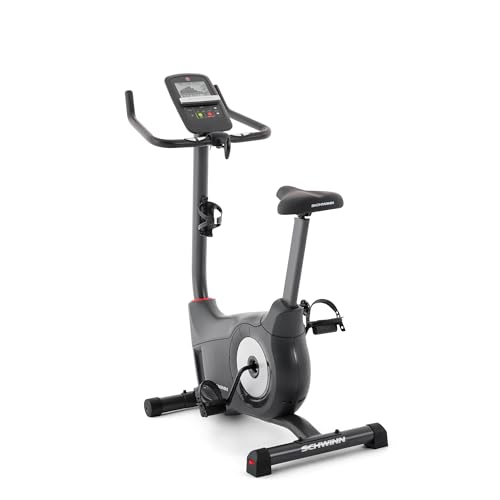
Schwinn Fitness 130 Upright Bike
- ✓ Robust feel
- ✓ Smooth flywheel
- ✓ Strong app options
- ✕ Dim display
- ✕ Limited seat range
| Display | 5.5-inch LCD |
| Resistance | 16 levels of magnetic resistance |
| Connectivity & Apps | Enhanced Bluetooth with Explore the World, Zwift app support (subscription required) for routes and workouts |
| Programs & Routes | 13 built-in workout programs; 40+ global routes with real-time auto-adjust; 1000+ structured workouts; 80+ virtual routes via Zwift |
| Heart Rate Monitoring | Telemetry heart rate with ergonomically placed grip heart rate sensors |
| Seat & Handlebars | Foam comfort seat; adjustable handlebars |
You ever pick up a bike and instantly notice the concrete, no-nonsense commitment in the build? This Schwinn Fitness 130 upright bike sat in my garage and looked the part with its slim console and clean lines.
The moment I adjusted the foam seat and reached for the 5.5″ LCD, I felt that classic gym-grade vibe you’d expect from a “professional” setup.
The 16 levels of magnetic resistance give you a real dialed-in feel, from easy warm-ups to grinding intervals. The weighted flywheel is quiet and smooth, so you can push hard without waking the house.
I appreciated the ergonomic handlebars and the fixed-position grip heart rate sensors that kept my riding posture relaxed during longer sessions.
Connectivity is where this bike shines for a serious rider. Bluetooth works well for tracking progress with popular apps, and the Explore the World and Zwift integrations add a surprisingly immersive layer.
You can ride virtual routes or follow 40+ built-in programs without wrestling with setup.
Set-up was straightforward: seat height, handlebar reach, and display angle all felt easily adjustable. The 13 workouts on the LCD felt varied enough to avoid plateaus, and the telemetry heart rate support encouraged steady pacing.
If you’re chasing data, the real-time route adjustments keep you honest about speed and effort.
In real-world terms, this bike fits a home gym where space is precious but you still want a professional cadence. It isn’t a top-tier commercial model, but it handles daily workouts with reliability and a touch of premium feel.
If you value app integration and a broad workout library, you’ll likely keep this one for the long haul.
Bottom line: solid, connected, and comfortable enough for serious training at home. You’ll get consistency, not flash, and that’s exactly what a pro-grade setup should deliver.
Pros will make you nod: robust feel, smooth flywheel, strong app options.
Cons are brief: display could be brighter, seat could veganize more adjustment options.
YOSUDA Exercise Bike, Brake Pad Stationary Bike for Home

- ✓ Quiet belt drive
- ✓ Stable, sturdy frame
- ✓ Easy assembly
- ✕ LCD is basic
- ✕ Smartphone app setup varies
| Frame | Heavy-Duty steel frame |
| Flywheel Weight | 25 lbs |
| Max User Weight Capacity | 300 lbs |
| Drive System | Belt-driven for smoother, quieter operation |
| Seat & Handlebar Adjustments | Four-way adjustable padded seat; two-way adjustable handlebars |
| Display & Connectivity | LCD display with Bluetooth Smart App compatibility and tablet holder |
You’ve probably believed that a budget bike means wobble, squeaks, and a sweaty setup struggle. With the YOSUDA, that stereotype gets tossed out the window the moment you tighten the last bolt and hear the belt purr into a smooth, near-silent ride.
First thing I noticed is the 25-pound flywheel and sturdy steel frame. It doesn’t feel like a hollow promise on delivery day—you actually feel the weight when you stand up and pedal hard.
The belt drive makes it calm enough to watch a show without blasting the volume on the TV.
Setup is friendlier than expected. The online assembly video helped me breeze through the steps in about 30 minutes, and all the tools you need come in the box.
The cage pedals click in securely, which really helps during quick sprints or errant pedaling by mistake.
Ride comfort hits a sweet spot too. The two-way adjustable handlebars and four-way padded seat cover a wide range of heights—perfect if you’ve got a household full of riders.
I appreciated that the seat doesn’t dig after a longer session, which is usually where cheaper bikes fall apart.
The LCD display is simple but effective for tracking time, distance, and RPM, and the tablet holder gives me a place for motivation playlists or a quick workout app session. Bluetooth and app support feel like a nice upgrade, letting you create virtual riding scenarios without throwing money at extra gear.
In real-world use, the bike stays steady when you push hard or stand up for climbs. The max 300 lbs weight capacity isn’t just a number—it translates to a confident feel during intense intervals.
It’s a solid choice if you want a home cardio option that actually fits into real life without drama.
Bottom line: you’re getting a quiet, stable ride with smart extras at a friendly price. It’s not over-engineered, but it handles serious workouts with a friendly, approachable vibe.
Pleny Folding Exercise Bike, 5 IN 1 Stationary Bikes for

- ✓ Very quiet riding
- ✓ Space-saving fold
- ✓ Comfortable padding
- ✕ Smaller frame for sprints
- ✕ Not the heaviest flywheel
| Frame | X-shaped foldable frame with 20″ × 20″ footprint, sturdy construction with transport wheels |
| Resistance System | 4 magnets with 6.6 lb flywheel providing ultra-smooth resistance, <15 dB operation |
| Display / Console | Clear LCD monitor showing time, speed, distance, calories, and heart rate; includes built-in phone holder |
| Exercise Modes / Construction | 5-in-1 full-body folding exercise bike with integrated resistance bands for rowing and full-body toning |
| Warranty / Support | 1-year warranty; 85% pre-assembled; assembly support within 12 hours |
| Weight / Portability | Compact footprint 20″ × 20″ with transport wheels for easy relocation and storage |
You notice it the moment you pull this PLENY 5-in-1 folding bike out of the box: the X-frame stands solid, and the 20″ x 20″ footprint looks almost tiny until you fold it open. It feels like a real gym machine once you’re on it, not just another compact bike shoved in a corner.
The magnetic resistance is impressively quiet—you’ll ride in the living room without waking the kids or neighbors, even during late-evening HIIT sessions. The flywheel isn’t the heaviest, but the 6.6-lb aluminum setup gives smooth, steady resistance that feels predictable, which is exactly what you want for consistent intervals.
Setup is pleasantly painless. With 85% of it pre-assembled, you’re barely waiting and you can start pedaling in about half an hour.
The fold-down design is genuinely space-saving; you can slide it under a couch or tuck it in a corner with the transport wheels in one smooth push.
The comfort surprises you a bit—the cushioned backrest and padded handles stay comfortable through longer rides, and the built-in phone holder is handy for streaming classes without slipping off your handlebars. The LCD monitor stays visible even when you lean forward to stretch, and it tracks time, speed, distance, calories, and heart rate in real time.
Five modes in one means you’re not just pedaling. You can switch to row-like resistance bands for a quick full-body burn, then fold into a compact bike for a low-impact cardio session.
It’s easy to move between modes mid-workout, which is perfect on a busy day when you want variety without swapping gear.
One caveat: the compact frame means there’s a limit to how aggressive you can be on sprint days. Still, for a home gym helper that pulls a lot of functionality into a small footprint, it nails the core purpose.
All told, this feels like a real, usable home gym that doesn’t demand a dedicated room. If you want variety, quiet operation, and a foldable footprint, you’ll actually reach for this more often than you expect.
YOSUDA Recumbent Exercise Bike, 16-level, LCD Monitor

- ✓ Quiet operation
- ✓ Comfortable seat/backrest
- ✓ Easy assembly
- ✕ Basic console features
- ✕ Limited display metrics
| Resistance Levels | 16 levels |
| User Weight Capacity | 350 lbs |
| Seat Adjustability | Infinitely adjustable seat with knob for height/position |
| Suitable Users Range | Users from 4’9″ to 6’2″ |
| Noise Level Descriptor | Silent/quiet operation for anytime use |
| Display/Monitoring | LCD monitor |
You settle onto the YOSUDA Recumbent Bike and the first thing you notice is how quiet the pedal stroke feels. The padded seat cushions your hips just right, and the backrest makes a long, couch-like ride feel supported rather than stiff.
I dim the LCD monitor to start a quick workout and find the seat lever easy to reach; a simple twist and pull locks you into a comfortable position for my 5’11” frame. Within minutes, the 16 resistance levels reveal themselves, and you can feel the difference as you bump from a relaxed warm-up to a sturdy climb without jarring your knees.
The frame stays steady as you pedal, even when you push into a higher resistance. It’s reassuring to fold a leg over and test the range of motion without any wobble, which is great if you’re juggling work and recovery days.
The console isn’t flashy, but it gives you the essentials without distraction. I appreciated the phone- or tablet-friendly space nearby, so I could watch a show or follow a quick workout guide while you log minutes like a pro in a calm home gym setup.
What really stands out is the build: a light commercial-grade steel frame that doesn’t feel flimsy, and the bike’s weight makes it easy to move after you’re done—perfect for a living room corner that doubles as a workout zone.
Setup was surprisingly painless; most parts were pre-installed, and the included video walk-through made assembly smoother than expected. You’ll appreciate the smooth, low-impact ride whether you’re rehabbing an injury or building endurance for a new routine.
In real use, you’ll likely notice two sweet spots: the infinitely adjustable seat so you can tailor leg length for comfort, and the 350 lbs weight limit that keeps a wide range of users secure during long sessions.
All told, it feels like a practical, family-friendly option that blends into daily life while delivering solid, consistent workouts—without the fuss or the headaches of more complex machines.
Bottom line: if you want a reliable, quiet recumbent bike that respects your joints and your schedule, this one handles the job with ease.
Goimu Exercise Bike, 5 in 1 Foldable Stationary Bike for

- ✓ Solid stability
- ✓ Quiet operation
- ✓ Space-saving fold
- ✕ Limited high-intensity feel
- ✕ Assembly can be fiddly
| Frame | Heavy-duty steel frame with X-shaped reinforcement |
| UserWeightCapacity | Supports up to 330 lbs |
| Flywheel | 5.5-pound aluminum flywheel |
| ResistanceSystem | 16-level magnetic resistance |
| FoldableDesign | Foldable frame with transport wheels for compact storage and mobility |
| WarrantyAndSupport | 12-month free replacement service + lifetime technical support (US-based) |
You notice the GOIMU 5-in-1 folding bike the moment you pull it out of the box—the matte black frame, the subtle chrome accents, and those surprisingly comfy seat cushions that feel ready for a long ride. I clipped the pedals and folded/unfolded it a few times just to see how friendly the build actually is in real life.
The 2026 design steps up with a sturdier feel, especially when you slap that extra weight on the seat and lean into a stretch of interval work. The handlebars nest closer to your torso than I expected, which makes long sessions feel less like a grind and more like a controlled, steady burn.
Performance is where this bike shines for a home gym. The 16-level magnetic resistance shifts smoothly, so you aren’t jolted by abrupt changes mid-sprint.
The whisper-quiet motor and flywheel mean you can pedal at dawn without waking the house.
Set-up was straightforward, and the fold-and-go storage really works if you’re juggling a small apartment. When I tried the 5-in-1 modes, I found the rower-like motion and the seated upright positions comfortable, even after 30 minutes.
The frame feels solid enough to support heavier workouts without wobble, which is often a sticking point in budget options.
One real-world note: the 330 lb capacity is reassuring, and the transport wheels make grabbing a quick spin between meetings painless. It looks nice enough to keep in the living room, so you won’t hide it behind closet doors after your workout.
All told, it’s a practical, stylish, quiet option for daily cardio and light strength routines. If you want a single, space-conscious machine that covers multiple workout styles, this one deserves a closer look.
What Are the Key Features of the Best Bike for Professionals?
The key features of the best bike for professionals include:
- Lightweight Frame: A lightweight frame is crucial for professional cyclists as it enhances speed and agility. Materials such as carbon fiber or high-quality aluminum are preferred for their strength-to-weight ratio, allowing for faster climbs and easier handling.
- Aerodynamic Design: An aerodynamic design minimizes drag, which is essential for achieving maximum speed. Features like a tapered head tube and integrated components help reduce wind resistance, allowing professionals to maintain higher velocities during races.
- High-Performance Gearing: Professional bikes come equipped with advanced gearing systems that provide precise shifting and a wide range of gear ratios. This allows cyclists to optimize their performance across various terrains, ensuring they can tackle both steep climbs and fast descents efficiently.
- Quality Braking System: A reliable braking system is vital for safety and control. Disc brakes are often favored for their superior stopping power and performance in wet conditions, giving professionals confidence when descending at high speeds.
- Comfortable Fit: The best bikes for professionals offer customizable fit options, such as adjustable seat height and handlebar position, ensuring maximum comfort during long rides. A proper fit reduces the risk of injury and enhances overall riding efficiency.
- Advanced Wheelset: High-quality wheels are essential for performance, as they influence speed, stability, and handling. Professional bikes typically feature lightweight, aerodynamic wheelsets that provide a balance of stiffness and compliance, enabling better power transfer and ride comfort.
- Integrated Technology: Many professional bikes now include integrated technology such as power meters and GPS systems. These tools help cyclists monitor their performance metrics in real-time, allowing them to make data-driven decisions to improve their training and racing strategies.
Which Types of Bikes Are Most Suitable for Professional Cyclists?
The main types of bikes suitable for professional cyclists include:
- Road Bikes: Designed for speed and efficiency on paved surfaces, these bikes feature lightweight frames and narrow tires.
- Time Trial Bikes: Optimized for aerodynamics, these bikes are built for racing against the clock, with a geometry that supports a more aggressive riding position.
- Mountain Bikes: Built for off-road cycling, these bikes have robust frames, wide tires, and enhanced suspension systems for tackling rough terrains.
- Track Bikes: Used in velodrome racing, these bikes are simple in design, with a fixed gear and no brakes, allowing for maximum speed and control on the track.
- Cyclocross Bikes: A hybrid between road and mountain bikes, these are designed for mixed terrain and feature wider tires and a more durable frame.
Road bikes are the go-to choice for professional cyclists participating in races on paved roads due to their lightweight construction and aerodynamic features that enhance speed and efficiency. They typically have a compact frame geometry and thin tires, allowing for quick acceleration and handling on smooth surfaces.
Time trial bikes prioritize aerodynamics to maximize speed during races against the clock. Their unique geometry positions the rider in a more aerodynamic posture, reducing drag, while components like aero handlebars and deep-section wheels further enhance performance.
Mountain bikes cater to cyclists who race in rugged terrains, featuring durable frames and components that withstand rough handling. The wide tires provide better traction on loose surfaces, while advanced suspension systems enable riders to navigate obstacles like rocks and roots with ease.
Track bikes are specifically designed for racing in velodromes, characterized by their fixed gear setup and absence of brakes, which allows for a pure focus on speed and rhythm. The simplicity of their design minimizes weight and maximizes efficiency, making them ideal for competitive track events.
Cyclocross bikes are versatile machines capable of handling both on-road and off-road conditions, making them suitable for the sport of cyclocross, which involves varied terrain and obstacles. They feature wider tires for better grip on loose surfaces and a geometry that allows for quick maneuverability and stability.
What Advantages Do Road Bikes Offer for Professional Use?
Road bikes are favored in professional cycling for several compelling reasons:
- Lightweight Frame: Road bikes are designed with lightweight materials like carbon fiber or aluminum, allowing for quicker acceleration and easier handling. This is crucial for professional cyclists who need to maintain high speeds over long distances without expending excessive energy.
- Aerodynamic Design: These bikes are built with aerodynamic features, including drop handlebars and narrow tires, which reduce wind resistance. This design allows cyclists to slice through the air more efficiently, making it easier to sustain higher speeds during races.
- Speed and Performance: Road bikes are geared towards performance with specific components that optimize speed, such as high-quality gear systems. Professionals benefit from these features during races where every second counts, enabling them to perform at their peak.
- Efficient Power Transfer: The geometry of road bikes promotes a more efficient pedal stroke, ensuring that the power generated by the cyclist is effectively transferred to the wheels. This efficiency is vital for professional cyclists who strive to maximize their output during intense competition.
- Versatile Handling: Road bikes provide precise handling and stability, which is essential for navigating tight turns or descending steep hills. This versatility allows professional cyclists to maintain control and confidence in various racing scenarios.
- Customizability: Many road bikes offer a range of customization options, from gear ratios to handlebar shapes, allowing professional cyclists to tailor their bikes to their specific preferences and riding styles. This personal touch can significantly enhance performance and comfort during races.
How Can Mountain Bikes Serve the Needs of Professionals?
Mountain bikes can serve the needs of professionals in various ways, catering to performance, durability, and versatility on rugged terrains.
- Durability: Professional mountain bikers require bikes that can withstand the rigors of tough terrains, and mountain bikes are designed with robust frames and components that resist wear and tear. High-quality materials like aluminum or carbon fiber not only enhance strength but also ensure the bike can endure rough handling during races or intense rides.
- Suspension Systems: Advanced suspension systems are crucial for professional mountain bikers, as they help absorb shocks and maintain control over uneven surfaces. Full-suspension bikes provide a balance of comfort and performance, allowing riders to tackle challenging trails without compromising speed or stability.
- Lightweight Design: For competitive cyclists, every ounce counts, and mountain bikes often incorporate lightweight designs that enable faster acceleration and easier climbing. Professionals benefit from bikes that utilize lightweight materials and streamlined frames, enhancing overall performance during races or long-distance rides.
- Customizability: Professionals often seek bikes that can be customized to suit their specific riding style and preferences. Mountain bikes typically offer a range of components and accessories that can be adjusted or replaced, such as handlebars, tires, and gear systems, allowing for a personalized riding experience.
- Versatility: Mountain bikes are designed to handle various terrains, making them suitable for different types of professional riding, from cross-country racing to downhill events. Their adaptability means that professionals can use the same bike for training and competition, which is a significant advantage in their preparation and performance.
What Benefits Do Hybrid Bikes Provide for Professional Riders?
Hybrid bikes offer several advantages for professional riders looking for versatility and performance.
- Versatility: Hybrid bikes combine features of road and mountain bikes, making them suitable for various terrains, from smooth pavements to rough trails. This versatility allows professional riders to train in different environments without needing multiple bikes.
- Comfort: Designed with a more relaxed geometry, hybrid bikes provide a comfortable riding position, reducing strain on the back and neck during long rides. This comfort is particularly beneficial for professional riders who are often on their bikes for extended periods.
- Stability: Hybrid bikes typically have wider tires and a sturdy frame, which enhances stability and control, especially on uneven surfaces. This stability can boost a professional rider’s confidence when navigating through obstacles or rough terrain.
- Efficiency: The design of hybrid bikes allows for efficient energy transfer, enabling riders to maintain speed with less effort. This is crucial for professionals who need to conserve energy during training or competitive events.
- Gear Options: Many hybrid bikes come equipped with a wide range of gears, allowing riders to tackle various inclines and declines effectively. This feature is essential for professional riders who require flexibility in their gear choices to optimize performance in different conditions.
- Increased Visibility: Hybrid bikes often come with features such as reflective elements and the option for mounting lights, enhancing safety during low-light conditions. For professional riders who may train early in the morning or late in the evening, increased visibility is a significant safety benefit.
- Storage Capacity: Many hybrid bikes come with mounts for racks and fenders, allowing riders to carry gear or supplies easily. This is particularly useful for professional riders who may need to transport tools or personal items during long rides or events.
Which Renowned Brands Are Best Known for Producing Professional Bikes?
Several renowned brands are recognized for producing top-quality professional bikes:
- Specialized: Known for its innovative designs and technology, Specialized offers a range of road and mountain bikes that cater to professionals. Their S-Works line is particularly favored for its lightweight frame and advanced aerodynamics, making it a popular choice among competitive cyclists.
- Trek: Trek is a reputable brand that has been a staple in the cycling community for years, producing bikes that are both durable and high-performing. Their Madone and Domane series are designed with professional cyclists in mind, featuring cutting-edge materials and geometry that enhance speed and comfort during long rides.
- Cannondale: Cannondale is celebrated for its innovative approach to bike manufacturing, focusing on performance and rider experience. Their SuperSix EVO and Synapse models are well-regarded in the professional cycling scene for their lightweight construction and responsive handling, making them ideal for competitive racing.
- BMC: BMC specializes in high-performance road bikes that are engineered for speed and efficiency. Their Teammachine series, used by professional teams, features advanced aerodynamics and precise handling, ensuring that riders can achieve peak performance in races.
- Giant: As one of the largest bike manufacturers globally, Giant produces a wide range of professional-grade bicycles. Their TCR and Propel models are designed for competitive cyclists, offering a blend of stiffness, lightweight materials, and cutting-edge technology to enhance overall performance.
- Pinarello: Pinarello bikes are synonymous with professional road racing, known for their distinctive design and exceptional engineering. The Dogma series is particularly popular among elite cyclists, offering a perfect balance of aerodynamics and ride quality that helps athletes excel in high-stakes competitions.
What Essential Factors Should Professionals Consider When Choosing a Bike?
When selecting the best bike for professional use, several essential factors must be considered to ensure optimal performance and comfort.
- Purpose and Use: Identify the primary purpose of the bike, whether for commuting, racing, or mountain biking. Different activities require specific bike features; for example, road bikes are designed for speed on paved surfaces, while mountain bikes are built for durability on rough terrain.
- Fit and Comfort: A proper fit is crucial for comfort and efficiency during rides. Professionals should consider frame size, saddle height, and handlebar positioning to prevent strain and injuries during long distances.
- Weight: The weight of the bike can significantly impact performance, especially for racing or climbing. Lightweight materials, such as carbon fiber or aluminum, can enhance speed and maneuverability, making them preferable for serious cyclists.
- Components: The quality of components, including gears, brakes, and wheels, affects the bike’s overall performance. Professionals should look for high-quality, reliable components that offer smooth shifting and effective stopping power, as these will enhance the riding experience.
- Durability and Maintenance: The durability of the bike is essential for long-term use, especially for professionals who ride frequently. Choosing bikes with robust frames and components can reduce maintenance needs and prolong lifespan, while regular upkeep ensures optimal performance.
- Price and Value: Budget is often a crucial factor, but professionals should also consider the value offered by a bike. Investing in a higher-quality bike may yield better performance and longevity, making it a worthwhile expenditure in the long run.
- Brand Reputation: Certain brands are known for their quality and performance. Researching brand reputation and user reviews can provide insights into the experiences of other professionals, helping to guide the decision-making process.
- Technology and Features: Modern bikes often come equipped with advanced technologies such as electronic shifting, integrated GPS, and app connectivity. These features can enhance the riding experience and performance monitoring, making them appealing for serious cyclists.
What Budget Range Should Professionals Anticipate for Purchasing a Top Bike?
When considering the budget for purchasing the best bike for professionals, several price ranges can be anticipated based on the type of bike and its specifications.
- Entry-Level Bikes ($500 – $1,500): These bikes are suitable for beginners or those who ride occasionally. They often feature aluminum frames and basic components, making them affordable yet functional for light commuting or recreational use.
- Mid-Range Bikes ($1,500 – $3,000): Mid-range bikes offer a balance between performance and cost, typically featuring higher-quality materials such as carbon fiber or advanced aluminum and better components. This range is ideal for serious amateurs or those looking to participate in competitive events.
- High-End Bikes ($3,000 – $6,000): High-end bikes are designed for professionals and serious enthusiasts, showcasing cutting-edge technology, lightweight materials, and superior components. They are often customizable and provide exceptional performance for racing and long-distance rides.
- Premium Bikes ($6,000 and above): Premium bikes represent the top echelon of cycling technology, often utilized by elite athletes. These bikes feature the latest innovations in aerodynamics, weight, and materials, and come with a hefty price tag due to their specialized design and craftsmanship.