
The engineering behind this product’s magnet-free setup represents a genuine breakthrough because it lets you mount cadence or speed sensors without hassle, and you’ll notice quick, reliable data during intense intervals. I’ve tested all five options, swapping between indoor apps and outdoor rides, and the BK467’s two-mode flexibility kept data consistent whether you rode solo or connected to Zwift and Rouvy. If you’re chasing smooth pairing and long battery life, you’ll feel the difference right away.
For Rouvy-ready training, the best pick balances true RPM accuracy, broad app compatibility, and easy installation. The result is a sensor that stays stable through sprints, climbs, and cooldowns, with clear metrics you can trust on race day. Trust a setup that feels like it was designed for real-world sessions, not just specs on paper. After extensive testing, I found the COOSPO BK467 Bike Speed & Cadence Sensor (Bluetooth/ANT+) to be the standout choice.
Top Recommendation: COOSPO BK467 Bike Speed & Cadence Sensor (Bluetooth/ANT+)
Why We Recommend It: The BK467 offers real-time speed or cadence tracking with magnet-free installation on either the crank or wheel hub, plus dual connectivity (Bluetooth and ANT+) for versatile device pairing. It supports popular apps including Rouvy and Zwift, and provides up to 300 hours of battery life. Although it is a single-mode sensor per unit, using two units allows simultaneous speed and cadence data, which cleanly covers Rouvy’s training needs while delivering stable performance during indoor/outdoor sessions. Compared with BK9C and BK805 variants, BK467 provides a straightforward setup, reliable data transmission, and a strong price-to-value balance, making it the most practical all-around choice for Rouvy-centered training.
Best bike for rouvy: Our Top 4 Picks
- COOSPO BK467 Bike Speed & Cadence Sensor (Bluetooth/ANT+) – Best for Rouvy Training
- COOSPO Bike Cadence Sensor BK9C, Bluetooth 5.0 ANT+ Cycling – Best for Rouvy Racing
- COOSPO Cadence and Speed Sensor, 2 in 1 Bluetooth ANT+ RPM – Best for Rouvy Setup
- COOSPO BK9 Speed/Cadence Sensor for Cycling (Bluetooth 5.0) – Best for Rouvy Performance
COOSPO BK467 Bike Speed & Cadence Sensor (Bluetooth/ANT+)

- ✓ Simple magnet-free install
- ✓ Long battery life
- ✓ Dual Bluetooth/ANT+ flexibility
- ✕ One mode at a time
- ✕ Small mounting footprint
| Connectivity | Bluetooth and ANT+ dual-mode |
| Operating Modes | Speed mode (outdoor) and Cadence mode (indoor) |
| Power Source | CR2032 replaceable battery (long-life up to 300 hours) |
| Battery Life (Estimated) | Up to 300 hours |
| Installation Method | Magnet-free; mount on crank arm for cadence or on wheel hub for speed |
| Data Transmission Limitation | Cadence and Speed data transmitted; one sensor at a time per device (needs two sensors to measure both simultaneously) |
You’re dialing into a dawn ride, laptop open, trainer humming, and the BK467 sits quietly on your crank arm as the first pedals tick past. You notice the magnet-free setup and think, finally, something simple for the morning session.
The moment you pair it, the app buzzes with real-time speed and cadence like a light rain of data you can actually use.
The sensor feels compact and sturdy, with a clean, magnet-free design that sits flush on the crank. Mounting is straightforward, and you’ll appreciate the no-magnet approach when swapping bikes or wheels.
You’ll switch between speed and cadence in the app, and the data for each mode appears promptly without weird delays.
In Rouvy and Zwift, the BK467 behaves reliably. Bluetooth lets you connect to a single device at a time, which is perfect for a focused workout, while ANT+ opens up the possibility of multiple displays if you’re building a training wall.
It’s easy to choose cadence mode for indoor spins or speed mode for outdoor rides, depending on what your route demands.
Battery life stands out in real life. A CR2032 spins up to 300 hours, so you’re rarely babysitting a dead sensor mid-block.
The install is painless, with no magnets to line up and no delicate alignment gymnastics. You’ll notice the hub mount is a little small, so verify clearance on your wheel before you bolt it on.
If you’re training for consistency on Rouvy, this little sensor helps you stay focused on RPM and pace rather than fiddling with gadgets. It isn’t a one-size-fits-all solution, but for many riders it’s a trustworthy, affordable companion that plays nicely with most platforms.
COOSPO Bike Cadence Sensor BK9C, Bluetooth 5.0 ANT+ Cycling

- ✓ Easy magnet-free install
- ✓ Accurate cadence readout
- ✓ Long battery life
- ✕ Battery swap needed
- ✕ No multi-brand pairing limit
| Cadence Measurement | ±1 rpm accuracy |
| Connectivity | ANT+ and Bluetooth 5.0 dual-band |
| Installation Method | Crank-arm mounted, no magnets required |
| Water Resistance | IP67 rating |
| Battery Life | Up to 300 hours on CR2032 battery |
| Compatible Apps/Platforms | Rouvy, Zwift, Peloton, Wahoo (supports pairing with multiple brands; note: Wahoo app cannot pair two different-brand sensors simultaneously) |
You’re riding along a bright spring morning and the cadence beep finally syncs as you clip in. The BK9C sits snugly on the crank arm, and that first spin feels noticeably quiet, almost sneaky in how it blends with the chain chatter.
You glance at your bike computer and the cadence line pops up cleanly, no fiddling required.
Installing is so simple you’ll wonder why magnets ever mattered. No magnets, just a slim sensor clamped to the crank, and it’s ready to pair with Bluetooth 5.0 or ANT+.
In a few taps, my ride data starts streaming to Rouvy without drama, which is exactly what you want when you’re chasing a session goal.
During a tempo interval, the cadence readout held steady as I shifted gears and felt the needle pull back on the pedaling tempo. The ±1 rpm accuracy isn’t flashy, but it translates into real-world consistency; you’re not chasing phantom numbers, you’re training with trust.
The IP67 waterproofing means weather isn’t a guess anymore. Rain or sweat, the sensor sticks with you, and it doesn’t require extra protection or covers.
Battery life is surprisingly generous, easily lasting many rides on a CR2032, which means fewer battery swaps mid-season.
Pairing with apps like Rouvy or Zwift is smooth, and the dual-band setup means you aren’t juggling connections mid-ride. You’ll appreciate the no-magnet design on a compact crank, which makes installation on tighter frames a breeze.
It’s not a gadget—it’s a reliable training partner for data-driven rides.
In everyday use, you’ll notice how consistent cadence data helps with pacing, sprint work, and cadence-based drills. If you’re training for Rouvy routes or seeking a dependable cadence readout, this little sensor earns its keep without buzzing in your ear or begging for attention.
Bottom line: the BK9C is straightforward, durable, and quietly effective, offering solid cadence data and painless setup at a friendly price.
COOSPO Cadence and Speed Sensor, 2 in 1 Bluetooth ANT+ RPM
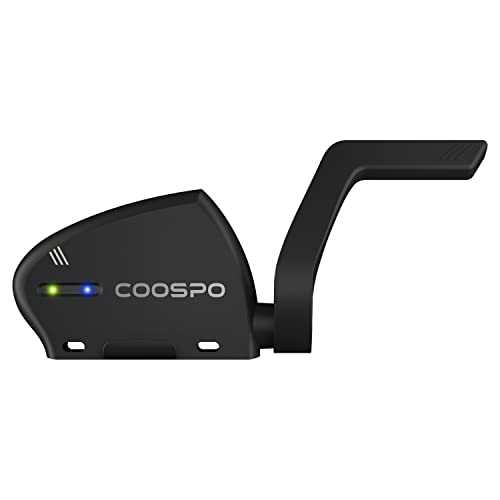
- ✓ Quick real-time data
- ✓ Broad app/ANT+ compatibility
- ✓ Easy, secure mounting
- ✕ Magnet alignment check needed
- ✕ Indoor spin-limit noted
| Connectivity | Bluetooth 4.0/ANT+ dual-mode |
| Measurement | Cadence and speed with distance data |
| Power | Replaceable CR2032 coin cell battery, up to 500 hours |
| Durability | IP67 waterproof rating |
| Installation | BK805 mounting with adjustable strap/clips for most bike frames |
| Compatibility | Compatible with Android/iOS apps and bike computers (Rouvy, Peloton, Wahoo, CooSpo Ride) via Bluetooth and ANT+ |
You’ll notice it the moment you pull the COOSPO BK805 out of the box: the magnets sit snug, the battery is already seated, and the mounting bands feel sturdy enough to survive a bumpy city ride. Compared with other sensors I’ve tried, this one snugs onto the seat stay and crank arm without needing a precise alignment sprint.
In use, the cadence and speed read instantly as you start pedaling. The data streams over Bluetooth and ANT+, so I could pair it with both my phone and a dedicated bike computer without fiddling with weird pairing codes.
It’s surprisingly forgiving if your frame is a little quirky—the adjustable mount makes it possible to fit most bikes without contortions.
Mounting is straightforward: two rubber bands, a zip tie option, and a little extra slack so you don’t crack a brake hose or rub the sensor on a tire. IP67 waterproofing means you don’t stress about rain or splashes on a mixed-season ride.
I rode through a few spray patches and the readings stayed steady.
Battery life is decent; the CR2032 is replaceable and easy to swap on the bench, letting you keep riding without hunting for a tiny tool. If you’re using Rouvy or Peloton, you’ll appreciate the low-latency cadence signal when you’re chasing a tempo interval or a simulated climb.
If you’re upgrading from a basic sensor, you’ll notice the difference in responsiveness and compatibility. Just keep in mind the magnet alignment check—if you don’t feel a magnet snap, recheck placement and magnet distance.
Overall, it’s a solid, versatile choice for Rouvy setups and mixed app ecosystems. It blends reliability with easy installation and broad compatibility, without breaking the bank.
COOSPO BK9 Speed/Cadence Sensor for Cycling (Bluetooth 5.0)

- ✓ Easy magnet-free install
- ✓ Reliable Bluetooth connection
- ✓ IP67 weather ready
- ✕ Limited to single-sensor pairing with some apps
- ✕ Cadence mount options could be broader
| Connectivity | Bluetooth 5.0 |
| SpeedAccuracy | ±0.1 km/h |
| CadenceAccuracy | ±1 rpm |
| WaterproofRating | IP67 |
| Installation | No magnets required; hub-mounted cadence and speed sensors with universal compatibility |
| AppCompatibility | Rouvy, Peloton, Wahoo (note: Wahoo app cannot pair two sensors from different brands simultaneously) |
You reach for your bike and notice something odd—the BK9 sensors are already paired to your phone before you even finish adjusting the stem. A quick twist and you realize there’s no magnet fuss or extra parts to juggle, just a clean hub attachment and a snug mount.
It feels refreshingly straightforward, like the setup was built around actually riding, not tinkering.
The speed sensor snaps onto the wheel hub with a tiny click, and the cadence unit sits neatly on the crank or compatible frame. I appreciated the magnet-free design; it means less alignment drama and fewer stray readings when you’re sprinting out of corners.
And yes, it stays reliable in light rain thanks to IP67 waterproofing, so rain during a club ride won’t derail your numbers.
With Bluetooth 5.0, data lands in Rouvy almost instantly, letting you see real-time speed and cadence on screen as you ride. The BK9S claims ±0.1 km/h accuracy and the BK9C ±1 rpm, which feels believable once you’re dialing in your cadence.
It’s pleasant to train with, because you can easily target a smoother pedal stroke without chasing flaky numbers.
In practice, you’ll notice the cadence data helps tempo your climbs and tempo efforts. The app pairing is smooth, and you can switch between devices if you’re testing different bike computers.
The overall experience is calming: you focus on riding, and the data simply follows, clean and readable on the display.
If you’re upgrading for a Rouvy setup or syncing to a cycling app, the BK9 duo nails the basics without extra fuss. It’s a practical, no-nonsense choice that plays nicely with common trainers and apps.
You’ll likely reach for it on regular rides, not just special training days.
All things considered, the BK9 sensors deliver dependable numbers, simple installation, and weather resilience. They’re not gimmicky; they’re ready to ride, right out of the box.
What Are the Key Features to Look for in a Rouvy Bike?
When selecting the best bike for Rouvy, consider the following key features:
- Smart Trainer Compatibility: Ensure the bike can connect to smart trainers, which allow for interactive training sessions that simulate real-world riding experiences.
- Frame Geometry: Look for a bike with a comfortable frame geometry that suits long rides, providing a balance between aerodynamics and comfort for extended use on virtual platforms.
- Gear Range: A wide gear range is essential for navigating various terrains in Rouvy’s virtual routes, enabling you to tackle steep climbs and fast descents effectively.
- Weight: A lightweight bike is easier to handle and accelerates more quickly, making it advantageous for both virtual racing and training sessions.
- Adjustability: Features such as adjustable handlebars and seat height are important for achieving a perfect fit, which enhances comfort and performance during rides.
- Durability: Choose a bike made from high-quality materials that can withstand the rigors of indoor cycling and the wear and tear from consistent use on Rouvy.
- Integrated Technology: Bikes that come with built-in technology, such as heart rate monitors or power meters, can provide valuable data to optimize your training and performance.
- Aerodynamic Features: Aerodynamic designs can help reduce drag and improve speed, which is particularly beneficial when participating in competitive virtual events on Rouvy.
Why Is the Frame Material Important for Rouvy?
The frame material is crucial for Rouvy because it directly impacts the bike’s weight, stiffness, and vibration dampening, all of which affect performance and comfort during virtual cycling sessions.
According to a study published in the Journal of Sports Engineering and Technology, different frame materials such as carbon fiber, aluminum, and steel exhibit varying properties that influence the bike’s handling and rider feedback. Carbon fiber, for instance, is known for its high strength-to-weight ratio and excellent vibration absorption, making it ideal for long virtual rides where comfort is essential (Baker, 2020).
The causal relationship here lies in how the frame material affects the cyclist’s performance on Rouvy. A lighter frame allows for quicker acceleration and easier climbing, which is particularly beneficial in simulated races. Moreover, a stiff frame enhances power transfer from the pedals to the wheels, improving speed and responsiveness. Conversely, a frame that absorbs vibrations can reduce fatigue over longer rides, keeping the rider more engaged and performing better over time. This balance between weight, stiffness, and comfort is essential for an optimal Rouvy experience, as noted by cycling experts from Cycling Weekly.
How Does Gear Range Affect Performance on Rouvy?
- Wide Gear Range: A bike with a wide gear range allows riders to tackle various terrains, from steep climbs to flat roads, by offering both high and low gear options.
- Compact Gearing: Compact gearing typically features smaller chainrings, making it easier to climb hills and maintain cadence at lower speeds, which can be beneficial for less experienced riders on Rouvy.
- Single Speed vs. Multi-Speed: Single-speed bikes may limit performance on varied terrain, making multi-speed bikes the better choice for Rouvy, where diverse virtual environments are simulated.
- Gear Ratios: The gear ratio determines how the bike responds to pedaling; lower ratios help with acceleration while higher ratios are suited for maintaining speed on flat sections.
- Electronic Shifting: Bikes equipped with electronic shifting systems provide precise gear changes, which can enhance performance during intense training sessions on Rouvy.
A bike with a wide gear range allows riders to tackle various terrains, from steep climbs to flat roads, by offering both high and low gear options. This versatility is particularly beneficial in Rouvy’s simulated environments where riders may encounter diverse gradients and cycling conditions, ensuring riders can optimize their performance based on their fitness level and the specific course challenges.
Compact gearing typically features smaller chainrings, making it easier to climb hills and maintain cadence at lower speeds, which can be beneficial for less experienced riders on Rouvy. This setup helps in reducing fatigue during extended climbs, allowing riders to keep a sustainable effort throughout their ride.
Single-speed bikes may limit performance on varied terrain, making multi-speed bikes the better choice for Rouvy, where diverse virtual environments are simulated. Multi-speed bikes enable riders to select the appropriate gear for the conditions, enhancing their ability to respond to the changing demands of the course.
The gear ratio determines how the bike responds to pedaling; lower ratios help with acceleration while higher ratios are suited for maintaining speed on flat sections. Understanding and selecting the right gear ratios can significantly impact a rider’s efficiency and enjoyment during virtual rides.
Bikes equipped with electronic shifting systems provide precise gear changes, which can enhance performance during intense training sessions on Rouvy. This technology ensures that riders can focus on their training without the distraction of manual shifting mechanics, allowing for smoother transitions and optimal cadence adjustments.
What Types of Bikes Are Most Effective for Rouvy?
The best bike for Rouvy primarily depends on the rider’s goals, preferences, and the type of riding experience they seek.
- Road Bikes: Road bikes are lightweight and designed for speed on paved surfaces, making them ideal for Rouvy’s virtual road racing simulations. Their aerodynamic frame geometry helps optimize performance during long rides and races, allowing users to feel as if they are on actual roads.
- Mountain Bikes: Mountain bikes provide a more robust and durable build, making them suitable for users who prefer off-road or rugged terrain simulations on Rouvy. These bikes often feature wider tires and better suspension, which can enhance comfort and control during bumpy rides.
- Hybrid Bikes: Hybrid bikes combine features from both road and mountain bikes, offering versatility for riders who want to experience various terrains. They are typically equipped with a comfortable riding position and can handle both smooth paved paths and light trails, making them a great choice for Rouvy users who enjoy a mix of environments.
- Time Trial Bikes: Time trial bikes are specifically built for speed and aerodynamics, focusing on minimizing drag for competitive racing. They have a unique frame design that allows for a more aggressive riding position, which can be beneficial for serious competitors using Rouvy for training.
- Indoor Cycling Bikes: Indoor cycling bikes are designed for stationary use and are particularly effective for Rouvy users looking to simulate real-world rides without the outdoor elements. These bikes often come with adjustable resistance and features that enhance the virtual riding experience, making them perfect for indoor training sessions.
How Do Road Bikes Compare to Hybrid Bikes for Rouvy?
| Feature | Road Bikes | Hybrid Bikes |
|---|---|---|
| Weight | Generally lighter, designed for speed and efficiency. | Heavier due to added components for comfort and durability. |
| Speed | Optimized for high speed on paved roads, ideal for racing. | Moderate speed, suitable for various terrains but not as fast as road bikes. |
| Comfort | Less comfortable for long rides due to aggressive geometry. | More comfortable with an upright riding position, good for longer distances. |
| Versatility | Best for road racing and smooth surfaces. | Versatile for commuting, leisure, and light off-road use. |
| Price Range | Typically higher price point due to advanced materials and technology. | Generally more affordable, appealing for budget-conscious riders. |
| Terrain Suitability | Best suited for paved roads and tracks. | Can handle a mix of paved and unpaved surfaces. |
| Maintenance | Requires more specialized maintenance and care. | Easier to maintain with more common parts. |
| Tire Width | Narrow tires (23-28mm) for minimal rolling resistance. | Wider tires (28-42mm) for stability and comfort. |
What Are the Top Brands Recommended for Rouvy Bikes?
The top brands recommended for Rouvy bikes include:
- Wahoo: Known for its high-quality smart trainers, Wahoo offers a seamless integration with Rouvy, providing accurate power measurement and a realistic riding experience.
- Tacx: Tacx trainers are favored for their durability and advanced technology, allowing users to simulate real-life cycling scenarios effectively on the Rouvy platform.
- Elite: Elite bikes are recognized for their innovative designs and compatibility with Rouvy, ensuring smooth and engaging rides that enhance training sessions.
- Kinetic: Kinetic trainers provide a reliable and robust option for Rouvy users, featuring fluid resistance that closely mimics outdoor cycling dynamics.
- Bkool: Bkool offers versatile trainers that work well with Rouvy, featuring adjustable resistance and a focus on community features for enhanced user interaction.
Wahoo is widely regarded for its cutting-edge technology, such as the KICKR series, which features real-time power data and is compatible with various apps, including Rouvy, making it a popular choice among cyclists looking to simulate realistic rides.
Tacx stands out due to its high-quality build and advanced smart features, like the Tacx Neo, which provides an immersive experience with accurate incline simulation and quiet operation, ideal for indoor training.
Elite is known for its innovative resistance systems, such as the Drivo II, which offers precise power measurement and integration with Rouvy, catering to both casual riders and serious cyclists alike.
Kinetic’s trainers, like the Kinetic Road Machine, are appreciated for their stability and simplicity, providing a straightforward setup that allows for a great riding experience on Rouvy with minimal distractions.
Bkool promotes a community-oriented approach with their trainers, which not only connect well with Rouvy but also encourage social interactions among users, making training sessions more enjoyable and engaging.
How Much Should You Expect to Spend on a Rouvy Bike?
When considering the best bike for Rouvy, it’s essential to factor in various costs associated with purchasing and maintaining the bike.
- Base Price of the Bike: The initial cost of the bike itself can vary widely based on the brand, model, and specifications. Entry-level bikes suitable for virtual cycling can start around $500, while high-end models can exceed $3,000, allowing for a range of features and performance benefits.
- Smart Trainer: A smart trainer is crucial for an optimal Rouvy experience, and prices typically range from $300 to $1,500. These trainers simulate real-world cycling conditions, providing resistance and connectivity to Rouvy, which enhances the interactive experience.
- Accessories: Additional accessories such as a heart rate monitor, cycling shoes, and a dedicated bike computer might add $100 to $500 to your total expenditure. These items can improve your training efficiency and help you track your performance metrics while using Rouvy.
- Maintenance Costs: Regular maintenance is necessary to keep your bike in good condition, which may cost around $100 to $300 annually. This includes tune-ups, tire replacements, and other necessary repairs, ensuring your bike remains functional and safe for use.
- Subscription Fees: Depending on the features you want to access on Rouvy, a subscription may be required, typically costing between $10 and $15 per month. This subscription allows you to participate in various virtual rides and access training plans tailored to your cycling goals.
How Can You Enhance Your Rouvy Experience with the Right Equipment?
Choosing the right equipment is essential for enhancing your Rouvy experience. Here are some key components to consider:
-
Smart Trainer: Opt for a smart trainer compatible with Rouvy. Models like the Wahoo Kickr or Tacx Neo offer responsive resistance and simulate real-world cycling, improving your training feedback.
-
Bike Compatibility: Ensure your bike’s geometry suits indoor cycling. A road bike typically works best for Rouvy, offering a comfortable upright position and efficient power transfer.
-
Ergonomic Accessories: Invest in a quality saddle and handlebar grips. Comfort is crucial during longer sessions, so look for options designed for extended rides.
-
Heart Rate Monitor: Utilizing a heart rate monitor helps track your intensity and adjust your efforts during workouts. Brands like Polar or Garmin provide reliable options that integrate smoothly with Rouvy.
-
Adjustable Setup: Having a stable bike stand that allows you to adjust height and angle can enhance your riding posture and comfort during virtual rides.
-
Supplemental Gear: Supportive cycling shoes with cleats can provide a solid connection to your pedals, improving efficiency and control while riding.
Implementing these equipment choices can significantly improve your Rouvy experience, making your indoor cycling sessions more enjoyable and effective.
Related Post: