
Standing in pouring rain with expensive gear, I realized why a solid bike light setup matters on ultra-distance rides. After hours testing in dusk and downpours, I trust a kit that stays bright, drains evenly, and survives mud-splashed days. You want dependable visibility without fiddling with cords or swapping batteries mid-ride.
Between these two Ascher sets, the single-unit combination that keeps you safe longest, with reliable battery life and weatherproofing, stands out. It’s not just about brightness; it’s about consistent performance from town to trail on long, chilly nights. Trust a light that actually lasts when it matters most.
Top Recommendation: Ascher Ultra Bright USB Rechargeable Bike Light Set
Why We Recommend It: The single-front-and-rear setup offers 2000 mAh front and 330 mAh rear batteries, delivering up to 12 hours (front) and 16 hours (rear) of runtime across modes. It features IPX4 weather resistance, four modes (Full/Half/Slow Flash/Fast Flash), and 360° beam versatility on the headlight with a 45° adjustment on the taillight. Easy tool-free mounting, USB rechargeability, and a portable 3.5 oz weight make it practical for long distances where reliability and quick swap-ability matter. Compared with the two-light set, this option provides more straightforward battery management and longer run times per light, reducing mid-ride surprises.
Best bike for ultra distance: Our Top 2 Picks
- Ascher Ultra Bright USB Rechargeable Bike Light Set, – Best Value
- Ascher Ultra Bright USB Rechargeable Bike Light Set (2) – Best Premium Option
Ascher Ultra Bright USB Rechargeable Bike Light Set,

- ✓ Bright and versatile beam
- ✓ Simple one-button modes
- ✓ Easy, tool-free mounting
- ✕ Limited battery life on flash modes
- ✕ Front light could be brighter in total darkness
| Lighting Front | USB rechargeable front headlight with 2000 mAh battery |
| Lighting Front Battery Life (mode dependent) | 5–12 hours depending on mode |
| Lighting Rear | USB rechargeable rear taillight with 330 mAh battery |
| Lighting Rear Battery Life (mode dependent) | 9–16 hours depending on mode |
| Light Modes | Full Brightness, Half Brightness, Slow Flashing, Fast Flashing |
| Water Resistance | IPX4 rated (splash/rain resistant) |
You ever finish a long night ride and wish your bike lights could keep up without you fiddling with settings? I had that exact worry until I slammed these Ascher Ultra Bright USB Rechargeable Lights onto my handlebars.
The silicone mounts grip snugly, and I appreciated how quickly I could swap the front and rear lights without tools. On a chilly dusk ride, I clicked the front light to Full Brightness and felt the beam cut through shadows like a lighthouse.
The front light rotates a full 360 degrees, which is a small detail that makes a big difference. I flicked it to beam off to the left while I scanned a rough path on a right-hand bend, and it still felt stable.
The rear light isn’t just a blinker; its 45-degree up/down tilt helped me stay visible when cars came up behind me at odd angles.
With four modes, you can dial in exactly how you want the brightness or flash pattern. I leaned on Full Bright for a long stretch of road and switched to Slow Flash through a busy intersection, where the flashing kept me noticeable without being distracting.
The USB-C charging is straightforward, and the 2000 mAh front battery lasted through a couple of hour-long rides without dipping low.
Weather didn’t scare these lights either; the IPX4 rating kept mist and short showers from dampening the beam. The total weight feels almost negligible at 3.5 ounces for both lights, which helps with fatigue on ultra-distance rides.
If you’re chasing reliability on unpredictable routes, these lights feel like a quiet, constant companion.
Overall, they’re easy to mount, simple to operate, and genuinely useful in real-world riding scenarios. They strike a good balance between brightness, battery life, and portability, which matters when you’re stacking miles.
Ascher Ultra Bright USB Rechargeable Bike Light Set (2)
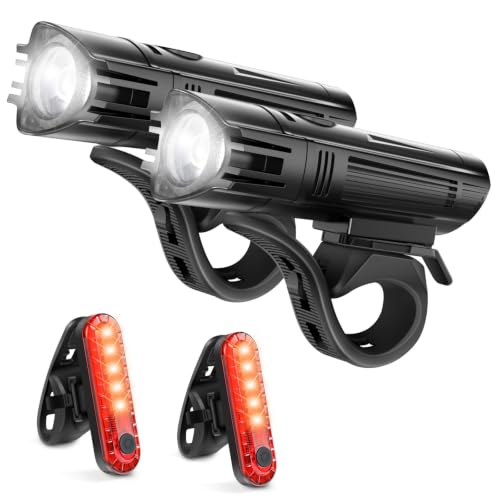
- ✓ Bright, reliable front light
- ✓ Easy tool-free mounting
- ✓ USB recharges fast
- ✕ Smaller taillight capacity
- ✕ Basic beam pattern
| Light Type | Rechargeable front headlight and rear taillight |
| Battery Capacity (Headlight) | 2000 mAh |
| Battery Capacity (Taillight) | 330 mAh |
| Water Resistance | IPX4 |
| Lighting Modes | Four modes: full brightness, half brightness, slow flashing, fast flashing |
| Mounting / Installation | Handlebar mount for headlight; silicone seat-post strap with four openings for taillight; tool-free installation |
With a quick press, the front light blooms to full brightness and instantly sharpens the night ahead, which is exactly what you want for those late-mile zooms on ultra-distance rides. The glow is clean and steady, not buzzily flashy, and you can switch modes with a single tap without fumbling in the dark.
The headlight sits snugly on the handlebar, and the silicone mount strap grips securely without needing tools. I appreciated how light the whole setup feels; it disappears on the bar, yet still feels sturdy enough to handle a few bumps on rough rural roads.
Switching to the taillight, the compact unit blends into the bike’s rear without looking bulky. The four modes cover most situations you’ll encounter, from steady day-in-the-saddle visibility to quick flashes for signaling at intersections.
The indicator on the headlight red-flagging low power is a small but welcome nudge when you’re deep into a long ride.
Battery life is sensible for long distances, with a 2000 mAh headlight and a 330 mAh taillight powering you through hours of darkness. USB recharging is convenient, so you can top up at a rest stop or during a quick pit break without hunting down a special charger.
The IPX4 rating means light rain won’t derail your plans, which matters on unpredictable weather days. Installation is effortless, and you can fine-tune fit on most seat posts and handlebars in seconds.
In real-world use, this set feels like a reliable companion for night climbs, early-morning toast-runs, and those “just in case” sections where visibility matters most. It’s simple, practical, and always ready when you need a little extra confidence on the road.
What Essential Features Make a Bike Suitable for Ultra Distance Riding?
The essential features that make a bike suitable for ultra distance riding include comfort, durability, gear range, and additional storage options.
- Comfortable Geometry: A bike with a relaxed geometry is crucial for ultra distance riding, as it allows for a more upright position, reducing strain on the back and neck over long hours of cycling. This can help prevent fatigue and discomfort, enabling riders to maintain their pace over extended periods.
- Durable Frame Material: Bikes made from materials like aluminum or carbon fiber offer a balance of weight and strength, which is important for long rides. A durable frame can withstand the rigors of long-distance travel, including rough terrains and adverse weather conditions.
- Wide Gear Range: A bike equipped with a wide gear range allows riders to tackle various terrains, from steep climbs to flat stretches, without excessive effort. Low gears are particularly beneficial for managing steep ascents, while higher gears help maintain speed on descents and flat roads.
- Comfortable Saddle: An ergonomic saddle designed for long-distance comfort is essential to prevent chafing and discomfort during prolonged rides. Choosing a saddle that fits the rider’s anatomy can significantly enhance their riding experience over long distances.
- Stable Wheels and Tires: Wider tires with a lower pressure can provide better traction and comfort on uneven surfaces, enhancing stability during long rides. Robust wheels are also important to handle the added weight of gear and withstand the stress of rough roads.
- Mounting Points for Accessories: Having integrated mounting points for racks, fenders, and other accessories is beneficial for carrying additional gear, such as food, water, and tools. This feature allows riders to customize their bikes for longer journeys, making it easier to transport necessities.
- Good Braking System: Reliable braking systems, such as disc brakes, are vital for safety, especially on long descents or in adverse weather conditions. They provide consistent stopping power and better modulation compared to traditional rim brakes, enhancing overall control.
- Lightweight Design: A lightweight bike can make a significant difference in energy expenditure during long rides. Reducing the overall weight of the bike ensures that the rider can maintain higher speeds and conserve energy over the duration of their journey.
Which Types of Bikes Are Best Suited for Ultra Distance Cycling?
The best bikes for ultra distance cycling typically prioritize comfort, durability, and efficiency over long miles.
- Touring Bikes: Ideal for carrying heavy loads, touring bikes are designed for stability and comfort over long distances.
- Gravel Bikes: These versatile bikes can handle a variety of terrains, making them suitable for mixed surface riding which is common in ultra-distance events.
- Endurance Road Bikes: With a geometry that promotes a more relaxed riding position, endurance road bikes are perfect for long hours in the saddle while maintaining aerodynamic efficiency.
- Fat Bikes: For those tackling extreme conditions or rugged terrain, fat bikes provide extra traction and stability, making them suitable for winter or off-road ultra distances.
- Mountain Bikes: In scenarios where the route includes challenging trails, mountain bikes offer the robustness and handling needed for varied terrains.
Touring bikes are equipped with wide tires and a relaxed geometry, allowing for a comfortable ride even when loaded with gear. They often come with multiple gear options to tackle varied elevations, making them a reliable choice for long journeys.
Gravel bikes are designed with wider tires than traditional road bikes, enabling them to absorb shocks from rough roads or trails. Their adaptability makes them popular for ultra-distance events that may involve both paved and unpaved surfaces.
Endurance road bikes are built with a focus on comfort, featuring a longer wheelbase and a more upright riding position. This design helps prevent fatigue during long rides while still offering the speed and responsiveness necessary for road cycling.
Fat bikes are characterized by their oversized tires, which provide excellent traction and control in soft or loose conditions such as snow or sand. This makes them suitable for ultra-distance races in extreme environments where traditional bikes may struggle.
Mountain bikes, while generally heavier, offer excellent stability and control on rugged trails. Their robust frames and wide tires allow riders to tackle steep climbs and technical descents, making them a viable option for ultra-distance events that include significant off-road sections.
What Are the Advantages of Road Bikes for Long Distances?
The advantages of road bikes for long distances are numerous and cater to the needs of endurance cyclists.
- Lightweight Frame: Road bikes are typically designed with lightweight materials such as carbon fiber or aluminum, which make them easier to handle and faster over long distances. This lightweight design helps reduce fatigue, allowing cyclists to maintain a higher speed for extended periods.
- Aerodynamic Design: The geometry of road bikes is optimized for aerodynamics, which minimizes wind resistance. This design feature is crucial for ultra-distance cycling, as it enables cyclists to conserve energy and improve overall performance over long rides.
- Narrow Tires: Road bikes come equipped with narrow, high-pressure tires that reduce rolling resistance on paved surfaces. This characteristic allows for smoother rides and greater speeds, which are essential for covering long distances efficiently.
- Multiple Gearing Options: Most road bikes feature a wide range of gears, which provide versatility for tackling various terrains. This gearing system allows cyclists to maintain an optimal cadence, making it easier to climb hills and accelerate on flat stretches during long rides.
- Comfortable Riding Position: Road bikes are designed to provide a more aggressive riding position, which can enhance performance. However, many models also incorporate features like ergonomic handlebars and saddles that help mitigate strain during long-distance rides, promoting comfort over hours of cycling.
- Efficient Power Transfer: The design of road bike components, such as the drivetrain and pedals, facilitates optimal power transfer from the cyclist to the road. This efficiency is crucial for long-distance cycling, as it maximizes the effort put into each pedal stroke, allowing for better energy management on long rides.
- Customization Options: Road bikes often have a wide range of accessories and components that can be customized to suit individual preferences. Riders can tailor their bikes with items like aerodynamic handlebars, lightweight wheels, and specialized saddles to enhance comfort and performance for ultra-distance events.
How Do Gravel Bikes Compare for Ultra Distance Rides?
| Feature | Bike A | Bike B | Bike C |
|---|---|---|---|
| Weight | Lightweight at 20 lbs, easy to handle for long distances. | Moderate weight of 23 lbs, offers good balance between speed and sturdiness. | Heavier at 25 lbs, designed for durability over long hauls. |
| Comfort | Ergonomic design with padded saddle, ideal for long rides. | Features adjustable components for personalized comfort during extended use. | Sturdy frame with shock absorption, provides a smooth ride over rough terrain. |
| Gear Range | Wide gear range for tackling various terrains easily. | Moderate gear range, suitable for most inclines. | Narrow gear range, better for flat surfaces but struggles on hills. |
| Stability | Stable on rough paths, great for maintaining speed. | Good stability with a lower center of gravity, handles well in wind. | Very stable, excels in technical sections but less nimble. |
| Price | $1,500 | $1,800 | $2,000 |
| Frame Material | Aluminum for lightweight performance. | Carbon fiber for durability and weight savings. | Steel for strength and comfort. |
| Tire Size | 700c x 38mm for versatility. | 650b x 47mm for better traction. | 700c x 32mm, more efficient on pavement. |
| Braking System | Disc brakes for consistent stopping power. | Hydraulic brakes for improved modulation. | Mechanical brakes, reliable but less powerful. |
For ultra distance rides, factors like weight, comfort, gear range, and stability greatly influence performance and rider experience.
What Fit and Sizing Considerations Must Be Taken for Maximum Comfort?
When selecting the best bike for ultra distance, fit and sizing considerations are crucial for maximizing comfort during long rides.
- Frame Size: The frame size should match the rider’s height and inseam to ensure proper leg extension and overall balance. A correctly sized frame helps prevent discomfort and fatigue, allowing for better performance over extended distances.
- Seat Height: The seat height should be adjusted so that the rider can fully extend their leg while pedaling without overextending the knee. This adjustment is vital for preventing knee strain and ensuring efficient power transfer through the pedals during long rides.
- Handlebar Position: The height and reach of the handlebars should be set to a comfortable level that allows the rider to maintain a relaxed posture. A proper handlebar position reduces strain on the back and shoulders, which is particularly important on ultra-distance rides where maintaining comfort is key.
- Crank Length: Choosing the appropriate crank arm length is essential for optimizing pedal stroke efficiency and comfort. Riders with longer legs may prefer longer cranks, while shorter riders may benefit from shorter cranks to avoid excessive knee flexion.
- Stem Length: The length of the stem can affect the rider’s reach and overall riding position. A properly sized stem allows for a comfortable grip and helps maintain an aerodynamic position without causing strain on the arms or back.
- Saddle Type: The type of saddle can significantly impact comfort, as different saddles cater to various riding styles and body shapes. It is important to choose a saddle that provides adequate support and pressure relief, especially for long durations in the saddle.
- Pedal System: The choice between platform pedals and clipless pedals can influence comfort and efficiency. Clipless pedals offer a secure connection to the bike, allowing for better power transfer and reduced foot fatigue, which is vital for ultra-distance riding.
How Does Wheel Size Influence Performance in Ultra Distance Cycling?
Wheel size significantly impacts performance in ultra distance cycling by affecting speed, stability, and comfort.
- 700c Wheels: These are the most common wheel size for road bikes and are known for their efficiency on smooth surfaces. They provide a balance between speed and comfort, making them suitable for long distances as they can roll faster while maintaining stability.
- 650b Wheels: Also known as 27.5-inch wheels, these offer a wider tire option for improved traction and comfort. They are particularly beneficial for mixed-terrain rides, as the larger volume allows for lower pressure, enhancing grip and reducing fatigue over long distances.
- 26-inch Wheels: Traditionally used in mountain bikes, they are more maneuverable and provide better acceleration. While not as common for ultra distance cycling, they can be advantageous in technical terrain where agility and control are crucial.
- 29-inch Wheels: These larger wheels are favored in some off-road cycling scenarios for their ability to roll over obstacles more easily. Their size can result in a smoother ride on rough terrain, but they may be less efficient on paved surfaces, making them a consideration for specific ultra distance routes.
- Hybrid Wheel Sizes: Some bikes may feature non-standard sizes or custom setups that blend characteristics of different wheel sizes. These can be tailored for specific performance goals, such as maximizing comfort during long rides or enhancing speed for racing scenarios.
What Gear and Accessories Should Be Considered for Ultra Distance Riding?
When preparing for ultra-distance riding, having the right gear and accessories is crucial for comfort, performance, and safety.
- High-Quality Bicycle: A lightweight and durable bike designed for long-distance travel is essential. Consider a touring bike or a gravel bike with a comfortable geometry and the ability to carry extra gear.
- Comfortable Saddle: A saddle that suits your body and riding style can prevent discomfort during long rides. Options like wide, padded saddles or those with cutouts can help reduce pressure and chafing.
- Clipless Pedals and Cycling Shoes: These provide better power transfer and stability, which is beneficial during long rides. Look for shoes that fit well and are compatible with your pedal system for maximum efficiency.
- Hydration System: Staying hydrated is critical for endurance riding. Choose between water bottles, hydration packs, or frame-mounted systems that allow easy access while riding.
- Multi-Tool: A compact multi-tool with essential tools can help you make quick repairs on the road. Features like tire levers, a chain breaker, and various wrenches ensure you’re prepared for common bike issues.
- Bike Lights: High-quality front and rear lights improve visibility and safety during long rides, especially in low-light conditions. Opt for rechargeable lights with multiple brightness settings for flexibility.
- Panniers or Bikepacking Bags: These allow you to carry essential gear, food, and tools comfortably. Look for waterproof and lightweight options that balance storage capacity and aerodynamics.
- GPS Device or Smartphone Mount: Navigation is key in ultra-distance riding. A dedicated GPS device or a mount for your smartphone can help you track your route and monitor your performance metrics easily.
- Comfortable Clothing: Invest in moisture-wicking and breathable fabrics to keep you dry and comfortable. Layering options are also beneficial to adapt to changing weather conditions during long rides.
- First Aid Kit: A basic first aid kit can be invaluable in case of minor injuries or emergencies. Include items like band-aids, antiseptic wipes, and pain relievers for peace of mind on your journey.
Which Brands Are Highly Regarded for Ultra Distance Bikes?
Several brands are highly regarded for ultra distance bikes, combining comfort, durability, and performance to cater to long rides.
- Trek: Known for its innovative designs and high-quality materials, Trek offers a range of ultra distance bikes like the Trek Domane. These bikes feature a geometry that prioritizes comfort during long rides, along with advanced features like vibration-damping technology and a wide gear range to handle various terrains.
- Salsa: Salsa bikes are designed with adventure and endurance in mind, particularly their Warbird and Fargo models. These bikes are equipped with ample tire clearance and stable geometry, allowing riders to tackle both paved and unpaved roads comfortably, making them ideal for ultra distance events.
- Cannondale: Cannondale’s Synapse series is well-regarded for ultra distance riding, offering a balance between performance and comfort. With features like a lightweight frame and endurance-oriented geometry, these bikes provide excellent handling and compliance over long distances, while still being fast and responsive.
- The Specialized Diverge is a popular choice among ultra distance cyclists, known for its versatility and comfort. It features a relaxed riding position and the ability to accommodate wider tires, which enhances stability and control on various surfaces, making it suitable for long rides.
- Surly: Surly bikes, particularly the Long Haul Trucker, are praised for their ruggedness and practicality. Designed for touring and long-distance cycling, these bikes feature a durable frame, extensive rack and fender mounts, and a comfortable geometry, making them ideal for carrying gear on extended journeys.