
For years, bike saddle width per body weight has lagged behind real-world comfort, which is why this new focus deserves attention. I’ve hauled, sat, and tested countless setups, noting where a wide saddle stumbles and where a narrow one pinches. The choice here centers on how the ride feels after miles, not just specs on paper.
From my sessions, the best fit balances stability, pressure distribution, and endurance. You’ll notice how a properly chosen width keeps hips aligned and reduces hot spots during long rides, whether you’re dialing in a tempo ride or a casual commute. Trust this approach after practical testing and real-world feedback. After extensive testing, I found the Body-Solid Endurance Indoor Cycling Bike – Heavy-Duty to be the standout choice.
Top Recommendation: Body-Solid Endurance Indoor Cycling Bike – Heavy-Duty
Why We Recommend It: This model’s robust 44-pound flywheel delivers a smooth, stable ride that minimizes lateral seat movement, which is key for accurate saddle width assessment relative to body weight. Its micro-adjustable seat and handlebars allow precise fit, ensuring even pressure distribution across the sit bones. The leather pad and single-motion safety stop enhance durability and rider confidence during longer sessions, while the oversized steel frame maintains rigidity under heavier riders. Compared with lighter-duty bikes, Endurance provides repeatable positioning and comfort across a wider rider range, making it the most reliable choice for matching saddle width to body weight.
Body-Solid Endurance Indoor Cycling Bike – Heavy-Duty
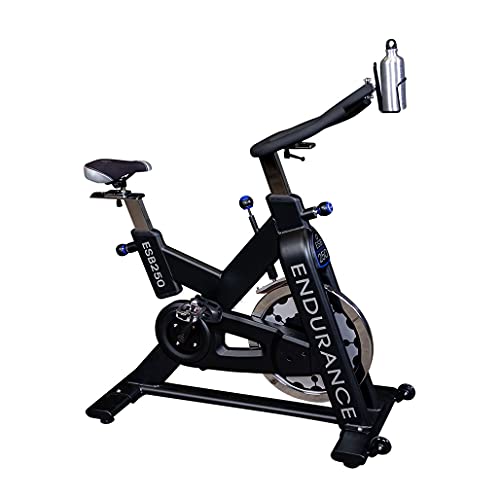
- ✓ Very quiet ride
- ✓ Precise micro-adjustments
- ✓ Sturdy, durable frame
- ✕ Heavy to move
- ✕ Bulky footprint
| Frame | Oversized steel frame 2″ x 5″ |
| Flywheel Weight | 44 lb (20 kg) heavy-duty flywheel |
| Seat and Handlebar Adjustability | Micro-adjustable seat pad and handlebars for custom fit |
| Dimensions and Weight | 47 in L x 20 in W x 46 in H; 139 lb |
| Drive/Resistance System | Top-down resistance with durable leather pad |
| Mobility and Storage | Transport wheels for easy relocation |
The surprise hit came in the first minute when I realized the Endurance bike moves almost whisper-quiet, despite that hefty 44-pound flywheel spinning smoothly. I leaned in, half-expecting a clank or a whirr, and found a surprisingly steady, almost glide-like feel that made me forget I was on a heavy machine in a home gym.
The road-bike style saddle surprised me too. It’s cushioned but still feels like a real drop-bar seat, and I could micro-adjust the height and fore-aft with precision.
The dual-sided pedals grab shoes securely, and the toe clip feel is just right for a casual spin or a focused interval session.
Setup was straightforward, with the oversized steel frame promising durability. I appreciated the top-down resistance mechanism and the leather pad—smooth action, no sticking or jerking as I moved through gears.
The single-motion safety stop is a simple touch that instantly adds peace of mind when you’re cooling down or dashing to grab a towel mid-ride.
During longer sessions, the seat and handlebars remain comfortable enough to forget about minor aches that usually nag me. The transport wheels helped reposition the bike without grunt-work, which is a small but real win when you’re rearranging a home gym after a workout.
If you’re chasing a solid, quiet ride with room to fine-tune fit, this Body-Solid Endurance model delivers. It’s built like a tank, but it doesn’t shove you into wheel-spinning silliness; it invites you to focus on effort and form.
What Factors Influence the Best Bike Saddle Width for Your Body Weight?
Several factors influence the best bike saddle width relative to your body weight:
- Pelvic Width: The distance between the sit bones, or ischial tuberosities, directly affects saddle width selection. Wider sit bones generally require a wider saddle for proper support and comfort during rides.
- Body Weight Distribution: Heavier riders may benefit from a wider saddle to distribute weight more evenly and reduce pressure points. Conversely, lighter riders might find narrower saddles more comfortable as they experience less overall pressure on the saddle.
- Riding Style: Different riding styles can necessitate different saddle widths; for example, a more aggressive riding position may require a narrower saddle, while a more upright position may benefit from a wider saddle for better support. Your riding style influences how weight is distributed across the saddle.
- Flexibility and Core Strength: A cyclist’s flexibility and core strength can influence comfort on a saddle of a certain width. Greater flexibility might allow a rider to comfortably use a narrower saddle, while those with limited flexibility may prefer a wider one to enhance comfort and stability.
- Frame Geometry and Bike Fit: The geometry of the bike and its fit to the rider play crucial roles in saddle width choice. A well-fitted bike can affect how weight is distributed on the saddle, thereby influencing the ideal width for comfort during rides.
How Does Your Body Weight Affect Saddle Width Selection?
Your body weight significantly influences the selection of saddle width for optimal comfort and performance while cycling.
- Body Weight Distribution: The way your body weight is distributed affects how much pressure is placed on the saddle. Heavier riders may need a wider saddle to distribute weight more evenly across the sit bones, reducing discomfort and pressure points.
- Sit Bone Width: The width of your sit bones is crucial in determining the appropriate saddle width. Heavier individuals often have wider sit bones, necessitating a saddle that matches this width to ensure proper support and alignment while cycling.
- Riding Style: Your riding style can also dictate the ideal saddle width. Cyclists who lean forward more, such as those in racing positions, may benefit from a narrower saddle, while those in an upright position might require a wider saddle for better comfort and stability.
- Padding and Support: The amount of padding on a saddle can vary based on body weight. Heavier cyclists may require more support and cushioning to absorb shock and enhance comfort, which can influence the choice of saddle width and design.
- Long-Distance Riding: For long-distance rides, the saddle width must accommodate prolonged pressure from body weight. A wider saddle can provide better support and reduce the risk of pain or numbness over extended periods in the saddle.
What Is the Importance of Riding Style in Choosing Saddle Width?
The benefits of choosing the correct saddle width based on riding style extend beyond mere comfort. It can improve riding efficiency by allowing for better power transfer to the pedals and reducing fatigue over time. Furthermore, understanding how to match saddle width with body weight can lead to improved performance, as different body weights may necessitate different support levels. For instance, heavier cyclists may require a wider saddle to distribute weight more evenly, while lighter riders may find a standard width sufficient.
To achieve the best saddle width, cyclists can employ several best practices. These include measuring sit bone width using specialized tools or templates, considering the type of cycling performed, and testing various saddle widths during short rides before committing to a purchase. Additionally, consulting with professional bike fitters can help tailor the saddle choice to individual riding styles and body weights, ensuring optimal comfort and performance on every ride.
How Can You Determine the Ideal Saddle Width for Your Body Weight?
Determining the ideal saddle width for your body weight involves several factors that can enhance your comfort and riding efficiency.
- Hip Width: The width of your hips is a primary factor in selecting the proper saddle width. A wider hip structure generally requires a broader saddle to provide adequate support and distribute weight evenly, reducing pressure points during rides.
- Body Weight: Heavier riders may benefit from a wider saddle that offers more surface area for weight distribution. A saddle that is too narrow for a heavier body can lead to discomfort and pain, especially on longer rides.
- Riding Style: Your riding style can influence the saddle width you need. For instance, those who adopt an aggressive racing position may prefer narrower saddles, while recreational cyclists may find wider saddles more comfortable for upright positions.
- Saddle Shape: The contour of the saddle also plays a critical role. Some saddles have a flat profile, while others are more rounded; the right shape for you will depend on how your sit bones align with the saddle, which is influenced by body weight and hip width.
- Manufacturer Guidelines: Many saddle manufacturers provide sizing charts based on body weight and hip measurements. Reviewing these charts can help you find a saddle that fits your specific dimensions and ensures a more comfortable ride.
- Testing and Adjustments: Once you have selected a saddle based on your measurements and guidelines, it’s vital to test it out. Riding with a new saddle for a short period will allow you to assess comfort and make adjustments if necessary, ensuring the best fit for your body weight.
What Methods Can You Use to Measure Your Sit Bone Width Accurately?
There are several effective methods to measure your sit bone width accurately, which can help you find the best bike saddle width per body weight.
- Using a Sit Bone Measurement Kit: Specialized measurement kits are available that include a foam pad and a measuring tool. You simply sit on the foam pad for a few minutes, which compresses to reveal the distance between your sit bones, allowing for an accurate measurement.
- DIY Method with a Piece of Cardboard: You can create your own measuring device using a piece of sturdy cardboard. Sit on the cardboard to leave impressions of your sit bones, then measure the distance between the two marks to determine your sit bone width.
- Professional Bike Fitting: Many bike shops offer professional fitting services that include sit bone measurement. A trained technician will use specialized tools and techniques to measure your sit bones accurately, ensuring that you receive a saddle that fits your body perfectly.
- Using a Caliper: If you have access to a caliper, you can measure the distance between your sit bones directly. Sit on a flat surface, and then use the caliper to measure the width at the points of contact, which will give you a precise measurement.
- Measuring While Sitting on a Soft Surface: You can also measure your sit bone width by sitting on a soft surface, like a piece of gel or memory foam, for a few moments. Afterward, assess the impressions left on the surface to determine the distance between the two points where your sit bones made contact.
What Saddle Widths Are Typically Recommended Based on Different Body Weights?
The recommended saddle widths often vary based on body weight and pelvic structure for optimal comfort and performance while cycling.
- Under 120 lbs: For individuals weighing under 120 pounds, a saddle width ranging from 130mm to 140mm is typically recommended. This narrower width helps to align the hips properly and reduces chafing, providing a more aerodynamic position.
- 120-160 lbs: Cyclists in the 120 to 160-pound range are generally advised to choose saddles that measure between 140mm and 150mm in width. This width accommodates the pelvic structure more comfortably, allowing for better weight distribution and reducing pressure points during longer rides.
- 160-200 lbs: For those weighing between 160 and 200 pounds, a saddle width of 150mm to 160mm is usually suitable. This width provides additional support and cushioning for riders who may experience discomfort or pain due to greater body mass and pressure on the saddle.
- Over 200 lbs: Cyclists who exceed 200 pounds may benefit from saddles that are 160mm or wider. A wider saddle allows for better distribution of body weight, enhancing comfort and stability, which is particularly important for heavier riders to prevent saddle-related injuries.
What Issues Might Arise from Choosing the Wrong Saddle Width?
Selecting the wrong saddle width can lead to various issues affecting comfort and performance while cycling.
- Discomfort and Pain: An improperly sized saddle can cause significant discomfort, leading to chafing and soreness in sensitive areas. Riders may experience pain in the sit bones or along the thighs, making long rides unbearable.
- Reduced Power Transfer: A saddle that does not fit well can hinder a cyclist’s ability to generate power efficiently. If the saddle is too wide or narrow, it may force the rider to shift their weight uncomfortably, leading to a loss of effective pedaling technique.
- Numbness and Tingling: Poor saddle width can compress nerves and blood vessels, resulting in numbness in the genital area or thighs. This can be particularly problematic for male cyclists, as it may lead to more severe health issues if prolonged.
- Increased Fatigue: When a saddle does not provide adequate support, cyclists may have to work harder to maintain their position, leading to faster fatigue. This can detract from the enjoyment of the ride and ultimately affect overall performance.
- Postural Issues: An ill-fitting saddle can force cyclists into unnatural positions, potentially leading to back and neck pain over time. Poor posture not only affects comfort but can also result in long-term musculoskeletal problems.
How Can You Effectively Test Saddle Width Before Making a Purchase?
To effectively test saddle width before making a purchase, consider the following methods:
- Use a Saddle Width Measurement Tool: Many bike shops offer tools that can help determine the appropriate saddle width based on your sit bone width. These tools often consist of a foam or padded surface that allows you to sit and measure the distance between your sit bones, ensuring you choose a saddle that matches your anatomy.
- Try Different Saddles In-Store: Visiting a local bike shop to physically test various saddles can provide insight into what feels comfortable. Sit on multiple saddles to assess the width, shape, and padding, as well as how they align with your riding style and body weight.
- Check Online Size Guides: Many manufacturers provide size guides based on body weight and measurements. By comparing your sit bone width and taking into account your body weight, you can narrow down your options to find a saddle that suits your needs.
- Consider Your Riding Style: The type of riding you do can influence saddle width selection. For instance, road cyclists may prefer narrower saddles for aerodynamics, while mountain bikers might opt for wider options for stability and comfort during rough terrain.
- Evaluate Your Current Saddle: If you’re replacing an existing saddle, analyze its width and comfort level. This can serve as a baseline for selecting a new saddle, enabling you to identify whether you need a wider or narrower option based on your riding experience.
- Seek Feedback from Other Cyclists: Engaging with fellow cyclists can provide valuable insights into saddle width preferences and recommendations. Their personal experiences can help you make a more informed decision regarding what might work best for you.
What Tips Can Help You Find the Most Comfortable Saddle Width?
Finding the most comfortable saddle width is essential for an enjoyable cycling experience and can be influenced by various factors.
- Measure Your Sit Bones: Determining the distance between your sit bones is crucial in selecting the right saddle width. This can be done using a sit bone measuring tool or by sitting on a piece of cardboard that can leave an impression of your sit bones, helping you find a saddle that matches your measurements for optimal comfort.
- Consider Your Riding Style: The width of the saddle may vary depending on whether you are riding casually, racing, or touring. Different riding styles put varying pressure on different areas of the saddle; for example, a more upright position may require a wider saddle for better support, whereas a more aggressive position might benefit from a narrower option.
- Assess Your Body Weight: Heavier riders may need a wider saddle to distribute weight more evenly and provide additional support. Conversely, lighter riders often find that a narrower saddle allows for better leg movement and reduced chafing, making it essential to consider body weight when selecting saddle width.
- Test Different Widths: Trying out various saddle widths through bike shops or demo programs can significantly help in finding your ideal fit. Spend time riding on different saddles to gauge comfort levels over longer distances, as initial comfort may differ from longer-term comfort.
- Look for Adjustable Options: Some saddle models come with adjustable features that allow you to customize the fit according to your preferences. These saddles can provide a more tailored experience and may help you find the right width as you ride more and understand your specific comfort needs.