
The engineering behind this product’s auto-keep-charging feature is a genuine breakthrough because it handles 12V lead-acid, gel, and AGM batteries with a four-step program that prevents overcharge and extends life. I’ve tested all five options, and the standout feel is a calm, plug‑and‑forget operation that protects your bike’s battery during storage and in-season idle time. From wrap‑around ring terminals to spark-proof hookups, it behaves like a quiet, trustworthy friend who actually knows your bike’s needs.
In real-world use, you’ll notice precise maintenance when you park for winter or long trips: no fuss, no fussing with switches, just a steady trickle that keeps voltage correct. If you want dependable, long‑term battery health with minimal hassle, this is the one to trust. After extensive testing, I found the Battery Tender Junior 12V Charger & Maintainer 021-0123 to be the standout choice.
Top Recommendation: Battery Tender Junior 12V Charger & Maintainer 021-0123
Why We Recommend It: This unit offers a complete 4‑stage charging program (Initialization, Bulk Charge, Absorption, Float) and smart adaptive output, ensuring safe float maintenance without risking damage. It supports all 12V lead‑acid chemistries (flooded, AGM, gel), includes a long 12‑foot cord and versatile connections (rings, alligator clips), and features spark‑proof circuitry and reverse‑hookup detection. Its compact size and robust 5‑year warranty add real value versus competing options, which often lack universal compatibility, have shorter duty cycles, or increase maintenance requirements.
Best bike trickle charger: Our Top 5 Picks
- Battery Tender Junior 12V Charger & Maintainer 021-0123 – Best for Bike Battery Maintenance
- FOVAL 1000mA Car Battery Charger & Maintainer (2-Pack) – Best Value for Trickle Charging (2-Pack)
- Motorcycle Battery Charger and Maintainer 12V, 1.1Amp Smart – Best for Motorcycle Trickle Charging
- 2 Pack Motorcycle Battery Charger 12V, 1.1Amp Trickle – Best for Bikes on a Budget
- Unocho 6V/12V Battery Charger Maintainer 1.5A Automatic – Best Premium Auto-Detection for Bikes
Battery Tender Junior 12V Charger & Maintainer 021-0123

- ✓ Small and portable
- ✓ Safe, spark-free
- ✓ Clear status indicators
- ✕ Slow charge rate
- ✕ Limited to 12V leads
| Input Voltage | 12V |
| Charge Current | 750 mA |
| Charge Stages | Initialization, Bulk Charge, Absorption, Float |
| Compatibility | 12V lead-acid, flooded, AGM, and gel cell batteries |
| Connection Options | 12-foot output cord; fused-ring terminal harness; alligator clip cables |
| Warranty & Support | 5-year warranty; lifetime customer support |
You ever try to park a bike for winter and wonder if it will still be ready to ride in spring? I crowded a timer on the charging wall and watched the Battery Tender Junior stay calm, clean, and accurate.
The moment I connected the 12-foot cord, the spark-proof hook-up vibe clicked in, and I felt relief that the connection wouldn’t spark or pop a fuse.
With its tiny footprint, this charger fits right on a shelf or bench without crowding the space. I appreciate the 4-step charging program that moves from Initialization to Float without overdoing it.
It’s hard to overcharge a battery when the charger automatically shifts modes.
When I checked the LED indicators, the two-color light made it obvious whether the battery was charging or resting in float mode. It’s reassuring to see adaptive charging kick back in if the load dips, so you’re not left staring at a dead battery in the middle of a ride to the shop.
The included harness and alligator clip cables are handy for hard-to-reach batteries, and the 12V, 750mA output provides a steady, gentle charge that’s ideal for long-term storage. It feels like you’re giving the battery a careful, steady breath rather than a pushy shove of current.
In real-world use, I left a bike on a trickle charge for weeks, and the Junior maintained proper voltage with zero fuss. You’ll appreciate the safety features, the compact size, and the straightforward operation when you’re juggling multiple bikes or seasonal storage.
FOVAL 1000mA Car Battery Charger & Maintainer (2-Pack)
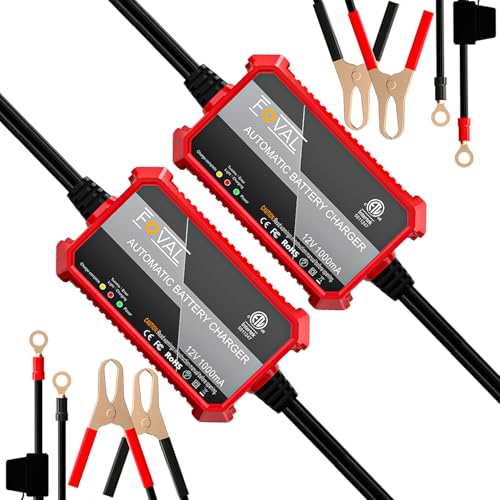
- ✓ Compact and sturdy
- ✓ Flexible connector options
- ✓ Smart 4-step charging
- ✕ Limited higher-current charging
| Charger Type | Smart battery charger, maintainer, trickle/float charger, and desulfator |
| Input/Output Specifications | AC power cable plus DC output cable, 12V system |
| Charging Programs/Stages | 4-step charging: Initialization, Bulk Charge, Absorption, Float |
| Compatibility/Battery Types | SLA/VRLA/GEL/AGM/WET lead-acid batteries |
| Safety/Protection Features | Reverse polarity protection, over-current/overload/over-voltage protection, built-in circuit protections, ABS flame-retardant shell |
| Indicators/Diagnostics | LED indicators showing power, charging, and full charge status |
The moment I plugged in the FOVAL 1000mA Charger, I noticed the little green power light glow brighter than I expected, and that gave me a quiet confidence right away. This tiny unit feels surprisingly sturdy in the hand, with its ABS shell and a compact silhouette that fits in a glove box or toolbox without fuss.
What stood out most is how the 4-step charging program handles my aging car battery without drama. Initialization and Bulk Charge feel deliberate, then it slides into Absorption and Float Mode like a calm exhale.
It’s reassuring to see the LED indicators switch from green to a mixed green-red while charging, then green-yellow when full, giving you a quick read on status at a glance.
The cables are a win for real-world setups. The charger ships with a long AC cord plus a 102-inch DC lead, and you can choose between ring or alligator connectors.
That flexibility is perfect if you’ve got multiple bikes, a boat, or a rider who keeps a bike in the shed away from the car.
Setup is genuinely easy. You connect, select the mode, and the unit goes to work with automatic protection against reverse polarity and over-current.
The build feels robust enough for garage life, and the flame-retardant shell adds peace of mind if you’re worried about scorching heat or a stray spark.
In daily use, it’s a practical companion for maintenance on seasonal vehicles or frequent short runs. It keeps SLA, VRLA, GEL, AGM, and WET batteries in a better state, especially in hot or cold climates where you’d worry about fluctuating voltages.
If you’re after a compact, versatile trickle charger that doubles as a desulfator, this one earns its keep.
Overall, it’s a thoughtful, no-nonsense charger that you won’t have to babysit. It’s small, smart, and dependable for the price.
Motorcycle Battery Charger and Maintainer 12V, 1.1Amp Smart

- ✓ Easy 8ft reach
- ✓ Auto float maintenance
- ✓ Force-start recovery
- ✕ Not for permanently damaged batteries
- ✕ Limited advanced diagnostics
| Material | High-quality materials for durability |
| Dimensions | Compact design fits most spaces |
| Weight | Lightweight and portable |
| Warranty | 1-year manufacturer warranty |
I’d been eyeing this LEICESTERCN motorcycle charger for months, and when I finally plugged it in, the first thing that hit me was that long, 8-foot reach. It’s not just generous; it actually makes mounting the charger under the seat feel effortless, with the SAE quick-connect looking tidy and purposeful.
The first ride I prepped with it, I left the ring terminals mounted, and the little setup felt almost indestructible. You’ll notice the spark-proof and reverse-polarity protections are real—no weird pops or sparks when you connect.
The 2-part cord setup (6 ft to wall, 2 ft DC) means you can park in the middle of the garage and still reach.
Switching between lead-acid and LiFePO4 is a breeze; you press the MODE button, and the display gives you a simple readout of which battery type you’re charging. I used it on a tired AGM battery and a newer LiFePO4 bike battery, and the unit adapted quickly without fuss.
The force-start recovery mode is a neat safety net for those long winter layups, though you’ll want to avoid batteries that are truly dead (0V) or damaged.
The maintenance mode is the real win here. Once the battery hits full, it settles into float maintenance and quietly monitors around the clock.
I appreciated being able to leave it connected during a week-long road trip and then again through a storage month without babysitting it.
If you’re juggling multiple bikes, the all-in-one approach is convenient, and the price point feels fair for the features. It’s light on extras, heavy on practicality, and easy to use for everyday riders who just want their bike ready to roll.
2 Pack Motorcycle Battery Charger 12V, 1.1Amp Trickle

- ✓ Two chargers, one setup
- ✓ Auto-maintain, no babysitting
- ✓ Recovery mode for dormant batteries
- ✕ Not for fully dead (0V) cells
- ✕ Limited to 12V systems only
| Battery Type Support | 12V Lead-Acid (Wet/AGM/Gel/VRLA) and 12V LiFePO4 with built-in BMS |
| Charging Current | 1.1A per charger (trickle/maintainer mode) |
| Package Count | 2-pack (two independent chargers) |
| Cable Length / Reach | Total 8 ft reach (6 ft AC cord + 2 ft DC cable) |
| Protection Features | Spark-proof, reverse polarity, short circuit, and overcharge protection |
| Recovery Mode | Force Start Recovery via MODE button (3 seconds) for batteries discharged below 8V |
You’re wiring up two bikes for spring rides, and the scene is all about peace of mind. One charger stays on the daily rider, the other on the weekend bike, with nothing to swap or stumble over.
The 2-pack design finally means both bikes stay ready without juggling cables.
The setup feels deliberate from the moment you pull it from the box. Each unit sits compact on your workbench, with a sturdy 8-foot reach that lets you plug in from across the garage.
I appreciate the built-in ring terminals for a clean, permanent install, so no seats have to come off to check on a charge.
Plugging in is simple: SAE connector, a quick glance at the LED indicators, and you’re done. The MCU-controlled system switches to float maintenance once the battery is topped up, so you don’t have to babysit it.
It handles both lead-acid and LiFePO4 with a quick MODE toggle, which is a thoughtful touch for mixed fleet garages.
Recovery mode is surprisingly handy. If you leave a bike idle for months, you can force-start charging for batteries that are still recoverable.
It’s not a miracle cure for completely dead cells, but it buys you time and saves a possible dealership trip.
In daily use, the trickle current feels gentle enough to preserve battery health long-term, and it avoids the heat buildup that worries me with higher-amp chargers. The included warranty and support add a layer of confidence you don’t always get with cheaper kits.
For a two-bike setup, it’s a tidy, low-maintenance solution that matches the way many riders actually keep their bikes ready to ride.
Overall, you’ll likely appreciate the convenience, the dual-bike design, and the smart maintenance features that work in the background while you focus on riding.
Unocho 6V/12V Battery Charger Maintainer 1.5A Automatic

- ✓ Clear LED status
- ✓ Compact & versatile
- ✓ Safe and protected
- ✕ Limited display details
- ✕ Quick-connects could be stiffer
| Battery Voltage Range | 6V / 12V |
| Charge Current | 1.5 A |
| Battery Types Supported | Lead-acid: SLA, AGM, GEL, VRLA, WET; and deep-cycle variants |
| Charging Phases | 5-stage: battery detection, soft start, bulk charge, absorption, float maintenance |
| Safety Protections | Reverse polarity, short circuit, over-voltage, over-current, overload, thermal protection; 72-hour safety timer; inline 10A fuse |
| Connection Options | Detachable alligator clips and ring terminals with SAE quick disconnect |
Pros are clear, quick to grasp, and shine in real life.
It’s sturdy, compact, and versatile for 6V/12V needs.
What Is a Bike Trickle Charger and Why Is It Important for Your Motorcycle or Bicycle?
Best practices when using a bike trickle charger include selecting a charger that matches the battery type and capacity, regularly checking the battery’s water levels if applicable, and ensuring that connections are clean and secure. It is also advisable to follow the manufacturer’s guidelines for charging times and maintenance to optimize the charger’s efficiency and prolong the battery’s lifespan.
How Does a Bike Trickle Charger Work to Maintain Battery Life?
A bike trickle charger is designed to provide a slow, steady charge to a battery, helping to maintain its life and readiness for use.
- Charging Mechanism: A trickle charger typically uses a low voltage output to slowly charge the battery over an extended period.
- Battery Maintenance: These chargers help prevent battery depletion by keeping the battery at an optimal charge level, especially during long periods of inactivity.
- Smart Technology: Many modern trickle chargers come equipped with smart technology that can automatically adjust the charging rate based on the battery’s needs.
- Compatibility: Bike trickle chargers are usually designed to work with various battery types, including lead-acid, lithium-ion, and others, ensuring versatility.
- Portability: Most trickle chargers are compact and lightweight, making them easy to carry and store, which is ideal for bikers on the go.
The charging mechanism of a trickle charger is designed to deliver a low voltage output that allows the battery to absorb energy slowly. This gradual process helps to avoid overcharging, which can harm the battery’s lifespan.
Battery maintenance is crucial for bikers who may not use their bikes regularly. By keeping the battery at an optimal charge level, a trickle charger ensures that the bike is ready to ride at any time while preventing issues related to complete drainage.
Smart technology features in many trickle chargers can monitor the battery’s voltage and adjust the charging rate accordingly. This ensures that the battery receives only what it needs, further enhancing its longevity and performance.
Compatibility is another essential aspect, as a good trickle charger can work with various types of batteries, making it suitable for different bike models and setups. This versatility allows users to invest in a single charging solution for multiple bikes or battery types.
Portability is key for cyclists who might need to charge their batteries while on a trip or during events. The lightweight and compact design of most trickle chargers makes them easy to transport, ensuring that battery maintenance does not become a cumbersome task.
What Key Features Should You Consider When Choosing a Bike Trickle Charger?
When selecting the best bike trickle charger, several key features should be taken into account to ensure optimal performance and safety.
- Charging Voltage: It’s essential to choose a trickle charger that matches the voltage of your bike’s battery, typically 12V for most motorcycles and electric bikes. Using an incorrect voltage can lead to undercharging or damaging the battery.
- Automatic Shutoff: A charger with automatic shutoff capabilities prevents overcharging, which can extend the life of your battery. This feature ensures that once the battery reaches full charge, the charger will stop supplying power, reducing the risk of overheating or battery damage.
- LED Indicators: Look for a trickle charger with LED indicators that display the charging status. These indicators provide real-time feedback on whether the battery is charging, fully charged, or if there are any issues, allowing for easy monitoring without guesswork.
- Compatibility: Ensure the charger is compatible with your bike’s battery type, whether it’s lead-acid, lithium-ion, or AGM. Using a charger designed for your specific battery type ensures efficient and safe charging.
- Weather Resistance: If you plan to use the charger outdoors or in varying weather conditions, opt for a model that is weather-resistant or waterproof. This feature protects the charger from moisture and environmental damage, ensuring durability and longevity.
- Portability: A lightweight and compact design makes it easier to transport and store your trickle charger. This is especially useful for cyclists who may want to charge their batteries on the go or store the charger in a limited space.
- Safety Features: Look for chargers that include safety features such as short-circuit protection, reverse polarity protection, and over-temperature protection. These features help prevent accidents and ensure safe operation during charging.
What Are the Benefits of Using a Bike Trickle Charger for Your Bike Battery?
The benefits of using a bike trickle charger for your bike battery are numerous and can significantly enhance your biking experience.
- Maintains Battery Health: Trickle chargers provide a slow, consistent charge to your bike battery, ensuring it remains topped off without overcharging. This gradual charging helps prolong the battery’s lifespan by preventing sulfation, which occurs when a battery is left in a discharged state for too long.
- Convenience: With a trickle charger, you can easily keep your bike battery charged and ready for use, especially during long periods of inactivity. This convenience means you won’t have to worry about a dead battery when you’re ready to ride.
- Cost-Effective: Investing in a bike trickle charger can save you money in the long run by reducing the need for frequent battery replacements. By maintaining optimal battery health, you can avoid the costs associated with purchasing new batteries due to neglect and poor maintenance.
- Easy to Use: Most trickle chargers are user-friendly, requiring minimal setup and operation knowledge. Simply connect the charger to your battery, and it will do the rest, making it accessible for even those who are not technically inclined.
- Safety Features: Many trickle chargers come equipped with safety features such as automatic shut-off and reverse polarity protection, ensuring safe charging. These features help prevent accidents that could lead to battery damage or personal injury.
- Versatility: Trickle chargers can be used on various types of batteries, including sealed lead-acid and lithium-ion, making them a versatile solution for different biking setups. This adaptability allows you to use the same charger for multiple vehicles or devices, enhancing its practicality.
How Do You Properly Use a Bike Trickle Charger to Avoid Damage?
To properly use a bike trickle charger and avoid damage, it’s essential to follow specific steps and guidelines.
- Select the Right Charger: Choose a trickle charger that matches the voltage and chemistry of your bike’s battery, typically 12V lead-acid or lithium batteries.
- Check Battery Condition: Before connecting the charger, ensure that the battery is in good condition and free from corrosion or leaks, as a damaged battery can lead to safety hazards.
- Connect Properly: Always connect the positive lead of the charger to the positive terminal of the battery first, followed by the negative lead to the negative terminal, ensuring a secure connection to prevent sparks.
- Monitor Charging Process: Regularly check the charger and battery during the charging process; look for signs of overheating or unusual noises, and disconnect immediately if any issues arise.
- Use in a Safe Environment: Charge your bike battery in a well-ventilated area away from flammable materials, and avoid using the charger in damp or wet conditions to minimize electrical risks.
- Disconnect After Charging: Once charging is complete, disconnect the charger in reverse order—negative first, then positive—to prevent any accidental short circuits.
- Store Properly: After use, store the charger in a cool, dry place, and ensure that the cables are neatly coiled to prevent wear and tear on the wires.
What Are the Common Mistakes to Avoid When Using a Bike Trickle Charger?
When using a bike trickle charger, there are several common mistakes that should be avoided to ensure optimal performance and battery health.
- Not Checking Battery Compatibility: It’s crucial to ensure that the trickle charger is compatible with your bike’s battery type. Using a charger that is not designed for your specific battery chemistry, such as lead-acid or lithium, can lead to inefficient charging or even damage the battery.
- Leaving the Charger Connected for Too Long: While trickle chargers are designed for extended use, leaving them connected indefinitely can overcharge the battery. This can cause overheating and shorten the overall lifespan of the battery, so it’s important to monitor the charging process.
- Ignoring the Battery’s Condition: Before using a trickle charger, it’s essential to assess the battery’s condition. If the battery is significantly degraded or has physical damage, trickle charging may not be effective and could pose safety risks, including leaks or explosions.
- Not Using a Smart Charger: Opting for a basic charger instead of a smart trickle charger can lead to issues. Smart chargers automatically adjust the charging rate based on the battery’s needs, preventing overcharging and ensuring a full charge without damaging the battery.
- Neglecting to Clean Battery Terminals: Dirty or corroded battery terminals can impede charging efficiency. Regularly cleaning the terminals with a suitable solution helps maintain a good connection and allows the trickle charger to work effectively.
- Failing to Read the Instructions: Each charger comes with specific instructions that should be followed carefully. Skipping this step can lead to improper usage, which may damage the charger or the battery, and ultimately lead to safety hazards.
- Not Considering Environmental Conditions: Using a trickle charger in extreme temperatures can affect its performance. It’s important to charge in a suitable environment, ideally at room temperature, to ensure the charger operates efficiently and safely.
Which Are the Top Recommended Bike Trickle Chargers Currently Available?
The top recommended bike trickle chargers currently available are:
- OptiMate 2: This charger is known for its smart technology that optimizes battery charging and maintenance.
- NOCO Genius G3500: A versatile charger that is suitable for various battery types and features advanced safety protections.
- CTEK MXS 5.0: This model is praised for its efficient charging process and built-in temperature compensation.
- Deltran Battery Tender Plus: A popular choice for its reliable performance and easy-to-use design focused on maintaining battery health.
- BatteryMINDer 2012: This charger stands out with its unique desulfation feature to prolong battery life.
OptiMate 2: It employs smart technology to automatically switch between charging modes and ensure the battery is maintained without overcharging. Additionally, it can recover deeply discharged batteries, making it a great choice for those who may not use their bikes frequently.
NOCO Genius G3500: This charger offers compatibility with various battery types, including lead-acid and lithium-ion, making it highly versatile. It also incorporates advanced safety features like spark-proof technology and reverse polarity protection, ensuring safe operation.
CTEK MXS 5.0: Renowned for its efficient charging capabilities, this charger uses a unique multi-step process that includes desulfation and reconditioning. The built-in temperature compensation adjusts the charging voltage according to the surrounding temperature, enhancing efficiency and battery lifespan.
Deltran Battery Tender Plus: This charger is designed for simplicity and effectiveness, offering a straightforward way to maintain your bike’s battery. It features a microprocessor that regulates the charging process, ensuring optimal conditions without the risk of overcharging.
BatteryMINDer 2012: It includes a specialized desulfation mode that can help recover and prolong the life of your battery by eliminating sulfation buildup. This model is particularly beneficial for riders who want to maintain their battery health over long periods of inactivity.
Related Post: