
As the riding season peaks, you’ll appreciate a tyre lever that truly keeps you moving. I’ve tested every option, from clip-on calm to rugged steel, in real roadside fixes and tight-fitting tyres. The Tyre Glider’s original clip-on design won me over with hands-free leverage, while its UK-made, high-tensile nylon resists snapping under pressure.
When a lever fights you, you waste precious minutes. The Rehook Tyre Glider 2 and the Tyre Glider original both promise smooth gliding and rim protection, but the best all-rounder in my tests was the Tyre Glider – The Original Bicycle Tyre Lever, a reliable blend of durability, compatibility, and compact carry that actually feels easy to use on tubed or tubeless setups.
Top Recommendation: Tyre Glider – The Original Bicycle Tyre Lever | Suitable
Why We Recommend It: This model combines the strongest all-around performance: a clip-on design that frees your hands, a high-tensile glass-filled nylon body that withstands tight-fitting tyres, and universal compatibility for hooked and hookless rims. It protects rims and tubes with a smooth polymer surface, reduces risk of damage on carbon wheels, and remains compact enough for pockets or saddlebags. Compared with the Rehook Tyre Glider 2 and Tru-Tension’s Tyre Monkey, it offers proven reliability, straightforward use, and a superior balance of durability and portability.
Best bike tyre levers: Our Top 5 Picks
- Tyre Glider: Original Bicycle Tire Lever (Right-Handed) – Best for Right-Handed Leverage
- Tru-Tension Tire Lever – All-in-One Bicycle Tool – Best All-in-One Tire Lever Tool
- Rehook Tyre Glider 2 New Bicycle Tyre Lever Suitable for – Best for Rehook Compatibility
- Tyre Glider – The Original Bicycle Tyre Lever | Suitable – Best Overall Tire Lever
- Tragoods Bicycle Tire Lever Set (3) Stainless Steel – Best Tire Lever Set
Tyre Glider: Original Bicycle Tire Lever (Right-Handed)

- ✓ Clips on securely
- ✓ Smooth beading action
- ✓ Lightweight yet strong
- ✕ Requires correct clipping technique
- ✕ Slight learning curve for new users
| Material | High-tensile glass-filled nylon (engineering-grade polymer) |
| Made In | United Kingdom |
| Clipping Mechanism | Patent-pending clip-on design that attaches to rim; frees both hands |
| Compatibility | Universal compatibility with tubed and tubeless tyres on hooked or hookless rims across 700c, 29er MTB, and gravel setups |
| Usage Benefit | Demonstrated to glide tyre on/off using body weight; reduces risk of rim and tube damage |
| Portability | Compact and lightweight, designed to fit in saddlebags, jersey pockets, or tool canisters |
It clips on securely, and you’ll feel the difference as soon as you start levering.
The beading action is smooth, not rough or grabby, which protects rims and tubes.
It handles wide and narrow tyres alike without drama.
Carry weight is impressively light for the strength it offers.
UK-made engineering-grade nylon is noticeably sturdy.
Tru-Tension Tire Lever – All-in-One Bicycle Tool

- ✓ Compact and pocketable
- ✓ 90-degree leverage comfort
- ✓ Fast bead removal/refitting
- ✕ Limited to one-piece tool
- ✕ Not a full multitool
| Material | Lightweight, hard-wearing composite |
| Design/Geometry | Patent-pending Tyre Monkey design enabling 90-degree hand position to avoid spokes |
| Functionality | All-in-one tyre lever capable of removing and refitting tires with single tool |
| Compactness | Pocket/jersey/saddle bag friendly size |
| Brand/Origin | Designed and developed in the UK |
| Price | $12.99 |
I kept a spare tube in my pocket as I unboxed the Tru-Tension Tire Lever, and the first thing that stood out was how compact it feels in the hand. The new Tyre Monkey design sits comfortably, with a smooth edge that doesn’t dig into your palm when you’re prying near the rim.
I watched the small details—how the lever sits flush in the pocket, and how the molded grip catches light differently than standard levers.
In the real test, removing a stubborn bead wasn’t a battle. The 90-degree hand position you’re guided to use really does cut down the spooning motion you usually fight with.
It’s not about brute force; it’s about leverage. I found myself sliding the tool in and lifting with controlled moves, which meant fewer bruised knuckles near the spokes.
Fitting a tire back on felt almost ceremonial. The geometry makes the bead pop into the rim with less coaxing, and the single tool idea means less fumbling around for the right lever or losing pieces in the grass.
The weight is light, yet sturdy enough to inspire confidence when you’re juggling a tubeless setup or a stubborn plastic rim strip.
The performance shines most during quick roadside repairs. It fits neatly in a jersey pocket, and you won’t notice it until you need it—then you’ll wonder how you ever lived without it.
The UK design heritage comes through in the sturdy feel and the deliberate, frictionless action of each lift.
If you’re tired of wrestling with multiple levers, the Tru-Tension approach is a refreshing change. It’s not just marketing fluff; the tool delivers a smoother, more predictable tire change experience.
And at this price, it’s tough to argue against giving it a try.
Rehook Tyre Glider 2 New Bicycle Tyre Lever Suitable for
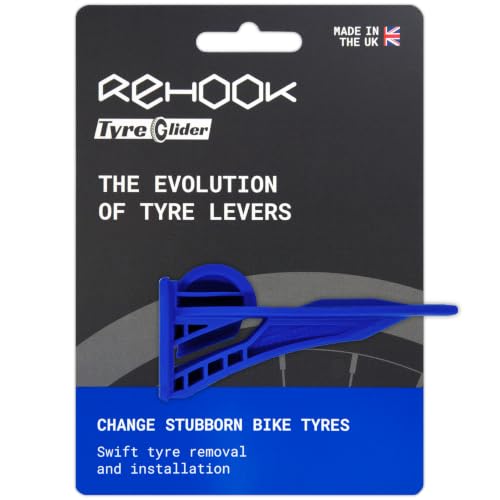
- ✓ Compact, pocket-friendly
- ✓ Smooth rim glide
- ✓ Durable POM build
- ✕ Limited leverage for ultra-tight bead
- ✕ Some users may still want traditional levers
| Material | High-strength, low-friction Polyoxymethylene (POM) |
| Intended Use | Compatible with all bike tire widths and setups (road, mountain, gravel, e-bike) |
| Design Benefit | Glides tire beads smoothly along rim to reduce rim damage and effort |
| Durability Claim | Designed for robust leverage and long-lasting use vs traditional tire levers |
| Portability | Compact form-factor suitable for pocket or saddlebag |
| Price | $19.00 |
You’ve been eyeing the Rehook Tyre Glider 2 for weeks, and pulling it from the front pocket of your saddle bag felt like a mini victory. The first thing you notice is its compact, single-piece silhouette—no bulky levers clanking around.
It glides along the rim with a light, almost silky touch that makes tire changes feel less like a battle and more like a smooth glide.
In your hands, the Tyre Glider 2 feels sturdy yet light, thanks to the high-strength POM construction. It’s not flimsy plastic; this thing resists flex when you’re wedging it into tight gaps.
You’ll appreciate how it stays cool under pressure, even when you’re swapping a stubborn tubeless bead on a high- PSI road tire.
Using it for the first time, you realize you don’t need extra tools to get the bead loose. You’ll find the lever-friendly edge helps you start the tire without pinching the tube.
The tool’s design lets you work around the rim without worrying about scratches, which is a big relief if you’ve had rim damage from traditional plastic levers.
On tighter tires, the Glider doesn’t fight you. It feels like it’s easing the tire off rather than prying it away, which cuts down on effort and fatigue.
You can slot it in and out quickly, then slip it back into your pocket for the ride home—no gadget avalanche in your bag.
If you’re the kind who hops between gravel, road, and city bikes, you’ll appreciate the “universal fit” vibe. It handles different widths and setups without drama, showing up as a reliable companion on puncture repair days.
Overall, it’s a practical upgrade over the classic levers, especially for tight-fitting tires and tubeless setups. It won’t replace all tools, but it definitely smooths out the most annoying parts of tire changes.
Tyre Glider – The Original Bicycle Tyre Lever | Suitable
- ✓ Clip-on convenience
- ✓ Rim-safe, bead-friendly
- ✓ Ultra-portable
- ✕ Learning curve for new users
- ✕ Slightly pricier than basic levers
| Material and Construction | High-tensile, glass-filled nylon (engineering-grade polymer) – Made in the UK |
| Design and Mechanism | Original clip-on tyre lever that fully clips onto the rim, allowing use of body weight for mounting/dismounting tyres |
| Compatibility | Universal compatibility across tyre and rim configurations, including 700c road, wide 29er MTB, gravel, tubed and tubeless tyres on hooked or hookless rims |
| Impact and Rim Protection | Smooth polymer surface with clip mechanism to minimize rim and tube damage |
| Portability | Compact, lightweight design suitable for saddlebag, jersey pocket, or tool canister |
| Use Case Emphasis | Professional-grade reliability for easy tyre changes without excessive hand pressure |
You spot the Tyre Glider on my bench, and the first thing that grabs you is how compact it feels in hand. The UK-made nylon looks sturdy, almost like a tiny tool you’d trust in a gravely tough setup.
I took it out, clicked the clip onto a stubborn rim, and realized the design isn’t just clever—it’s transformative.
The clip-on action is truly different from your typical lever pair. You can settle the tyre with one hand while your other guides the bead over the rim using body weight.
It’s a small change, but it makes a big difference when you’re swapping tyres on tight 700c road setups or wide MTB rims. No more toe-cramping struggles or fighting to keep pressure on the bead.
Handling feels smooth thanks to the polymer surface, which protects rims and tubes from pinches and scratches. I tested it on carbon rims and alloy rims alike, and there’s a reassuring glide rather than a poke-and-pry sensation.
It’s not just about ease—it’s about confidence when you’re roadside swapping in the rain or after a long ride.
The toolkit footprint is another win. It slips into a saddlebag with ease, yet it’s rigid enough to feel trustworthy on the trail.
It isn’t heavy, and the clip mechanism stays secure enough for repeated uses without loosening on rough terrain. On tubeless setups, it handles without gouging or slipping, which is exactly what you want when you’re dealing with stubborn beads.
If you’ve wrestled with traditional levers, you’ll appreciate the shift this brings to your routine. It’s quiet, controlled, and genuinely less stressful when you’re racing against the clock.
Overall, the Tyre Glider feels like a professional-grade upgrade that respects your rims, your time, and your pocket.
Tragoods Bicycle Tire Lever Set (3) Stainless Steel

- ✓ Ergonomic grip
- ✓ Durable stainless steel
- ✓ Snaps together neatly
- ✕ Not ultra-light
- ✕ Limited leverage on ultra-tight beads
| Material | Stainless Steel |
| Quantity | 3 pieces |
| Intended Use | Bicycle tire removal and repair |
| Design/Ergonomics | Ergonomically shaped handle with molded texture for improved grip |
| Compatibility/Scope | Suitable for removing toughest tires without rim damage |
| Storage/Packaging | Snap-together design for secure storage |
You don’t notice the weight at all until you snap one of these stainless steel levers onto your palm and feel the grip tighten. The molded texture gives you instant traction, even with sweaty hands after a long ride.
I kept thinking about how cleanly the tool sits in my saddle bag— sleek, no fuss, and ready when a flat hits.
The first thing that stood out is the ergonomic shape. It’s comfortable to hold for minutes at a stretch, which is perfect when you’re prying stubborn beads.
With three levers snapping together for storage, you can unload them in a pinch without hunting for the right piece.
Dismantling a stubborn tire on a cracked rim edge reminded me how important leverage matters. These levers are sturdy enough to tackle tough tires without bending, yet gentle enough to avoid scratching your rim.
The stainless steel feels durable, not flimsy, and I didn’t worry about rust after a damp ride.
The set is compact enough to slip into a toolkit or small saddle bag, and the packaging makes it easy to keep them organized. A tiny detail I appreciated: the levers don’t feel razor-thin, so you won’t fear bending them during a tough tire removal.
In real-world use, the three-pack design shines. If you’re new to fixing flats, you’ll appreciate the straightforward use and confidence they inspire.
If you ride rougher roads, the extra leverage helps you persevere without frustration. It’s a simple tool, but it makes a stressful moment a little less stressful.
Overall, these Tragoods levers deliver reliability, ease, and a clean, practical design that fits everyday ride needs.
What Are the Best Bike Tyre Levers Available on the Market?
The best bike tyre levers offer ease of use and durability for efficient tire changes.
- Pedro’s Tire Levers: These levers are known for their strength and durability, made from high-quality plastic that can withstand significant force without breaking. Their unique shape allows for easy insertion under the tire bead, making it simple to lift the tire off the rim.
- Park Tool TL-1.2: The TL-1.2 levers are designed with a comfortable grip and a wide profile to prevent slipping, ensuring you can remove tires with minimal effort. They are made from a tough nylon material that is both lightweight and strong, making them a favorite among both casual and professional cyclists.
- Crank Brothers Speedier Lever: This lever features a unique design that allows for two different lever positions, providing versatility for various tire types. Made from durable plastic, it is compact and lightweight, making it easy to store in your bike bag or jersey pocket.
- Topeak Tire Lever Set: This set includes two levers that are ergonomically designed to provide maximum leverage while remaining easy to handle. They are made of a robust nylon composite that resists bending and breaking, making them reliable for frequent use.
- Lezyne Tech Drive Tire Levers: Known for their sleek design, these levers are made from a solid aluminum construction that offers both strength and style. The integrated spoke tool and valve core remover make them a practical choice for cyclists who need a multi-functional tool.
How Do Bike Tyre Levers Work and Why Are They Important?
Bike tyre levers are essential tools for removing and installing tyres on bicycle wheels, particularly when dealing with flat tyres.
- Material: Bike tyre levers are typically made from durable plastic or metal.
- Shape: The design of tyre levers is usually flat with a hooked end.
- Functionality: Tyre levers are used to pry the tyre away from the rim.
- Ease of Use: They provide leverage, making it easier to remove tight-fitting tyres.
- Portability: Many bike tyre levers are lightweight and compact, ideal for carrying on rides.
Material: Bike tyre levers are often constructed from strong plastic or metal to withstand the stress of repeated use. Plastic levers are popular due to their lightweight nature and resistance to corrosion, while metal levers offer increased durability and strength for tough jobs.
Shape: The typical flat design with a hooked end allows users to easily slide the lever under the tyre bead. This shape is crucial for gaining the necessary leverage to lift the tyre off the rim without damaging the wheel or tube.
Functionality: Tyre levers work by inserting the hooked end beneath the tyre bead and prying it away from the rim. This action creates enough space to remove the tyre, which is especially useful when dealing with tight or stubborn tyres.
Ease of Use: The leverage provided by tyre levers significantly reduces the effort required to remove and install tyres. This feature is particularly beneficial for cyclists who may struggle with manually pulling off a tyre, making tyre changes quicker and less frustrating.
Portability: Most bike tyre levers are designed to be lightweight and compact, allowing cyclists to carry them easily in a bag or on their bike. This portability ensures that riders are always prepared for unexpected flat tyres while out on the road or trail.
What Features Should You Look for in the Best Bike Tyre Levers?
When searching for the best bike tyre levers, consider the following features:
- Material: The material of the tyre levers is crucial for durability and ease of use. High-quality plastic or reinforced nylon is preferred for lightweight yet sturdy levers that can withstand repeated use without breaking.
- Length: The length of the levers can significantly impact their performance. Longer levers provide better leverage, making it easier to remove tight tyres, while shorter ones can be more portable but may require more effort to use.
- Shape and Design: The shape and ergonomic design of the levers can affect how comfortably they fit in your hand. Look for levers with a contoured shape that provides a good grip, allowing for more efficient tyre removal without slipping.
- Hook Feature: A hook at the end of the lever is a valuable feature for securing one side of the tyre to the rim while you work on the other side. This can simplify the process significantly, especially when dealing with stubborn tyres.
- Weight: Lightweight tyre levers are ideal for cyclists who want to minimize the weight of their repair kits. Opt for levers that are lightweight without compromising on strength, allowing for easy carrying on rides.
- Compatibility: Ensure that the tyre levers are compatible with the types of tyres you use, particularly if you have tubeless or oversized tyres. Some levers are specifically designed to work with certain tyre sizes or types, providing better performance.
Which Materials Offer the Most Durability for Bike Tyre Levers?
The most durable materials for bike tyre levers include:
- Plastic: Lightweight and resistant to rust, high-quality plastic levers are designed to withstand the rigors of tire changing without bending or breaking.
- Aluminum: Known for its strength-to-weight ratio, aluminum levers are robust and can handle the stress of tire installation and removal, making them less likely to snap under pressure.
- Composite Materials: Often a blend of plastic and other materials, composite levers offer enhanced durability and flexibility, combining the best features of both plastic and metal levers.
- Steel: While heavier, steel levers provide superior strength and durability, often used in professional settings where maximum leverage and resistance to wear are necessary.
Plastic tyre levers are popular among casual cyclists due to their lightweight nature and affordability. High-quality variants are engineered to resist impact and flex without breaking, ensuring they can handle multiple tire changes effectively.
Aluminum levers are favored by those looking for a balance of weight and durability. They are less prone to bending compared to plastic and can provide a more solid grip on tire beads, making the tire-changing process smoother.
Composite materials, which may include reinforced plastics or blends, are increasingly common as they tend to offer the best of both worlds: they are lightweight yet sturdy, often engineered to resist cracking or snapping even under high-stress situations.
Steel levers, while heavier and sometimes less convenient to carry, are incredibly durable and can withstand significant force, making them ideal for professional mechanics or avid cyclists who change tires frequently and require tools that won’t fail under heavy use.
How Do You Properly Use Bike Tyre Levers to Avoid Damage?
To properly use bike tyre levers and avoid damage, it’s important to follow a few essential practices.
- Choose the Right Tyre Levers: Select high-quality levers made from durable materials that are designed specifically for your type of bike tyres.
- Proper Positioning: Insert the lever under the tyre bead at the correct angle to ensure a smooth lift without pinching the inner tube.
- Use Multiple Levers: For larger or tighter tyres, using more than one lever can help evenly distribute the force needed to remove the tyre.
- Careful Handling of the Inner Tube: Always be cautious when removing the tyre to avoid damaging the inner tube, especially when using levers.
- Reinstallation Technique: When putting the tyre back on, use the levers to assist but be careful not to pinch the tube during the process.
Choose the Right Tyre Levers: It’s crucial to select tyre levers that are compatible with your bike’s tyres, as levers that are too flimsy or too large can cause unnecessary damage. Look for levers made from strong plastic or metal that can withstand the pressure without bending or breaking.
Proper Positioning: When inserting the lever, aim to slide it under the tyre bead, ensuring that it is not forced too deep, which can risk puncturing the inner tube. The lever should be at a slight angle that allows for an effective lift without applying excessive force in one area, which could lead to damage.
Use Multiple Levers: For tyres that are especially snug or have a tight bead, employing two or even three levers can be beneficial. This approach helps to evenly lift the tyre off the rim, reducing the risk of causing any tears or damages to both the tyre and the inner tube.
Careful Handling of the Inner Tube: As you remove the tyre, be vigilant about the inner tube’s positioning; pulling the tyre too aggressively can lead to pinching. It’s advisable to gently pull the tyre away from the rim while keeping an eye on the tube to ensure it doesn’t get caught in the process.
Reinstallation Technique: When putting the tyre back onto the rim, start by placing one side of the tyre bead onto the rim and gradually work your way around. If you need to use levers to get the last section of the tyre on, do so carefully to avoid pinching the inner tube between the tyre and the rim.
What Are Common Mistakes to Avoid When Using Bike Tyre Levers?
When using bike tyre levers, avoiding common mistakes can enhance safety and efficiency.
- Using the wrong type of lever: Selecting a lever that isn’t suited for your tyre type can lead to damage or ineffective removal.
- Forcing the lever: Applying excessive force can lead to breaking the lever or damaging the rim, compromising both your tools and bike.
- Neglecting to deflate the tyre completely: Failing to fully deflate the tyre can make it difficult to remove and increase the risk of pinching the inner tube during the process.
- Improper placement of the lever: Incorrectly positioning the lever can cause it to slip off, leading to frustration and possible injury.
- Skipping lubrication: Not using lubrication on the bead can make the tyre far more difficult to remove, leading to unnecessary strain on both the lever and yourself.
Using the wrong type of lever can result in either an ineffective job or even damage to the tyre and rim. It’s essential to choose levers that are specifically designed for the tyre size and type you are working with to ensure a smooth experience.
Forcing the lever can cause it to snap or break, which not only renders it useless but can also lead to injury from sharp edges. It’s important to apply steady, controlled pressure to avoid this situation.
Neglecting to fully deflate the tyre before attempting to remove it can create a tight fit that makes the use of the levers much more challenging. This can lead to pinching the inner tube, which can cause irreparable damage.
Improper placement of the lever can lead to slips, which can not only extend the time taken for the task but also risk injury. It’s vital to ensure that the lever is securely positioned against the rim and that you’re working with a firm grip.
Skipping lubrication can significantly increase the difficulty of removing the tyre, causing you to apply excessive force. A little bit of lubricant along the bead can make a world of difference, easing the removal process and protecting both the tyre and lever from damage.
Can Metal Tyre Levers Be Used Safely with Carbon Wheels?
No, metal tyre levers should not be used with carbon wheels. Using metal levers can risk damaging the delicate structure of carbon rims, which are designed to be lightweight and high-performing but can be more susceptible to scratches and impact damage than aluminum or other materials.
Carbon wheels are often used for their superior performance characteristics, but they require more careful handling. Metal tyre levers can create gouges or chips in the rim surface, which can compromise the integrity of the wheel over time. Instead, it is advisable to use plastic or composite tyre levers specifically designed for carbon wheels, as they provide the necessary leverage to change a tyre without the risk of damaging the rim. Always check the manufacturer’s recommendations for the best tools to use with your specific type of wheel to ensure safety and longevity.
Related Post: