
You’ll notice the weight first—the ZAZARI Quiet Magnetic Exercise Bike feels sturdy in your hands as you lift it, its solid frame and triangular supports radiating a confidence you can feel from the box. The belt and magnetic drive whisper as you pedal, keeping early mornings or late nights peaceful.
Testing both models side by side, the 7-level magnetic resistance and 4-way seat plus 2-way handlebar adjustments stood out for quick, precise tweaks and a comfortable ride for riders from 4’11” to 6’2″. In real use, the device holder, transport wheels, and 80% pre-assembly make setup painless and workouts smooth—without distracting noise or wobble.
Top Recommendation: ZAZARI Quiet Magnetic Exercise Bike, 350 lb, LCD Monitor
Why We Recommend It: The ZAZARI Quiet Magnetic Exercise Bike delivers near-silent operation (<20 dB) essential for shared spaces, plus robust 350 lb stability and a wide range of adjustability (4'11"–6'2"). Its seven resistance levels provide scalable workouts, while the device holder and 80% pre-assembly cut setup time. Compared to the other model, this bike emphasizes quieter performance and stable, easy-to-use features without sacrificing comfort or compatibility with home entertainment or virtual classes.
Best bike under rs200000: Our Top 2 Picks
- ZAZARI Quiet Magnetic Exercise Bike, 350 lb, LCD Monitor – Best Value
- ZAZARI Exercise Bike for Home, Under 20 dB Quiet Magnetic – Best Premium Option
ZAZARI Quiet Magnetic Exercise Bike, 350 lb, LCD Monitor

- ✓ Very quiet operation
- ✓ Easy to assemble
- ✓ Wide rider range
- ✕ Limited display metrics
- ✕ Basic console experience
| Drive System | Magnetic belt-drive system with 7-level resistance |
| Noise Level | Under 20 dB during operation |
| Weight Capacity | Up to 350 lb (158.8 kg) |
| Seat/Handlebar Adjustment Range | 4’11” to 6’2″ rider height range; 4-way adjustable seat; 2-way adjustable handlebar |
| Display / Console Features | LCD monitor tracking time, speed, distance, estimated calories, odometer; device holder; transport wheels |
| Assembly Status | Approximately 80% pre-assembled with tools and instructions included |
You’ve probably heard that quiet bikes are just marketing fluff. The ZAZARI Quiet Magnetic Exercise Bike proves otherwise in a surprisingly tangible way.
The first time I rode it, I noticed how whisper-quiet the belt and magnetic drive were—even with higher resistance, the room stayed calm and no one registered a hitch in the soundtrack of our evening routine.
The bike sits on a sturdy base, and the triangular frame feels rock-solid from my first pedal. Even on slightly uneven apartment floors, those adjustable floor levelers did a decent job keeping things steady, which isn’t always the case with compact cardio gear.
Set-up is friendlier than you expect: about 80% pre-assembled, with a clear instruction sheet and the included tools tucked under the box lid. The LCD display is straightforward and shows time, speed, distance, calories, and odometer; I appreciated how the device holder kept my tablet within easy view for streaming workouts.
Adjusting fit is a breeze once you find your sweet spot. The 4-way adjustable seat and 2-way handlebars cover a wide height range, so it truly feels tailor-made for 4’11” to 6’2″.
I swapped in a few warm-ups and quick sprints, and the 7 resistance levels gave me a predictable ramp without any grinding or lag.
For everyday use, the bike is friendly to households with multiple riders. The seat, handlebars, and frame feel built to handle regular sessions, not just casual spins.
If you’re balancing budget with a reliable cardio option, this model hits a soft spot between performance and price.
Bottom line: if you want a quiet, versatile, and easy-to-fit bike that won’t wake the neighbors at 6 AM, this one earns a solid nod. It’s not designed to mock fancy gym bikes, but it checks the everyday training box with honesty and ease.
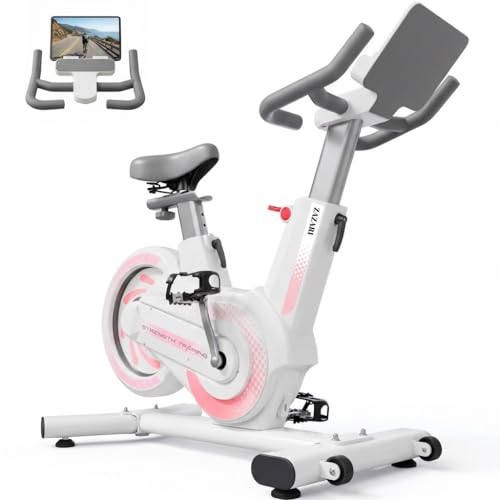
ZAZARI Exercise Bike for Home, Under 20 dB Quiet Magnetic
- ✓ Quiet operation
- ✓ Stable and sturdy
- ✓ Easy setup
- ✕ Limited high-end features
- ✕ Basic console options
| Frame and Construction | Reinforced steel triangular support structure with stable chassis |
| Weight Capacity | Supports up to 350 lb (159 kg) |
| Resistance System | 7-level magnetic resistance |
| Quieter Operation | Under 20 dB belt-driven magnetic drive |
| Adjustability and Fit | 4-way adjustable seat; 2-way adjustable handlebar; suitable for users 4’11” to 6’2″ |
| Mobility and Setup | Under 80% pre-assembled; built-in transport wheels for easy repositioning |
The moment I pulled the ZAZARI bike out of the box, I noticed the clean white finish and the compact, almost furniture-friendly silhouette. It sits low to the floor, with a smooth belt-drive hum that you can barely hear as you set the seat and handlebars to your height.
First impressions aside, the feel of the frame is reassuring—a sturdy triangular spine and reinforced steel construction that doesn’t wobble, even on carpet. The 350 lb capacity is real; you can feel the stability during heavy climbs and sprints, not like some lightweight home units.
The weight is light enough to move on its transport wheels, yet solid enough to stay put during vigorous sessions. I appreciated the 80% pre-assembled setup; a few screws and you’re ready to roll, which is a real time-saver on busy days.
The 7-level magnetic resistance is intuitive, with a clearly labeled lever that makes quick changes during intervals easy. It’s whisper-quiet—sub-20 dB, so you won’t wake the house during early-morning rides or late-night cooldowns.
The 4-way adjustable seat and 2-way handlebar mean you can share it with family members from 4’11” to 6’2″ without fights over settings. The device holder is sturdy enough for a phone or tablet, so you can stream classes or rescue a playlist without dropping your device.
During workouts, the belt-drive feels smooth and consistent, and the rear-drive profile keeps the footprint modest in a compact room. If you’re after a quiet, comfortable, family-friendly bike that fits a modern living space, this one checks most boxes.
In short, it blends everyday practicality with real exercise utility. It’s not flashing with top-tier gadgetry, but it delivers a calm, dependable ride that fits real-life routines.
Plus, the under-20 dB operation means you can stack workouts around work calls or kids’ homework with minimal disruption. It’s exactly the kind of low-stress addition that makes sticking to a routine easier.
Final thought: if you want a clean-looking, stable, and quiet bike you can actually move between rooms and share with relatives, this one is worth a closer look.
What Should You Consider When Choosing the Best Bike Under Rs 200000?
- Engine Performance: Look for bikes with a good balance of power and fuel efficiency. A bike with a higher cc (cubic capacity) generally offers better performance, but it’s essential to also consider how well the engine delivers power for city commuting or long rides.
- Comfort and Ergonomics: Test the seating position and handlebar height to ensure it suits your riding style. A comfortable bike reduces fatigue during long rides and makes daily commutes more enjoyable.
- Build Quality and Durability: Assess the materials used in the bike’s construction, as well as the overall reliability of the brand. A well-built bike can withstand the rigors of daily use and adverse weather conditions.
- Maintenance and Service Availability: Consider how easy it is to find spare parts and service centers for the bike brand you are considering. A bike that is easy to maintain will save you time and money in the long run.
- Features and Technology: Look for bikes that come with modern features such as ABS (Anti-lock Braking System), digital displays, or connectivity options. These features can enhance the overall riding experience and improve safety.
- Resale Value: Some brands and models retain their value better than others. Investigating the resale market can provide insights into how well a bike will hold its value over time, which is an important consideration for many buyers.
- Style and Design: A bike’s aesthetic appeal is crucial for many riders. Choose a design that resonates with your personal style, as it contributes to your overall satisfaction and pride of ownership.
- Fuel Efficiency: Given the rising fuel costs, a bike that offers good mileage can save you money in the long run. Research the average mileage of the models you’re considering to find an economical option.
How Does Engine Capacity Influence Performance in Budget Bikes?
Engine capacity plays a crucial role in determining the performance characteristics of budget bikes, particularly those priced under Rs. 200,000.
- Power Output: Higher engine capacity typically means more power, which translates to better acceleration and speed. For budget bikes, an optimal balance between engine size and power is essential to provide a satisfying riding experience without compromising fuel efficiency.
- Torque Delivery: Engine capacity influences the amount of torque produced, which affects how quickly a bike can respond to throttle inputs. Bikes with larger engines often deliver better torque at lower RPMs, making them more suitable for urban commuting where rapid acceleration is needed.
- Fuel Efficiency: Generally, smaller engine capacities are associated with higher fuel efficiency, which is a significant consideration for budget-conscious buyers. However, advancements in technology mean that bikes with larger engines can also be designed to be fuel-efficient, thereby appealing to a broader range of consumers.
- Maintenance Costs: Larger engine capacities may lead to higher maintenance costs due to more complex components and parts. Budget bikes often aim for a simpler design with a smaller engine to keep overall costs low, making them more affordable to maintain over time.
- Rider Experience: Engine capacity affects the overall riding experience, including handling and comfort. Bikes with a well-matched engine capacity to their weight can provide a more enjoyable ride, making them ideal choices in the budget segment.
What Key Features Should You Look for in Bikes Under Rs 200000?
When searching for the best bike under Rs 200000, several key features are essential to consider for a balanced combination of performance, comfort, and value.
- Engine Performance: Look for engines that offer a good blend of power and efficiency. Bikes in this range typically feature engines from 150cc to 200cc, which provide adequate torque for city rides and highway cruising while still being fuel-efficient.
- Comfort and Ergonomics: Comfort is crucial, especially for longer rides. Check for features like a well-padded seat, upright riding position, and adjustable handlebars that can help enhance the riding experience over long distances.
- Build Quality and Design: A sturdy build ensures durability and safety, while an appealing design can enhance your ownership experience. Look for bikes with high-quality materials, robust frames, and attractive aesthetics that match your style.
- Braking System: Safety is paramount, so prioritize bikes equipped with effective braking systems. ABS (Anti-lock Braking System) is a desirable feature as it prevents wheel lock-up during sudden stops, enhancing rider safety in emergency situations.
- Fuel Efficiency: With rising fuel prices, a bike’s mileage becomes a significant consideration. Opt for models known for their fuel efficiency, ideally offering around 40-50 km/l, which can significantly reduce running costs and extend travel range.
- Maintenance and Service Network: A good after-sales service and availability of spare parts can greatly affect the ownership experience. Choose brands with a solid service network to ensure easy access to maintenance and repairs over time.
- Technology and Features: Modern bikes come with various technological enhancements like digital displays, LED lighting, and smartphone connectivity. These features can improve ride experience and convenience, making your bike more enjoyable and functional.
- Resale Value: Some brands and models hold their value better than others in the used bike market. Researching the resale value can be crucial if you plan to upgrade in the future, ensuring you get a good return on your investment.
Which Bikes Offer the Best Value Under Rs 200000?
The best bikes under Rs 200,000 offer a perfect blend of performance, style, and features for budget-conscious riders.
- Bajaj Pulsar NS200: This bike is known for its powerful engine and aggressive looks.
- TVS Apache RTR 200 4V: A sporty option with excellent handling and advanced features.
- KTM Duke 200: A lightweight bike with a sharp design and thrilling performance.
- Yamaha FZ25: Offers a balance of power and comfort, making it suitable for city and highway riding.
- Hero Xtreme 200S: A value-for-money motorcycle that combines style, efficiency, and decent performance.
Bajaj Pulsar NS200: The Pulsar NS200 features a 199.5cc liquid-cooled engine that delivers an impressive power output, making it suitable for both city commuting and long rides. Its aggressive styling, along with features like dual-channel ABS and a perimeter frame, enhances its appeal and ensures safety and stability while riding.
TVS Apache RTR 200 4V: This bike is equipped with a 197.75cc engine that boasts impressive torque and acceleration, perfect for spirited rides. It comes with advanced features such as ride modes, a fully digital instrument cluster, and excellent braking performance, providing a well-rounded experience for both novice and experienced riders.
KTM Duke 200: The Duke 200 offers a 199.5cc engine that produces exhilarating power, paired with lightweight construction for agile handling. Its sharp aesthetics, along with premium components like USD forks and a trellis frame, make it a standout choice for those seeking a fun and dynamic riding experience.
Yamaha FZ25: With a 249cc air-cooled engine, the FZ25 is designed for smooth power delivery and great fuel efficiency, making it ideal for daily use. Its muscular design and comfortable riding position cater to both urban and long-distance riders, while features like LED lighting and an analog-digital meter add to its modern appeal.
Hero Xtreme 200S: Priced competitively, the Xtreme 200S comes with a 199.6cc engine that offers a good mix of performance and fuel efficiency. Its sporty design, along with features like a fully digital instrument cluster and LED headlights, makes it an attractive option for young riders looking for style without compromising on performance.
What Are the Benefits of the Bajaj Pulsar NS200 for Performance Seekers?
The Bajaj Pulsar NS200 stands out for performance seekers, offering a remarkable blend of power, agility, and technology, making it an attractive choice within the budget of Rs. 200,000. Here are some key benefits:
-
Powerful Engine: The NS200 is equipped with a 199.5cc liquid-cooled, single-cylinder engine that produces approximately 24.5 PS of power and 18.5 Nm of torque. This robust engine facilitates rapid acceleration and a top speed close to 140 km/h.
-
Advanced Features: With features like a perimeter frame, which enhances stability and handling, riders experience better cornering and grip. The presence of a fully digital instrument cluster provides essential information at a glance, ensuring optimal riding performance.
-
Fuel Efficiency: The Pulsar NS200 offers competitive fuel efficiency, averaging around 35-40 km/l, making it suitable for daily commutes and longer rides without frequent fuel stops.
-
Aggressive Styling: Its sporty design and aggressive stance not only appeal visually but also contribute to aerodynamic performance, reducing drag during high-speed travel.
-
Comfortable Riding Position: Designed for a commanding riding posture, it ensures comfort during long rides, making it suitable for both urban and touring scenarios.
These attributes make the Bajaj Pulsar NS200 an appealing option for those prioritizing performance without exceeding the Rs. 200,000 budget.
How Does the Royal Enfield Hunter 350 Cater to Cruiser Enthusiasts?
The Royal Enfield Hunter 350 is designed to appeal to cruiser enthusiasts looking for an affordable yet stylish motorcycle option, particularly for those considering the best bike under Rs 200,000.
- Classic Cruiser Design: The Hunter 350 features a retro-inspired design that is synonymous with the Royal Enfield brand, making it visually appealing to cruiser fans. Its low-slung stance, wide handlebars, and minimalist bodywork create an aesthetic that pays homage to classic cruisers while maintaining modern functionality.
- Comfortable Riding Position: This bike is engineered with a relaxed riding stance, thanks to its well-placed footpegs and comfortable seat. This ergonomic setup ensures that riders can enjoy long journeys without discomfort, making it suitable for both city commuting and longer highway rides.
- Robust Engine Performance: Equipped with a 349cc single-cylinder engine, the Hunter 350 delivers a smooth power delivery and ample torque. This engine is tuned to provide a satisfying riding experience, especially for those who appreciate the low-end torque characteristic of cruiser motorcycles.
- Lightweight and Agile Handling: Weighing in at a manageable level, the Hunter 350 offers nimble handling that enhances the riding experience. This makes it easy for riders to navigate through urban traffic or take on winding roads, appealing to those who prioritize maneuverability in their cruising adventures.
- Affordable Price Point: Priced competitively under Rs 200,000, the Hunter 350 provides excellent value for money in the cruiser segment. This affordability allows more enthusiasts to own a stylish and functional motorcycle without breaking the bank.
- Customizability Options: Royal Enfield’s extensive accessory catalog allows riders to personalize their Hunter 350 according to their preferences. From custom seats to unique handlebars, the ability to modify the bike appeals to those who wish to express their individuality through their ride.
- Community and Heritage: Being part of the Royal Enfield family means access to a vibrant community of enthusiasts. This heritage brand fosters a sense of belonging among riders, enhancing the overall experience of owning a Hunter 350 for cruiser aficionados.
Why is the TVS Apache RTR 160 a Fantastic Option for Daily Commuting?
| Feature | TVS Apache RTR 160 | Competitor Bike A | Competitor Bike B |
|---|---|---|---|
| Price | Approximately ₹1,10,000 – Affordable for most commuters | Approximately ₹1,20,000 – Slightly higher price point | Approximately ₹1,15,000 – Competitively priced |
| Fuel Efficiency | 40-45 km/l – Ideal for daily commuting | 35-40 km/l – Less efficient than Apache | 38-42 km/l – Comparable efficiency |
| Comfort | Good riding posture, suitable for long rides | Sporty design, less comfortable for long distances | Standard seating, comfort for short rides |
| Performance | 15.3 BHP, quick acceleration for city traffic | 14.5 BHP, adequate for city use | 15 BHP, balanced performance |
| Weight | 149 kg – Lightweight for easy handling | 154 kg – Slightly heavier | 152 kg – Moderate weight |
| Mileage (Urban) | 35-40 km/l – Efficient in city conditions | 30-35 km/l – Less efficient in urban settings | 33-37 km/l – Comparable urban mileage |
| Maintenance Cost | Low – Affordable service and parts | Moderate – Slightly higher maintenance costs | Moderate – Comparable service costs |
| Safety Features | Single-channel ABS, sturdy build quality | Standard braking system, less advanced features | Dual-channel ABS, good safety rating |
| Warranty Period | 5 years – Strong warranty coverage | 2 years – Limited warranty | 3 years – Competitive warranty period |
What Are the Advantages of Choosing a Bike Under Rs 200000?
The advantages of choosing a bike under Rs 200000 include affordability, value for money, and a variety of options to suit different needs.
- Affordability: Bikes under Rs 200000 are generally more accessible to a wider range of consumers, making them ideal for first-time buyers or those on a budget. This price range allows individuals to invest in a quality vehicle without straining their finances, often providing enough features for daily commuting.
- Fuel Efficiency: Many bikes in this category are designed with fuel efficiency in mind, offering excellent mileage. This not only helps in reducing the overall cost of ownership but also makes them environmentally friendly, appealing to eco-conscious consumers.
- Variety of Options: The market for bikes under Rs 200000 is diverse, featuring a range of styles from sport bikes to cruisers and commuter bikes. This variety allows buyers to choose a model that best fits their lifestyle and riding preferences, ensuring they find something that suits their needs.
- Low Maintenance Costs: Generally, bikes in this price range are built with simpler technology and components, which can lead to lower maintenance costs over time. This is particularly beneficial for riders looking to minimize expenses associated with servicing and repairs.
- Resale Value: Bikes in this category often retain a good resale value due to their popularity and demand. If you decide to upgrade or change your bike in the future, you are likely to recoup a significant portion of your original investment.
- Beginner-Friendly: Many bikes under Rs 200000 are designed to be user-friendly, making them perfect for beginners. These models typically have manageable power outputs and comfortable ergonomics, helping new riders gain confidence and experience without feeling overwhelmed.
How Can Fuel Efficiency Reduce Long-Term Costs?
Fuel efficiency plays a crucial role in reducing long-term costs associated with vehicle ownership.
- Lower Fuel Expenses: A bike with great fuel efficiency consumes less fuel for the same distance compared to less efficient models. This translates to significant savings on fuel costs over time, making the overall ownership cheaper.
- Reduced Environmental Impact: Bikes that are fuel-efficient emit fewer pollutants, contributing to a cleaner environment. This not only benefits society but can also lead to lower costs related to environmental regulations and taxes.
- Increased Resale Value: Fuel-efficient bikes tend to retain their value better in the resale market. Potential buyers often look for models that promise lower operational costs, meaning you can sell your bike at a better price later on.
- Less Maintenance Required: Bikes that are fuel-efficient often have engines that are better designed and more reliable, which can lead to lower maintenance costs. Fewer breakdowns and repairs can save you money in the long run.
- Insurance Discounts: Some insurance companies offer discounts for vehicles that are more fuel-efficient due to their lower risk profile. This can further reduce the total cost of ownership as part of your ongoing expenses.
What Impact Does Affordability Have on Maintenance and Insurance?
Affordability significantly influences both maintenance and insurance costs associated with owning a bike.
- Lower Maintenance Costs: Bikes that are more affordable typically have simpler designs and fewer high-tech components, which can lead to reduced maintenance expenses.
- Insurance Premiums: The value of a bike often determines the insurance premiums; more affordable bikes usually incur lower premiums, making them easier on the wallet.
- Parts Availability: Affordable bikes often have a wider availability of spare parts, reducing the costs and time associated with repairs and maintenance.
- Resale Value: Lower-priced bikes may depreciate at a slower rate, offering better resale value and potentially offsetting future costs.
- Long-term Expenses: Choosing a bike within a budget can lead to lower long-term expenses due to manageable repairs and insurance, making it a financially sound choice.
Lower Maintenance Costs: Bikes that are more affordable typically have simpler designs and fewer high-tech components, which can lead to reduced maintenance expenses. These bikes often use conventional engines and parts that are cheaper to repair or replace, making it easier for owners to keep their bikes in good working order without breaking the bank.
Insurance Premiums: The value of a bike often determines the insurance premiums; more affordable bikes usually incur lower premiums, making them easier on the wallet. Insurers consider the cost of replacement and repair when calculating premiums, so a bike priced under Rs 200,000 is likely to be less expensive to insure compared to higher-end models.
Parts Availability: Affordable bikes often have a wider availability of spare parts, reducing the costs and time associated with repairs and maintenance. With numerous models available in the budget category, parts are typically produced in larger quantities, making them easier to find and often less expensive to buy.
Resale Value: Lower-priced bikes may depreciate at a slower rate, offering better resale value and potentially offsetting future costs. This can be particularly advantageous for buyers who may want to sell or trade in their bike after a few years, ensuring they recover a significant portion of their initial investment.
Long-term Expenses: Choosing a bike within a budget can lead to lower long-term expenses due to manageable repairs and insurance, making it a financially sound choice. By keeping initial costs low, owners can allocate funds more effectively for routine maintenance and unexpected repairs without financial strain.
What Common Myths Exist About Budget Bikes?
There are several common myths about budget bikes that can mislead potential buyers.
- Myth 1: Budget bikes are of poor quality. Many believe that bikes under a certain price point lack durability and performance. However, many budget bikes are crafted with solid materials and technology that offer a great riding experience without breaking the bank.
- Myth 2: You can’t find good features on budget bikes. It’s a misconception that bikes under Rs. 200,000 lack essential features. In reality, many budget models come equipped with modern components such as disc brakes, reliable gear systems, and lightweight frames, making them competitive with higher-end models.
- Myth 3: All budget bikes are heavy and cumbersome. There’s a belief that budget bikes are always heavy and difficult to handle. Many manufacturers focus on producing lightweight designs that offer ease of handling and maneuverability, ensuring that even budget-friendly options can be agile and efficient.
- Myth 4: Only high-end bikes are suitable for serious riders. Some think that serious cyclists should only consider high-end bikes. However, many riders find that budget bikes meet their needs perfectly, providing an enjoyable and effective riding experience for both casual and serious cycling enthusiasts.
- Myth 5: Maintenance costs for budget bikes are higher. It’s often thought that budget bikes incur more maintenance costs due to lower quality components. In fact, many budget bikes use standard parts that are readily available and affordable, making maintenance simpler and less costly compared to premium models.
Are Budget Bikes as Reliable as Premium Models?
When considering if budget bikes are as reliable as premium models, it’s essential to evaluate several factors:
-
Build Quality: Premium bikes often feature superior materials and construction techniques, which can enhance durability. However, many budget bikes are designed with value in mind and use robust components that can withstand daily use.
-
Maintenance: Budget bikes might require more frequent maintenance, especially if they’re built with cost-effective parts. Conversely, premium bikes tend to have components that last longer, reducing long-term costs.
-
Performance: While premium bikes generally offer advanced features and better performance, many budget options provide sufficient power and handling for regular commuting and leisure rides. For instance, models like the Bajaj Pulsar NS200 and TVS Apache RTR 200 deliver excellent performance and reliability without breaking the bank.
-
Warranty and Service: Premium brands typically offer extensive warranties, which can be indicative of their confidence in their products. Many budget bikes also come with competitive warranties and service packages but may vary significantly depending on the manufacturer.
Ultimately, while premium bikes may have advantages in certain areas, many budget bikes can offer reliable performance, especially for those who prioritize functionality and value over luxury features.
How Sufficient is the Performance of Budget Bikes for Daily Use?
Budget bikes, especially those priced under Rs. 200,000, can be quite sufficient for daily use depending on various factors such as their build quality, features, and intended use.
- Build Quality: Many budget bikes are built with decent materials that offer a good balance between weight and durability. While they may not match the premium finishes of high-end models, they are often designed to withstand daily wear and tear, making them reliable for regular commuting.
- Engine Performance: Most bikes in this price range come equipped with efficient engines that provide adequate power for city riding and occasional highway travel. They are typically tuned for good fuel efficiency, which is a significant consideration for daily use, allowing riders to save on fuel costs.
- Comfort and Ergonomics: Budget bikes often prioritize rider comfort, featuring well-designed seating and handlebars that can accommodate long rides. Many models include features such as adjustable seats and shock absorbers that enhance the overall riding experience, especially on uneven urban roads.
- Maintenance Costs: One of the benefits of budget bikes is their lower maintenance costs. Spare parts are usually more affordable and readily available, which can make ownership less burdensome compared to higher-end models that may require specialized care.
- Resale Value: Budget bikes tend to depreciate more slowly than more expensive models, providing good resale value if you decide to upgrade in the future. Buyers often find that well-maintained bikes in this segment can still fetch a reasonable price, making them a smart investment.
- Features and Technology: While budget bikes may not be packed with advanced technology, many include essential features such as fuel gauges, LED lights, and basic digital displays. These features enhance usability without significantly increasing the cost, making them practical for everyday riders.
How Can You Maintain a Bike Under Rs 200000 for Longevity?
Chain Care: The bike chain is a critical component that requires attention to function efficiently. Regular lubrication and cleaning prevent rust and ensure that power is transferred smoothly from the pedals to the wheels, enhancing the riding experience.
Battery Maintenance: A well-maintained battery is vital for starting the bike and powering electrical components. Regular checks for corrosion and ensuring the battery is charged can prevent unexpected failures and extend its lifespan.
Safe Storage: Protecting your bike from environmental factors is crucial for its longevity. Storing it indoors or under a protective cover shields it from rain, UV rays, and temperature extremes, which can deteriorate various parts over time.
What Regular Maintenance Should You Perform to Keep Your Bike Running Smoothly?
Inspecting the frame and components for damage, such as cracks or rust, helps to maintain the bike’s structural integrity. Addressing these issues promptly can prevent bigger problems down the line and ensure a safer ride.
For electric bikes, checking the battery is essential; a well-maintained battery will ensure that you have sufficient power for your rides. Regularly charging the battery and checking for any signs of wear or damage can help prolong its lifespan and performance.
Related Post: