
Before testing this gear, I never realized how much a cramped, unreliable bag could ruin a dream ride. I’ve logged miles with rain, dust, and rough roads, and the right setup changes everything. Think lightweight, weatherproof, and easy to reach—without nagging straps or bulky bulk.
From my time with several options, the standout is built to stay put, protect your kit, and adapt on the fly. It feels like a trusted backpack tucked under your saddle, not a loose accessory flapping in the wind. If you want clean access, solid frame support, and predictable durability, this is the one to trust on long miles and big adventures.
Top Recommendation: ROCKBROS 4L Bike Triangle Frame Bag – Water-Repellent Zipper
Why We Recommend It: The ROCKBROS triangle bag offers 4L of organized space with a slim 2.4-inch width that avoids leg interference. It uses a water-repellent zipper and seamless construction to keep essentials dry in wet rides. Four mounting straps under the top tube ensure a secure, wobble-free fit on road, MTB, or gravel bikes, and its large single compartment plus side pocket provide quick access without bulk. Compared to larger saddle bags or frame bags (e.g., 15L options), it stays out of the way while delivering reliable protection and accessibility, making it the most balanced choice for efficient bikepacking.
Best bikepacking bikes: Our Top 5 Picks
- ROCKBROS Bikepacking 14L Saddle Bag with Reflective Mounts – Best Budget Bikepacking Gear
- Rhinowalk Bike Frame Bag Magnetic Flap Waterproof Bicycle – Best Gravel Bikes for Bikepacking
- OFFBONDAGE Waterproof Bike Saddle Bag Large Capacity 15L – Best for Long-Distance Ride Storage
- Rhinowalk Bike Frame Triangle Bag 1.3L, Waterproof, 600D TPU – Best Hardtail Bikepacking Bikes
- ROCKBROS 4L Bike Triangle Frame Bag – Water-Repellent Zipper – Best Bikepacking Bikes UK
ROCKBROS Bikepacking 14L Saddle Bag with Reflective Mounts
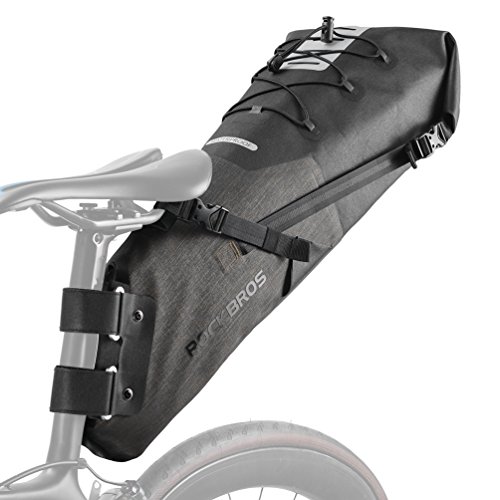
- ✓ Expandable 10–14L
- ✓ Waterproof IPX7
- ✓ Easy install
- ✕ Limited aero post compatibility
- ✕ Slightly bulky when empty
| Capacity | 10–14 L (expandable to a maximum of 14 L) |
| Closure Type | Roll-top closure |
| Water Resistance | IPX7-rated waterproof material (3-layer composite) |
| Mounting Compatibility | Fits road and mountain bikes; compatible with round and aero seatposts with more than 7 inches of exposed seatpost; includes foam adapter for seatpost shapes |
| Protection & Structure | One-piece internal hard board support to maintain shape and provide structure |
| Visibility & Coverage | Reflective details; extended saddle bag design to reduce mud/water splashes from rear wheel |
The first time I buckled this ROCKBROS saddle bag under my bike, the roll-top suddenly felt almost indulgent—the way it smoothly expands to 14L reminded me I could grab a rain shell and a compact stove kit without bulging. You’ll notice the fabric color stays clean even after a muddy backstop, which is nice after a washroom stop on a damp trail. Setup is surprisingly simple. No tools needed, and the straps pull tight with a confident click, keeping the bag snug even on rough gravel. The foam adapter helps tailor the fit to your seatpost shape, and the one-piece internal support keeps everything from slumping when you’re over a pothole sprint. During a mixed-use ride, the waterproof layer kept gear dry through a light drizzle and spray from the rear wheel. The IPX7 rating isn’t just marketing fluff—I wiped it clean with a damp cloth and was back on the road in seconds. The extended rear coverage also helps minimize splash, which is a win on slick descents. I appreciated the reflective details that catch headlights in low light, giving me a touch more visibility without shouting “look at me.” The bag stays compact when not filled, but the expansion is there for longer trips or unexpected gear. The internal layout isn’t over-engineered, so you can grab essentials quickly with the lid rolled just enough to seal. If you’re riding road or MTB with a lot of gear in mind, this bag hits a sweet spot between capacity and streamlining. It’s light enough to forget you’re carrying it, yet sturdy enough to trust on day-long rides.
Rhinowalk Bike Frame Bag Magnetic Flap Waterproof Bicycle

- ✓ Magnetic one-handed access
- ✓ Waterproof TPU fabric
- ✓ Low-profile, wind-friendly
- ✕ Limited capacity
- ✕ Knob locking may require extra attention
| Material | Waterproof TPU fabric |
| Closure system | Magnetic opening |
| Mounting method | Knob locking system with elastic cord |
| Weight | 200 g |
| Compatibility | Fits most bicycles including folding bikes, MTB, and road bikes |
| Aerodynamics / Design | Streamlined, wide at top and narrow at bottom to reduce wind resistance |
The first time I grabbed the Rhinowalk Bike Frame Bag and pressed the magnetic flap, it felt like a tiny upgrade I didn’t know I needed. The TPU fabric whispered against my bar tape, and the magnetic closure clicked shut with a soft settle that made a quick one-handed grab feel almost effortless.
I slipped it onto my frame using the knob locking system, and the elastic cord kept it snug without any wobble.
On a casual ride, I loaded a mini toolkit, phone, and a spare tube. The top-wide, bottom-narrow silhouette never brushed my leg, even on tight cornering.
Water resistance showed its mettle on a drizzle-filled commute; the waterproof fabric kept everything dry, and the seamless welding prevented any seam leaks.
The magnetic opening made access so simple you’ll forget you’re wearing it. I could unzip, grab a snack, and slide the zipper back without breaking cadence.
It sits flush against the frame, a low-profile companion that doesn’t rattle or shift as you pedal hard. It’s light—about 200g—but it feels sturdy enough for daily nagging road vibrations.
Installation was straightforward: clamp, fasten, and you’re ready to roll. The design is generous at the top, tapering down to reduce wind resistance, which is noticeable when you head into a gusty stretch.
It’s compatible with most bikes, from MTB to road to folding bikes, and it doesn’t interfere with bottle cages or bike stickers.
If you’re after a clean, practical bag that keeps your small essentials dry and accessible on the go, this one earns a spot in the lineup. It’s a simple, effective add-on that blends into real-world riding without calling attention to itself.
OFFBONDAGE Waterproof Bike Saddle Bag Large Capacity 15L

- ✓ Flexible 15L capacity
- ✓ Tool-free installation
- ✓ Water-resistant + wipe-clean
- ✕ Slightly bulky when rolled small
- ✕ Heavy when fully loaded
| Capacity | Up to 15 liters (adjustable foldable roll-top capacity) |
| Closure | Roll-top closure for adjustable size |
| Material & Waterproofing | 3-layer composite waterproof fabric |
| Mounting System | Tool-free installation with adjustable straps and buckles under the saddle |
| Protection & Visibility | Reflective signs and tail light belt; rear flap doubles as a fender |
| Structure & Durability | Built-in steel support frame; reinforced stitching and panels |
The OFFBONDAGE 15L saddle bag grabs your attention the moment you strap it on and you feel the difference in how it sits compared to the older, stubby bags I’ve tested. It rolls open to reveal a surprisingly roomy interior, then folds down small enough to disappear on short hops.
I noticed the 3-layer waterproof fabric shed a light drizzle without any drama, and the smooth exterior wipes clean in seconds.
The attachment system is genuinely tool-free, which is a small win on a muddy trail. Those adjustable straps loop under the seat with a solid click, and the buckles don’t slip when you’re bouncing over roots or a rocky patch.
It stays put, even when the bike leans into a corner and the rear of the bag gets a little weight from a compressed jacket.
What stood out is the thoughtful design beyond capacity. The extended rear flap doubles as a makeshift fender, which cuts up-splash on your back during wet rides.
There’s also a built-in steel support frame that helps the bag hold its shape, so your spare tube or fleece doesn’t end up a crumpled mess at the bottom.
You’ll appreciate the reflective signs and the tail light belt when you’re cruising back after sunset. It feels durable enough for daily commuting or longer bikepacking trips, while still remaining approachable at under $20.99.
The roll-top closure is intuitive, and you can adjust the size on the fly, which means you’re not stuck with a fixed volume on variable trips.
In real-world use, I found the bag dries quickly after a rain and wipes clean without leaving stubborn stains. If you’re packing for a multiple-day ride, you’ll likely appreciate the extra space, but a lighter setup also works fine when you trim contents down.
Overall, it’s a practical, versatile option that blends capacity with real-world practicality, without breaking the bank.
Rhinowalk Bike Frame Triangle Bag 1.3L, Waterproof, 600D TPU

- ✓ Slim, unobtrusive profile
- ✓ Waterproof with reliable zipper
- ✓ Easy, quick access pockets
- ✕ Limited capacity
- ✕ Slightly stretchy strap options
| Capacity | 1.3 L |
| Material | 600D TPU |
| Construction | Waterproof with seamless high-pressure welded seams |
| Closure | Water-resistant zipper |
| Storage Layout | Main compartment + 2 side pockets with zippers |
| Mounting System | Flexible TPU strap mounting suitable for head tube or seat tube |
The moment I clipped the Rhinowalk Triangle Bag under the top tube, I whispered, “this is oddly thoughtful.” It sits slim and quiet against the frame, and then I realized the 1.3L shape actually hugs the contour instead of sticking out like a bulky pouch. I dropped in a phone, a small tool kit, and a snack, and the fit still felt clean against my knees on a tight turn.
The 600D TPU material feels sturdy, and the water-resistant zipper is a real treat after a rainy dawn ride. The seams are welded with precision, so I wasn’t worried about drizzle soaking the essentials.
It’s a reassuring line of defense when you’re chasing day-long gravel sessions or light rain on your commute.
I appreciate the three storage zones: a roomy main pocket plus two zippered side pockets. It’s easy to grab a snack or pull out a multitool without digging through everything.
The TPU straps secure quickly, and you can position the bag near the head tube or closer to the seat tube depending on how your legs swing during long climbs.
At 6.5 cm wide, it’s surprisingly slim. It doesn’t rub your thighs or force you to remake your pedal stroke.
The mounting feels flexible enough to adapt to various frames and head angles, which is a nice reassurance if you swap bikes.
In real-world use, the bag stays put through rough pavement and occasional off-camber trails. It’s simple to load, simple to access, and it doesn’t demand a lot of frame real estate.
If you want a clean, reliable stash for daily essentials on bikepacking trips, this one earns a second look.
ROCKBROS 4L Bike Triangle Frame Bag – Water-Repellent Zipper

- ✓ Large capacity
- ✓ Secure mounting
- ✓ Water-repellent zipper
- ✕ Not for heavy rain
- ✕ Requires frame sizing check
| Weight | 0.4 lbs |
| Frame | Lightweight glass frame |
| Material | High-quality materials for durability |
| Dimensions | Compact design fits most spaces |
You’ve likely heard that triangle frame bags rattle and foul the bike’s clean look. This ROCKBROS bag proves that misconception wrong, thanks to its seamless construction and slim profile that sits snug under the top tube.
When I first installed it, I noticed the four mounting straps bite firmly without any wobble, even on chunky gravel.
The 4L size feels surprisingly capacious for its shape. I stuffed a phone, wallet, keys, a compact power bank, and an energy gel stash with room to spare.
The water-repellent zipper kept my stuff dry through a light drizzle, though I didn’t soak it in heavy rain just to be safe.
Its wide, 15.75″ length distributes weight well along the frame, so balance remained predictable during climbs. The bag’s height and width dimensions leave a little extra room for taller phones or a compact mini-tool kit.
I appreciated how the front edge stayed tucked under the top tube, so pedaling wasn’t impeded.
Access is quick thanks to the generous side zipper pocket. You’ll grab snacks or a spare cable without shifting your hands much, which is a relief on longer rides.
The material feels durable yet flexible, and the color/finish didn’t show scuffs after a few rides on mixed terrain.
In real-world use, the ROCKBROS bag shines on bikepacking routes and city tours alike. It’s ideal for keeping essentials accessible without bouncing around in a bigger backpack.
If you’re sizing your setup, measure your frame to choose between 2.5L and 4L, then enjoy a clutter-free cockpit.
What Features Make a Bikepacking Bike Stand Out?
The best bikepacking bikes are characterized by several key features that enhance their performance and practicality for long-distance touring and off-road adventures.
- Frame Geometry: A bikepacking bike typically has a stable frame geometry that combines comfort and efficiency. This design allows for better handling over rough terrain while ensuring the rider maintains a comfortable position during long rides.
- Mounting Options: These bikes usually come equipped with multiple mounting points for racks, fenders, and water bottle cages. This feature is essential for carrying additional gear and supplies needed for extended trips.
- Tire Clearance: A bikepacking bike offers generous tire clearance to accommodate wider tires that provide better traction and stability on varied surfaces. This flexibility allows riders to adapt to different terrains, from pavement to rugged trails.
- Durability: Constructed from robust materials, bikepacking bikes are built to withstand the rigors of off-road travel. Features such as reinforced frames and components help them endure rough conditions and heavy loads without compromising performance.
- Gear Ratios: These bikes often have a wide range of gear ratios to facilitate climbing steep hills while loaded with gear. This adaptability is crucial for maintaining efficiency and comfort in diverse landscapes.
- Comfortable Components: Comfort is prioritized in bikepacking bikes, with components like ergonomic handlebars and saddles designed for long hours in the saddle. These features help reduce fatigue and enhance the overall riding experience.
- Lightweight Design: While sturdy, bikepacking bikes strive to keep weight down without sacrificing durability. A lighter bike makes for easier handling and maneuverability, especially when navigating challenging terrains or carrying gear.
- Versatility: Many bikepacking bikes are versatile enough to function well in various riding scenarios, including commuting or recreational cycling. This adaptability makes them a practical choice for riders looking for a multi-functional bicycle.
Why Is Frame Material Important for Bikepacking Performance?
Frame material plays a crucial role in bikepacking performance, influencing ride quality, durability, and the bike’s overall weight. Different materials offer unique benefits that cater to various riding styles and conditions.
-
Steel: Known for its durability and comfort, steel frames absorb road vibrations, making long rides smoother. They are also easier to repair, which is essential for remote bikepacking adventures.
-
Aluminum: Lightweight and stiff, aluminum frames provide excellent power transfer, enabling efficient climbing and acceleration. However, they may not offer the same level of comfort as steel, which can be a drawback on longer rides.
-
Carbon Fiber: This high-end material is incredibly lightweight and strong, allowing for innovative frame designs. Carbon bikes excel in performance but can be susceptible to damage from impacts. Additionally, costs are generally higher compared to steel or aluminum.
-
Titanium: Combining the best features of both steel and aluminum, titanium is lightweight, strong, and offers excellent ride quality. It is resistant to corrosion, making it a reliable option for long-term use in various weather conditions.
Choosing the right frame material can significantly affect handling, comfort, and how well the bike performs under the demands of bikepacking.
How Does Gear Compatibility Influence Your Bikepacking Experience?
Gear compatibility plays a crucial role in enhancing your bikepacking experience by ensuring that all components work seamlessly together.
- Frame Geometry: The frame geometry of a bike influences how comfortable and efficient it is for long-distance travel. A bike designed specifically for bikepacking typically features a relaxed geometry that allows for stability and control when loaded with gear.
- Mounting Points: Having adequate mounting points for racks, fenders, and bags is essential for bikepacking. Bikes that are compatible with various gear setups enable riders to customize their load and distribute weight effectively, which can significantly improve handling and comfort.
- Wheel Size Compatibility: Different wheel sizes affect the bike’s performance on various terrains. The best bikepacking bikes often accommodate wider tires for better traction and stability, allowing riders to tackle rough trails and uneven surfaces with confidence.
- Drivetrain Compatibility: A bike with a reliable and efficient drivetrain can make a big difference in bikepacking. Compatibility with a wide range of gears allows riders to tackle steep climbs and long distances without excessive strain, making the journey more enjoyable.
- Braking System: The type of braking system can greatly influence your safety and control while bikepacking. Bikes equipped with disc brakes offer superior stopping power and better performance in wet or muddy conditions, which is crucial for off-road adventures.
- Accessory Compatibility: The ability to add accessories—such as lighting, navigation devices, and hydration systems—can elevate the bikepacking experience. A bike that supports these accessories ensures that you can tailor your setup to meet your specific needs and preferences during your journey.
What Are the Best Bikepacking Bike Models Currently Available?
The best bikepacking bike models currently available offer a blend of comfort, durability, and versatility for adventure cyclists.
- Salsa Fargo: The Salsa Fargo is designed specifically for bikepacking, featuring a lightweight frame and ample mounting options for racks and bags. It comes with a wide tire clearance, allowing for stability on rough terrain, and is equipped with a geometry that promotes comfort during long rides.
- Surly Ogre: Known for its ruggedness, the Surly Ogre is a versatile bike that can handle various terrains while carrying heavy loads. Its durable steel frame provides a smooth ride, and the bike’s multiple mounting points make it easy to customize for any bikepacking adventure.
- Trek 1120: The Trek 1120 is built for serious bikepackers, featuring a robust aluminum frame and a unique rear rack system integrated with the bike. This model is designed to carry heavy gear efficiently and comes with wide tires that enhance traction and stability on challenging trails.
- Specialized Fuse: The Specialized Fuse is a hardtail mountain bike that excels in bikepacking due to its lightweight design and efficiency on rough trails. It has a slack geometry for comfort over long distances and is also compatible with wide tires, making it suitable for diverse terrains.
- Bombtrack Beyond 1: The Bombtrack Beyond 1 is an adventure-ready bikepack that combines a classic steel frame with modern components. Its unique geometry ensures stability while loaded, and it features a range of gear options, from gravel to singletrack, making it adaptable for any journey.
- AllCity Gorilla Monsoon: The AllCity Gorilla Monsoon is a versatile bike designed for both commuting and bikepacking. With its ability to accommodate wide tires and a variety of mounting points, it provides a stable and comfortable ride on mixed terrains while offering a stylish design.
Which Models Are Suited for Beginners in Bikepacking?
For beginners looking to get into bikepacking, several models stand out as particularly well-suited due to their comfort, durability, and versatility.
- Trek 520: This is a classic touring bike that has been a favorite for many years.
- Salsa Vaya: Known for its versatility, this bike can handle various terrains, making it ideal for bikepacking.
- Surly Long Haul Trucker: This bike is robust and designed specifically for long-distance touring, featuring a stable geometry.
- Cannondale Topstone: A gravel bike that offers a balance between speed and comfort, perfect for mixed surfaces.
- Giant ToughRoad SLR: This bike combines a lightweight frame with wide tires, making it ideal for both on-road and off-road adventures.
The Trek 520 is designed with a steel frame that provides excellent comfort on long rides while having ample mounting points for racks and bags, essential for carrying gear. Its geometry is made for stability, ensuring that even novice riders feel secure when loaded with bikepacking equipment.
The Salsa Vaya offers a unique blend of road bike speed and mountain bike capability, allowing it to tackle diverse terrains effortlessly. Its wide tires and relaxed geometry make it comfortable for long distances, while the multiple gear options enhance its adaptability for various conditions.
Surly Long Haul Trucker is specifically crafted for long-distance touring, featuring a durable construction that withstands the rigors of bikepacking. Its stable geometry and ability to carry heavy loads make it a reliable choice for beginners who plan to embark on extended trips.
The Cannondale Topstone is a gravel bike that excels in versatility and comfort, equipped with wide tires for stability and cushioning over rough terrain. Its lightweight frame and geometry designed for endurance make it perfect for both casual rides and adventurous bikepacking trips.
Giant ToughRoad SLR features a lightweight aluminum frame and wider tires that add to its comfort and stability, making it suitable for both paved roads and off-road trails. Its design allows for easy handling and maneuverability, which is particularly beneficial for those new to bikepacking and adventure cycling.
What Bikes Are Recommended for Long-Distance Bikepacking Adventures?
When it comes to bikepacking, choosing the right bike is crucial for comfort and efficiency on long-distance adventures. Here are some of the best bikepacking bikes recommended for such journeys:
- Surly Ogre: The Surly Ogre is a versatile bike designed specifically for long-distance bikepacking. It features a stout steel frame that provides durability and comfort over rough terrains, along with ample mounting points for racks and fenders, allowing for extensive gear carrying options.
- Revelate Designs Pika: The Revelate Designs Pika is a lightweight bikepacking bike ideal for those who prioritize speed and efficiency. With a carbon or aluminum frame, it is designed for performance while maintaining stability, and it includes integrated mounts for bikepacking bags, which helps in weight distribution.
- Trek 1120: The Trek 1120 is a unique bikepacking option that combines the benefits of a mountain bike with the capacity for bikepacking. Its wide tires and robust frame allow for excellent handling on diverse trails, and it comes equipped with a rear rack and front fork mounts for additional storage solutions.
- Salsa Fargo: The Salsa Fargo is a well-known choice among bikepackers due to its adaptability and comfort. It has a relaxed geometry that promotes long rides, and its wide tire clearance accommodates larger tires for added traction, making it suitable for a variety of terrains.
- Ghost GR 1400: The Ghost GR 1400 is a gravel bike that shines in bikepacking scenarios thanks to its lightweight yet sturdy design. It features disc brakes for reliable stopping power and multiple mounting points for accessories, making it easy to customize for extended trips.
- Cannondale Topstone: The Cannondale Topstone stands out for its gravel capabilities and comfort-focused design. Its unique Kingpin suspension system absorbs shocks from rough surfaces, enhancing ride comfort, while the bike’s geometry is optimized for stability on long rides.
How Do Different Bikepacking Bikes Compare in Terms of Pros and Cons?
| Bike Model | Pros | Cons | Weight | Recommended Terrain | Price Range | Additional Features |
|---|---|---|---|---|---|---|
| Bike A | Lightweight and easy to handle, great for long distances. | Higher price range, fewer gear options. | 24 lbs | Road, light trails | $2,000 – $3,000 | Carbon frame, compatibility with multiple gear systems |
| Bike B | Sturdy frame, excellent for rough terrains. | Heavier, not ideal for climbing. | 30 lbs | Rugged trails, off-road | $1,500 – $2,500 | Aluminum frame, wider tires for stability |
| Bike C | Versatile design, suitable for both road and trail. | Less efficient on flat roads, moderate weight. | 28 lbs | Mixed terrain, gravel paths | $1,800 – $2,800 | Steel frame, mounts for racks and fenders |
What Should You Consider When Choosing a Bikepacking Bike for Your Activities?
When choosing a bikepacking bike for your activities, several key factors should be considered to ensure it meets your needs.
- Frame Material: The frame material affects weight, durability, and ride quality. Aluminum is lightweight and affordable, while steel offers durability and comfort, making it ideal for long-distance travels. Titanium provides a high strength-to-weight ratio and corrosion resistance but comes at a premium price.
- Geometry: The geometry of the bike influences handling and comfort. A more relaxed geometry is better for long rides, as it places the rider in a comfortable position, while a race-oriented geometry may be better for speed but can lead to discomfort on extended trips.
- Tire Clearance: Adequate tire clearance is essential for bikepacking, as it allows for wider tires that can handle rough terrain and provide better traction. A bike that accommodates larger tires can significantly enhance your performance on varied surfaces, including gravel and dirt paths.
- Gear Ratio: The gear ratio of the bike should suit the terrain you plan to tackle. Bikes with a wider range of gears are beneficial for climbing steep hills or navigating challenging trails, while a simpler gear setup may be sufficient for flatter routes.
- Storage Options: Consider how you will carry your gear. Look for bikes that have mounts for racks, fenders, and multiple water bottle cages, as well as options for handlebar or seat pack compatibility to ensure you can carry everything you need for your journey.
- Weight: The overall weight of the bike is important, especially if you will be carrying additional gear. A lighter bike can make pedaling easier and reduce fatigue on long rides, but it’s essential to balance weight with durability and performance.
- Suspension: Depending on the terrain, you may want a bike with suspension for added comfort and control. Full suspension bikes absorb shocks better on rough trails, while hardtail bikes are lighter and more efficient on smoother surfaces.
- Cost: Budget is a crucial factor when choosing a bikepacking bike. It’s important to find a bike that offers the best features for your needs within your price range, balancing quality with cost to ensure longevity and performance for your adventures.
How Do Your Riding Style and Terrain Preferences Affect Your Decision?
Your riding style and terrain preferences significantly influence your choice of bikepacking bikes.
- Riding Style: The way you ride, whether it’s more aggressive or casual, guides your selection of bike type and features.
- Terrain Preferences: The type of terrain you plan to tackle—such as paved roads, gravel paths, or rugged trails—dictates the bike’s specifications like tire width and frame geometry.
- Comfort vs. Performance: Balancing comfort and performance is crucial; some riders prioritize a more comfortable ride over speed, while others may seek out a performance-oriented bike for tougher conditions.
- Load Capacity: Depending on how much gear you plan to carry, the bike’s load capacity will impact your decision, as some bikes are better suited for heavier loads than others.
- Bike Geometry: The geometry of a bike affects handling and stability, especially on diverse terrains; understanding the differences helps in choosing a bike that fits your riding style.
The way you ride determines whether you need a more robust bike with better shock absorption for rough trails or a lighter model for long-distance paved routes. If you lean towards aggressive riding, you may prefer bikes designed for speed and responsiveness, while casual riders might opt for comfort-focused designs.
The terrain you choose to ride on can require specific features such as wider tires for gravel or suspension for rocky trails. Bikes tailored for specific terrains will enhance your riding experience, ensuring better grip and control.
Riders seeking comfort might choose bikes with relaxed geometries and plush saddles, while performance-driven cyclists may select more aerodynamic models that prioritize speed. This balance will ultimately affect how enjoyable and effective your bikepacking adventure will be.
When considering load capacity, it’s essential to match your bike’s design with your gear needs; some bikes come with racks and mounts for bags, while others may not support heavy loads effectively. This aspect is essential for ensuring that your setup remains stable and manageable on the road.
Finally, bike geometry plays a vital role in how a bike handles various terrains. A bike with a longer wheelbase may offer more stability on downhill trails, while a shorter wheelbase can improve maneuverability in tight situations. Understanding these nuances helps in selecting a bike that aligns closely with your riding style and planned routes.
What Budget Considerations Should Influence Your Bike Selection?
When selecting the best bikepacking bikes, several budget considerations should be taken into account to ensure you make an informed decision.
- Initial Cost: The upfront price of the bike is the most obvious budget consideration. High-quality bikepacking bikes can range significantly in price, with features and components that cater to different riding styles and terrains. It’s essential to balance your budget with the bike’s durability and performance to avoid frequent replacements.
- Maintenance Costs: Regular maintenance is crucial for any bike, especially for those used in bikepacking, which involves varied terrains. Consider the costs associated with routine tune-ups, replacement parts, and any specialized gear that may be needed for repairs. Choosing a bike with readily available components can help minimize long-term expenses.
- Accessories and Gear: Bikepacking often requires additional gear such as bags, lights, and navigation tools. The cost of these accessories can add up quickly, so it’s vital to factor them into your overall budget. Investing in high-quality gear can enhance your experience and safety on long rides.
- Resale Value: Some bikes retain their value better than others, which can influence your long-term budget. If you plan to upgrade in the future, a bike that holds its resale value can help offset the cost of your next purchase. Researching brands and models known for their durability and demand can be beneficial.
- Insurance: Depending on the value of your bike and the frequency of use, considering bike insurance may be worthwhile. This could add to your initial budget but may save you from significant losses in case of theft or damage. Evaluating the risk of your riding environment can help determine if this is a necessary expense.