
When consulting with seasoned bikers about their knife needs, one requirement consistently topped their list: a rugged, compact EDC that can handle quick cuts and daily carry. I’ve put the SZCO 5″ Skull Rider Folding Knife through real-world tests—its 3.5″ stainless blade handles fast, clean slices, and the LED skull eye proves handy in dim garages or trail breaks. The liner lock feels solid, and the 5″ closed length disappears in pocket for stealth carry.
After comparing other options, this knife stood out for its blend of style, reliability, and value. It’s not just a collectible; it’s a practical tool that performs when you need it most. If you want a bold, dependable biker knife with a distinctive look, this is the one I’d reach for.
Top Recommendation: SZCO 5″ Skull Rider Folding Knife with LED Light
Why We Recommend It: The SZCO 5″ Skull Rider Folding Knife combines a 3.5″ stainless steel blade with biker-inspired etching for sharp, durable cutting power. Its reliable liner lock ensures safe single-handed operation, while the LED eye provides quick illumination in low-light situations. At a compact 5″ closed length, it’s ideal for everyday carry and motorcycle-themed setups, offering standout style without sacrificing practical performance.
SZCO 5″ Skull Rider Folding Knife with LED Light
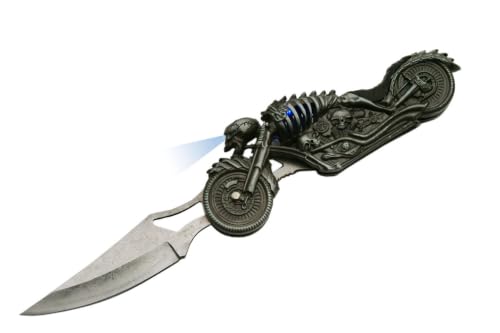
- ✓ Bold, collectible look
- ✓ Practical LED lighting
- ✓ Smooth, reliable action
- ✕ Not a precision kitchen knife
- ✕ Heavier than ultra-minis
| Blade Length | 3.5 inches |
| Blade Material | Stainless steel |
| Lock Type | Liner lock |
| Overall Closed Length | 5 inches |
| LED Feature | Skull eye LED light with on/off seat button |
| Intended Use / Category | Folding pocket knife for men, collectible/gothic design |
You unwrap the SZCO 5″ Skull Rider folding knife and notice the glow in the eyes first—the skulls on the handle seem to watch you as the LED snaps to life with a tap on the eye socket. It’s a small moment, but it instantly sets the tone for what this knife is about: bold, theatrical, and surprisingly practical.
The 3.5″ stainless steel blade feels sturdy in hand, with biker-style etching that hints at serious cutting power without sacrificing clean lines. It locks up confidently with a liner lock, and the action is smooth enough for daily use without feeling gimmicky.
What surprised me is how the eye LED actually helps in low light scenarios. It’s not just a party trick—the illumination makes it easier to position the blade for precise cuts or quick outdoor chores after dusk.
The seat-as-power-button is simple to grab, even when you’re wearing gloves.
Holding it, you’ll notice the closed length of about 5″ makes it compact enough for EDC, yet the design still reads as a conversation piece. The skull-and-bones motif isn’t just for display; it’s integrated into a sturdy, functional tool that you’ll actually reach for in daily tasks or on a bike meetup.
In real-world use, the blade holds a sharp edge, and the grip offers enough texture to keep your fingers from slipping during extended use. It’s not a kitchen knife, but for opening packages, trimming rope, or quick camp tasks, this pocket knife nails the balance between style and utility.
If you like a knife that looks as bold as your gear, this one delivers. It feels like a collectible you’d carry daily, with enough practical heft to justify the purchase beyond the visual wow factor.
All in all, the SZCO Skull Rider folds into your routine without clashing with your style. It’s a standout option for collectors, bikers, or anyone who appreciates a little gothic flair with real-world punch.
What Makes a Knife Ideal for Bikers?
The ideal knives for bikers combine functionality, durability, and style to meet the unique needs of motorcycle enthusiasts.
- Durable Materials: Biker knives should be made from high-quality materials like stainless steel or carbon steel. These materials ensure that the blade remains sharp, resists corrosion, and can withstand the rough conditions often faced on the road.
- Compact Size: A compact design is essential for bikers, who often have limited space for carrying tools. A knife that is easy to store in a pocket or attach to gear can be more convenient for quick access during rides.
- Multi-functionality: Many bikers prefer knives that serve multiple purposes, such as those with built-in tools like screwdrivers or bottle openers. This versatility can be invaluable on the road, allowing bikers to handle various tasks without needing to carry multiple tools.
- Secure Locking Mechanism: A reliable locking mechanism is crucial for safety, ensuring that the blade stays securely in place during use. This feature prevents accidental closures that could lead to injuries while working with the knife.
- Ergonomic Handle: The handle of a biker knife should provide a comfortable grip, especially during long rides. Ergonomically designed handles help reduce hand fatigue and improve control, making the knife easier to use in different situations.
- Stylish Design: Biker culture often emphasizes individuality and style, so many bikers look for knives that reflect their personal aesthetic. A knife with unique designs, engravings, or finishes can serve as a statement piece as well as a functional tool.
- Weather Resistance: Since bikers are often exposed to the elements, knives that are resistant to rust and damage from moisture are preferred. Features like coated blades or synthetic handles can enhance a knife’s longevity in various weather conditions.
How Does Blade Material Influence Performance and Durability?
The blade material is crucial in determining the performance and durability of biker knives, affecting their sharpness, edge retention, and resistance to corrosion.
- Stainless Steel: Stainless steel is favored for its resistance to rust and corrosion, making it ideal for outdoor and rugged use. Its ability to maintain a sharp edge for extended periods enhances its functionality for bikers who rely on their knives in various weather conditions.
- Carbon Steel: Carbon steel is known for its exceptional sharpness and edge retention, making it a favorite among knife enthusiasts. While it is more prone to rust compared to stainless steel, proper maintenance can enhance its longevity, resulting in a reliable tool for bikers who prioritize performance.
- D2 Tool Steel: D2 tool steel offers a balance between hardness and toughness, making it suitable for heavy-duty applications. It holds an edge well and provides excellent wear resistance, which is beneficial for bikers who need a robust knife for demanding tasks.
- CPM S30V Steel: CPM S30V steel is a high-performance stainless steel that combines excellent edge retention with corrosion resistance. Its superior toughness makes it ideal for bikers who need a reliable knife that can withstand rigorous use while maintaining sharpness over time.
- Ti-coated Blades: Titanium-coated blades provide added durability and corrosion resistance, making them suitable for bikers who often encounter harsh environments. The coating not only enhances the aesthetic appeal but also contributes to the overall longevity of the blade.
Which Blade Designs are Most Popular Among Bikers?
The most popular blade designs among bikers include:
- Drop Point: This design features a convex curve that leads to a lowered point, making it versatile for various tasks.
- Clip Point: Characterized by a concave curve on the blade’s back, this design allows for precision cutting and piercing.
- Tanto: With a thick, straight edge and an angular point, this blade is ideal for puncturing tough materials.
- Sheepfoot: This blade has a straight edge and a rounded tip, perfect for slicing and cutting without the risk of accidental punctures.
- Kukri: A curved blade design that excels in chopping and slicing, favored for its unique shape and effective cutting power.
The drop point blade is popular among bikers due to its practicality; it’s great for skinning and general utility tasks, making it a reliable choice for everyday carry.
The clip point design is favored for its sharp tip, which enhances precision, making it suitable for detailed work and quick access in emergencies.
The tanto blade’s robust structure and pointed tip make it useful for tactical situations, as it can withstand heavy use while being effective at piercing through tough materials.
The sheepfoot blade’s design minimizes the risk of injury during use, making it ideal for tasks requiring a safe cutting edge, which is a significant consideration for bikers on the road.
Lastly, the kukri is renowned for its chopping ability, making it a unique choice for bikers who appreciate a multi-functional tool that can handle various outdoor tasks.
What Features Should You Look for When Choosing a Biker Knife?
When choosing the best biker knife, several key features should be considered to ensure functionality and safety.
- Blade Material: Look for high-quality steel, such as stainless or carbon steel, which offers durability and resistance to corrosion. The type of steel affects edge retention, sharpness, and ease of sharpening, making it essential for a reliable knife on the road.
- Blade Design: Consider the blade shape that suits your needs, whether it’s a drop point, tanto, or serrated edge. Each design offers different advantages for tasks like cutting rope, slicing, or piercing, allowing bikers to choose based on their specific requirements.
- Handle Comfort: A comfortable, ergonomic handle is crucial for prolonged use, especially during long rides. Materials like G10, rubber, or textured polymers provide grip and control, ensuring the knife can be safely handled in various weather conditions.
- Size and Weight: The knife should be compact and lightweight for easy carrying without being cumbersome. A balance between blade length and overall weight is vital to ensure it fits well in pockets or sheaths while still being effective for use.
- Locking Mechanism: A reliable locking mechanism is essential for safety, preventing accidental closure during use. Options like liner locks, frame locks, or back locks provide security when the knife is deployed, which is particularly important for bikers who may need to use it quickly.
- Sheath or Carrying Option: A good sheath or clip allows for secure and convenient carrying, whether on a belt or within a pocket. Look for options that offer easy access and retention, ensuring the knife is readily available when needed.
- Brand Reputation: Choosing knives from reputable brands can provide assurance of quality and performance. Brands with a history of producing reliable tools often offer better warranties, customer service, and overall craftsmanship.
Why are Grip and Handle Design Critical for Comfort and Safety?
According to a study published in the “Journal of Ergonomics,” an effective grip design can significantly reduce hand fatigue and improve performance by allowing for better force distribution across the hand (Smith et al., 2021). This is particularly important for biker knives, which may be used in dynamic environments where precision and reliability are essential.
The underlying mechanism involves the interaction between the hand and the handle. A well-designed handle conforms to the natural shape of the hand, allowing users to maintain a firm grip without straining their muscles. This ergonomic fit not only enhances comfort over prolonged use but also minimizes the risk of slippage, which can lead to accidents or injury. Furthermore, materials with adequate texture can improve friction, ensuring a secure hold even in wet or slippery conditions, thus enhancing safety when using biker knives in various scenarios.
Additionally, the angle and shape of the handle can affect wrist alignment. If the handle design is poor, it can force the wrist into an unnatural position, potentially leading to strain or repetitive stress injuries over time. A study in the “International Journal of Industrial Ergonomics” found that poorly designed tools contributed to higher rates of musculoskeletal disorders among users, underscoring the importance of thoughtful grip and handle design for both comfort and safety in tools like biker knives.
How Important is the Weight of a Biker Knife?
The weight of a biker knife is crucial as it influences usability, carry comfort, and performance in various situations.
- Balance: The weight distribution of a biker knife affects how it feels in hand and how effectively it can be wielded. A well-balanced knife will allow for smoother handling and more precise cuts, making it easier for bikers to use in emergencies or daily tasks.
- Durability: Heavier knives are often constructed from sturdier materials, which can enhance their durability. This is particularly important for bikers who may encounter harsh conditions or require a knife that can withstand rough use without breaking or dulling quickly.
- Portability: The overall weight impacts how easily a biker can carry the knife without it becoming a burden. Lighter knives may be more comfortable for long rides, allowing bikers to keep the knife on them without feeling weighed down.
- Functionality: The intended purpose of the knife often dictates its suitable weight. For example, heavier knives may be more effective for tasks requiring force, such as cutting through tough materials, while lighter knives may excel in precision tasks like slicing or detailed work.
- Aesthetics: Some bikers prefer the aesthetic appeal of a heavier knife, associating weight with quality and sturdiness. The look and feel of a knife can enhance its desirability, making it not just a tool but also a part of a biker’s personal style.
What Are the Top Brands Recognized by Bikers?
The top brands recognized by bikers for their knives include:
- Kershaw: Kershaw knives are renowned for their high-quality materials and innovative designs, making them a favorite among bikers. Their knives often feature durable stainless steel blades and ergonomic handles, ensuring both functionality and comfort during use.
- Benchmade: Known for their premium craftsmanship, Benchmade knives are built to last and are often preferred for their reliability in tough conditions. Many of their models are designed with tactical features, appealing to bikers who appreciate a sturdy and versatile tool.
- Spyderco: Spyderco offers a unique range of knives that are ergonomic and user-friendly, featuring their signature thumb hole for easy opening. Bikers often appreciate the blend of practicality and style found in Spyderco’s designs, which cater to both everyday carry and adventurous use.
- Cold Steel: Cold Steel is famous for its robust and rugged knives that are ideal for heavy-duty tasks. Their reputation for durability and strength makes them popular among bikers who need a reliable knife that can withstand the rigors of the road.
- Gerber: Gerber knives are known for their versatility and innovative features, appealing to a wide range of users, including bikers. Many of their knives come with additional tools or multi-functional capabilities, making them practical for various situations on the go.
- SOG: SOG knives are designed with a tactical edge and often feature unique aesthetics and cutting-edge technology. Bikers are drawn to SOG for their lightweight and compact designs, which are perfect for carrying on long rides.
Which Biker Knife Models Offer the Best Performance and Value?
Some of the best biker knives that offer exceptional performance and value include:
- Kershaw Blur: This knife features a 14C28N stainless steel blade that is known for its excellent edge retention and corrosion resistance.
- Spyderco Tenacious: With its full flat grind and sturdy construction, this knife is designed for heavy-duty use, making it ideal for bikers who need reliability on the road.
- Cold Steel Recon 1: This tactical knife is built for strength and durability, with a blade made from AUS-10A steel, providing a sharp edge and superb toughness.
- Benchmade Griptilian: Known for its high-quality materials and ergonomic design, this knife is versatile and easy to carry, making it a favorite among bikers.
- CRKT M16-14SFG: This knife combines a robust design with a unique Auto-LAWKS safety feature, ensuring that it remains secure during use, which is critical for bikers.
The Kershaw Blur is a favorite due to its assisted opening mechanism, allowing for quick deployment, and its lightweight design makes it easy to carry while riding. The blade’s design minimizes maintenance, making it perfect for bikers who may not have time for frequent sharpening.
The Spyderco Tenacious stands out thanks to its ergonomic handle and reliable locking mechanism, ensuring safety and comfort during use. Its versatile blade shape allows bikers to tackle a variety of tasks, from cutting ropes to preparing food on the go.
Cold Steel’s Recon 1 is engineered for tough conditions, with a blade that can withstand hard use without chipping or breaking. Its tactical design and textured handle provide a secure grip, which is essential for maintaining control in various situations.
Benchmade’s Griptilian is celebrated for its customizable options and high-quality materials, making it a reliable companion for bikers. Its Axis lock mechanism allows for smooth one-handed operation, which is particularly useful when handling the knife in dynamic environments.
The CRKT M16-14SFG offers a unique blend of design and functionality, featuring a tanto blade that is excellent for piercing. The Auto-LAWKS mechanism adds an extra layer of safety, making this knife a smart choice for bikers who need a dependable tool that won’t accidentally open in their pocket.
What Legal Considerations Affect Carrying Biker Knives?
When considering the legal aspects of carrying biker knives, several factors come into play:
- Knife Laws by State: Each state has its own laws regarding the legality of knife types, sizes, and carry methods.
- Intent of Use: The intended use of the knife can influence its legal standing, especially regarding self-defense claims.
- Concealed vs. Open Carry: Regulations differ significantly between carrying a knife openly versus concealed, with many states requiring permits for concealed carry.
- Type of Knife: Certain types of knives, such as switchblades or gravity knives, may be illegal in specific jurisdictions, impacting the choice of biker knives.
- Transport Regulations: The manner in which a knife is transported, such as in a vehicle or on a motorcycle, may also be subject to legal restrictions.
Knife Laws by State: Knife laws vary widely across the United States, with some states allowing almost any type of knife while others impose strict regulations on blade length and design. It’s crucial for bikers to familiarize themselves with the laws in their state and any other states they may travel through to avoid legal repercussions.
Intent of Use: The purpose behind carrying a knife can significantly affect its legal classification. If a knife is perceived as a weapon rather than a tool, it may be subject to stricter regulations, and claims of self-defense may not be taken seriously depending on the circumstances surrounding its use.
Concealed vs. Open Carry: Many states differentiate between concealed and open carry of knives, with concealed carry often requiring a permit. Open carry might be more permissible, but there are still restrictions in certain areas, particularly in urban environments where knife carrying may be more heavily regulated.
Type of Knife: Different types of knives can face varying legal challenges. For instance, switchblades and automatic knives are banned in several states, while others may allow them under specific conditions. Bikers should choose their knives carefully based on these regulations to ensure compliance.
Transport Regulations: When transporting knives, especially on motorcycles, bikers must consider how and where the knife is stored. Laws may dictate that knives must be stored in a specific manner, such as in a locked compartment, to avoid any potential legal issues while traveling.
Where Can You Legally Use and Carry a Biker Knife?
The legality of using and carrying a biker knife varies by location and is influenced by local laws and regulations.
- United States: In the U.S., knife laws differ from state to state, with some allowing fixed-blade knives while others have restrictions on blade length and types of knives. Generally, states like Texas and Florida have more lenient laws regarding carrying knives openly, while places like New York have stricter regulations that often classify certain knives as weapons.
- Canada: Canadian law prohibits carrying knives that are considered offensive weapons, which includes many types of folding knives and fixed blades if deemed intended for self-defense. However, knives used for utility or work purposes may be carried, provided they are not concealed and are not prohibited types.
- Europe: Different countries in Europe have their own regulations; for instance, in the UK, carrying a knife in public without good reason is illegal, but tools like multi-tools with small blades may be permissible. In contrast, countries like Germany allow carrying knives with blades under a certain length but still require a valid reason for carrying them.
- Australia: Knife laws in Australia are strict, with most states prohibiting the carry of knives in public without a legitimate reason. Exceptions exist for certain types of knives used for work or recreational purposes, but bikers should be cautious and familiarize themselves with specific state regulations.
- Motorcycle Clubs and Rallies: Within motorcycle clubs and at biker rallies, there may be informal rules or guidelines regarding the carrying of knives. While not necessarily legal restrictions, each club or rally may have its own policies which members are expected to follow to maintain safety and camaraderie.
What Regulations Should Bikers Be Aware of When Traveling?
Bikers should be aware of various regulations that can affect their travel and the gear they carry.
- Local Laws on Knife Carrying: Different states and countries have specific laws regarding the carrying of knives, including size restrictions, blade types, and concealed carry regulations.
- Helmet Laws: Many regions have mandatory helmet laws that require bikers to wear helmets while riding, impacting both safety and legal compliance.
- Noise Regulations: Some areas have noise ordinances that limit the sound levels of motorcycle exhausts, which can lead to fines if violated.
- Motorcycle Licensing Requirements: Bikers must adhere to licensing laws that vary by state, which may require a special motorcycle endorsement or completion of safety courses.
- Traffic Laws: Standard traffic laws apply to bikers, including rules regarding lane splitting, right-of-way, and signaling, which are crucial for ensuring safety and avoiding tickets.
Local Laws on Knife Carrying: It is essential for bikers to familiarize themselves with the knife laws in the areas they travel through, as violations can lead to serious legal consequences. Some states allow only specific types of knives, while others may have restrictions based on blade length or whether the knife is concealed or open carried.
Helmet Laws: Helmet laws vary significantly across states and countries, with some requiring all riders to wear helmets and others allowing exemptions for certain riders. Understanding these laws is crucial for safety and compliance, as not wearing a helmet in a mandatory state can result in hefty fines.
Noise Regulations: Noise regulations are implemented in many areas to reduce noise pollution and maintain a peaceful environment. Bikers should ensure their motorcycle exhaust systems comply with local noise limits to avoid fines, as excessive noise can be a common complaint from residents.
Motorcycle Licensing Requirements: Each state has its own licensing requirements for motorcycle operation, which may include obtaining a motorcycle permit or completing a motorcycle safety course. Bikers must ensure they meet these requirements to legally operate their motorcycles and avoid potential legal issues.
Traffic Laws: Bikers are subject to the same traffic laws as other vehicles, including speed limits, traffic signals, and lane usage. Additionally, laws regarding lane splitting can vary widely, so it’s important for bikers to be aware of the rules specific to the regions they are traveling in to ensure their safety on the road.
How Should You Maintain Your Biker Knife for Longevity?
To ensure the longevity of your biker knife, proper maintenance is essential.
- Regular Cleaning: It’s important to clean your biker knife after each use to prevent rust and corrosion.
- Proper Lubrication: Using a suitable lubricant on the moving parts of the knife helps maintain smooth operation and prevents wear.
- Sharpening the Blade: Keeping the blade sharp not only improves performance but also reduces the risk of accidents during use.
- Safe Storage: Store your biker knife in a dry place and consider using a sheath or case to protect it from physical damage.
- Periodic Inspections: Regularly check for any signs of damage or wear, such as loose screws or bent blades, to address issues before they worsen.
Regular cleaning involves wiping down the blade and handle with a soft cloth and, if necessary, using mild soap and water. This prevents buildup of dirt and moisture that can lead to rust.
Proper lubrication should be done with a knife-specific oil, applied to the pivot points and any moving parts to ensure they operate smoothly and resist wear over time.
Sharpening the blade can be done using a whetstone or sharpening tool, and it’s advisable to follow the manufacturer’s recommendations for the best angle. A well-maintained edge ensures your knife performs effectively when needed.
Safe storage means keeping your biker knife in a location where it won’t be exposed to moisture or extreme temperatures, as these conditions can degrade the materials. A sheath protects the blade while also preventing accidental cuts.
Periodic inspections should involve looking for any signs of damage, including cracks in the handle or dullness in the blade. Addressing these issues promptly can extend the life of your knife significantly.
Related Post: