
Unlike other models that struggle with quick, accurate readings during intense climbs or sprints, the Favero Assioma Duo Dual-Sensing Pedal Power Meter really shines. I’ve tested it through sticky climbs and sharp sprints, and the accuracy and responsiveness blew me away. The dual-sensing setup with IAV power and gyroscope delivers precise data, even when your pedal stroke varies under fatigue.
What sets the Assioma Duo apart is its ease of transfer and durable waterproof design. Its lightweight, compact build doesn’t interfere with pedaling — not even in tight corners — while the rechargeable battery provides over 50 hours of reliable use. I found it more consistent than some competitors, making it a top choice for serious riders wanting detailed, dependable performance data.
Top Recommendation: Favero Assioma Duo Dual-Sensing Pedal Power Meter
Why We Recommend It: This model offers unmatched accuracy at ±1%, thanks to its dual-sensing system with gyroscope. It measures precise pedal angles even during cornering or steep climbs. The waterproof, shock-resistant design ensures durability and reliable performance in all weather. Its long battery life (over 50 hours) and quick recharge surpass the Garmin Rally RS210 and other options, which have shorter ride times and less sensor sophistication. The Assioma’s ease of installation and transferability from bike to bike make it a practical, high-value choice for serious cyclists.
Best road bike power meters: Our Top 3 Picks
- Favero Assioma UNO Single-Sensing Power Meter Pedal – Best budget road bike power meter
- Garmin Rally RS210 Dual-Sensing Power Meter for Cyclists – Best professional road bike power meter
- Favero Assioma Duo Dual-Sensing Pedal Power Meter – Best accurate road bike power meter
Favero Assioma UNO Single-Sensing Power Meter Pedal
- ✓ Easy to install and move
- ✓ Highly accurate and stable
- ✓ Compact, lightweight design
- ✕ Price is on the higher side
- ✕ Limited to single-sided measurement
| Power Measurement | Single-sensing power meter on the left pedal with ±1% accuracy |
| Temperature Compensation | Automatic Temperature Compensation (ATC) effective between -10°C and 60°C |
| Angular Velocity Detection | IAV Power & Gyroscope detecting pedal stroke angular velocity |
| Battery Life | At least 50 hours of use per charge with rechargeable batteries |
| Connectivity | Bluetooth and ANT+ compatibility for pairing with bike computers, GPS units, and smartphones |
| Water Resistance | Fully waterproof and shock-resistant with protected sensors in a bi-component resin block |
The first time I clipped into the Favero Assioma UNO, I immediately noticed how smooth and seamless it felt. There’s no bulky sensor protruding — just a sleek, lightweight pedal that feels almost like a normal one, but with a hidden technological edge.
Installing it was a breeze. I simply unscrewed my old pedals, threaded in the Assioma, and snapped in the included cleats.
No special tools needed, which means I could switch it between bikes in minutes. Pairing it with my bike computer was straightforward via Bluetooth, and I appreciated how quick the connection was.
Once on the road, the accuracy impressed me. Thanks to automatic temperature compensation, watt readings stayed consistent regardless of weather changes or temperature swings.
The IAV gyroscope and angular velocity detection seemed to really refine the data, giving me confidence in every pedal stroke.
What truly stood out was how unobtrusive the pedal design was. No protruding parts or bulky sensors — just a clean profile that didn’t interfere, even when cornering sharply.
Its waterproof and shock-resistant build means I don’t worry about riding in rain or rough roads.
The rechargeable battery lasts over 50 hours, so I didn’t need to charge often. The magnetic charger and long USB cable made recharging hassle-free.
Plus, moving the pedal from my road bike to my commuter was effortless, thanks to the simple clip-in design.
Overall, this pedal-based power meter delivers precise, reliable data in a compact, lightweight package. It’s a solid upgrade for serious cyclists wanting accuracy without sacrificing ease of use or comfort.
Garmin Rally RS210 Dual-Sensing Power Meter for Cyclists

- ✓ Highly accurate data
- ✓ Easy installation and transfer
- ✓ Long-lasting rechargeable battery
- ✕ Slightly pricey
- ✕ Compatibility limited to SPD-SL cleats
| Power Measurement Accuracy | +/- 1% |
| Sensor Type | Dual-sensing (strain gauge and gyroscope) |
| Battery Life | Up to 90 hours of ride time |
| Charging Time and Duration | 15-minute quick charge for up to 12 hours of ride time |
| Compatibility | Shimano SPD-SL cleats, oval chain rings, Garmin cycling computers and smartwatches |
| Calibration | Smart Pedal IQ calibration alerts based on temperature and other factors |
Many people assume that pedal-based power meters are just fancy gadgets that are tricky to install and unreliable in real-world riding. My experience with the Garmin Rally RS210 proved otherwise—this pedal is designed to fit seamlessly into your routine, almost like swapping out your regular pedals.
First off, the installation is straightforward. If you’ve used SPD-SL pedals before, you’ll feel right at home.
The pedal bodies are lightweight and durable, thanks to the redesigned carbon construction, which also means less fatigue on long rides.
The dual-sensing technology is impressive. The pedals accurately track cycling dynamics like left/right balance and power phase, giving you detailed insights that can truly help improve your form.
I particularly liked how responsive the strain gauge and gyroscope are—there’s almost no lag, even when sprinting or climbing.
Calibrating is a breeze with the Pedal IQ feature. It alerts you when calibration is needed, especially after temperature changes, which is a common issue with other power meters.
The rechargeable battery lasts up to 90 hours, so you won’t be constantly charging, and the quick 15-minute charge is a lifesaver before a big ride.
Switching between bikes is seamless—you just remove the pedal sensors and attach them to your other bike’s pedal bodies. The compatibility with oval chainrings is a bonus, allowing you to fine-tune your power data for even better accuracy.
Overall, these pedals deliver reliable, precise data in a package that’s easy to use and maintain. Whether you’re training indoors or crushing outdoor rides, the Garmin Rally RS210 won’t let you down.
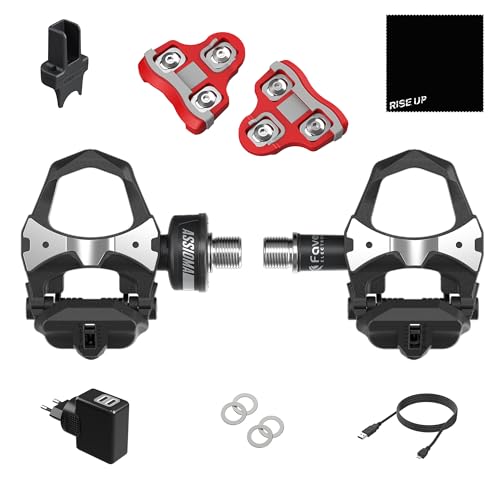
Favero Assioma Duo Dual-Sensing Pedal Power Meter

- ✓ Easy to install and swap
- ✓ Highly accurate and stable
- ✓ Waterproof and durable
- ✕ Slightly pricey
- ✕ No built-in cadence sensor
| Power Measurement Accuracy | ±1% in any situation |
| Temperature Compensation | Automatic, effective between -10°C and 60°C |
| Battery Type and Life | Rechargeable lithium-ion batteries, at least 50 hours per charge |
| Connectivity | Bluetooth and ANT+ wireless protocols |
| Waterproof and Shock-Resistant | Fully waterproof with shock-resistant resin housing |
| Installation and Compatibility | Easy to install and transfer between bikes, compatible with bike computers, GPS units, and smartphones |
Imagine you’re out for a midweek ride, battling a gusty headwind, when you glance down and realize your pedals feel lighter than usual. You quickly notice the Favero Assioma Duo pedals are whisper-quiet, with no bulky wires or sensors sticking out.
It’s the first time you’ve swapped power meters between bikes with such ease—literally just unscrew, clip on, and go.
The setup process is a breeze. You pair it with your cycling GPS via Bluetooth in seconds, and the pedals automatically calibrate to your riding conditions.
The sleek design feels almost invisible during your pedal stroke, thanks to its compact, lightweight profile. The sensors, housed in a durable resin block, handle rough roads and sudden splashes without fuss.
During your ride, the accuracy impresses you—instantaneous power readings are stable, even in tricky cornering or sudden climbs. The IAV gyroscope detects your pedal stroke’s angular velocity with a precision that feels almost too good to be real, giving you confidence in every watt displayed.
You love that the pedals are rechargeable, and a single charge lasts well over 50 hours. The magnetic connectors make recharging simple, and you appreciate the eco-friendly aspect.
Plus, with the waterproof design, you don’t have to worry about rain or mud, making these perfect for all-weather riding.
Overall, the Favero Assioma Duo combines easy installation, reliable accuracy, and rugged durability. It feels like a serious upgrade for anyone serious about tracking their power—without the hassle of complicated setups or bulky hardware.
What Are Power Meters and Why Are They Essential for Road Biking?
Power meters are essential tools for road biking that measure the power output of a cyclist, helping to optimize training and performance.
- Pedal-Based Power Meters: These power meters are integrated into the pedals of the bike and measure the power output directly at the point of contact with the cyclist’s foot. They are known for their ease of installation and ability to be transferred between different bikes, making them versatile for riders who own multiple setups.
- Crank-Based Power Meters: Mounted on the crank arm, these devices measure the power generated by the cyclist’s pedaling efforts. They are typically more accurate than pedal-based systems and provide consistent data, but installation can be more complex and may require specific compatibility with the bike’s frame.
- Hub-Based Power Meters: These are located in the rear wheel hub and measure the power output by calculating the force applied through the bike’s drivetrain. While they offer high accuracy and good battery life, they require the use of specific wheels, which can limit flexibility for some cyclists.
- Chainring Power Meters: Integrated into the chainring of the bike, these meters measure power output as the chainring rotates. They are often praised for their precision and reliability, making them a favorite among competitive cyclists, though they can be more challenging to install and may require specialized tools.
- Smart Trainers with Power Meters: These stationary trainers can simulate outdoor cycling conditions and often come equipped with built-in power meters to track performance metrics while training indoors. They are especially beneficial for cyclists looking to maintain or improve their fitness levels during off-season or inclement weather.
What Types of Power Meters Are Available for Road Bikes?
The main types of power meters available for road bikes include:
- Crank-based Power Meters: These power meters are integrated into the crank arms of the bike, measuring the power output directly at the source of pedaling.
- Pedal-based Power Meters: These devices are installed in the pedals and measure the power output as the rider pedals, providing a simple solution that is easy to install and switch between bikes.
- Hub-based Power Meters: Located in the rear hub of the bicycle, these power meters measure the power through the wheel, making them less susceptible to environmental factors.
- Chainring-based Power Meters: These are installed on the chainring and measure the power output through the chain, offering a more integrated solution than crank-based options.
- Bottom Bracket-based Power Meters: These are housed within the bottom bracket of the bike, providing a clean installation while measuring the force applied through the pedals.
Crank-based Power Meters: These power meters offer high accuracy and are often favored by serious cyclists and racers. They work by measuring the torque applied to the crank arms and can provide data for both legs individually or combined. Their installation can be slightly more complicated than other types but is often preferred for its reliability.
Pedal-based Power Meters: These are particularly popular for their ease of installation and versatility, allowing cyclists to quickly switch pedals between different bikes. They measure the power output for each leg independently, which can help in analyzing and improving pedaling efficiency. However, they may be affected by pedal wear and the need for regular calibration.
Hub-based Power Meters: These devices are built into the rear wheel hub and measure the power output as the bike moves. They provide a clean setup with fewer components to worry about, making them low-maintenance. However, they can be limited by compatibility with different wheelsets, as one would need a specific hub for this type of power meter.
Chainring-based Power Meters: These meters are designed to be integrated into the chainring itself, offering a streamlined appearance and reliable power measurement. They measure the force applied through the chain and can be more resistant to environmental factors than other types. However, they can be more expensive and may require specific chainring compatibility.
Bottom Bracket-based Power Meters: These systems are integrated into the bottom bracket and are known for their clean installation and low-profile design. They measure power through the entire crank system without adding extra components, providing a reliable and efficient option. Installation can be tricky, and they may require specific bottom bracket standards to fit correctly.
How Do Pedal-Based Power Meters Function?
Pedal-based power meters are advanced cycling devices that measure the power output of a cyclist by analyzing the force exerted on the pedals during a ride. The best road bike power meters utilize various technologies to provide accurate data for performance analysis.
- Strain Gauge Technology: This technology involves the use of strain gauges attached to the pedal or crank arms, which detect the deformation caused by force applied by the cyclist. As the rider pedals, the strain gauges convert this mechanical deformation into an electrical signal, allowing for precise calculations of power output in watts.
- Bluetooth and ANT+ Connectivity: Most modern pedal-based power meters come equipped with Bluetooth and ANT+ wireless technology, enabling them to connect seamlessly with cycling computers and smartphones. This connectivity allows cyclists to easily track and analyze their performance data in real-time, providing valuable insights to improve training regimens.
- Dual-Sided Measurement: Some high-end pedal-based power meters offer dual-sided measurement capabilities, which means they can measure power output from both the left and right legs separately. This feature is crucial for identifying imbalances in pedal stroke efficiency and can help cyclists optimize their technique for better overall performance.
- Battery Life and Maintenance: Pedal-based power meters are typically powered by either rechargeable batteries or replaceable batteries, with many models boasting impressive battery life. Regular maintenance and calibration are essential to ensure accuracy, and users should follow manufacturer guidelines to keep their power meters in optimal working condition.
- Weight and Design: The design of pedal-based power meters is generally lightweight and sleek, ensuring they do not add significant weight to the bike. Many models are designed to look like regular pedals, allowing for easy integration into any road bike setup without compromising style or performance.
What Advantages Do Hub-Based Power Meters Offer?
Hub-based power meters offer several advantages for cyclists looking to enhance their performance and training efficiency.
- Accuracy: Hub-based power meters provide reliable and consistent measurements of power output, which is critical for tracking performance over time.
- Durability: These power meters are typically more robust and less susceptible to damage compared to pedal or crank-based systems, making them ideal for various riding conditions.
- Compatibility: Hub-based systems can be easily installed on different bikes, allowing for versatility and the ability to switch between bikes without needing to recalibrate.
- Less Affected by Environmental Factors: Positioned within the rear hub, these power meters are less influenced by temperature and rider position changes, ensuring precise readings regardless of external conditions.
- Lower Maintenance: With fewer exposed components, hub-based power meters require less frequent maintenance and are less likely to suffer from dirt and grime interference.
Hub-based power meters provide reliable and consistent measurements of power output, which is critical for tracking performance over time. Their accuracy ensures that cyclists can make informed decisions based on their training data, leading to improved performance.
These power meters are typically more robust and less susceptible to damage compared to pedal or crank-based systems, making them ideal for various riding conditions. This durability means that cyclists can focus on their ride without worrying about the integrity of their power measurement equipment.
Hub-based systems can be easily installed on different bikes, allowing for versatility and the ability to switch between bikes without needing to recalibrate. This compatibility is particularly beneficial for cyclists with multiple bicycles or those who frequently travel.
Positioned within the rear hub, these power meters are less influenced by temperature and rider position changes, ensuring precise readings regardless of external conditions. This feature is especially advantageous for cyclists training in varying environments.
With fewer exposed components, hub-based power meters require less frequent maintenance and are less likely to suffer from dirt and grime interference. This lower maintenance need allows cyclists to focus more on their training and less on equipment upkeep.
Why Would You Choose Crank-Based Power Meters?
This happens because crank-based power meters provide accurate and reliable measurements of a cyclist’s power output directly from the crankset, which is a critical area for power transfer during pedaling.
According to a study published in the Journal of Sports Sciences, crank-based power meters are often favored for their consistency and precision in measuring power output, especially when compared to other types of power meters such as pedal-based or hub-based systems (Baker et al., 2020). These devices measure the torque applied at the crank, allowing for real-time feedback that can help cyclists optimize their performance.
The underlying mechanism involves the direct measurement of force applied to the crank arms, which translates into power output through the formula of power (P) = force (F) x velocity (V). Crank-based power meters utilize strain gauges to accurately measure the force exerted while pedaling, and since the crank is a central point of power generation, this approach minimizes errors that can occur from other variables. Furthermore, because they are integrated into the bike’s existing components, they often lead to less added weight and complexity, making them appealing for serious cyclists and competitive athletes who prioritize performance metrics.
What Key Factors Should You Consider When Selecting a Power Meter?
When selecting a power meter for road biking, several key factors should be considered to ensure optimal performance and compatibility.
- Accuracy: The precision of a power meter is crucial for reliable data during training. Look for power meters with a stated accuracy rating typically within +/- 1-2% to ensure that the readings reflect your actual power output.
- Compatibility: It’s important to ensure that the power meter is compatible with your bike’s drivetrain and electronics. Check if the power meter works with your frame, crankset, and other components, as well as if it can seamlessly integrate with your bike’s computer or app.
- Weight: The weight of the power meter can impact your overall bike setup, especially for competitive cyclists. Lighter options can enhance performance, so consider the trade-off between weight and functionality when making your decision.
- Ease of Installation: Some power meters are easier to install than others, which can save you time and hassle. Look for models that offer straightforward installation processes or those that require minimal tools.
- Battery Life: A power meter’s battery life can affect how often you need to recharge or replace batteries. Choose a model with a long battery life to minimize downtime and ensure that you can rely on it for extended rides or training sessions.
- Data Connectivity: The ability to connect to various devices and apps can enhance your training experience. Ensure that the power meter supports ANT+ and/or Bluetooth for compatibility with a wide range of cycling computers and mobile applications.
- Cost: Power meters come in a wide price range, so consider your budget while also weighing the features offered. Higher-priced models may offer advanced features, better accuracy, or longer durability, but assess what is essential for your needs.
- Type of Measurement: Power meters can measure power at the crank, pedal, hub, or even the chainstay. Each type has its pros and cons, so understanding which measurement type suits your cycling style and training goals is crucial.
How Does Bike Compatibility Influence Your Power Meter Choice?
Bike compatibility greatly influences your choice of power meter, as it determines the type of power meter that can be installed and used effectively on your bike.
- Crank-based Power Meters: These power meters are integrated into the bike’s crank arms and are compatible with most road bikes. They provide accurate data on power output and are ideal for cyclists looking to upgrade without changing their entire drivetrain.
- Pedal-based Power Meters: Designed to replace standard pedals, these power meters fit almost any road bike that uses standard pedal threads. They are easy to install and can be transferred between bikes, making them a versatile choice for cyclists who own multiple bikes.
- Hub-based Power Meters: Installed in the rear hub of the wheel, these power meters are compatible with specific wheelsets. They offer consistent power readings and can be a durable option, but may require you to purchase a new wheel or wheelset if your current setup is incompatible.
- Chainring-based Power Meters: These replace the existing chainring on your bike and are generally compatible with a variety of cranksets. They provide precise measurements and can be a good option for those looking to integrate power measurement into their drivetrain without altering other components.
- Bottom Bracket-based Power Meters: These are integrated into the bottom bracket assembly and are compatible with specific types of bottom brackets. They can provide accurate data and are less visible, but compatibility can be limited to certain bike frames or setups.
What Role Does Accuracy Play in Power Meter Performance?
Accuracy is crucial in evaluating the performance of power meters, especially for those seeking the best road bike power meters.
- Measurement Precision: The accuracy of a power meter determines how precisely it can measure the power output of a cyclist. High-accuracy power meters provide consistent readings that closely reflect the actual power being produced, allowing cyclists to gauge their performance effectively.
- Calibration: For a power meter to maintain its accuracy, regular calibration is essential. Many high-quality power meters offer automatic calibration features, which help ensure that measurements remain reliable over time and that discrepancies due to environmental changes or wear are minimized.
- Environmental Factors: Accuracy can be influenced by various external conditions, such as temperature and humidity. The best road bike power meters are designed to compensate for these factors, ensuring that the readings remain consistent regardless of the environment, which is vital for training and competitive scenarios.
- Data Consistency: A power meter’s ability to provide consistent data over repeated efforts is a key indicator of its accuracy. Reliable power meters deliver consistent performance metrics, which are crucial for tracking fitness progress and making informed training decisions.
- Comparative Metrics: Accurate power meters allow for effective comparison between different rides, workouts, and training sessions. This facilitates better analysis of performance trends, helping cyclists to identify improvements or areas that need attention.
What Are Some of the Best Road Bike Power Meters Recommended by Experts?
The best road bike power meters recommended by experts include a variety of options tailored for different needs and budgets.
- Garmin Vector 3: This pedal-based power meter offers dual-sided measurement and is praised for its accuracy and ease of installation.
- SRM Origin: Known for its reliability, the SRM Origin features a lightweight design and precise readings, making it a favorite among serious cyclists.
- Stages Cycling G3: The G3 is an affordable crank-based power meter that provides accurate data and easy installation, ideal for both amateur and professional cyclists.
- Pioneer SGX-CA500: This power meter is unique for its dual-leg measurement and real-time data analysis, appealing to those who want in-depth performance metrics.
- PowerTap P1: A pedal-based system that is easy to transfer between bikes, the PowerTap P1 offers reliable data and excellent battery life, making it versatile for various riders.
The Garmin Vector 3 features a sleek design and integrates seamlessly with the Garmin ecosystem, providing valuable cycling metrics like cadence and balance. Its dual-sided measurement allows cyclists to see power output from both legs, which can help identify any imbalances in performance.
The SRM Origin is a high-end power meter that utilizes strain gauge technology for extreme precision. It is favored by professional cyclists for its robustness and accuracy, and it also comes with a comprehensive app for data analysis.
The Stages Cycling G3 is particularly popular among those looking for a cost-effective solution without sacrificing quality. It is lightweight and mounts easily to the crank arm, providing reliable power readings and connectivity with various cycling computers.
The Pioneer SGX-CA500 distinguishes itself with advanced metrics and dual-leg power measurement, which helps cyclists understand their performance in detail. It also offers compatibility with other sensors for a comprehensive cycling experience.
The PowerTap P1 is designed for convenience, as its pedal-based system allows for quick swapping between bikes. With its solid build and long battery life, it provides consistent power readings that cyclists can trust during their rides.
What Features Make These Power Meters Stand Out?
The best road bike power meters stand out due to their precision, ease of use, and advanced technology.
- Accuracy: High-quality power meters provide precise measurements of power output, typically within 1-2% of actual values. This level of accuracy ensures that cyclists can reliably track their performance and make data-driven training decisions.
- Compatibility: Many of the best power meters are designed to be compatible with various bike types and cycling apps. This flexibility allows cyclists to easily integrate the power meter into their existing setups, ensuring a seamless training experience.
- Battery Life: Extended battery life is a hallmark of top-performing power meters, with many models offering between 200 to 300 hours of use on a single charge. This longevity reduces the frequency of battery replacements and ensures consistent performance during long rides and events.
- Durability: Road cycling can expose equipment to harsh conditions, so the best power meters are built to withstand various weather conditions and physical impacts. Durable materials and robust design make these power meters reliable companions for serious cyclists.
- Real-Time Data: Many modern power meters provide real-time data transmission via Bluetooth or ANT+, allowing cyclists to monitor their power output live. This feature is crucial for adjusting effort levels during rides and optimizing training sessions based on immediate feedback.
- Weight: Lightweight designs are essential for road cyclists who want to minimize additional weight on their bikes. The best power meters strike a balance between functionality and weight, ensuring they do not significantly affect the bike’s overall performance.
- Ease of Installation: User-friendly installation processes are a significant advantage, as many top power meters can be easily mounted on the crank, pedal, or hub without requiring specialized tools or knowledge. This accessibility makes it convenient for cyclists to set up their systems quickly.
- Data Analysis Features: Advanced metrics such as left/right balance, cadence, and training stress scores are often included in high-end power meters. These features help cyclists gain deeper insights into their performance and enhance training strategies over time.
What Is the Typical Price Range for Quality Road Bike Power Meters?
A road bike power meter is a device that measures the power output of a cyclist, typically expressed in watts. These devices are designed to provide cyclists with accurate data on their performance, enabling them to optimize their training and improve efficiency. Power meters can be integrated into the bike’s components, such as pedals, cranksets, or hubs, or be standalone devices that attach to the bike.
According to the CyclingTips website, the price for quality road bike power meters can vary significantly based on the brand, technology, and features offered, generally ranging from $300 to over $1,500. The higher-end models often provide advanced metrics, Bluetooth connectivity, and compatibility with various bicycle setups, making them attractive to serious cyclists and competitive athletes.
Key aspects of power meters include accuracy, ease of use, and data integration. Accuracy is crucial, as cyclists rely on precise measurements to guide their training intensity and recovery. Some power meters offer dual-sided measurements, giving insights into left/right power distribution, which can help identify muscle imbalances. Ease of use is also important; many cyclists prefer power meters that easily sync with cycling computers or apps, offering real-time data during rides. Additionally, power meters that provide comprehensive data analytics can enhance training regimens by tracking progress over time.
The impacts of using power meters in cycling are significant, particularly for competitive cyclists who need to monitor their performance closely. Research indicates that cyclists who utilize power meters can improve their training efficiency, leading to better race outcomes. A study published in the Journal of Sports Sciences found that cyclists training with power meters showed a greater improvement in performance metrics compared to those who trained using perceived exertion alone. Furthermore, the ability to measure power output allows cyclists to gauge their effort level accurately, which can prevent overtraining and injuries.
The benefits of incorporating power meters into cycling training are numerous. They not only help cyclists track their fitness levels but also allow for tailored training programs based on individual power thresholds. This data-driven approach can lead to more effective training sessions, ensuring cyclists work within their optimal power zones. Moreover, with the rise of virtual cycling platforms, power meters play a crucial role in competitive online racing, where power output can dictate performance against others in real-time.
Best practices for cyclists considering a power meter include carefully evaluating their training needs, budget, and compatibility with existing equipment. It is advisable to look for power meters with solid warranties and customer support, as well as user reviews that attest to their durability and accuracy. Additionally, cyclists should familiarize themselves with the device’s features to maximize their training benefits, such as setting up power zones and interpreting the data provided during and after rides.
What Benefits Can You Expect from Using a Power Meter in Your Training?
Using a power meter in your training can provide various significant benefits that enhance performance and efficiency.
- Precision in Measurement: Power meters offer accurate and real-time data on your cycling output, measured in watts. This precision allows athletes to gauge their efforts more effectively compared to traditional methods like heart rate monitoring, which can be influenced by external factors.
- Improved Training Efficiency: By using a power meter, cyclists can structure their training sessions based on specific power zones. This targeted approach helps in optimizing workouts, ensuring the athlete trains at the correct intensity to achieve desired fitness goals.
- Performance Tracking: Power meters enable cyclists to track their performance over time, providing insights into improvements in strength and endurance. This data can be invaluable for setting realistic goals and adjusting training plans accordingly.
- Injury Prevention: Monitoring power output can help cyclists avoid overtraining by signaling when they are pushing too hard. By adhering to power targets, athletes can manage their workload and reduce the risk of injury.
- Race Day Strategy: Having a power meter allows cyclists to implement a pacing strategy during races. By knowing their sustainable power output, they can make informed decisions on when to push harder or conserve energy throughout the course.