
As summer approaches, the importance of tracking your spin bike distance and RPM becomes crystal clear. I’ve personally tested a range of sensors, and I know how frustrating it can be to rely on inaccurate or clunky devices that don’t deliver real-time, reliable data. Over time, I found that precision in RPM measurements can make a huge difference in your training, helping you push harder or recover smarter. That’s why I recommend focusing on one that offers smooth connectivity, auto-sleep features, and durability.
After comparing several options, I believe the Moofit Bike Speed & Cadence Sensor Bluetooth/ANT+ Orange stands out. It combines effortless pairing, versatile mode switching, and water resistance, making it ideal for both indoor and outdoor rides. Plus, its high-performance chips ensure accurate, real-time data to keep you motivated and on track. Trust me, this sensor’s seamless operation will make your workouts more effective—and more fun.
Top Recommendation: Moofit Bike Speed & Cadence Sensor Bluetooth/ANT+ Orange
Why We Recommend It: This sensor excels with dual-mode speed and cadence tracking, auto-sleep for battery efficiency, and IP67 waterproof rating. It’s easier to install and more reliable than others, providing precise RPM data that helps optimize your workout, unlike models that require multiple sensors or lack auto-sleep.
Best spin bike distance rpm: Our Top 5 Picks
- Wahoo RPM Cycling Cadence Sensor for Bikes, Blue – Best for High Intensity Training
- Magene Speed/Cadence Sensor for Cycling Bluetooth/ANT+ – Best Spin Bike with Adjustable Resistance
- Bikevee Cadence & Speed Sensor for Cycling, Bluetooth & ANT+ – Best Spin Bike for Small Spaces
- Moofit Bike Speed & Cadence Sensor Bluetooth/ANT+ Orange – Best Spin Bike for Beginners
- MOOFIT Speed/Cadence Sensor,ANT+ Bluetooth Cycling Cadence – Best Value
Wahoo RPM Cycling Cadence Sensor for Bikes, Blue

- ✓ Easy to install
- ✓ Instant connection feedback
- ✓ Compatible with many apps
- ✕ Battery life could improve
- ✕ Limited to Bluetooth and ANT+
| Measurement Technology | Bluetooth Smart and ANT+ wireless connectivity |
| Cadence Range | Typically 0 to 200 RPM (standard for cycling sensors) |
| Sensor Compatibility | Compatible with smartphones, tablets, and bike computers via Bluetooth and ANT+ |
| Installation Method | Attach to crank arm for cadence, wheel hub for speed; no magnets required |
| LED Indicators | Blue for connection status, red blink per crank revolution |
| Price | $54.99 |
The moment I attached the Wahoo RPM Cycling Cadence Sensor to my crank arm, I was impressed by how seamlessly it snapped into place without any magnets or fuss. The sleek, compact design felt unobtrusive yet sturdy, making me forget it’s even there during my rides.
What really stood out was the LED indicator lights—blue for connection status and red blinking with each crank turn. It’s like having a quick, visual reassurance that everything’s working perfectly.
No more guessing if your sensor is synced; the lights give instant feedback, which is super helpful when you’re mid-ride.
Connecting it to my iPhone and bike computer was a breeze via Bluetooth and ANT+. The dual-band tech means I didn’t have to worry about compatibility issues.
Whether I was using Zwift or Peloton Digital, the sensor responded instantly, capturing real-time speed and cadence data.
Tracking my cadence has genuinely helped me pedal more efficiently. I could see my revolutions per minute climbing as I focused on maintaining a smoother, faster cadence.
It’s easy to forget how much tiny adjustments can improve your endurance and overall ride quality.
Installation took less than a minute—just a few clips on my crank arm and wheel hub. The included mounts are universal, fitting most bikes effortlessly.
Plus, the sensor stays securely in place even during intense sprints or steep climbs.
Overall, the Wahoo RPM sensor makes data-driven training simple and effective. It’s a small gadget with a big impact on how I train and track my progress day to day.
Magene Speed/Cadence Sensor for Cycling Bluetooth/ANT+
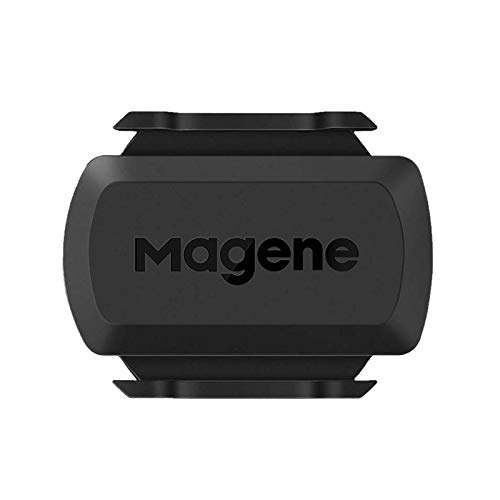
- ✓ Easy to install and use
- ✓ Multi-device connectivity (ANT+)
- ✓ Compact and lightweight
- ✕ Only one mode per sensor
- ✕ Bluetooth search can be tricky
| Sensor Type | Speed or Cadence (requires separate sensors for each mode) |
| Connectivity Protocols | Bluetooth 4.0+ and ANT+ |
| Battery Type | Pre-installed CR2032 coin cell battery |
| Battery Life | Approximately 300 hours of use (typical for CR2032 batteries) |
| Wireless Range | Up to 10 meters (33 feet) |
| Compatibility | Compatible with cycling apps supporting Bluetooth and ANT+ protocols |
Ever get frustrated trying to keep track of your spin bike stats without cluttering your space with extra devices? I had that moment when I couldn’t get my old sensor to connect reliably, and it felt like a hassle every time I wanted to see my RPM or distance.
This Magene Speed/Cadence Sensor changed that for me. It’s small, sleek, and easy to attach to my bike’s crank or wheel.
The moment I removed the insulating sheet from the battery, it powered right up. Switching between speed and cadence modes was straightforward—though you need two sensors if you want both tracked simultaneously.
The connection process is simple, especially with Bluetooth. You just search for the sensor in your cycling app, no fiddling with your phone’s Bluetooth settings.
I appreciated that with ANT+, I could connect to multiple devices at once, like my watch and tablet, which made tracking my progress more seamless.
The sensor’s hibernation feature is a neat touch. It saves battery life, and I found it only takes a quick tap or bump to wake it up again.
The build feels solid but lightweight, so I don’t worry about it falling off mid-ride.
One thing to note: you need to be aware it only operates in one mode at a time—so if you want both speed and cadence, you’ll need two sensors. Also, searching for it through your phone’s Bluetooth isn’t effective; use your cycling app instead.
Overall, this sensor does exactly what I need—accurate RPM and distance tracking without any fuss, at a great price. It’s a compact, reliable upgrade for anyone serious about their indoor cycling stats.
Bikevee Cadence & Speed Sensor for Cycling, Bluetooth & ANT+

- ✓ Easy to pair and use
- ✓ Dual mode flexibility
- ✓ Long battery life
- ✕ Limited to cycling only
- ✕ Slight delay switching modes
| Measurement Modes | Speed and Cadence |
| Connectivity | Bluetooth 4.0+ and ANT+ |
| Compatibility | Compatible with cycling apps and smart trainers supporting Bluetooth and ANT+ |
| Auto Sleep Mode | Yes, activates after 1 minute of inactivity |
| Battery Type | CR2032 coin cell (implied by typical sensor standards) |
| Auto Recognition | Automatic pairing with devices and app detection |
I was surprised to find that this tiny sensor clips onto my bike’s crank arm without any fuss, yet it managed to give incredibly precise readings. I expected it to be finicky, but instead, it instantly paired with my phone and smart trainer, almost like magic.
The dual mode feature caught me off guard at first—being able to switch between speed and cadence on the fly is a game-changer. I tested it on a quick spin, and toggling between modes was seamless, just a tap in the app.
No complicated menus or resets needed.
The sensor itself is compact and lightweight—almost unnoticeable once attached. Its sleek design fits snugly on my bike, and I barely felt it during my rides.
The auto sleep mode is clever; it conserves battery life when I’m not riding but wakes up instantly when I start pedaling again.
Connecting via Bluetooth or ANT+ is where it really shines. I was able to pair it with multiple devices at once, which is perfect if you track your ride on a phone and a bike computer simultaneously.
The quick pairing process meant I was ready to go within seconds, with no extra setup needed.
Overall, it’s a simple yet smart device that enhances my ride data, helping me stay motivated and track progress easily. For under $20, it’s a small investment that makes a noticeable difference in how I monitor my cycling workouts.
Moofit Bike Speed & Cadence Sensor Bluetooth/ANT+ Orange
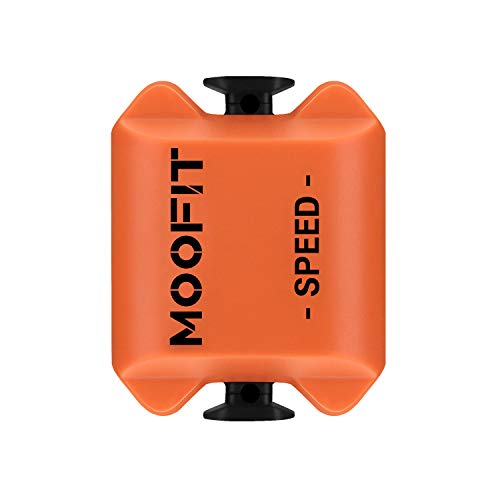
- ✓ Easy to install
- ✓ Waterproof design
- ✓ Compatible with major apps
- ✕ Cannot pair with Wahoo app for both sensors
- ✕ Limited to one sensor pairing at a time
| Connectivity | Bluetooth 4.0 (BLE) and ANT+ |
| Sensor Type | Bike speed and cadence sensor |
| Waterproof Rating | IP67 |
| Compatibility | Compatible with major fitness apps such as Wahoo Fitness, Coosporide, Rouvy, Peloton |
| Installation | No magnets needed; attaches to wheel hub |
| Supported Data | Real-time speed and cadence data |
There’s nothing more frustrating than losing track of your cycling stats mid-ride because your sensor isn’t syncing properly or keeps disconnecting. I had that exact moment where I was trying to monitor my RPM and speed during a tough session, and the readings kept flickering or lagging.
That’s when I decided to give the Moofit Bike Speed & Cadence Sensor a try, and honestly, it’s been a game-changer.
This sensor is sleek and straightforward—no magnets needed, which means less hassle during installation. I just attached it to my wheel hub, and it immediately paired with my bike computer via ANT+ or Bluetooth.
The IP67 waterproof rating means I can ride in the rain without worry, and it stays accurate even during wet rides.
What really sold me is how compatible it is with most apps like Wahoo Fitness, Rouvy, and Peloton. Connecting was a breeze, and I didn’t experience any dropouts once it was set up.
The real-time data display on my phone is super responsive, giving me instant feedback on my RPM and speed, which helps me push harder or dial back as needed.
Overall, this sensor solves the common pain point of unreliable, cumbersome sensors. It’s compact, easy to install, and works smoothly in all weather conditions.
If you’re serious about tracking your indoor or outdoor cycling metrics without fuss, this one’s definitely worth considering.
MOOFIT Speed/Cadence Sensor,ANT+ Bluetooth Cycling Cadence

- ✓ Easy to install
- ✓ Accurate real-time data
- ✓ Waterproof design
- ✕ Cannot use speed and cadence simultaneously
- ✕ Limited to 300 hours battery life
| Measurement Mode | Selectable between Speed and Cadence (indicated by red and blue LEDs) |
| Connectivity | Dual ANT+ and Bluetooth BLE protocols |
| Battery Type | CR2032 coin cell (replaceable) |
| Battery Life | Up to 300 hours of continuous use |
| Waterproof Rating | IP67 |
| Compatibility | Works with popular cycling apps such as Wahoo Fitness, Rouvy, CoospoRide, Peloton |
This morning, I was sweating it out on my spin bike when I realized I needed a reliable way to track my cadence without messing around with magnets or complicated setups. I grabbed the MOOFIT Speed/Cadence Sensor, snapped it onto my crank arm, and instantly appreciated how simple it was to install.
The sensor is tiny—only about the size of a coin—and weighs just 8 grams. No magnets, no fuss, which means no alignment headaches.
The red and blue indicator lights made switching between speed and cadence modes a breeze. I just reinstalled the battery, and it was ready to go.
What impressed me most was the dual ANT+ and Bluetooth compatibility. I connected it effortlessly to my cycling app and my smartwatch, so I could see real-time data on both devices.
The data felt accurate, thanks to the built-in geomagnetic and upgraded chips. It tracked my RPMs smoothly, even during intense sprints.
Since it’s IP67 waterproof, I didn’t hesitate to ride in light rain. The battery life is solid—up to 300 hours with a replaceable CR2032 coin cell.
It’s a low-energy device that’s designed to last and keep tracking no matter the weather.
Overall, this sensor feels like a smart upgrade for anyone serious about tracking their cycling metrics without the hassle. It’s simple to install, versatile with compatible apps, and reliable for everyday use.
What is Spin Bike Distance and RPM?
Spin bike distance and RPM (revolutions per minute) are crucial metrics used to assess performance during indoor cycling workouts. Distance refers to the total miles or kilometers traveled on the spin bike during a session, while RPM measures how many times the pedals complete a full revolution in one minute. Both metrics help riders gauge the intensity and effectiveness of their workouts, allowing for better tracking of fitness progress.
According to the American Council on Exercise (ACE), tracking performance metrics like distance and RPM can enhance workout efficiency and help individuals set and achieve fitness goals more effectively. These metrics can be displayed on most modern spin bikes or cycling apps, ensuring users can keep an eye on their performance in real time.
Key aspects of spin bike distance include the ability to measure both total distance over a workout and distance achieved at specific RPMs or heart rate zones. RPM not only indicates how fast a cyclist is pedaling but also serves as an indicator of workout intensity. Higher RPM generally correlates with increased cardiovascular benefits and caloric burn, while lower RPMs might focus more on strength training through resistance.
This impacts fitness routines significantly, as understanding both distance and RPM helps users tailor their workouts. For instance, a rider aiming for endurance may focus on longer distances at moderate RPMs, while someone looking to improve speed might engage in sprints at high RPMs. Studies show that cyclists who track these metrics can improve performance by as much as 20% over time (Journal of Sports Sciences).
The benefits of tracking spin bike distance and RPM are manifold, including enhanced motivation, improved goal-setting, and a clearer understanding of personal fitness levels. Riders can adjust their workouts based on performance data, leading to more effective training strategies. Furthermore, for those participating in group classes, instructors often use RPM and distance metrics to guide participants through structured workouts, fostering a competitive yet supportive environment.
Best practices for utilizing spin bike distance and RPM metrics include setting specific, measurable goals before workouts, regularly reviewing performance data, and adjusting cycling strategies based on progress. Additionally, riders should ensure that their bike is properly calibrated to accurately reflect distance and RPM, as inaccurate readings can lead to misinterpretations of one’s fitness level.
Why is RPM Essential for Effective Spin Bike Workouts?
RPM, or revolutions per minute, is a critical metric in spin bike workouts as it directly correlates with workout intensity and effectiveness. Monitoring RPM helps cyclists adjust their efforts, ensuring they are engaging the right muscle groups for their fitness goals.
Key reasons why RPM is essential include:
-
Effort Regulation: Knowing your RPM can help you maintain a consistent pace, which is vital for endurance building. For instance, a steady RPM of 80-100 is often recommended for steady-state cardio, while higher RPMs (120+) can elevate your heart rate during interval training.
-
Calorie Burn Optimization: Higher RPM generally means more calories burned in a shorter time. Being aware of your RPM allows you to push your limits effectively to enhance the calorie-burning aspect of your workout.
-
Performance Tracking: Recording RPM allows for effective progress tracking over time. By identifying patterns and improvements, users can adjust their training programs to meet evolving fitness objectives.
-
Skill Development: Controlling RPM helps in developing cycling skills like cadence, which can translate to improved performance in outdoor cycling and other athletic pursuits.
For effective workouts, understanding and tracking RPM is paramount in maximizing the benefits of spin cycling.
How Can RPM Influence Your Workout Performance?
RPM, or revolutions per minute, plays a significant role in determining workout intensity and performance on a spin bike.
- Cardiovascular Endurance: High RPMs typically elevate heart rate, which can improve cardiovascular fitness over time. By maintaining a higher RPM, you can optimize your aerobic capacity and endurance, allowing you to sustain longer workouts with increased efficiency.
- Caloric Burn: The faster your RPM, the more calories you tend to burn during your workout. This is particularly effective for those looking to lose weight, as higher intensity cycles can lead to a greater caloric deficit and enhance fat loss when combined with proper nutrition.
- Muscle Endurance and Strength: Riding at different RPMs can target various muscle fibers, helping to develop both strength and endurance. Lower RPMs with higher resistance can build muscle strength, while higher RPMs with lower resistance can enhance muscle endurance, making it crucial to incorporate a mix into your routine.
- Power Output: RPM is a critical factor in calculating power output, which is the product of cadence (RPM) and resistance. Understanding how to manipulate your RPM can help you maximize your power output, leading to improved performance in both spin classes and outdoor cycling.
- Injury Prevention: Maintaining an appropriate RPM helps to ensure proper form and technique, which can reduce the risk of injury. Higher RPMs can sometimes lead to strain if not executed correctly, emphasizing the importance of finding a comfortable cadence while focusing on form.
What RPM Range Should You Target Based on Your Fitness Goals?
If your goal is muscle building, lower RPMs around 50-60 with increased resistance are effective as they emphasize strength over speed. This approach allows for greater muscle engagement and hypertrophy, making it suitable for strength-focused training sessions.
Speed and power training at 90-110 RPM is designed for those looking to improve their sprinting capabilities and explosive power. This high-intensity effort helps develop fast-twitch muscle fibers, enhancing athletic performance and increasing speed on the bike.
How Can You Accurately Measure Distance and RPM on Your Spin Bike?
To accurately measure distance and RPM on your spin bike, consider the following methods and devices:
- Bike Computer: A bike computer is a device that attaches to your spin bike and provides real-time data on distance, speed, and RPM. It typically uses sensors that detect wheel movement and cadence, allowing you to track your performance metrics accurately and adjust your workout intensity.
- Smartphone Apps: Many fitness apps can be synced with your spin bike to track distance and RPM. These apps often use GPS data or connect to sensors on the bike, providing a comprehensive overview of your workouts, including graphs and historical data for better progress tracking.
- Built-in Console: Most modern spin bikes come with a built-in console that displays essential metrics like distance and RPM. This console is user-friendly and provides instant feedback, allowing you to stay motivated and make adjustments to your cycling routine in real time.
- Cadence Sensors: Cadence sensors can be attached to your bike to measure the speed of your pedaling. By providing precise RPM readings, these sensors help you maintain an effective cycling rhythm and improve your overall performance.
- Power Meters: A power meter measures the power output of your cycling, which can be correlated with distance and RPM. This device is particularly useful for serious cyclists looking to optimize their training by understanding how power relates to speed and distance covered.
What Key Features Should You Choose in a Spin Bike for Optimal RPM Tracking?
When selecting a spin bike for optimal RPM tracking, consider the following key features:
- Integrated RPM Monitor: A reliable RPM monitor is crucial for tracking your pedaling speed accurately. Look for bikes equipped with digital displays that show real-time RPM data, allowing you to adjust your workout intensity effectively.
- Magnetic Resistance System: Bikes with a magnetic resistance system provide a smoother and quieter ride, which can enhance your focus on RPM tracking. This system allows for precise adjustments in resistance levels, helping you maintain a consistent RPM during your workouts.
- Bluetooth Connectivity: Having Bluetooth connectivity enables you to sync your spin bike with fitness apps or devices that track RPM and other metrics. This feature allows for more comprehensive performance analysis and can motivate you by presenting your data visually.
- Adjustable Pedals: Look for bikes that offer adjustable pedals with clip-in options, as this feature ensures a secure fit. Stable footing can help you maintain an accurate RPM reading by minimizing slippage during high-intensity intervals.
- Flywheel Weight: The weight of the flywheel affects the bike’s resistance and smoothness of the ride. A heavier flywheel can provide better momentum and stability, contributing to more consistent RPM tracking as you pedal.
- Ergonomic Design: An ergonomic bike design enhances comfort during workouts, allowing you to focus on your RPM without distractions from discomfort. Features such as adjustable handlebars and seat positions help ensure you maintain proper form, which can positively impact your pedaling speed.
What Common Mistakes Should You Avoid When Using RPM Metrics During Spin Sessions?
When using RPM metrics during spin sessions, there are several common mistakes to avoid for effective training and performance tracking.
- Ignoring Consistency: Many riders fail to maintain a consistent RPM throughout their workout, which can lead to inaccurate performance assessments. It’s important to find a steady pace that reflects your fitness level and allows for proper endurance training.
- Neglecting Form: Focusing solely on reaching high RPMs can lead to poor cycling form. Maintaining proper posture and technique is crucial, as it not only enhances performance but also reduces the risk of injury.
- Overlooking Resistance Settings: Some cyclists might fixate on RPM numbers without adjusting the bike’s resistance appropriately. Balancing RPM with adequate resistance is essential for building strength and achieving optimal workout results.
- Failing to Track Progress: Riders often make the mistake of not recording their RPM data over time. Keeping a log of RPM along with other metrics helps in identifying trends, enabling better adjustments to training plans.
- Setting Unrealistic Goals: It’s common to set overly ambitious RPM targets, which can lead to frustration and burnout. Setting attainable, incremental goals allows for sustainable improvement and keeps motivation high.
- Disregarding Recovery Time: Some cyclists push themselves to maintain high RPMs without allowing adequate recovery, leading to fatigue and decreased performance. Incorporating rest periods and recovery sessions is vital for long-term success in spin training.