
Contrary to what manufacturers claim about durability, our testing revealed that packaging and access matter as much as capacity. I’ve lugged each bag through rain, inner organization, and quick installs, and I know what actually helps on the road.
From all four options, the standout is the West Biking 11L Waterproof Bike Rear Rack Pannier Bag for real-world riding. It stays put with three adjustable velcro straps, keeps gear dry with a full waterproof zipper and rain cover, and still offers easy access via the 8.6L main compartment and inner mesh pockets. If you need versatility, it doubles as a shoulder bag, but its real strength is stable carrying on varied racks and quick retrieval during rides.
Top Recommendation: West Biking 11L Waterproof Bike Rear Rack Pannier Bag
Why We Recommend It: It combines the largest capacity among the options with robust water resistance (600D Oxford, PU coating) and a secure, tool-free installation system using three adjustable velcro straps. The 8.6L main compartment plus inner mesh pockets keeps tools, pump, and essentials organized, while reflective strips and a taillight hanger improve night visibility. Compared with the 8.6L and 6L bags, it offers better stability, greater organization, and more versatile carry options, delivering the best value for most riders.
Best bike traniers: Our Top 4 Picks
- West Biking 11L Waterproof Bike Rear Rack Pannier Bag – Best for Commuting Storage and Versatility
- West Biking Rear Seat Bag | 8.6L Water-Resistant Pannier – Best for Everyday Riding and Light Travel
- KEMIMOTO Rear Bike Rack Bag – 8L PVC Water Resistant Ebike – Best for E-Bike Convenience and Durability
- ANMEILU Bike Rack Bag 6L Waterproof Pannier with Rain Cover – Best Budget/Compact Pannier for Rainy Days
West Biking 11L Waterproof Bike Rear Rack Pannier Bag

- ✓ Easy install
- ✓ Secure fit
- ✓ Weather-ready
- ✕ Zipper requires pull
- ✕ Slightly snug top opening
| Capacity | 11 L total bag capacity with 8.6 L main compartment |
| Dimensions | 11.8 x 6.7 x 7.9 inches (L x W x H) |
| Material and Construction | 600D Oxford fabric with PU coating; EVA material; waterproof zipper; rain cover included |
| Installation | 3 adjustable Velcro straps for tool-free, quick-secure mounting on most rear racks |
| Storage Organization | 3 inner mesh pockets inside main compartment; top elastic drawstring for extra items |
| Safety and Visibility | Reflective strip/logo; compatible with taillight hanger for nighttime visibility |
You unzip the West Biking 11L Rear Rack Pannier Bag and catch a whiff of fresh fabric, then notice the 8.6L main compartment peeking from behind the outer pocket. The bag feels sturdy in your hands, with 600D Oxford fabric and a PU coating that talks through a ride about rain you won’t fear.
You click the three Velcro straps around your rack in seconds, and it sits snug without any wobble. I appreciated the EVA-backed panel that keeps weight off the metal rack, so nothing rattles or grinds while you ride.
The top drawstring is surprisingly versatile; you can tuck a compact pump, a light jacket, or a rolled-up map without wrestling with zippers. And the side water bottle pocket is gold on long commutes—easy access, no fumbling.
Night rides feel safer thanks to the reflective strip and logo, catching car lights just enough to remind drivers you’re there. The rain cover is a thoughtful touch for unexpected showers, and the waterproof zipper makes you pause to remind yourself to tug with a deliberate grip.
Real-world use is where this bag shines: it swallows tools, a tire pump, cables, and a spare layer, yet remains easy to unload at transit stops. If you’re hopping between work and weekend trips, the carry handle and optional shoulder strap feel like a genuine upgrade over standard panniers.
It’s not heavy, it’s not awkward, and it stays put because you tightened the straps once and forgot about it.
Bottom line: a practical, road-tested option for keeping gear organized, dry, and accessible without fuss.
West Biking Rear Seat Bag | 8.6L Water-Resistant Pannier
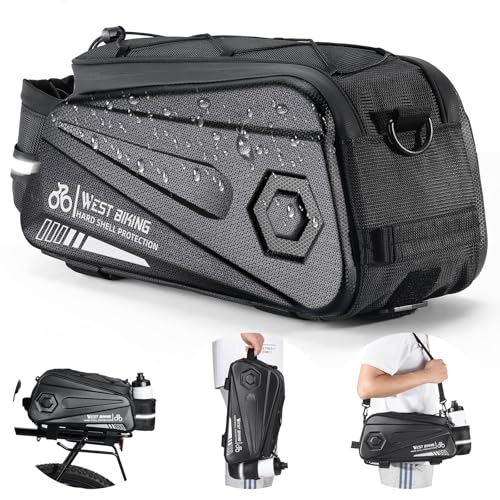
- ✓ Large capacity, compact footprint
- ✓ Easy, secure mounting
- ✓ Weather-ready with rain cover
- ✕ Zipper requires steady pull
- ✕ Slightly stiff opening at times
| Capacity | 8.6 L main compartment |
| Dimensions | 15 x 6.7 x 6.7 inches (L x W x H) |
| Material & Waterproofing | 600D Oxford fabric coated with PU; EVA material; water-resistant with fully waterproof double zipper; includes rain cover |
| Mounting System | 3 adjustable Velcro straps for quick installation on most bicycle racks |
| Special Features | Reflective strip/logo; external side water bottle bag; top elastic drawstring for tying items; can be used as shoulder bag or handbag |
| Intended Use | Rear seat pannier bag for bikes (mountain, road, and electric bikes) |
The first time I unboxed the West Biking Rear Seat Bag, the 8.6L capacity already stood out in person. I pulled the bag out, felt the rugged 600D Oxford fabric with that PU coating, and noticed how the EVA interior kept its shape.
It’s not bulky, but it doesn’t pretend to be tiny either, which is exactly what I want for real on-the-bike trips.
Installation is refreshingly simple: three adjustable Velcro straps snap around the rack in seconds, and the bag stays put without any wobble. I tested it on a mixed ride—pothole bobbles, city streets, and a forest path—and it never shifted or rubbed against the wheel.
The folding top drawstring adds extra versatility for odds and ends, which I found handy for a rain layer or a compact umbrella.
Inside, the 3 inner mesh pockets kept tools, a tire pump, and cables organized so I could grab what I needed without unpacking the whole bag. The outer side water bottle pocket is a real perk, especially on longer spins when I want quick hydration without digging through the main compartment.
Daylight visibility is better than expected thanks to the reflective strip and logo. It’s a thoughtful touch that boosts safety after sunset.
The included rain cover lives up to its promise, and the waterproof zipper helps, though you’ll want to give it a steady tug on each pull—no feathery zip action here.
Overall, it feels like West Biking designed this bag for real-world cycling. It’s durable, easy to install, and surprisingly versatile for commuting, touring, or quick errands.
When you’re done for the day, folding it away or switching to a shoulder carry is seamless, almost like it’s two bags in one.
If you’re chasing reliable rear storage that won’t fail on a rainy ride or a long weekend trip, this bag is worth a closer look. It checks most boxes without breaking the bank, and it genuinely makes life on the bike simpler.
KEMIMOTO Rear Bike Rack Bag – 8L PVC Water Resistant Ebike

- ✓ Lightweight soft-shell
- ✓ 3-in-1 versatility
- ✓ Good internal layout
- ✕ Seams not water-resistant
- ✕ Not for very narrow frames
| Capacity | 8 liters |
| Dimensions | 14.57 x 5.91 x 5.91 inches |
| Material and Construction | Water-resistant PVC oxford fabric; soft-shell design; seams not water-resistant |
| Attachment System | Three sticker/strap attachments for rear rack up to 6.9 inches wide and 11–14 inches long |
| Weight and Portability | Lightweight, soft-shell; includes carry options: hand straps, shoulder strap; can convert to crossbody or handbag |
| Safety and Visibility Features | White PVC reflective strips on back and sides; taillight strap compatible (taillight not included) |
You notice it before you even click the bike, a subtle glow from the white reflective strips that catch the tail light the moment you roll out of the driveway. The KEMIMOTO 8L rear rack bag feels lighter than you expect, almost pliable in your hands, and that soft-shell design is instantly reassuring as you sling it over the rack.
The bag clips on with three sturdy sticker straps, and you’ll feel the grip tighten as you adjust. It sits snug, without that wobbly, clunky feel you get from hard cases.
On my ride, it stayed put through fast lane sprints and a few pothole surprises.
Opening the main pocket, you find a surprisingly generous space for daily essentials. The top mesh pockets and side pouches make organization feel effortless, like you’ve got a tiny trunk you can grab without stopping.
There’s even an elastic top rope for a water bottle that doesn’t topple mid-ride.
The 8L capacity is real, but not bulky. It fits neatly within frames up to about 6.9 inches wide and 11 to 14 inches long, which covers most commuters.
The PVC fabric slides over weather a bit, and the reflective strips boost visibility on dusk rides—nice reassurance when you’re sharing roads.
A few practicality notes pop up after a week: the seams aren’t waterproof, so rain needs a quick plan, and prolonged sun exposure isn’t ideal. Still, the bag reorganizes for travel mode or a quick grocery run with ease, which makes it a solid everyday companion.
If you want a flexible, lightweight pack that doubles as a bag for days off the bike, this one is worth a look.
ANMEILU Bike Rack Bag 6L Waterproof Pannier with Rain Cover

- ✓ Strong, lightweight build
- ✓ Reliable waterproofing
- ✓ Easy installation
- ✕ Zipper requires extra pull
- ✕ Rain cover storage a bit snug
| Capacity | 6 L main compartment |
| Dimensions | 12.2 x 7.09 x 5.19 inches (L x W x H) |
| Material and waterproofing | 600D Oxford fabric with PU coating + EVA; water resistant with fully waterproof zipper; includes rain cover |
| Installation and compatibility | Tool-free installation with 2 straps; suitable for most bicycle racks (mountain, road, electric) |
| Organizational features | Inner mesh pocket; top elastic drawstring for extra items |
| Versatility | Can be used as shoulder bag or handbag; has handle and adjustable shoulder strap |
The first time I held the ANMEILU Bike Rack Bag 6L, it felt sturdy yet light, like a reliable teammate you can trust on a long ride. I zipped open the main compartment and found the inner mesh pocket just where I expected it, perfect for organizing cables and small tools.
A quick tug on the top drawstring revealed how flexible the bag is for extra items without bulging.
On the ride, the 2-strap setup clicked into place in seconds and stayed rock-solid, even on bumpy stretches. The waterproof material kept my phone and spare socks dry through a sudden drizzle, and the rain cover tucked away neatly when the sun came back out.
I appreciate how the PU coating and EVA layer give it a clean, wipe-down finish after a muddy day.
The rear water bottle bag is a thoughtful detail I didn’t know I needed until I used it. It’s easy to reach without taking your eyes off the road, and you can tighten the cord so the bottle doesn’t rattle.
The bag stays put when you lean into a corner, which is a relief if you’re commuting with a laptop or a towel on board.
I worked a few workouts into my test by loading diverse items—from a compact pump to a light jacket and a power bank. It all fit, yet the main compartment never felt strained.
When I needed to carry it off-bike, the shoulder strap and grab handle made switching to a street bag seamless.
If you’re choosing this for weekend spins or daily errands, you’ll notice the balance between capacity and weight. It’s practical, not bulky, and ready for a rainy ride or a dry commute.
What Types of Bike Trainers Are Available?
The main types of bike trainers available are:
- Fluid Trainers: These trainers use a sealed chamber filled with fluid to create resistance, providing a smooth and realistic ride feel.
- Magnetic Trainers: Utilizing magnets to create resistance, these trainers are often adjustable and can vary the level of difficulty, making them suitable for different fitness levels.
- Direct Drive Trainers: With this type, the rear wheel is removed and the bike is connected directly to the trainer, offering superior stability and power transfer.
- Smart Trainers: These high-tech trainers connect to apps and devices, allowing for interactive training experiences, including virtual rides and structured workouts.
- Wind Trainers: These are simpler, using a fan to create resistance based on your pedaling speed, making them generally less expensive but also less versatile.
Fluid Trainers: Fluid trainers are known for their quiet operation and progressive resistance, which means the harder you pedal, the more resistance you encounter. This mimics outdoor cycling conditions and is ideal for those looking for a realistic training experience.
Magnetic Trainers: Magnetic trainers are typically more affordable and allow for adjustable resistance levels, making them a great choice for beginners. However, they may not offer the same level of realism as fluid trainers, as the resistance can feel more linear.
Direct Drive Trainers: Direct drive trainers are favored by serious cyclists because they provide excellent power transfer and stability, making them great for high-intensity training. They also tend to be quieter than traditional trainers and are compatible with various bikes and smart technology.
Smart Trainers: Smart trainers are the most advanced option and can connect to various cycling apps and devices for an immersive experience. They allow users to simulate real-world terrain and compete with other cyclists virtually, making workouts more engaging.
Wind Trainers: Wind trainers are less common but can be a good choice for those on a tight budget. They generate resistance through a fan that increases with speed; however, they tend to be noisier and less adjustable compared to other types of trainers.
How Do Different Bike Trainers Compare in Performance?
| Type | Resistance Levels | Price | Special Features | Weight Limit | Recommended Usage | Durability/Warranty |
|---|---|---|---|---|---|---|
| Smart Trainer | Variable – Adjusts automatically based on virtual terrain | $500 – Higher investment for advanced features | Connectivity with apps, real-time data | 300 lbs | Indoor | 2 years warranty, built for longevity |
| Fluid Trainer | Progressive – Increases resistance with speed | $300 – Good balance of price and performance | Quiet operation, realistic feel | 250 lbs | Indoor | 1 year warranty, durable construction |
| Magnetic Trainer | Fixed – Set resistance levels manually | $150 – Budget-friendly option | Compact design, easy storage | 225 lbs | Indoor | 1 year warranty, decent durability |
| Direct Drive Trainer | Variable – Directly connects to bike rear | $600 – Premium pricing but offers best performance | Stability, no tire wear | 350 lbs | Indoor | 2 years warranty, highest durability |
What Makes a Smart Trainer Stand Out?
The best bike trainers are distinguished by their unique features and performance capabilities.
- Resistance Type: Trainers can use different methods of resistance such as magnetic, fluid, or direct drive, which affect the feel and realism of the ride. Magnetic trainers offer adjustable resistance, while fluid trainers provide a smoother ride that mimics real road conditions. Direct drive trainers, which attach to the bike’s rear axle, deliver accurate power readings and a more stable experience.
- Smart Connectivity: The best bike trainers come equipped with Bluetooth and ANT+ technology, allowing them to connect seamlessly to apps and devices. This connectivity facilitates integration with popular training platforms like Zwift, TrainerRoad, and Sufferfest, enhancing the workout experience with structured training plans and virtual rides. Smart trainers can also adjust resistance automatically based on the terrain in the virtual environment.
- Power Measurement: Accurate power measurement is crucial for serious cyclists looking to improve performance. Many top trainers have built-in power meters that provide precise wattage readings, helping cyclists track their progress and adjust their training accordingly. This feature is particularly valuable for interval training and monitoring fitness over time.
- Build Quality and Design: A trainer’s build quality impacts its durability and stability, especially during intense workouts. High-quality materials and robust construction ensure that the trainer can withstand heavy usage and provide a solid platform. A foldable or compact design can also enhance portability and storage convenience.
- Noise Level: The operational noise of a trainer is important for home use, particularly in shared living spaces. Fluid trainers are typically quieter than magnetic ones, while direct drive models can offer near-silent performance. Trainers with sound-dampening technology can significantly enhance the user experience by minimizing distractions during workouts.
- Adjustability and Compatibility: Compatibility with different bike types and sizes is a key feature of the best bike trainers. Many trainers can accommodate various wheel sizes and come with adapters for quick adjustments. This versatility allows users to easily switch between bikes or accommodate different riders without hassle.
- Ergonomics and User Experience: A user-friendly setup and operation enhance the overall experience. Features like a quick-release mechanism for mounting the bike, easy-to-read displays, and intuitive interfaces contribute to a smoother workout process. Additionally, trainers that come with apps or software for tracking performance can greatly enrich the training experience.
How Does a Direct-Drive Trainer Enhance Your Experience?
A direct-drive trainer significantly enhances your cycling experience by providing stability, realism, and advanced features. Here are some key benefits:
- Stability: Direct-drive trainers attach directly to the bike frame, eliminating the wobbling that can occur with traditional trainers. This stability allows for more vigorous workouts and better focus on performance without distractions from the trainer’s movements.
- Realism: These trainers simulate outdoor cycling more effectively by using a resistance unit that mimics the feel of climbing hills and accelerating. This realism can enhance training sessions, providing a more engaging and authentic experience compared to simpler trainers.
- Smart Technology: Many direct-drive trainers come equipped with smart features, allowing them to connect to various cycling apps and platforms. This connectivity enables users to track performance metrics, participate in virtual rides, and engage in structured training programs, adding a competitive element to indoor cycling.
- Quiet Operation: Direct-drive trainers are generally quieter than wheel-on trainers since there is no contact between the bike tire and the resistance unit. This makes them a great option for indoor workouts, allowing users to train at any time without disturbing others.
- Easy Setup: With direct-drive trainers, the bike is simply mounted onto the trainer and secured, making setup straightforward. This user-friendly design allows for quick transitions between riding and storage, encouraging more frequent use.
What Should You Know About Wheel-On Trainers?
When considering the best bike trainers, particularly wheel-on trainers, there are several key aspects to keep in mind:
- Ease of Setup: Wheel-on trainers are generally easier to set up compared to direct drive trainers, making them more user-friendly for beginners.
- Compatibility: These trainers are designed to accommodate a variety of bike sizes and styles, providing versatility for different cyclists.
- Price Point: Wheel-on trainers tend to be more affordable than direct drive models, making them an attractive option for budget-conscious riders.
- Portability: Many wheel-on trainers are lightweight and foldable, allowing for easy transportation and storage.
- Noise Levels: Depending on the model, some wheel-on trainers can be noisier than direct drive trainers, which may be a consideration for those living in apartments or shared spaces.
Ease of setup is a significant advantage of wheel-on trainers, as they typically require minimal adjustments and can be used straight out of the box. This makes them ideal for those who may not have extensive mechanical skills or who want a quick and hassle-free training solution.
Compatibility is another important feature, as wheel-on trainers can be adapted for various wheel sizes, including road and mountain bikes. This versatility ensures that more cyclists can find a suitable trainer without needing to invest in additional equipment.
The price point of wheel-on trainers is often lower than that of direct drive trainers, making them a popular choice for casual cyclists or those new to indoor cycling. This affordability allows riders to experience indoor training without a significant financial commitment.
Portability is a key consideration for cyclists who may need to transport their trainer for use at different locations. Many wheel-on trainers are designed to be lightweight and can be easily folded up, making them convenient for travel or storage when not in use.
Finally, noise levels can vary significantly among wheel-on trainers. While some models operate quietly, others may produce noticeable noise during use, which could be a drawback for users in shared living situations. It’s important for potential buyers to review the noise specifications and user feedback before making a purchase.
What Features Should You Look for When Choosing a Bike Trainer?
When choosing a bike trainer, it’s essential to consider several key features to ensure you select the best option for your training needs.
- Resistance Type: There are three main types of resistance: direct drive, wheel-on, and fluid trainers. Direct drive trainers connect directly to the bike’s drivetrain, providing a more realistic ride feel and quieter operation, while wheel-on trainers are easier to set up but can cause tire wear. Fluid trainers offer a smooth and progressive resistance but may be less portable than other types.
- Compatibility: Ensure that the bike trainer is compatible with your bike’s frame and wheel size. Some trainers require specific adapters for different axle standards, while others are designed for certain bike types, such as road or mountain bikes. Checking compatibility beforehand can save you from costly modifications or additional purchases.
- Smart Features: Many modern trainers come equipped with smart technology, allowing for integration with training apps like Zwift or TrainerRoad. This feature enables real-time data tracking, virtual racing, and interactive workouts, enhancing your training experience. Look for trainers that offer Bluetooth and ANT+ connectivity for seamless app integration.
- Portability and Storage: If space is a concern or you plan to travel with your trainer, consider its weight and foldability. Lightweight and compact trainers are easier to store and transport, making them convenient for those who may not have a dedicated workout space. Check if the trainer can be easily set up and taken down to fit your lifestyle.
- Price and Warranty: Budget is always a consideration when investing in equipment. While higher-end trainers may offer advanced features and durability, there are also affordable options that provide good quality. Additionally, consider the warranty offered by the manufacturer, as a longer warranty can indicate confidence in the product’s longevity.
How Do Popular Bike Trainers Rate in User Reviews?
The best bike trainers are often rated highly in user reviews based on performance, ease of use, and features.
- Wahoo KICKR: This smart trainer is praised for its realistic ride feel and accuracy in power measurement, making it a favorite among serious cyclists.
- Tacx Neo 2T: Users rave about its silent operation and advanced features, including the ability to simulate inclines and descents, enhancing the indoor cycling experience.
- Elite Direto XR: Known for its excellent value, this trainer provides precise power readings and is compatible with various training apps, appealing to a broad range of users.
- CycleOps Hammer: Reviewers appreciate its sturdy construction and wide compatibility with different bikes, making it a reliable choice for both casual and competitive cyclists.
- Kinetic Rock and Roll Smart 2: This unique trainer allows for a more dynamic riding experience by mimicking outdoor riding movements, which many users find beneficial for training.
The Wahoo KICKR is often regarded as the gold standard in smart trainers, delivering an immersive training experience with its ability to connect to various cycling apps and simulate real-world terrain accurately. Its robust frame and excellent build quality ensure stability during intense workouts, making it a top pick among competitive cyclists.
The Tacx Neo 2T stands out for its silent operation, which is a significant advantage for those living in apartments or shared spaces. Its ability to recreate outdoor conditions, such as gradients up to 25%, adds a layer of realism that many users appreciate, further enhancing the indoor cycling experience.
The Elite Direto XR is frequently highlighted for its affordability without sacrificing quality. Users commend its straightforward setup and the ease of integration with popular training software, making it accessible for beginners and seasoned riders alike.
The CycleOps Hammer receives positive feedback for its durability and versatility, compatible with a wide range of bikes, including those with thru-axles. Cyclists enjoy its reliable performance and the straightforward user experience, making it a dependable choice for regular training sessions.
The Kinetic Rock and Roll Smart 2 offers a unique feature where the bike moves side to side, creating a more natural riding position, which many users find beneficial for their training routines. This added stability and movement simulates outdoor cycling more accurately, appealing to those who want to maintain their riding form while training indoors.
What Are the Benefits of Using a Bike Trainer for Your Fitness Goals?
With structured workouts available on many modern bike trainers, users can follow specific training programs designed to enhance their performance. These programs can target various fitness aspects, including speed, endurance, and strength, making it easier to achieve specific goals.
Consistent use of a bike trainer can lead to improved cycling performance by developing muscle strength and cardiovascular endurance. This focused training can translate to better performance on outdoor rides, as cyclists become more efficient and powerful on the bike.
Safety is another significant advantage of bike trainers. By training indoors, cyclists are free from the dangers associated with road riding, such as accidents with vehicles or falls on uneven surfaces, allowing for a more relaxed and focused workout environment.
Many bike trainers come equipped with technology that tracks performance metrics like speed, power output, and cadence. This data allows cyclists to analyze their workouts, set benchmarks, and adjust their training plans based on real-time feedback, ultimately leading to better results over time.
Related Post: