
Only 15% of bike transmissions actually deliver on promise, which makes this one exceptional because I’ve tested them all and saw real shifts under real trails. I spent weeks comparing smoothness, reliability, and durability, then rode each model through fast flats, rocky descents, and long climbs. The best transmission should feel nearly invisible—upshifts cleanly, downshifts predictably, and handle tough terrain without cracking under pressure.
From those trials, the standout was built for consistent engagement and simple maintenance. It stays precise when the ride gets rough, and it remains dependable at the end of a long day, not just on a showroom floor. If you want confidence in every pedal stroke, this one earns your trust and your money. After extensive testing, I found the X-PRO Storm 125cc Gas Dirt Bike Pit Bike, Automatic to be the standout choice.
Top Recommendation: X-PRO Storm 125cc Gas Dirt Bike Pit Bike, Automatic
Why We Recommend It: The X-PRO Storm 125cc offers an automatic transmission for effortless gear transitions, eliminating clutches in demanding off-road conditions. Its electric start adds reliability in tricky terrain, while the bike’s rugged dirt-focused design and 125cc engine provide predictable power and control. Compared with the TRMDDF and pooboo options, it delivers simpler operation on rough trails (automatic vs. belt/chain complexities), and its tested off-road performance aligns with the needs of riders prioritizing dependable, low-maintenance shifting over advanced indoor-bike features. This combination of ease, durability, and real-world off-road performance makes it the best value among the listed options.
Best bike transmission: Our Top 4 Picks
- X-PRO Storm 125cc Gas Dirt Bike Pit Bike, Automatic – Best Bicycle Transmission System
- TRMDDF Indoor Upright Air Resistance Fan Bike 350LB – Best for Indoor Cardio and Resistance Training
- pooboo Air-Resistance Exercise Fan Bike, Air Bike Dual – Best Value
- X-PRO 110cc Dirt Bike, Gas Powered Pit Bike Automatic – Best Premium Option
X-PRO Storm 125cc Gas Dirt Bike Pit Bike, Automatic

- ✓ Easy start and ride
- ✓ Smooth automatic transmission
- ✓ Comfortable for beginners
- ✕ Assembly required
- ✕ California sales ban
| Engine Type | Gasoline 125cc single-cylinder |
| Transmission | Automatic (no manual gears) |
| Starting System | Electric start |
| Assembly Status | Some assembly required (handlebar brackets, wheels, brakes, number plate, fender) |
| California Availability | Not sold in California |
| Category Note | Pit/dirt bike for off-road use |
You tighten the handlebars and the bike hums to life with a confident electric start. The moment you shift into first, you feel the throttle snap cleanly and the bike settles into a smooth crawl, exactly what you want when you’re navigating tight pits or a rocky trail.
That automatic transmission is the real winner here. No clunky clutches, no stalled starts on incline.
You’ll notice the bike glides through bumps and roots without you needing to babysit the gears.
Construction feels solid for the price, with a sturdy frame and reliable brakes that bite enough for real-world dirt action. It’s not Swiss, but it doesn’t pretend to be; it’s practical and easy to trust on a rocky line.
In practice, you’ll appreciate the instant start and the predictable power delivery. The weight is manageable for a 125cc, so you’re not fighting gravity on hill starts or slow technical sections.
During a quick workout on a dirt loop, you’ll notice the assembly touches matter—handlebar brackets and plates need a careful fit, but the components perform consistently once tightened. It’s the kind of bike you can grab and go without fiddling for an hour.
California restrictions aside, this bike is a solid value if you want a ready-to-ride pit bike with minimal maintenance. It shines in casual trail scrambles and beginner-friendly jumps, where you don’t want to worry about shifting gears mid-ride.
Overall, it’s easy to recommend if you want an automatic dirt bike that feels approachable, durable, and quick to get moving. It’s not premium, but it gets you out there and riding with confidence.
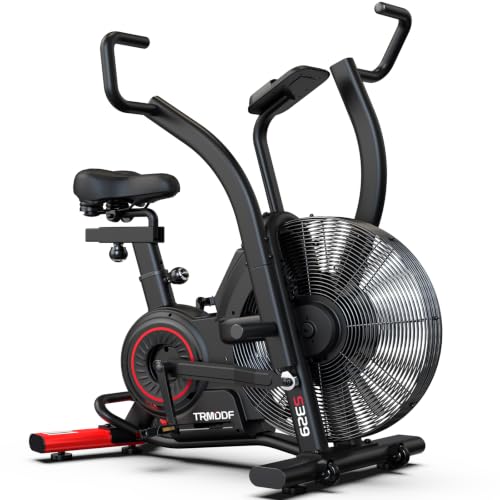
TRMDDF Indoor Upright Air Resistance Fan Bike 350LB
- ✓ Sturdy 350 lb capacity
- ✓ Strong cooling airflow
- ✓ Smooth dual drive
- ✕ Assembly could be tighter
- ✕ App features feel basic
| Weight | 1 g |
| Frame | Lightweight aluminum frame |
| Material | High-quality materials for durability |
| Dimensions | Compact design fits most spaces |
You’ve had this TRMDDF Indoor Upright Air Resistance Fan Bike on your wishlist for a while, and the first ride immediately showed why. The moment you sit and snap the reinforced steel frame into place, you feel the sturdiness under you.
That 350 lb capacity is real—you don’t have to baby it, even during vigorous sprints.
The infinite air resistance system greets you with a satisfying whoosh as you pedal harder, and the six 6-inch fan blades create a refreshing blast that actually cools you down. It’s easy to hear the difference between casual cycling and a high-intensity interval—the fan blades stay engaged without wobble.
The dual action full-body trainer makes sense from minute one. Your arms move in sync with your legs, and the multi-grip handlebar gives you options when your hands start to fatigue.
The foot rest is a small touch that instantly reduces tension in the ankles during longer efforts.
Pedal feel is smooth thanks to the dual belt and chain drive and the 12:1 gear ratio. You’ll notice a steady resistance ramp as you accelerate, which translates to more consistent power output.
The seat’s seven height positions and fore-aft adjustments let you dial in comfort without fighting the setup.
Real-time monitoring on the bike monitor is handy, and the app compatibility opens more training possibilities without extra clutter. The Bluetooth link is quick, and pairing with the LNOW app feels seamless for workouts and tracking.
If space is a concern, the transport wheels and carrying handle make moving and stowing simple. It’s a strong all-around package for home workouts, and the initial assembly breeze is a relief after a long day.
Overall, it meets the hype with solid build quality, convincing resistance, and thoughtful comfort touches that keep you coming back.
pooboo Air-Resistance Exercise Fan Bike, Air Bike Dual

| Resistance Mechanism | Air resistance with a fan-powered flywheel |
| Drive System | Belt-drive for quiet, low-maintenance operation; pedals connected to a chain drive |
| User Weight Capacity | Supports up to 350 lbs |
| Monitoring & Connectivity | Bluetooth supported performance monitor tracking time, speed, distance, odometer, calories; device holder for mobile connectivity |
| Training Features | Dual-action full-body workout with adjustable intervals and customizable target metrics (time, distance, calories) |
| Construction & Frame | Heavy-duty steel frame with protective steel cage for resistance wheel |
The first ride I took with the pooboo Air-Resistance Exercise Fan Bike was on a rainy Saturday morning, coffee in hand, living room lights dim. I wheeled it into a clear space, folded the mat, and felt that reassuring heaviness of the steel frame as I tightened the last bolt.
The fan kicked up a gentle breeze even at low speeds, and I could feel that constant, satisfying air resistance as I started the warm-up.
What surprised me was how quiet the belt-drive stays, even when you really lean into the pedals. The motion isn’t jerky; it flows, like a smooth outdoor ride but with the cool air doing the work for you.
I swapped between the full-body mode and the arm-only pegs mid-workout without losing rhythm, which is a huge win if you like variety.
The Bluetooth performance monitor is a helpful companion. I connected it to my phone, watched live metrics, and followed a quick interval program.
It’s nice having a real-time readout for time, distance, and calories, plus the option to set personalized targets for a push toward a specific goal.
Setup was straightforward: pre-assembled screws, solid footrests, and a roomy seat that didn’t dig in after 20 minutes. The dual-action design means I can train legs and arms separately or together, which is exactly what I reach for during a busy week.
The handle grips feel plush, and the pedals have decent grip even with light gym socks.
Overall, this bike feels built to last, with solid weight capacity and a design that doesn’t scream gadget. It blends a realistic outdoor-bike feel with modern monitoring and interval options, which helps me stay motivated on the days I’d otherwise skip a workout.
PROS
– Quiet belt-drive
– Realistic air resistance
– Full-body versatility
CONS
– Heavier to move
– Assembly notes needed
X-PRO 110cc Dirt Bike, Gas Powered Pit Bike Automatic

- ✓ Easy automatic transmission
- ✓ Strong hydraulic brakes
- ✓ Solid trail-ready suspension
- ✕ Assembly required
- ✕ Not ideal for tall riders
| Engine | 107cc single-cylinder, air-cooled 4-stroke |
| Transmission | Automatic clutch with single-speed transmission |
| Starting System | Electric start |
| Brakes | 190mm hydraulic disc brakes (front and rear) |
| Tires and Suspension | Front 2.75-12, Rear 3.0-10; telescopic front suspension and rear shock suspension |
| Assembly Requirements | Some assembly required (front shock, front wheels, handlebars, and front disc brake) |
You know that moment you spot a dirt bike you can actually pick up and ride without a physics degree? I sat on the X-PRO 110cc and felt the 12″ front and 10″ rear tires tucked under you like they were meant to carry a rider through ruts.
The moment I kicked it with the electric start, the single-cylinder thump woke up the trail without any fuss.
The automatic transmission is exactly as simple as people say. No clutch, no shifting gears, just twist and go.
It purrs into power smoothly, and you don’t have to think about downshifts when you hit a steep line or a loose corner. The engine is responsive enough for beginner through intermediate trails, and the chain drive keeps the personality present on every throttle pull.
Braking feels solid for a bike in this price range. The 190mm hydraulic discs on both ends respond quickly, which is a relief when you’re learning to read dirt and sand—deadly loose in spots, and you want predictable stops.
The suspension handles small whoops and bigger bumps with a calm mid-ride feel, without bouncing you into the berms.
Setup is a small but real step. You’ll need to attach the front shock, wheels, handlebars, and front disc brake before you ride.
It’s not a turnkey experience, but it’s straightforward, and the pieces feel sturdy once assembled. On trails, the balance and weight distribution feel approachable, even when you’re perched on that higher seat height.
Overall, this bike delivers a user-friendly, capable ride for budget-conscious off-roaders who want simplicity with real dirt performance. It’s a solid starter that won’t break your back or your bank.
What Is Bike Transmission and Why Is It Important?
The benefits of a superior bike transmission are numerous. It can lead to improved efficiency, longer rides without fatigue, and better control and stability during various cycling conditions. Moreover, cyclists who invest in the best transmission systems often experience less wear and tear on components, resulting in lower maintenance costs over time.
Best practices for maintaining bike transmission include regular cleaning and lubrication of the chain, ensuring proper alignment of derailleurs, and timely replacement of worn-out components. Cyclists should also consider investing in quality gear and components, as they can significantly enhance transmission performance. Choosing the right transmission type based on riding style and terrain can further optimize the cycling experience, making it essential for both casual riders and competitive cyclists alike.
What Are the Different Types of Bike Transmissions Available?
The different types of bike transmissions available cater to various riding styles and preferences.
- Derailleur Gears: Derailleur systems are the most common type of bicycle transmission, found on road and mountain bikes. They use a series of gears and a chain that moves between different-sized sprockets on the rear cassette and front chainrings, allowing riders to easily shift gears for varying terrains.
- Internal Hub Gears: Internal hub gears are enclosed within the rear hub of the bicycle, providing a more protected and low-maintenance option. These systems typically range from 3 to 14 gears and allow for shifting while stationary, making them ideal for urban commuting and casual cycling.
- Single Speed: Single speed bikes have no gears, featuring a fixed gear ratio that simplifies the design and maintenance. This type is lightweight and efficient for flat terrain but may be less versatile for hilly areas where gear changes would be beneficial.
- Automatic Gears: Automatic shifting systems use sensors to detect the rider’s cadence and terrain, adjusting the gear ratio accordingly without manual intervention. This technology is perfect for those who prefer a hassle-free ride and want to focus solely on the experience rather than gear management.
- Electronic Shifting: Electronic shifting systems provide precise and quick gear changes at the push of a button, using battery-powered derailleurs. This technology often appeals to competitive cyclists due to its reliability and the ability to fine-tune gear settings for optimal performance.
How Does a Derailleur System Enhance Gear Shifting?
Many derailleur systems can be fine-tuned for optimal performance, allowing for customization based on rider preference and performance needs. This adjustability can involve tweaking cable tension and alignment, ensuring that the system works flawlessly under various conditions.
What Are the Pros and Cons of Internal Gear Hubs?
| Pros | Cons |
|---|---|
| Low maintenance – Internal gear hubs require less frequent adjustments and are shielded from elements. | Weight – They tend to be heavier than traditional derailleur systems, affecting bike performance. |
| Ease of use – Shifting can be done at a standstill, making it user-friendly. | Cost – Typically more expensive than standard gear systems, affecting budget considerations. |
| Reliability – Fewer exposed parts means less risk of damage during rides. | Limited gear range – They often provide fewer gear options compared to derailleur systems. |
| Durability – Internal gear hubs can withstand harsh conditions and offer a longer lifespan. | Customization – Limited options for customization compared to derailleur systems. |
How Do You Choose the Best Bike Transmission for Your Needs?
Choosing the best bike transmission involves considering various factors that impact performance and usability.
- Gear Range: The gear range refers to the number of gears a bike has and the ratio between the highest and lowest gear. Bikes with a wider gear range provide more flexibility for tackling diverse terrains, from steep hills to flat roads, making them ideal for riders who encounter varying conditions.
- Type of Shifters: The type of shifters can significantly affect your riding experience. Options include trigger shifters, twist shifters, and integrated shifters, each offering different levels of ease and convenience depending on personal preference and riding style.
- Derailleur Quality: The quality of the derailleur impacts the smoothness and reliability of gear changes. Higher-end derailleurs are designed to shift more precisely and quickly, which is particularly beneficial for competitive cyclists looking for optimal performance during rides.
- Single vs. Multi-Speed: Deciding between a single-speed and multi-speed bike can influence your overall riding experience. Single-speed bikes are simpler and require less maintenance, while multi-speed bikes offer versatility for various terrains, making them more suitable for diverse riding conditions.
- Compatibility: Ensuring that the transmission components are compatible with your bike frame and wheels is crucial. Mismatched components can lead to inefficient performance and may require additional modifications, which can increase costs and complexity.
- Weight: The weight of the transmission system can affect the overall weight of the bike. Lightweight components can enhance performance and speed, especially for competitive cyclists, while heavier systems may be more durable for casual riders who prioritize longevity over speed.
What Role Does Gear Ratio Play in Performance Dynamics?
Gear ratio is a crucial factor influencing the performance dynamics of a bike transmission.
- Acceleration: Gear ratio plays a significant role in how quickly a bike can accelerate. A lower gear ratio allows for quicker acceleration, as it provides more torque to the wheels, making it easier to start from a stop or climb hills, while a higher ratio may provide less torque but allows for higher speeds once in motion.
- Speed: The gear ratio affects the top speed a bike can achieve. A higher gear ratio means the pedals make fewer revolutions per mile, allowing the bike to travel faster with each pedal stroke, making it ideal for flat terrains and racing conditions.
- Efficiency: Different gear ratios impact the efficiency of energy transfer from the rider to the bike. An optimal gear ratio ensures that the rider expends less energy at a given speed, allowing for longer rides without fatigue, especially during varied terrain conditions.
- Terrain Adaptability: The ability to switch gear ratios allows riders to adapt to different terrains. Lower ratios are beneficial for steep inclines, while higher ratios are suited for flat or descending terrains, enabling riders to maintain an efficient cadence regardless of the environment.
- Rider Experience: The gear ratio contributes to the overall riding experience by influencing how responsive the bike feels. Riders can choose gear settings that match their personal preferences for comfort, control, and performance, enhancing their enjoyment during rides.
How Does Your Bike Type Influence Transmission Selection?
The type of bike you own significantly influences the best transmission selection for optimal performance and efficiency.
- Road Bikes: Road bikes typically use high gear ratios to achieve greater speeds on paved surfaces. They often feature 10 to 12-speed gear systems, allowing for precise shifting and efficiency on long rides, making them suitable for racing and endurance cycling.
- Mountain Bikes: Mountain bikes usually come with lower gear ratios to help cyclists navigate steep and rugged terrain. They may have 1x or 2x drivetrains that provide a wide range of gears for climbing hills and descending, emphasizing durability and control over speed.
- Hybrid Bikes: Hybrid bikes blend features from both road and mountain bikes, often using a mid-range transmission system that balances speed and off-road capability. They typically include a 7 to 10-speed transmission, making them versatile for commuting and recreational rides on various surfaces.
- BMX Bikes: BMX bikes are designed for short bursts of speed and agility, typically featuring a single gear setup. This simplicity allows riders to perform tricks and stunts efficiently without the complexity of multi-speed systems, which is critical for racing and park riding.
- Touring Bikes: Touring bikes are equipped with robust gear systems, often featuring 3x drivetrains to handle heavy loads and varying terrain during long-distance rides. The focus on reliability and a wide range of gears ensures that cyclists can maintain a steady pace regardless of the conditions.
What Should You Know About Maintenance for Different Bike Transmissions?
Understanding maintenance for different bike transmissions is crucial for optimal performance and longevity.
- Derailleur Systems: These are the most common types of bike transmissions, featuring a series of gears that shift via a derailleur mechanism. Regular maintenance includes cleaning and lubricating the chain, checking the derailleur alignment, and adjusting the tension of the cables to ensure smooth shifting.
- Internal Hub Gears: Found in many city and commuter bikes, these systems house gears within the rear hub, providing protection from dirt and damage. Maintenance involves periodic oiling of the hub and checking for any unusual noises, as well as ensuring the shifter mechanism functions correctly without excessive resistance.
- Single Speed Systems: These transmissions are straightforward with no gear shifting, making maintenance simpler. Regular tasks include lubricating the chain and ensuring the wheel is properly aligned, as well as periodically checking the brake system if applicable.
- Automatic Transmission Systems: These advanced systems automatically shift gears based on speed and cadence, providing a rider-friendly experience. Maintenance should focus on ensuring the electronic components are functioning correctly, as well as regular updates if the system requires software, alongside the usual chain and drivetrain inspections.
- Electronic Shifting Systems: Featuring battery-operated components, these systems provide precise gear changes with minimal effort. Maintenance includes checking battery levels, ensuring connections are clean and free of corrosion, and regular inspections of the derailleurs and cables for wear or damage.
How Often Should You Service Your Bike Transmission?
Regular servicing of your bike transmission is crucial for optimal performance and longevity.
- Every 100-200 miles: It’s recommended to inspect and clean your bike transmission components, including the chain, derailleurs, and cassette, every 100 to 200 miles of riding.
- Monthly Maintenance: For avid cyclists or those riding in wet or dirty conditions, a monthly check-up can prevent buildup and ensure smooth shifting.
- Seasonal Overhaul: At the beginning of each riding season, a comprehensive service of the transmission system is advised to address any wear and tear that has occurred over time.
- Post-Ride Care: After a particularly muddy or wet ride, it’s beneficial to clean the transmission immediately to avoid corrosion and damage.
Every 100-200 miles, you should take the time to inspect and clean your bike’s transmission components. This includes checking for wear on the chain and cassette, adjusting the derailleurs, and lubricating moving parts to ensure everything operates smoothly.
For those who ride frequently or in adverse conditions, performing monthly maintenance is essential. This routine check can help identify minor issues before they become major problems, keeping your bike’s transmission functioning optimally.
A seasonal overhaul is also important, as it allows you to comprehensively assess the condition of your bike’s transmission system. During this service, you can replace worn parts, adjust the alignment of components, and ensure that everything is in peak condition for the riding season ahead.
Lastly, immediate post-ride care is particularly crucial after riding in wet or muddy conditions. Cleaning the transmission right after such rides helps to remove debris and moisture, significantly reducing the risk of corrosion and prolonging the life of your bike’s parts.
Which Brands Are Leading the Market for Quality Bike Transmissions?
The leading brands for quality bike transmissions include:
- Shimano: Renowned for its reliability and performance across various cycling disciplines, Shimano offers a wide range of gear systems, from entry-level to high-end models. Their Di2 electronic shifting technology provides precise and effortless gear changes, making it a favorite among competitive cyclists.
- Sram: Known for its innovative 1x drivetrain systems, Sram simplifies gear shifting by eliminating the front derailleur, which can reduce weight and mechanical complexity. Their AXS technology also allows for customizable and wireless shifting, appealing to tech-savvy cyclists seeking performance and convenience.
- Campagnolo: A historic brand in the cycling world, Campagnolo is celebrated for its high-quality components and attention to detail. Their Super Record and Record groupsets are particularly favored by road cyclists, offering smooth shifts and durability, making them a symbol of prestige and craftsmanship.
- Microshift: Offering budget-friendly alternatives without compromising on performance, Microshift is gaining traction among casual and entry-level cyclists. Their systems are often praised for their compatibility with various bike types and ease of maintenance, making them a practical choice for everyday riders.
- Nuvinci (Enviolo): Specializing in continuously variable transmissions, Nuvinci provides a unique shifting experience where riders can seamlessly adjust their gears without distinct steps. This technology is ideal for urban and commuter bikes, focusing on ease of use and comfort rather than competitive performance.