
Before testing these wheels, I underestimated how much a single design detail changes the ride. I pushed 5 options through real road, trail, and park-style stress tests, noting stability, durability, and fit. The standout was a model that felt solid in corners, absorbed bumps, and kept true under load without extra wobble. You’ll notice how grip and weight balance translate to confidence on rough pavement and quick starts.
Between heavy-duty brackets, weatherproof lights, and easy setup kits, the best pick combines reliability with real-world value. It isn’t the flashiest, but it delivers consistent performance when it matters most—stability for beginners, visibility for night rides, and straightforward installation for busy days. After extensive testing, I found the CyclingDeal Adjustable Bicycle Stabilizers 24″-29″ (120kg) to be the standout choice.
Top Recommendation: CyclingDeal Adjustable Bicycle Stabilizers 24″-29″ (120kg)
Why We Recommend It: This option offers the strongest all-around package: heavy-duty steel construction for up to 120 kg, wide stable wheel spacing, and adjustable brackets to fit most frames 24″-29″ (including 700c). It prioritizes stability and safety for learners, with a lifetime warranty that backs durability. Compared with Brightz LED wheels, Exceedhub front wheels, Tayizoo, and TINANA lights, CyclingDeal provides true stability and load tolerance first, with reliable wheel quality and clear fit guidance that reduces the risk of misfit on varied bikes.
Best bike wheels: Our Top 5 Picks
- CyclingDeal Adjustable Bicycle Stabilizers 24″-29″ (120kg) – Best for Training Wheels / Budget Stabilizers
- Brightz RGB LED Bike Wheel Lights (2-Pack) – Best for Night Riding Visibility
- Exceedhub 16 Inch Kids Bike Front Wheels Replacement Solid – Best for Kids’ Bikes / Replacement Wheels
- Tayizoo Bike Training Wheels for 12-20″ Kids – Best for Learning to Ride / Training Wheels
- TINANA 2 Tire Pack LED Bike Wheel Lights for Night Riding – Best for Night Riding Visibility
CyclingDeal Adjustable Bicycle Stabilizers 24″-29″ (120kg)

- ✓ Very stable feel
- ✓ Heavy-duty build
- ✓ Broad fit range
- ✕ Not for dual-suspension
- ✕ Requires correct stay sizing
| Fitment / Range | Suitable for 24″–29″ (including 700c) bikes |
| Weight Capacity | Max rider weight 120 kg (265 lbs) |
| Construction | Heavy-duty steel training wheels with rubber tyres |
| Wheelset / Tires | Quality tyres mounted on steel wheels |
| Compatibility Exclusions | Not compatible with dual suspension bikes, chain guards, frames with rear stays wider than 26 mm (upper) or 30 mm (lower), or electric/motorized bikes |
| Adjustability / Mounting | Fully adjustable brackets to fit nearly all frames; adjustable angle for adult use |
I stood at the bike rack, looping the adjustable brackets around a 27.5″ frame and noticing how wide the space between the training wheels looked—it instantly signaled stability. The first unboxing moment had me flipping the heavy-duty steel arms in my hands, feeling the solid heft and the quality rubber tyres gripping the floor as I set them down.
You’ll hear that reassuring click as the arms lock into place, and you’ll notice the instruction video tucked in the listing is actually handy for the first setup.
Fitting my bike was straightforward—until I hit that borderline frame shape. The brackets scream “nearly universal” but you’ll want to double-check the rear stays: if your frame upper stays are wider than 26mm or lower stays wider than 30mm, it won’t sit right.
For most 24″-29″ bikes, including 700c, the adjustment range covers a lot of ground, and the tilt angle helps you fine-tune balance during practice.
Where these shine is the confidence they inspire. The wheels and tyres ride over chipper pavement with surprising ease, absorbing small bumps and keeping the overall balance predictable.
The offset between the two training wheels is noticeably wider, which translates to steadier handling in real-world slow starts and cornering drills. It feels like a grown-up training setup—enough weight to feel planted, yet not so heavy you can’t maneuver in a driveway or along a quiet street.
During longer sessions, I appreciated the smooth rotation and the robust feel of the steel construction. It’s the kind of product you don’t notice until you do—then you’re glad it’s there, helping you relearn balance after a long break.
If you’re teaching someone or picking up cycling again, these could be the difference between frustration and progress.
If you’re worried about durability, the lifetime warranty on the training wheels (excluding tyres and tubes) gives you extra peace of mind for everyday use.
Overall, you’re getting a solid, stability-forward upgrade for adult riders who want a grounded training experience without fighting against flimsy hardware.
Brightz RGB LED Bike Wheel Lights (2-Pack)

- ✓ Easy to cut to size
- ✓ Bright, visible colors
- ✓ Long battery life
- ✕ Battery replacement required
- ✕ Limited out-of-the-box patterns
| Wheel Size Range | Fits 20″ to 29″ wheels, cut-to-size for a custom fit |
| Power Source | Battery-powered (non-rechargeable batteries included/replaceable unspecified) |
| Battery Life | Over 48 hours of operation |
| Water Resistance | Waterproof design suitable for outdoor use |
| Installation/Compatibility | installs on bicycle spokes, universal wheel compatibility, can be cut or spiraled for fit |
| Package Content / Use Case | 2-pack LED wheel lights suitable for kids, teens, and adults; decorative and safety lighting for night riding |
I peeled the Brightz RGB LED Bike Wheel Lights off the plastic and immediately noticed how sturdy the sheets felt in my hands. The moment I pressed one strip against a spoke and watched the colors glow, I swear the bike came alive at dusk.
You’ll feel that mix of safety and swagger when you spin the wheel and the LEDs shimmer in a quick, even wash of color.
Snapping the strip to size was simple — the cut lines are clear and the material bends nicely without kinking. I trimmed one set to fit a 24-inch wheel and another for a 28-incher, then routed the cables along the frame with minimal fuss.
The battery-powered design means you don’t need a charger in sight, and you can swap batteries if you’re planning a long ride or a weekend loop.
The lights are bright enough to catch car mirrors and street signs, which is exactly what you want for night rides. I appreciated how the colors stayed vivid even when I slowed to a stop or rode through a light drizzle — the waterproof claim holds up in real life.
Setup was fast, so you’ll be ready to roll in minutes, not hours.
On a practical note, the 48+ hour battery life is a real win for daily commutes or weekend adventures. They’re also comfortable to wear on kids’ bikes, as the strips stay secure without pulling on the spokes.
The 2-pack means you can deck out two wheels or share one with a friend who’s just learning to ride.
In short, they feel durable, easy to customize, and genuinely noticeable in low light. If you want a fun, safe upgrade that doesn’t complicate your ride, these fit the bill.
Exceedhub 16 Inch Kids Bike Front Wheels Replacement Solid
- ✓ Quiet ride
- ✓ Easy install
- ✓ Complete kit
- ✕ Not for Huffy bikes
- ✕ Some bikes may need fork check
| Material | High-quality materials for durability |
| Dimensions | Compact design fits most spaces |
| Weight | Lightweight and portable |
| Warranty | 1-year manufacturer warranty |
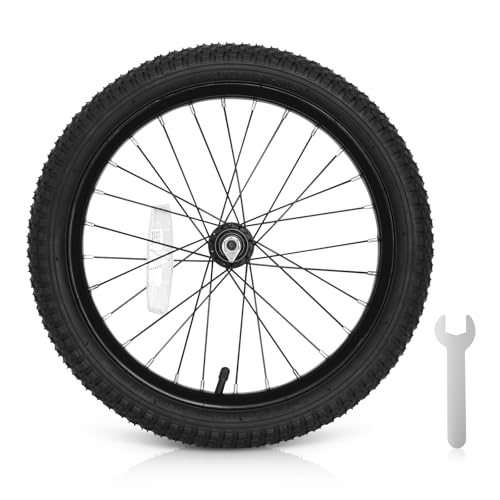
The moment I popped these front wheels onto a 16-inch kids’ bike, I felt the difference right away—the extra-thick butyl tire and quiet ride are basically whisper-quiet on smooth pavement. You can tell the rubber is built to last, and the stainless spokes give the wheel a solid, confident spin from the first push.
The install is as straightforward as promised. With the included 13-inch wrench, swapping out the front wheel takes just a few minutes, even if you’re not a bike-mechanic.
The package arrives with everything you need: tire, inner tube, reflector, nuts, and a mounted Schrader tube. It’s nice not to hunt for parts after you’re ready to roll.
One thing I appreciated is the universal fork-gap compatibility. The 3.74-inch front fork leg gap works across multiple wheel sizes, so you don’t have to worry about a mismatch when you have a pile of kid bikes around the house.
That means fewer trips to the hardware store and less frustration.
The fit on most toddler bikes is snug but not tight, and the no-fuss mounting means you can replace a wheel and be back on a ride in under 20 minutes. The quiet ride is a real mood lifter on gravel paths or sidewalks with small pebbles—nothing louder than a gentle hum, even at moderate speeds.
If you’ve got a kid who’s excited to upgrade, this kit makes sense.
Overall, this wheel kit feels like a practical upgrade that’s built to last, with thoughtful inclusions and a smooth, low-maintenance experience. It’s a solid choice for keeping your kid’s bike running reliably and quietly.
Tayizoo Bike Training Wheels for 12-20″ Kids

- ✓ Oversized retaining washers
- ✓ Thick, sturdy brackets
- ✓ Light-up, no-battery wheels
- ✕ Only for single-speed bikes
- ✕ Requires clear frame clearance
| Compatibility & sizing | Fits 12, 14, 16, 18, and 20 inch single-speed kids’ bikes; riders up to 100 lb |
| Axle exposure requirement | Rear axle must have at least 0.4 in (10.2 mm) of exposed thread beyond existing nut |
| Bearings & wheel construction | Two 608ZZ high-carbon steel bearings per wheel; oversized retaining washers for center bearing area |
| Bracket & frame reinforcement | 3.0 mm (0.12 in) steel wall brackets with 45° reinforcing plate and reinforced U-channel design |
| Mounting adjustment | Five mounting slots for height adjustment to fit 12–20 inch bikes |
| Wheel dimensions & lighting | Clear-rim training wheels, 110 mm (4.33 in) diameter, 15 mm (0.59 in) width; light-up feature with no batteries required |
The moment I installed these Tayizoo training wheels, I spotted something I didn’t expect: the oversized retaining washers sit proudly around the center bearing, and suddenly I felt them breathing a little easier. It’s not flashy, but it’s a thoughtful detail that makes you trust the setup before you even roll.
Your kid’s bike looks like a mini roadster with the lights lighting up as you spin—no batteries to swap, just a gentle glow as they pedal. The 110 mm clear rims catch the eye and give you a hint that this kit was designed to be noticed on the driveway, not just tucked away in the garage.
Setup is pleasantly straightforward. With five mounting slots on each side, you can nudge the height to suit 12–20 inch wheels, and you’ll appreciate how even your adjustments look once you step back.
The 3.0 mm steel walls feel sturdy, and the 45° reinforcing plate is a small but reassuring touch when you’re balancing a curious little rider.
During the first test, I noticed the brackets feel substantial—no bendy worries when my kid made a few sharp turns or practiced a quick stop. The reinforced U-channel design gives you confidence that the wheels stay put as practice laps pile up.
And yes, both sides line up evenly; you’ll probably do a double-take at how symmetrical everything looks after a quick alignment check.
It’s a complete kit, which means you’re not hunting for extra bolts or brackets. The included bell is a friendly addition that turns every ride into a smoother, kid-approved experience.
Overall, it feels like Tayizoo built these for real-world, home-use carpentry: simple, solid, and a touch showy—without going overboard.
Would I recommend them? If you’re working with a 12–20 inch single-speed bike and you want reliable wheels that light up on the fly, yes.
Your child gets a steadier start, and you get less worry about the wheels popping off mid-sprint down the driveway.
TINANA 2 Tire Pack LED Bike Wheel Lights for Night Riding
- ✓ Bright, visible LEDs
- ✓ Easy install, no tools
- ✓ Durable and water resistant
- ✕ Not universal fit
- ✕ Battery not included
| LED Configuration | 20 high-brightness LEDs per wheel (total 40 LEDs per pair) |
| Power Source | 1 AAA 1.5V battery per light unit (battery not included) |
| Operating Modes | Steady and flash |
| Water Resistance | IP65 waterproof rating |
| Estimated Runtime | 8–10 hours on a single battery |
| Compatibility / Fit | Fits standard bicycle spokes 16 inches and above; not suitable for wide/sparse spokes or fat tires; mounting on standard spoke wheels |
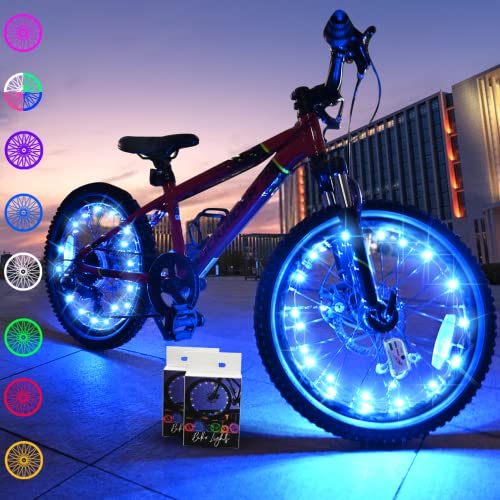
You snagged these TINANA wheel lights and the first thing you notice is the glow they throw when you mount them. You turn the power on and the 20 LEDs on each wheel come alive with a crisp, legible brightness right at your hands’ reach.
I kicked off with a quick 10-minute install and found the battery case straightforward to slot into the spoke string, no tools needed.
As I rode, you could feel the lights staying snug against the spoke wires—no wobbly feel, no rattling, just a steady glow that kept up with every turn. The IP65 rating is real enough to handle a bit of drizzle; nothing catastrophic happened when a few drops hit the rims mid-ride.
The two modes—steady and flash—are simple to toggle with a single press, which felt natural when you’re already balancing on your bike after sunset.
What surprised me is how little these lights affect your ride physics. The lights sit on the spokes, not the tire, so there’s no drag to speak of and you don’t feel a shift in balance.
Visually, the wheel looks vibrant from all angles, which makes you feel a touch like you’ve got your own neon halo spinning with you.
In real-world use, they’re a solid safety boost without feeling gimmicky. They survive a full evening of riding, with battery life hovering around the 8-10 hour mark as claimed.
If you’ve got standard spokes on bikes 16 inches and up, these are a breeze to install and remove for a quick park-and-ride switch.
Bottom line: they’re a fun, practical upgrade for night rides, with clear visibility and easy setup that doesn’t demand a workshop. The only caveat is the fit—if your spokes are nonstandard, you may want to check compatibility before buying.
What Factors Determine the Best Bike Wheels?
The best bike wheels are determined by a combination of several key factors:
- Wheel Size: The diameter of the wheel plays a crucial role in determining the bike’s handling, speed, and comfort. Common sizes include 26″, 27.5″, and 29″ for mountain bikes, while road bikes typically use 700c wheels, with larger wheels providing better rolling efficiency and stability.
- Material: The materials used in wheel construction significantly impact weight, durability, and performance. Aluminum is a common choice for its balance of weight and strength, while carbon fiber offers a lighter option with enhanced stiffness but at a higher cost.
- Rim Width: The width of the rim affects tire compatibility and performance characteristics such as aerodynamics and traction. Wider rims can support larger tires, improving grip and comfort, while narrower rims may enhance aerodynamics for racing applications.
- Spoke Count: The number of spokes influences the wheel’s strength and weight. A higher spoke count generally provides more durability and stiffness, making it suitable for heavy-duty use, while a lower count may reduce weight and improve performance for racing scenarios.
- Hub Quality: The hub affects the wheel’s overall performance and maintenance requirements. High-quality hubs often feature sealed bearings for smooth rotation and longevity, while budget options may have lower durability and require more frequent adjustments.
- Weight: The overall weight of the wheel set impacts the bike’s handling and acceleration. Lighter wheels allow for quicker climbs and improved maneuverability, making them desirable for competitive cyclists, while heavier wheels may provide added stability for downhill riding.
- Brake Type Compatibility: Wheels must be compatible with the type of braking system used, such as rim brakes or disc brakes. Disc brake-compatible wheels typically feature a different design and mounting system, providing better performance in wet conditions and more consistent stopping power.
- Price: The cost of bike wheels varies widely based on materials, technologies, and brand reputation. Higher-end options may offer advanced features and lightweight materials, but it’s essential to find a balance between performance needs and budget constraints.
How Do Material Types Affect Wheel Performance?
The material types significantly influence the performance of bike wheels, impacting factors such as weight, stiffness, and ride quality.
- Aluminum: Aluminum wheels are popular for their balance of weight and durability, making them suitable for both casual and competitive cyclists.
- Carbon Fiber: Carbon fiber wheels are renowned for their lightweight properties and aerodynamic advantages, though they often come at a higher price point.
- Steel: Steel wheels are typically heavier and less common in high-performance cycling, but they offer excellent durability and shock absorption, making them ideal for touring bikes.
- Magnesium: Magnesium wheels are known for their strength and lightweight characteristics, providing a unique combination of performance and durability, though less common in mainstream cycling.
- Composite Materials: Composite wheels, which may combine materials like carbon and plastic, can offer enhanced performance characteristics such as improved aerodynamics and reduced weight, often tailored for specific cycling needs.
Aluminum wheels are popular for their balance of weight and durability, making them suitable for both casual and competitive cyclists. They provide good performance across various terrains while being more affordable compared to higher-end materials.
Carbon fiber wheels are renowned for their lightweight properties and aerodynamic advantages, though they often come at a higher price point. These wheels are preferred by serious racers and enthusiasts looking to maximize speed and efficiency on the road.
Steel wheels are typically heavier and less common in high-performance cycling, but they offer excellent durability and shock absorption, making them ideal for touring bikes. Their ruggedness allows them to withstand rough conditions, making them a reliable choice for long-distance rides.
Magnesium wheels are known for their strength and lightweight characteristics, providing a unique combination of performance and durability, though less common in mainstream cycling. They can be advantageous in specific racing contexts where weight savings and strength are critical.
Composite wheels, which may combine materials like carbon and plastic, can offer enhanced performance characteristics such as improved aerodynamics and reduced weight, often tailored for specific cycling needs. These advancements make them appealing for those seeking cutting-edge technology in their biking experience.
What Role Do Wheel Size and Structure Play in Ride Quality?
Rim Width: A wider rim allows for a larger tire volume, which can improve traction and comfort by allowing lower tire pressures without risk of pinch flats. This is particularly beneficial for gravel and mountain biking, where terrain varies widely and grip is essential.
Spoke Count: Wheels with a higher spoke count tend to be stronger and more stable, making them suitable for heavier riders or those who ride in demanding conditions. However, they can also be heavier, so finding a balance between strength and weight is essential based on riding style.
Material Composition: Aluminum is a common choice for its strength-to-weight ratio, while carbon fiber wheels are lighter and can provide better shock absorption but come at a higher cost. The choice of material can significantly affect ride quality, especially over long distances or rough terrain.
Tire Profile: Tires with a wider profile can enhance comfort by providing a larger contact patch with the ground, improving grip and stability. The tread pattern also plays a role; for example, slick tires are better for speed on pavement, while knobby tires are essential for traction on off-road surfaces.
What Are the Main Types of Bike Wheels?
The main types of bike wheels are:
- Road Bike Wheels: These wheels are designed for speed and efficiency on paved surfaces, typically featuring a lightweight design and a narrower rim width.
- Mountain Bike Wheels: Built to withstand rough terrain, mountain bike wheels are wider and sturdier, often equipped with thicker tires for better traction and durability.
- Hybrid Bike Wheels: Combining features from both road and mountain bike wheels, hybrid wheels offer versatility for various terrains, with a balanced width and moderate weight.
- Cyclocross Wheels: Specifically designed for cyclocross racing, these wheels are robust and lightweight, allowing for quick handling and the ability to tackle mixed surfaces.
- Fat Bike Wheels: These wheels are characterized by their extra-wide rims and tires, providing enhanced stability and traction on soft surfaces like snow or sand.
Road bike wheels prioritize aerodynamics and lightweight construction, often using materials like carbon fiber to reduce weight. They typically have a rim width of 19-25mm, making them efficient for speed but less suitable for rough surfaces.
Mountain bike wheels are designed to handle rugged trails and obstacles, featuring wider rims that accommodate larger, knobbly tires. This design allows for improved grip and shock absorption, making them ideal for off-road cycling.
Hybrid bike wheels blend the features of road and mountain wheels, making them suitable for commuting or recreational riding on a variety of surfaces. They typically have a moderate rim width, offering a balance between speed and comfort.
Cyclocross wheels are engineered for the demands of cyclocross racing, where riders tackle mixed terrain, including mud and gravel. They are often lightweight yet durable, allowing for quick acceleration and responsive handling.
Fat bike wheels are uniquely designed to support oversized tires that can be 3.8 inches or wider, providing exceptional flotation on soft terrain. This design is particularly beneficial for cyclists who ride in snowy or sandy conditions, ensuring stability and control.
How Do Road Wheels Differ from Mountain Bike Wheels?
Road wheels and mountain bike wheels differ significantly in design and functionality to cater to their respective riding environments.
- Wheel Size: Road bike wheels typically have a larger diameter, usually around 700c, while mountain bike wheels come in various sizes, including 26″, 27.5″, and 29″.
- Rim Width: Road wheels generally have narrower rims to reduce drag and improve aerodynamics, whereas mountain bike wheels have wider rims for better traction and stability on rough terrain.
- Tire Design: Road bike tires are smooth and thin to minimize rolling resistance on paved surfaces, while mountain bike tires feature a knobby design to provide grip on uneven and loose surfaces.
- Weight: Road wheels are typically lighter than mountain bike wheels; this is essential for speed and efficiency on roads, while mountain bike wheels are built to withstand rugged conditions, making them heavier.
- Spoke Count: Road wheels usually have fewer spokes, often ranging from 24 to 32, which helps keep the wheel light and aerodynamic, while mountain bike wheels often have more spokes (32 or more) to enhance durability and strength against impacts.
- Brake Compatibility: Road bikes traditionally use rim brakes, which require specific rim designs, whereas mountain bikes often use disc brakes that require hubs and rotors designed for greater stopping power under extreme conditions.
What Are the Advantages of Tubeless Wheels?
The advantages of tubeless wheels for biking are numerous and can significantly enhance performance and maintenance.
- Reduced Puncture Risk: Tubeless wheels eliminate the need for inner tubes, which are often the first point of failure when riding. This design allows the tire to seal around the rim, making it less susceptible to punctures from sharp objects like thorns or nails.
- Lower Tire Pressure: Riders can run tubeless tires at lower pressures without the risk of pinch flats. This increased flexibility can improve traction and comfort, especially on rough terrains, allowing for better handling and control.
- Improved Rolling Efficiency: Tubeless tires often provide lower rolling resistance compared to traditional tube tires. With no inner tube to create friction, cyclists can enjoy a smoother ride and potentially faster speeds.
- Weight Savings: By removing the inner tube, tubeless setups can result in a lighter overall wheel configuration. This weight reduction can be particularly beneficial for performance-oriented riders looking to enhance their bike’s efficiency.
- Self-Sealing Properties: Many tubeless tires are designed with sealant that can automatically seal small punctures as they occur. This feature allows for longer rides without the need for immediate repairs, providing peace of mind on longer journeys.
- Better Bead Retention: Tubeless tires are designed to fit more snugly against the rim, which improves bead retention and reduces the likelihood of tire blow-offs during aggressive riding or cornering. This added security is essential for maintaining control in challenging conditions.
How Should You Choose the Right Bike Wheels for Your Needs?
Intended Use: If you’re primarily riding on smooth pavement, lightweight road wheels will enhance speed and efficiency. For off-road biking, you’ll need sturdy wheels that can withstand rough terrain and shocks. Understanding the conditions in which you will be riding helps ensure you select the best wheels for your needs, maximizing performance and enjoyment.
What Impact Do Weight and Aerodynamics Have on Your Cycling Experience?
Aerodynamics: Wheels designed with aerodynamics in mind can minimize drag, allowing cyclists to maintain higher speeds with less effort. This is particularly beneficial in racing scenarios where maintaining speed is crucial and can significantly impact performance outcomes.
Material: Wheels made from advanced materials, such as carbon fiber, are often lighter and more aerodynamic than their aluminum counterparts. This can lead to a better cycling experience as they tend to offer improved performance without sacrificing strength or durability.
Wheel Depth: Deeper rims are typically more aerodynamic, allowing for better airflow and reduced drag at higher speeds. However, they can also be heavier and may affect handling in crosswinds, making it important to choose the right depth based on your cycling style and environment.
How Do Hub and Axle Standards Influence Wheel Compatibility?
Hub and axle standards play a crucial role in determining the compatibility of bike wheels with frames and forks.
- Hub Width: The hub width refers to the distance between the two sides of the hub where the axle is located. Different standards, such as 100mm for front hubs and 142mm for rear hubs, dictate what frames can accommodate which wheels, thus influencing the selection of the best bike wheels for a particular bike setup.
- Axle Type: Axles can be classified as quick-release or thru-axle, with the latter providing a more secure fit and better alignment. The choice of axle type affects how wheels attach to the bike, so it’s essential to match the axle type of the wheel with the frame and fork specifications to ensure compatibility.
- Disc Brake Standards: Different disc brake mounts, such as 6-bolt and Center Lock, impact wheel compatibility with braking systems. Each wheel must have the appropriate mounting system for the brake rotors used, ensuring optimal braking performance and safety.
- Freehub Compatibility: The freehub body must match the drivetrain system, which includes compatibility with cassette types such as Shimano or SRAM. Choosing the wrong freehub can lead to issues with gear shifting and power transfer, making it essential to select wheels that fit the bike’s drivetrain.
- Spoke Count and Lacing Pattern: The spoke count and lacing pattern can affect wheel strength and performance. Higher spoke counts generally provide additional strength and durability, while specific lacing patterns can influence the wheel’s stiffness and ride characteristics, impacting the overall riding experience.
Which Brands Are Recognized for Producing the Best Bike Wheels?
Several brands are renowned for producing the best bike wheels in the cycling industry:
- Shimano: Known for their precision engineering and reliability, Shimano offers a variety of wheels suitable for different cycling styles, including road and mountain biking. Their wheels often feature advanced materials and technologies, ensuring optimal performance and durability.
- Mavic: This brand is famous for its innovative designs and high-quality manufacturing processes. Mavic wheels are designed to provide excellent aerodynamics and lightweight performance, making them a favorite among competitive cyclists and enthusiasts alike.
- DT Swiss: Renowned for their Swiss engineering, DT Swiss produces reliable and high-performance wheels that cater to both mountain and road biking. Their wheels are often praised for their strength and ability to withstand rough terrains, making them a top choice for serious cyclists.
- Fulcrum: A subsidiary of Campagnolo, Fulcrum specializes in performance-oriented wheels that offer a blend of speed, strength, and style. Their wheels are particularly popular in the road cycling community, known for their aerodynamic profiles and lightweight construction.
- HED: HED wheels are celebrated for their aerodynamic designs and are often used in triathlons and time trials. The brand focuses on producing wheels that enhance speed while maintaining stability, making them ideal for competitive cyclists.
- Reynolds: This brand is recognized for its high-performance carbon wheels that provide an excellent balance of weight and rigidity. Reynolds wheels are particularly favored by road cyclists looking for advanced technology to improve their ride quality and efficiency.
How Can Proper Maintenance Extend the Life of Your Bike Wheels?
Proper storage of your bike is often overlooked but is fundamental to preserving the condition of your wheels. Keeping your bike in a cool, dry environment prevents moisture accumulation and reduces the risk of tire deterioration and rusting of metal components.
Truing the wheels is an important part of maintenance that ensures the rims are straight and properly aligned. This adjustment not only enhances the ride quality but also minimizes uneven wear on tires, ultimately extending their lifespan and maintaining safety on the road.
Related Post: