
Before testing this 150 Stationary Bike Workouts: Beginner to Advanced, I never realized how much a simple ride could sharpen your runs. I jumped in, started with low resistance, and felt the crossover fast: steadier tempo, quicker recovery, and smoother transitions when you push next mile. The guide is compact, and the workouts scale from easy spin to tough intervals, so you can tailor sessions to race days or easy weeks. If you’ve ever skipped cross-training, this set finally makes sense and fits into a tight schedule.
As a friend who’s actually logged the miles, I found the structure clear, the cues practical, and the pacing consistent. It’s small enough to carry on a tablet, but comprehensive enough to replace a separate cycling plan. Give it a try, and you’ll notice running form stay steadier on tired legs and VO2 feel more sustainable across longer tempos.
Top Recommendation: 150 Stationary Bike Workouts: Beginner to Advanced
Why We Recommend It: This product offers a scalable progression from beginner to advanced, matching a runner’s evolving needs. It provides a clear interval structure and pacing cues, which translate well to running efficiency and endurance. The price is accessible at $9.99, and the format is portable for on-the-go coaching, making it a practical, value-driven choice compared with broader, less targeted cycling guides.
150 Stationary Bike Workouts: Beginner to Advanced
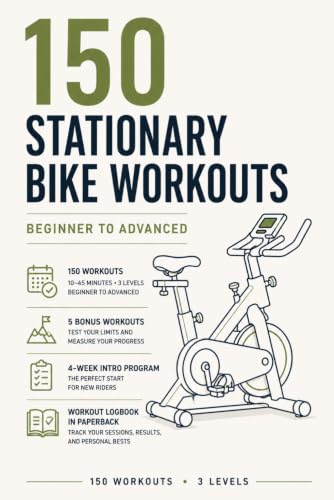
- ✓ Clear progression
- ✓ Runner-focused blocks
- ✓ Easy to follow
- ✕ Limited visuals
- ✕ No video guidance
| Pricing | $9.99 |
| Workout Library Size | 150 stationary bike workouts |
| Skill Level Coverage | Beginner to Advanced |
| Target Audience | Runners using bike workouts for cardio cross-training |
| Delivery Format | Digital/ebook-style collection (stationary bike workouts) |
You’re knee-deep in a rainy morning routine, coffee in hand, and the 150 Stationary Bike Workouts sitting open on your laptop. You decide to grab a quick session before the day starts, aiming for something that actually feels like a workout and not just spinning in place.
The beginner-to-advanced range means you won’t outgrow it in a week. You browse through the variety of sessions and land on a 30-minute endurance ride labeled “for runners.” The pacing cues feel intuitive, and you can tell the workouts were designed with real life training in mind—no fluff, just solid structure.
Physically, the e-book-like feel of the workouts is clean and approachable. The pages load quickly on your tablet, and the text sizing is comfortable for early-morning eyes.
You notice how the intervals line up with natural running cues, which helps a lot if you’re cross-training between the bike and the road.
As you start, you quickly notice the rhythm: steady climbs, short surges, and a long, steady finish that mirrors a race. You’re surprised at how transferable the effort feels; your legs remember the tempo without needing a fancy gadget.
The progression feels gradual but effective, and you don’t feel overwhelmed by complexity.
By the end, you’ve logged a solid session without feeling assaulted by data or gimmicks. It’s straightforward, practical, and respectful of your time.
If you run and want cardio variety, this collection fits your week without crowding your calendar.
Overall, it’s a reliable, no-nonsense toolkit for runners who want bike workouts that actually make sense in real life. You’ll reach for it when you need structure, motivation, and something a bit different from the same treadmill grind.
What Are the Key Benefits of Incorporating Bike Workouts into Running Training?
- Improved Cardiovascular Endurance: Bike workouts help build cardiovascular endurance without the high impact associated with running. This allows runners to maintain or increase aerobic capacity while giving their joints a break.
- Increased Leg Strength: Cycling targets different muscle groups, particularly the quadriceps, hamstrings, and calves, which can enhance leg strength for running. Stronger muscles contribute to improved running efficiency and power.
- Enhanced Recovery: Bike workouts provide a low-impact option for active recovery, helping to flush out lactic acid and reduce muscle soreness. This allows runners to recover faster while still engaging in a productive workout.
- Variety and Motivation: Incorporating biking into a training regimen adds variety, which can help prevent burnout and keep runners motivated. Mixing up workouts can make training more enjoyable and engaging.
- Cross-Training Benefits: Cycling is an effective cross-training activity that can prevent overuse injuries common in runners. By diversifying workouts, athletes can maintain fitness while reducing the risk of injury from repetitive stress on specific muscles and joints.
How Do Different Types of Bike Workouts Impact Running Performance?
Different types of bike workouts can enhance running performance by improving cardiovascular fitness, strength, and recovery. The best bike workouts for runners include:
- Interval Training: This involves alternating between high-intensity bursts and moderate recovery periods. It helps improve anaerobic capacity and builds muscular endurance, allowing runners to tackle more intense intervals during their running sessions.
- Endurance Rides: Longer, steady-state rides at a moderate pace enhance aerobic capacity and stamina. These rides mirror the prolonged energy demands of long-distance running, helping runners build the endurance necessary for longer races.
- Hill Repeats: Riding uphill repeatedly develops leg strength and power. Just as hill workouts benefit runners by improving their strength and efficiency, cycling uphill builds the same muscle groups, thereby translating to better hill running performance.
- Recovery Rides: Low-intensity cycling helps promote blood flow and aid in muscle recovery without adding significant stress. These rides are essential after hard running workouts, allowing for active recovery while still benefiting cardiovascular fitness.
- Cadence Drills: Focusing on maintaining a high pedal cadence can improve leg turnover and efficiency. This workout helps runners develop a quicker stride, which can lead to faster race times and improved running economy.
How Can Interval Bike Workouts Improve Running Speed?
Interval bike workouts can significantly enhance running speed by improving cardiovascular fitness, increasing leg strength, and enhancing recovery. The following are some of the best bike workouts for runners:
- High-Intensity Intervals: This workout involves alternating between periods of maximum effort and active recovery. For runners, it boosts anaerobic capacity and helps sustain faster paces during races.
- Tempo Rides: These rides maintain a steady, challenging pace for an extended period. They help build endurance and strength in the legs, translating to improved stamina for running longer distances.
- Hill Repeats: Cycling uphill increases resistance and builds muscle strength in the legs. This workout mimics the effort required for hill running, enhancing overall power and speed.
- Recovery Rides: These low-intensity sessions promote blood flow and muscle recovery without overexertion. Incorporating recovery rides helps prevent burnout and keeps the legs fresh for running workouts.
- Cadence Drills: Focused on maintaining a high pedaling rate, these drills train the legs to move quickly, which can improve turnover speed in running. They also enhance neuromuscular coordination, benefiting overall running efficiency.
What Is the Role of Endurance Cycling in Building Runner Stamina?
The benefits of endurance cycling extend beyond just improved stamina. It serves as a valuable tool for recovery, allowing runners to maintain aerobic fitness while minimizing the risk of overuse injuries. Cycling workouts can be tailored to specific training goals, such as maintaining a base level of fitness during off-season periods or recovering from a hard running workout. Furthermore, cycling can help develop mental toughness, as longer rides require focus and endurance, qualities that are crucial for long-distance running.
Best practices for integrating cycling into a runner’s training plan include starting with a frequency of one to two cycling sessions per week, gradually increasing intensity and duration. Runners should also consider incorporating interval training on the bike to simulate the intensity of race efforts. Using a heart rate monitor can help ensure that cyclists maintain the appropriate intensity for endurance training, which typically falls between 60-75% of maximum heart rate. Finally, consistent assessments of progress and adaptation in both running and cycling will help athletes optimize their training strategies and achieve their performance goals.
How Can Bike Workouts Aid in Injury Prevention for Runners?
Bike workouts can significantly aid in injury prevention for runners by enhancing cardiovascular fitness, strengthening muscles, and allowing for active recovery.
- Low-Impact Cardio: Cycling is a low-impact exercise that reduces stress on joints compared to running, making it an excellent option for improving aerobic capacity without risking overuse injuries.
- Muscle Strengthening: Bike workouts target the lower body muscles, particularly the quadriceps, hamstrings, and calves, helping to build strength that supports running performance and stability.
- Active Recovery: Incorporating cycling into a training regimen allows runners to maintain their fitness levels while recovering from intense running sessions or injuries, promoting healing and reducing fatigue.
- Improved Flexibility: Regular cycling can enhance flexibility in the hip joints and lower back, which are crucial for maintaining proper running form and preventing tightness or imbalances that lead to injuries.
- Cross-Training Benefits: Using a bike as a cross-training tool offers variety in workouts, which can prevent mental burnout and physical plateau, ultimately leading to better performance and lower injury risk.
Low-Impact Cardio: Cycling is a low-impact exercise that reduces stress on joints compared to running, making it an excellent option for improving aerobic capacity without risking overuse injuries. This is particularly beneficial for runners who may be recovering from previous injuries or looking to increase their endurance without exacerbating joint pain.
Muscle Strengthening: Bike workouts target the lower body muscles, particularly the quadriceps, hamstrings, and calves, helping to build strength that supports running performance and stability. Stronger leg muscles can improve running efficiency and help protect against common running injuries such as shin splints or runner’s knee.
Active Recovery: Incorporating cycling into a training regimen allows runners to maintain their fitness levels while recovering from intense running sessions or injuries, promoting healing and reducing fatigue. This active recovery can aid in flushing out lactic acid and reducing muscle soreness after hard efforts.
Improved Flexibility: Regular cycling can enhance flexibility in the hip joints and lower back, which are crucial for maintaining proper running form and preventing tightness or imbalances that lead to injuries. A well-stretched and flexible body can adapt better to the stresses of running, reducing the likelihood of strains and sprains.
Cross-Training Benefits: Using a bike as a cross-training tool offers variety in workouts, which can prevent mental burnout and physical plateau, ultimately leading to better performance and lower injury risk. By diversifying their training, runners can engage different muscle groups and reduce repetitive strain on the same areas of their bodies.
What Are Some Effective Bike Workout Routines Specifically for Runners?
Some effective bike workout routines specifically designed for runners include:
- Interval Training: This workout involves alternating between high-intensity efforts and recovery periods. Runners can benefit from interval training as it mimics the varying pace required during a race and improves cardiovascular fitness while building leg strength.
- Endurance Rides: Long, steady-state rides at a moderate pace help build stamina and aerobic capacity. These rides are particularly beneficial for runners as they enhance the body’s ability to utilize oxygen efficiently, which is crucial for long-distance events.
- Hill Repeats: Incorporating hill climbs into bike workouts can significantly strengthen the legs and improve power output. For runners, this translates into better uphill running ability and overall strength, crucial for tackling varied terrains.
- Cadence Drills: Focusing on pedal cadence by cycling at a high RPM helps improve leg turnover and efficiency. These drills can translate to improved running form and speed, as they encourage a quicker stride and better overall running mechanics.
- Cross-Training Sessions: Combining cycling with other forms of cross-training, such as strength workouts or yoga, can provide a balanced approach to fitness. This method not only helps enhance overall performance but also reduces the risk of injury by allowing runners to build strength without the repetitive impact of running.
How Often Should Runners Include Cycling Workouts in Their Training Schedule?
- Recovery Days: Incorporating cycling on recovery days allows runners to maintain cardiovascular fitness without the impact stress of running.
- Cross-Training Sessions: Cycling can serve as an effective cross-training session that targets different muscle groups while still providing an aerobic workout.
- Interval Training: High-intensity cycling intervals can improve speed and power, which can translate effectively to running performance.
- Long Ride Days: Including long cycling sessions can help build endurance and stamina, making them a valuable addition to long run weeks.
- Hill Training: Cycling on hilly terrain can strengthen the leg muscles used in running and improve overall strength and efficiency.
Recovery days are essential in any training schedule, and cycling provides a low-impact alternative that helps maintain fitness levels while allowing the body to rest from the stresses of running. This can aid in muscle repair and prevent overuse injuries commonly associated with running.
Cross-training sessions are critical for well-rounded fitness, and incorporating cycling allows runners to work on cardiovascular endurance without the repetitive impact of running. This variation can help to alleviate mental fatigue and keep training fresh and engaging.
Interval training through cycling can boost a runner’s speed and power by enhancing their anaerobic capacity. By alternating between high-intensity bursts and recovery periods, cyclists can mimic the demands of running races, improving their performance in shorter distances.
Long ride days are beneficial for building endurance as they allow runners to extend their aerobic base without the physical toll of long runs. These sessions can also help with calorie burning and fat utilization, which are essential for longer running events.
Hill training on a bike can effectively strengthen the muscles used in running, particularly the quads, hamstrings, and calves. This additional strength training can enhance running efficiency and power, particularly on hilly courses.
Related Post: