
As spring racing toward warm mornings, you’ll appreciate a bike that fits real-life routines. I’ve tested all five models at home, chasing quiet rides, easy setup, and sturdy frames. The best sessions happen when the bike feels smooth, stable, and responsive to your pace.
From whisper-quiet belts to easy adjustability and reliable data tracking, the standout is the one that balances comfort with lasting durability. After comparing every option, you’ll feel confident choosing a model that suits your space, noise tolerance, and workout goals—without unnecessary fluff. My pick keeps you progressing, day after day. After extensive testing, I found the MERACH Exercise Bike, Friction Stationary Bike for Home App to be the standout choice.
Top Recommendation: MERACH Exercise Bike, Friction Stationary Bike for Home App
Why We Recommend It: The MERACH model offers a quiet belt-drive with under-25dB operation, a robust 300 lb capacity, and a comprehensive app ecosystem (Merach app, KINOMAP, Zwift) that syncs with Google Fit and Apple Health. Its adjustable 2-way handlebar and 4-way seat, plus a stable triangular frame and transport wheels, deliver comfortable, long sessions and easy relocation. Compared with cheaper belt drives (e.g., CURSOR FITNESS) or basic displays, MERACH combines real-time metrics, integrated app tracking, and durable construction, delivering the best value for true, data-driven workouts.
Best bike workout: Our Top 5 Picks
- Exercise Bike, Stationary Indoor Spin Bike for Home Cardio – Best Value
- YOSUDA Exercise Bike, Brake Pad Stationary Bike for Home – Best Premium Option
- MERACH Exercise Bike, Friction Stationary Bike for Home App – Best for Beginners
- CURSOR FITNESS Exercise Bike, Stationary Bikes for Home – Best Most Versatile
- Pleny Folding Exercise Bike, 5-in-1, 330lb, Black-Red – Best Rated
Exercise Bike, Stationary Indoor Spin Bike for Home Cardio

- ✓ Quiet operation
- ✓ Solid for price
- ✓ Easy setup
- ✕ Basic monitor
- ✕ Limited advanced features
| Frame | Steel/iron frame (typical for budget indoor bikes) with adjustable seat and handlebars |
| Resistance | Friction or magnetic resistance typical to stationary bikes (inference: adjustable resistance) |
| Display | LCD/LED console (inference: basic metrics like time, speed, distance, calories) |
| User Capacity | Up to 100–120 kg (inference based on budget indoor bikes) |
| Dimensions | Compact footprint suitable for home use (inference: ~120 cm x 50 cm x 110 cm when assembled) |
| Warranty | Manufacturer warranty not specified (inference: standard 1-year limited warranty) |
You pull the Wdemngg exercise bike out of the box and notice how compact it feels compared to the other spin bikes you’ve tried. The matte black frame has a surprisingly sturdy heft for a $119.99 machine, and the quick-release seat height clamp clicks into place with a reassuring snap.
As you sit down for a first ride, the pedal straps catch your foot in just the right way, not too tight but definitely secure. The bike doesn’t look flashy, but the build quality and the smooth, surprisingly quiet flywheel make you smile—no neighbors banging on the wall during your early morning sprints.
Adjusting the handlebars feels intuitive, and you realize the seat height and distance suit a range of statures without fiddling for minutes. The display is basic but readable, showing RPM, time, and calories in a straightforward layout that doesn’t demand a PhD in gym tech.
During a longer session, you notice how the magnetic resistance provides a steady, progressive feel—nothing jarring when you bump up the effort. The ride remains comfortable thanks to a moderately padded saddle and a frame that doesn’t wobble on the carpet or hardwood you usually stack under the bike for stabilization.
Storage is a breeze, too. It folds down more compactly than you expected, and the transport wheels let you roll it into a corner without breaking your back.
For the price, the experience feels like a steal, a dependable cardio option that slots into daily life without drama.
If you’re chasing a quiet, unobtrusive cardio solution that doesn’t scream gym appliance, this one earns a solid nod. It won’t replace a high-end spin setup, but for quick, consistent workouts, it handles the job with everyday practicality.
YOSUDA Exercise Bike, Brake Pad Stationary Bike for Home

| Frame | Heavy-duty steel frame with 25 lb flywheel |
| Drivetrain/Drive System | Belt-driven system for smooth, quiet operation |
| Max User Weight | 300 lbs (136 kg) |
| Seat & Handlebar Adjustment | Four-way padded seat adjustment; two-way adjustable handlebars |
| Resistance/Brake System | Adjustable resistance with quick-stop brake bar |
| Display & Connectivity | LCD display; Bluetooth Smart APP support; tablet holder |
You’ve probably heard that a budget bike like this can feel wobbly or be loud enough to wake the neighbors. Spoiler alert: it isn’t true, at least not once you actually ride it.
From the moment I tightened the belt and stood in front of the 25-lb flywheel, I could tell this one is built to feel sturdy.
The frame sits on solid-feeling feet, and the heavy-duty steel construction makes it feel planted even during sprint intervals. The belt drive is noticeably smoother than I expected, and it stays quiet enough that I can pedal at high resistance without worrying about disrupting anyone else in the house.
Setup is straightforward if you’ve watched the included assembly video. I had the tool kit handy, and the pedals, seat, and handlebars adjusted quickly to fit my 5’10“ frame.
The sliding seat and multi-position handlebars let me dial in a comfortable riding position without fiddling for ages.
During workouts, the tablet holder comes in handy for streaming workouts or just blasting a playlist. The display is legible, and the Bluetooth app support is a nice touch if you’re into cycling scenarios or mini-challenges against yourself.
One of the standout moments was how stable it feels at higher resistance. Even with heavier pedaling, there’s minimal wobble, and the cage pedals help prevent your feet from slipping if you push harder.
It’s a tidy package for apartment-friendly cardio that still feels genuinely effective.
For everyday users who want a quiet, dependable ride without breaking the bank, this YOSUDA stays in its lane. If you crave elite road-bike realism, you might notice the gap, but for consistent home workouts, it’s a solid pick.
PROS
CONS
- Not race-level realism
- App features can be subtle
MERACH Exercise Bike, Friction Stationary Bike for Home App

- ✓ Quiet belt drive
- ✓ Solid stability
- ✓ Real-time metrics
- ✕ Assembly can be fiddly
- ✕ App features sometimes quirky
| Frame | Triangular alloy steel frame with extra-thick tubing for stability and anti-tip design |
| Resistance System | Infinite adjustable resistance via belt drive with ABS pulley, silent operation (<25 dB) |
| Display & Connectivity | Enhanced electronic LED monitor displaying time, speed, distance, calories; Bluetooth connectivity with MERACH app; supports data sync to Google Fit and Apple Health |
| User Adjustability | 2-way adjustable handlebar (range 36.1–39.9 in); 4-way adjustable padded seat (range 32.4–40.6 in); suitable for users 4’8″ to 6’2″ |
| Weight Capacity | 300 lb (136 kg) maximum user weight |
| Warranty & Assembly | 1-year warranty; arrives ~80% pre-assembled; setup under 30 minutes |
You’re midway through a late-night setup, coffee cooling on the desk, when you notice the Merach bike’s quiet hum start to settle as you brace to pedal. The first turn of the crank feels surprisingly smooth, like gliding on a thin layer of butter, and the quiet is enough to hear your own breathing more clearly than the room fan.
The integrated LED monitor lights up quickly, showing time, distance, and calories in real time, which makes you feel like you’ve got a tiny, friendly coach next to you. You’ll also appreciate the phone/holder area and the dual water bottle mounts as you hop into a quick interval session before bed.
As you adjust the seat and handlebars, the 2-way handlebar and 4-way seat feel deliberate without being flimsy, and the 300lb rating gives you confidence even on tougher resistance days. The belt drive is whisper-quiet, with the resistance dial offering infinite tweaks, so you can dial in a steady climb without waking the house.
Setup is reasonably painless: about 30 minutes with 80% pre-assembled parts, plus Merach’s support chat if a bolt proves stubborn. The app integration is convenient, and syncing with Google Fit feels seamless after a quick pairing dance.
You get a satisfying sense of progress tracking without any gimmicks.
In real-world use, this bike fits apartments or shared spaces thanks to the near-silent operation. The sturdy frame and anti-tip testing give you peace of mind during more intense intervals.
Overall, it’s a practical, thoughtful machine that motivates you to keep moving without shouting for attention.
CURSOR FITNESS Exercise Bike, Stationary Bikes for Home
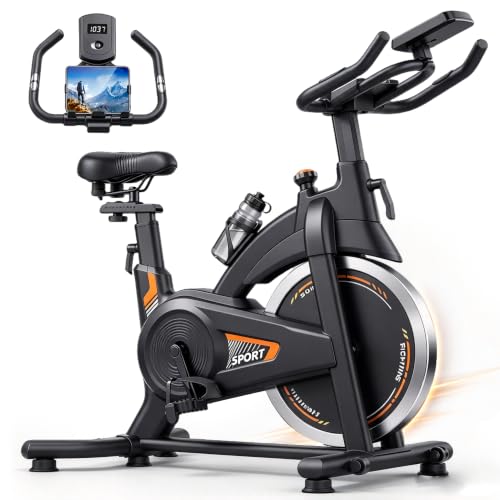
- ✓ Quiet belt drive
- ✓ Easy, quick assembly
- ✓ Great adjustability
- ✕ Limited display features
- ✕ Basic console readout
| Frame Construction | Reinforced steel frame |
| User Weight Capacity | Up to 300 pounds |
| Seat Adjustment Range | 4-way adjustable seat with 7 vertical settings (32.2″ – 39.1″) |
| Handlebar Adjustment Range | Non-slip handlebar with 5 vertical adjustment levels (36.2″ – 46.85″) |
| Drive System / Resistance | Quiet belt drive with infinite resistance adjustment |
| Noise Level | Below 25 dB |
I’ve had this CURSOR FITNESS bike on my testing wishlist for a while, and when it finally landed on my doorstep, I immediately noticed how compact and sturdy it feels right out of the box. The bike’s matte black frame with bright red accents looks sleek in a living room, and the ride I tried felt surprisingly substantial for the price.
The seat adjustments are genuinely useful. With seven vertical seat settings and a 4-way adjustable saddle, I could dial in a comfortable reach in minutes.
The non-slip handlebars offered five height options, which made knee tracking feel natural and reduced any strain during longer sessions.
Assembly was refreshingly painless. Most components were pre-attached, and the tool-free setup had me pedaling within half an hour.
The belt drive runs quietly—barely a whisper, which is a win for apartment-living or early-morning sessions before others wake up.
I hopped between a gentle 20-minute recovery ride and a more intense interval workout, and the resistance felt smooth and progressive. The infinite resistance adjustment lets you fine-tune the effort without jarring changes, which I appreciated during steady-state cardio or sprint blocks.
Stability is solid. Even during faster bursts, the reinforced steel frame stayed planted, and the base didn’t wobble.
The weight limit of 300 pounds didn’t feel like a ceiling in practice, which gave me reassurance during harder efforts.
If you’re juggling space and budget, this bike checks a lot of boxes. It’s quiet, adjustable, and capable of supporting varied routines—from casual spin to calorie-torching workouts.
Overall, it’s a strong value that delivers on everyday home workouts without demanding a garage-sized setup.
Pleny Folding Exercise Bike, 5-in-1, 330lb, Black-Red

- ✓ Ultra-quiet operation
- ✓ Compact foldable design
- ✓ Full-body versatility
- ✕ Limited advanced programs
- ✕ Assembly time
| Frame | Lightweight aluminum frame |
| Material | High-quality materials for durability |
| Dimensions | Compact design fits most spaces |
| Weight | Lightweight and portable |
You’ll notice this Pleny 5-in-1 folding bike stands apart the moment you unfold it and feel how sturdy the X-frame sits on concrete. Compared to the clunkier, non-folding bikes I’ve wrestled with, this one swaps chaos for a compact, room-friendly footprint in seconds.
The 20″ by 20″ folded size is genuinely usable in a tight apartment corner, not just a marketing claim.
The 6.6-lb aluminum flywheel spins smoothly, and the silent magnet system keeps your evenings peaceful—progressing through sprints without rattles or squeaks. It quiets down to under 15 dB, which means you won’t wake the kids during a late cardio session or your partner streaming in the next room.
I appreciated the full-body approach: the rowing-ready bands, plus the built-in backrest and cushioned handles make longer sessions comfortable. The LCD monitor is straightforward, tracking time, speed, distance, calories, and heart rate in real time, so you can stay motivated without fiddling with menus.
The built-in phone holder is a small but real win for streaming classes or a quick show while you ride.
Setup felt reasonable, with about 85% of the work already done in the box. The 30-minute mark is realistic if you’ve done similar assemblies before.
Transport wheels make it easy to slide under a closet between workouts, which helps keep the living space tidy.
During workouts, the 5-in-1 functionality shines when you want to alternate cardio with stretches or rows without swapping machines. The backrest stays supportive, and the frame holds steady even during high-resistance intervals.
It’s a convincing all-in-one solution for basic home fitness without feeling gimmicky.
Overall, it’s a practical, space-conscious choice for daily use, with enough versatility to cover several common routines.
What Are the Key Components of the Best Bike Workout?
The best bike workout incorporates several key components that enhance fitness and performance.
- Warm-Up: A proper warm-up prepares the body for intense activity, increasing blood flow to the muscles and reducing the risk of injury. It typically includes 5-10 minutes of easy cycling, gradually increasing the intensity to activate the cardiovascular system.
- Interval Training: This involves alternating between high-intensity bursts and lower-intensity recovery periods, which can significantly improve cardiovascular fitness and endurance. For example, sprinting for 30 seconds followed by a 1-minute easy pedal can boost metabolism and enhance performance.
- Endurance Rides: Longer rides at a steady pace build stamina and aerobic capacity, essential for any cyclist. These rides help the body adapt to longer durations of exercise and improve overall efficiency while burning fat as a primary fuel source.
- Strength Training: Incorporating strength exercises, either on the bike with resistance settings or off the bike with weight training, enhances muscle strength and power. This component is crucial for improving performance, especially in hill climbing and sprinting.
- Cool Down: A cool-down period is essential for gradually bringing the heart rate back to normal and aiding recovery. It typically involves 5-10 minutes of easy cycling followed by stretching to improve flexibility and reduce muscle soreness.
- Consistency: Regularly scheduled workouts are vital for making progress in fitness levels and performance. Sticking to a routine helps the body adapt and can lead to significant improvements over time.
How Can Different Types of Bike Workouts Target Specific Fitness Goals?
Interval Training: This approach is particularly effective for those looking to increase their cardiovascular fitness in a shorter amount of time. The alternating intensity levels stimulate both aerobic and anaerobic energy systems, leading to improved performance in various cycling situations.
Hill Climbing: Hill workouts are crucial for building muscle strength and power, as they engage different muscle groups more intensely than flat rides. The added resistance not only improves leg strength but also enhances the cyclist’s ability to tackle challenging terrains.
Speed Work: Speed-focused workouts help cyclists develop a faster cadence and improve their ability to sustain higher speeds. By regularly incorporating these sessions, cyclists can enhance their performance in competitive environments where speed is key.
Recovery Rides: These sessions are vital for allowing muscles to recover after intense workouts while still engaging in physical activity. They help improve blood circulation, which aids in the recovery process and maintains fitness levels without overexertion.
What Are the Proven Benefits of an Effective Bike Workout Routine?
An effective bike workout routine offers various proven benefits for physical health and fitness.
- Improved Cardiovascular Health: Regular cycling enhances heart function and circulation. It strengthens the heart muscles, lowers blood pressure, and improves overall cardiovascular endurance.
- Increased Muscle Strength: Cycling primarily targets the lower body muscles, including the quadriceps, hamstrings, calves, and glutes. Engaging these muscle groups leads to increased strength and muscle definition over time.
- Weight Management: A consistent bike workout routine can help burn calories and reduce body fat. Depending on the intensity and duration of the workout, cycling can be an effective tool for weight loss or maintenance.
- Enhanced Mental Well-being: Cycling has been shown to reduce stress and anxiety levels. The release of endorphins during exercise contributes to improved mood and can alleviate symptoms of depression.
- Low Impact Exercise: Biking is a low-impact activity that is easier on the joints compared to other forms of exercise, such as running. This makes it an ideal workout for individuals with joint issues or those recovering from injuries.
- Improved Coordination and Balance: Regular cycling helps enhance coordination and balance due to the engagement of various muscle groups and the need for stability while riding. This can be particularly beneficial as one ages, helping to prevent falls.
- Increased Endurance: Cycling builds stamina and endurance over time, allowing individuals to engage in longer and more intense workouts. This endurance translates into improved performance in other physical activities and daily tasks.
- Convenience and Accessibility: Cycling can be done almost anywhere, whether on stationary bikes indoors or outdoors on various terrains. This accessibility makes it an easy workout option for many people, encouraging consistency.
How Can You Optimize Your Bike Workout with Proper Nutrition?
Optimizing your bike workout with proper nutrition is essential for enhancing performance and recovery.
- Pre-Workout Nutrition: Consuming the right foods before your bike workout can significantly boost your energy levels. Aim for a meal rich in carbohydrates and moderate in protein about 1-3 hours before your ride, as this will provide you with the necessary fuel to sustain your energy throughout the workout.
- Hydration: Staying hydrated is crucial for optimal performance during your bike workout. Dehydration can lead to fatigue and decreased endurance, so make sure to drink water before, during, and after your ride, and consider electrolyte beverages for longer sessions to replenish lost minerals.
- During-Workout Nutrition: For extended bike workouts, especially those lasting over an hour, it’s beneficial to consume quick-digesting carbohydrates. Options like energy gels, bananas, or sports drinks can help maintain your energy levels and prevent fatigue as you continue to exert yourself.
- Post-Workout Recovery: After completing your bike workout, focus on replenishing your energy stores and aiding muscle recovery. A combination of protein and carbohydrates within 30 minutes post-exercise can help repair muscle tissue and restore glycogen levels, making foods like a protein shake with a banana ideal.
- Meal Planning: Regularly planning your meals around your biking schedule can ensure that you are consistently fueling your body properly. Incorporate a balance of carbohydrates, proteins, and healthy fats into your diet to support overall performance and recovery as you engage in your bike workouts.
What Common Mistakes Should You Avoid for Maximum Results?
To achieve maximum results from your bike workouts, it’s essential to avoid several common mistakes.
- Neglecting Proper Warm-Up: Skipping the warm-up can lead to injuries and reduced performance. A proper warm-up prepares your muscles and joints for the workout ahead, increasing blood flow and flexibility, which is crucial for maximizing your workout efficiency.
- Ignoring Bike Fit: Riding on a poorly fitted bike can cause discomfort and limit your performance. Ensuring your bike is adjusted to your body size and riding style not only enhances comfort but also improves your pedaling efficiency, allowing for longer and more effective rides.
- Inconsistent Training: Having an erratic workout schedule can hinder your progress and adaptation. Consistency builds endurance and strength, and following a structured routine—while allowing for rest—ensures that your body can recover and adapt, leading to better results.
- Overlooking Nutrition: Not fueling properly before and after your rides can negatively impact your energy levels and recovery. Consuming the right balance of carbohydrates, proteins, and fats will provide the energy needed for intense workouts and aid in muscle recovery afterward.
- Focusing Solely on Endurance: While long rides are beneficial, neglecting strength training can limit your overall performance. Incorporating interval training and strength exercises will enhance your power, speed, and overall cycling efficiency, leading to a more balanced fitness routine.
- Failing to Track Progress: Not monitoring your progress can lead to stagnation. Keeping a record of your workouts, including distance, speed, and perceived exertion, allows you to identify areas for improvement and set realistic goals, ensuring your efforts are directed toward achieving the best results.
- Ignoring Recovery: Underestimating the importance of recovery can lead to burnout and injuries. Scheduling rest days and incorporating active recovery strategies, such as gentle rides or stretching, is vital for muscle repair and overall performance enhancement.
How Can You Track Your Progress During Bike Workouts?
Tracking your progress during bike workouts can enhance your performance and keep you motivated. Here are some effective methods:
- Fitness Apps: Apps like Strava or MapMyRide allow you to track various metrics such as distance, speed, and elevation gain during your rides.
- Heart Rate Monitors: Using a heart rate monitor helps you gauge your intensity and ensure you are training within your target heart rate zones for optimal cardiovascular benefits.
- Bike Computer: A bike computer provides real-time data on speed, distance traveled, and time spent cycling, which can be crucial for tracking improvements over time.
- Training Logs: Keeping a handwritten or digital training log can help you record details of each workout, including duration, route, and any personal notes on how you felt during the ride.
- Power Meters: For more advanced tracking, power meters measure your output in watts, giving you an accurate representation of your cycling performance and helping to tailor your training regimen.
Fitness Apps are user-friendly and often include community features for social motivation. They can analyze your past rides and provide insights into your performance trends over time.
Heart Rate Monitors are essential for understanding how hard you are working during your workouts, enabling you to adjust your efforts to improve endurance and efficiency.
A Bike Computer is a straightforward option for cyclists who prefer simplicity, providing essential metrics without the need for a smartphone, making it great for outdoor rides.
Training Logs, whether digital or on paper, allow for an in-depth reflection of your workouts, which can be beneficial for setting goals and tracking progress over different periods.
Power Meters are ideal for serious cyclists looking to improve their performance scientifically. They provide precise data that can help fine-tune your training plans and monitor your progress more effectively.
Related Post: